Taurine: The Amino Sulfonic Acid for Heart, Brain, and Longevity
Interactive Visualization GABA, the Brain's Brake — press it with a benzo or alcohol Watch glutamate try to fire a neuron while GABA slams the chloride brake on — then add a benzodiazepine or alcohol and see the brake amplified, and why stacking them is dangerous. Launch →
Table of Contents
- Overview
- Cardiovascular Health and Heart Rhythm
- Bile Salt Formation and Fat Digestion
- Antioxidant and Anti-Inflammatory Properties
- Nervous System and Brain Protection
- Eye Health
- Electrolyte Balance and Hydration
- Exercise Performance and Muscle Function
- Blood Sugar Regulation
- Anti-Aging and Longevity Research
- Immune System Modulation
- Deficiency Signs
- Food Sources
- Supplementation Guidelines
- Recommended Daily Intake
- Research Papers
- Connections
- Featured Videos
Overview
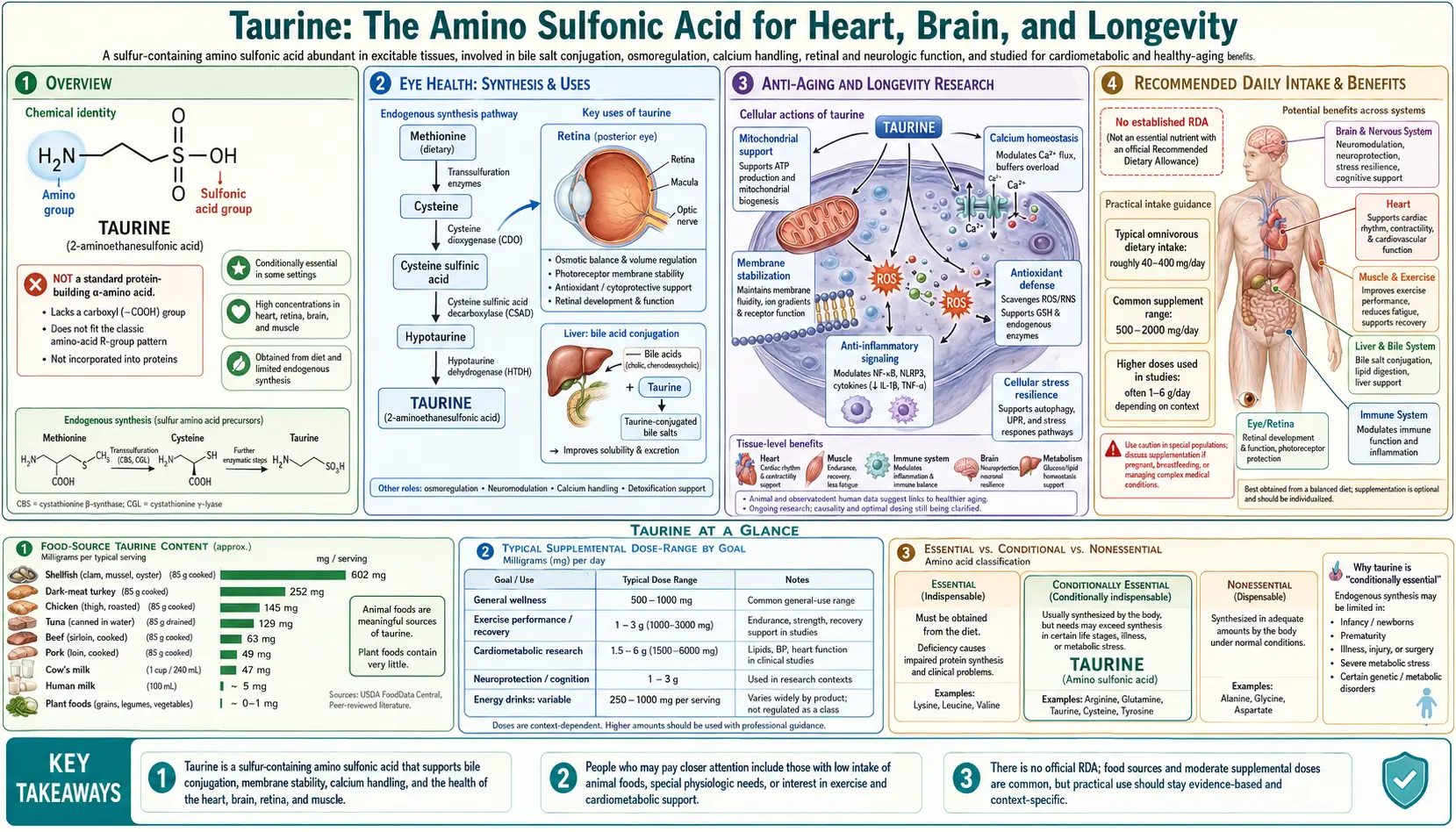
Taurine, chemically known as 2-aminoethanesulfonic acid, is a conditionally essential amino sulfonic acid that is found in extraordinarily high concentrations throughout the human body. Unlike most amino acids, taurine is not incorporated into proteins. Instead, it exists as a free amino acid in virtually every tissue, with particularly high concentrations in the heart, brain, retina, skeletal muscle, and white blood cells. The human body contains approximately 70 grams of taurine, making it one of the most abundant low-molecular-weight organic compounds in mammalian tissues. While the body can synthesize taurine from the amino acids cysteine and methionine with the help of vitamin B6, this endogenous production is often insufficient to meet the body's demands, especially during periods of illness, stress, aging, or increased physiological need.
From a naturopathic perspective, taurine exemplifies the principle that the body's healing capacity depends on an adequate supply of foundational nutrients. Taurine is not simply a metabolic byproduct or a minor player in human biochemistry. It is a master regulator of cellular function, influencing everything from cardiac contractility and neuronal excitability to bile acid conjugation, antioxidant defense, and osmoregulation. When taurine levels are optimal, the heart beats with steady rhythm, the nervous system maintains calm resilience, the eyes retain their visual acuity, and the liver processes fats efficiently. When taurine is depleted, these systems begin to falter, often in subtle ways that can go unrecognized for years before manifesting as clinically significant disease.
Taurine was first isolated from ox bile in 1827 by the German scientists Friedrich Tiedemann and Leopold Gmelin, and its name derives from the Latin word taurus, meaning bull or ox. For decades, taurine was dismissed as a mere end product of sulfur amino acid metabolism. However, research over the past forty years has dramatically expanded our understanding of its biological significance. Today, taurine is recognized as a cytoprotective molecule with roles in membrane stabilization, calcium signaling, mitochondrial function, gene expression, and the regulation of inflammatory pathways. A landmark 2023 study published in Science demonstrated that taurine levels decline substantially with age in multiple species and that taurine supplementation extended healthy lifespan in mice by up to twelve percent, sparking renewed interest in this remarkable compound as a potential longevity intervention.
Cardiovascular Health and Heart Rhythm
The heart contains the highest concentration of taurine of any muscle in the body, and this is no coincidence. Taurine plays an indispensable role in maintaining cardiac function through several interconnected mechanisms. It modulates intracellular calcium levels, which directly governs the force and rhythm of cardiac contractions. By regulating the flow of calcium ions into and out of cardiac myocytes, taurine helps prevent both excessive contraction and inadequate relaxation of the heart muscle. This calcium-modulating effect is particularly important for maintaining a regular heartbeat and preventing arrhythmias, including atrial fibrillation and ventricular tachycardia.
Taurine also exerts a profound effect on blood pressure regulation. Clinical studies have demonstrated that taurine supplementation can reduce systolic blood pressure by an average of seven to ten millimeters of mercury and diastolic pressure by four to six millimeters. These effects are mediated through multiple pathways, including the enhancement of nitric oxide bioavailability, the reduction of sympathetic nervous system overactivity, the improvement of endothelial function, and the promotion of renal sodium excretion. For patients with mild to moderate hypertension, taurine offers a well-tolerated nutritional approach that can complement dietary and lifestyle modifications.
Beyond blood pressure and rhythm control, taurine protects the heart against ischemia-reperfusion injury, the damage that occurs when blood flow is restored after a period of oxygen deprivation, such as during a heart attack or cardiac surgery. Taurine achieves this protection by stabilizing mitochondrial membranes, reducing the formation of reactive oxygen species, and preventing the opening of the mitochondrial permeability transition pore, a critical event in the cascade leading to cell death. Naturopathic physicians recognize taurine as one of the most important nutrients for comprehensive cardiovascular support, often recommending it alongside magnesium, coenzyme Q10, and omega-3 fatty acids as part of an integrative cardioprotective protocol.
Bile Salt Formation and Fat Digestion
One of taurine's most fundamental biochemical roles is its conjugation with bile acids in the liver to form bile salts, primarily taurocholate and taurochenodeoxycholate. Bile salts are essential for the emulsification and absorption of dietary fats, fat-soluble vitamins (A, D, E, and K), and cholesterol. Without adequate taurine, the liver must rely more heavily on glycine for bile acid conjugation, producing glycine-conjugated bile salts that are less soluble and less effective at emulsifying fats, particularly in the more acidic environment of the upper small intestine.
Taurine-conjugated bile acids also play a critical role in cholesterol homeostasis. By promoting the excretion of cholesterol through bile, taurine helps maintain healthy serum cholesterol levels. Research has shown that taurine supplementation can reduce total cholesterol and LDL cholesterol while modestly increasing HDL cholesterol, effects that are particularly beneficial for individuals with dyslipidemia or metabolic syndrome. Furthermore, taurine-conjugated bile acids resist bacterial deconjugation in the intestine more effectively than glycine-conjugated forms, which may reduce the formation of toxic secondary bile acids that have been linked to colorectal cancer risk.
From a naturopathic clinical standpoint, patients who present with symptoms of fat malabsorption, including greasy or floating stools, bloating after fatty meals, deficiency of fat-soluble vitamins, or difficulty digesting rich foods, may benefit from taurine assessment and supplementation. This is especially relevant for individuals with compromised liver function, those who have undergone cholecystectomy, and vegans or strict vegetarians whose dietary taurine intake is negligible. Supporting bile salt formation through taurine supplementation represents a root-cause approach to improving fat digestion rather than simply recommending digestive enzyme supplements to manage symptoms.
Antioxidant and Anti-Inflammatory Properties
Taurine possesses remarkable antioxidant and anti-inflammatory properties, though its mechanisms differ from those of classical antioxidants like vitamin C or glutathione. Rather than directly scavenging free radicals through electron donation, taurine protects cells by stabilizing mitochondrial electron transport chain function, thereby reducing the generation of reactive oxygen species at their primary source. Taurine also reacts with hypochlorous acid, a potent oxidant produced by neutrophils during the immune response, to form taurine chloramine, a compound that is far less toxic than hypochlorous acid itself and that possesses its own anti-inflammatory signaling properties.
Taurine chloramine is a particularly fascinating molecule from a naturopathic perspective because it demonstrates how the body can transform a potentially damaging substance into a healing one. Taurine chloramine inhibits the production of pro-inflammatory cytokines, including tumor necrosis factor-alpha, interleukin-6, and interleukin-8, while simultaneously enhancing the production of anti-inflammatory mediators. It also suppresses the activation of nuclear factor kappa-B, a master transcription factor that drives the expression of hundreds of inflammatory genes. These properties make taurine a valuable nutrient for managing chronic inflammatory conditions, including cardiovascular disease, neurodegeneration, metabolic syndrome, and autoimmune disorders.
Additionally, taurine supports the body's endogenous antioxidant defenses by maintaining adequate levels of glutathione, superoxide dismutase, and catalase. It protects the integrity of cell membranes by preventing lipid peroxidation and preserves mitochondrial function under conditions of oxidative stress. For practitioners who understand that chronic inflammation and oxidative damage lie at the root of most degenerative diseases, taurine represents a safe and versatile tool for addressing these underlying pathological processes rather than merely suppressing their symptoms.
Nervous System and Brain Protection
Taurine is one of the most abundant amino acids in the central nervous system, where it functions as a major inhibitory neuromodulator. It activates both glycine and GABA-A receptors, promoting a state of calm neural activity that counterbalances the excitatory effects of glutamate. This inhibitory action is essential for preventing excitotoxicity, a process in which excessive glutamate signaling leads to neuronal damage and death. Excitotoxicity is implicated in numerous neurological conditions, including stroke, traumatic brain injury, epilepsy, Alzheimer's disease, and Parkinson's disease, making taurine's neuroprotective role of immense clinical significance.
During brain development, taurine is present in concentrations several times higher than in the adult brain, reflecting its critical role in neurogenesis, neuronal migration, synaptogenesis, and the formation of inhibitory neural circuits. Infants who are unable to synthesize sufficient taurine depend entirely on dietary sources, which is why breast milk contains high concentrations of taurine and why infant formula has been supplemented with taurine since the 1980s. In adults, taurine continues to support cognitive function by modulating synaptic plasticity, protecting against age-related neuronal loss, and maintaining the integrity of the blood-brain barrier.
Naturopathic physicians frequently consider taurine supplementation for patients experiencing anxiety, insomnia, seizure disorders, or cognitive decline. Its calming effect on the nervous system is gentle yet meaningful, lacking the sedating side effects associated with pharmaceutical GABA-ergic agents. Taurine also supports the production of brain-derived neurotrophic factor, a protein that promotes the survival and growth of neurons and is critical for learning and memory. For individuals under chronic stress, whose taurine reserves may be depleted by sustained cortisol elevation and increased urinary taurine excretion, restoring taurine status can help reestablish nervous system resilience and emotional equilibrium.
Eye Health
The retina contains the highest concentration of taurine of any tissue in the body, comprising up to fifty percent of the total free amino acid pool in retinal photoreceptor cells. This extraordinary concentration underscores taurine's indispensable role in visual function. Taurine protects photoreceptor cells from light-induced oxidative damage, maintains the structural integrity of retinal cell membranes, and supports the osmotic regulation of retinal pigment epithelial cells. Animal studies have demonstrated that taurine depletion leads to severe and progressive retinal degeneration, with complete photoreceptor loss occurring within months of taurine deprivation.
Taurine's photoprotective effects are mediated through several mechanisms. It scavenges reactive oxygen species generated by the constant exposure of retinal cells to light energy, stabilizes rhodopsin in rod photoreceptors, maintains mitochondrial function in the metabolically demanding photoreceptor inner segments, and regulates intracellular calcium concentrations that, if uncontrolled, can trigger apoptotic cell death pathways. These protective functions are particularly relevant in the context of age-related macular degeneration, the leading cause of irreversible vision loss in adults over fifty, which is driven in large part by cumulative oxidative damage to the macula.
From a naturopathic approach to eye health, taurine deserves attention alongside the more commonly discussed nutrients such as lutein, zeaxanthin, zinc, and vitamins C and E. Patients taking medications that deplete taurine, particularly certain chemotherapy agents and the anti-epileptic drug vigabatrin, which is known to cause irreversible visual field constriction through retinal taurine depletion, should be monitored closely and may benefit from taurine supplementation. Supporting retinal taurine levels through diet and supplementation represents a proactive strategy for preserving visual function across the lifespan.
Electrolyte Balance and Hydration
Taurine functions as one of the body's primary organic osmolytes, small molecules that regulate cell volume and fluid balance without disrupting the function of intracellular proteins and enzymes. When cells are exposed to osmotic stress, whether from dehydration, changes in blood electrolyte concentrations, or shifts in tissue hydration, taurine is transported into or out of cells to maintain appropriate cell volume. This osmoregulatory function is particularly critical in the brain, kidneys, and heart, where even small changes in cell volume can impair organ function.
In the kidneys, taurine modulates the renal handling of sodium, potassium, and chloride, contributing to the maintenance of electrolyte homeostasis and blood pressure regulation. Taurine promotes natriuresis, the excretion of sodium in the urine, which helps prevent sodium-driven fluid retention and hypertension. It also supports the function of the renal medullary concentrating mechanism, which is essential for the kidney's ability to produce concentrated urine and conserve water during periods of dehydration. These properties make taurine particularly relevant for individuals who exercise heavily, live in hot climates, or consume high-sodium diets.
Naturopathic practitioners recognize that optimal hydration extends far beyond simply drinking adequate water. True cellular hydration depends on the proper balance of electrolytes and osmolytes that allow water to be distributed appropriately between intracellular and extracellular compartments. Taurine's role as a key osmolyte means that it directly influences how effectively cells absorb and retain water. For patients who report persistent feelings of dehydration despite adequate fluid intake, or who experience frequent muscle cramps, headaches, or cognitive fog related to fluid imbalance, taurine supplementation alongside electrolyte support can address the underlying osmoregulatory dysfunction.
Deep dive: For the full biochemistry of taurine's role in electrolyte handling — including the sodium-taurine cotransporter, magnesium-taurine synergy, sweat losses, POTS protocols, hypertension trials, and dosing for arrhythmia, muscle cramps, and heat stress — see Taurine and Electrolyte Balance: The Forgotten Osmolyte.
Exercise Performance and Muscle Function
Skeletal muscle is the largest reservoir of taurine in the body, containing approximately seventy percent of the total body pool. During exercise, taurine concentrations in muscle tissue decline as it is released into the bloodstream to support increased metabolic demands. Taurine enhances exercise performance through multiple mechanisms, including the improvement of calcium handling in muscle fibers, the protection of muscle cells from exercise-induced oxidative damage, the enhancement of fat oxidation during endurance activity, and the reduction of lactate accumulation during high-intensity effort.
Research has demonstrated that taurine supplementation can improve exercise capacity, reduce perceived exertion, decrease markers of muscle damage following intense training, and accelerate recovery between exercise sessions. A meta-analysis of human clinical trials found that taurine supplementation at doses of one to six grams taken one to three hours before exercise consistently improved endurance performance, with the most pronounced benefits observed in activities lasting thirty minutes or longer. These effects are thought to result from taurine's ability to enhance mitochondrial energy production, improve contractile function, and buffer the metabolic acidosis that contributes to muscle fatigue.
From a naturopathic sports medicine perspective, taurine represents a natural and well-tolerated ergogenic aid that supports athletic performance without the adverse effects associated with stimulant-based supplements. It is particularly valuable for endurance athletes, individuals engaged in high-volume resistance training, and older adults who wish to maintain muscle function and exercise capacity. Taurine also protects against exercise-induced cardiac stress by stabilizing heart rhythm during intense exertion and supporting the heart's recovery following prolonged exercise, making it an important consideration for athletes concerned about cardiovascular health during training.
Blood Sugar Regulation
Taurine plays a significant and multifaceted role in glucose metabolism and insulin signaling. In the pancreas, taurine supports the health and function of beta cells, the insulin-producing cells of the islets of Langerhans. It protects beta cells from oxidative stress and inflammatory damage, both of which are major drivers of beta cell dysfunction and death in type 2 diabetes. Taurine also enhances insulin secretion in response to glucose stimulation and improves insulin sensitivity in peripheral tissues, including skeletal muscle, liver, and adipose tissue.
Animal studies have consistently shown that taurine supplementation improves glucose tolerance, reduces fasting blood glucose levels, decreases insulin resistance, and protects against the development of diabetic complications. Human clinical trials have yielded promising results as well, with several studies demonstrating that taurine supplementation at doses of one and a half to three grams daily can reduce hemoglobin A1c, improve fasting blood glucose, and decrease markers of oxidative stress and inflammation in patients with type 2 diabetes. Taurine also appears to protect against the microvascular and macrovascular complications of diabetes by reducing glycation of proteins, improving endothelial function, and protecting the kidneys, retina, and peripheral nerves from hyperglycemia-induced damage.
Naturopathic practitioners managing patients with metabolic syndrome, insulin resistance, or type 2 diabetes should consider taurine as a valuable component of an integrative treatment plan. Its mechanisms of action complement those of other evidence-based nutritional interventions for blood sugar regulation, including chromium, berberine, alpha-lipoic acid, and magnesium. Taurine's additional benefits for cardiovascular health and weight management make it particularly well-suited for patients with metabolic syndrome, in whom insulin resistance, hypertension, dyslipidemia, and central obesity commonly coexist.
Anti-Aging and Longevity Research
Perhaps the most exciting area of current taurine research concerns its relationship to aging and lifespan. A comprehensive study published in Science in June 2023 by researchers at Columbia University demonstrated that blood taurine levels decline by approximately eighty percent between youth and old age in humans, monkeys, and mice. The researchers then showed that restoring taurine levels through supplementation in middle-aged mice extended median lifespan by ten to twelve percent, reduced age-associated weight gain, improved bone density, enhanced immune function, decreased insulin resistance, and improved muscular endurance and strength. Taurine-supplemented animals also showed reduced markers of cellular senescence, DNA damage, and inflammation compared to unsupplemented controls.
The mechanisms through which taurine may slow biological aging are numerous and interconnected. Taurine supports mitochondrial function and biogenesis, which is critical because mitochondrial dysfunction is recognized as one of the primary hallmarks of aging. It reduces the accumulation of senescent cells, the so-called zombie cells that secrete inflammatory factors and contribute to tissue degeneration. Taurine also helps maintain telomere length, suppresses chronic low-grade inflammation (inflammaging), and supports the integrity of the proteome by reducing protein misfolding and aggregation. These effects position taurine at the intersection of multiple aging pathways, suggesting that its decline with age may be not merely a biomarker of aging but a contributing cause.
While it is premature to declare taurine a proven anti-aging intervention in humans, the accumulating evidence from animal models and epidemiological studies is compelling. Large observational studies, including the European EPIC study, have found associations between higher taurine status and reduced risk of cardiovascular disease, diabetes, and obesity. From a naturopathic perspective, supporting taurine levels through diet and supplementation as part of a comprehensive longevity strategy, alongside caloric moderation, regular exercise, stress management, and adequate sleep, represents a prudent and low-risk approach to promoting healthy aging.
Immune System Modulation
Taurine is found in high concentrations in immune cells, particularly neutrophils, lymphocytes, and monocytes, where it serves multiple protective and regulatory functions. Neutrophils, the first responders of the innate immune system, contain taurine at concentrations of approximately twenty to fifty millimolar, far higher than plasma levels. During the respiratory burst that neutrophils use to destroy pathogens, large quantities of hypochlorous acid are generated. Taurine reacts with this hypochlorous acid to form taurine chloramine, which protects surrounding tissues from collateral oxidative damage while simultaneously modulating the inflammatory response to prevent excessive tissue destruction.
Taurine also supports adaptive immune function by enhancing the proliferation and activity of T lymphocytes, supporting the production of immunoglobulins by B cells, and modulating the balance between pro-inflammatory Th1 and Th17 responses and anti-inflammatory Th2 and regulatory T cell responses. This immunomodulatory capacity is particularly relevant in the context of autoimmune conditions, where the immune system is dysregulated rather than simply overactive or underactive. By helping to restore immune balance, taurine may help reduce the severity of autoimmune flares without compromising the body's ability to defend against infections.
Naturopathic physicians working with immunocompromised patients, individuals with chronic infections, or those recovering from surgery or serious illness should consider the immune-supportive properties of taurine. Its safety profile makes it suitable for long-term use, and its multisystem benefits mean that immune-compromised patients who supplement with taurine may experience improvements not only in immune function but also in cardiovascular health, energy levels, and neurological resilience. Supporting taurine status is a practical way to strengthen the body's innate healing capacity from the cellular level upward.
Deficiency Signs
Because taurine is involved in such a wide array of physiological processes, deficiency can manifest across multiple organ systems. Cardiovascular signs of taurine depletion include heart palpitations, irregular heart rhythm, exercise intolerance, and an increased susceptibility to cardiomyopathy. Neurological signs may include anxiety, insomnia, difficulty concentrating, increased sensitivity to stress, and in severe cases, seizure activity. Visual disturbances, including decreased night vision and increased sensitivity to bright light, can reflect retinal taurine depletion. Digestive symptoms such as fat malabsorption, bloating after fatty meals, and deficiency of fat-soluble vitamins may indicate impaired bile salt conjugation.
Certain populations are at greater risk of taurine deficiency. Vegans and strict vegetarians consume virtually no preformed taurine, as it is found almost exclusively in animal-derived foods, and must rely entirely on endogenous synthesis from cysteine and methionine. This synthesis requires adequate vitamin B6, and individuals with B6 deficiency may have further compromised taurine production. Premature infants and neonates have limited capacity to synthesize taurine and are dependent on breast milk or supplemented formula. Elderly individuals often have declining taurine levels due to reduced biosynthetic capacity, decreased dietary intake, and impaired renal conservation. Patients with chronic liver disease, kidney disease, or heart failure may also have depleted taurine stores due to impaired synthesis or increased losses.
Other factors that can deplete taurine include chronic stress, heavy alcohol consumption, excessive caffeine intake, certain medications including chemotherapy agents and beta-alanine supplements that compete with taurine for cellular uptake, and diets that are deficient in the taurine precursors methionine and cysteine. Naturopathic practitioners should maintain a high index of suspicion for taurine insufficiency in patients who present with symptoms spanning multiple systems, particularly when conventional workups fail to identify a unifying diagnosis. Plasma and urinary taurine levels can be measured, though functional assessment based on clinical presentation and dietary history often provides the most practical starting point.
Food Sources
Taurine is found predominantly in animal-derived foods, with the highest concentrations occurring in shellfish, dark-meat poultry, and organ meats. The following foods represent the richest dietary sources of taurine:
- Shellfish: Scallops, mussels, clams, and oysters are among the most concentrated food sources, providing 50 to 250 milligrams per 100-gram serving.
- Fish: Dark-fleshed fish such as tuna, mackerel, sardines, and salmon provide 40 to 130 milligrams per 100-gram serving. Octopus and squid are also excellent sources.
- Poultry: Dark-meat chicken and turkey provide 100 to 300 milligrams per 100-gram serving, with dark meat containing substantially more taurine than white meat.
- Beef and Lamb: Red meat provides approximately 40 to 60 milligrams per 100-gram serving, with organ meats such as heart and liver containing higher concentrations.
- Pork: Provides approximately 50 to 60 milligrams per 100-gram serving.
- Eggs and Dairy: These foods contain only trace amounts of taurine and are not considered significant dietary sources.
Plant foods contain negligible amounts of taurine, with only certain seaweeds and microalgae providing small quantities. This dietary reality means that individuals following plant-based diets have substantially lower plasma taurine levels than omnivores, with studies reporting reductions of thirty to fifty percent. While the body can synthesize taurine from cysteine via the intermediate cysteine sulfinic acid, this pathway produces limited quantities, typically estimated at 50 to 100 milligrams per day, which may be insufficient to maintain optimal tissue concentrations in the absence of dietary intake. For vegans and vegetarians, taurine supplementation with a synthetic form that is not derived from animal sources provides a practical solution to ensure adequate taurine status.
Supplementation Guidelines
Taurine supplements are widely available in capsule and powder forms, and taurine is one of the most well-tolerated amino acid supplements, with an excellent safety record in both clinical trials and decades of widespread commercial use. The following guidelines reflect current evidence and clinical experience:
- General health maintenance: 500 to 1,000 milligrams daily, taken with or without food.
- Cardiovascular support: 1,000 to 3,000 milligrams daily, divided into two or three doses. Higher doses within this range may be beneficial for individuals with hypertension, heart failure, or arrhythmias.
- Blood sugar regulation: 1,500 to 3,000 milligrams daily, divided into two or three doses with meals.
- Neurological support and anxiety: 500 to 2,000 milligrams daily. Doses toward the higher end may be more effective for individuals with significant anxiety or sleep disturbances.
- Exercise performance: 1,000 to 3,000 milligrams taken one to three hours before exercise.
- Eye health: 500 to 1,500 milligrams daily as part of a comprehensive retinal support protocol.
- Vegan and vegetarian support: 500 to 1,000 milligrams daily to compensate for the absence of dietary taurine.
Taurine is generally considered safe at doses up to 6,000 milligrams per day, and no significant adverse effects have been reported in clinical trials using doses up to 6 grams daily for extended periods. The European Food Safety Authority has established an observed safe level of 6,000 milligrams per day. Taurine may interact with certain medications, including lithium, antihypertensive drugs, and antiepileptic medications, and patients taking these medications should consult with their healthcare provider before beginning supplementation. Taurine is best absorbed on an empty stomach, though it can be taken with food if gastrointestinal sensitivity occurs. It pairs well with magnesium for cardiovascular and neurological support, with B vitamins for individuals who may have impaired endogenous synthesis, and with other amino acids such as glycine and L-theanine for calming nervous system support.
Recommended Daily Intake
There is currently no established Recommended Dietary Allowance or Adequate Intake for taurine set by major regulatory bodies such as the National Institutes of Health or the European Food Safety Authority. This absence of an official recommendation reflects the fact that taurine is conditionally essential rather than strictly essential, meaning the body can synthesize it under normal circumstances, even if that synthesis may be suboptimal in many individuals. However, based on the available evidence, several expert panels and researchers have proposed intake guidelines.
The average omnivorous diet provides approximately 40 to 400 milligrams of taurine per day, depending on the quantity and type of animal foods consumed. Endogenous synthesis contributes an additional 50 to 100 milligrams daily. Researchers who have studied taurine's effects on cardiovascular health, metabolic function, and longevity generally suggest that an optimal daily intake may be in the range of 500 to 3,000 milligrams, which is substantially higher than what most people obtain from diet and endogenous production alone. This discrepancy between typical intake and optimal intake suggests that many individuals may benefit from increasing their consumption of taurine-rich foods or from judicious supplementation.
For naturopathic practitioners, the appropriate taurine recommendation depends on the individual patient's health status, dietary pattern, age, and therapeutic goals. A healthy omnivore with no specific health concerns may need only modest supplementation or none at all, while a vegan patient with cardiovascular risk factors, an elderly patient with declining taurine levels, or an athlete seeking to optimize performance and recovery may benefit from higher doses within the established safe range. As with all nutritional interventions, the goal is to identify and address each patient's unique biochemical needs, supporting the body's innate capacity for self-regulation and healing through the provision of adequate foundational nutrients.
Research Papers
The following curated PubMed searches surface the peer-reviewed literature underpinning the claims on this page. Each link opens a live PubMed query for Taurine filtered by topic, so the results stay current as new studies are indexed.
- PubMed search — Taurine: Metabolism and biochemistry (review)
- PubMed search — Taurine: Dietary intake and requirements
- PubMed search — Taurine: Supplementation randomized controlled trials
- PubMed search — Taurine: Plasma levels and clinical outcomes
- PubMed search — Taurine: Muscle protein synthesis and exercise
- PubMed search — Taurine: Deficiency: signs and consequences
- PubMed search — Taurine: Cardiovascular effects
- PubMed search — Taurine: Neurological and cognitive effects
- PubMed search — Taurine: Immune function
- PubMed search — Taurine: Oxidative stress and antioxidant activity
- PubMed search — Taurine: Gastrointestinal and gut health
- PubMed search — Taurine: Safety, toxicity, and upper limit
For a broader literature review, see the full PubMed record for Taurine and the NIH Office of Dietary Supplements Fact Sheets.
This content is provided for informational purposes only and does not constitute medical advice. Consult a qualified healthcare provider before beginning any supplementation regimen.
Connections
- Fluoride Chelation — liver conjugation during a protocol
- All Amino Acids
- GABA: The Brain’s Brake — interactive animation
- Taurine Benefits Deep Dive
- Deep Dives: Taurine and Electrolyte Balance, Cardiac Function, Bile Acids and Fat Digestion, Retinal and Eye Health
- Cysteine
- Glycine
- Methionine
- Alanine
- Arginine
- Taurine for Tinnitus
- Glycine for Tinnitus
- Hypertension
- Calcium
- Magnesium
- Blood Sugar
- Metabolic Syndrome
- Anxiety
- Insulin Resistance
- Oxidative Stress
- Liver Cleansing
- Beef