Parkinson's Disease
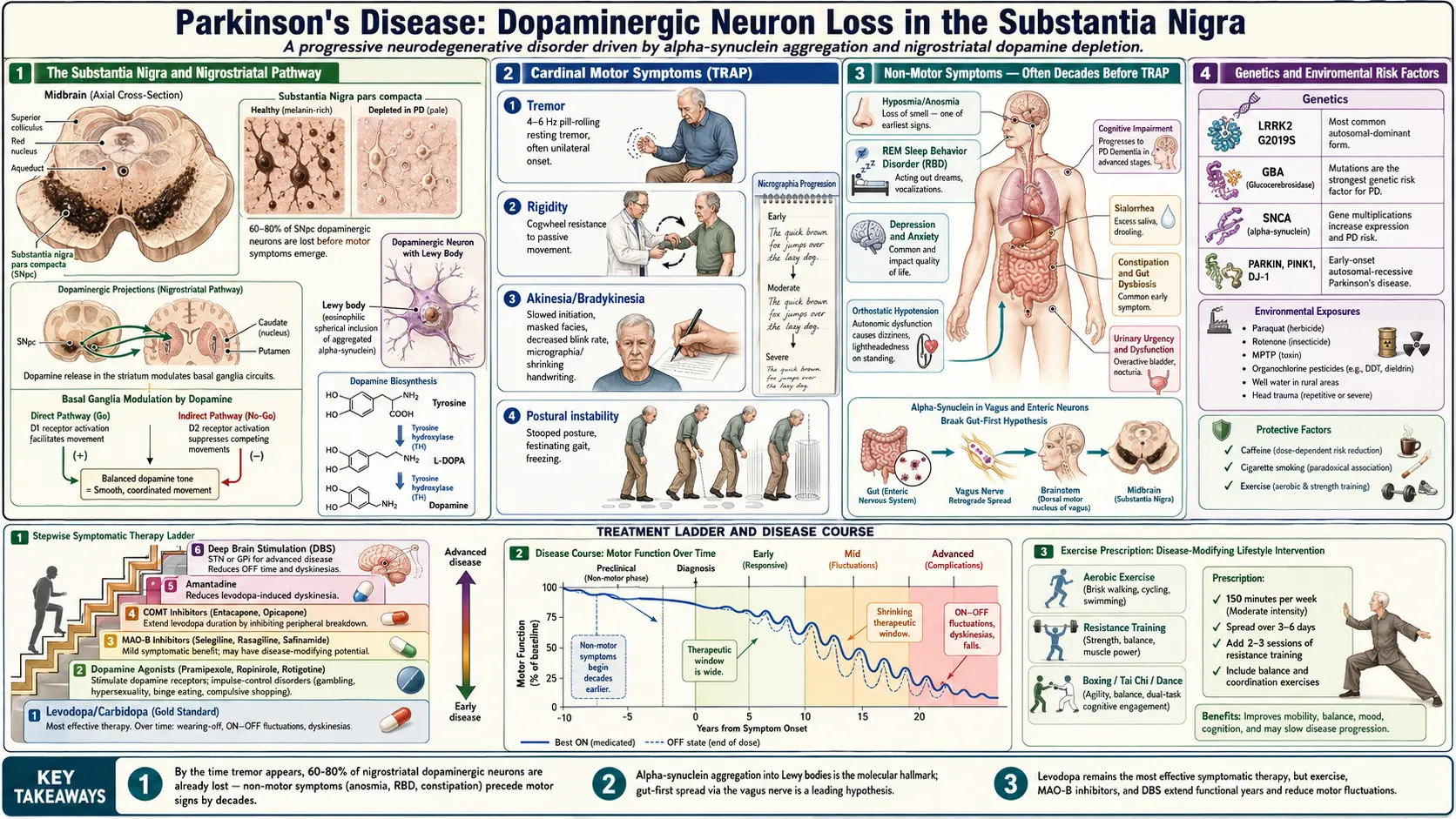
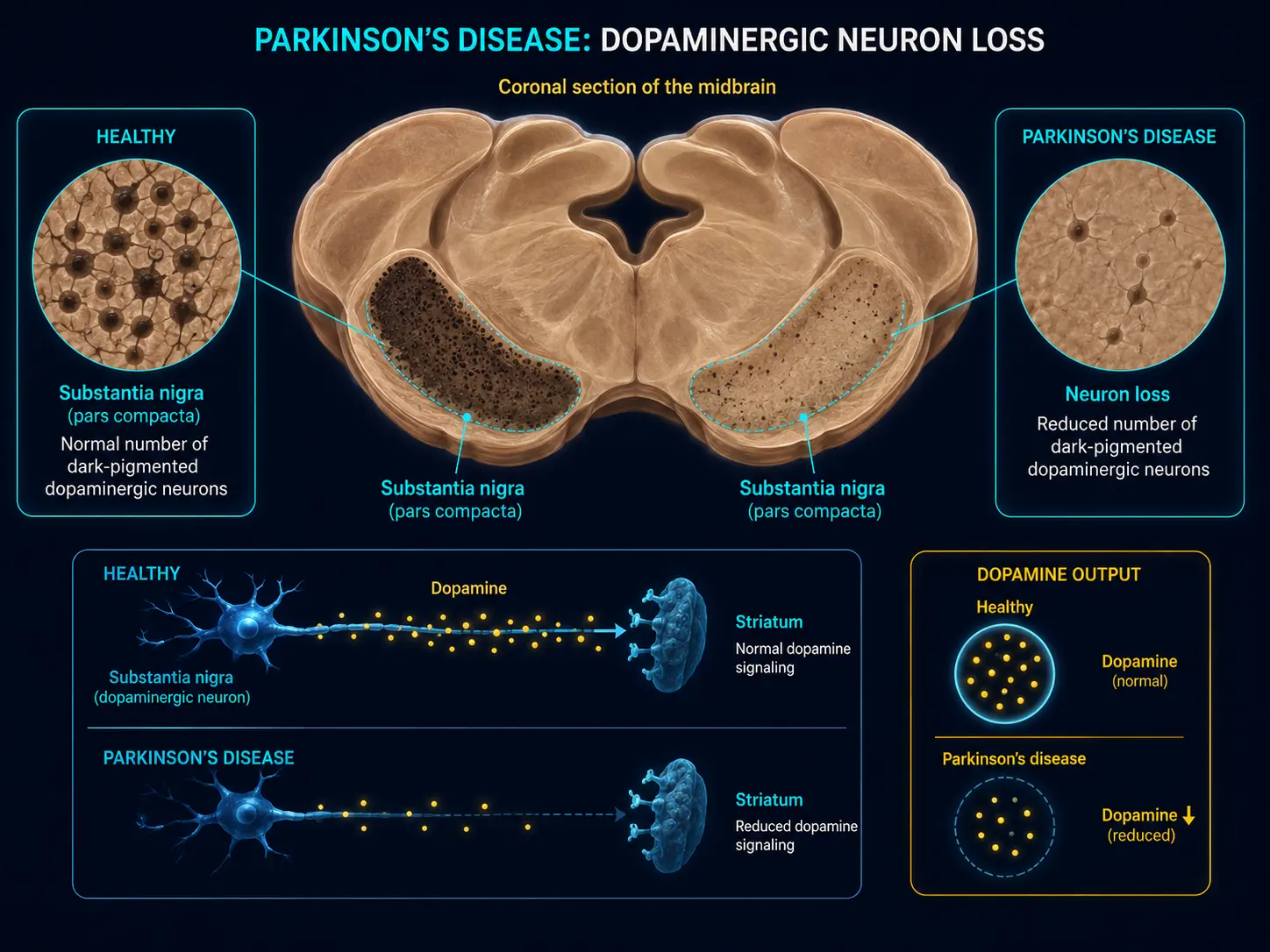
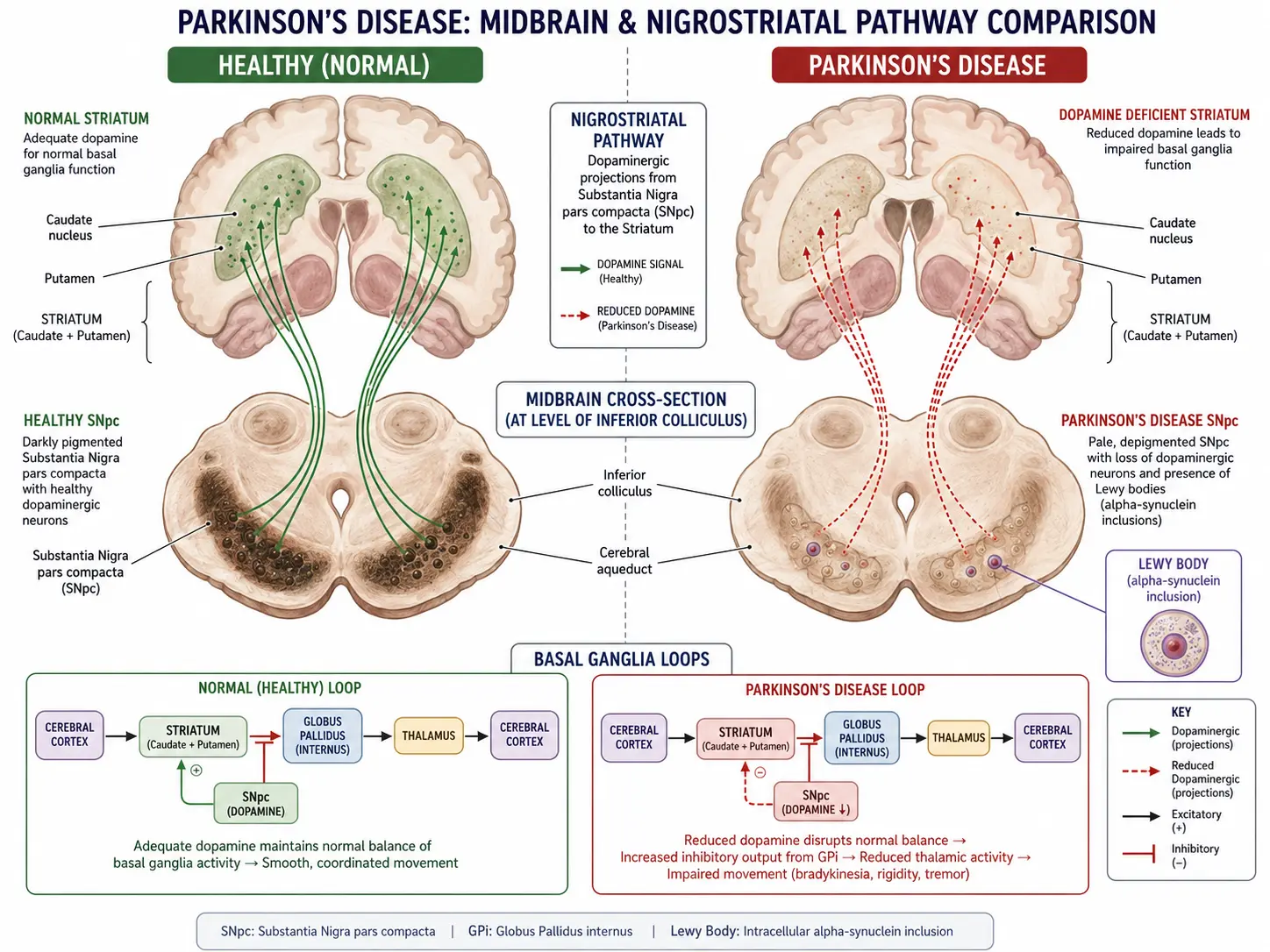
What is Parkinson's Disease?
Parkinson's disease is a progressive neurodegenerative disorder that affects movement. It occurs when nerve cells in the brain that produce dopamine become impaired or die, leading to motor symptoms and other complications.
Symptoms of Parkinson's Disease
Symptoms typically develop gradually and can vary between individuals. They include:
- Tremors: Shaking, usually beginning in a limb, often in the hands or fingers.
- Bradykinesia: Slowed movement, making simple tasks more difficult and time-consuming.
- Muscle stiffness: Can occur in any part of the body and cause pain or limit range of motion.
- Impaired balance and coordination: May lead to falls.
- Speech changes: Soft, rapid, or slurred speech.
- Writing difficulties: Smaller handwriting or difficulty writing over time.
Non-Motor Symptoms
Parkinson's can also cause non-motor symptoms, such as:
- Depression and emotional changes
- Sleep disturbances: Insomnia, vivid dreams, or daytime sleepiness.
- Cognitive impairment: Memory and thinking problems, especially in later stages.
- Loss of sense of smell (anosmia)
- Constipation
- Fatigue
- Autonomic dysfunction: Issues with blood pressure regulation, sweating, and digestion.
Risk Factors
- Age: Most commonly affects individuals aged 60 and older.
- Genetics: Having a close relative with Parkinson's increases the risk, although genetic links are rare.
- Gender: Men are more likely to develop Parkinson's than women.
- Environmental exposure: Prolonged exposure to herbicides and pesticides may slightly increase risk.
Diagnosis
- Medical history and symptom review: A neurologist will assess symptoms and medical history.
- Neurological examination: Tests coordination, reflexes, and muscle strength.
- Imaging tests: Such as MRI or PET scans, may help rule out other conditions.
- Response to Parkinson's medications: Improvement with medications like levodopa can support diagnosis.
Treatment Options
- Medications:
- Levodopa: The most effective treatment, converted to dopamine in the brain.
- Dopamine agonists: Mimic dopamine effects (e.g., pramipexole, ropinirole).
- MAO-B inhibitors: Help prevent the breakdown of dopamine (e.g., selegiline, rasagiline).
- COMT inhibitors: Prolong the effect of levodopa.
- Physical therapy: Helps improve mobility, flexibility, and balance.
- Occupational therapy: Aids in adapting daily activities for better functionality.
- Speech therapy: Assists with speech and swallowing difficulties.
- Surgical options:
- Deep brain stimulation (DBS): Electrodes are implanted in specific brain areas to reduce symptoms.
Prevention Strategies
- Regular physical activity: May help reduce the risk or delay the onset of Parkinson’s symptoms.
- Healthy diet: A diet rich in fruits, vegetables, whole grains, and omega-3 fatty acids supports brain health.
- Avoid exposure to toxins: Limiting contact with herbicides and pesticides may reduce risk.
Complications of Parkinson's Disease
- Cognitive decline: Dementia may occur in the later stages.
- Depression and emotional changes: Can affect quality of life.
- Swallowing and eating problems: Can lead to malnutrition and aspiration pneumonia.
- Sleep problems: Includes REM sleep behavior disorder and daytime drowsiness.
- Bladder and bowel issues: Problems with control and constipation.
Interactive Visualization Dopamine, Reward & How Habits Hijack You Dopamine is not the pleasure chemical. Watch the spike migrate from the reward to the cue — then withhold the reward and see it dip below zero. That dip is craving. Launch → Interactive Visualization The Blood-Brain Barrier — get a drug past the bouncer Send molecules at the tightest wall in the body — fat-soluble ones slip through, big ones bounce, a pump ejects the rest — then see why L-DOPA gets in when dopamine can't. Launch → Interactive Visualization Smell — light up a pattern across 400 receptors Send an odour at your ~400 receptor types and watch a unique pattern light up — how you smell a trillion things with a few hundred sensors, and why losing smell warns of Parkinson's. Launch → Interactive Visualization Apoptosis — trigger a cell's programmed self-destruct Watch a damaged cell trigger its own tidy self-destruct with caspases — then see cancer block the death switch so bad cells survive, or too much of it kill healthy neurons. Launch →
Table of Contents
- What is Parkinson's Disease?
- Symptoms of Parkinson's Disease
- Non-Motor Symptoms
- Risk Factors
- Diagnosis
- Treatment Options
- Prevention Strategies
- Complications of Parkinson's Disease
- Research Papers
- Connections
- Featured Videos
Research Papers
Curated PubMed topic searches on Parkinson's Disease. Each link opens a live PubMed query so the result set stays current as new studies are indexed.
- PubMed topic search: Parkinson disease review
- PubMed topic search: Alpha synuclein Parkinson
- PubMed topic search: Levodopa Parkinson disease
- PubMed topic search: Deep brain stimulation Parkinson trial
- PubMed topic search: MDS Parkinson diagnostic criteria
- PubMed topic search: LRRK2 Parkinson genetics
- PubMed topic search: GBA Parkinson disease
- PubMed topic search: MAO-B inhibitor Parkinson
- PubMed topic search: Dopamine agonist Parkinson
- PubMed topic search: Gut microbiome Parkinson
- PubMed topic search: Parkinson non-motor symptoms
- PubMed topic search: Coenzyme Q10 Parkinson trial
Connections
- Neurology
- Apoptosis: Your Cells’ Programmed Self-Destruct — interactive animation
- Smell: How Your Nose Reads a Trillion Odours — interactive animation
- The Blood-Brain Barrier: The Brain’s Bouncer — interactive animation
- Dopamine, Reward & How Habits Hijack You — interactive animation
- Alzheimer's Disease
- ALS
- Huntington's Disease
- Multiple Sclerosis
- Peripheral Neuropathy
- Lion's Mane Mushroom
- Vitamin B12
- Vitamin D3
- Magnesium
- Sleep Hygiene
- Depression
- Lead
- Coffee and Parkinson's Disease
- Myasthenia Gravis
- Gut Brain Axis
- Copper Iron Dysregulation
- Manganese
- Pesticides
- Essential Tremor
- Urinary Incontinence
- Hess & Moniz — Hess's stimulate-and-verify method is the lineage behind deep brain stimulation