Pesticides in Our Food: The Invisible Threat
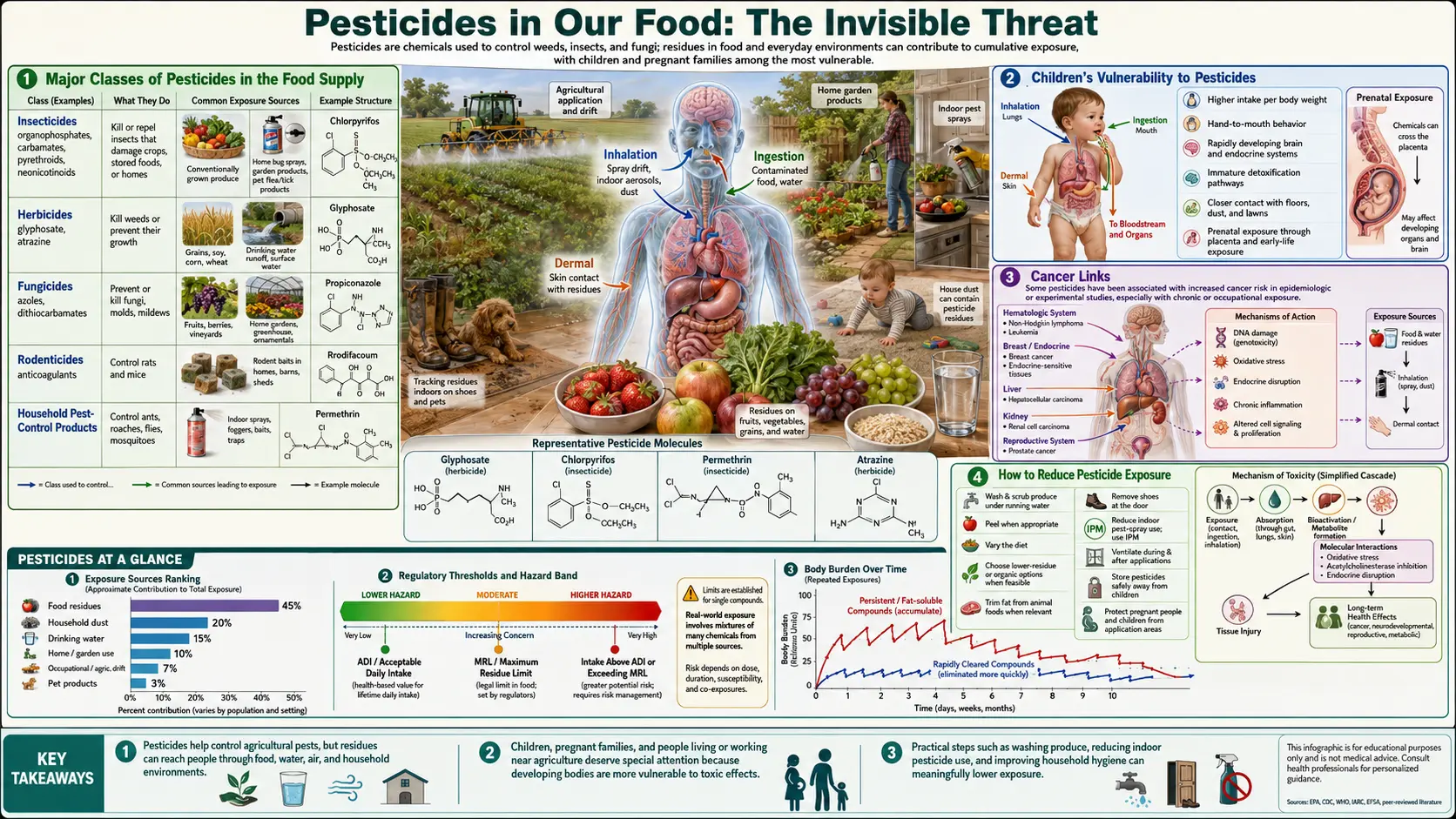


Table of Contents
- Major Classes of Pesticides in the Food Supply
- The Dirty Dozen vs. Clean Fifteen (EWG)
- Bioaccumulation and the Cocktail Effect
- Children's Vulnerability to Pesticides
- Neurodevelopmental Effects
- Endocrine Disruption
- Cancer Links
- USDA Pesticide Data and Regulatory Gaps
- Organic vs. Conventional Produce
- How to Reduce Pesticide Exposure
- Connections
- Featured Videos
Every year, billions of pounds of pesticides are applied to crops worldwide. These chemical agents, designed to kill insects, weeds, fungi, and other organisms, leave residues on the food we eat every day. Despite regulatory assurances of safety, a growing body of scientific evidence links chronic low-level pesticide exposure to a range of serious health problems, including cancer, neurological disorders, endocrine disruption, and developmental harm in children.
The USDA's own Pesticide Data Program (PDP) consistently finds detectable pesticide residues on the majority of conventionally grown fruits and vegetables tested each year. While regulators argue these levels fall within "acceptable" limits, critics point out that safety thresholds were established based on single-chemical exposure and do not account for the cumulative "cocktail effect" of consuming multiple pesticides simultaneously over a lifetime.
Major Classes of Pesticides in the Food Supply
Organophosphates
- Origin: Originally developed as nerve agents during World War II, organophosphates were repurposed for agricultural use after the war ended
- Mechanism: They work by inhibiting acetylcholinesterase, an enzyme critical for proper nerve function in both insects and humans
- Common examples: Malathion, chlorpyrifos, diazinon, and parathion are among the most widely used organophosphates in agriculture
- Health effects: Linked to neurodevelopmental problems in children, including reduced IQ, ADHD-like symptoms, and impaired cognitive function
- Exposure routes: Residues are commonly found on fruits, vegetables, and grains, and can also contaminate drinking water near agricultural areas
Glyphosate (Roundup)
- Scale of use: Glyphosate is the most widely used herbicide in human history, with over 300 million pounds applied annually in the United States alone
- WHO classification: The World Health Organization's International Agency for Research on Cancer (IARC) classified glyphosate as "probably carcinogenic to humans" (Group 2A) in 2015
- Cancer link: Multiple epidemiological studies have linked glyphosate exposure to non-Hodgkin lymphoma, resulting in billions of dollars in legal settlements by Bayer/Monsanto
- Ubiquity: Detected in bread, breakfast cereals, oats, beer, wine, and even breast milk, making complete avoidance nearly impossible
- Gut microbiome: Glyphosate disrupts the shikimate pathway in gut bacteria, potentially killing beneficial microbes while leaving harmful pathogens unaffected
- Learn more: Glyphosate (Roundup): The World's Most Used Herbicide
Neonicotinoids
- What they are: A class of systemic insecticides chemically related to nicotine that are absorbed into every part of the plant, including pollen, nectar, fruit, and seeds
- Pollinator crisis: Neonicotinoids are a primary driver of colony collapse disorder in honeybees and have devastated pollinator populations worldwide
- Common examples: Imidacloprid, clothianidin, thiamethoxam, and acetamiprid are the most commonly used neonicotinoids in agriculture
- Human exposure: Because they are systemic, neonicotinoids cannot be washed off produce since they are embedded within the plant tissue itself
- Health concerns: Emerging research links neonicotinoid exposure to developmental neurotoxicity, reproductive harm, and liver damage in humans
- Regulatory action: The European Union banned three major neonicotinoids for outdoor use in 2018 due to the risk they pose to pollinators, while the U.S. has taken limited action
Chlorpyrifos
- Background: One of the most widely used organophosphate insecticides in the U.S., commonly applied to corn, soybeans, fruit trees, and nut crops
- Neurodevelopmental harm: Columbia University studies found that prenatal chlorpyrifos exposure was associated with lower birth weight, reduced IQ, structural brain changes, and increased rates of autism and ADHD
- EPA controversy: The EPA's own scientists recommended banning chlorpyrifos, but the ban was delayed for political reasons before finally being enacted for food uses in 2022
- Residential ban: Chlorpyrifos was banned for home use in 2001 due to health risks to children, yet remained legal on food crops for two more decades
- Farmworker exposure: Agricultural workers applying chlorpyrifos face the highest exposure levels, with documented cases of acute poisoning, chronic illness, and reproductive harm
The Dirty Dozen vs. Clean Fifteen (EWG)
Each year, the Environmental Working Group (EWG) publishes its Shopper's Guide to Pesticides in Produce, ranking fruits and vegetables based on USDA pesticide testing data. The "Dirty Dozen" lists the most contaminated produce, while the "Clean Fifteen" identifies items with the lowest pesticide residues.
The Dirty Dozen (Most Contaminated)
- Strawberries: Consistently top the list, with a single sample containing residues from up to 22 different pesticides
- Spinach: Contains high levels of permethrin, a neurotoxic insecticide, along with multiple other pesticide residues
- Kale, collard, and mustard greens: Found to contain residues of DCPA (Dacthal), a pesticide the EPA has classified as a possible human carcinogen
- Peaches: Thin-skinned fruits that readily absorb pesticides applied during growing season
- Pears: Frequently contaminated with multiple fungicide and insecticide residues
- Nectarines: Like peaches, their thin, edible skin provides little barrier against pesticide absorption
- Apples: Among the most heavily sprayed fruit crops, with residues persisting even after washing
- Grapes: Tested positive for multiple pesticide residues, with imported grapes sometimes showing higher contamination
- Bell and hot peppers: Found to contain concerning levels of insecticides, including organophosphates and carbamates
- Cherries: Often treated with multiple pesticide applications throughout the growing season
- Blueberries: Domestically grown blueberries frequently test positive for multiple pesticide residues
- Green beans: Added to the Dirty Dozen after USDA testing revealed concerning levels of acephate and other organophosphates
The Clean Fifteen (Least Contaminated)
- Avocados: The cleanest produce item, with less than 1% of samples showing detectable pesticide residues
- Sweet corn: The thick husk provides a natural barrier against pesticide penetration (though GMO concerns remain separate)
- Pineapple: The tough, inedible outer skin protects the flesh from pesticide absorption
- Onions: Their natural pest resistance and multiple outer layers result in very low residue levels
- Papaya: Relatively low pesticide use due to the fruit's natural hardiness
- Sweet peas (frozen): The pod provides protection, and freezing process may reduce some residues
- Asparagus: Few insects target asparagus, reducing the need for insecticide application
- Honeydew melon: Thick rind provides a protective barrier for the edible flesh
- Kiwi: The fuzzy outer skin is peeled before eating, removing surface residues
- Cabbage: Outer leaves (which are typically discarded) absorb most pesticide residues
- Mushrooms: Grown indoors in controlled environments with minimal pesticide use
- Mangoes: Thick skin that is removed before consumption provides natural protection
Bioaccumulation and the Cocktail Effect
- Bioaccumulation: Many pesticides are lipophilic (fat-soluble) and accumulate in body fat, the liver, and the brain over time, meaning that even small daily exposures build up to significant body burdens
- Persistent organic pollutants: Some older pesticides like DDT and its metabolite DDE persist in the environment and human body for decades after exposure
- Cocktail effect: The average American is exposed to 10-13 different pesticide residues daily through diet alone, yet safety testing evaluates chemicals individually rather than in combination
- Synergistic toxicity: Research shows that combinations of pesticides can be far more toxic than the sum of their individual effects, as chemicals may amplify each other's harmful actions
- Breast milk contamination: Pesticide residues have been detected in breast milk worldwide, meaning infants are exposed from their very first meals
- Body burden testing: CDC biomonitoring studies find detectable levels of multiple pesticides and their metabolites in the blood and urine of nearly all Americans tested
Children's Vulnerability to Pesticides
- Developing nervous system: Children's brains are undergoing rapid development, making them far more susceptible to neurotoxic pesticides than adults
- Higher exposure per body weight: Children eat more food relative to their body weight than adults, resulting in proportionally higher pesticide intake
- Immature detoxification: Children's livers and kidneys are not fully developed, reducing their ability to metabolize and eliminate pesticide residues
- Hand-to-mouth behavior: Young children frequently put their hands in their mouths, increasing exposure to pesticide residues on surfaces, floors, and in soil
- IQ reduction: Multiple studies have found that prenatal and early childhood pesticide exposure is associated with measurable reductions in IQ scores
- ADHD and behavioral effects: Organophosphate exposure has been linked to increased risk of attention deficit hyperactivity disorder in children
- Childhood cancer: Children living near agricultural areas with heavy pesticide use show elevated rates of leukemia and brain cancer
Neurodevelopmental Effects
- Cognitive impairment: Chronic low-level pesticide exposure has been linked to deficits in memory, attention, processing speed, and executive function
- Parkinson's disease: Farmers and agricultural workers exposed to pesticides have significantly higher rates of Parkinson's disease, with specific chemicals like rotenone and paraquat strongly implicated
- Alzheimer's risk: Elevated levels of DDE (a DDT metabolite) have been found in the brains of Alzheimer's patients, suggesting a possible contributing role
- Autism spectrum disorder: Prenatal exposure to organophosphates and other pesticides has been associated with increased risk of autism in several large epidemiological studies
- Depression and anxiety: Agricultural workers with chronic pesticide exposure show elevated rates of depression, anxiety, and other mood disorders
Endocrine Disruption
- Hormone mimicry: Many pesticides, including atrazine, DDT metabolites, and certain fungicides, can mimic or block natural hormones like estrogen, testosterone, and thyroid hormones
- Atrazine: One of the most widely used herbicides in the U.S., atrazine has been shown to cause chemical castration and feminization of male frogs at concentrations found in drinking water
- Reproductive harm: Pesticide exposure has been linked to reduced sperm quality, lower testosterone levels, menstrual irregularities, endometriosis, and reduced fertility in both men and women
- Thyroid disruption: Multiple pesticides interfere with thyroid hormone synthesis and metabolism, which is critical for brain development and metabolic regulation
- Timing matters: Endocrine-disrupting pesticides are most harmful during critical windows of development, including fetal development, infancy, and puberty
- Low-dose effects: Endocrine disruptors can have effects at very low doses that are not seen at higher doses, challenging the traditional toxicology assumption that "the dose makes the poison"
Cancer Links
- IARC classifications: The WHO's International Agency for Research on Cancer has classified several commonly used pesticides as known, probable, or possible human carcinogens
- Non-Hodgkin lymphoma: Glyphosate, 2,4-D, malathion, and diazinon have all been linked to non-Hodgkin lymphoma in epidemiological studies of agricultural workers
- Breast cancer: Exposure to DDT, atrazine, and other estrogenic pesticides has been associated with increased breast cancer risk, particularly when exposure occurs during puberty
- Prostate cancer: Farmers exposed to certain pesticides show elevated rates of prostate cancer, with specific chemicals like fonofos and methyl bromide strongly linked
- Childhood leukemia: Residential pesticide use during pregnancy and early childhood has been associated with increased risk of childhood leukemia in multiple studies
- Agricultural Health Study: This large, ongoing NIH-funded study of over 89,000 farmers and their spouses has documented elevated cancer rates associated with specific pesticide exposures
USDA Pesticide Data and Regulatory Gaps
- USDA testing: The Pesticide Data Program tests approximately 10,000 food samples annually, consistently finding detectable residues on over 70% of conventionally grown produce
- Multiple residues: Individual produce samples frequently contain residues from 5-10 or more different pesticides simultaneously
- Outdated tolerances: Many EPA tolerance levels for pesticide residues were set decades ago and have not been updated to reflect current scientific understanding of health effects
- Industry influence: Pesticide manufacturers fund the studies used to establish safety thresholds, creating an inherent conflict of interest in the regulatory process
- Limited testing: The FDA tests only a tiny fraction of imported food for pesticide residues, allowing contaminated products to reach consumers
- Banned abroad, used at home: Several pesticides banned in the European Union and other countries for health or environmental reasons remain legal and widely used in the United States
Organic vs. Conventional Produce
- Residue levels: Organic produce consistently shows significantly lower pesticide residue levels than conventionally grown produce, though trace contamination can occur through drift and soil persistence
- Urinary pesticide levels: Studies show that switching to an organic diet reduces urinary pesticide metabolite levels by 60-90% within days
- Nutritional differences: Some studies suggest organic produce contains higher levels of certain antioxidants and lower levels of cadmium compared to conventional
- Cost barrier: Organic produce typically costs 20-100% more than conventional, creating a situation where healthier food is less accessible to lower-income families
- Organic pesticides: Organic farming does permit certain natural pesticides such as copper sulfate, pyrethrin, and neem oil, though these are generally considered less harmful than synthetic alternatives
- Environmental benefits: Organic farming supports soil health, biodiversity, and water quality by avoiding synthetic chemical inputs
How to Reduce Pesticide Exposure
Washing Methods
- Baking soda solution: Research from the University of Massachusetts found that soaking produce in a 1% baking soda solution (1 teaspoon per 2 cups of water) for 12-15 minutes is the most effective home method for removing surface pesticide residues
- Vinegar wash: A solution of one part white vinegar to four parts water can help remove some surface residues and bacteria from produce
- Running water: Simply rinsing produce under running water for 30 seconds removes some surface residues, though it is less effective than baking soda or vinegar solutions
- Peeling: Removing the peel from apples, cucumbers, and other produce eliminates surface residues but also removes valuable fiber, vitamins, and antioxidants found in the skin
- Limitations: No washing method can remove systemic pesticides that have been absorbed into the flesh of the produce, such as neonicotinoids
Shopping and Dietary Strategies
- Prioritize organic for the Dirty Dozen: If budget is limited, focus organic purchases on the most contaminated items identified by the EWG
- Buy local and seasonal: Local farmers may use fewer pesticides than large-scale operations, and seasonal produce often requires less chemical treatment
- Grow your own: Even a small garden or container herbs can reduce reliance on pesticide-treated commercial produce
- Diversify your diet: Eating a wide variety of produce reduces the risk of accumulating high levels of any single pesticide
- Check country of origin: Some countries have weaker pesticide regulations, leading to higher residue levels on imported produce
- Support regenerative agriculture: Farms using regenerative practices minimize or eliminate synthetic pesticide use while building healthy soil ecosystems
Connections
- All Toxins
- Glyphosate
- Cancer
- Heavy Metals
- PCBs
- BPA and Plastics
- Dioxins
- Lymphoma
- ADHD
- Autism
- Leukemia
- Cadmium
- Parkinson's Disease
- Chlorella
- Detox Protocols
- Gut Healing
- Banned Additives
- Arsenic
- Mercury
- Paul Hermann Müller — the DDT story in full — what it achieved, what it cost, and where it still stands