Multiple Sclerosis (MS)
What is Multiple Sclerosis?
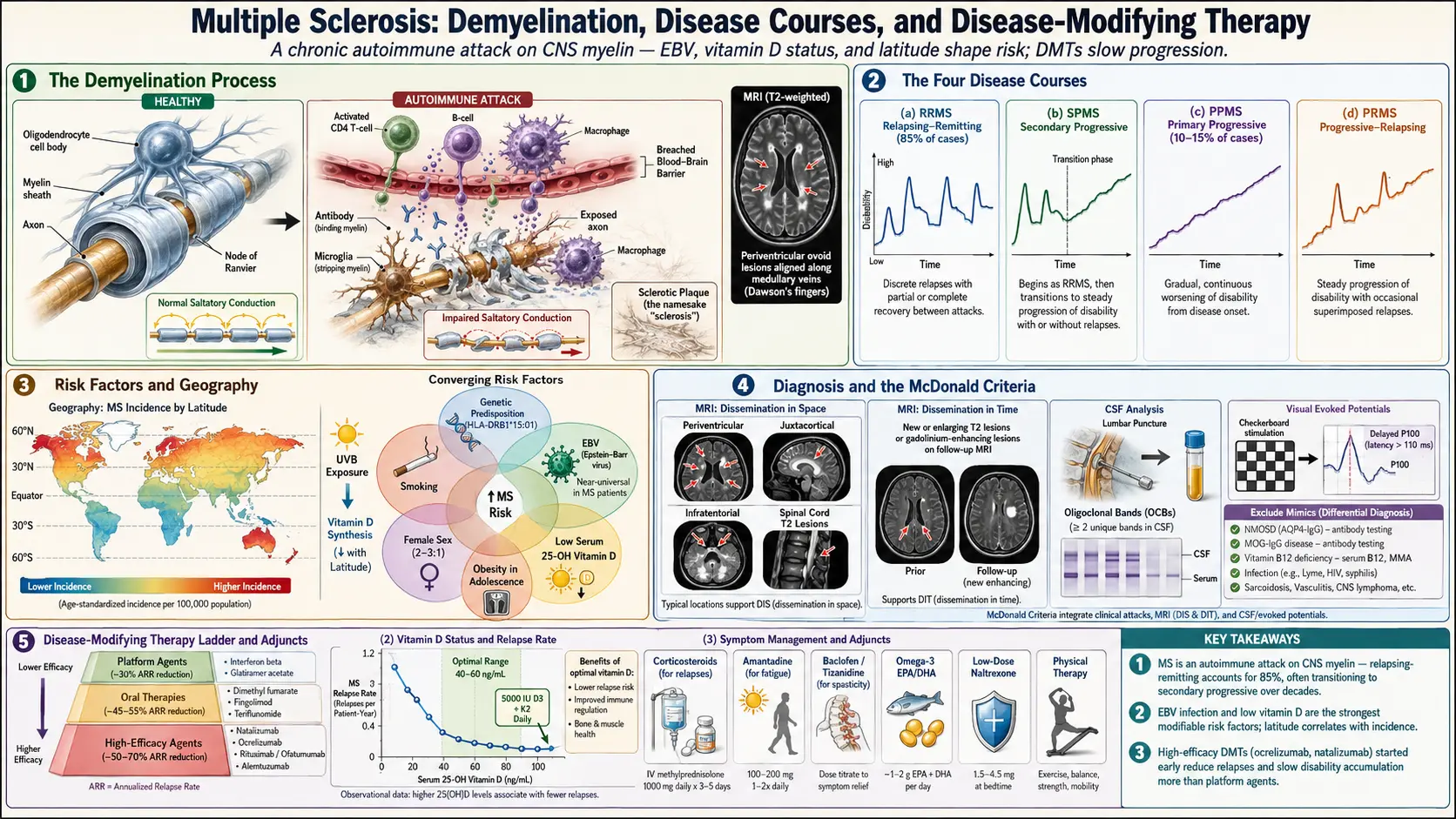
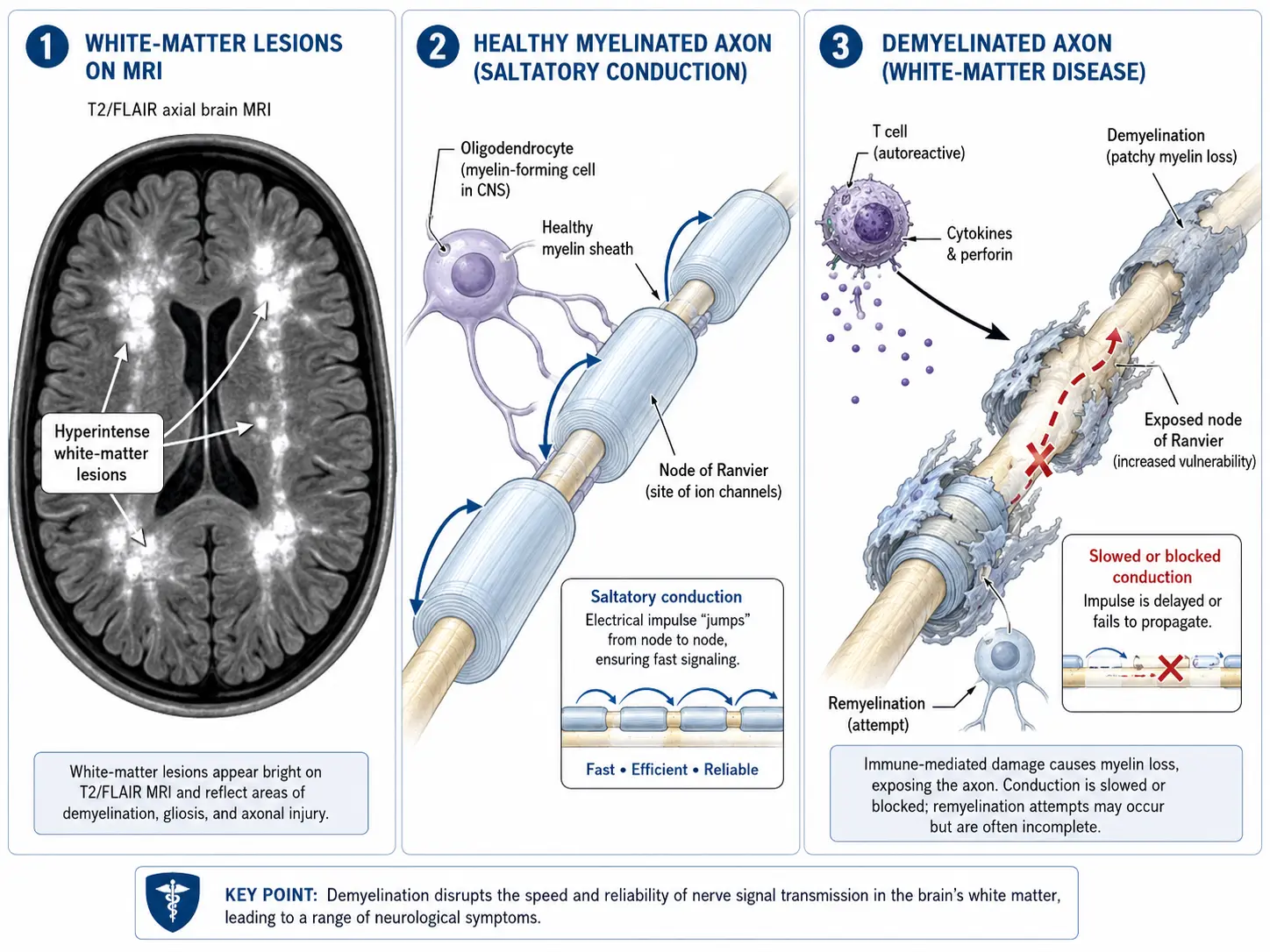
Multiple Sclerosis (MS) is a chronic autoimmune disease that affects the central nervous system (CNS), which includes the brain and spinal cord. In MS, the immune system mistakenly attacks the protective covering of nerve fibers known as myelin, leading to communication problems between the brain and the rest of the body. This can result in irreversible damage or deterioration of the nerves themselves.
Types of Multiple Sclerosis
1. Relapsing-Remitting MS (RRMS)
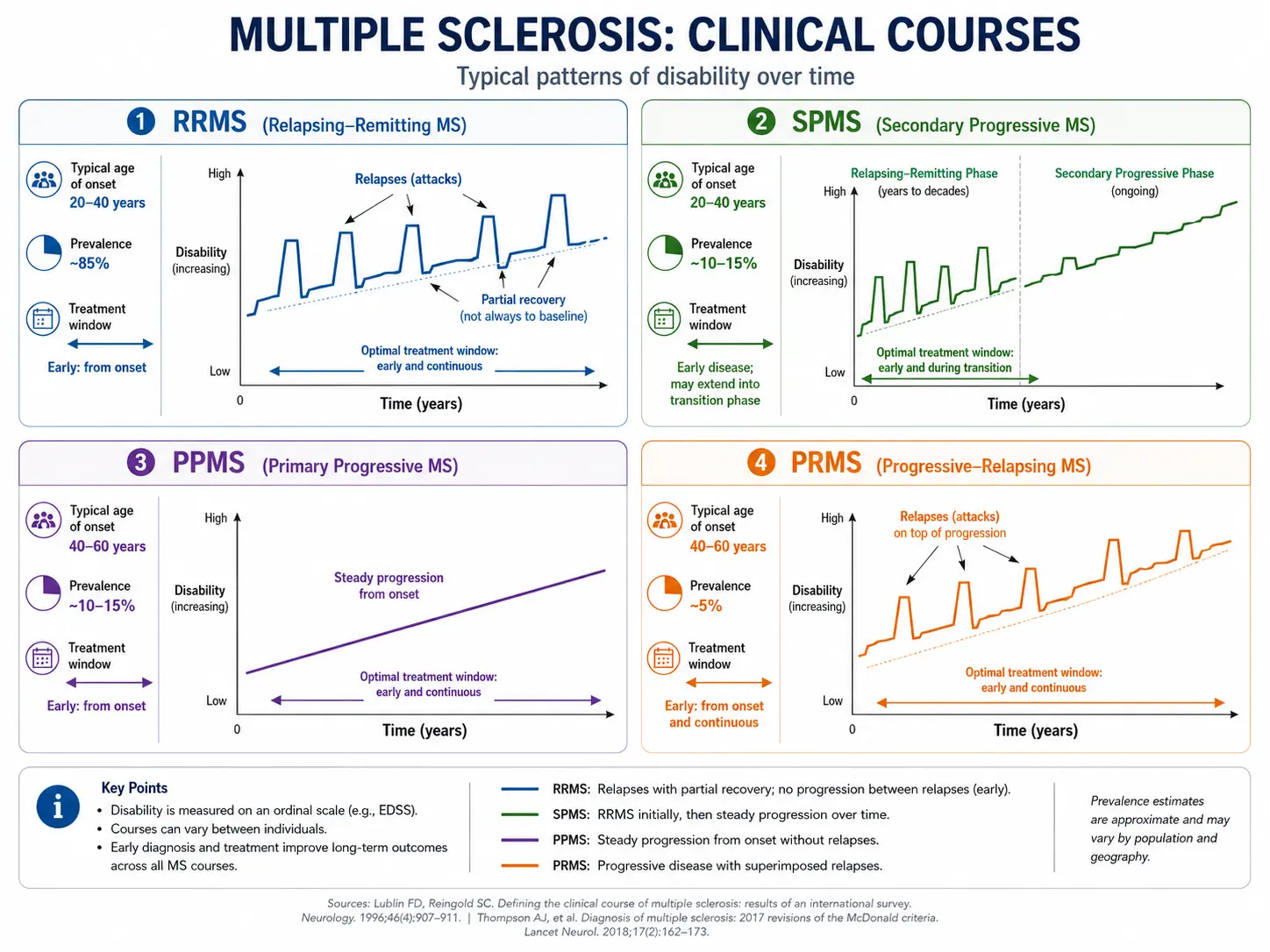
- Most common form of MS, affecting about 85% of people with the condition.
- Characterized by clearly defined attacks (relapses) of new or worsening symptoms, followed by periods of partial or complete recovery (remissions).
2. Secondary Progressive MS (SPMS)
- Develops after RRMS in many cases.
- Characterized by a progressive worsening of neurological function over time, with fewer or no relapses.
3. Primary Progressive MS (PPMS)
- Accounts for about 10-15% of MS cases.
- Characterized by a gradual progression of symptoms from the onset, without relapses or remissions.
4. Progressive-Relapsing MS (PRMS)
- Rare form of MS that is progressive from the start.
- Characterized by steady disease progression with occasional relapses.
Common Symptoms of Multiple Sclerosis
- Fatigue
- Numbness or tingling in the face, body, or limbs.
- Weakness in one or more limbs.
- Vision problems: Blurred vision, double vision, or partial vision loss.
- Difficulty with coordination and balance
- Spasticity: Muscle stiffness and spasms.
- Bladder and bowel dysfunction
- Cognitive issues: Problems with memory, attention, and problem-solving.
- Dizziness or vertigo
Causes and Risk Factors
- Immune system dysfunction: The immune system attacks the myelin sheath protecting nerve fibers.
- Genetic predisposition: A family history of MS can increase the risk.
- Environmental factors:
- Low vitamin D levels: Associated with increased risk.
- Geographic location: Higher incidence in regions further from the equator.
- Viral infections: Certain viruses, such as the Epstein-Barr virus (EBV), have been linked to MS.
- Gender: Women are more likely to develop MS than men.
Diagnosis
- Medical history and neurological examination: To assess symptoms and rule out other conditions.
- Magnetic Resonance Imaging (MRI): To detect lesions in the brain and spinal cord.
- Spinal tap (lumbar puncture): To analyze cerebrospinal fluid for signs of MS-related changes.
- Evoked potential tests: To measure the electrical activity in the brain and assess nerve pathway functionality.
- Blood tests: To rule out other conditions with similar symptoms.
Treatment Options
- Medications:
- Disease-modifying therapies (DMTs): Help reduce the frequency and severity of relapses and slow disease progression (e.g., interferon beta, glatiramer acetate, natalizumab).
- Relapse management: Corticosteroids, such as prednisone, to reduce inflammation during relapses.
- Physical therapy: To improve mobility, strength, and balance.
- Occupational therapy: Helps individuals maintain independence in daily activities.
- Speech therapy: For those with speech or swallowing difficulties.
- Symptom management:
- Muscle relaxants: For spasticity.
- Medications for fatigue: Such as amantadine.
- Pain relief: For chronic pain associated with MS.
Prevention and Management Strategies
- Maintain a healthy lifestyle: Balanced diet, regular exercise, and adequate sleep.
- Manage stress: Stress reduction techniques like yoga and meditation can help manage symptoms.
- Stay hydrated and avoid overheating
- Adhere to treatment plans and keep up with regular medical check-ups.
Complications of Multiple Sclerosis
- Mobility issues: Can lead to difficulty walking or require the use of assistive devices.
- Muscle stiffness and spasms: Can lead to discomfort and difficulty with movement.
- Chronic pain: Neuropathic pain or musculoskeletal pain.
- Emotional challenges: Depression and mood swings are common.
- Bladder and bowel dysfunction: Can include incontinence or constipation.
- Cognitive decline: Problems with memory and concentration.
Interactive Visualization Nerve Impulse — fire an action potential Watch it race down the axon: sodium rushing in, potassium out, a live voltage trace spiking, and neurotransmitter crossing the synapse. Launch → Interactive Visualization The Blood-Brain Barrier — get a drug past the bouncer Send molecules at the tightest wall in the body — fat-soluble ones slip through, big ones bounce, a pump ejects the rest — then see why L-DOPA gets in when dopamine can't. Launch → Interactive Visualization Cerebrospinal Fluid — follow the brain's plumbing Make CSF at the choroid plexus and follow it around the brain and spine and back to the blood — block the aqueduct to flood the ventricles, or fall asleep and watch the glymphatic flush. Launch →
Table of Contents
- What is Multiple Sclerosis?
- Types of Multiple Sclerosis
- Common Symptoms of Multiple Sclerosis
- Causes and Risk Factors
- Diagnosis
- Treatment Options
- Prevention and Management Strategies
- Complications of Multiple Sclerosis
- Research Papers
- Connections
- Featured Videos
Research Papers
Curated PubMed topic searches on Multiple Sclerosis. Each link opens a live PubMed query so the result set stays current as new studies are indexed.
- PubMed topic search: Multiple sclerosis review
- PubMed topic search: McDonald criteria MS diagnosis
- PubMed topic search: Relapsing remitting multiple sclerosis
- PubMed topic search: Primary progressive MS
- PubMed topic search: Ocrelizumab MS trial
- PubMed topic search: Natalizumab MS
- PubMed topic search: Fingolimod multiple sclerosis
- PubMed topic search: Dimethyl fumarate MS
- PubMed topic search: Vitamin D multiple sclerosis
- PubMed topic search: Epstein-Barr virus multiple sclerosis
- PubMed topic search: MRI multiple sclerosis lesions
- PubMed topic search: MS fatigue management
Connections
- Neurology
- Cerebrospinal Fluid: The Brain’s Cushion & Plumbing — interactive animation
- The Blood-Brain Barrier: The Brain’s Bouncer — interactive animation
- Nerve Impulse — interactive animation
- ALS
- Myasthenia Gravis
- Peripheral Neuropathy
- Alzheimer's Disease
- Chronic Fatigue Syndrome (ME/CFS)
- Vitamin B12
- Vitamin D3
- Magnesium
- Lysine & Epstein-Barr Virus
- Low-Dose Naltrexone
- Fatigue
- Brain Fog
- Numbness & Tingling
- Chronic Pain
- Depression
- Parkinsons Disease
- Dizziness
- Lions Mane Mushroom
- Mononucleosis
- Essential Tremor
- Trigeminal Neuralgia
- Urinary Incontinence