Epilepsy
What is Epilepsy?
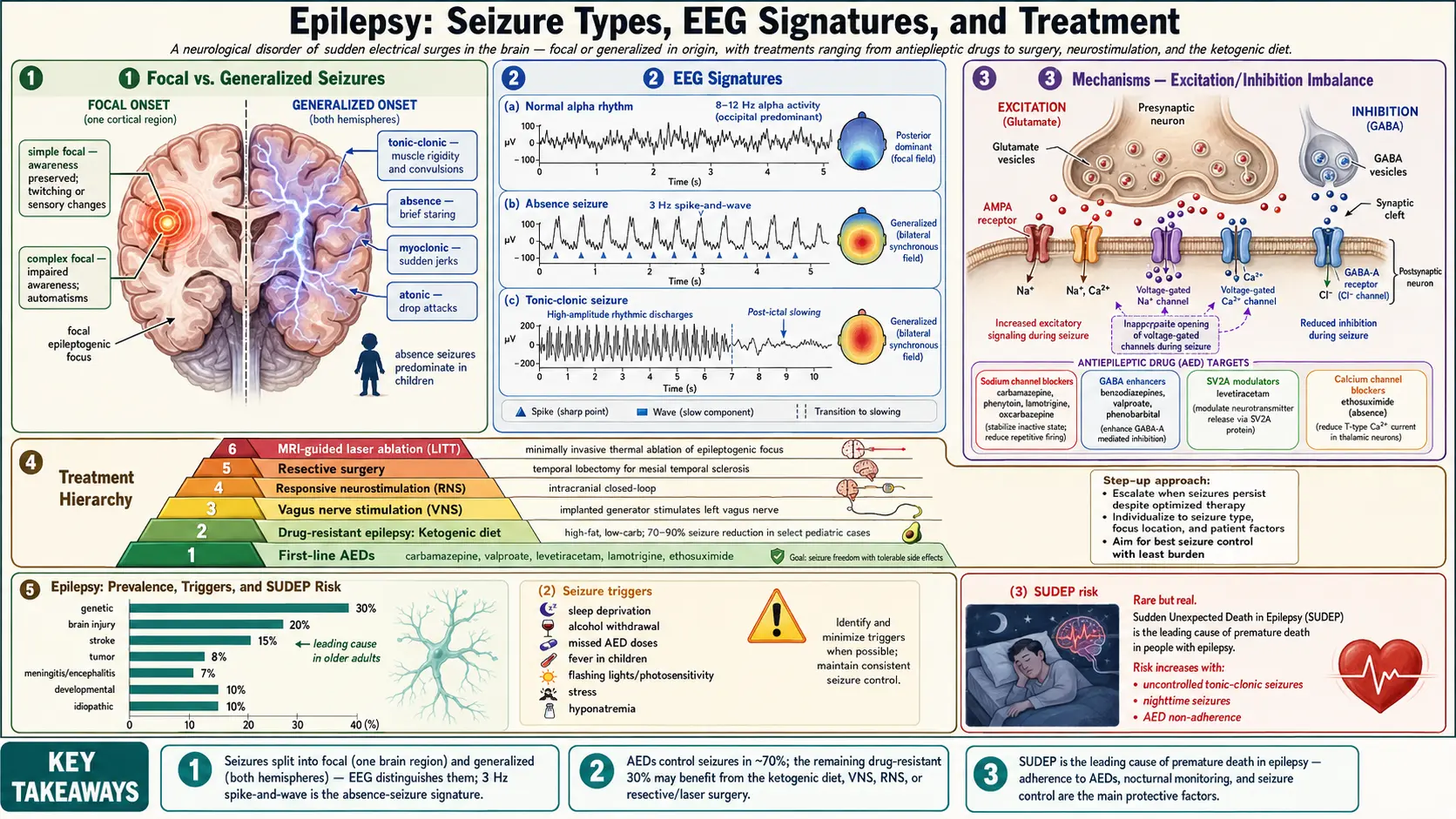
Epilepsy is a neurological disorder characterized by recurrent, unprovoked seizures. Seizures are sudden surges of electrical activity in the brain that can cause changes in behavior, movements, feelings, and levels of consciousness.
Types of Seizures
1. Focal Seizures (Partial Seizures)
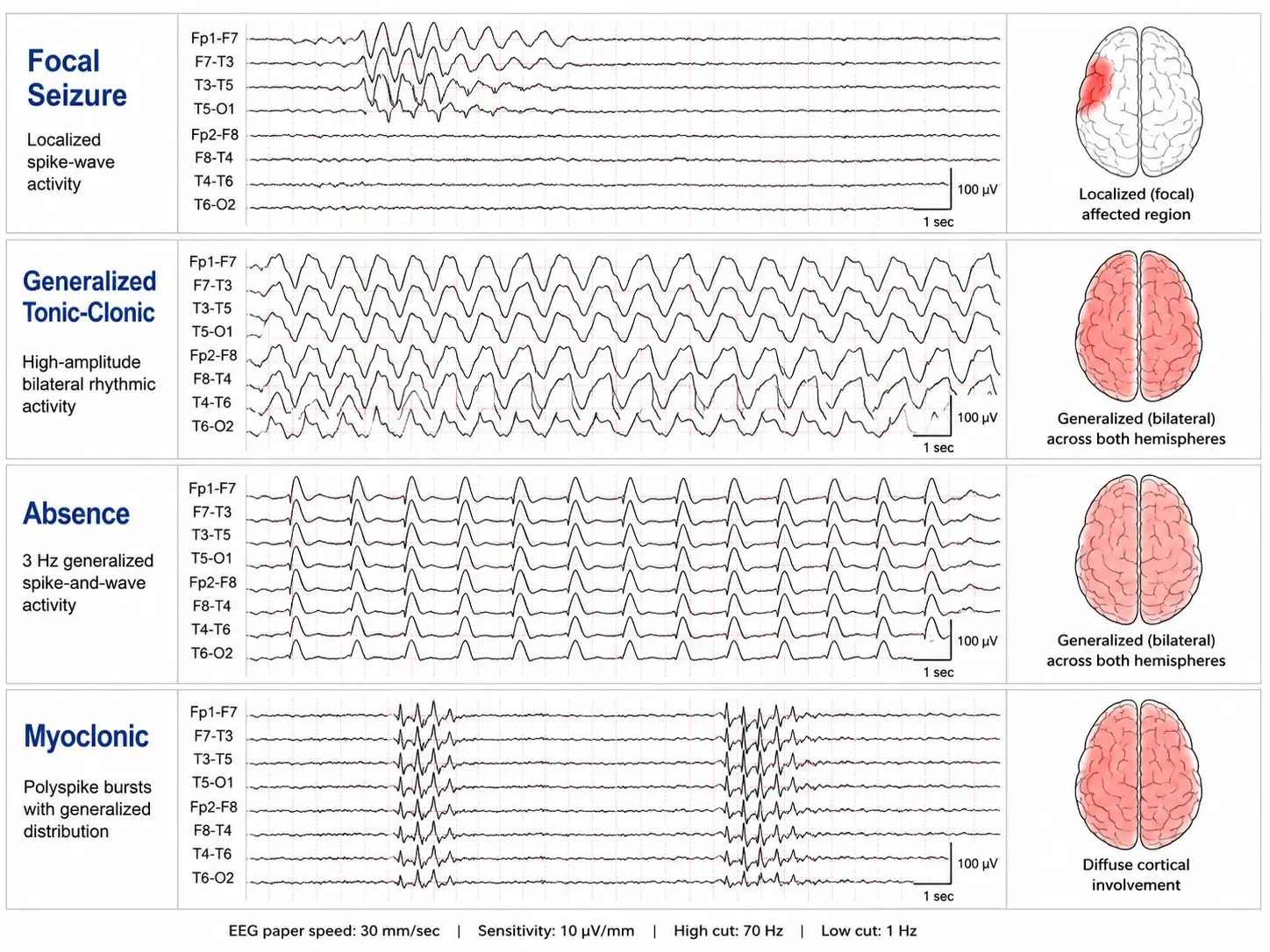
- Originates in one area of the brain.
- Simple focal seizures: Do not affect awareness and may cause twitching or sensory changes.
- Complex focal seizures: Affects awareness, may cause confusion and repetitive movements.
2. Generalized Seizures
- Involves both sides of the brain.
- Tonic-clonic seizures (grand mal): Characterized by muscle rigidity, convulsions, and loss of consciousness.
- Absence seizures (petit mal): Brief episodes of staring, primarily affecting children.
- Myoclonic seizures: Sudden, brief jerks or twitches of the body.
- Atonic seizures: Sudden loss of muscle tone, leading to falls.
- Tonic seizures: Muscle stiffness without convulsions.
Causes of Epilepsy
- Genetic factors: Some types of epilepsy run in families and are linked to specific genes.
- Brain injuries: Trauma from accidents, surgeries, or other injuries can trigger epilepsy.
- Stroke: A leading cause of epilepsy in older adults.
- Brain conditions: Such as tumors or infections like meningitis.
- Developmental disorders: Including autism or neurodevelopmental issues.
- Unknown causes: In many cases, the cause of epilepsy remains unidentified.
Symptoms of Epilepsy
Symptoms vary depending on the type of seizure but may include:
- Temporary confusion
- Staring spells
- Uncontrollable jerking movements of the arms and legs
- Loss of consciousness or awareness
- Sensory symptoms: Tingling, visual disturbances, or auditory sensations
- Psychological symptoms: Fear, anxiety, or déjà vu
Diagnosis
- Medical history and symptom review: Detailed analysis of seizure patterns and family history.
- Neurological examination: To assess brain function and reflexes.
- Electroencephalogram (EEG): Measures electrical activity in the brain to detect abnormalities.
- Imaging tests: MRI or CT scans to identify structural abnormalities in the brain.
- Blood tests: To rule out other conditions that may cause similar symptoms.
Treatment Options
- Medications:
- Antiepileptic drugs (AEDs): First-line treatment to control seizures (e.g., carbamazepine, valproate, levetiracetam).
- Side effects: May include fatigue, dizziness, weight gain, or mood changes.
- Surgery:
- Resective surgery: Removes the part of the brain where seizures originate.
- Laser ablation: Uses laser technology to target and destroy seizure-causing brain tissue.
- Therapies:
- Vagus nerve stimulation (VNS): A device implanted in the chest sends electrical impulses to the brain to reduce seizure frequency.
- Responsive neurostimulation (RNS): Monitors brain activity and delivers electrical stimulation to stop seizures.
- Ketogenic diet: High-fat, low-carbohydrate diet shown to help control seizures in some cases.
Prevention Strategies
- Take medications as prescribed: Ensure consistency in AED use to maintain seizure control.
- Avoid seizure triggers: Identify and minimize exposure to known triggers like stress, lack of sleep, or alcohol.
- Maintain a healthy lifestyle: Regular exercise, balanced diet, and proper sleep patterns.
- Manage stress: Use relaxation techniques such as deep breathing and meditation.
Complications of Epilepsy
- Injuries from falls or accidents: Seizures can lead to accidental injuries.
- Sudden unexpected death in epilepsy (SUDEP): Rare but serious risk associated with epilepsy.
- Depression and anxiety: Higher prevalence of mental health issues in individuals with epilepsy.
- Memory and cognitive problems: Frequent seizures can affect cognitive abilities.
- Social stigma and isolation: Can impact quality of life and mental well-being.
Interactive Visualization Nerve Impulse — fire an action potential Watch it race down the axon: sodium rushing in, potassium out, a live voltage trace spiking, and neurotransmitter crossing the synapse. Launch → Interactive Visualization GABA, the Brain's Brake — press it with a benzo or alcohol Watch glutamate try to fire a neuron while GABA slams the chloride brake on — then add a benzodiazepine or alcohol and see the brake amplified, and why stacking them is dangerous. Launch → Interactive Visualization What Happens in a Seizure Tip the balance between excitation and inhibition and watch neurons fire in a runaway synchronous storm — then see how a seizure spreads and how medication damps it. Launch →
Table of Contents
- What is Epilepsy?
- Types of Seizures
- Causes of Epilepsy
- Symptoms of Epilepsy
- Diagnosis
- Treatment Options
- Prevention Strategies
- Complications of Epilepsy
- Research Papers
- Connections
- Featured Videos
Research Papers
Curated PubMed topic searches on Epilepsy. Each link opens a live PubMed query so the result set stays current as new studies are indexed.
- PubMed topic search: Epilepsy classification ILAE
- PubMed topic search: Status epilepticus treatment
- PubMed topic search: Temporal lobe epilepsy
- PubMed topic search: Antiepileptic drug monotherapy trial
- PubMed topic search: Levetiracetam seizure
- PubMed topic search: Lamotrigine epilepsy
- PubMed topic search: Ketogenic diet epilepsy
- PubMed topic search: Vagus nerve stimulation epilepsy
- PubMed topic search: Sudden unexpected death in epilepsy
- PubMed topic search: Epilepsy surgery outcomes
- PubMed topic search: Drug-resistant epilepsy
- PubMed topic search: Pediatric epilepsy syndromes
Connections
- Neurology
- What Happens in a Seizure — interactive animation
- GABA: The Brain’s Brake — interactive animation
- Nerve Impulse — interactive animation
- Multiple Sclerosis
- Alzheimer's Disease
- Parkinson's Disease
- Magnesium
- Vitamin B6
- Sleep Hygiene
- Stress Management
- Anxiety
- Depression
- Stroke
- Migraine
- Autism
- Concussion
- Fatigue
- Dizziness
- Lead
- Neuropsychiatric Lupus
- Bacopa Monnieri
- Rothman, Schekman & Südhof — vesicle traffic — levetiracetam binds SV2A, a protein in the synaptic vesicle itself