Cold and Flu Natural Treatments
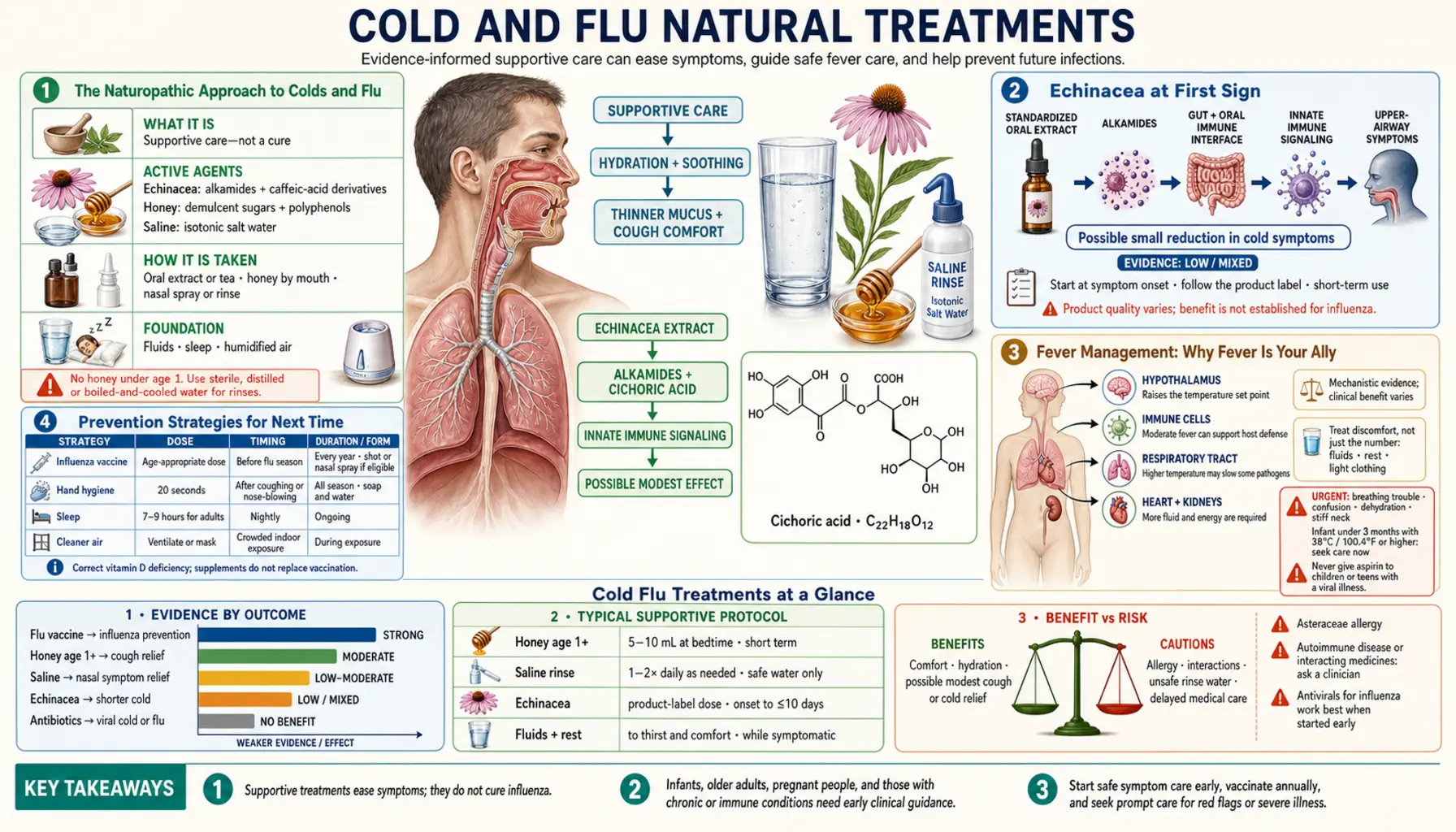


From a naturopathic perspective, colds and influenza are not enemies to be crushed with pharmaceutical force. They are signals that the immune system is engaged in necessary housekeeping. The goal of natural treatment is to support and accelerate the body's own healing response rather than suppress the very symptoms that indicate the immune system is working. A well-managed cold or flu, treated naturally, can leave you with a stronger, more resilient immune system than you had before you fell ill.
Table of Contents
- The Naturopathic Approach to Colds and Flu
- The First 24-Hour Protocol
- Vitamin C Mega-Dosing Protocol
- Zinc Lozenges: Timing Is Everything
- Elderberry Syrup (Sambucus nigra)
- Vitamin D Loading Dose
- Echinacea at First Sign
- Raw Garlic and Raw Honey
- Bone Broth and Therapeutic Fasting
- Herbal Teas for Recovery
- Steam Inhalation with Essential Oils
- Throat Remedies
- Nasal Irrigation with a Neti Pot
- Fever Management: Why Fever Is Your Ally
- Rest and Sleep: The Most Important Remedy
- Hydration Protocols
- Homeopathic Options
- Cold vs. Flu vs. Something More Serious
- When to See a Doctor
- Prevention Strategies for Next Time
- Featured Videos
1. The Naturopathic Approach to Colds and Flu
Conventional medicine tends to treat cold and flu symptoms as problems to eliminate: suppress the cough, reduce the fever, dry up the mucus. Naturopathic medicine takes a fundamentally different view. Symptoms are not the disease; they are the body's intelligent response to the disease. A fever raises body temperature to inhibit viral replication. A runny nose flushes pathogens from the nasal passages. A cough clears debris from the lungs.
The naturopathic approach rests on several principles:
- Vis medicatrix naturae (the healing power of nature) — the body possesses an inherent ability to heal itself when given the right conditions.
- Tolle causam (treat the cause) — rather than masking symptoms, we address the underlying immune dysfunction or exposure that allowed the infection to take hold.
- Primum non nocere (first, do no harm) — avoid treatments that suppress the immune response or create additional toxicity.
- Docere (doctor as teacher) — educate patients so they can manage their own recovery with confidence.
With this philosophy in mind, natural treatments aim to shorten the duration of illness, reduce the severity of symptoms without suppressing the immune response, and strengthen the body's defenses for the future.
2. The First 24-Hour Protocol
The single most critical window in fighting a cold or flu is the first 24 hours after you notice the very first symptom. That initial tickle in the throat, the slight fatigue that seems out of proportion, the faint body ache — these are your early warning signals. Acting aggressively at this stage can mean the difference between a mild, two-day episode and a full-blown week of misery.
At the very first sign of illness, implement the following protocol immediately:
- Cancel your plans. Clear your schedule for the next 24 to 48 hours. Nothing you have to do is more important than rest right now.
- Begin zinc lozenges immediately (see the zinc section below). Timing is critical.
- Take a loading dose of vitamin C — 2,000 to 3,000 mg right away, then 1,000 mg every hour until bowel tolerance is reached.
- Take echinacea tincture — a full dropper every two hours for the first six hours.
- Eat a clove of raw garlic crushed and mixed with raw honey.
- Begin sipping bone broth and warm herbal teas continuously.
- Take a hot bath or shower, then bundle up and go to bed early.
- Take 50,000 IU of vitamin D3 as a one-time loading dose (if not already taking high-dose daily).
Most people who follow this protocol aggressively at the first sign report that the illness either fails to develop fully or resolves in one to three days rather than the typical seven to ten.
3. Vitamin C Mega-Dosing Protocol
Vitamin C (ascorbic acid) is perhaps the most well-studied natural remedy for upper respiratory infections. While mainstream medicine often dismisses vitamin C because standard 200 mg doses show only modest benefit, naturopathic practitioners use therapeutic mega-doses that operate on an entirely different level.
The Bowel Tolerance Method
Developed by Dr. Robert Cathcart, the bowel tolerance method involves taking vitamin C in divided doses until you reach the point of loose stools, then backing off slightly. The principle is elegant: when the body is under viral stress, it can absorb and utilize dramatically more vitamin C than when healthy.
- A healthy person typically reaches bowel tolerance at 4 to 15 grams per day.
- During a mild cold, bowel tolerance may rise to 30 to 60 grams per day.
- During a severe flu, bowel tolerance can reach 100 to 200 grams per day.
The protocol: take 2,000 mg of vitamin C (as ascorbic acid powder mixed in water, or capsules) every 30 to 60 minutes. When stools become loose, reduce the dose to roughly 75% of that level and maintain it throughout the illness. As you recover, your tolerance will drop — this is a sign that the body needs less.
Liposomal Vitamin C
Liposomal vitamin C encapsulates ascorbic acid in phospholipid spheres (liposomes), which allows it to bypass the gut's normal absorption limitations and deliver the vitamin directly into cells. Studies suggest that liposomal delivery can achieve blood levels approaching those of intravenous vitamin C. A typical therapeutic dose is 3 to 6 grams per day of liposomal C during active infection. It can be used alongside the bowel tolerance method with regular ascorbic acid, as the liposomal form rarely causes digestive distress.
4. Zinc Lozenges: Timing Is Everything
Zinc is one of the most evidence-backed natural cold remedies, but its effectiveness depends entirely on form, dose, and timing. Multiple meta-analyses have confirmed that zinc lozenges can reduce the duration of a cold by 33% or more — but only when used correctly.
- Form matters: Use zinc acetate or zinc gluconate lozenges. Avoid formulations that contain citric acid, tartaric acid, or sorbitol, as these bind the zinc ions and prevent them from contacting the throat mucosa where they exert their antiviral effect.
- Timing is critical: Zinc must be started within the first 24 hours of symptom onset. The sooner the better — ideally within the first few hours. Starting zinc on day two or three provides little to no benefit.
- Dose: Dissolve one lozenge (containing 13 to 23 mg of elemental zinc) slowly in the mouth every two to three waking hours. Do not chew. The goal is to bathe the throat in zinc ions for as long as possible.
- Duration: Continue for the full duration of symptoms, typically five to seven days.
- Side effects: Zinc lozenges can cause nausea on an empty stomach and may leave a metallic taste. Taking them after a small snack can reduce nausea.
The mechanism is believed to involve zinc ions directly interfering with the rhinovirus's ability to dock onto and replicate within the cells lining the nasal passages and throat.
5. Elderberry Syrup (Sambucus nigra)
Elderberry (Sambucus nigra) has been used for centuries as a remedy for colds and flu, and modern research has validated its remarkable antiviral properties. Elderberry is one of the few natural remedies shown to be effective against both cold viruses and influenza viruses.
Mechanism of Action
Elderberry works through multiple pathways:
- Hemagglutinin inhibition: The flavonoids in elderberry bind to the tiny spikes (hemagglutinin proteins) on the surface of influenza viruses, preventing them from piercing cell membranes and entering cells.
- Cytokine modulation: Elderberry enhances the production of inflammatory cytokines (IL-1 beta, TNF-alpha, IL-6, IL-8), which help coordinate a robust immune response.
- Direct antiviral activity: Elderberry extract has demonstrated the ability to inhibit replication of several strains of influenza in vitro.
Dosing Protocol
- Prevention: 1 tablespoon (15 ml) of elderberry syrup daily for adults, or 1 teaspoon for children.
- Active infection: 1 tablespoon every three to four hours for the first 48 hours, then four times daily until recovery.
- Standardized extract capsules: 500 to 1,000 mg daily for prevention; up to 1,000 mg three times daily during illness.
A landmark study by Zakay-Rones found that flu patients who took elderberry syrup recovered an average of four days sooner than those on placebo. Look for products made from the European black elder (Sambucus nigra) with standardized anthocyanin content.
6. Vitamin D Loading Dose
Vitamin D is not just a vitamin — it is a steroid hormone precursor that plays a central role in immune regulation. Low vitamin D levels are strongly associated with increased susceptibility to respiratory infections. Multiple meta-analyses have confirmed that vitamin D supplementation reduces the risk of acute respiratory infections, with the greatest benefit seen in those who are deficient.
At the onset of a cold or flu, a naturopathic loading dose protocol may be used:
- Loading dose: 50,000 IU of vitamin D3 taken once at the first sign of illness. Some practitioners recommend 50,000 IU daily for three consecutive days.
- Maintenance during illness: 10,000 IU daily until recovery.
- Co-factors: Always take vitamin D with vitamin K2 (MK-7 form, 100 to 200 mcg) to ensure proper calcium metabolism, and with magnesium (200 to 400 mg) which is required for vitamin D activation.
Vitamin D enhances the innate immune response by stimulating the production of cathelicidin and defensins, antimicrobial peptides that directly kill viruses and bacteria. It also modulates the adaptive immune system, helping to prevent the excessive inflammatory response that causes many flu complications.
7. Echinacea at First Sign
Echinacea (Echinacea purpurea and Echinacea angustifolia) is among the most widely used herbal remedies for colds and flu worldwide. Its effectiveness has been debated in the medical literature, but much of the confusion stems from studies using different species, different plant parts, and inadequate doses. When used correctly, echinacea can be a powerful first-line defense.
- Best form: A fresh-pressed juice or hydroethanolic tincture made from the aerial parts of E. purpurea or the roots of E. angustifolia. Quality matters enormously — you should feel a distinct tingling or numbing sensation on your tongue when you take a good echinacea tincture.
- Acute dosing: At the first sign of illness, take a full dropper (approximately 1 ml) of tincture every two hours for the first six to eight hours, then three to four times daily for up to ten days.
- Mechanism: Echinacea stimulates phagocytosis (the engulfing and destruction of pathogens by white blood cells), increases natural killer cell activity, and boosts interferon production.
- Key point: Echinacea works best when started at the very first sign of illness. Starting it on day three or four of a cold provides little benefit. It is a fire alarm remedy, not a fire extinguisher.
8. Raw Garlic and Raw Honey
Garlic (Allium sativum) is one of nature's most potent antimicrobial agents. The key compound is allicin, which is produced when raw garlic is crushed or chopped and the enzyme alliinase converts alliin into allicin. Allicin has demonstrated broad-spectrum antiviral, antibacterial, and antifungal activity in research.
- Preparation: Crush or finely mince one to two cloves of fresh garlic and let them sit for 10 to 15 minutes. This waiting period is essential — it allows the alliinase enzyme to fully convert alliin to allicin. Cooking destroys allicin, so the garlic must be consumed raw.
- Delivery method: Mix the crushed garlic with a spoonful of raw honey. The honey coats the garlic and makes it easier to swallow, while also contributing its own antimicrobial properties. Raw, unprocessed honey contains hydrogen peroxide, bee defensin-1, and methylglyoxal (especially manuka honey), all of which have antimicrobial effects.
- Dose: One to two crushed cloves mixed with honey, taken two to three times daily during active infection.
- Caution: Raw garlic on an empty stomach can cause heartburn and nausea. Always take it with food or honey. Those on blood-thinning medications should consult their practitioner, as garlic has mild anticoagulant properties.
9. Bone Broth and Therapeutic Fasting
The old adage "starve a fever" contains a kernel of naturopathic wisdom. When the body is fighting an infection, digestion diverts enormous amounts of energy away from the immune system. Therapeutic fasting or dramatically reducing food intake during the acute phase of illness allows the body to redirect that energy toward fighting the pathogen.
Why Bone Broth
Bone broth is the ideal food during illness for several reasons:
- Easy to digest: It requires minimal digestive effort, freeing energy for immune function.
- Rich in minerals: Calcium, magnesium, phosphorus, and trace minerals are released from the bones during slow cooking and are present in highly bioavailable forms.
- Gelatin and collagen: These support gut lining integrity, which is critical since approximately 70% of the immune system resides in the gut.
- Amino acids: Glycine, proline, and glutamine support detoxification, tissue repair, and immune cell function.
- Hydration: Warm broth is soothing, hydrating, and provides electrolytes naturally.
The Fasting Protocol
- During the first 24 to 48 hours of acute illness, consume only bone broth, herbal teas, water, and possibly diluted fruit juices.
- Listen to your body — if you have no appetite, do not force yourself to eat. Lack of appetite during illness is the body's way of redirecting resources.
- As appetite returns, reintroduce simple, easily digestible foods: steamed vegetables, soups, and small portions of protein.
10. Herbal Teas for Recovery
Herbal teas are a cornerstone of naturopathic cold and flu treatment. They provide hydration, warmth, and therapeutic compounds simultaneously. The following herbs are among the most effective:
Ginger (Zingiber officinale)
Fresh ginger tea is a powerful diaphoretic (promotes sweating), which helps break a fever naturally. It also has anti-inflammatory, analgesic, and antiviral properties. Slice a thumb-sized piece of fresh ginger, simmer in two cups of water for 15 minutes, and add raw honey and lemon.
Thyme (Thymus vulgaris)
Thyme is one of the most effective herbal remedies for respiratory infections. Its essential oil, rich in thymol, has potent antimicrobial and expectorant properties. Thyme tea helps loosen mucus, calm coughs, and fight infection. Steep one tablespoon of fresh thyme (or one teaspoon dried) in hot water for 10 minutes.
Oregano (Origanum vulgare)
Oregano contains carvacrol and thymol, both powerful antimicrobial compounds. Oregano tea can be brewed from fresh or dried leaves. For a stronger effect, oil of oregano (two to three drops in water or under the tongue) can be taken three to four times daily during acute illness.
Peppermint (Mentha piperita)
Peppermint tea opens the sinuses through the action of menthol, soothes sore throats, and relieves headache. It also has mild antiviral and antibacterial properties. Combine with ginger for an especially effective cold-fighting blend.
Elderflower (Sambucus nigra flowers)
Elderflower is a classic diaphoretic and is traditionally used to help break fevers. It also has mild anti-inflammatory and antiviral properties. Elderflower combines beautifully with peppermint and yarrow in the traditional "flu tea" of European herbal medicine.
11. Steam Inhalation with Essential Oils
Steam inhalation is one of the simplest and most immediately effective remedies for nasal and sinus congestion. The warm, moist air helps thin mucus, open airways, and soothe inflamed respiratory tissues. Adding essential oils dramatically enhances the therapeutic effect.
Method
- Boil a large pot of water and remove from heat.
- Add three to five drops of essential oil (see below).
- Drape a towel over your head, creating a tent over the pot.
- Breathe deeply through your nose for 10 to 15 minutes.
- Repeat two to three times daily.
Recommended Essential Oils
- Eucalyptus (Eucalyptus globulus): The most effective decongestant oil. Contains 1,8-cineole, which has proven mucolytic, anti-inflammatory, and antimicrobial properties. Opens airways powerfully.
- Tea Tree (Melaleuca alternifolia): Broad-spectrum antimicrobial that fights bacteria, viruses, and fungi simultaneously. Especially useful when a secondary bacterial infection is suspected.
- Peppermint: Provides an immediate cooling sensation and opens the sinuses through menthol.
- Thyme and Oregano: Powerful antimicrobial oils that can be added in small amounts (one to two drops) for severe congestion.
Caution: Keep eyes closed during steam inhalation. Do not use eucalyptus or peppermint essential oils on or near the faces of infants or small children, as they can cause respiratory distress.
12. Throat Remedies
A sore throat is often the first and most bothersome symptom of a cold or flu. Natural remedies can provide significant relief while actually fighting the underlying infection.
Manuka Honey
Manuka honey from New Zealand contains uniquely high levels of methylglyoxal (MGO), which gives it antimicrobial properties far beyond those of regular honey. For sore throats, take one teaspoon of manuka honey (UMF 10+ or higher) and let it slowly coat the throat. Repeat every two to three hours. It can also be stirred into warm (not hot) tea — excessive heat destroys the beneficial enzymes.
Sage Gargle
Sage (Salvia officinalis) has been used for throat ailments since antiquity, and clinical studies have confirmed its effectiveness. Brew a strong sage tea (two tablespoons of dried sage in one cup of boiling water, steeped for 15 minutes), add a pinch of salt, and gargle every two to three hours. Sage contains rosmarinic acid, which has anti-inflammatory and antimicrobial properties.
Slippery Elm
Slippery elm bark (Ulmus rubra) contains mucilage, a gel-like substance that coats and soothes inflamed mucous membranes. It provides a physical barrier over the irritated throat tissue, relieving pain and reducing further irritation. Mix one tablespoon of slippery elm bark powder in warm water to create a thick, soothing drink, or use slippery elm lozenges throughout the day.
13. Nasal Irrigation with a Neti Pot
Nasal irrigation using a neti pot is one of the most effective methods for relieving nasal congestion, reducing sinus pressure, and physically flushing viruses and bacteria from the nasal passages. The practice comes from the Ayurvedic tradition (jala neti) and has been validated by modern clinical research.
- Solution: Use a properly prepared saline solution — one-quarter teaspoon of non-iodized salt (sea salt or pickling salt) and a small pinch of baking soda dissolved in eight ounces of warm distilled or previously boiled water. Never use tap water without boiling it first, as tap water may contain harmful organisms.
- Technique: Lean over a sink, tilt your head to one side, and pour the saline solution into the upper nostril. It will flow through the nasal passages and out the lower nostril. Repeat on the other side.
- Frequency: Two to three times daily during active infection. Once daily for prevention during cold and flu season.
- Enhancement: Some practitioners add one to two drops of colloidal silver or a tiny amount of xylitol to the saline solution for additional antimicrobial benefit.
Nasal irrigation has been shown to reduce the duration of illness, decrease the use of medications, and prevent secondary sinus infections.
14. Fever Management: Why Fever Is Your Ally
Perhaps no area of natural medicine is more misunderstood than fever management. Modern culture has conditioned people to reach for acetaminophen or ibuprofen at the first sign of a temperature rise. From a naturopathic perspective, this is counterproductive in most situations.
Why Fever Is Beneficial
- Viral replication slows: Most viruses replicate optimally at normal body temperature (98.6 degrees F). Raising the temperature to 101 to 103 degrees F significantly inhibits viral replication.
- Immune activation: Fever increases the production and activity of white blood cells, natural killer cells, and interferons.
- Iron sequestration: Fever triggers the body to hide iron from bacteria, which need iron to reproduce.
- Faster recovery: Studies have shown that suppressing fever with antipyretics can prolong the duration of illness.
When to Let Fever Run and When to Intervene
- Below 103 degrees F (39.4 degrees C) in adults: Generally safe to let the fever run its course. Support the body with rest, hydration, and cool compresses if uncomfortable.
- 103 to 104 degrees F: Monitor closely. Use tepid (not cold) sponge baths, increase fluid intake, and consider calling a healthcare provider.
- Above 104 degrees F: Seek medical attention. Fevers above this level can become dangerous.
- Children: Fever management in young children requires more careful monitoring. Febrile seizures, while usually harmless, can occur. Consult a pediatrician for guidance.
If you must reduce a fever for comfort, use a lukewarm bath, cool compresses on the forehead and wrists, or a wet sock treatment (a traditional naturopathic hydrotherapy technique) before reaching for over-the-counter medications.
15. Rest and Sleep: The Most Important Remedy
If you could choose only one remedy from this entire guide, it should be rest. No supplement, herb, or technique can substitute for allowing the body to direct its full energy toward immune function. Sleep is when the majority of immune repair and pathogen clearance occurs.
- Sleep as much as possible. Aim for 10 to 12 hours per night during illness, plus naps during the day. If your body wants to sleep, let it.
- Stay home. Going to work or school while sick not only slows your recovery but spreads the infection to others.
- Minimize stimulation. Avoid screens, stressful news, intense conversations, and mental exertion. The brain consumes significant energy, and that energy is better directed toward immune function.
- Keep the room cool and well-ventilated but ensure you are warmly covered. Fresh air assists recovery.
- Do not exercise. Exercise temporarily suppresses immune function. Even mild exercise during acute illness can prolong recovery. Wait until you have been symptom-free for at least 24 hours before resuming physical activity.
The single biggest mistake people make with colds and flu is trying to push through them. Every hour of rest you take in the first 48 hours can save you days of illness later.
16. Hydration Protocols
Proper hydration during illness is non-negotiable. Fever increases fluid loss through perspiration. Mucus production requires water. Immune cells need adequate fluid to circulate and function. Dehydration thickens mucus, worsens congestion, and slows recovery.
What to Drink
- Warm water with lemon and honey: Soothing, hydrating, and provides vitamin C and antimicrobial benefits.
- Bone broth: Provides minerals, electrolytes, and amino acids along with hydration.
- Herbal teas: Ginger, thyme, peppermint, elderflower, and chamomile all provide therapeutic benefits beyond hydration.
- Coconut water: A natural source of electrolytes (potassium, sodium, magnesium) that can prevent dehydration more effectively than plain water.
- Homemade electrolyte drink: Mix one quart of filtered water with one-quarter teaspoon of sea salt, one-quarter teaspoon of baking soda, two tablespoons of raw honey, and the juice of one lemon.
What to Avoid
- Dairy: Can thicken mucus in some individuals, worsening congestion.
- Sugar-sweetened beverages: Sugar suppresses white blood cell function for hours after consumption.
- Alcohol: Dehydrating and immunosuppressive.
- Caffeine in excess: Mildly dehydrating; one cup of green tea is acceptable, but avoid multiple cups of coffee.
Aim for a minimum of eight to ten glasses of fluid per day during illness, more if running a fever. A simple hydration test: your urine should be pale yellow. If it is dark, you are not drinking enough.
17. Homeopathic Options
Homeopathy offers several remedies that many patients find helpful during colds and flu. While the mechanism of homeopathic medicine remains debated in conventional circles, clinical experience and several published studies suggest benefit.
- Oscillococcinum (Anas barbariae): The most widely used homeopathic flu remedy worldwide. Multiple double-blind, placebo-controlled studies have shown that it can reduce the duration and severity of flu symptoms, particularly when taken within 48 hours of onset. The standard dose is one tube of pellets dissolved under the tongue, three times daily for two to three days.
- Aconite (Aconitum napellus) 30C: Best used at the very first onset of symptoms, especially when the illness comes on suddenly after exposure to cold wind or a fright. Symptoms include high fever, restlessness, anxiety, and thirst. Take three to five pellets every 30 minutes for the first two hours, then every four hours.
- Bryonia 30C: For the flu that comes on slowly with body aches that are worse with any movement. The patient wants to lie perfectly still and is irritable when disturbed. Dry mouth with great thirst for large quantities of cold water.
- Gelsemium 30C: The classic flu remedy. Heavy, droopy eyelids, extreme fatigue, dull headache, chills running up and down the spine, and absence of thirst despite fever. The patient feels weak, heavy, and wants to be left alone.
- Allium cepa 30C: For colds with profuse, watery, burning nasal discharge that irritates the upper lip, along with bland (non-irritating) watery eyes. The symptoms are typically worse in a warm room and better in open air.
18. Cold vs. Flu vs. Something More Serious
Knowing what you are dealing with helps determine the appropriate level of treatment. While many natural remedies overlap for colds and flu, the severity of your response should match the severity of the illness.
Common Cold
- Gradual onset over one to two days
- Primary symptoms: runny nose, sneezing, sore throat, mild cough
- Mild or no fever (rarely above 100.4 degrees F)
- Mild fatigue and body aches
- Duration: seven to ten days (three to five with aggressive natural treatment)
Influenza (Flu)
- Sudden onset — often you can identify the exact hour you became ill
- Primary symptoms: high fever (102 to 104 degrees F), severe body aches, profound fatigue, headache, dry cough
- Respiratory symptoms may be secondary to systemic symptoms
- Can feel like you have been "hit by a truck"
- Duration: one to two weeks (five to seven days with aggressive natural treatment)
When It May Be Something Else
- Strep throat: Severe sore throat without cold symptoms (no runny nose or cough), often with white patches on the tonsils and swollen lymph nodes. Requires testing and may need antibiotics.
- Sinus infection: Facial pain and pressure, thick yellow or green nasal discharge lasting more than ten days, or worsening after initial improvement.
- Pneumonia: High fever, productive cough with colored sputum, chest pain with breathing, shortness of breath. Requires medical evaluation.
- Bronchitis: A persistent productive cough that lingers for weeks after a cold, sometimes with chest tightness and wheezing, may indicate acute bronchitis and warrants evaluation if it does not improve.
19. When to See a Doctor
Natural medicine is powerful, but it has limits. The following warning signs indicate that you should seek professional medical evaluation without delay:
- Difficulty breathing or shortness of breath — especially at rest or with minimal exertion
- Persistent chest pain or pressure
- Fever above 104 degrees F (40 degrees C) or any fever lasting more than five days
- Fever that improves and then returns — this often signals a secondary bacterial infection
- Severe or persistent vomiting or inability to keep fluids down
- Confusion, disorientation, or altered mental status
- Bluish discoloration of lips or face (cyanosis) — indicates inadequate oxygenation
- Symptoms that improve and then suddenly worsen
- Dehydration: Dizziness upon standing, very dark urine, or absence of urination for more than eight hours
- In children: Rapid breathing, inability to drink fluids, inconsolable crying, or extreme lethargy
High-risk individuals — including the elderly, pregnant women, immunocompromised patients, and those with chronic lung or heart conditions — should have a lower threshold for seeking medical care.
20. Prevention Strategies for Next Time
The best cold or flu is the one you never get. Naturopathic prevention focuses on building a robust, well-nourished immune system year-round so that when you are inevitably exposed to viruses, your body handles them efficiently.
Daily Immune Support Supplements
- Vitamin D3: 2,000 to 5,000 IU daily (maintain blood levels of 50 to 70 ng/mL)
- Vitamin C: 1,000 to 2,000 mg daily
- Zinc: 15 to 30 mg daily
- Elderberry syrup: 1 tablespoon daily during cold and flu season
- Probiotics: A multi-strain probiotic with at least 10 billion CFU daily to support gut-based immunity
Lifestyle Factors
- Sleep: Aim for seven to nine hours nightly. Sleep deprivation dramatically increases susceptibility to infection. One study found that sleeping less than six hours per night made participants four times more likely to catch a cold.
- Stress management: Chronic stress elevates cortisol, which suppresses immune function. Practice meditation, deep breathing, or other stress-reduction techniques daily.
- Regular exercise: Moderate exercise (30 minutes most days) enhances immune surveillance. Avoid overtraining, which suppresses immunity.
- Whole foods diet: Emphasize vegetables, fruits, quality proteins, healthy fats, and fermented foods. Minimize sugar, processed foods, and excess alcohol.
- Hygiene: Wash hands frequently with regular soap and water for at least 20 seconds. Avoid touching your face. Keep common surfaces clean during cold and flu season.
- Cold exposure: Regular cold showers or cold water immersion have been shown to increase white blood cell counts and improve immune resilience over time.
Building a strong immune system is not a one-time event but a daily practice. The investments you make in sleep, nutrition, stress management, and targeted supplementation throughout the year determine how well your body responds when the next virus comes along.
Research Papers
- Clinical trials on cold & flu natural treatments — PubMed search
- Systematic reviews of cold & flu natural treatments — PubMed search
- Meta-analyses on cold & flu natural treatments — PubMed search
- Treatment research on cold & flu natural treatments — PubMed search
- Mechanism studies of cold & flu natural treatments — PubMed search
- Epidemiology of cold & flu natural treatments — PubMed search
Connections
- All Remedies
- Zinc
- Vitamin C
- Elderberry
- Echinacea
- Garlic
- Bone Broth
- Vitamin D3
- Immune Boosting
- Honey
- Ginger
- Thyme
- Peppermint
- Oregano
- Influenza
- Pneumonia
- Manuka Honey
- Magnesium
- Eucalyptus