Fasting: Science-Based Guide to Intermittent and Extended Fasting
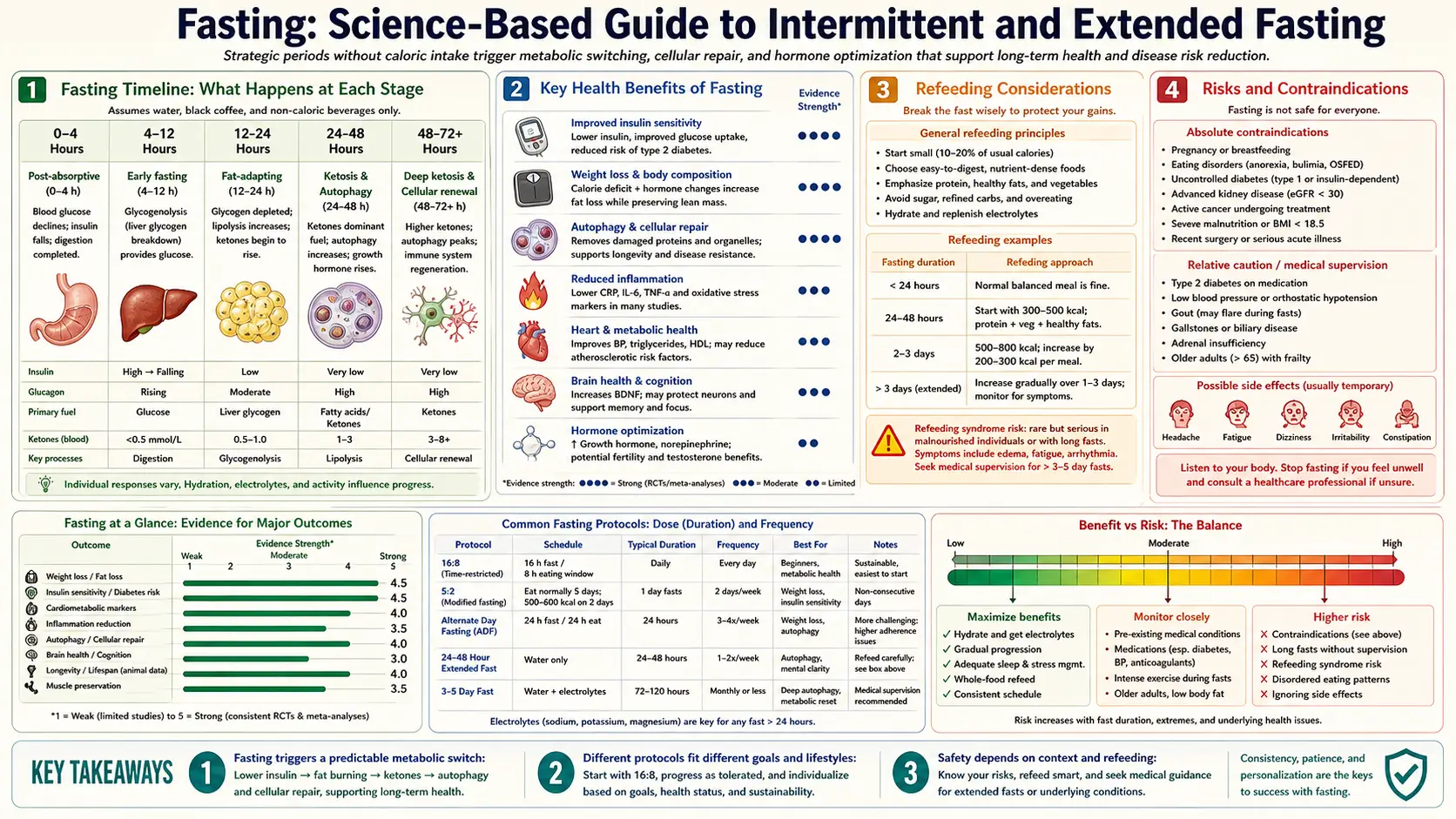
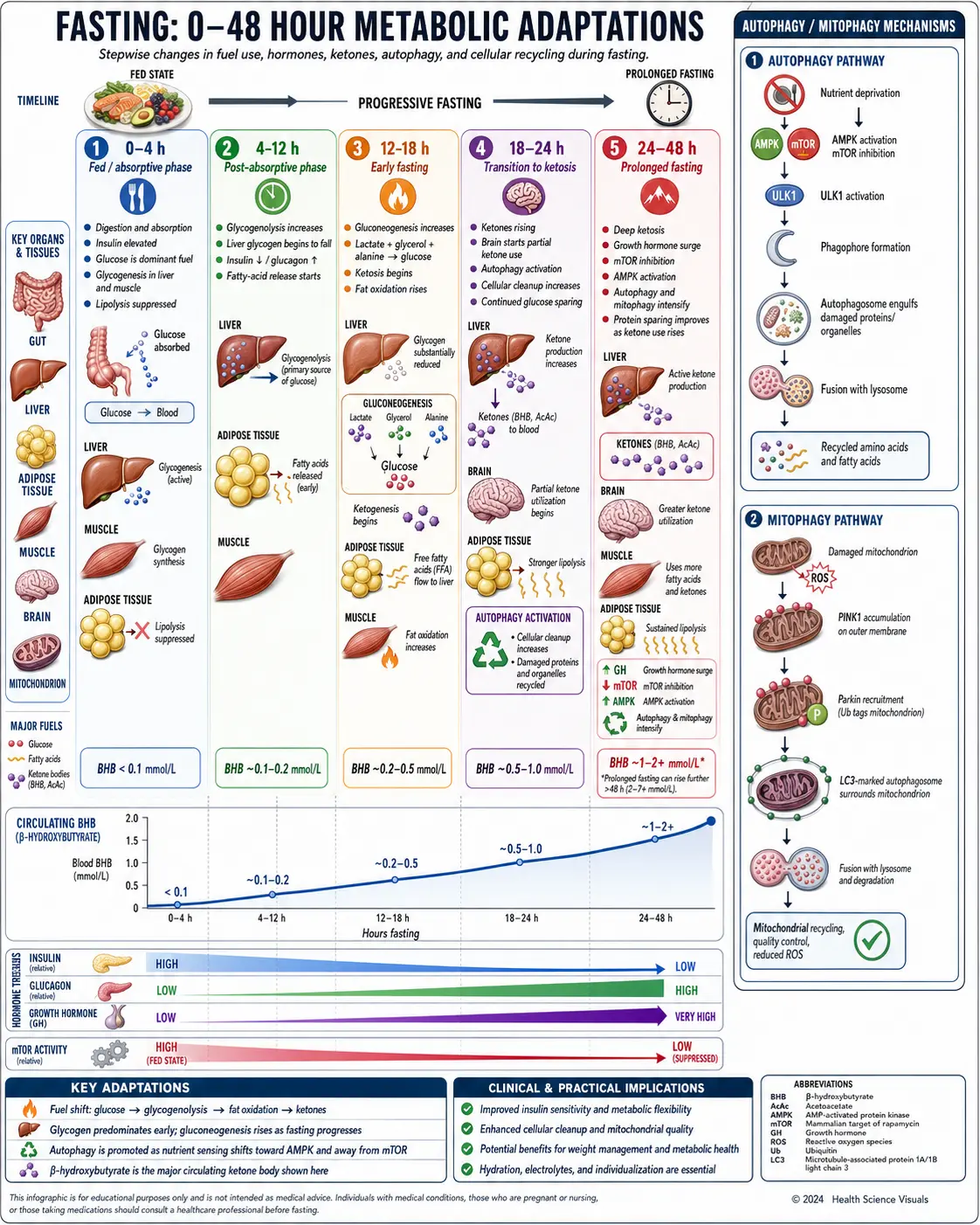
Fasting — the voluntary abstinence from food for a defined period — is one of the oldest health practices in human history, observed across cultures for millennia. Modern research has revealed that fasting triggers profound metabolic, hormonal, and cellular changes including autophagy, improved insulin sensitivity, increased growth hormone secretion, and reduced systemic inflammation. From time-restricted eating windows of 14–16 hours to extended multi-day fasts, each duration activates distinct physiological pathways with increasing depth of cellular repair and metabolic adaptation.
Interactive Visualization Fat Burning & Ketosis — what actually happens Follow a fatty acid out of a fat cell to the mitochondrial gate and find it padlocked by insulin. Drop the carbs, open CPT1, and watch the liver start making ketones. Launch →Table of Contents
- Fasting Timeline: What Happens at Each Stage
- Key Health Benefits of Fasting
- Common Fasting Protocols
- Refeeding Considerations
- Risks and Contraindications
- Key Research Papers and References
- Research Papers
- Connections
Fasting Timeline: What Happens at Each Stage
14 Hours Fasting
- Insulin levels start to drop, promoting fat burning.
- The body begins shifting to using fat for energy.
- Growth hormone levels start increasing, aiding in muscle preservation and fat metabolism.
16 Hours Fasting
- Ketosis begins: The body starts breaking down fat for fuel instead of glucose.
- Increased autophagy: The body clears out damaged cells and proteins.
- Improved insulin sensitivity continues.
- Hunger hormones may rise temporarily but stabilize with adaptation.
24 Hours Fasting
- Deeper autophagy: Cellular repair mechanisms are more active.
- Significant reduction in insulin and blood sugar levels.
- Increased ketone production for brain and energy metabolism.
- Growth hormone levels are significantly elevated (up to 5x).
36 Hours Fasting
- Full ketosis: The body is primarily using fat and ketones for energy.
- Enhanced autophagy: Damaged cells and proteins are recycled.
- Reduced inflammation and oxidative stress.
- Improved gut health as the digestive system resets.
- Blood sugar and insulin levels remain very low.
100 Hours Fasting
- Maximum autophagy: Supports deep cellular repair.
- Stem cell regeneration: New immune and intestinal cells are produced.
- Deep ketosis: Fat burning is highly efficient, and brain function benefits from ketones.
- Drastic insulin and glucose reduction.
- Risk of electrolyte imbalance increases (sodium, potassium, magnesium).
- Possible muscle breakdown if protein intake was low before fasting.
Key Health Benefits of Fasting
- Autophagy and cellular repair: Fasting activates autophagy, a process in which the body breaks down and recycles damaged organelles, misfolded proteins, and dysfunctional mitochondria, promoting cellular renewal and longevity.
- Improved insulin sensitivity: Periodic fasting significantly reduces fasting insulin and blood glucose levels, lowering the risk of type 2 diabetes and metabolic syndrome.
- Weight and fat loss: Fasting promotes lipolysis and increases metabolic rate through norepinephrine release, making it effective for reducing body fat while preserving lean muscle mass.
- Reduced inflammation: Studies show fasting decreases circulating markers of inflammation including C-reactive protein, IL-6, and TNF-alpha, which are linked to chronic diseases.
- Cardiovascular health: Fasting improves blood lipid profiles by reducing LDL cholesterol, triglycerides, and blood pressure, all major risk factors for heart disease.
- Neuroprotection: Fasting increases brain-derived neurotrophic factor (BDNF), supports neuronal plasticity, and may reduce the risk of neurodegenerative diseases such as Alzheimer's and Parkinson's.
- Growth hormone secretion: Fasting can increase human growth hormone production by up to 500%, supporting muscle preservation, fat metabolism, and tissue repair.
- Immune system regeneration: Extended fasting (72+ hours) triggers stem cell-based regeneration of the immune system, producing new white blood cells.
Common Fasting Protocols
- 12:12 Time-Restricted Eating: 12 hours of eating, 12 hours of fasting. A gentle entry point that aligns with natural circadian rhythms and supports basic metabolic health.
- 16:8 Intermittent Fasting: 16 hours of fasting with an 8-hour eating window. The most popular protocol, shown to improve insulin sensitivity, promote fat loss, and initiate autophagy.
- 18:6 Protocol: 18 hours of fasting with a 6-hour eating window. Deepens ketosis and autophagy while remaining sustainable for many people long-term.
- OMAD (One Meal a Day): A 23:1 fasting pattern with a single daily meal. Maximizes daily fasting benefits but requires careful attention to nutrient density.
- 5:2 Diet: Normal eating five days per week with two non-consecutive days of reduced calorie intake (500–600 calories). Studied extensively for weight management and metabolic health.
- Alternate Day Fasting (ADF): Alternating between normal eating days and fasting or very low-calorie days. Research demonstrates significant improvements in cardiovascular markers.
- 36-Hour Fast: A full day plus overnight without food. Achieves deep ketosis, significant autophagy, and substantial anti-inflammatory effects.
- 72-Hour Extended Fast: Three days without food. Triggers immune system regeneration through stem cell activation. Should be done under medical guidance.
- Prolonged Fasting (4–7 days): Multi-day water fasts for deep therapeutic benefits. Requires medical supervision, electrolyte management, and careful refeeding protocols.
Refeeding Considerations
- After 36+ hours of fasting, refeeding should be done gradually.
- Avoid overeating immediately to prevent digestive distress.
- Start with light, nutrient-dense foods like bone broth or cooked vegetables.
- Ensure proper electrolyte replenishment (sodium, potassium, magnesium).
- Refeeding syndrome is a serious risk after extended fasts (72+ hours) — rapid shifts in electrolytes (especially phosphate) can cause cardiac and neurological complications.
- Gradually increase meal complexity over 24–48 hours, adding proteins and healthy fats before reintroducing complex carbohydrates.
Risks and Contraindications
- Not recommended for: Pregnant or breastfeeding women, children and adolescents, individuals with a history of eating disorders, those with type 1 diabetes, or people who are underweight.
- Electrolyte imbalance: Extended fasting can deplete sodium, potassium, magnesium, and phosphate, potentially causing muscle cramps, heart arrhythmias, or refeeding syndrome.
- Medication interactions: Fasting can alter the pharmacokinetics of medications, especially diabetes drugs and blood pressure medications. Consult a physician before fasting if taking prescription medications.
- Muscle loss: Prolonged fasting without adequate prior protein intake may lead to muscle catabolism, particularly beyond 72 hours.
- Gallstones: Rapid weight loss from extended or repeated fasting may increase the risk of gallstone formation.
- Hormonal disruption: Excessive fasting may disrupt reproductive hormones, particularly in women, potentially affecting menstrual regularity.
Key Research Papers and References
- de Cabo R, Mattson MP. Effects of intermittent fasting on health, aging, and disease. New England Journal of Medicine. 2019;381(26):2541-2551. | PubMed
- Mattson MP, Longo VD, Harvie M. Impact of intermittent fasting on health and disease processes. Ageing Research Reviews. 2017;39:46-58. | PubMed
- Longo VD, Mattson MP. Fasting: molecular mechanisms and clinical applications. Cell Metabolism. 2014;19(2):181-192. | PubMed
- Cheng CW, Adams GB, Perin L, et al. Prolonged fasting reduces IGF-1/PKA to promote hematopoietic-stem-cell-based regeneration and reverse immunosuppression. Cell Stem Cell. 2014;14(6):810-823. | PubMed
- Anton SD, Moehl K, Donahoo WT, et al. Flipping the metabolic switch: understanding and applying the health benefits of fasting. Obesity. 2018;26(2):254-268. | PubMed
- Patterson RE, Sears DD. Metabolic effects of intermittent fasting. Annual Review of Nutrition. 2017;37:371-393. | PubMed
- Alirezaei M, Kemball CC, Flynn CT, et al. Short-term fasting induces profound neuronal autophagy. Autophagy. 2010;6(6):702-710. | PubMed
- Ho KY, Veldhuis JD, Johnson ML, et al. Fasting enhances growth hormone secretion and amplifies the complex rhythms of growth hormone secretion in man. Journal of Clinical Investigation. 1988;81(4):968-975. | PubMed
- Harvie MN, Pegington M, Mattson MP, et al. The effects of intermittent or continuous energy restriction on weight loss and metabolic disease risk markers: a randomized trial in young overweight women. International Journal of Obesity. 2011;35(5):714-727. | PubMed
- Wilhelmi de Toledo F, Grundler F, Bergouignan A, et al. Safety, health improvement and well-being during a 4 to 21-day fasting period in an observational study including 1422 subjects. PLoS ONE. 2019;14(1):e0209353. | PubMed
- Varady KA, Bhutani S, Klempel MC, et al. Alternate day fasting for weight loss in normal weight and overweight subjects: a randomized controlled trial. Nutrition Journal. 2013;12(1):146. | PubMed
- Sutton EF, Beyl R, Early KS, et al. Early time-restricted feeding improves insulin sensitivity, blood pressure, and oxidative stress even without weight loss in men with prediabetes. Cell Metabolism. 2018;27(6):1212-1221. | PubMed
Research Papers
- Intermittent fasting and metabolic health — PubMed search
- Autophagy and fasting — PubMed search
- Time-restricted eating clinical trials — PubMed search
- Prolonged fasting and stem cells — PubMed search
- Fasting and insulin sensitivity — PubMed search
- Alternate-day fasting and weight loss — PubMed search
- Fasting and growth hormone secretion — PubMed search
Connections
- All Remedies
- Fat Burning & Ketosis — interactive animation
- Detox Protocols
- Gut Healing
- GLP-1 Receptor Agonists
- Immune Boosting
- Glutamine
- Coffee & Type 2 Diabetes
- Glutamine & Weight Loss
- Diabetes
- Obesity
- Metabolic Syndrome
- Blood Sugar
- Fasting Insulin
- Magnesium
- Anti-Inflammatory Diet
- Berberine
- Hemoglobin A1C
- CGM
- Oxidative Stress
- Yoshinori Ohsumi — the Nobel-winning autophagy science behind fasting claims, tiered honestly