Pneumonia
Interactive Visualization Breathing & Gas Exchange — move the diaphragm yourself Fill the alveoli and watch oxygen diffuse into the blood while carbon dioxide leaves, with live pO₂/pCO₂ meters and an exercise mode. Launch →
Table of Contents
- What is Pneumonia?
- Types of Pneumonia
- Common Symptoms of Pneumonia
- Causes and Risk Factors
- Diagnosis
- Treatment Options
- Prevention Strategies
- Complications of Pneumonia
- Research Papers
- Connections
- Featured Videos
What is Pneumonia?
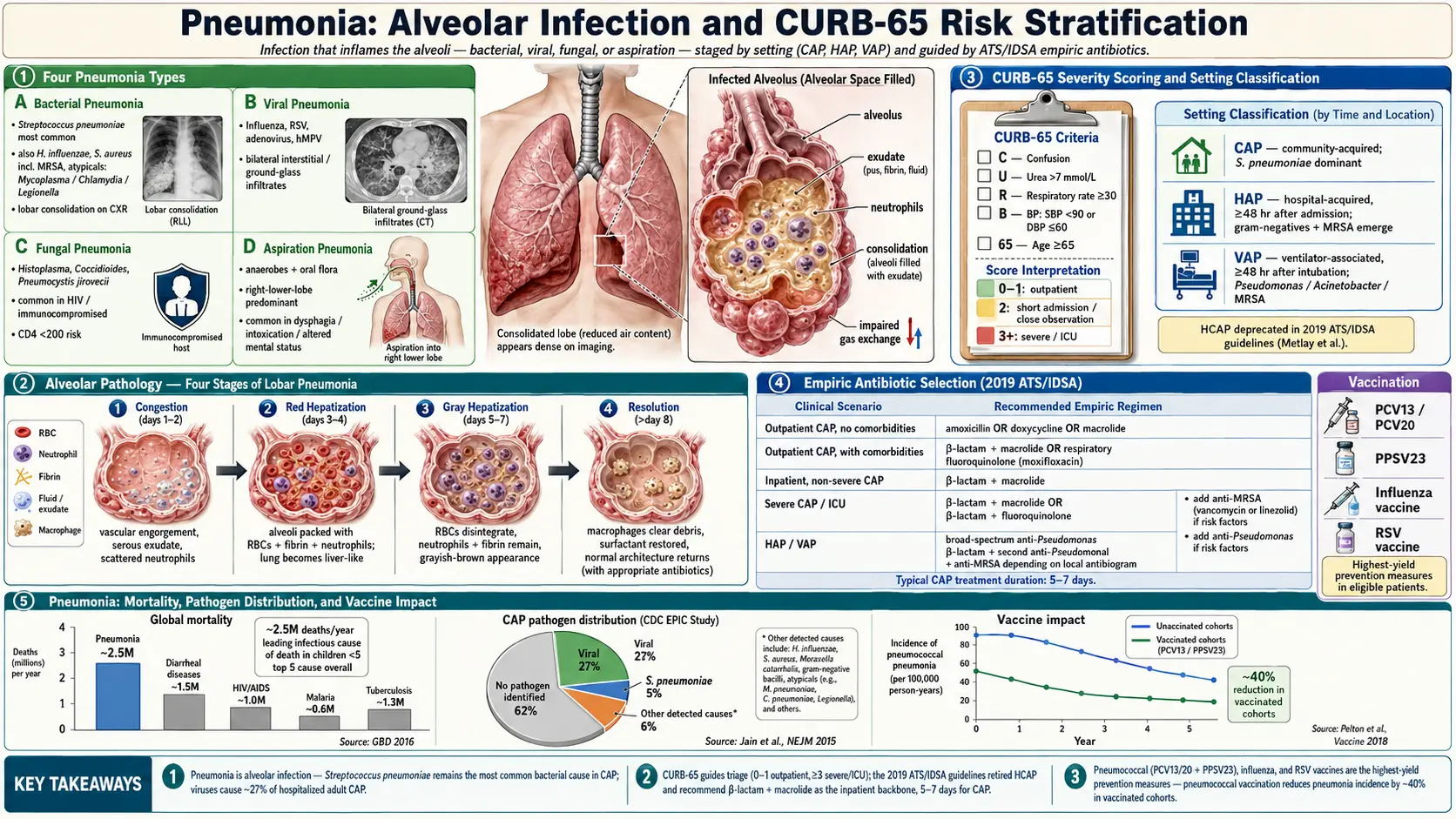
Pneumonia is an infection that inflames the air sacs (alveoli) in one or both lungs. The air sacs may fill with fluid or pus, leading to symptoms such as coughing, fever, chills, and difficulty breathing. Pneumonia can be caused by various organisms, including bacteria, viruses, and fungi.
Types of Pneumonia
1. Bacterial Pneumonia
- Most common cause: Streptococcus pneumoniae.
- Can affect people of all ages, but more severe in those with weakened immune systems or chronic health conditions.
2. Viral Pneumonia
- Common causes: Influenza virus, respiratory syncytial virus (RSV), parainfluenza virus, and adenovirus.
- Typically less severe but can become serious, especially in young children, older adults, or those with compromised immune systems.
3. Fungal Pneumonia
- More common in people with weakened immune systems.
- Common causes: Histoplasma, Coccidioides, and Pneumocystis jirovecii.
4. Aspiration Pneumonia
- Caused by inhaling food, liquid, or vomit into the lungs.
- Higher risk: People with swallowing difficulties or those who are intoxicated.
Common Symptoms of Pneumonia
- Cough: May produce green, yellow, or bloody mucus.
- Fever and chills
- Shortness of breath
- Chest pain when breathing or coughing
- Fatigue
- Nausea, vomiting, or diarrhea
- Confusion: Especially in older adults.
Causes and Risk Factors
- Bacteria, viruses, and fungi: The most common causes of pneumonia.
- Weakened immune system: Increases the risk of developing pneumonia.
- Chronic diseases: Such as asthma, COPD, and heart disease.
- Smoking: Damages the lungs and reduces their ability to fight off infection.
- Age: Infants, young children, and older adults are at higher risk.
Diagnosis
- Medical history and physical examination: To check for signs like crackling or wheezing in the lungs.
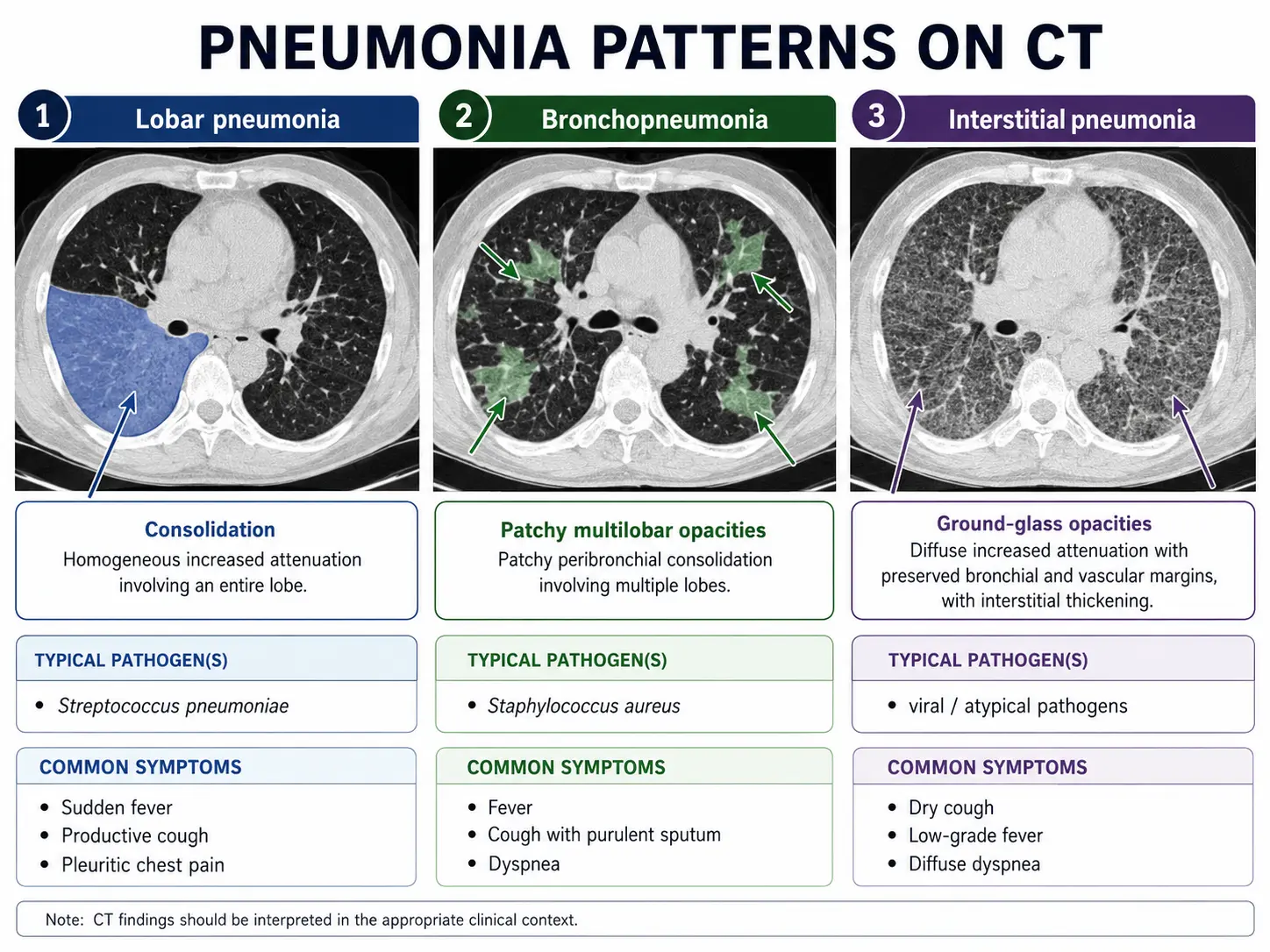
- Chest X-ray: Confirms the presence and extent of the infection.
- Blood tests: To check for infection and identify the type of organism causing pneumonia.
- Sputum test: Analyzes mucus for the cause of the infection.
- Pulse oximetry: Measures the oxygen level in the blood.
Treatment Options
- Antibiotics: For bacterial pneumonia, tailored based on the specific bacteria.
- Antiviral medications: For viral pneumonia, such as those caused by influenza.
- Antifungal treatments: For fungal pneumonia.
- Supportive care:
- Rest and hydration
- Over-the-counter medications: To manage fever and pain.
- Oxygen therapy: For severe cases to improve breathing.
Prevention Strategies
- Good hygiene practices: Frequent handwashing and avoiding close contact with sick individuals.
- Quit smoking: To improve lung health.
- Healthy lifestyle: Balanced diet, regular exercise, and adequate sleep to strengthen the immune system.
Complications of Pneumonia
- Pleurisy and pleural effusion: Inflammation or fluid buildup in the space between the lungs and chest cavity.
- Lung abscess: Pus-filled cavity in the lung.
- Sepsis: Severe infection that spreads into the bloodstream and can lead to organ failure.
- Acute respiratory distress syndrome (ARDS): Severe inflammation that prevents the lungs from providing enough oxygen to the body.
- Chronic lung conditions: Increased risk of long-term breathing problems.
References & Research
Historical Background
Pneumonia has been recognized since antiquity, with Hippocrates describing it around 400 BCE as a disease "named by the ancients." In 1881, Carl Friedländer and Albert Fränkel independently identified the pneumococcus bacterium as the primary cause of bacterial pneumonia, laying the groundwork for understanding its microbiology and eventually leading to antibiotic treatment.
Key Research Papers
- Musher DM, Thorner AR. Community-acquired pneumonia. N Engl J Med. 2014;371(17):1619-1628.
- Metlay JP, Waterer GW, Long AC, et al. Diagnosis and treatment of adults with community-acquired pneumonia: an official clinical practice guideline of the ATS and IDSA. Am J Respir Crit Care Med. 2019;200(7):e45-e67.
- Jain S, Self WH, Wunderink RG, et al. Community-acquired pneumonia requiring hospitalization among U.S. adults (CDC EPIC Study). N Engl J Med. 2015;373(5):415-427.
- Torres A, Cilloniz C, Niederman MS, et al. Pneumonia. Nat Rev Dis Primers. 2021;7(1):25.
- Kalil AC, Metersky ML, Klompas M, et al. Management of adults with hospital-acquired and ventilator-associated pneumonia: 2016 clinical practice guidelines by the IDSA and ATS. Clin Infect Dis. 2016;63(5):e61-e111.
- Postma DF, van Werkhoven CH, van Elden LJ, et al. Antibiotic treatment strategies for community-acquired pneumonia in adults. N Engl J Med. 2015;372(14):1312-1323.
- Fine MJ, Auble TE, Yealy DM, et al. A prediction rule to identify low-risk patients with community-acquired pneumonia (PSI/PORT Score). N Engl J Med. 1997;336(4):243-250.
- Lim WS, van der Eerden MM, Laing R, et al. Defining community acquired pneumonia severity on presentation to hospital: an international derivation and validation study (CURB-65). Thorax. 2003;58(5):377-382.
- GBD 2016 Lower Respiratory Infections Collaborators. Estimates of the global, regional, and national morbidity, mortality, and aetiologies of lower respiratory infections. Lancet Infect Dis. 2018;18(11):1191-1210.
- Wunderink RG, Waterer GW. Community-acquired pneumonia. N Engl J Med. 2014;370(6):543-551.
Research Papers
The following PubMed topic searches surface the current peer-reviewed literature on Pneumonia. Each link opens a live PubMed query; results update as new papers are indexed.
- PubMed search: community acquired pneumonia
- PubMed search: hospital acquired pneumonia
- PubMed search: ventilator associated pneumonia
- PubMed search: pneumonia antibiotic therapy
- PubMed search: streptococcus pneumoniae
- PubMed search: pneumococcal vaccine
- PubMed search: legionella pneumophila
- PubMed search: mycoplasma pneumoniae
- PubMed search: aspiration pneumonia
- PubMed search: pneumonia severity index
- PubMed search: pneumonia elderly
- PubMed search: fungal pneumonia
Connections
- Pulmonology
- Breathing & Gas Exchange — interactive animation
- Influenza
- COPD
- Asthma
- Acute Respiratory Distress Syndrome
- Shortness of Breath
- Chest Pain
- Zinc
- Vitamin C
- Vitamin D3
- Oregano
- Sepsis
- Pleural Effusion
- Fatigue
- Eucalyptus
- Chronic Cough
- Cold and Flu Treatments
- Interstitial Lung Disease
- Magnesium
- Mullein
- Lung Cancer
- Common Cold
- RSV
- Measles
- Whooping Cough
- Dysphagia (Difficulty Swallowing) — impaired swallowing is the leading risk factor for aspiration pneumonia.
- Legionellosis (Legionnaires’ Disease) — a waterborne cause of severe pneumonia that routine cultures miss unless specifically tested for.