Phosphorus and Energy Production
Phosphorus is a macromineral that lies at the very heart of cellular energy metabolism. Present in every living cell, phosphorus forms the backbone of adenosine triphosphate (ATP), the universal energy currency of biological systems. Without phosphorus, no cell in the human body could generate, store, or transfer the chemical energy required to sustain life.
Table of Contents
- ATP Structure and Function
- Phosphorylation Reactions
- Creatine Phosphate System
- Glycolysis and Phosphorylated Intermediates
- Mitochondrial Oxidative Phosphorylation
- Phosphorus in Metabolic Pathways
- Clinical Significance
- Research Papers
- Connections
ATP Structure and Function
- Adenosine triphosphate (ATP) consists of an adenine base, a ribose sugar, and three phosphate groups linked by high-energy phosphoanhydride bonds. The hydrolysis of the terminal phosphate bond releases approximately 7.3 kcal/mol of free energy under standard conditions.
- ATP hydrolysis to adenosine diphosphate (ADP) and inorganic phosphate (Pi) drives hundreds of endergonic reactions in the cell, including muscle contraction, active transport across membranes, and biosynthetic processes.
- ATP regeneration occurs continuously at extraordinary rates. The average adult human turns over roughly 40 to 70 kg of ATP per day, recycling each ATP molecule thousands of times. This constant regeneration depends on a steady supply of phosphorus.
- GTP, UTP, and CTP are other nucleoside triphosphates that contain phosphorus and serve specialized roles in signal transduction, glycogen synthesis, and lipid metabolism, respectively.
Phosphorylation Reactions
- Protein phosphorylation is the most common post-translational modification in eukaryotic cells. Protein kinases transfer the gamma-phosphate group from ATP to serine, threonine, or tyrosine residues on target proteins, altering their activity, localization, or interactions.
- Signal transduction cascades rely on sequential phosphorylation events to relay messages from cell surface receptors to the nucleus. The MAP kinase pathway, PI3K/Akt pathway, and JAK-STAT pathway all depend on phosphorus-containing intermediates.
- Substrate-level phosphorylation refers to the direct transfer of a phosphate group from a phosphorylated substrate to ADP, generating ATP without the involvement of the electron transport chain. This mechanism operates in glycolysis and the citric acid cycle.
- Reversible phosphorylation acts as a molecular switch, with kinases adding phosphate groups and phosphatases removing them. This regulatory mechanism controls virtually every cellular process, from cell division to apoptosis.
Creatine Phosphate System
- Creatine phosphate (phosphocreatine) serves as a rapidly mobilizable reserve of high-energy phosphate groups in skeletal muscle, cardiac muscle, and brain tissue. It provides the fastest mechanism for regenerating ATP during the first seconds of intense physical activity.
- Creatine kinase catalyzes the reversible transfer of a phosphate group from phosphocreatine to ADP, regenerating ATP almost instantaneously. This reaction buffers ATP concentrations during sudden increases in energy demand.
- The phosphocreatine shuttle also functions to transport high-energy phosphate equivalents from mitochondria to sites of ATP utilization in the cytoplasm, particularly important in cells with high and fluctuating energy demands.
- Serum creatine kinase levels serve as a clinical biomarker. Elevated levels indicate tissue damage, particularly myocardial infarction (CK-MB isoform) or skeletal muscle injury (CK-MM isoform).
Glycolysis and Phosphorylated Intermediates
- Glucose-6-phosphate is formed in the first committed step of glycolysis when hexokinase transfers a phosphate group from ATP to glucose. This phosphorylation traps glucose inside the cell and prepares it for further metabolism.
- Fructose-1,6-bisphosphate is generated by the rate-limiting enzyme phosphofructokinase-1 (PFK-1). This doubly phosphorylated intermediate commits the glucose carbon skeleton irreversibly to the glycolytic pathway.
- 1,3-Bisphosphoglycerate contains a high-energy acyl phosphate bond that drives substrate-level phosphorylation of ADP to ATP, catalyzed by phosphoglycerate kinase. This is the first ATP-generating step in glycolysis.
- Phosphoenolpyruvate (PEP) possesses the highest phosphoryl transfer potential of any common biological molecule. Pyruvate kinase catalyzes the transfer of its phosphate group to ADP, generating the second ATP molecule in glycolysis.
- The pentose phosphate pathway branches from glycolysis at glucose-6-phosphate and produces ribose-5-phosphate, the phosphorylated sugar required for nucleotide and nucleic acid biosynthesis.
Mitochondrial Oxidative Phosphorylation
- Oxidative phosphorylation is the process by which the electron transport chain (ETC) generates a proton gradient across the inner mitochondrial membrane, and ATP synthase uses this gradient to phosphorylate ADP to ATP. This process produces approximately 30 to 32 molecules of ATP per glucose molecule.
- ATP synthase (Complex V) is a remarkable rotary molecular motor that couples the flow of protons down their electrochemical gradient to the condensation of ADP and inorganic phosphate (Pi). Each 360-degree rotation of its rotor produces three ATP molecules.
- The adenine nucleotide translocase (ANT) exchanges newly synthesized ATP for cytoplasmic ADP across the inner mitochondrial membrane, ensuring that phosphorus-containing energy currency is delivered to where it is needed.
- The phosphate carrier imports inorganic phosphate from the cytoplasm into the mitochondrial matrix, driven by the proton gradient. This transporter ensures a constant supply of phosphorus substrate for ATP synthase.
- Uncoupling of oxidative phosphorylation by uncoupling proteins (UCPs) or chemical uncouplers dissipates the proton gradient as heat rather than ATP, demonstrating the tight coupling between phosphorus utilization and energy capture.
Phosphorus in Metabolic Pathways
- NAD+ and NADP+ are phosphorus-containing coenzymes essential for redox reactions throughout metabolism. NAD+ functions primarily in catabolic pathways, while NADP+ supports anabolic reactions such as fatty acid synthesis.
- Coenzyme A (CoA) contains a phosphopantetheine group and is indispensable for fatty acid oxidation, the citric acid cycle (as acetyl-CoA), and numerous biosynthetic reactions.
- Cyclic AMP (cAMP) is a phosphorus-containing second messenger generated from ATP by adenylyl cyclase. It mediates the intracellular effects of hormones such as epinephrine and glucagon, linking phosphorus metabolism to hormonal regulation of energy balance.
- Pyridoxal phosphate (PLP), the active form of vitamin B6, and thiamine pyrophosphate (TPP), the active form of vitamin B1, both require phosphorylation for their coenzyme function in amino acid and carbohydrate metabolism.
Clinical Significance
- Hypophosphatemia (serum phosphorus below 2.5 mg/dL) impairs ATP synthesis and can cause muscle weakness, respiratory failure, cardiac dysfunction, hemolytic anemia, and rhabdomyolysis. Severe cases can be life-threatening.
- Refeeding syndrome is a dangerous clinical condition in which malnourished patients develop acute hypophosphatemia upon resumption of nutrition. The sudden demand for phosphorus to support anabolic metabolism depletes extracellular phosphate stores rapidly.
- Chronic kidney disease leads to hyperphosphatemia due to impaired renal excretion. Elevated phosphorus accelerates vascular calcification and is independently associated with increased cardiovascular mortality in dialysis patients.
- Dietary phosphorus is abundant in protein-rich foods including meat, dairy, fish, eggs, nuts, and legumes. The recommended daily allowance for adults is 700 mg. Most Western diets provide phosphorus well in excess of requirements.
- Phosphorus additives in processed foods contribute significantly to total phosphorus intake and are more readily absorbed than naturally occurring organic phosphorus. Excessive intake from additives has raised public health concerns regarding cardiovascular and renal risk.
Research Papers
The following PubMed topic searches compile peer-reviewed literature on phosphorus and bioenergetics. Each link opens the current PubMed results for that query.
- ATP synthesis and oxidative phosphorylation
- ATP synthase structure and function
- Phosphocreatine and energy metabolism
- Hypophosphatemia and refeeding syndrome
- Hyperphosphatemia and chronic kidney disease
- Phosphate additives and cardiovascular risk
- FGF23 and phosphate homeostasis
- Creatine kinase as biomarker
- Protein phosphorylation and signal transduction
- Glycolysis and phosphofructokinase regulation
- Mitochondrial phosphate carrier
- Dietary phosphorus and bone health
Connections
- Phosphorus
- Creatine
- Magnesium
- Calcium
- Potassium
- Vitamin B6
- Vitamin B1
- Vitamin D3
- Iron
- Osteoporosis
- Kidney Disease
- Anemia
- Serine
- Threonine
- eGFR
- Eggs
- Calcium and Bone Health
Featured Videos
A Simple Guide to Phosphorus (Phosphate) in the Body

10 Warning Signs Your Body Is Need Of Phosphorus
Note These Key Symptoms You Shouldn't Ignore with Phosphorus Deficiency
Phosphorus Physiology Explained: FGF23–PTH–Vitamin D Axis + Clinical Patterns (MedEClasses)

Phosphorus Imbalance Explained: Hypo vs Hyperphosphatemia

ClariPhos Rare Earth Coagulant: Remove more phosphorus, produce less sludge.

Mineral Nutrition - Role and Deficiency symptoms of Potassium and Phosphorus in Plants
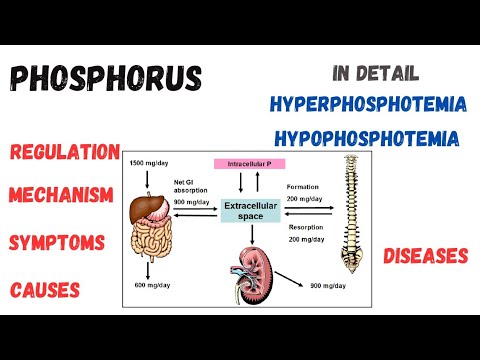
Phosphorus Mineral|Hyperphosphotemia |Hypophosphotemia | Urdu /Hindi

All About the Homeopathic Remedy Phosphorus!