Threonine: The Essential Amino Acid for Gut Health and Connective Tissue
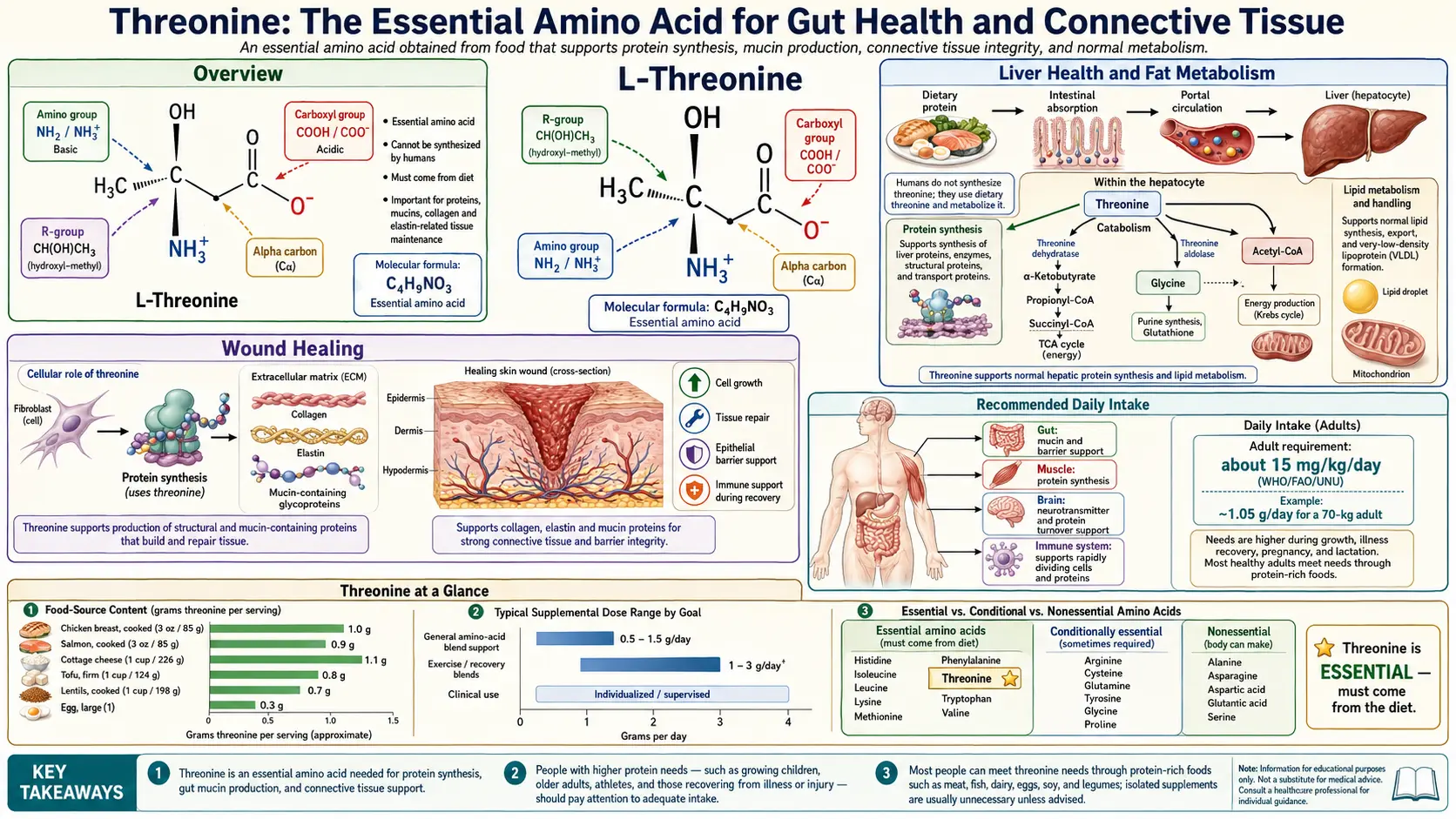
Table of Contents
- Overview
- Collagen and Elastin Synthesis
- Gut Health and Intestinal Lining
- Immune System Function
- Liver Health and Fat Metabolism
- Nervous System Support
- Tooth Enamel Protection
- Muscle Elasticity and Function
- Wound Healing
- Deficiency Signs
- Food Sources
- Supplementation Guidelines
- Recommended Daily Intake
- Research Papers
- Connections
- Featured Videos
Overview
Threonine is one of the nine essential amino acids that the human body cannot synthesize on its own and must therefore obtain through dietary sources. Discovered in 1936 by William Cumming Rose, threonine was the last of the common amino acids to be identified. Its chemical structure includes a hydroxyl group, which makes it a polar amino acid capable of participating in a wide range of biochemical reactions throughout the body. This unique structural feature allows threonine to undergo phosphorylation, a critical process in cellular signaling and enzyme regulation.
From a naturopathic perspective, threonine stands out among the essential amino acids for its remarkably diverse physiological roles. It serves as a foundational building block for structural proteins such as collagen and elastin, plays a central role in maintaining the integrity of the gastrointestinal lining, supports robust immune function, and contributes to the health of the liver and nervous system. Unlike some amino acids that the body can convert from other precursors, threonine must be replenished consistently through whole foods or, when necessary, targeted supplementation.
Threonine is metabolized primarily in the liver and the gut, where it is converted into glycine and acetyl-CoA. This metabolic pathway is significant because glycine itself is a conditionally essential amino acid involved in detoxification, neurotransmitter balance, and collagen formation. Thus, adequate threonine intake has a cascading positive effect on multiple body systems. In clinical nutrition, threonine is increasingly recognized as a nutrient of special importance for individuals with compromised digestive health, autoimmune conditions, or chronic connective tissue disorders.
Collagen and Elastin Synthesis
One of threonine's most vital roles in the body is its contribution to the synthesis of collagen and elastin, the two primary structural proteins that give strength and flexibility to skin, tendons, ligaments, bones, and blood vessels. Threonine is present in high concentrations within collagen molecules, where its hydroxyl group participates in the formation of hydroxyproline and hydroxylysine residues that stabilize the collagen triple helix.
Collagen accounts for approximately 30 percent of the total protein in the human body, making it the most abundant protein by mass. Without sufficient threonine, the body's ability to produce and repair collagen is significantly impaired. This can manifest as premature skin aging, weakened joint cartilage, brittle nails, and slower recovery from injuries involving connective tissue. Naturopathic practitioners often observe that patients with chronically low protein intake or poor digestive absorption show visible signs of collagen insufficiency that improve markedly when threonine-rich foods are emphasized in the diet.
Elastin, the protein responsible for the elastic recoil of tissues such as the lungs, arterial walls, and skin, also depends on adequate threonine availability. As the body ages, elastin production naturally declines, and ensuring a steady supply of its amino acid precursors becomes increasingly important. Supporting elastin synthesis through proper threonine nutrition can help maintain vascular flexibility, reduce the risk of arterial stiffness, and preserve lung function over time.
Gut Health and Intestinal Lining
Perhaps no other amino acid plays as direct a role in gut health as threonine. The mucus layer that lines the entire gastrointestinal tract is rich in mucin glycoproteins, and threonine is the single most abundant amino acid in these mucins. Research has shown that the intestinal mucosa utilizes a disproportionately large fraction of dietary threonine compared to other tissues, underscoring the gut's extraordinary demand for this nutrient.
The intestinal mucus barrier serves as the body's first line of defense against pathogenic bacteria, dietary irritants, and environmental toxins. When threonine intake is insufficient, mucin production declines, the mucus layer thins, and the tight junctions between intestinal epithelial cells may become compromised. This condition, commonly referred to as increased intestinal permeability or "leaky gut," allows partially digested food particles, bacterial endotoxins, and other inflammatory molecules to enter the bloodstream, triggering systemic immune activation.
In naturopathic practice, threonine supplementation or dietary optimization is frequently recommended as part of a comprehensive gut-healing protocol. Patients with inflammatory bowel disease, irritable bowel syndrome, food sensitivities, and chronic digestive complaints often benefit from increased threonine intake alongside other gut-supportive nutrients such as glutamine, zinc, and vitamin A. By restoring the mucus barrier, threonine helps reduce intestinal inflammation, improve nutrient absorption, and support the growth of beneficial commensal bacteria that thrive in a healthy mucus environment.
Animal studies have demonstrated that threonine-deficient diets lead to measurable thinning of the intestinal mucus layer within weeks, along with increased susceptibility to bacterial infection. Conversely, threonine supplementation has been shown to enhance mucin secretion, strengthen barrier function, and reduce markers of intestinal inflammation. These findings have important implications for human health, particularly for individuals recovering from gastrointestinal infections, antibiotic use, or chronic stress that depletes gut mucosal integrity.
Immune System Function
Threonine plays a critical role in supporting the immune system through multiple mechanisms. As a precursor to immunoglobulin production, threonine is essential for the synthesis of antibodies that recognize and neutralize pathogens. The gamma globulin fraction of blood proteins, which includes the major classes of immunoglobulins (IgA, IgG, IgM), contains a notably high proportion of threonine residues.
Secretory IgA, the predominant antibody class found in mucosal secretions of the gut, respiratory tract, and urogenital system, is particularly dependent on threonine availability. This antibody serves as a frontline immune defender, preventing pathogenic bacteria and viruses from adhering to and penetrating mucosal surfaces. When threonine levels are inadequate, secretory IgA production may decline, leaving mucosal surfaces more vulnerable to infection.
The thymus gland, which is responsible for the maturation of T lymphocytes, also requires threonine for optimal function. T cells orchestrate much of the adaptive immune response, and their proper development and proliferation depend on a steady supply of essential amino acids. Naturopathic physicians recognize that immune resilience is built not only through botanical medicines and lifestyle practices but also through ensuring that the foundational nutritional substrates for immune cell production are abundantly available.
Furthermore, threonine's role in maintaining the gut mucosal barrier has indirect but profound immune implications, given that approximately 70 percent of the body's immune tissue resides in the gut-associated lymphoid tissue (GALT). A healthy, well-nourished intestinal lining supports appropriate immune surveillance and helps prevent the chronic low-grade inflammation that underlies many autoimmune and allergic conditions.
Liver Health and Fat Metabolism
Threonine is classified as a lipotropic amino acid, meaning it plays a direct role in preventing the excessive accumulation of fat in the liver. Along with methionine, choline, and inositol, threonine supports the liver's ability to process and export lipids, thereby reducing the risk of fatty liver disease. This lipotropic function is achieved through threonine's participation in the synthesis of phosphatidylcholine and other phospholipids that are essential components of very low-density lipoprotein (VLDL) particles, the primary vehicles for transporting fat out of the liver.
Non-alcoholic fatty liver disease has become one of the most prevalent metabolic conditions worldwide, affecting an estimated 25 percent of the global population. From a naturopathic standpoint, dietary and supplemental strategies that support hepatic fat metabolism are central to managing this condition. Ensuring adequate threonine intake, in combination with a nutrient-dense whole-foods diet, regular physical activity, and targeted liver-supportive botanicals, can be a meaningful component of a comprehensive liver health protocol.
Threonine also contributes to liver health through its metabolic conversion to glycine, which is a key substrate for phase II hepatic detoxification. Glycine conjugation is one of the liver's primary mechanisms for neutralizing and excreting environmental toxins, drug metabolites, and endogenous waste products such as excess bile acids. By supplying the liver with ample threonine, the body ensures a robust capacity for this critical detoxification pathway.
Nervous System Support
Threonine contributes to nervous system health in several important ways. As a precursor to glycine, threonine indirectly supports the production of one of the brain's most important inhibitory neurotransmitters. Glycine acts at specific receptors in the spinal cord and brainstem to modulate motor function, pain perception, and sensory processing. It also serves as a co-agonist at NMDA receptors in the brain, where it plays a role in learning, memory, and synaptic plasticity.
Research has explored the potential of threonine and its metabolite glycine in supporting mental health conditions characterized by excitatory-inhibitory neurotransmitter imbalance. Preliminary studies suggest that enhancing glycine signaling through nutritional means may have anxiolytic and mood-stabilizing effects, although more clinical research is needed to establish definitive therapeutic protocols.
Threonine is also a component of the myelin sheath, the protective fatty coating that surrounds nerve fibers and enables rapid signal transmission throughout the nervous system. Adequate threonine intake supports the maintenance and repair of myelin, which is particularly relevant for individuals with demyelinating conditions or those seeking to preserve cognitive function during aging. Naturopathic practitioners often emphasize the importance of a complete amino acid profile in supporting neurological resilience, and threonine is a key piece of that nutritional foundation.
Tooth Enamel Protection
Threonine is a significant component of tooth enamel, the hardest and most mineralized substance in the human body. Enamel proteins, including amelogenin and enamelin, contain threonine residues that participate in the biomineralization process during tooth development. These proteins guide the formation of hydroxyapatite crystals, which give enamel its extraordinary hardness and resistance to acid erosion.
While tooth enamel does not regenerate once fully formed, maintaining adequate threonine levels throughout childhood and adolescence is critical for proper enamel development. In adults, threonine continues to support the structural proteins in dentin and cementum, the mineralized tissues beneath the enamel and around the tooth root. Naturopathic dental health strategies often emphasize the importance of a complete amino acid profile, alongside minerals such as calcium, phosphorus, and magnesium, for preserving long-term dental integrity.
Additionally, threonine's contribution to saliva glycoprotein production helps maintain the protective film that coats the tooth surface, buffering against acid attacks from oral bacteria and dietary acids. This salivary pellicle serves as a natural barrier that slows mineral loss from the enamel surface and supports the remineralization process.
Muscle Elasticity and Function
As a building block of both collagen and elastin, threonine contributes directly to the structural integrity of muscle fascia, tendons, and the extracellular matrix that surrounds and supports muscle fibers. This connective tissue framework is essential for transmitting the force generated by muscle contraction and for maintaining the elastic properties that allow muscles to stretch and recoil efficiently.
Athletes and physically active individuals have increased demands for threonine due to the repetitive mechanical stress placed on muscles, tendons, and ligaments during exercise. Adequate threonine intake supports the repair and remodeling of these connective tissues, helping to prevent overuse injuries, tendinopathy, and muscle stiffness. In naturopathic sports medicine, ensuring a complete essential amino acid profile through whole-food protein sources is considered fundamental to injury prevention and recovery.
Threonine also plays a role in muscle protein synthesis more broadly. As an essential amino acid, it must be present in sufficient quantities for the ribosomal machinery to assemble new muscle proteins. Even a marginal deficiency in a single essential amino acid can limit the rate of overall protein synthesis, making threonine adequacy an important consideration for individuals seeking to build or maintain lean muscle mass.
Wound Healing
The wound healing process depends heavily on the rapid synthesis of new collagen, extracellular matrix proteins, and immune factors, all of which require threonine as a substrate. Following tissue injury, the body initiates an inflammatory phase, followed by a proliferative phase during which fibroblasts produce large quantities of collagen to rebuild damaged tissue. Threonine availability during this critical period can significantly influence the speed and quality of wound repair.
Clinical observations suggest that patients with inadequate protein intake, particularly those deficient in essential amino acids like threonine, experience delayed wound healing, weaker scar formation, and increased susceptibility to wound infection. This is especially relevant for surgical patients, individuals with chronic wounds such as diabetic ulcers, and elderly patients whose baseline protein status may already be compromised.
Naturopathic wound care protocols often include dietary optimization with emphasis on high-quality protein sources rich in threonine and other collagen-building amino acids such as proline, lysine, and glycine. Alongside nutritional support, botanical therapies, adequate hydration, and stress reduction all contribute to creating the optimal internal environment for tissue repair.
Deficiency Signs
True threonine deficiency is relatively uncommon in populations with access to diverse protein sources, but marginal insufficiency can occur in individuals with restricted diets, malabsorption syndromes, chronic illness, or elevated metabolic demands. Recognizing the signs of threonine insufficiency is important for guiding nutritional interventions.
Common signs and symptoms associated with low threonine status include:
- Digestive disturbances such as increased intestinal permeability, frequent bloating, and heightened sensitivity to dietary irritants, reflecting compromised mucin production in the gut
- Weakened immune function with increased frequency of upper respiratory infections, urinary tract infections, or other mucosal infections due to reduced secretory IgA output
- Poor wound healing and slow recovery from surgical procedures or minor injuries
- Skin changes including premature wrinkling, loss of skin elasticity, and dry or fragile skin resulting from impaired collagen and elastin synthesis
- Fatty liver or elevated liver enzymes on blood work, potentially indicating impaired hepatic lipid metabolism
- Mood disturbances such as irritability, difficulty concentrating, or increased anxiety, possibly related to reduced glycine availability for neurotransmitter balance
- Muscle weakness or stiffness particularly in the connective tissue structures surrounding muscles and joints
- Dental problems including increased susceptibility to enamel erosion and cavities
Populations at elevated risk for threonine insufficiency include strict vegans who do not carefully combine protein sources, individuals with Crohn's disease or celiac disease who have impaired intestinal absorption, elderly individuals with reduced appetite and protein intake, and those undergoing intense physical training without adequate nutritional support.
Food Sources
Threonine is found in a wide variety of both animal and plant-based foods. Animal proteins generally provide the highest concentrations and the most bioavailable form of threonine, though well-planned plant-based diets can also meet daily requirements.
Excellent animal sources of threonine include:
- Lean poultry such as chicken breast and turkey
- Wild-caught fish including salmon, cod, halibut, and sardines
- Grass-fed beef and lamb
- Eggs, particularly the egg white which is rich in essential amino acids
- Cottage cheese, ricotta, and other dairy products
- Bone broth, which provides threonine alongside collagen-specific amino acids
Notable plant-based sources of threonine include:
- Soybeans, tempeh, and tofu
- Lentils, chickpeas, and black beans
- Quinoa, which is one of the few plant foods containing all essential amino acids in meaningful amounts
- Spirulina and chlorella
- Pumpkin seeds, sesame seeds, and sunflower seeds
- Wheat germ and oats
- Nuts such as almonds, cashews, and pistachios
From a naturopathic nutrition perspective, obtaining threonine from whole-food sources is always preferred over isolated supplementation when possible. Whole foods provide threonine in the context of a complete amino acid profile along with synergistic cofactors such as B vitamins, zinc, and vitamin C that support its absorption and utilization. Preparing foods with gentle cooking methods and consuming fermented protein sources like tempeh, miso, and yogurt can further enhance amino acid bioavailability.
Supplementation Guidelines
While most individuals can meet their threonine needs through a balanced diet, supplementation may be warranted in certain clinical situations. Naturopathic physicians may recommend threonine supplementation as part of a targeted therapeutic protocol for patients with the following conditions:
- Chronic intestinal permeability or inflammatory bowel conditions where gut mucosal repair is a primary treatment goal
- Recovery from surgery, burns, or other significant tissue trauma requiring accelerated collagen synthesis
- Diagnosed fatty liver disease as part of a comprehensive lipotropic support strategy
- Chronic immune deficiency or recurrent mucosal infections suggesting impaired immunoglobulin production
- Neurological conditions where enhanced glycine availability may be therapeutically beneficial
L-threonine is the bioactive form used in supplementation and is typically available in capsule or powder form. Therapeutic dosages in clinical settings generally range from 100 to 500 milligrams per day, taken between meals for optimal absorption. Some practitioners recommend combining threonine with other synergistic amino acids such as glycine, proline, and lysine when the primary therapeutic objective is connective tissue repair or gut healing.
Threonine supplementation is generally well tolerated, with few reported adverse effects at standard therapeutic doses. However, individuals with impaired kidney function should exercise caution with any amino acid supplementation and consult their healthcare provider. Pregnant and breastfeeding women should obtain threonine preferentially from food sources unless supplementation is specifically recommended by a qualified practitioner. As with all nutritional therapeutics, threonine supplementation is most effective when integrated into a holistic treatment plan that addresses diet, lifestyle, stress management, and underlying causes of nutrient depletion.
Recommended Daily Intake
The World Health Organization has established a recommended daily intake of threonine at approximately 15 milligrams per kilogram of body weight for healthy adults. This translates to roughly 1,050 milligrams per day for an adult weighing 70 kilograms (154 pounds). However, individual requirements can vary significantly based on age, health status, activity level, digestive function, and the presence of chronic disease.
The following general guidelines reflect typical daily threonine requirements across different populations:
- Healthy adults: 15 mg per kg of body weight (approximately 900 to 1,200 mg per day)
- Infants and young children: 25 to 35 mg per kg of body weight, reflecting the higher demands of rapid growth and development
- Pregnant women: Increased requirements of approximately 18 to 20 mg per kg of body weight to support fetal tissue development and expanded maternal blood volume
- Athletes and physically active individuals: 18 to 25 mg per kg of body weight depending on training intensity and recovery demands
- Elderly individuals: May benefit from the higher end of the adult range (18 to 20 mg per kg) due to decreased protein absorption efficiency and increased need for connective tissue maintenance
Meeting these requirements is readily achievable through a diet that includes adequate high-quality protein at each meal. A single serving of chicken breast (approximately 170 grams) provides roughly 1,600 milligrams of threonine, well above the daily requirement for most adults. Similarly, two eggs combined with a serving of lentils and a portion of yogurt can easily meet the daily threonine target for those following a vegetarian diet.
Naturopathic practitioners encourage patients to view amino acid nutrition not in isolation but as part of a broader commitment to whole-body wellness. Adequate threonine intake, when combined with a nutrient-dense diet, regular movement, quality sleep, stress management, and a healthy gut microbiome, provides the foundation upon which vibrant health is built and maintained throughout life.
Research Papers
The following curated PubMed searches surface the peer-reviewed literature underpinning the claims on this page. Each link opens a live PubMed query for Threonine filtered by topic, so the results stay current as new studies are indexed.
- PubMed search — Threonine: Metabolism and biochemistry (review)
- PubMed search — Threonine: Dietary intake and requirements
- PubMed search — Threonine: Supplementation randomized controlled trials
- PubMed search — Threonine: Plasma levels and clinical outcomes
- PubMed search — Threonine: Muscle protein synthesis and exercise
- PubMed search — Threonine: Deficiency: signs and consequences
- PubMed search — Threonine: Cardiovascular effects
- PubMed search — Threonine: Neurological and cognitive effects
- PubMed search — Threonine: Immune function
- PubMed search — Threonine: Oxidative stress and antioxidant activity
- PubMed search — Threonine: Gastrointestinal and gut health
- PubMed search — Threonine: Safety, toxicity, and upper limit
For a broader literature review, see the full PubMed record for Threonine and the NIH Office of Dietary Supplements Fact Sheets.
This content is provided for informational purposes only and does not constitute medical advice. Consult a qualified healthcare provider before beginning any supplementation regimen.
Connections
- All Amino Acids
- Threonine Benefits Deep Dive
- Glycine
- Methionine
- Serine
- Lysine
- Proline
- Isoleucine
- Glutamine
- Collagen
- Gut-Brain Axis
- NAC & Liver Health
- Detoxification
- Zinc
- Inflammatory Bowel Disease
- Irritable Bowel Syndrome
- Lentils
- Eggs
- Phosphorus and Energy Production