Serine: The Amino Acid for Brain Function, Immunity, and Cell Membranes
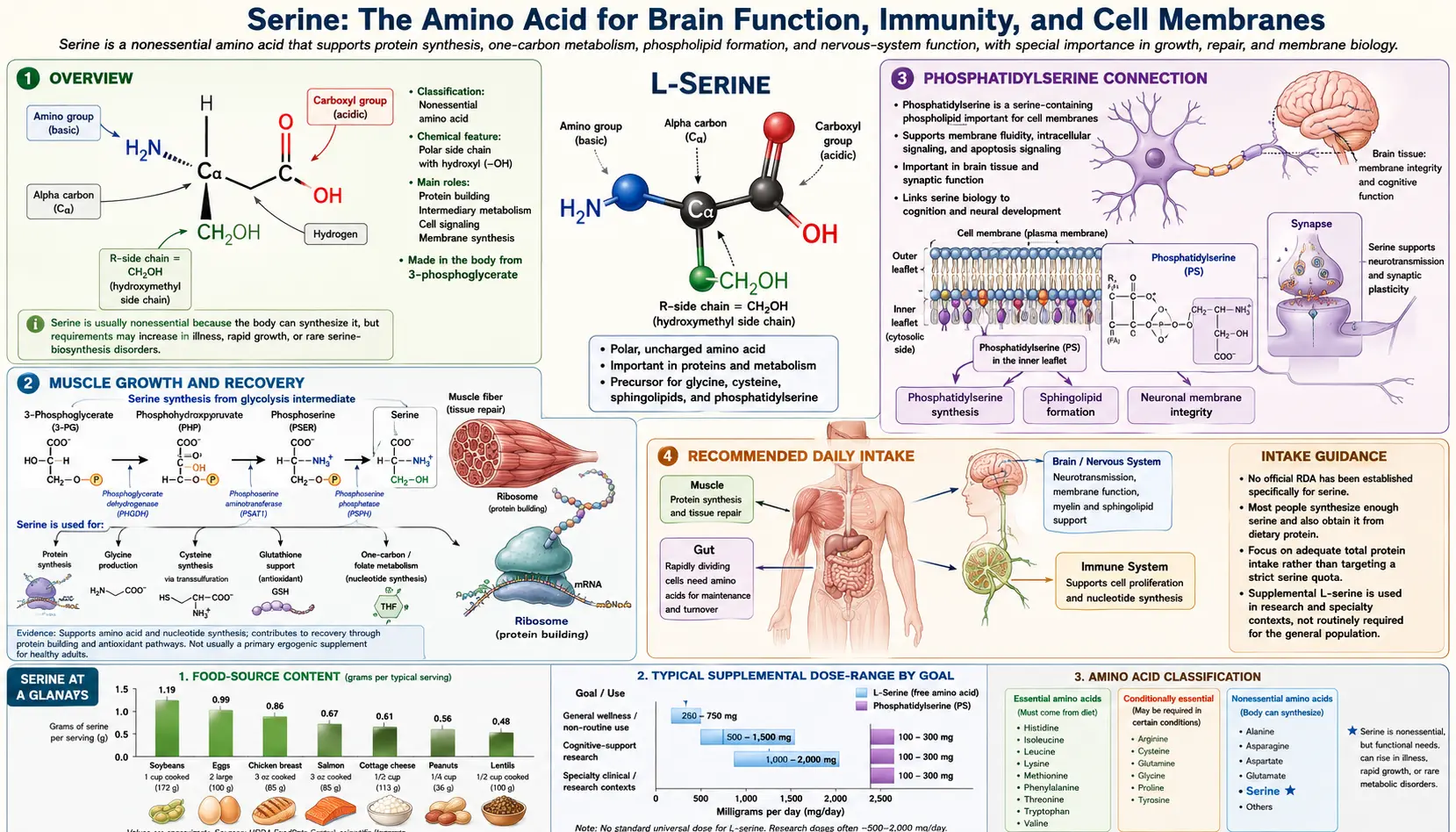
Table of Contents
- Overview
- Phospholipid and Cell Membrane Synthesis
- Brain Health and Neurotransmitter Production
- Immune System Function
- Muscle Growth and Recovery
- Tryptophan and Serotonin Pathway
- DNA and RNA Synthesis
- Fatty Acid Metabolism
- Skin Hydration and Moisturization
- Phosphatidylserine Connection
- Deficiency Signs
- Food Sources
- Supplementation Guidelines
- Recommended Daily Intake
- Research Papers
- Connections
- Featured Videos
Overview
Serine is a non-essential amino acid that the body can synthesize from other metabolic intermediates, primarily from 3-phosphoglycerate, a byproduct of glycolysis. Despite its classification as non-essential, serine is anything but dispensable. It participates in an extraordinary range of biochemical processes, from building the phospholipids that form every cell membrane in the body to serving as a precursor for neurotransmitters, nucleotides, and other amino acids. In naturopathic medicine, serine is recognized as a foundational molecule whose adequate supply supports the structural integrity of cells, the clarity of cognitive function, and the resilience of the immune system.
Serine exists in two optical isomers: L-serine and D-serine. L-serine is the form incorporated into proteins and is the predominant dietary form. D-serine, produced in the brain by the enzyme serine racemase, acts as a potent co-agonist at NMDA receptors and plays a critical role in synaptic plasticity, learning, and memory. Both forms are important, and the body maintains careful regulatory control over their concentrations in different tissues.
From a whole-body perspective, serine is a metabolic hub. It donates single-carbon units to the folate cycle, contributes to the synthesis of cysteine and glycine, participates in sphingolipid production, and is essential for the formation of phosphatidylserine and phosphatidylethanolamine. When serine availability is compromised, the downstream effects can manifest across multiple organ systems, making it a nutrient worthy of close attention in clinical practice.
Phospholipid and Cell Membrane Synthesis
Every cell in the human body is enclosed by a lipid bilayer membrane composed primarily of phospholipids, and serine is a direct building block for two of the most abundant phospholipid classes: phosphatidylserine and phosphatidylethanolamine. Phosphatidylserine is concentrated on the inner leaflet of cell membranes, where it plays essential roles in cell signaling, apoptosis regulation, and blood coagulation. Phosphatidylethanolamine, which the body produces by decarboxylating phosphatidylserine, is the second most abundant phospholipid in mammalian membranes.
The synthesis of these phospholipids depends on a steady supply of serine. In rapidly dividing tissues such as the bone marrow, intestinal epithelium, and immune cells, the demand for new membrane material is enormous. Without adequate serine, the production of new cells slows and existing membranes may lose their optimal fluidity and signaling capacity. This is one reason why serine status becomes particularly important during periods of growth, tissue repair, and immune activation.
Sphingolipids represent another class of membrane components that require serine for their synthesis. The condensation of serine with palmitoyl-CoA, catalyzed by the enzyme serine palmitoyltransferase, is the committed first step in sphingolipid biosynthesis. Sphingolipids are especially concentrated in nervous tissue, where they form the myelin sheath that insulates nerve fibers and enables rapid signal transmission. Disruptions in sphingolipid metabolism have been linked to neurodegenerative conditions, underscoring the importance of maintaining adequate serine for nervous system integrity.
Brain Health and Neurotransmitter Production
The brain has an outsized dependence on serine. Both L-serine and its isomer D-serine are critical for normal central nervous system function. L-serine is actively transported across the blood-brain barrier and is also synthesized locally by astrocytes, the star-shaped glial cells that support neuronal health. Astrocytic production of L-serine is now recognized as essential for providing the brain with the building blocks it needs for neurotransmitter synthesis, myelination, and synaptic membrane maintenance.
D-serine, produced from L-serine by the enzyme serine racemase, functions as a co-agonist at the glycine-binding site of NMDA (N-methyl-D-aspartate) receptors. These receptors are fundamental to synaptic plasticity, the process by which the strength of connections between neurons is modified in response to experience. NMDA receptor activation is central to learning, memory consolidation, and cognitive flexibility. Research has demonstrated that reduced D-serine levels are associated with cognitive decline, and supplementation with L-serine has shown promise in supporting neurological health.
Serine also serves as a precursor for the synthesis of glycine, another neurotransmitter with inhibitory functions in the spinal cord and brainstem. Through the enzyme serine hydroxymethyltransferase, serine is converted to glycine while simultaneously donating a one-carbon unit to tetrahydrofolate. This reaction links serine directly to the folate cycle and, by extension, to methylation reactions throughout the body. Naturopathic practitioners often consider serine status when addressing conditions involving cognitive fog, poor memory, mood disturbances, or neurological symptoms.
Immune System Function
The immune system is one of the most metabolically demanding systems in the body, and serine plays a vital role in supporting its function. Activated T cells, B cells, and macrophages all require large quantities of serine to fuel their rapid proliferation and effector functions. Recent research in immunometabolism has revealed that serine is not merely a passive building block but an active regulator of immune cell behavior.
When T cells are activated by an antigen, they undergo a dramatic metabolic reprogramming that increases their uptake and utilization of serine. This serine fuels one-carbon metabolism, which provides the methyl groups and nucleotide precursors necessary for DNA replication and epigenetic modifications that govern gene expression in immune cells. Without sufficient serine, T cell proliferation is impaired and the immune response is blunted.
Serine also contributes to the production of glutathione, the body's master antioxidant, through its role in cysteine synthesis. Immune cells generate large quantities of reactive oxygen species during their attack on pathogens, and glutathione is essential for protecting these cells from oxidative self-damage. By supporting glutathione production, serine helps maintain the functional integrity of immune cells during an active immune response. In clinical practice, ensuring adequate serine intake is particularly important for individuals with chronic infections, autoimmune conditions, or those recovering from illness.
Muscle Growth and Recovery
While serine is not typically highlighted alongside the branched-chain amino acids in discussions of muscle metabolism, it makes important contributions to muscle growth and post-exercise recovery. Serine is incorporated into muscle proteins and is required for the synthesis of creatine, a compound that serves as a rapid energy reserve in muscle tissue. The first step of creatine biosynthesis involves the transfer of an amidino group from arginine to glycine, and since glycine is produced from serine, adequate serine availability supports creatine production.
During exercise, muscle tissue sustains micro-damage that triggers an inflammatory and repair response. Serine supports this recovery process in several ways: it provides the phospholipids needed to repair damaged cell membranes, it fuels the immune cells that clear cellular debris from injured tissue, and it contributes to the nucleotide pool required for the proliferation of satellite cells, the muscle stem cells responsible for muscle fiber repair and growth.
Additionally, serine participates in the regulation of protein synthesis through its involvement in the mTOR signaling pathway. Adequate amino acid availability, including serine, signals to the cell that conditions are favorable for building new proteins. Athletes and physically active individuals may benefit from ensuring their diet provides sufficient serine, especially during periods of intense training or recovery from injury.
Tryptophan and Serotonin Pathway
Serine has an indirect but meaningful relationship with the serotonin pathway through its metabolic connections to tryptophan metabolism. Tryptophan, an essential amino acid, is the sole precursor for serotonin synthesis. The conversion of tryptophan to serotonin requires the enzyme tryptophan hydroxylase, which depends on tetrahydrobiopterin (BH4) as a cofactor. Serine contributes to BH4 recycling through its role in the folate cycle and one-carbon metabolism, thereby supporting the enzymatic machinery that produces serotonin.
Furthermore, serine's conversion to glycine and its participation in one-carbon metabolism influence the availability of S-adenosylmethionine (SAMe), a universal methyl donor involved in the methylation of neurotransmitters including serotonin. Proper methylation is required for the inactivation and turnover of serotonin, and disruptions in methylation can lead to imbalances in serotonin signaling. By supporting healthy methylation, serine indirectly helps maintain serotonin homeostasis.
From a naturopathic standpoint, patients presenting with low mood, anxiety, sleep disturbances, or carbohydrate cravings may benefit from a comprehensive assessment of amino acid status that includes serine. While tryptophan and 5-HTP supplementation are more commonly used to directly support serotonin production, ensuring adequate serine helps create the metabolic environment in which serotonin synthesis and regulation can proceed optimally.
DNA and RNA Synthesis
Serine is indispensable for the synthesis of nucleotides, the building blocks of DNA and RNA. Through the one-carbon metabolism pathway, serine donates a methylene group to tetrahydrofolate, generating 5,10-methylenetetrahydrofolate. This activated folate intermediate is required for the synthesis of thymidylate (a DNA-specific nucleotide) and is also involved in the production of purine nucleotides, which are shared components of both DNA and RNA.
This role makes serine essential for any tissue undergoing rapid cell division. During embryonic development, wound healing, immune responses, and red blood cell production, the demand for nucleotides surges, and serine must be available in sufficient quantities to meet this demand. A deficit in serine can impair DNA replication and increase the risk of mutations, as cells may be forced to incorporate uracil into DNA in place of thymine when thymidylate synthesis is compromised.
Serine's contribution to one-carbon metabolism also connects it to epigenetic regulation through DNA and histone methylation. These methylation marks govern which genes are expressed or silenced in a given cell type, and their proper maintenance depends on the availability of methyl donors ultimately derived from the folate and methionine cycles. By feeding into these cycles, serine helps support the epigenetic landscape that defines cellular identity and function throughout the body.
Fatty Acid Metabolism
Serine participates in fatty acid metabolism through multiple pathways. As noted in the discussion of cell membranes, serine is required for the synthesis of sphingolipids via the serine palmitoyltransferase reaction. This reaction consumes both serine and palmitoyl-CoA (a fatty acid derivative) to produce sphinganine, the precursor to all sphingolipids including ceramides, sphingomyelins, and gangliosides. These lipids are not merely structural components but also serve as bioactive signaling molecules that regulate cell growth, differentiation, and programmed cell death.
Ceramides, in particular, have garnered significant research attention for their roles in metabolic health. Elevated ceramide levels are associated with insulin resistance, inflammation, and cardiovascular disease. The balance between ceramide synthesis and degradation is tightly regulated, and serine availability influences the rate of de novo ceramide production. This relationship highlights the importance of understanding serine metabolism in the context of metabolic syndrome and related conditions.
Serine also influences fatty acid oxidation indirectly through its role in carnitine synthesis. Carnitine, which is required for the transport of long-chain fatty acids into mitochondria for beta-oxidation, is synthesized from lysine and methionine in a pathway that depends on SAMe-dependent methylation reactions. Since serine feeds into the methionine cycle through its one-carbon donations, it helps maintain the SAMe pool that supports carnitine production and, consequently, efficient fat burning.
Skin Hydration and Moisturization
Serine is one of the most abundant amino acids in the skin's natural moisturizing factor (NMF), a complex mixture of hygroscopic substances found within the corneocytes of the stratum corneum. The NMF is responsible for maintaining skin hydration by attracting and retaining water from the environment. Serine, along with glycine and alanine, constitutes a significant proportion of the free amino acid pool in the NMF, and its presence is critical for the skin's ability to remain supple, resilient, and properly hydrated.
The free amino acids in the NMF are derived from the breakdown of filaggrin, a structural protein in the epidermis. As keratinocytes mature and move toward the skin surface, filaggrin is degraded by specific proteases into its constituent amino acids, with serine being released in particularly high concentrations. Conditions that impair filaggrin expression or processing, such as atopic dermatitis and ichthyosis, result in reduced NMF levels and characteristic dry, flaky skin.
From a naturopathic dermatology perspective, supporting serine status through diet and, when appropriate, supplementation can contribute to improved skin hydration from within. Topical formulations containing serine and other NMF components are also used in clinical practice to restore the moisture-retaining capacity of compromised skin barriers. Patients with chronic dry skin, eczema, or age-related skin changes may benefit from attention to their serine intake as part of a comprehensive skin health protocol.
Phosphatidylserine Connection
Phosphatidylserine (PS) is a phospholipid that requires serine for its synthesis and has become one of the most widely studied nutritional supplements for cognitive health. PS is produced in the body by a base-exchange reaction in which serine replaces the head group of phosphatidylcholine or phosphatidylethanolamine. It is concentrated in the inner leaflet of cell membranes, particularly in the brain, where it constitutes approximately 15 percent of the total phospholipid pool in neural tissue.
The functions of phosphatidylserine in the brain are extensive. It modulates the activity of membrane-bound enzymes and receptors, facilitates neurotransmitter release, supports synaptic function, and plays a role in the clearance of damaged cells through its externalization on the outer membrane surface during apoptosis. Clinical trials have shown that PS supplementation can improve memory, attention, and processing speed in older adults experiencing age-related cognitive decline.
The body's ability to synthesize phosphatidylserine depends on the availability of its precursor, L-serine. When serine supply is limited, PS production may be compromised, potentially affecting neuronal membrane composition and cognitive function over time. This connection is especially relevant for aging populations, as both serine metabolism and PS levels tend to decline with age. Naturopathic practitioners often recommend PS supplementation alongside dietary strategies to ensure adequate serine intake, creating a comprehensive approach to supporting brain health throughout the lifespan.
Deficiency Signs
Because serine is classified as non-essential and can be synthesized endogenously, overt deficiency is uncommon in healthy individuals consuming a varied diet. However, suboptimal serine status can occur in certain populations and may manifest through a range of subtle symptoms that are often attributed to other causes. Recognizing these signs is important for naturopathic practitioners who take a comprehensive, root-cause approach to patient care.
Signs and symptoms that may indicate insufficient serine availability include:
- Cognitive difficulties such as poor memory, reduced mental clarity, difficulty concentrating, and slowed processing speed
- Mood disturbances including low mood, increased anxiety, irritability, and reduced stress resilience
- Chronic fatigue and reduced physical endurance that does not improve with rest
- Dry, flaky skin and impaired wound healing due to reduced natural moisturizing factor and slower cell turnover
- Weakened immune function manifesting as frequent infections, slow recovery from illness, or persistent low-grade inflammation
- Muscle weakness and delayed recovery from exercise or physical exertion
- Peripheral neuropathy or numbness and tingling, potentially related to impaired sphingolipid and myelin synthesis
Populations at higher risk for suboptimal serine status include older adults (whose endogenous synthesis declines with age), individuals with chronic illness or malabsorption conditions, those on severely restricted diets, and patients with inborn errors of serine metabolism. Genetic conditions affecting the serine biosynthesis pathway, though rare, can cause severe neurological impairment and seizures, particularly in infants and children, and require serine supplementation as a medical treatment.
Food Sources
Serine is widely available in both animal and plant foods, making it accessible to individuals following diverse dietary patterns. Because it is a component of most dietary proteins, any protein-rich food will provide serine. However, some foods are particularly rich sources.
Animal sources of serine:
- Eggs are among the richest dietary sources, providing approximately 800 mg of serine per large egg
- Dairy products including milk, cheese, and yogurt provide substantial amounts, with hard cheeses being especially concentrated sources
- Meat and poultry including chicken, turkey, beef, and pork provide 1,000 to 1,500 mg of serine per 100-gram serving
- Fish and seafood including salmon, cod, shrimp, and tuna are good sources, typically providing 800 to 1,200 mg per 100-gram serving
Plant sources of serine:
- Soybeans and soy products such as tofu, tempeh, and edamame are among the best plant-based sources
- Legumes including lentils, chickpeas, black beans, and kidney beans provide meaningful amounts
- Nuts and seeds particularly sunflower seeds, pumpkin seeds, almonds, and peanuts
- Whole grains including oats, wheat, and rice contribute to daily serine intake
- Seaweed and spirulina are concentrated plant sources rich in serine and other amino acids
A balanced diet that includes adequate total protein from varied sources will generally provide sufficient serine for most individuals. However, those with increased needs due to illness, intense physical activity, aging, or neurological conditions may benefit from targeted dietary emphasis on serine-rich foods or from supplementation under professional guidance.
Supplementation Guidelines
L-serine supplementation has gained increasing attention in both naturopathic and conventional medicine, particularly for neurological applications. The most commonly available supplemental form is L-serine powder, which dissolves readily in water and has a mildly sweet taste. Phosphatidylserine is available as a separate supplement and is more commonly used specifically for cognitive support.
General supplementation considerations:
- L-serine is generally well tolerated, with few reported side effects at commonly used doses
- Doses used in clinical research typically range from 2 to 15 grams per day, depending on the condition being addressed
- For general wellness and cognitive support, doses of 2 to 5 grams per day are commonly recommended by naturopathic practitioners
- Higher doses of 10 to 15 grams per day have been used in research on neurodegenerative conditions, but should only be undertaken with professional supervision
- Phosphatidylserine supplements are typically dosed at 100 to 300 mg per day for cognitive support
Timing and administration:
- L-serine can be taken with or without food, though taking it with a meal may improve absorption and reduce any mild gastrointestinal discomfort
- Dividing the daily dose into two or three servings may help maintain more consistent blood levels
- For cognitive benefits, some practitioners recommend taking serine in the morning or early afternoon
Precautions:
- Individuals with kidney disease should consult their healthcare provider before supplementing with any amino acid, as impaired renal function affects amino acid metabolism and clearance
- Pregnant and breastfeeding women should seek professional guidance before beginning supplementation
- Those taking medications for neurological or psychiatric conditions should consult their prescribing physician, as serine can influence neurotransmitter systems
- As with all supplements, quality matters; choose products from reputable manufacturers that provide third-party testing for purity and potency
Recommended Daily Intake
There is no official Recommended Dietary Allowance (RDA) established specifically for serine, as it is classified as a non-essential amino acid that the body can synthesize. However, dietary intake research and clinical studies provide useful guidance for understanding optimal serine consumption.
Estimated daily intake from diet:
- The average adult consuming a standard Western diet obtains approximately 3 to 5 grams of serine per day from food sources
- Individuals with higher protein intakes may consume 5 to 8 grams per day
- Those on restricted or low-protein diets may obtain as little as 1 to 2 grams per day
Considerations for specific populations:
- Older adults may benefit from higher intakes due to declining endogenous synthesis and increased risk of neurodegeneration
- Athletes and physically active individuals have increased demands for amino acids to support muscle repair, immune function, and energy metabolism
- Individuals with neurological conditions may require significantly higher intakes, as supported by clinical research using doses of 10 to 15 grams per day
- Children and adolescents in periods of rapid growth have increased amino acid needs overall, including serine for brain development and cell proliferation
- Individuals with chronic illness or recovering from surgery may benefit from increased serine to support immune function and tissue repair
A practical approach for most adults is to ensure adequate total protein intake from varied sources, which will naturally provide sufficient serine for general health. For those seeking specific therapeutic benefits, working with a qualified naturopathic doctor or healthcare practitioner to determine appropriate supplementation doses based on individual health status, goals, and any existing medical conditions is strongly recommended.
Research Papers
The following curated PubMed searches surface the peer-reviewed literature underpinning the claims on this page. Each link opens a live PubMed query for Serine filtered by topic, so the results stay current as new studies are indexed.
- PubMed search — Serine: Metabolism and biochemistry (review)
- PubMed search — Serine: Dietary intake and requirements
- PubMed search — Serine: Supplementation randomized controlled trials
- PubMed search — Serine: Plasma levels and clinical outcomes
- PubMed search — Serine: Muscle protein synthesis and exercise
- PubMed search — Serine: Deficiency: signs and consequences
- PubMed search — Serine: Cardiovascular effects
- PubMed search — Serine: Neurological and cognitive effects
- PubMed search — Serine: Immune function
- PubMed search — Serine: Oxidative stress and antioxidant activity
- PubMed search — Serine: Gastrointestinal and gut health
- PubMed search — Serine: Safety, toxicity, and upper limit
For a broader literature review, see the full PubMed record for Serine and the NIH Office of Dietary Supplements Fact Sheets.
This content is provided for informational purposes only and does not constitute medical advice. Consult a qualified healthcare provider before beginning any supplementation regimen.
Connections
- All Amino Acids
- Serine Benefits Deep Dive
- Glycine
- Tryptophan
- Methionine
- Alanine
- Cysteine
- Threonine
- Tyrosine
- Histidine
- Glycine for Tinnitus
- Creatine
- NAC & Glutathione
- Anxiety
- Insulin Resistance
- Cardiovascular Disease
- Fatigue
- Hemophilia
- Phosphorus and Energy Production
- Asparagine