Vitamin E and Immune Function
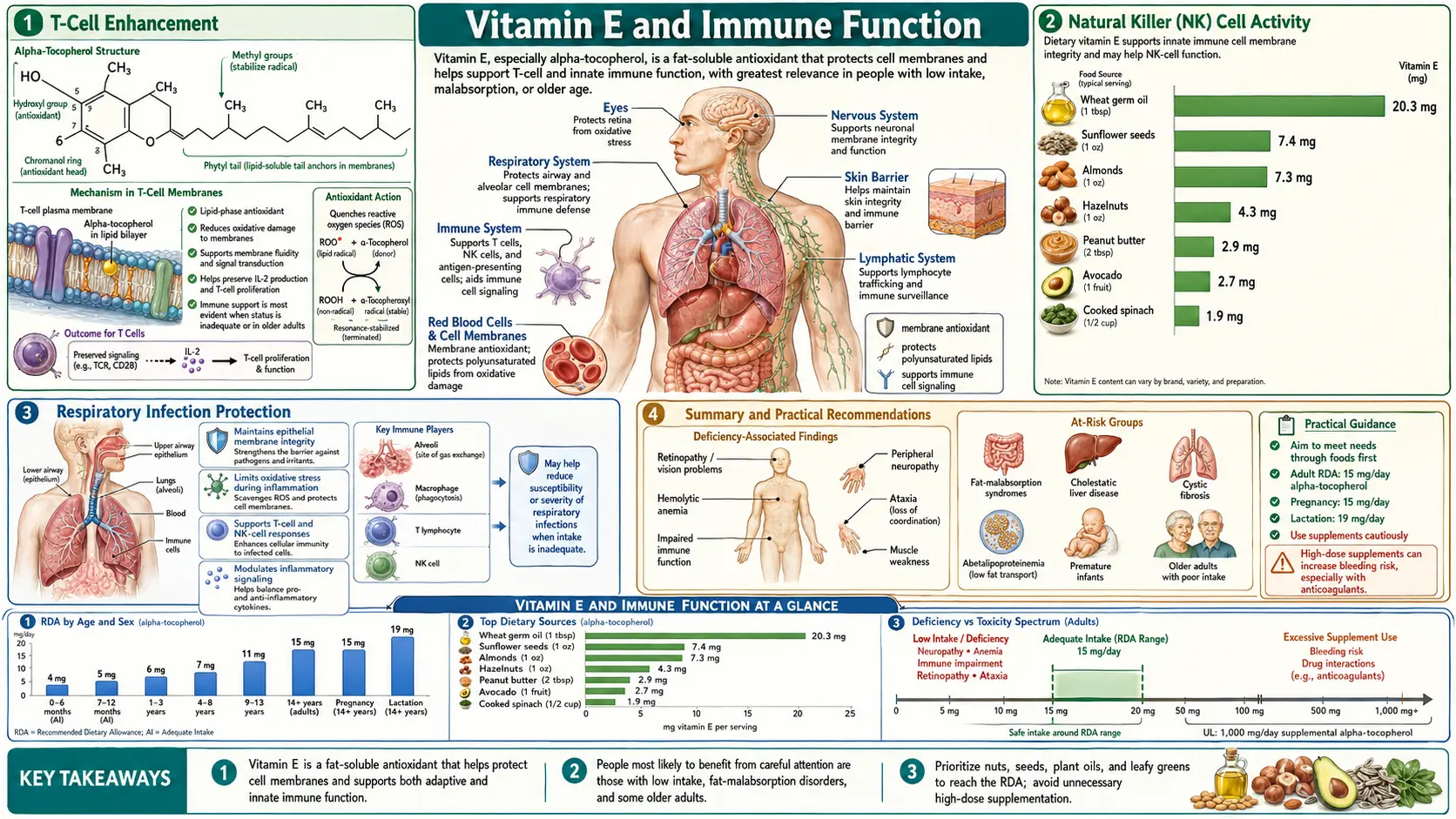
Vitamin E is one of the most potent nutritional modulators of immune function, with effects that are particularly significant in older adults whose immune systems undergo progressive decline through a process known as immunosenescence. The immune system is exceptionally sensitive to oxidative stress — immune cells have high concentrations of polyunsaturated fatty acids in their membranes, they generate reactive oxygen species as part of their antimicrobial arsenal, and they undergo rapid proliferative expansion during immune responses, all of which create enormous demand for antioxidant protection. Vitamin E, as the primary lipid-soluble antioxidant in cell membranes, plays a critical role in maintaining immune cell membrane integrity, modulating intracellular signaling, and regulating the production of immunomodulatory mediators. Decades of research, including landmark studies by Simin Nikbin Meydani and colleagues at Tufts University, have established Vitamin E as a key nutrient for optimal immune function across the lifespan, with the most dramatic benefits observed in the elderly population.
Table of Contents
- T-Cell Enhancement
- Elderly Immune Response and the SENIEUR Protocol Studies
- Natural Killer (NK) Cell Activity
- Prostaglandin E2 (PGE2) Reduction — A Key Mechanism
- Respiratory Infection Protection
- Autoimmune Modulation
- Summary and Practical Recommendations
- Cautions & Drug Interactions
- Key Research Papers
- Connections
- Featured Videos
1. T-Cell Enhancement
T-lymphocytes (T-cells) are central orchestrators of the adaptive immune response, and Vitamin E enhances their function through multiple mechanisms.
- Membrane Protection: T-cells have high concentrations of polyunsaturated fatty acids (PUFAs) in their membranes, making them particularly vulnerable to lipid peroxidation. Vitamin E protects T-cell membranes from oxidative damage, preserving membrane fluidity, receptor function, and signal transduction capacity. Oxidized T-cell membranes have impaired receptor mobility and signaling, leading to reduced responsiveness to antigenic stimulation.
- Immunological Synapse Formation: When a T-cell recognizes an antigen presented by an antigen-presenting cell (APC), it forms an immunological synapse — a structured interface of receptors, signaling molecules, and cytoskeletal elements. Vitamin E supports the membrane reorganization and lipid raft formation required for proper synapse assembly, enhancing the efficiency of antigen recognition and T-cell activation.
- IL-2 Production: Interleukin-2 (IL-2) is the primary T-cell growth factor, essential for T-cell proliferative expansion during immune responses. Vitamin E supplementation increases IL-2 production by T-cells, both by protecting the cells from oxidative suppression and by reducing the inhibitory effects of prostaglandin E2 on IL-2 synthesis.
- T-Cell Proliferation: Multiple clinical studies demonstrate that Vitamin E supplementation significantly enhances T-cell proliferative responses to mitogenic and antigenic stimulation, with the most pronounced effects in elderly individuals whose baseline T-cell proliferation is reduced.
- Th1/Th2 Balance: Aging is associated with a shift from Th1 (cell-mediated) toward Th2 (humoral) immune responses. Vitamin E supplementation may help restore a more balanced Th1/Th2 profile in elderly individuals, supporting cell-mediated immunity against intracellular pathogens and cancer cells.
- CD4+ and CD8+ T-Cell Function: Both helper T-cells (CD4+) and cytotoxic T-cells (CD8+) benefit from Vitamin E supplementation, with improved proliferation, cytokine production, and cytotoxic activity observed in supplemented elderly subjects.
2. Elderly Immune Response and the SENIEUR Protocol Studies
The most compelling evidence for Vitamin E's immune-enhancing effects comes from studies in elderly populations, where immunosenescence creates a measurable window for nutritional intervention.
- Immunosenescence: Aging is associated with progressive decline in immune function characterized by reduced T-cell proliferation, decreased IL-2 production, impaired delayed-type hypersensitivity (DTH) responses, thymic involution, and increased susceptibility to infections. Oxidative stress is a major driver of immunosenescence.
- SENIEUR Protocol: The SENIEUR protocol is a set of rigorous inclusion criteria developed by the European Community's Concerted Action on Aging (EURAGE) to select immunologically healthy elderly individuals for immunogerontological studies. Subjects selected by SENIEUR criteria are free of diseases and medications that affect immune function, allowing researchers to study the effects of aging per se (and nutritional interventions) on immunity without confounding factors.
- Landmark Meydani Study (1997): In a landmark randomized, double-blind, placebo-controlled trial, Simin Meydani and colleagues at Tufts University demonstrated that Vitamin E supplementation (200 mg/day for 235 days) in healthy elderly individuals (aged 65+) significantly enhanced DTH responses, increased T-cell proliferation, increased IL-2 production, and decreased PGE2 production. The 200 mg/day dose was the most effective, outperforming both 60 mg/day and 800 mg/day doses.
- Delayed-Type Hypersensitivity (DTH): DTH responses — skin test reactions to recall antigens such as Candida, tetanus toxoid, and trichophyton — are a clinically meaningful measure of cell-mediated immunity. Vitamin E supplementation at 200 mg/day significantly increased both the number of positive DTH responses and the total diameter of induration, indicating enhanced cell-mediated immune competence.
- Optimal Dose: The finding that 200 mg/day was more effective than 800 mg/day suggests a bell-shaped dose-response curve for Vitamin E's immune effects, with very high doses potentially providing less benefit than moderate doses. This may be related to excessive suppression of ROS signaling at very high doses, as some ROS production is necessary for optimal immune cell activation.
3. Natural Killer (NK) Cell Activity
Natural killer cells are innate immune lymphocytes that provide rapid defense against virally infected cells and cancer cells without requiring prior sensitization.
- NK Cell Cytotoxicity: Vitamin E enhances NK cell cytotoxic activity — the ability to recognize and kill target cells through the release of perforin and granzymes. This enhancement is observed in both young and elderly individuals, though the magnitude of improvement is typically greater in the elderly due to their lower baseline NK function.
- Membrane-Dependent Recognition: NK cell recognition of target cells depends on the interaction between NK receptors and ligands on target cell surfaces. Vitamin E's protection of NK cell membrane integrity supports proper receptor expression and function, enhancing target cell recognition.
- Cancer Immunosurveillance: Enhanced NK cell activity through Vitamin E supplementation may support the immune system's ability to detect and eliminate nascent cancer cells — the process of cancer immunosurveillance — though this hypothesis requires further clinical validation.
- Viral Defense: NK cells are critical for early defense against viral infections, particularly herpes viruses, influenza, and other pathogens. Vitamin E's enhancement of NK function may contribute to improved antiviral immunity, particularly in elderly individuals whose NK cell function is compromised.
4. Prostaglandin E2 (PGE2) Reduction — A Key Mechanism
The reduction of prostaglandin E2 production is considered one of the primary mechanisms by which Vitamin E enhances immune function, particularly in the elderly.
- PGE2 and Immunosuppression: Prostaglandin E2, produced by cyclooxygenase enzymes (primarily COX-2) from arachidonic acid, is a potent immunosuppressive mediator. PGE2 inhibits T-cell proliferation, reduces IL-2 and interferon-gamma production, suppresses NK cell activity, and shifts immune responses from Th1 toward Th2 predominance.
- Age-Related PGE2 Increase: Aging is associated with increased PGE2 production by macrophages, driven by increased COX-2 expression and elevated arachidonic acid availability. This age-related PGE2 excess is a significant contributor to immunosenescence, creating a suppressory environment that impairs T-cell-mediated immunity.
- Vitamin E Reduces PGE2: Vitamin E supplementation significantly reduces macrophage PGE2 production through multiple mechanisms: (1) inhibition of COX-2 activity, (2) reduction of arachidonic acid release from membrane phospholipids via phospholipase A2 inhibition, and (3) reduced peroxide tone that activates COX enzymes. By reducing the immunosuppressive PGE2 burden, Vitamin E releases T-cells from PGE2-mediated suppression.
- Cascade Effect: The reduction of PGE2 is not an isolated effect but triggers a cascade of immune improvements: increased IL-2 production, enhanced T-cell proliferation, improved DTH responses, and restored Th1/Th2 balance. This explains why PGE2 reduction is considered the central mechanism of Vitamin E's immune-enhancing effects in the elderly.
- Macrophage Function: While reducing immunosuppressive PGE2 production, Vitamin E does not impair other macrophage functions — phagocytic capacity, antigen presentation, and cytokine production (TNF-alpha, IL-1) are maintained or enhanced, ensuring that the innate immune defense remains intact.
5. Respiratory Infection Protection
Upper and lower respiratory tract infections are leading causes of morbidity and mortality in the elderly, and Vitamin E supplementation may reduce infection risk.
- Nursing Home Studies: A randomized controlled trial by Meydani et al. (2004) in 617 elderly nursing home residents found that Vitamin E supplementation (200 IU/day) significantly reduced the incidence of upper respiratory tract infections, particularly the common cold, though it did not significantly reduce lower respiratory tract infections in the overall study population.
- Upper Respiratory Tract Infections: The reduction in common colds with Vitamin E supplementation was approximately 20% compared to placebo, a modest but clinically meaningful benefit in a population with high infection burden.
- Pneumonia: Some analyses suggest that the effect of Vitamin E on pneumonia risk may depend on baseline characteristics — lighter-weight, less-smoking elderly individuals appeared to benefit more, while heavier smokers did not. The interaction between Vitamin E and smoking in respiratory infection risk remains an area of investigation.
- Immune Mechanism: The respiratory infection protection is likely mediated by Vitamin E's enhancement of mucosal immune defenses, T-cell function, NK cell activity, and overall immune competence, enabling more effective pathogen clearance and reduced infection establishment.
- Influenza Protection: Enhanced immune function from Vitamin E supplementation may support defense against influenza in the elderly through improved innate immune response and stronger adaptive immunity.
6. Autoimmune Modulation
While Vitamin E is primarily recognized for enhancing immune function, it also possesses immunomodulatory properties that may be relevant to autoimmune conditions.
- Anti-Inflammatory Effects: Vitamin E's anti-inflammatory properties — COX-2 inhibition, PGE2 reduction, NF-kB pathway modulation, and reduction of pro-inflammatory cytokines — may help reduce the chronic inflammatory drive that perpetuates autoimmune tissue damage.
- Oxidative Stress in Autoimmunity: Many autoimmune diseases are characterized by elevated oxidative stress, which can modify self-proteins (creating neo-antigens), activate inflammatory signaling, and amplify tissue damage. Vitamin E's antioxidant protection may reduce these oxidative triggers of autoimmune inflammation.
- Regulatory T-Cell Support: Some research suggests that Vitamin E may support the function of regulatory T-cells (Tregs), which are critical for maintaining immune tolerance and preventing autoimmune responses. Enhanced Treg function could help restrain inappropriate immune activation against self-tissues.
- Rheumatoid Arthritis: Some studies have explored Vitamin E supplementation as an adjunct therapy in rheumatoid arthritis, with mixed results. Vitamin E's anti-inflammatory effects may provide modest symptomatic benefit, but it is not a replacement for disease-modifying therapy.
- Systemic Lupus Erythematosus (SLE): Patients with SLE have elevated oxidative stress and often have low Vitamin E levels. Some preliminary studies suggest that Vitamin E supplementation may reduce oxidative stress markers and modestly improve certain disease parameters in SLE, though robust clinical trial evidence is limited.
- Balanced Immune Modulation: Vitamin E's value in the context of autoimmunity lies in its ability to modulate rather than simply stimulate immune function — reducing excessive inflammatory responses while preserving antimicrobial defense. This balanced immunomodulatory profile distinguishes Vitamin E from simple immunostimulants.
7. Summary and Practical Recommendations
The evidence supporting Vitamin E's role in immune function is substantial, with the strongest and most clinically relevant data coming from studies in elderly populations.
- Strongest Evidence: Enhancement of T-cell proliferation and IL-2 production, improvement of DTH responses, and reduction of PGE2-mediated immune suppression in elderly individuals are the best-supported immune effects of Vitamin E supplementation.
- Optimal Dose: Based on the available clinical evidence, 200 mg/day (approximately 200 IU) of alpha-tocopherol appears to be the optimal dose for immune enhancement in the elderly — more effective than lower doses and potentially more effective than very high doses (800+ IU/day).
- Target Population: The greatest immune benefit is seen in elderly individuals (65+ years) who are experiencing immunosenescence. Younger, healthy individuals with robust immune function may see less dramatic improvement, as their baseline immune capacity is already high.
- Dietary Sources: A diet rich in nuts (almonds, hazelnuts, sunflower seeds), healthy oils, and leafy greens provides Vitamin E along with other immune-supporting nutrients (zinc, selenium, Vitamin C) in a natural food matrix.
- Safety: Moderate-dose Vitamin E supplementation (200-400 IU/day) is generally safe for most adults. Higher doses should be approached with caution, particularly in individuals on anticoagulant therapy or with bleeding disorders.
Cautions & Drug Interactions
Vitamin E supplementation for immune support is generally well-tolerated, but several clinical considerations apply:
- Dose ceiling for immune benefit — the Meydani 1997 trial established that 200 mg/day produced greater immune enhancement than 800 mg/day. Do not assume more is better — very high doses (>800 IU/day) may blunt useful reactive-oxygen-species signaling that immune cells need for activation. For immune support, 200 IU/day is the evidence-based dose.
- Bleeding risk with anticoagulants — even at 200 IU/day, Vitamin E has mild anti-platelet effects. Patients on warfarin, aspirin, clopidogrel, or fish oil should inform their physician before starting.
- Acute infection — do not start high-dose Vitamin E during an active acute infection (e.g. sepsis). The body's oxidative burst is a critical antimicrobial weapon, and excessive antioxidant suppression could theoretically impair early bacterial clearance. The immune benefit of Vitamin E is established for chronic supplementation prior to infection exposure, not for treating active infection.
- Mixed tocopherols preferred for immune use — gamma-tocopherol contributes to immune effects through reactive-nitrogen-species scavenging and COX-2/5-LOX inhibition. High-dose alpha-tocopherol monotherapy depletes gamma-tocopherol by 30-50%. Mixed-tocopherol formulations preserve the full immune-relevant tocopherol profile.
- Autoimmune disease patients — Vitamin E's effect in active autoimmune disease is theoretically beneficial (anti-inflammatory) but clinically uncertain. Patients with lupus, rheumatoid arthritis, MS, or other autoimmune conditions should treat Vitamin E as an experimental adjunct, not a replacement for disease-modifying therapy, and discuss with rheumatology.
- Vaccine timing — some studies suggest Vitamin E supplementation modestly enhances vaccine antibody responses in the elderly. The mechanism is improved T-cell help. Starting Vitamin E 4-6 weeks before a planned vaccination (e.g. annual flu vaccine) is a reasonable approach for older adults.
- Smoking and Vitamin E — smokers have higher Vitamin E turnover and lower plasma Vitamin E. Smokers may benefit from higher dietary Vitamin E intake but should be aware of the historical signal that high-dose beta-carotene supplements (NOT Vitamin E) increased lung cancer in smokers (ATBC, CARET). Vitamin E itself did not show this signal.
- Iron co-administration — iron supplements reduce Vitamin E absorption. Take Vitamin E and iron supplements at least 8-12 hours apart.
- Recommended immune protocol for elderly (65+) — 200 IU/day mixed-tocopherol Vitamin E with a fat-containing meal, ideally paired with adequate zinc (15-30 mg), Vitamin D (1000-2000 IU), Vitamin C (500 mg), and selenium (100-200 mcg). This combination addresses the most common nutrient-related contributors to immunosenescence.
Key Research Papers
- Meydani SN et al. (1997). Vitamin E supplementation and in vivo immune response in healthy elderly subjects. A randomized controlled trial. JAMA. — PubMed
- Meydani SN et al. (2004). Vitamin E and respiratory tract infections in elderly nursing home residents: a randomized controlled trial. JAMA. — PubMed
- Meydani SN et al. (1990). Vitamin E supplementation enhances cell-mediated immunity in healthy elderly subjects. American Journal of Clinical Nutrition. — PubMed
- Han SN et al. (2000). Vitamin E supplementation increases T helper 1 cytokine production in old mice infected with influenza virus. Immunology. — PubMed
- Pae M, Meydani SN, Wu D (2012). The role of nutrition in enhancing immunity in aging. Aging and Disease. — PubMed
- Belisle SE et al. (2008). Polymorphisms at cytokine genes may determine the effect of vitamin E on cytokine production in the elderly. Journal of Nutrition. — PubMed
- Lewis ED et al. (2019). Regulatory role of vitamin E in the immune system and inflammation. IUBMB Life. — PubMed
- Wu D & Meydani SN (2008). Age-associated changes in immune function: impact of vitamin E intervention and the underlying mechanisms. Endocrine, Metabolic & Immune Disorders Drug Targets. — PubMed
- Graat JM et al. (2002). Effect of daily vitamin E and multivitamin-mineral supplementation on acute respiratory tract infections in elderly persons: a randomized controlled trial. JAMA. — PubMed
- Hayek MG et al. (1997). Vitamin E supplementation decreases lung virus titers in mice infected with influenza. Journal of Infectious Diseases. — PubMed
- Beharka AA et al. (2002). Mechanism of vitamin E inhibition of cyclooxygenase activity in macrophages from old mice: role of peroxynitrite. Free Radical Biology and Medicine. — PubMed
- Singh U & Devaraj S (2007). Vitamin E: inflammation and atherosclerosis. Vitamins and Hormones. — PubMed
PubMed Topic Searches
- Vitamin E and immune function
- Vitamin E and immunosenescence in the elderly
- Meydani — Vitamin E and T-cell function
- Vitamin E and natural killer (NK) cells
- Vitamin E and prostaglandin E2 (PGE2)
- Vitamin E and respiratory infection in the elderly
- Alpha-tocopherol and IL-2 production
- Vitamin E and delayed-type hypersensitivity (DTH)
- Tocotrienols and immune function
- Vitamin E and autoimmune disease
- Vitamin E and vaccine response
- Gamma-tocopherol and inflammation
Connections
- All Vitamins
- Vitamin E (Main Page)
- Vitamin E Benefits Hub
- Vitamin E and Heart Health
- Vitamin E and Skin Health
- Tocotrienols — The Other Vitamin E Family
- Vitamin C
- Vitamin C and Immune Defense
- Vitamin D3
- Vitamin A
- Zinc
- Selenium
- Immune Boosting
- Oxidative Stress
- Cancer
- Influenza
- Arthritis
- Almonds
- Walnuts