Vitamin E and Cardiovascular Health
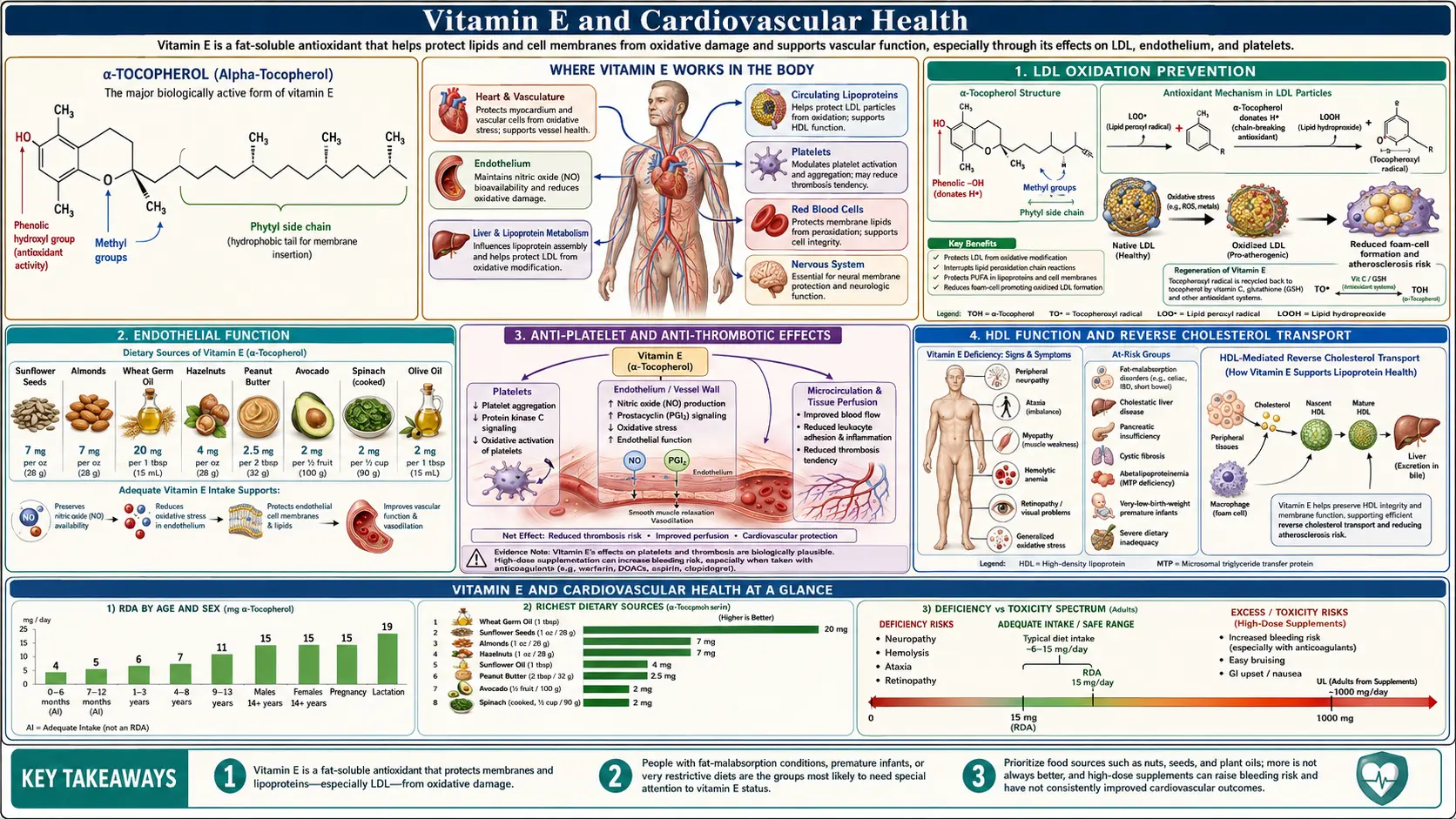
The relationship between Vitamin E and cardiovascular health has been one of the most intensively studied and debated topics in nutritional medicine over the past four decades. The oxidative modification hypothesis of atherosclerosis — which proposes that oxidation of LDL cholesterol is a critical early step in the development of atherosclerotic plaques — placed Vitamin E at the center of cardiovascular prevention research, as it is the primary antioxidant within LDL particles. Early epidemiological studies and biological plausibility generated tremendous enthusiasm for Vitamin E supplementation as a cardiovascular protectant. However, large randomized controlled trials produced unexpectedly mixed results, leading to a more nuanced understanding of how Vitamin E interacts with the complex pathophysiology of cardiovascular disease. This page examines the biochemical mechanisms, clinical trial evidence, and current understanding of Vitamin E's role in heart and vascular health.
Table of Contents
- LDL Oxidation Prevention
- Endothelial Function
- Anti-Platelet and Anti-Thrombotic Effects
- HDL Function and Reverse Cholesterol Transport
- Vascular Inflammation
- Major Clinical Trials — Evidence and Interpretation
- Gamma-Tocopherol's Cardiovascular Role
- Current Evidence Summary and Recommendations
- Cautions & Drug Interactions
- Key Research Papers
- Connections
- Featured Videos
1. LDL Oxidation Prevention
The oxidation of low-density lipoprotein (LDL) cholesterol is a pivotal event in the initiation and progression of atherosclerosis, and Vitamin E's role as the primary LDL antioxidant is its most studied cardiovascular mechanism.
- LDL Structure and Vulnerability: Each LDL particle contains a core of cholesteryl esters and triglycerides surrounded by a surface monolayer of phospholipids, free cholesterol, and apolipoprotein B-100. The polyunsaturated fatty acids in LDL's lipid core and surface phospholipids are highly susceptible to oxidative attack by reactive oxygen species generated in the arterial wall.
- Vitamin E as LDL Antioxidant: Each LDL particle typically contains 6-12 molecules of alpha-tocopherol, which serve as the first and most important line of antioxidant defense within the particle. Vitamin E intercepts lipid peroxyl radicals, donating a hydrogen atom to terminate chain reactions of lipid peroxidation within the LDL particle.
- Oxidized LDL and Atherosclerosis: Native (unoxidized) LDL is not recognized by scavenger receptors on macrophages in the arterial intima. However, when LDL becomes oxidized, it is avidly taken up by scavenger receptors (CD36, SR-A), leading to unregulated cholesterol accumulation and the formation of lipid-laden foam cells — the defining feature of early atherosclerotic lesions (fatty streaks).
- Monocyte Recruitment: Oxidized LDL stimulates endothelial cells to express adhesion molecules (VCAM-1, ICAM-1) and secrete monocyte chemotactic protein-1 (MCP-1), promoting the recruitment of monocytes into the arterial wall where they differentiate into macrophages and become foam cells.
- Ex Vivo Evidence: Numerous studies demonstrate that Vitamin E supplementation significantly increases the resistance of LDL to oxidation in ex vivo laboratory assays. The lag time before LDL oxidation begins is consistently and dose-dependently prolonged by Vitamin E supplementation.
- Oxidized Phospholipids: Beyond lipid peroxidation, oxidized phospholipids generated during LDL oxidation (such as oxidized phosphatidylcholine) are potent pro-inflammatory mediators that activate endothelial cells and macrophages. Vitamin E reduces the formation of these bioactive oxidized lipids.
2. Endothelial Function
The vascular endothelium plays a critical role in cardiovascular health, and Vitamin E supports endothelial function through multiple mechanisms.
- Nitric Oxide Preservation: Reactive oxygen species, particularly superoxide, rapidly react with nitric oxide (NO) to form peroxynitrite, reducing NO bioavailability. Since NO is the primary endothelium-derived vasodilator and anti-atherogenic molecule, this oxidative destruction of NO impairs vasodilation and promotes vascular disease. Vitamin E reduces superoxide generation and preserves NO bioavailability.
- Endothelial Nitric Oxide Synthase (eNOS): Vitamin E supports the function and coupling of eNOS, the enzyme responsible for producing NO in endothelial cells. Under conditions of oxidative stress, eNOS can become "uncoupled," producing superoxide instead of NO — a process that Vitamin E helps prevent.
- Flow-Mediated Dilation: Several clinical studies have demonstrated that Vitamin E supplementation improves flow-mediated dilation (FMD), a non-invasive measure of endothelial function, particularly in individuals with impaired endothelial function at baseline (diabetics, smokers, patients with coronary artery disease).
- Adhesion Molecule Reduction: Vitamin E reduces endothelial expression of vascular cell adhesion molecule-1 (VCAM-1) and intercellular adhesion molecule-1 (ICAM-1), decreasing the adhesion of monocytes and leukocytes to the endothelium — an early step in atherogenesis.
- Endothelin-1 Modulation: Vitamin E may reduce the production of endothelin-1, a potent vasoconstrictor and pro-inflammatory peptide produced by endothelial cells, contributing to improved vascular tone and reduced vascular inflammation.
3. Anti-Platelet and Anti-Thrombotic Effects
Vitamin E has significant anti-platelet properties that may reduce the risk of thrombotic cardiovascular events.
- Protein Kinase C Inhibition: Alpha-tocopherol directly inhibits protein kinase C (PKC) in platelets, a key signaling enzyme involved in platelet activation and aggregation. This inhibition is independent of Vitamin E's antioxidant activity and represents a direct cell-signaling effect.
- Thromboxane A2 Reduction: Vitamin E inhibits the synthesis of thromboxane A2 (TXA2), a potent platelet aggregator and vasoconstrictor produced by activated platelets. Reduced TXA2 production decreases platelet aggregation tendency.
- Prostacyclin Enhancement: Some studies suggest that Vitamin E may enhance the production of prostacyclin (PGI2) by endothelial cells. Prostacyclin is a vasodilator and platelet aggregation inhibitor, and a favorable balance of prostacyclin over thromboxane promotes vascular health.
- Platelet Adhesion Reduction: Vitamin E reduces platelet adhesion to collagen and other subendothelial matrix components exposed at sites of vascular injury, potentially reducing thrombus formation at atherosclerotic plaque rupture sites.
- Clinical Significance: Vitamin E's anti-platelet effects are clinically relevant — they may contribute to cardiovascular protection but also necessitate caution in patients on anticoagulant or antiplatelet therapy (warfarin, aspirin, clopidogrel) and in pre-surgical settings.
4. HDL Function and Reverse Cholesterol Transport
Emerging research suggests that Vitamin E may influence the functionality of high-density lipoprotein (HDL) and the reverse cholesterol transport pathway.
- HDL Antioxidant Capacity: HDL particles carry antioxidant enzymes (paraoxonase-1, platelet-activating factor acetylhydrolase) and contain Vitamin E. The antioxidant capacity of HDL is important for its anti-atherogenic function, as HDL protects LDL from oxidation and removes oxidized lipids from the arterial wall.
- Paraoxonase-1 (PON-1) Activity: Some studies suggest that Vitamin E supplementation may support the activity of paraoxonase-1, an HDL-associated enzyme that hydrolyzes oxidized lipids and protects both HDL and LDL from oxidative modification.
- Reverse Cholesterol Transport: HDL's ability to promote cholesterol efflux from macrophage foam cells in the arterial wall — the first step of reverse cholesterol transport — may be preserved or enhanced by the antioxidant protection provided by Vitamin E, which helps maintain HDL particle integrity and receptor interactions.
5. Vascular Inflammation
Atherosclerosis is now understood as a chronic inflammatory disease of the arterial wall, and Vitamin E's anti-inflammatory effects are relevant to cardiovascular protection.
- NF-kB Inhibition: Vitamin E inhibits the activation of nuclear factor kappa-B (NF-kB) in vascular cells, reducing the transcription of genes encoding pro-inflammatory cytokines (TNF-alpha, IL-1beta, IL-6), adhesion molecules (VCAM-1, ICAM-1, E-selectin), and chemokines (MCP-1) that drive vascular inflammation.
- C-Reactive Protein (CRP) Reduction: Some clinical studies have demonstrated that Vitamin E supplementation reduces circulating levels of high-sensitivity C-reactive protein (hs-CRP), a systemic marker of inflammation and an independent predictor of cardiovascular events.
- Monocyte-Endothelial Interaction: Vitamin E reduces monocyte adhesion to endothelial cells by decreasing both adhesion molecule expression on the endothelium and the expression of integrins on monocytes, reducing the inflammatory cell infiltration that drives plaque development.
- Smooth Muscle Cell Proliferation: Alpha-tocopherol inhibits vascular smooth muscle cell proliferation through PKC inhibition. Smooth muscle cell proliferation contributes to plaque growth and arterial remodeling in atherosclerosis, and its inhibition by Vitamin E represents an anti-atherogenic mechanism.
- Gamma-Tocopherol's Unique Role: Gamma-tocopherol possesses anti-inflammatory properties not shared by alpha-tocopherol, including the ability to scavenge reactive nitrogen species (peroxynitrite, NO2) and to inhibit both cyclooxygenase-2 and 5-lipoxygenase. These properties may make gamma-tocopherol an important but underappreciated contributor to cardiovascular protection.
6. Major Clinical Trials — Evidence and Interpretation
The clinical trial evidence for Vitamin E in cardiovascular disease prevention has been the subject of extensive analysis and debate.
- ATBC Study (Alpha-Tocopherol, Beta-Carotene Cancer Prevention Study, 1994): This Finnish trial of 29,133 male smokers found that alpha-tocopherol supplementation (50 mg/day) did not significantly reduce the incidence of major coronary events, though post-hoc analyses suggested a reduction in prostate cancer risk. The relatively low dose of Vitamin E and the advanced disease status of participants may have limited the study's ability to detect cardiovascular benefit.
- CHAOS Study (Cambridge Heart Antioxidant Study, 1996): This trial of 2,002 patients with angiographically proven coronary atherosclerosis showed that Vitamin E supplementation (400-800 IU/day) significantly reduced non-fatal myocardial infarction by 77%, though there was a non-significant trend toward increased cardiovascular mortality. The dramatic non-fatal MI reduction generated substantial enthusiasm but was not consistently replicated.
- GISSI-Prevenzione (1999): This Italian trial of 11,324 post-MI patients found no significant benefit of synthetic Vitamin E (300 mg/day) on the combined endpoint of death, non-fatal MI, and non-fatal stroke, though a modest reduction in cardiovascular death was observed in early analyses.
- HOPE Study (Heart Outcomes Prevention Evaluation, 2000): This landmark trial of 9,541 high-risk patients (with vascular disease or diabetes) found that natural Vitamin E (400 IU/day) provided no cardiovascular benefit over 4.5 years. The HOPE-TOO extension found that long-term Vitamin E supplementation was associated with increased risk of heart failure.
- WAVE Study (Women's Angiographic Vitamin and Estrogen, 2002): This trial found that Vitamin E (400 IU) plus Vitamin C (500 mg) did not slow angiographic coronary progression and suggested a non-significant trend toward worsening in some subgroups.
- Women's Health Study (2005): This large trial of 39,876 healthy women found that Vitamin E (600 IU every other day) did not reduce the risk of major cardiovascular events overall but showed a significant 24% reduction in cardiovascular mortality, a secondary endpoint.
7. Gamma-Tocopherol's Cardiovascular Role
The focus of most clinical trials on alpha-tocopherol alone has obscured the potentially important cardiovascular contributions of gamma-tocopherol.
- Dietary Predominance: Gamma-tocopherol is the most abundant form of Vitamin E in the typical Western diet (primarily from soybean, corn, and canola oils). Many individuals consuming a Western diet have higher gamma-tocopherol intake than alpha-tocopherol intake.
- Unique Anti-Inflammatory Properties: Gamma-tocopherol traps reactive nitrogen species (peroxynitrite and nitrogen dioxide) that alpha-tocopherol cannot effectively neutralize. These reactive nitrogen species are significant mediators of vascular inflammation and endothelial dysfunction.
- Alpha-Tocopherol Displacement Effect: High-dose alpha-tocopherol supplementation significantly reduces plasma gamma-tocopherol levels by 30-50%, as the alpha-tocopherol transfer protein preferentially binds alpha-tocopherol and accelerates gamma-tocopherol catabolism. This displacement effect means that alpha-tocopherol-only supplementation may inadvertently remove a beneficial cardiovascular nutrient.
- Epidemiological Evidence: Some epidemiological studies have found that plasma gamma-tocopherol levels are inversely associated with cardiovascular disease risk, independent of alpha-tocopherol levels. The highest gamma-tocopherol levels are associated with the lowest cardiovascular risk in several cohort studies.
- Natriuretic Factor: Gamma-tocopherol's metabolite, gamma-CEHC, has natriuretic (sodium-excreting) properties that may contribute to blood pressure regulation — a cardiovascular benefit not provided by alpha-tocopherol.
- Mixed Tocopherol Hypothesis: Some researchers hypothesize that the disappointing results of alpha-tocopherol-only cardiovascular trials may be partly explained by the depletion of gamma-tocopherol. Trials using mixed tocopherols (alpha + gamma + delta) might yield different results, though this hypothesis remains to be tested in large-scale trials.
8. Current Evidence Summary and Recommendations
The totality of evidence regarding Vitamin E and cardiovascular health requires a balanced interpretation that accounts for both the strong biological plausibility and the mixed clinical trial results.
- Dietary Vitamin E: Epidemiological studies consistently show that higher dietary Vitamin E intake from food sources (nuts, seeds, vegetable oils, whole grains) is associated with reduced cardiovascular risk. Dietary Vitamin E provides a natural mixture of tocopherols (alpha, gamma, delta) and tocotrienols, along with other protective nutrients present in Vitamin E-rich foods.
- Supplementation Uncertainty: Large-scale randomized trials have not demonstrated consistent cardiovascular benefit from alpha-tocopherol supplementation, and some studies have raised safety concerns at high doses. The American Heart Association does not currently recommend Vitamin E supplementation for cardiovascular disease prevention.
- Possible Explanations for Trial Failures: Several factors may explain the discrepancy between strong biological mechanisms and disappointing trial results: (1) use of alpha-tocopherol alone (depleting gamma-tocopherol), (2) use of synthetic forms with lower bioactivity, (3) enrollment of patients with advanced disease where oxidative damage is already extensive, (4) inadequate trial duration, (5) failure to select patients based on baseline Vitamin E status or oxidative stress levels, (6) complex interactions with other medications and nutrients.
- Food-First Approach: The strongest recommendation is to obtain Vitamin E from a diet rich in nuts (almonds, hazelnuts), seeds (sunflower seeds), healthy oils (olive oil, avocado oil), and leafy green vegetables. This approach provides a natural spectrum of Vitamin E forms along with other cardiovascular-protective nutrients.
- Targeted Supplementation: If supplementation is considered, mixed tocopherol formulations (containing alpha, gamma, and delta tocopherols) may be preferable to alpha-tocopherol alone. Moderate doses (200-400 IU/day) are generally considered safe for most adults. Patients on anticoagulant therapy should consult their healthcare provider before supplementing.
- Ongoing Research: Research continues into the cardiovascular effects of tocotrienols, gamma-tocopherol, mixed tocopherol formulations, and the role of Vitamin E in specific cardiovascular conditions. Future trials designed with the lessons of past studies may provide clearer answers about which forms, doses, and populations may benefit from Vitamin E supplementation for cardiovascular protection.
Cautions & Drug Interactions
Vitamin E supplementation for cardiovascular protection requires awareness of several important interactions and clinical considerations.
- Warfarin and other anticoagulants — Vitamin E at doses above 400 IU/day can potentiate the anticoagulant effect of warfarin, increasing INR and bleeding risk. Patients on warfarin should not start high-dose Vitamin E without notifying their prescribing physician, and INR monitoring should be more frequent for at least 4 weeks after initiating, stopping, or changing dose.
- Antiplatelet drugs (aspirin, clopidogrel, ticagrelor) — Vitamin E adds an anti-platelet effect through PKC inhibition and reduced thromboxane A2 synthesis. The combination is not absolutely contraindicated but increases bleeding risk; weigh against cardiovascular benefit.
- Fish oil (EPA/DHA) — combination further increases bleeding risk. Many integrative protocols use both, which is acceptable at moderate doses but warrants caution before surgery or invasive procedures.
- Pre-surgical discontinuation — most surgeons recommend stopping high-dose Vitamin E supplements 2 weeks before elective surgery, particularly cardiac, neurosurgical, or orthopedic procedures where intraoperative bleeding is a concern.
- Heart failure (HOPE-TOO finding) — long-term high-dose alpha-tocopherol (400 IU/day for >4 years) was associated with a 13% increased risk of heart failure hospitalization in the HOPE-TOO extension. Patients with established heart failure or high heart-failure risk should avoid chronic high-dose alpha-tocopherol-only supplementation.
- SELECT prostate cancer signal — alpha-tocopherol 400 IU/day alone produced a 17% increase in prostate cancer incidence in the SELECT trial. Men, particularly with prostate cancer family history, should avoid chronic high-dose alpha-tocopherol monotherapy; mixed-tocopherol formulations may be safer.
- Hemorrhagic stroke — meta-analyses suggest a small (~22%) relative increase in hemorrhagic stroke risk with Vitamin E supplementation, balanced by a small decrease in ischemic stroke. Patients with prior hemorrhagic stroke or significant hemorrhage risk factors should not supplement.
- Synthetic vs natural distinction — the negative HOPE / SELECT signals used natural alpha-tocopherol (the more bioactive form). The signal is not avoidable by switching to synthetic. The mitigation is dose reduction and using mixed-tocopherol formulations.
- Statin interaction — some early data suggested antioxidant cocktails (Vitamin E + Vitamin C + selenium + beta-carotene) could blunt the HDL-raising effect of simvastatin + niacin in the HATS trial. Whether this applies to Vitamin E alone at moderate doses is unclear. If using Vitamin E with a statin, prefer moderate doses (200 IU) over high doses.
- Iron interaction — Vitamin E and iron supplements should be taken at least 8-12 hours apart, because iron oxidizes Vitamin E in the gut, reducing absorption.
- Recommended cardiovascular protocol — for individuals choosing to supplement: 200 IU/day mixed tocopherols (alpha + gamma + delta) with food, paired with adequate Vitamin C (500-1000 mg) for E-recycling, dietary nut/seed intake, and Mediterranean-pattern diet. High-dose alpha-tocopherol monotherapy (>400 IU/day) is not recommended for primary or secondary cardiovascular prevention based on the totality of evidence.
Key Research Papers
- Stephens NG et al. (1996). Randomised controlled trial of vitamin E in patients with coronary disease: Cambridge Heart Antioxidant Study (CHAOS). Lancet. — PubMed
- Yusuf S et al. (2000). Vitamin E supplementation and cardiovascular events in high-risk patients (HOPE trial). New England Journal of Medicine. — PubMed
- Lonn E et al. (2005). Effects of long-term vitamin E supplementation on cardiovascular events and cancer: a randomized controlled trial (HOPE-TOO). JAMA. — PubMed
- GISSI-Prevenzione Investigators (1999). Dietary supplementation with n-3 polyunsaturated fatty acids and vitamin E after myocardial infarction. Lancet. — PubMed
- Rapola JM et al. (1997). Randomised trial of alpha-tocopherol and beta-carotene supplements on incidence of major coronary events in men with previous myocardial infarction (ATBC subgroup). Lancet. — PubMed
- Lee IM et al. (2005). Vitamin E in the primary prevention of cardiovascular disease and cancer: the Women's Health Study. JAMA. — PubMed
- Sesso HD et al. (2008). Vitamins E and C in the prevention of cardiovascular disease in men: the Physicians' Health Study II randomized controlled trial. JAMA. — PubMed
- Boshtam M et al. (2002). Vitamin E can reduce blood pressure in mild hypertensives. International Journal for Vitamin and Nutrition Research. — PubMed
- Devaraj S et al. (2007). Gamma-tocopherol supplementation alone and in combination with alpha-tocopherol alters biomarkers of oxidative stress and inflammation in subjects with metabolic syndrome. Free Radical Biology and Medicine. — PubMed
- Jiang Q et al. (2001). gamma-Tocopherol and its major metabolite, in contrast to alpha-tocopherol, inhibit cyclooxygenase activity in macrophages and epithelial cells. PNAS. — PubMed
- Boaz M et al. (2000). Secondary prevention with antioxidants of cardiovascular disease in endstage renal disease (SPACE): randomised placebo-controlled trial. Lancet. — PubMed
- Schwingshackl L et al. (2017). An umbrella review of nuts intake and risk of cardiovascular disease. Current Pharmaceutical Design. — PubMed
- Saremi A & Arora R (2010). Vitamin E and cardiovascular disease. American Journal of Therapeutics. — PubMed
PubMed Topic Searches
- Vitamin E and cardiovascular disease
- Alpha-tocopherol and LDL oxidation
- Gamma-tocopherol and cardiovascular risk
- Vitamin E and endothelial function
- HOPE trial — Vitamin E and cardiovascular outcomes
- CHAOS trial — Vitamin E in coronary atherosclerosis
- Vitamin E and platelet aggregation
- Mixed tocopherols and atherosclerosis
- Tocotrienols and cardiovascular health
- Vitamin E and C-reactive protein (CRP)
- Vitamin E, nitric oxide, and endothelium
- GISSI-Prevenzione — Vitamin E post-MI
Connections
- All Vitamins
- Vitamin E (Main Page)
- Vitamin E Benefits Hub
- Vitamin E and Immune Function
- Vitamin E and Skin Health
- Tocotrienols — The Other Vitamin E Family
- Cardiovascular Disease
- Coronary Artery Disease
- Atherosclerosis
- Hypertension
- Stroke
- Vitamin C
- Vitamin K
- Vitamin K2 and Arterial Calcification
- Magnesium
- Magnesium and Heart Health
- Niacin and Cholesterol
- Oxidative Stress
- Almonds