BPA, Plastics, and Food Contact Chemicals
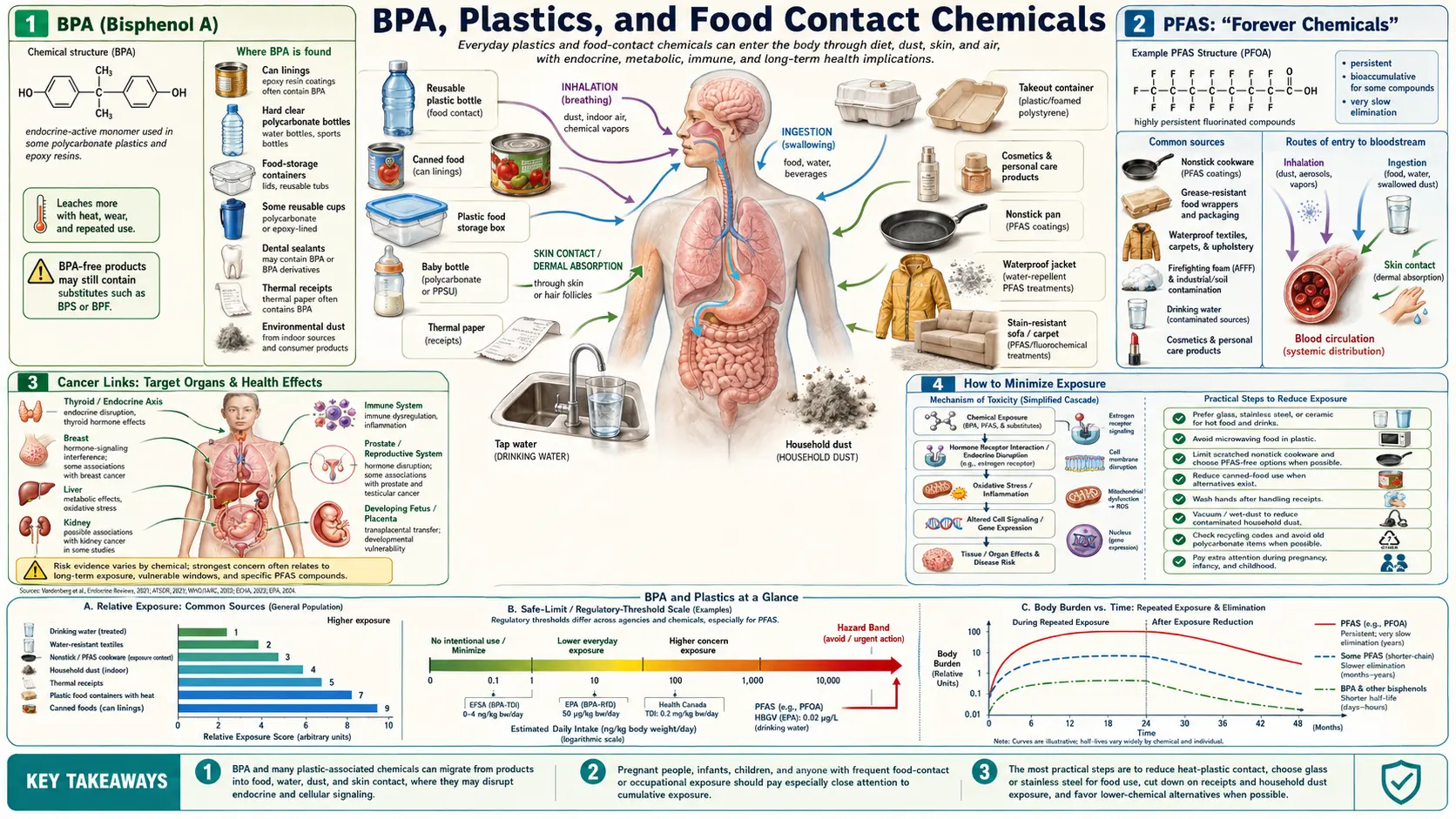

Table of Contents
- BPA (Bisphenol A)
- "BPA-Free" Replacements: Equally Toxic?
- Phthalates
- PFAS: "Forever Chemicals"
- Plastic Migration Into Food
- Estrogenic Activity and Reproductive Harm
- Developmental Effects
- Cancer Links
- Microplastics in Food and Water
- The Scale of the Problem
- How to Minimize Exposure
- Connections
- Featured Videos
Modern food packaging is a significant and largely invisible source of chemical exposure. Bisphenol A (BPA), phthalates, PFAS ("forever chemicals"), and microplastics are just a few of the thousands of chemicals that migrate from packaging materials into the food and beverages we consume daily. These chemicals, many of which are endocrine disruptors, have been linked to reproductive harm, developmental problems, cancer, metabolic disorders, and cardiovascular disease. Despite growing evidence of harm, regulatory action has been slow, and consumers remain largely unaware of the extent of their exposure.
The problem extends far beyond BPA. Researchers have identified over 12,000 chemicals used in food contact materials, and for the majority of these, little or no safety data exists. As one chemical is identified as harmful and removed, it is frequently replaced by a closely related compound that may be equally or even more toxic, a pattern that has been called "regrettable substitution."
BPA (Bisphenol A)
- What it is: BPA is a synthetic chemical used since the 1960s to make polycarbonate plastics and epoxy resins. It is one of the highest-volume chemicals produced worldwide, with over 6 million tons manufactured annually
- Where it is found: BPA is present in hard polycarbonate plastic bottles and containers, the epoxy lining of food and beverage cans, dental sealants, thermal receipt paper, water supply pipes, and the lining of metal bottle caps
- Can linings: The interior of nearly all metal food and beverage cans is coated with an epoxy resin containing BPA, which leaches into the contents, particularly in acidic foods like tomatoes, citrus, and canned beverages
- Thermal receipts: Cash register receipts, ATM receipts, and airline boarding passes are printed on thermal paper coated with BPA or BPS, which is absorbed directly through the skin upon contact
- Endocrine disruption: BPA is a potent endocrine disruptor that mimics estrogen, binding to estrogen receptors and disrupting the body's hormonal signaling at concentrations far below current regulatory limits
- Ubiquitous exposure: CDC biomonitoring studies detect BPA in over 93% of Americans tested, demonstrating that exposure is virtually universal in industrialized societies
- Low-dose effects: BPA exhibits non-monotonic dose responses, meaning it can have significant biological effects at very low doses that are not observed at higher doses, challenging traditional toxicology's reliance on "the dose makes the poison"
"BPA-Free" Replacements: Equally Toxic?
- Regrettable substitution: In response to consumer demand for BPA-free products, manufacturers replaced BPA with structurally similar bisphenol compounds, primarily BPS (bisphenol S) and BPF (bisphenol F)
- BPS concerns: Research has shown that BPS has endocrine-disrupting activity comparable to or even greater than BPA, with studies demonstrating estrogenic effects, disruption of thyroid hormone signaling, and developmental toxicity
- BPF concerns: BPF has been found to have similar or stronger estrogenic and anti-androgenic effects compared to BPA in multiple studies
- False reassurance: "BPA-free" labels give consumers a false sense of safety, as the replacement chemicals may pose equal or greater health risks than the BPA they replaced
- Lack of testing: Most BPA replacements were introduced to the market without comprehensive long-term safety testing, repeating the same pattern that allowed BPA to be used for decades before its harms were fully recognized
- Ongoing exposure: BPS and BPF are now detected in human urine, blood, and breast milk at levels comparable to those previously seen for BPA, indicating widespread exposure to replacement chemicals
- Structural similarity: BPS and BPF share the same bisphenol core structure as BPA, with only minor chemical modifications that do not eliminate their endocrine-disrupting properties
- Industry pattern: The replacement of one harmful chemical with a structurally similar untested compound is a recurring pattern in the chemical industry, seen with BPA/BPS, DDT/chlorpyrifos, and many other chemical classes
Phthalates
- What they are: Phthalates are a family of chemicals used to make plastics flexible and as solvents in personal care products, fragrances, and industrial applications
- Food exposure routes: Phthalates leach into food from plastic packaging, plastic gloves used in food handling, conveyor belts, tubing in dairy operations, and PVC plastic wrap
- Endocrine disruption: Phthalates are anti-androgenic, meaning they block or reduce the effects of testosterone, making them particularly harmful to male reproductive development
- Reproductive effects: Phthalate exposure has been linked to reduced sperm quality, reduced testosterone levels, hypospadias, cryptorchidism (undescended testicles), and reduced anogenital distance in male infants
- "Phthalate syndrome": Researchers have described a cluster of male reproductive abnormalities associated with prenatal phthalate exposure that mirrors effects observed in animal studies
- Fast food exposure: Studies have shown that people who eat fast food have significantly higher phthalate levels, likely due to the extensive use of plastic gloves, containers, and packaging in fast food preparation
- Ubiquitous presence: Phthalates are found in food packaging, vinyl flooring, shower curtains, perfumes, cosmetics, medications, and medical devices, making complete avoidance nearly impossible
- DEHP: Di(2-ethylhexyl) phthalate (DEHP) is one of the most widely used plasticizers in food packaging and has been classified as a possible human carcinogen and a known reproductive toxicant
- Metabolic effects: Phthalate exposure has been associated with insulin resistance, obesity, and metabolic syndrome in both children and adults in multiple epidemiological studies
- Short half-life, constant exposure: While individual phthalate molecules are metabolized relatively quickly (hours to days), constant exposure through food, personal care products, and indoor air maintains chronically elevated body levels
PFAS: "Forever Chemicals"
- What they are: Per- and polyfluoroalkyl substances (PFAS) are a class of over 12,000 synthetic chemicals characterized by extremely strong carbon-fluorine bonds that make them virtually indestructible in the environment and the human body
- Food packaging uses: PFAS are used in grease-resistant food packaging including fast food wrappers, microwave popcorn bags, pizza boxes, and take-out containers to prevent oil and liquid from soaking through
- Water contamination: PFAS contamination of drinking water affects millions of Americans, with contamination originating from military bases, manufacturing facilities, and fire training sites where PFAS-containing firefighting foam was used
- Bioaccumulation: PFAS accumulate in the body over time, with some variants having half-lives of 4-8 years in human blood, meaning exposure builds up faster than the body can eliminate it
- Health effects: PFAS exposure has been linked to cancer (kidney, testicular), thyroid disease, immune suppression, reproductive harm, elevated cholesterol, and liver damage
- Forever chemicals: PFAS do not break down in the environment, contaminating water supplies, soil, and the food chain indefinitely. They have been detected in rainwater worldwide, even in remote areas
- Regulatory action: The EPA has proposed new drinking water limits for PFAS, and several states have enacted their own regulations, but the vast majority of PFAS compounds remain unregulated
- Cookware concern: Non-stick cookware coated with PTFE (Teflon) is part of the PFAS family and can release toxic fumes and particles when overheated, contributing to PFAS exposure in the kitchen
- Contaminated food supply: PFAS from contaminated water and sewage sludge used as fertilizer have entered the food supply through crops and livestock, with elevated levels found in dairy products, meat, and produce from affected farms
- Legal accountability: Major PFAS manufacturers including 3M and DuPont have faced billions of dollars in lawsuits and settlements for contaminating water supplies and concealing known health risks from the public
- Blood levels declining slowly: Even after reducing exposure, PFAS blood levels decline very slowly due to the chemicals' long half-lives, meaning that past exposure continues to affect health for years or decades
Plastic Migration Into Food
- Heat accelerates migration: Heating food in plastic containers, whether by microwave, dishwasher, or hot filling, dramatically increases the rate at which chemicals migrate from the plastic into the food
- Acid accelerates migration: Acidic foods and beverages (tomato sauce, citrus juice, vinegar, carbonated drinks) cause increased leaching of chemicals from plastic and can lining materials
- Fat accelerates migration: Fatty and oily foods absorb lipophilic chemicals from plastic packaging more readily than aqueous or dry foods
- Wear and damage: Scratched, clouded, or worn plastic containers leach chemicals at significantly higher rates than new containers
- Time factor: Longer contact time between food and plastic packaging increases chemical migration, meaning that food stored in plastic for extended periods accumulates more contaminants
- Thousands of chemicals: A 2024 study identified over 3,600 chemicals that migrate from food contact materials into food, with many having no safety data available
- Temperature thresholds: Chemical migration rates can increase by 10-fold or more for every 20-degree Celsius increase in temperature, making hot food in plastic containers a particularly significant exposure route
- UV degradation: Plastic containers exposed to sunlight undergo photodegradation, which breaks down the polymer structure and accelerates the release of chemical additives into the food or beverage contents
- Repeated use: Reusing single-use plastic containers (such as disposable water bottles or takeout containers) increases chemical leaching as the plastic degrades with each use, wash cycle, or temperature change
Estrogenic Activity and Reproductive Harm
- Synthetic estrogens: BPA, BPS, BPF, phthalates, and many other food contact chemicals exhibit estrogenic activity, meaning they can activate estrogen receptors and disrupt hormonal balance
- Female reproductive effects: Estrogenic chemicals from plastics have been linked to early puberty in girls, polycystic ovary syndrome (PCOS), endometriosis, uterine fibroids, and reduced fertility
- Male reproductive effects: Anti-androgenic and estrogenic plastic chemicals contribute to declining sperm counts, reduced testosterone levels, and increasing rates of testicular cancer and reproductive abnormalities in males
- Sperm count decline: Global sperm counts have declined by approximately 50% over the past 50 years, a trend that many researchers attribute at least in part to increasing exposure to endocrine-disrupting chemicals in plastics and other sources
- Prenatal exposure: Fetal exposure to endocrine-disrupting plastic chemicals during critical windows of development can program lifelong reproductive abnormalities and metabolic dysfunction
Developmental Effects
- Brain development: BPA and phthalate exposure during pregnancy and early childhood has been associated with behavioral problems, anxiety, aggression, ADHD, and reduced cognitive function in children
- Thyroid disruption: Plastic chemicals that interfere with thyroid hormone signaling can impair brain development, as thyroid hormones are essential for normal neurodevelopment
- Obesity programming: Prenatal exposure to BPA and other plastic chemicals may program metabolic pathways that increase the risk of obesity and diabetes later in life, a concept known as the "obesogen hypothesis"
- Immune development: PFAS and other plastic-associated chemicals have been shown to impair immune system development in children, increasing susceptibility to infections
- Early puberty: Exposure to estrogenic chemicals from plastics has been linked to the trend toward earlier puberty onset in girls, which is itself a risk factor for breast cancer and other health problems later in life
- Epigenetic changes: BPA and phthalate exposure can cause epigenetic modifications (changes to gene expression without altering DNA sequence) that may be passed to future generations, meaning the health effects of plastic chemical exposure could extend across multiple generations
- Neurobehavioral effects: Prenatal BPA exposure has been associated with increased anxiety and hyperactivity in children, with effects varying by sex, suggesting hormone-mediated mechanisms
Cancer Links
- Breast cancer: BPA's estrogenic activity has been linked to increased breast cancer risk, with studies showing that BPA exposure can promote mammary tumor development and increase breast tissue sensitivity to carcinogens
- Prostate cancer: BPA exposure has been associated with increased prostate cancer risk and may promote the growth of prostate cancer cells through estrogen receptor activation
- PFAS and cancer: Long-term PFAS exposure has been linked to kidney cancer and testicular cancer, with the strongest evidence coming from studies of communities with contaminated water supplies
- Vinyl chloride: PVC plastic is made from vinyl chloride, a known human carcinogen that can leach from PVC packaging materials into food
- Styrene: Polystyrene (Styrofoam) food containers can leach styrene, classified as "reasonably anticipated to be a human carcinogen," into food, particularly hot or fatty foods
- Formaldehyde: Some plastic food containers release formaldehyde, a known human carcinogen, when heated or degraded, adding another cancer-linked chemical to the list of food contact contaminants
Microplastics in Food and Water
- Ubiquitous contamination: Microplastics, defined as plastic particles smaller than 5 millimeters, have been detected in tap water, bottled water, sea salt, seafood, honey, beer, fruits, vegetables, and virtually every food category tested
- Weekly intake: Research estimates that the average person ingests approximately 5 grams of microplastic per week, equivalent to the weight of a credit card, through food, water, and air combined
- Bottled water levels: Studies have found that bottled water contains significantly more microplastic particles than tap water, with a 2024 Columbia University study detecting approximately 240,000 nanoplastic particles per liter of bottled water
- Nanoplastic penetration: Nanoplastics, particles smaller than 1 micrometer, are small enough to cross the blood-brain barrier, the placental barrier, and individual cell membranes, accumulating in organs and tissues throughout the body
- Cardiovascular risk: A 2024 study in the New England Journal of Medicine found microplastics embedded in carotid artery plaques, with affected patients showing 4.5 times higher risk of heart attack, stroke, or death
- Reproductive contamination: Microplastics have been detected in human placentas, breast milk, and testicular tissue, confirming exposure from the earliest stages of life
- Learn more: Microplastics in Food and Water: The Emerging Crisis
The Scale of the Problem
- Thousands of chemicals: Researchers have identified over 12,000 chemicals used in food contact materials, with comprehensive safety data available for only a small fraction
- Regulatory gaps: The FDA's food contact notification system allows new chemicals to be introduced into food packaging with limited safety testing, often based on industry-submitted data rather than independent studies
- Cumulative exposure: The average person is exposed to dozens of food contact chemicals simultaneously from different sources, yet safety testing evaluates each chemical individually without accounting for combined effects
- Vulnerable populations: Infants, pregnant women, and developing children face the greatest risk from food contact chemicals due to higher exposure relative to body weight, immature detoxification systems, and sensitivity during critical developmental windows
- Global problem: Food contact chemical contamination is a worldwide issue, with industrialized and developing nations alike affected by plastic packaging, canned food linings, and processed food manufacturing
- Environmental persistence: Many food contact chemicals, particularly PFAS and certain plasticizers, persist in the environment indefinitely, contaminating water supplies, soil, and the food chain for generations
How to Minimize Exposure
- Use glass containers: Store food in glass containers with non-plastic lids whenever possible, especially for hot, acidic, or fatty foods
- Choose stainless steel: Stainless steel water bottles and food containers avoid the chemical migration issues associated with plastic and lined aluminum
- Never microwave plastic: Even microwave-safe plastics release chemicals when heated. Transfer food to glass or ceramic containers before microwaving
- Avoid canned foods: Choose fresh, frozen, or foods packaged in glass jars over canned foods to reduce BPA and BPS exposure from can linings
- Skip the receipt: Decline thermal paper receipts when possible, or wash your hands after handling them. Do not use hand sanitizer before touching receipts, as it increases BPA absorption through the skin
- Filter your water: Use a high-quality water filter (activated carbon or reverse osmosis) to reduce PFAS and other contaminants in drinking water
- Avoid heating food in plastic: Do not put plastic containers in the dishwasher, leave plastic water bottles in hot cars, or pour hot liquids into plastic cups
- Replace worn plastic: Discard scratched, clouded, or damaged plastic containers, as they leach chemicals at higher rates
- Choose fresh over packaged: The more processed and packaged a food is, the more opportunity there is for chemical migration from packaging materials
- Avoid plastic wrap on food: Use beeswax wraps, silicone lids, or glass containers with lids instead of plastic cling wrap, especially for fatty or acidic foods
- Learn more: Microplastics in Food and Water: The Emerging Crisis
Connections
- All Toxins
- Microplastics
- PFAS
- Microplastics Overview
- Heavy Metals
- Household Chemicals
- Pesticides
- Cancer
- Obesity
- Metabolic Syndrome
- Polycystic Ovary Syndrome
- Endometriosis
- Infertility
- ADHD
- Cardiovascular Disease
- Testosterone
- Detoxification
- Dioxins
- PCBs