Food Additives: What's Really in Your Food
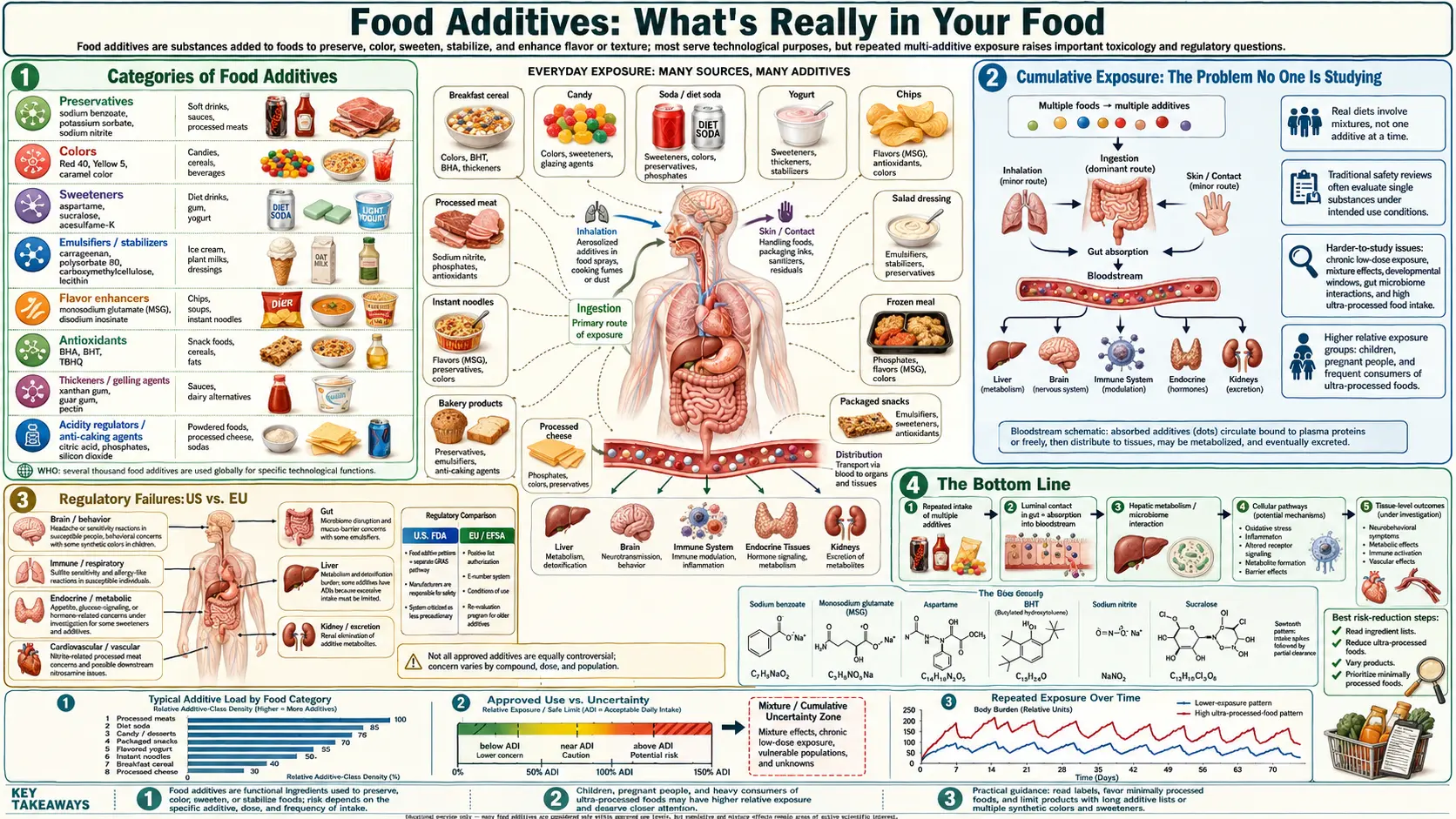

Table of Contents
- Categories of Food Additives
- The FDA GRAS Loophole: How Chemicals Enter Your Food Without Safety Testing
- Impact on the Gut Microbiome
- Cumulative Exposure: The Problem No One Is Studying
- Children's Vulnerability
- Regulatory Failures: US vs. EU
- How to Read Labels and Protect Yourself
- Specific Food Additives of Concern
- The Bottom Line
- Connections
- Featured Videos
The modern food supply contains thousands of chemical additives that most consumers never think about. From preservatives that extend shelf life to emulsifiers that improve texture, these substances are woven into nearly every processed food product on grocery store shelves. While some additives are harmless or even beneficial, many have never been adequately tested for long-term safety, and a troubling number have been linked to serious health concerns including cancer, hormonal disruption, neurological damage, and chronic inflammation.
Understanding what these additives are, how they enter the food supply, and what the science says about their safety is essential for anyone who wants to make informed decisions about what they eat and feed their families.
Categories of Food Additives
Food additives fall into several broad categories, each serving a different function in food manufacturing. The sheer number and variety of these chemicals is staggering — the FDA's database lists over 10,000 substances that can be added to food.
Preservatives
- Sodium nitrite and sodium nitrate — used in processed meats (bacon, hot dogs, deli meats) to prevent bacterial growth and maintain pink color. These compounds can form nitrosamines, which are potent carcinogens, during cooking or digestion. The World Health Organization classified processed meats as Group 1 carcinogens in 2015, and nitrites are a key reason why.
- BHA (butylated hydroxyanisole) and BHT (butylated hydroxytoluene) — synthetic antioxidants used to prevent fats from going rancid in cereals, snack foods, and packaging. BHA is classified as a possible human carcinogen by the International Agency for Research on Cancer (IARC). BHT has been linked to liver and kidney damage in animal studies.
- Sodium benzoate — used in acidic foods and beverages like sodas and fruit juices. When combined with ascorbic acid (vitamin C), sodium benzoate can form benzene, a known human carcinogen. The FDA has found benzene levels above safe drinking water limits in some soft drinks.
- Sulfites (sodium sulfite, sodium bisulfite, sulfur dioxide) — used in wine, dried fruits, and processed foods. Can trigger severe allergic reactions and asthma attacks in sensitive individuals. Approximately 1% of the population is sulfite-sensitive.
- TBHQ (tertiary butylhydroquinone) — a petroleum-derived preservative found in many processed foods. High doses have caused stomach tumors in animal studies and can affect immune function.
Emulsifiers
- Polysorbate 80 (P80) — used in ice cream, sauces, and baked goods to keep ingredients blended. Research published in Nature found that polysorbate 80 damages the intestinal mucus barrier, promotes gut inflammation, and contributes to metabolic syndrome and colitis in animal models.
- Carboxymethylcellulose (CMC) — another common emulsifier shown in the same research to erode the gut's protective mucus layer, alter gut bacteria composition, and promote chronic inflammation.
- Lecithin (soy lecithin, sunflower lecithin) — widely used emulsifier generally considered safer than synthetic alternatives, though soy lecithin may be derived from genetically modified soybeans.
- Mono- and diglycerides — used in bread, margarine, and baked goods. These are exempt from trans fat labeling requirements, meaning they can contain trans fats without disclosure on nutrition labels.
Thickeners and Stabilizers
- Carrageenan — derived from red seaweed and used in dairy products, plant-based milks, and deli meats. Degraded carrageenan is a known inflammatory agent used to induce inflammation in lab studies. Even food-grade carrageenan has been shown to cause intestinal inflammation and has been linked to gastrointestinal problems.
- Xanthan gum — produced by bacterial fermentation, used as a thickener in sauces, dressings, and gluten-free products. Generally considered safe, though it can cause digestive issues in large amounts.
- Cellulose (powdered cellulose, microcrystalline cellulose) — essentially wood pulp, used as a filler and anti-caking agent in shredded cheese, fiber supplements, and processed foods. While not toxic, its presence raises questions about food quality and labeling transparency.
Flavor Enhancers
- Monosodium glutamate (MSG) — a controversial flavor enhancer that triggers excitotoxicity in nerve cells at high concentrations. While the FDA considers it safe, a subset of the population reports headaches, flushing, and other symptoms after consumption. MSG is sometimes hidden on labels under names like "hydrolyzed protein," "autolyzed yeast extract," or "natural flavoring."
- Artificial sweeteners (aspartame, sucralose, acesulfame potassium) — used as sugar substitutes in diet products. Research has linked these to disrupted gut microbiome, glucose intolerance, increased appetite, and potential carcinogenicity. The WHO classified aspartame as "possibly carcinogenic" (Group 2B) in 2023.
- "Natural flavors" — this vague label can represent dozens of chemical compounds, including solvents and preservatives, that manufacturers are not required to disclose individually. "Natural" does not mean safe or minimally processed.
Texture Modifiers and Dough Conditioners
- Azodicarbonamide (ADA) — a dough conditioner also used industrially in yoga mats and shoe soles. Banned in the EU and Australia but still legal in US bread products. When heated, it breaks down into semicarbazide, a recognized carcinogen. Read more about ADA.
- Potassium bromate — a flour improver classified as a Group 2B carcinogen. Banned in most countries worldwide but still permitted in US bread. Read more about potassium bromate.
- Brominated vegetable oil (BVO) — used in citrus-flavored sodas to keep flavoring evenly distributed. Banned in the EU, Japan, and India for decades, and finally banned by the FDA in 2024. Read more about BVO.
The FDA GRAS Loophole: How Chemicals Enter Your Food Without Safety Testing
Perhaps the most alarming aspect of food additive regulation in the United States is the GRAS (Generally Recognized As Safe) loophole. This system, originally created by the 1958 Food Additives Amendment, was intended for substances with a long history of safe use, like vinegar or baking soda. But it has been exploited to allow thousands of new chemicals into the food supply with little or no independent safety review.
How the GRAS System Actually Works
- Self-certification by companies — food manufacturers can hire their own scientists to declare a substance "generally recognized as safe" without ever notifying the FDA. The company conducts its own review, reaches its own conclusion, and begins adding the chemical to food products. The FDA may never know about it.
- No mandatory pre-market testing — unlike pharmaceuticals, which must go through years of clinical trials, food additives entering through the GRAS pathway face no mandatory pre-market safety testing. Companies are not required to conduct long-term studies.
- Voluntary notification system — in 1997, the FDA replaced its formal GRAS petition process with a voluntary notification system. Companies can choose to notify the FDA, but they are not required to. Even when companies do notify, the FDA does not formally "approve" the substance — it simply acknowledges the company's own safety determination.
- Conflicts of interest — a 2013 study published in JAMA Internal Medicine found that 100% of the members of panels that determined GRAS status had financial ties to the companies seeking the designation. Not a single independent scientist was involved.
- Thousands of untested chemicals — estimates suggest that approximately 1,000 chemicals have been added to the food supply through the GRAS process without any FDA notification at all. The agency literally does not know what chemicals are being added to food.
Notable GRAS Failures
- Trans fats — held GRAS status for decades while causing an estimated 30,000 to 100,000 heart disease deaths per year in the US. The FDA did not revoke GRAS status until 2015, decades after the science was clear.
- BVO — maintained GRAS status from the 1950s until the FDA finally banned it in 2024, despite evidence of toxicity and bans in most other countries.
- Partially hydrogenated oils — considered GRAS for more than 50 years before the FDA determined they were not safe.
Impact on the Gut Microbiome
Emerging research reveals that many common food additives wreak havoc on the gut microbiome — the complex ecosystem of trillions of bacteria that plays a critical role in digestion, immune function, mental health, and metabolic regulation. A damaged microbiome has been linked to obesity, autoimmune diseases, depression, and inflammatory bowel disease.
- Emulsifiers — polysorbate 80 and carboxymethylcellulose have been shown to thin the intestinal mucus layer, allowing bacteria to come into closer contact with intestinal cells and trigger chronic low-grade inflammation. This inflammation is associated with metabolic syndrome, weight gain, and colitis.
- Artificial sweeteners — saccharin, sucralose, and aspartame have been shown to alter gut bacteria composition in ways that impair glucose tolerance. A 2014 study in Nature demonstrated that artificial sweeteners induced glucose intolerance by changing the gut microbiota.
- Titanium dioxide (E171) — a whitening agent used in candies, chewing gum, and powdered foods. Research has shown it can damage intestinal cells, alter gut bacteria, and promote intestinal inflammation. France banned titanium dioxide in food in 2020, followed by an EU-wide ban in 2022. It remains legal in the US.
- Carrageenan — shown to promote the growth of harmful gut bacteria and reduce beneficial species, contributing to intestinal inflammation.
- Antimicrobial preservatives — substances designed to kill bacteria in food don't distinguish between harmful bacteria and the beneficial microbes in your gut. Regular consumption of foods loaded with preservatives may progressively damage microbiome diversity.
Cumulative Exposure: The Problem No One Is Studying
Even when individual additives are tested (which many are not), they are tested in isolation. No regulatory agency requires testing of additive combinations, despite the fact that the average American consumes dozens of different food additives every single day. This cumulative and combinatorial exposure represents a massive blind spot in food safety science.
- The cocktail effect — chemicals that may be individually "safe" at low doses can have synergistic toxic effects when combined. For example, the combination of sodium benzoate and artificial food colors has been linked to increased hyperactivity in children.
- Bioaccumulation — some additives, particularly those containing bromine or heavy metals, accumulate in body tissues over time. The dose considered "safe" on any given day does not account for years or decades of daily exposure.
- Lifetime exposure — safety thresholds are typically based on adult body weight and short-term studies. They do not account for the reality that many people are exposed to these chemicals from infancy through old age.
- No requirement for cumulative risk assessment — unlike the EU, the US has no regulatory framework for assessing the combined risk of multiple food additives consumed simultaneously.
Children's Vulnerability
Children are disproportionately affected by food additives for several important biological and behavioral reasons. A landmark 2018 policy statement from the American Academy of Pediatrics (AAP) called for urgent reforms to the food additive regulatory system, specifically citing risks to children.
- Higher exposure per body weight — children eat and drink more relative to their body weight than adults, meaning they receive proportionally higher doses of any chemical present in food.
- Developing organ systems — children's brains, endocrine systems, and immune systems are still developing, making them more susceptible to disruption by chemicals. The blood-brain barrier is not fully developed in young children, allowing greater penetration of toxic substances.
- Longer lifetime of exposure — a child exposed to a food additive starting at age 2 will have decades more cumulative exposure than someone who begins consuming it at age 30.
- Endocrine disruption — many food additives and food contact chemicals (like BPA and phthalates) interfere with hormonal signaling. Even tiny doses during critical developmental windows can have permanent effects on reproductive development, metabolism, and neurological function.
- Behavioral effects — artificial food colors (Red 40, Yellow 5, Yellow 6) have been linked to hyperactivity and attention problems in children. The EU requires warning labels on foods containing these dyes; the US does not.
- Disproportionate consumption of processed foods — many foods marketed specifically to children (cereals, snack foods, candy, juice drinks) are among the most heavily processed and additive-laden products on the market.
Regulatory Failures: US vs. EU
The contrast between how the United States and the European Union regulate food additives is stark and revealing. The EU operates under the precautionary principle: if there is reasonable scientific concern about a substance's safety, it is restricted or banned until proven safe. The US operates under the opposite approach: substances are allowed unless proven dangerous, and the burden of proof falls on regulators rather than manufacturers.
Substances Banned in the EU but Legal in the US
- Potassium bromate — banned in the EU since 1990; still used in US bread. Learn more.
- Azodicarbonamide — banned in the EU with fines up to 450,000 euros; FDA considers it GRAS in the US. Learn more.
- Titanium dioxide — banned in EU food products since 2022; still widely used in US candies and processed foods. Learn more.
- BHA (butylated hydroxyanisole) — IARC Group 2B carcinogen; banned in EU food products; still used in US cereals and snack foods. Learn more.
- Artificial food dyes (certain uses) — the EU requires warning labels on products containing synthetic dyes linked to hyperactivity; the US has no such requirement. Learn more.
- rBGH/rBST (recombinant bovine growth hormone) — banned in the EU, Canada, Australia, and Japan; still used in US dairy production. Learn more.
- Ractopamine — a growth promoter in livestock banned in 160 countries including the EU, China, and Russia; still used in US pork and beef production. Learn more.
Why the US Lags Behind
- Industry lobbying — the food and chemical industries spend hundreds of millions of dollars annually lobbying Congress and regulatory agencies. This lobbying has consistently blocked reform of the GRAS system and delayed bans on harmful substances.
- Regulatory capture — the revolving door between food industry executives and FDA leadership positions creates inherent conflicts of interest.
- Outdated legislation — the foundational food safety law (the 1958 Food Additives Amendment) has not been meaningfully updated in over 60 years, despite dramatic changes in food science and manufacturing.
- Resource constraints — the FDA is chronically underfunded relative to its mandate. The agency is responsible for regulating 80% of the US food supply but receives a fraction of the budget needed for comprehensive safety review.
How to Read Labels and Protect Yourself
Until regulatory reform catches up with the science, consumers must take responsibility for understanding what is in their food. Here are practical strategies for reducing your exposure to harmful food additives.
- Read ingredient lists, not just nutrition facts — the nutrition label tells you about macronutrients, but the ingredient list is where you'll find the chemical additives. Ingredients are listed in descending order by weight.
- Learn to recognize hidden names — many additives go by multiple names. MSG can appear as "hydrolyzed vegetable protein," "autolyzed yeast," or "natural flavoring." Sugars appear under over 60 different names.
- Be skeptical of "natural" claims — the term "natural" has no meaningful regulatory definition for most food products. "Natural flavors" can contain synthetic solvents and preservatives.
- Choose fewer processed foods — the simplest way to reduce additive exposure is to eat more whole, unprocessed foods. Foods with five or fewer recognizable ingredients are generally a safer choice.
- Use additive-checking apps — smartphone apps like Yuka, EWG's Food Scores, and others can scan barcodes and flag concerning additives.
- Buy organic when possible — organic certification prohibits many (though not all) synthetic additives. Organic processed foods contain significantly fewer chemical additives than conventional products.
- Watch for additives in unexpected places — food additives appear not just in processed snacks but also in bread, dairy products, condiments, plant-based milks, supplements, and even medications.
- Pay attention to food contact materials — chemicals can migrate from packaging into food. BPA in can linings, phthalates in plastic wrap, and PFAS in food packaging are all sources of chemical exposure beyond the food itself.
Specific Food Additives of Concern
The following pages provide in-depth information about some of the most concerning food additives currently in use or recently banned:
- Brominated Vegetable Oil (BVO) — a flame retardant chemical that was used in citrus sodas for over 50 years, banned worldwide before the FDA finally acted in 2024.
- Potassium Bromate — a carcinogenic bread additive banned in most countries but still legal in the United States.
- Azodicarbonamide (ADA) — the "yoga mat chemical" still used in American bread, despite being banned in the EU and Australia.
- Titanium Dioxide (E171) — a nanoparticle whitening agent banned in EU food since 2022, still widely used in US candies, chewing gum, and medications.
- BHA (Butylated Hydroxyanisole) — an IARC Group 2B possible carcinogen used as a preservative in US cereals, snack foods, and packaging.
- rBGH/rBST (Recombinant Bovine Growth Hormone) — a genetically engineered hormone that increases IGF-1 in milk, banned in the EU, Canada, Australia, and Japan but still used in US dairy.
- Ractopamine — a beta-agonist growth promoter banned in 160 countries, still used in US pork and beef production with virtually no USDA testing.
The Bottom Line
The US food additive regulatory system is fundamentally broken. The GRAS loophole allows companies to add chemicals to food without independent safety review. Thousands of substances in the food supply have never been adequately tested. The FDA lacks the resources and political will to keep up with the flood of new chemicals entering the market. And the burden of proof is placed on regulators and consumers rather than on the companies profiting from these additives.
Until meaningful reform occurs, consumers must educate themselves about what is in their food, advocate for stronger regulation, and make informed choices about what they eat. The fact that a substance is legal in the US food supply does not mean it is safe — it may simply mean that no one has been required to prove otherwise.
Connections
- All Toxins
- Carrageenan
- BHA
- Titanium Dioxide
- Potassium Bromate
- Sodium Benzoate
- Azodicarbonamide
- Polysorbate 80
- Brominated Vegetable Oil
- BHT
- TBHQ
- Sodium Nitrite
- Sulfites
- Ractopamine
- rBGH
- MSG
- Food Dyes
- Artificial Sweeteners
- Preservatives