Microplastics in Food and Water: The Emerging Crisis
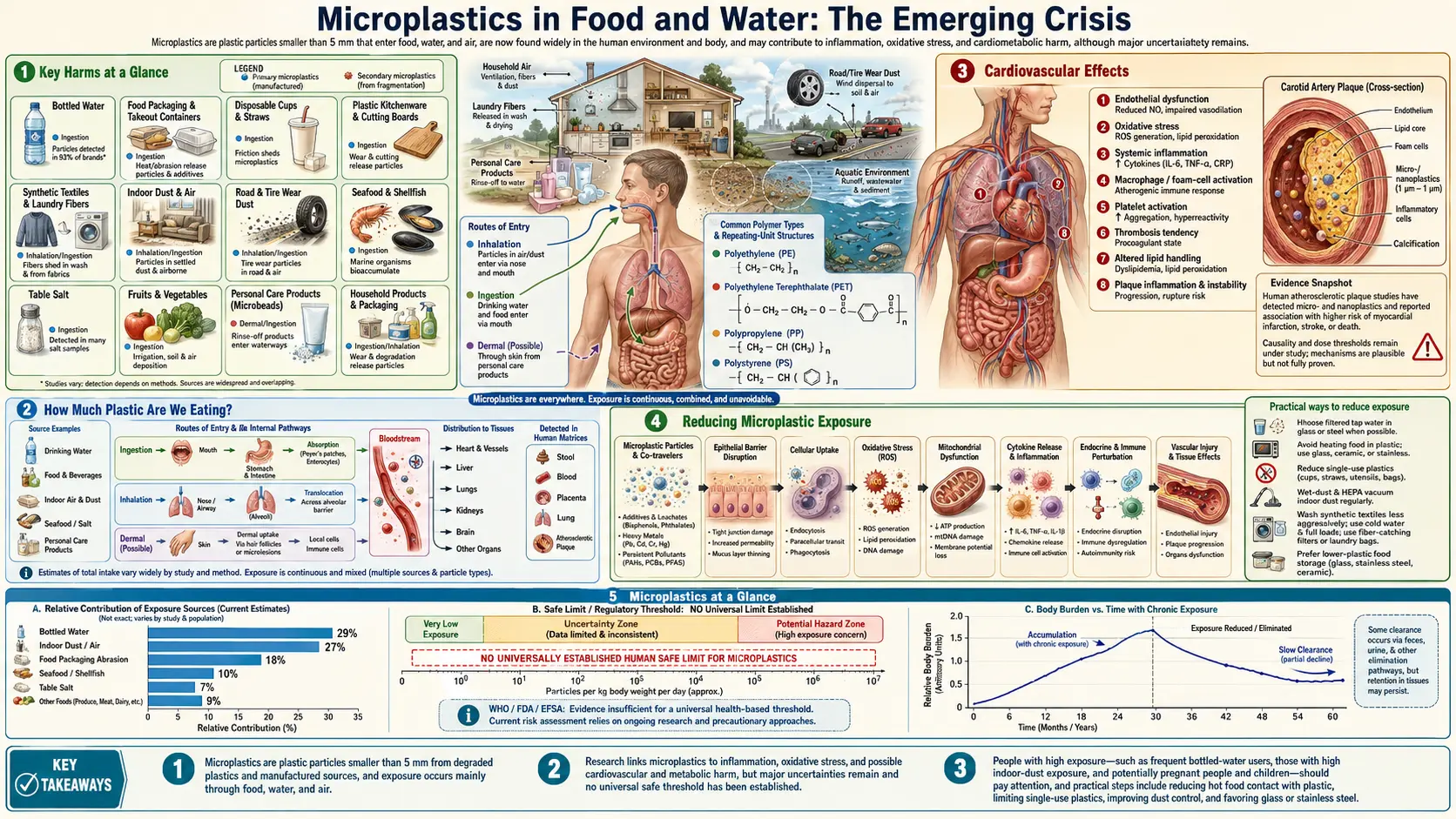
Microplastics have infiltrated virtually every corner of the planet, from the deepest ocean trenches to the summit of Mount Everest, from Arctic ice to Antarctic snow. More alarmingly, they have infiltrated our bodies. These tiny fragments of plastic, invisible to the naked eye, are now found in the food we eat, the water we drink, and the air we breathe. Research has detected microplastics in human blood, lungs, liver, placenta, breast milk, and even brain tissue, raising urgent questions about their long-term effects on human health.
The scale of the problem is staggering. Studies estimate that the average person ingests approximately 5 grams of plastic per week, roughly the weight of a credit card. As the science of microplastic detection advances, researchers are discovering that these particles are not inert bystanders in the body but active participants in inflammation, endocrine disruption, and cellular damage.
Table of Contents
- Key Harms at a Glance
- What Are Microplastics?
- Sources of Microplastic Exposure Through Food and Water (Exposure Routes)
- How Much Plastic Are We Eating?
- Nanoplastics Crossing the Blood-Brain Barrier
- Gut Inflammation
- Endocrine Disruption
- Cardiovascular Effects
- Reproductive Harm
- Bottled Water vs. Tap Water
- Reducing Microplastic Exposure (How to Avoid)
- Research Papers and References
- Connections
- Featured Videos
Key Harms at a Glance
- Credit-card-per-week intake — estimated ~5 g of plastic consumed weekly; ~250 g annually.
- Detected in blood, placenta, breast milk, and brain tissue — ubiquitous human exposure.
- 4.5x higher cardiovascular event risk — 2024 NEJM study linked plaque microplastics to heart attack, stroke, death.
- Gut barrier disruption — physical damage and tight-junction degradation ('leaky gut').
- Endocrine disruption — plastic additives (BPA, phthalates) leach and disrupt reproductive and thyroid hormones.
- Reproductive harm — reduced sperm count/motility; placental and breast-milk contamination.
- Bottled water delivers ~240,000 nanoplastic particles/L — Columbia 2024 Raman spectroscopy study.
- Tea bags release billions of particles per cup — plastic-based bags in hot water.
- Brain accumulation and neuroinflammation — nanoplastics cross blood-brain barrier in animal models.
What Are Microplastics?
- Definition: Microplastics are plastic particles smaller than 5 millimeters in diameter, ranging from visible fragments down to microscopic particles. Nanoplastics are even smaller, measuring less than 1 micrometer (1,000 nanometers), and can penetrate individual cells
- Primary microplastics: Manufactured at small size for specific purposes, including microbeads in personal care products (exfoliating scrubs, toothpaste), plastic pellets (nurdles) used as raw material for plastic manufacturing, and synthetic fibers shed from clothing during washing
- Secondary microplastics: Formed when larger plastic items break down through UV radiation, mechanical weathering, and biological degradation. Plastic bags, bottles, food packaging, and other plastic waste gradually fragment into smaller and smaller particles over time
- Composition: Microplastics consist of various polymer types including polyethylene (PE), polypropylene (PP), polystyrene (PS), polyethylene terephthalate (PET), polyvinyl chloride (PVC), and nylon, each carrying different chemical additives and contaminants
- Chemical hitchhikers: Microplastics act as carriers for other toxic chemicals, adsorbing persistent organic pollutants, heavy metals, pesticides, and pharmaceutical residues from the surrounding environment and concentrating them on their surface
- Additives: Plastics contain thousands of chemical additives including plasticizers, flame retardants, UV stabilizers, colorants, and antimicrobial agents, many of which are toxic and can leach from microplastic particles into body tissues
Sources of Microplastic Exposure Through Food and Water
- Bottled water: A landmark 2018 study found that 93% of bottled water samples from 11 major brands contained microplastic contamination, with an average of 325 particles per liter. A 2024 study using advanced detection methods found approximately 240,000 nanoplastic particles per liter of bottled water
- Tap water: Microplastics have been detected in tap water worldwide, with contamination levels varying by region. While generally lower than bottled water, tap water remains a significant source of ongoing microplastic exposure
- Sea salt: Studies have found microplastics in 90% or more of commercial sea salt brands tested globally, with sea salt containing significantly more particles than rock salt or lake salt
- Seafood: Fish, shrimp, mussels, oysters, and other seafood accumulate microplastics from contaminated marine environments. Filter-feeding shellfish are particularly contaminated, as they strain large volumes of water and concentrate the plastic particles
- Honey: Microplastic fibers and fragments have been detected in honey samples worldwide, likely originating from environmental contamination of flowering plants and bee colonies
- Beer: Studies have found microplastics in beer, likely originating from the water used in brewing and the filtration process
- Tea bags: Plastic-based tea bags release billions of micro- and nanoplastic particles into a single cup of tea when steeped in hot water
- Fruits and vegetables: Plants can absorb nanoplastics through their root systems, with microplastics detected in apples, carrots, lettuce, and other produce
- Processed foods: Food processing, packaging, and preparation introduce additional microplastics through contact with plastic equipment, conveyor belts, cutting boards, and packaging materials
How Much Plastic Are We Eating?
- Credit card per week: A widely cited 2019 study commissioned by the World Wildlife Fund estimated that the average person ingests approximately 5 grams of microplastic per week, equivalent to the weight of a credit card
- Annual intake: This translates to approximately 250 grams (over half a pound) of plastic consumed per year through food, water, and air
- Particle count: Researchers estimate that the average person ingests between 39,000 and 52,000 microplastic particles per year through diet alone, with the number rising to 74,000-121,000 when inhalation is included
- Bottled water contribution: Individuals who drink primarily bottled water may ingest an additional 90,000 microplastic particles per year compared to those who drink tap water
- Growing exposure: As global plastic production continues to increase (over 400 million tons per year and rising) and existing plastic waste continues to fragment, human microplastic exposure is expected to increase significantly in coming decades
Nanoplastics Crossing the Blood-Brain Barrier
- Size matters: While larger microplastics may pass through the digestive system, nanoplastics (particles smaller than 1 micrometer) are small enough to cross biological barriers including the intestinal wall, the blood-brain barrier, and the placental barrier
- Brain penetration: Animal studies have demonstrated that nanoplastics can cross the blood-brain barrier and accumulate in brain tissue, where they trigger neuroinflammation, oxidative stress, and neuronal damage
- Cognitive effects: Mice exposed to nanoplastics showed impaired cognitive function, memory deficits, and behavioral changes, suggesting that nanoplastic accumulation in the brain may have functional consequences
- Neurodegeneration concern: The neuroinflammation and oxidative stress caused by nanoplastics in brain tissue mirrors the pathological processes seen in Alzheimer's disease and Parkinson's disease, raising concerns about a possible contributing role
- Detection in human brain: Microplastics have been detected in human brain tissue samples, confirming that these particles do reach the brain in living humans
- Cellular uptake: Nanoplastics can enter individual cells through endocytosis, accumulating in organelles including mitochondria and lysosomes, where they disrupt normal cellular function
Gut Inflammation
- Physical irritation: Microplastic particles can physically damage the intestinal epithelium, the single-cell-thick lining that serves as the primary barrier between the gut contents and the bloodstream
- Increased permeability: Microplastic exposure has been shown to increase intestinal permeability ("leaky gut"), allowing bacteria, toxins, and undigested food particles to enter the bloodstream and trigger immune responses
- Inflammatory response: Microplastics activate inflammatory pathways in gut tissue, increasing production of pro-inflammatory cytokines and triggering immune cell recruitment
- Microbiome disruption: Microplastics alter the composition of the gut microbiome, reducing beneficial bacterial populations and promoting the growth of potentially harmful species
- Chemical leaching: Additives and adsorbed contaminants leach from microplastic particles in the acidic environment of the stomach and the warm environment of the intestines, releasing toxic chemicals directly into the digestive tract
- IBD connection: Researchers have found significantly higher concentrations of microplastics in the stool of patients with inflammatory bowel disease compared to healthy controls, suggesting a possible link between microplastic exposure and gut inflammation
Endocrine Disruption
- Plastic additives: Many chemical additives in plastics, including BPA, phthalates, and UV stabilizers, are endocrine disruptors that can interfere with hormone signaling even after leaching from microplastic particles
- Estrogenic activity: Multiple studies have demonstrated that microplastic extracts exhibit estrogenic activity in cell-based assays, with the potential to disrupt reproductive hormone signaling
- Thyroid disruption: Plastic additives and adsorbed contaminants on microplastics have been shown to interfere with thyroid hormone production and metabolism
- Trojan horse effect: Microplastics can act as a "Trojan horse," carrying endocrine-disrupting chemicals past the body's normal defenses and delivering concentrated doses of these chemicals directly to target tissues
Cardiovascular Effects
- Blood contamination: A 2022 study published in Environment International detected microplastics in human blood for the first time, finding plastic particles in 80% of participants tested
- Arterial plaques: A landmark 2024 study published in the New England Journal of Medicine found microplastics and nanoplastics embedded in carotid artery plaques and demonstrated that patients with plastic-containing plaques had a 4.5 times higher risk of heart attack, stroke, or death over a 34-month follow-up period
- Vascular inflammation: Microplastics in the bloodstream trigger inflammatory responses in blood vessel walls, potentially accelerating atherosclerosis and increasing cardiovascular risk
- Blood clotting: Some studies suggest that microplastics may activate platelets and promote blood clot formation, adding another mechanism by which they could increase cardiovascular events
Reproductive Harm
- Testicular accumulation: Microplastics have been detected in human testicular tissue, with a 2024 study finding significantly higher concentrations in human testes compared to animal testes
- Sperm quality: Microplastic and nanoplastic exposure has been associated with reduced sperm count, decreased sperm motility, increased DNA fragmentation in sperm, and altered sperm morphology
- Ovarian effects: Animal studies show that microplastic exposure can disrupt ovarian function, reduce egg quality, and impair fertility in females
- Placental accumulation: Microplastics have been detected in human placentas, on both the maternal and fetal sides, meaning that unborn children are exposed to microplastics from the earliest stages of development
- Breast milk contamination: Studies have detected microplastics in human breast milk, confirming that infants are exposed through nursing in addition to prenatal exposure through the placenta
- Fertility decline: The accumulation of microplastics in reproductive tissues, combined with the endocrine-disrupting effects of their chemical additives, may be contributing to the declining fertility rates observed in many industrialized countries
Bottled Water vs. Tap Water
- Bottled water contamination: Studies consistently find that bottled water contains significantly more microplastic particles than tap water, likely due to contamination from the plastic bottle itself during manufacturing, storage, and transport
- Heat exposure: Plastic water bottles exposed to heat (in warehouses, trucks, or cars) leach chemicals and release microplastics at accelerated rates
- Nanoplastic discovery: A Columbia University study using advanced Raman spectroscopy found approximately 240,000 detectable nanoplastic particles per liter of bottled water, a level 10 to 100 times higher than previous estimates that could only detect larger microplastics
- Reusable bottle concerns: Even reusable plastic bottles can release microplastics, especially as they age, are scratched, or are exposed to heat and UV light
- Tap water filtration: While tap water also contains microplastics, home filtration systems (particularly reverse osmosis and activated carbon filters) can reduce microplastic levels significantly
- Glass and stainless steel: Drinking from glass or stainless steel containers eliminates the microplastic contribution from the container itself
Reducing Microplastic Exposure
- Avoid bottled water: Use glass or stainless steel water bottles and fill from filtered tap water to avoid the high microplastic levels found in bottled water
- Filter drinking water: Install a reverse osmosis or high-quality activated carbon water filter to remove microplastics and other contaminants from tap water
- Minimize plastic food packaging: Choose fresh foods over plastic-packaged products, bring your own bags and containers, and use glass or stainless steel for food storage
- Never heat food in plastic: Do not microwave food in plastic containers or pour boiling water into plastic cups or bottles, as heat dramatically increases microplastic release
- Avoid plastic tea bags: Use loose-leaf tea with a metal strainer, or choose brands that use paper tea bags without plastic coatings
- Use natural fiber clothing: Synthetic fabrics (polyester, nylon, acrylic) shed microplastic fibers with every wash. Choose natural fibers like cotton, wool, linen, and silk when possible
- Use a laundry filter: Microplastic-catching laundry bags or filters can capture synthetic fibers during washing, preventing them from entering the water supply
- Reduce processed food consumption: Processed foods undergo more contact with plastic equipment and packaging, increasing microplastic contamination levels
- Choose rock salt or lake salt: These contain fewer microplastics than sea salt, which is contaminated by ocean plastic pollution
- Avoid plastic cutting boards: Use wooden or glass cutting boards instead of plastic ones, which shed microplastic fragments during use
- Ventilate indoor spaces: Indoor air contains microplastic fibers from synthetic carpets, furniture, and clothing. Regular ventilation and air purification can reduce inhalation exposure
- Support plastic reduction policies: Advocate for regulations that reduce plastic production, improve waste management, and hold manufacturers responsible for the health consequences of plastic pollution
Research Papers and References
Key peer-reviewed research and authoritative sources underpinning the claims on this page. Links resolve to DOI, PubMed, or the issuing agency.
- Mason SA, Welch VG, Neratko J. Synthetic polymer contamination in bottled water. Front Chem. 2018;6:407.
- Qian N, Gao X, Lang X, et al. Rapid single-particle chemical imaging of nanoplastics by SRS microscopy. Proc Natl Acad Sci USA. 2024;121(3):e2300582121.
- Marfella R, Prattichizzo F, Sardu C, et al. Microplastics and nanoplastics in atheromas and cardiovascular events. N Engl J Med. 2024;390(10):900-910.
- Leslie HA, van Velzen MJM, Brandsma SH, Vethaak AD, Garcia-Vallejo JJ, Lamoree MH. Discovery and quantification of plastic particle pollution in human blood. Environ Int. 2022;163:107199.
- Ragusa A, Svelato A, Santacroce C, et al. Plasticenta: first evidence of microplastics in human placenta. Environ Int. 2021;146:106274.
- Ragusa A, Notarstefano V, Svelato A, et al. Raman microspectroscopy detection and characterisation of microplastics in human breastmilk. Polymers. 2022;14(13):2700.
- Nihart AJ, Garcia MA, El Hayek E, et al. Bioaccumulation of microplastics in decedent human brains. Nat Med. 2025;31:1114-1119.
- Hernandez LM, Xu EG, Larsson HCE, Tahara R, Maisuria VB, Tufenkji N. Plastic teabags release billions of microparticles and nanoparticles into tea. Environ Sci Technol. 2019;53(21):12300-12310.
- Cox KD, Covernton GA, Davies HL, Dower JF, Juanes F, Dudas SE. Human consumption of microplastics. Environ Sci Technol. 2019;53(12):7068-7074.
- Senathirajah K, Attwood S, Bhagwat G, Carbery M, Wilson S, Palanisami T. Estimation of the mass of microplastics ingested — a pivotal first step towards human health risk assessment. J Hazard Mater. 2021;404(Pt B):124004.
- Zeng L, Zhou C, Xu W, et al. The ovarian-related effects of polystyrene nanoplastics on female mice and their offspring. Part Fibre Toxicol. 2023;20:28.
- Jin Y, Lu L, Tu W, Luo T, Fu Z. Impacts of polystyrene microplastic on the gut barrier, microbiota and metabolism of mice. Sci Total Environ. 2019;649:308-317.
- PubMed — search for recent research
Connections
- All Toxins
- BPA and Plastics
- Heavy Metals
- PFAS
- Glyphosate
- Household Chemicals
- Detox Protocols
- Gut Healing
- Atherosclerosis
- Alzheimers Disease
- Irritable Bowel Syndrome
- Gut Brain Axis
- Leaky Gut
- Oxidative Stress
- Stroke
- Parkinsons Disease
- Microplastics