Heavy Metals in Cosmetics
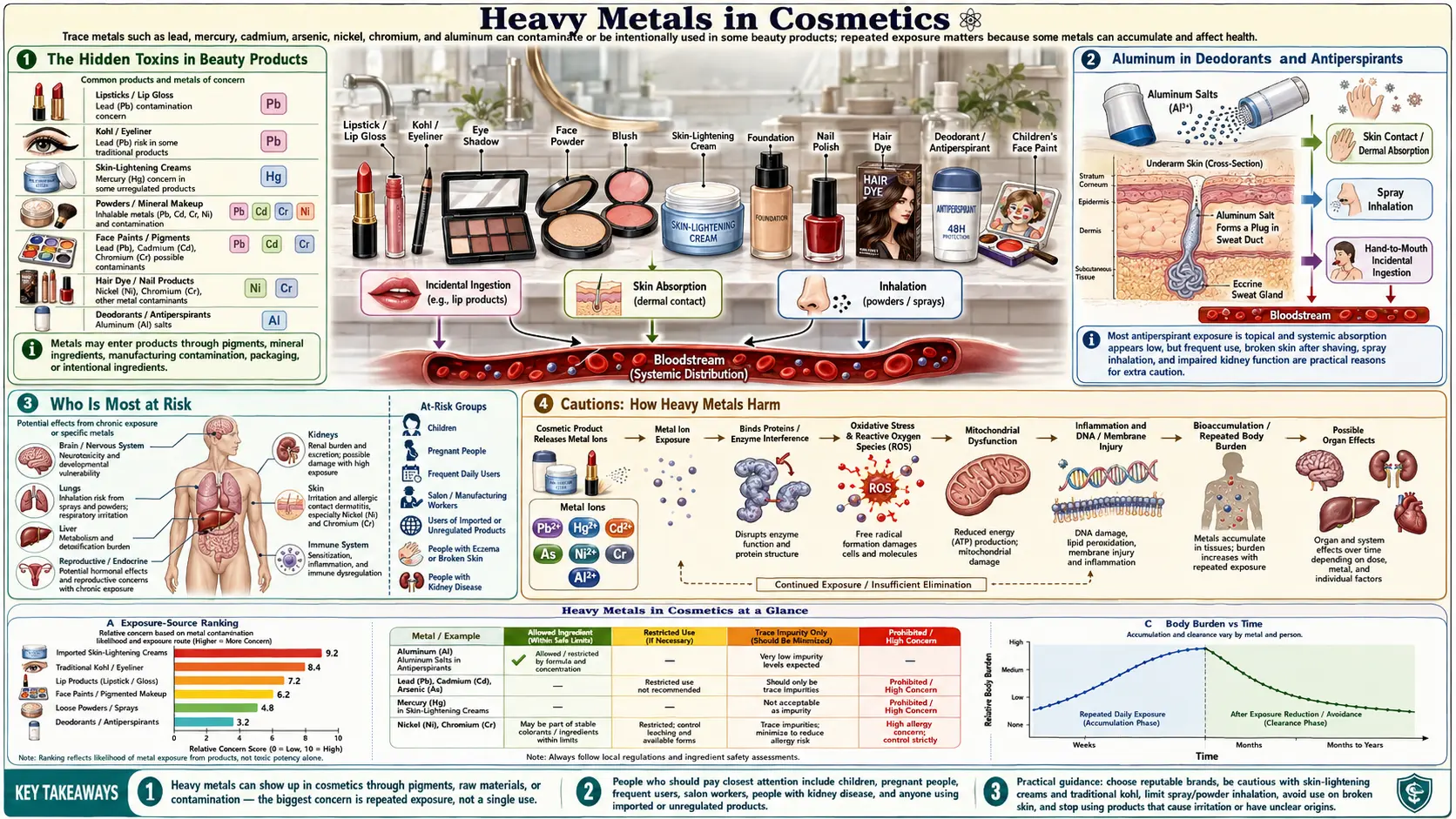
Every day, millions of people apply cosmetics and personal care products to their skin, lips, and eyes without realizing that these products may contain toxic heavy metals. Unlike food and pharmaceuticals, cosmetics in the United States do not require pre-market safety testing or FDA approval before they reach store shelves. This regulatory gap means that products containing lead, mercury, arsenic, cadmium, and other heavy metals are legally sold and used daily. The skin is the body's largest organ, and substances applied to it are absorbed into the bloodstream, making chronic cosmetic use a significant and underappreciated route of heavy metal exposure.
From a naturopathic perspective, the cumulative burden of heavy metals from cosmetics adds to the total toxic load the body must process. When combined with heavy metals from food, water, air pollution, and dental amalgams, cosmetic exposure can push the body past its capacity to detoxify effectively. The result is bioaccumulation in organs, bones, and the brain, contributing to chronic inflammation, endocrine disruption, neurological damage, and increased cancer risk over a lifetime of use.
Table of Contents
- The Hidden Toxins in Beauty Products
- Lead in Lipstick
- Mercury in Skin-Lightening Creams
- Arsenic in Foundation and Eye Shadow
- Cadmium in Lipstick and Blush
- Chromium and Nickel in Eye Makeup
- Aluminum in Deodorants and Antiperspirants
- Titanium Dioxide and Zinc Oxide Nanoparticles in Sunscreen
- Talc Contamination with Asbestos
- How Heavy Metals Get into Cosmetics
- Health Effects of Chronic Low-Dose Exposure
- Who Is Most at Risk
- Regulations Comparison: EU vs. United States
- How to Choose Safer Cosmetics
- Natural and Mineral Makeup Alternatives
- DIY Simple Beauty Products
- Detoxing from Heavy Metal Exposure
- Cautions
- Connections
- Featured Videos
The Hidden Toxins in Beauty Products
The United States FDA does not require pre-market safety testing for cosmetics. Under the Federal Food, Drug, and Cosmetic Act, cosmetic companies are responsible for substantiating the safety of their own products before marketing, but there is no requirement to share safety data with the FDA and no approval process before a product goes on sale. The FDA cannot even mandate a recall of a cosmetic product found to be harmful. This stands in stark contrast to the rigorous approval process required for pharmaceuticals and food additives.
Heavy metals are not intentionally added to most cosmetics as active ingredients. Instead, they are present as contaminants in the raw materials used to manufacture these products, particularly mineral-based pigments, colorants, and base ingredients. Because no regulatory limits exist for most heavy metals in cosmetics sold in the United States, manufacturers have little incentive to test for or reduce these contaminants.
Independent testing by consumer advocacy groups and academic researchers has repeatedly found heavy metals in a wide range of cosmetic products:
- Lipstick and lip gloss: Lead, cadmium, chromium, aluminum, and manganese
- Foundation and concealer: Arsenic, lead, mercury, and cadmium
- Eye shadow and eyeliner: Nickel, chromium, lead, and cobalt
- Blush and bronzer: Cadmium, lead, and arsenic
- Skin-lightening creams: Mercury, lead, and hydroquinone
- Deodorants and antiperspirants: Aluminum compounds
- Sunscreens: Titanium dioxide and zinc oxide nanoparticles
- Talcum powder and baby powder: Asbestos fibers as a natural contaminant of talc
The average woman in the United States uses 12 personal care products daily, exposing herself to approximately 168 unique chemical ingredients. Men use an average of 6 products with about 85 unique ingredients. This daily chemical cocktail, applied to the skin and absorbed over decades, represents a significant and largely unregulated source of toxic exposure.
Lead in Lipstick
In 2007, the Campaign for Safe Cosmetics commissioned independent testing that found lead in 61% of lipsticks tested, including popular brands. The FDA responded by conducting its own studies and found detectable levels of lead in 400 lipsticks tested between 2010 and 2012. Lead concentrations ranged from 0.026 to 7.19 parts per million (ppm). The FDA concluded that these levels were not a safety concern, but many toxicologists and public health advocates strongly disagreed.
There is no established safe level of lead exposure, particularly for children and pregnant women. Lead is a potent neurotoxin that accumulates in the body over time. Consider that lipstick is applied to the lips multiple times per day and is inevitably ingested. A woman who wears lipstick daily from age 16 to 70 could consume significant cumulative quantities of lead through this single product alone.
Lead in lipstick comes primarily from the color additives and pigments used to create various shades. Deeper, more vibrant colors tend to contain higher lead levels because they require more mineral-based pigments. Lead is not listed on product labels because it is a contaminant in the pigments rather than an intentionally added ingredient, making it invisible to consumers who read labels carefully.
Key Concerns with Lead in Lipstick
- Cumulative exposure: Daily application over decades results in substantial total lead ingestion
- No safe threshold: The CDC acknowledges there is no safe blood lead level, especially in children
- Pregnancy risk: Lead crosses the placenta and can affect fetal brain development
- Neurological effects: Even low-level chronic lead exposure is associated with cognitive decline, mood disorders, and memory impairment
- Bone storage: Lead is stored in bones and can be released during pregnancy, menopause, or osteoporosis when bone turnover increases
Mercury in Skin-Lightening Creams
Mercury is one of the most dangerous heavy metals found in cosmetics, and it appears most frequently in skin-lightening and anti-aging creams. Mercury inhibits melanin production, which is why it is used as a skin-bleaching agent, but it is profoundly toxic to the nervous system, kidneys, and developing fetus. The FDA has banned mercury as an intentional ingredient in cosmetics in the United States, but enforcement is extremely difficult for imported products sold online, in ethnic beauty supply stores, and in informal markets.
Testing of skin-lightening products sold in the United States has found alarming mercury levels. A 2014 study published in the Journal of Environmental Health found that 6% of skin-lightening creams purchased in the Chicago area contained mercury above 1,000 ppm, which is 1,000 times the FDA limit of 1 ppm. Some products contained mercury levels exceeding 30,000 ppm. Many of these products were imported from countries where mercury-based skin lighteners remain legal or poorly regulated.
Health Effects of Mercury in Cosmetics
- Kidney damage: Mercury is nephrotoxic and can cause kidney failure with chronic exposure
- Neurological damage: Symptoms include tremors, memory loss, irritability, numbness, and vision or hearing impairment
- Skin damage: Paradoxically, mercury-containing creams can cause permanent skin discoloration, rashes, and increased sun sensitivity
- Reproductive harm: Mercury crosses the placenta and is excreted in breast milk, posing severe risks to fetal and infant brain development
- Secondary exposure: Family members, including children, can be exposed through skin contact with the user or through contamination of household surfaces
Arsenic in Foundation and Eye Shadow
Arsenic, classified as a Group 1 carcinogen by the International Agency for Research on Cancer, has been detected in foundation, eye shadow, and other color cosmetics. A 2013 study published in Environmental Health Perspectives tested 32 cosmetic products and found arsenic in nearly all of them. While individual product levels were generally low, the concern centers on cumulative daily exposure from multiple products applied simultaneously.
Arsenic enters cosmetics through contaminated mineral ingredients, particularly iron oxides and other pigments derived from mined minerals. These naturally occurring minerals may contain arsenic as a geological contaminant. Because cosmetics are not required to be tested for arsenic contamination in the United States, there is no mechanism to identify or remove contaminated products from the market before they reach consumers.
Arsenic Exposure Risks from Cosmetics
- Skin absorption: Arsenic applied to the skin is absorbed into the bloodstream, particularly through damaged or abraded skin around the eyes
- Cancer risk: Chronic arsenic exposure is associated with skin, bladder, lung, kidney, and liver cancers
- Cardiovascular effects: Long-term low-dose arsenic exposure is linked to increased risk of heart disease and hypertension
- Endocrine disruption: Arsenic interferes with hormone signaling, including estrogen, progesterone, and thyroid hormones
- Immune suppression: Arsenic can suppress immune function, increasing susceptibility to infection and reducing the body's ability to detect and destroy cancer cells
Cadmium in Lipstick and Blush
Cadmium is a toxic heavy metal that has been found in lipsticks, blushes, and other color cosmetics. A study by the University of California, Berkeley tested 32 lip products and found cadmium in 75% of them. Cadmium is classified as a Group 1 carcinogen and is toxic to the kidneys, bones, and respiratory system. Like lead, cadmium accumulates in the body over time with a biological half-life of 10 to 30 years, meaning it takes decades for the body to eliminate even half of the cadmium absorbed.
Cadmium enters cosmetics through contaminated pigments and colorants, particularly red and pink mineral pigments. Products with warmer tones, including many popular lipstick and blush shades, tend to have higher cadmium contamination. Because cadmium is present as a contaminant rather than an intentional ingredient, it does not appear on product labels.
Health Effects of Cadmium
- Kidney damage: Cadmium is a potent nephrotoxin that damages the kidney tubules, leading to protein loss in urine and eventual kidney failure
- Bone loss: Cadmium interferes with calcium metabolism and is associated with osteoporosis and bone fractures, particularly in postmenopausal women
- Cancer: Cadmium is linked to breast, endometrial, lung, and prostate cancers
- Endocrine disruption: Cadmium mimics estrogen in the body and can disrupt hormonal balance, contributing to estrogen-sensitive cancers
- Cardiovascular disease: Chronic cadmium exposure is associated with hypertension and increased cardiovascular mortality
Chromium and Nickel in Eye Makeup
Chromium and nickel are frequently detected in eye shadows, eyeliners, and mascaras. A Canadian study testing popular cosmetics found chromium in 100% of eye shadows tested and nickel in the vast majority. These metals come from mineral pigments, particularly the iron oxides, ultramarines, and mica used to create the shimmery and metallic finishes that are popular in eye cosmetics.
Chromium
Chromium exists in multiple forms, with hexavalent chromium (Cr VI) being the most toxic and carcinogenic. While most chromium in cosmetics is in the less toxic trivalent form (Cr III), the conversion of trivalent to hexavalent chromium can occur under certain conditions. Chromium applied near the eyes is of particular concern because the delicate periorbital skin is thin and highly absorptive, and accidental contact with the eye itself can cause irritation and damage.
Nickel
Nickel is one of the most common causes of allergic contact dermatitis, affecting an estimated 10 to 20% of the population. Nickel allergy is more common in women, likely due in part to greater exposure through jewelry and cosmetics. Symptoms of nickel contact dermatitis around the eyes include redness, swelling, itching, flaking, and blistering of the eyelids. Chronic nickel exposure through cosmetics can sensitize individuals who were not previously allergic, creating a lifelong allergy.
- Contact dermatitis: Nickel in eye shadow is a leading cause of eyelid dermatitis
- Sensitization: Repeated exposure to nickel through cosmetics can trigger a permanent allergic response
- Systemic effects: Absorbed nickel can cause systemic contact dermatitis, producing rashes in areas distant from the application site
- Respiratory concerns: Inhaled nickel particles from powder cosmetics can irritate the respiratory tract
Aluminum in Deodorants and Antiperspirants
Unlike the other metals discussed in this article, aluminum is intentionally added to antiperspirants as the active ingredient. Aluminum-based compounds such as aluminum chlorohydrate and aluminum zirconium tetrachlorohydrex work by blocking sweat ducts and reducing perspiration. This means that aluminum in antiperspirants is not a trace contaminant but is present in concentrations of 15 to 25% of the product, and it is applied to the skin daily, often on freshly shaved or abraded underarm skin that absorbs substances more readily.
The Breast Cancer Debate
The potential link between aluminum in antiperspirants and breast cancer has been debated for decades. Several observations have fueled concern:
- Proximity: Antiperspirants are applied directly adjacent to breast tissue
- Disproportionate tumor location: A disproportionate number of breast cancers develop in the upper outer quadrant of the breast, closest to the underarm where antiperspirants are applied
- Estrogenic activity: Aluminum salts have been shown to have estrogen-mimicking effects in laboratory studies, and estrogen is a known driver of breast cancer
- Aluminum in breast tissue: Studies have found higher concentrations of aluminum in breast tissue samples from cancer patients compared to healthy tissue
- DNA damage: In vitro studies have shown that aluminum can cause DNA damage and oxidative stress in mammary cells
The Alzheimer's Disease Debate
Aluminum has long been suspected as a potential contributor to Alzheimer's disease. Elevated aluminum levels have been found in the brains of Alzheimer's patients, and aluminum is a known neurotoxin. While the causative relationship remains unproven and controversial, the precautionary principle suggests minimizing unnecessary aluminum exposure through antiperspirants, particularly given that effective aluminum-free alternatives exist.
Titanium Dioxide and Zinc Oxide Nanoparticles in Sunscreen
Titanium dioxide and zinc oxide are mineral sunscreen ingredients that physically block ultraviolet radiation. In their traditional micronized form, these minerals create a visible white cast on the skin. To eliminate this cosmetically undesirable effect, manufacturers have developed nanoparticle versions, with particle sizes smaller than 100 nanometers, that are transparent on the skin while still providing UV protection.
The safety concern with nanoparticles is that their extremely small size may allow them to penetrate the skin barrier and enter the bloodstream, potentially reaching organs, crossing the blood-brain barrier, or accumulating in tissues. Most studies suggest that nanoparticles do not penetrate intact, healthy skin, but the question remains open for damaged, sunburned, or abraded skin, which is precisely when people are most likely to apply sunscreen generously.
Key Concerns with Nanoparticles
- Inhalation risk: Spray sunscreens containing nanoparticles pose an inhalation risk, as inhaled nanoparticles can deposit deep in lung tissue and potentially cause inflammation and oxidative damage
- Cellular toxicity: In vitro studies have shown that titanium dioxide nanoparticles can generate reactive oxygen species, cause DNA damage, and trigger inflammation in cells
- Bioaccumulation potential: The long-term effects of nanoparticle accumulation in the body over decades of daily sunscreen use are unknown
- Environmental impact: Titanium dioxide and zinc oxide nanoparticles wash off into waterways and oceans, where they may harm aquatic ecosystems
- Classification: The International Agency for Research on Cancer classifies titanium dioxide as a Group 2B possible carcinogen when inhaled
Talc Contamination with Asbestos
Talc is a naturally occurring mineral used in cosmetic powders, baby powders, eye shadows, blushes, and foundations for its ability to absorb moisture and create a smooth, silky texture. The critical safety issue with talc is that it is geologically associated with asbestos, a known carcinogen. Talc and asbestos form in similar geological environments, and talc deposits are frequently contaminated with asbestos fibers. When talc-based cosmetics contain asbestos, users inhale or apply carcinogenic fibers to their skin.
The connection between talc and cancer gained public attention through the tens of thousands of lawsuits against Johnson and Johnson, alleging that the company's talc-based baby powder caused ovarian cancer and mesothelioma. Internal company documents revealed that Johnson and Johnson had known about asbestos contamination in their talc supply for decades but did not disclose this information to consumers or regulators. In 2020, Johnson and Johnson announced it would discontinue talc-based baby powder in North America, though it continued selling the product in other markets.
Health Risks of Talc and Asbestos
- Ovarian cancer: Multiple epidemiological studies have found an association between genital talc use and ovarian cancer, with a 20 to 30% increased risk
- Mesothelioma: Asbestos-contaminated talc can cause mesothelioma, a rare and aggressive cancer of the lining of the lungs and abdomen
- Lung disease: Chronic inhalation of talc powder, even without asbestos, can cause talcosis, a form of pneumoconiosis (lung scarring)
- FDA testing: In 2019 and 2020, FDA testing found asbestos in several cosmetic products, including products marketed to children
- Inadequate testing: Standard industry testing methods for asbestos in talc have been criticized as insufficiently sensitive to detect low levels of contamination
How Heavy Metals Get into Cosmetics
Understanding how heavy metals contaminate cosmetics is essential for both consumers and for developing effective regulatory solutions. Heavy metal contamination occurs through multiple pathways in the cosmetic manufacturing process.
Contaminated Raw Materials
The primary source of heavy metals in cosmetics is contaminated raw materials. Most cosmetic pigments are derived from minerals mined from the earth, and these minerals naturally contain trace amounts of heavy metals as geological contaminants. Iron oxides, which provide red, yellow, and brown colors, frequently contain arsenic, lead, and cadmium. Zinc oxide may contain lead and cadmium. Mica, which provides shimmer and sparkle, can contain nickel, chromium, and lead.
Mineral Pigments
Color cosmetics depend heavily on mineral pigments for their shades and effects. These pigments include:
- Iron oxides: The most commonly used cosmetic pigments for warm tones, frequently contaminated with arsenic and lead
- Ultramarines: Blue and violet pigments that may contain lead and arsenic
- Chromium oxide: Green pigments that contain chromium by definition and may contain other heavy metals
- Manganese violet: Purple pigments that contain manganese and may contain other metal contaminants
- Mica: A shimmer-producing mineral commonly contaminated with nickel, lead, and chromium
- Titanium dioxide: A white pigment and UV blocker that may contain lead and arsenic as contaminants
Manufacturing Processes
Heavy metals can also be introduced during manufacturing through contaminated processing equipment, metal machinery that sheds particles into products, contaminated water used in manufacturing, and cross-contamination between products processed in the same facility. Older manufacturing equipment may contain lead solder, cadmium-plated components, or nickel-containing alloys that leach metals into products during processing.
Health Effects of Chronic Low-Dose Exposure
The health effects of heavy metals in cosmetics are not from acute poisoning but from chronic, low-dose exposure over years and decades. This makes the effects subtle, progressive, and difficult to attribute to cosmetic use, but no less real or serious from a naturopathic perspective that recognizes the cumulative nature of toxic burden.
Bioaccumulation
Heavy metals accumulate in the body faster than they can be eliminated. Lead is stored in bones with a half-life of 20 to 30 years. Cadmium accumulates in the kidneys with a half-life of 10 to 30 years. Mercury concentrates in the brain and kidneys. This means that daily cosmetic exposure, even at individually low levels, contributes to a steadily increasing body burden over a lifetime.
Endocrine Disruption
Multiple heavy metals found in cosmetics act as endocrine disruptors, interfering with the body's hormonal signaling systems:
- Cadmium mimics estrogen and binds to estrogen receptors, potentially promoting estrogen-sensitive cancers
- Lead disrupts the hypothalamic-pituitary-gonadal axis, affecting reproductive hormones
- Arsenic interferes with glucocorticoid, thyroid, and sex hormone signaling
- Mercury disrupts thyroid function and reproductive hormones
- Aluminum has estrogenic properties and can bind to estrogen receptors
Neurological Damage
Lead, mercury, arsenic, and cadmium are all neurotoxins. Chronic low-dose exposure through cosmetics can contribute to cognitive decline, memory impairment, mood disorders including depression and anxiety, fatigue, headaches, peripheral neuropathy, and reduced processing speed. These effects develop gradually and are often attributed to aging or stress rather than recognized as symptoms of chronic heavy metal exposure.
Kidney and Liver Stress
The kidneys and liver are the primary organs responsible for filtering and detoxifying heavy metals. Chronic exposure from cosmetics adds to the total toxic burden these organs must process, potentially contributing to subclinical kidney damage, elevated liver enzymes, reduced detoxification capacity, and increased vulnerability to damage from other toxins, medications, or infections.
Cancer Risk
Lead, cadmium, arsenic, hexavalent chromium, and nickel are all classified as known or probable human carcinogens. Chronic exposure through cosmetics may contribute to the development of breast cancer, ovarian cancer, lung cancer, skin cancer, and bladder cancer. While it is difficult to isolate the cancer risk from cosmetic heavy metal exposure alone, the precautionary principle demands that unnecessary carcinogen exposure be minimized.
Who Is Most at Risk
While anyone who uses cosmetics is exposed to heavy metals, certain populations bear a disproportionate burden of risk.
Women
Women use significantly more cosmetic and personal care products than men. The average woman applies 12 products containing 168 ingredients to her body daily. Women who wear full makeup, including foundation, concealer, powder, eye shadow, eyeliner, mascara, blush, bronzer, lipstick, and lip gloss, may apply a dozen or more products to their face alone. This higher exposure translates directly into a higher cumulative heavy metal dose over a lifetime.
Children and Adolescents
Children are more vulnerable to heavy metal toxicity because their developing brains and organs are more susceptible to damage, they have lower body weight so the same dose produces a higher tissue concentration, their detoxification pathways are immature, and they have more years of life ahead in which bioaccumulated metals can cause harm. The growing trend of cosmetic use among younger and younger girls increases this concern.
Communities of Color
Skin-lightening products, which carry the highest risk of mercury contamination, are disproportionately marketed to and used by communities of color. Studies have found that skin-lightening cream use is prevalent in parts of Africa, Asia, the Caribbean, and among immigrant communities in the United States and Europe. The global skin-lightening industry is worth billions of dollars and often targets communities with aggressive marketing that equates lighter skin with beauty, success, and social status. This creates a deeply troubling intersection of racism, beauty standards, and toxic exposure.
Professional Cosmetologists
Makeup artists, estheticians, hairstylists, and other beauty professionals face elevated exposure because they handle cosmetic products throughout their working day, often without gloves or adequate ventilation. Their occupational exposure to heavy metals in cosmetics is significantly higher than that of individual consumers.
Regulations Comparison: EU vs. United States
The regulatory disparity between the European Union and the United States regarding cosmetic safety is striking and reveals the degree to which American consumers are underprotected.
European Union
- Banned substances: The EU has banned or restricted over 1,400 chemicals from cosmetics under its Cosmetics Regulation
- Safety assessments: All cosmetic products must undergo a safety assessment by a qualified person before being placed on the market
- Heavy metal limits: The EU has established specific limits for heavy metals in cosmetics, including lead, arsenic, cadmium, and mercury
- Product notification: All cosmetic products must be notified to the European Commission's Cosmetic Products Notification Portal before sale
- Precautionary principle: The EU applies the precautionary principle, restricting substances when there is scientific uncertainty about their safety
United States
- Banned substances: The FDA has banned or restricted only 11 chemicals from cosmetics, fewer than 1% of the number restricted by the EU
- No pre-market approval: Cosmetics do not require FDA approval or safety testing before sale
- No mandatory registration: Cosmetic manufacturers are not required to register their products or manufacturing facilities with the FDA
- No recall authority: The FDA cannot mandate recalls of cosmetic products, even when they are found to contain dangerous contaminants
- Limited heavy metal guidance: The FDA has issued non-binding guidance on lead in cosmetics (a recommended maximum of 10 ppm) but has no enforceable limits for most heavy metals
- Modernization efforts: The Modernization of Cosmetics Regulation Act of 2022 (MoCRA) gave the FDA some new authorities, including adverse event reporting requirements and the ability to mandate recalls, but implementation has been slow
How to Choose Safer Cosmetics
Until regulations catch up with the science, consumers must take responsibility for reducing their own exposure to heavy metals in cosmetics. Several tools and strategies can help.
Research and Rating Tools
- EWG Skin Deep database: The Environmental Working Group maintains a searchable database rating over 90,000 personal care products for safety, including heavy metal contamination risk. Products are scored from 1 (lowest hazard) to 10 (highest hazard)
- MADE SAFE certification: Products carrying the MADE SAFE seal have been screened for known toxic chemicals, including heavy metals, and certified as made with safe ingredients
- Leaping Bunny certification: While primarily a cruelty-free certification, Leaping Bunny-certified brands tend to be smaller, more transparent companies with better safety practices
- Think Dirty app: A mobile app that allows consumers to scan product barcodes and receive safety ratings
Reading Labels
- Avoid products listing "color additives" without specificity: Look for products that identify their specific pigments
- Watch for terms like "fragrance" or "parfum": These catch-all terms can hide undisclosed ingredients, including metal-containing compounds
- Look for "heavy metal tested" or "third-party tested" claims: Some brands voluntarily test for and disclose heavy metal levels
- Avoid skin-lightening products with unlisted ingredients: If a skin-lightening cream does not clearly list all ingredients, do not use it
- Be skeptical of "natural" and "organic" claims: These terms are not regulated for cosmetics and do not guarantee the absence of heavy metals
General Strategies
- Use fewer products: Reducing the total number of cosmetic products used daily reduces cumulative exposure
- Choose lighter shades: Darker and more vibrant pigments tend to contain higher levels of heavy metals
- Avoid powder products when possible: Pressed and loose powders pose inhalation risks in addition to skin absorption
- Support brands that test and disclose: Choose companies that voluntarily test for heavy metals and publish the results
- Avoid imported skin-lightening products: These carry the highest risk of mercury contamination
Natural and Mineral Makeup Alternatives
The term "mineral makeup" can be misleading, as all traditional cosmetic pigments are technically minerals and may contain heavy metal contaminants. However, a growing number of brands are committed to using purified, tested mineral ingredients and transparent manufacturing processes.
What to Look For
- Pharmaceutical-grade minerals: Some brands use pharmaceutical-grade titanium dioxide, zinc oxide, and iron oxides that are refined to remove heavy metal contaminants
- Plant-based colorants: Cosmetics colored with plant pigments such as beetroot, turmeric, cocoa, berries, and annatto avoid mineral-based contamination entirely
- Talc-free formulations: Choose products explicitly labeled talc-free to avoid potential asbestos contamination
- Aluminum-free deodorants: Natural deodorants use baking soda, arrowroot powder, magnesium, or probiotics instead of aluminum to manage odor
- Non-nano mineral sunscreens: Mineral sunscreens using non-nanoparticle zinc oxide provide effective UV protection without the uncertainties associated with nanoparticles
Trusted Natural Brands
Several brands have built reputations for transparency and safety in cosmetics. Look for companies that publish complete ingredient lists, conduct third-party heavy metal testing, avoid talc and synthetic pigments, use organic and plant-based ingredients where possible, and maintain transparent supply chains for their mineral ingredients. Research brands thoroughly, as the natural beauty market has attracted both genuinely committed companies and those engaged in greenwashing.
DIY Simple Beauty Products
Making your own simple beauty products is one of the most effective ways to eliminate heavy metal exposure from cosmetics. Many effective personal care products can be made at home with a few safe, food-grade ingredients.
Simple DIY Recipes
- Lip balm: Melt equal parts beeswax, coconut oil, and shea butter. Add a few drops of vitamin E oil and a natural flavor such as vanilla or peppermint essential oil. Pour into small containers and allow to solidify
- Tinted lip color: Add beetroot powder or cocoa powder to the lip balm base above for natural, heavy-metal-free lip color
- Face moisturizer: Jojoba oil, rosehip seed oil, or argan oil applied directly to damp skin provides excellent moisturization without any additives
- Deodorant: Mix equal parts coconut oil and arrowroot powder (or cornstarch) with a small amount of baking soda and a few drops of essential oil for scent
- Face powder: Arrowroot powder mixed with small amounts of cocoa powder and cinnamon can be adjusted to match skin tone and used as a light setting powder
- Eye makeup remover: Olive oil or coconut oil on a cotton pad effectively removes eye makeup without any synthetic chemicals
- Body scrub: Mix sugar or fine sea salt with coconut oil and a few drops of essential oil for an effective exfoliant
Safety Notes for DIY Products
- Use food-grade or cosmetic-grade ingredients from reputable suppliers
- Make small batches and use within a few weeks, as homemade products lack preservatives
- Store in clean, airtight containers in a cool location
- Patch test new products on a small area of skin before full use
- Do not use essential oils undiluted on skin, and avoid essential oils around the eyes
Detoxing from Heavy Metal Exposure
From a naturopathic perspective, supporting the body's natural detoxification pathways is essential for reducing the accumulated burden of heavy metals from years of cosmetic use. Detoxification should be approached gradually and gently, as mobilizing stored metals too aggressively can redistribute them to more sensitive organs.
Supporting Natural Detoxification
- Chlorella: This freshwater algae has demonstrated the ability to bind heavy metals in the gastrointestinal tract and support their elimination. Start with a small dose and increase gradually
- Cilantro (coriander leaf): Cilantro may help mobilize mercury, lead, and aluminum from tissues. It is best used in combination with a binding agent like chlorella to prevent redistribution
- Modified citrus pectin: Research has shown that modified citrus pectin can bind lead, mercury, and other heavy metals in the bloodstream and promote their excretion through urine
- Sulfur-rich foods: Garlic, onions, cruciferous vegetables (broccoli, cauliflower, kale, Brussels sprouts), and eggs provide sulfur compounds that support glutathione production and Phase II liver detoxification
- Selenium: Selenium has a natural affinity for mercury and can help neutralize its toxicity. Brazil nuts are the richest dietary source of selenium
- Vitamin C: Vitamin C supports detoxification, reduces lead absorption, and protects against oxidative damage caused by heavy metals
- Adequate fiber: Fiber binds toxins in the gut and promotes regular bowel movements, which is one of the body's primary elimination routes
- Clean water: Staying well-hydrated supports kidney function and the urinary excretion of heavy metals. Use filtered water to avoid adding to the toxic burden
Professional Detoxification
- Heavy metal testing: A naturopathic or functional medicine doctor can order provoked urine testing, blood testing, or hair mineral analysis to assess your heavy metal burden
- Chelation therapy: In cases of significant heavy metal accumulation, chelation therapy using agents such as DMSA, DMPS, or EDTA may be recommended under medical supervision
- IV nutrient therapy: Intravenous vitamin C, glutathione, and mineral infusions may support detoxification in individuals with heavy metal burden
- Sauna therapy: Infrared sauna use promotes the excretion of heavy metals through sweat and is a gentle, effective adjunct to other detoxification strategies
Cautions
While reducing heavy metal exposure from cosmetics is a worthy and important goal, there are several cautions to keep in mind.
- Do not abruptly stop necessary medical products: If you use a medically prescribed topical product, do not discontinue it based on heavy metal concerns without consulting your healthcare provider
- Detoxification can mobilize stored metals: Aggressive detoxification protocols can release stored heavy metals from tissues into the bloodstream, potentially worsening symptoms or redistributing metals to the brain and kidneys. Always work with a qualified healthcare practitioner when pursuing heavy metal detoxification
- Pregnancy and breastfeeding: Do not undertake chelation therapy or aggressive detoxification during pregnancy or breastfeeding, as mobilized metals can cross the placenta and enter breast milk. Focus instead on reducing ongoing exposure and supporting gentle elimination pathways
- "Natural" does not mean safe: Natural and organic cosmetic products can still contain heavy metals from natural mineral ingredients. Natural arsenic, lead, and mercury are just as toxic as synthetic forms
- DIY products have limitations: Homemade products lack preservatives and can harbor bacteria and mold if not used promptly or stored properly. Products for use around the eyes require particular care to avoid contamination
- Individual variability: People vary significantly in their ability to detoxify heavy metals based on genetics, nutritional status, liver and kidney function, and overall health. What constitutes a safe level of cosmetic exposure for one person may be harmful to another
- Sunscreen is still essential: The risks of unprotected UV exposure, including skin cancer, far outweigh the theoretical risks of mineral sunscreen nanoparticles. If you are concerned about nanoparticles, choose non-nano mineral sunscreens rather than abandoning sun protection entirely
- Avoid fear-based decision-making: The goal is informed harm reduction, not paralyzing fear of all cosmetic products. Incremental changes, such as switching to safer lipstick or aluminum-free deodorant, are more sustainable and effective than trying to eliminate all cosmetic use overnight
Connections
- All Toxins
- Heavy Metals
- Lead
- Mercury
- Arsenic
- Cadmium
- Chromium
- Cancer
- Detoxification
- Zinc
- Selenium
- Vitamin C
- Chlorella
- Titanium Dioxide
- Hypertension
- Alzheimer's Disease
- Kidney Function
- Glutathione
- Manganese