Household Chemicals: The Hidden Toxic Burden of the Modern Home
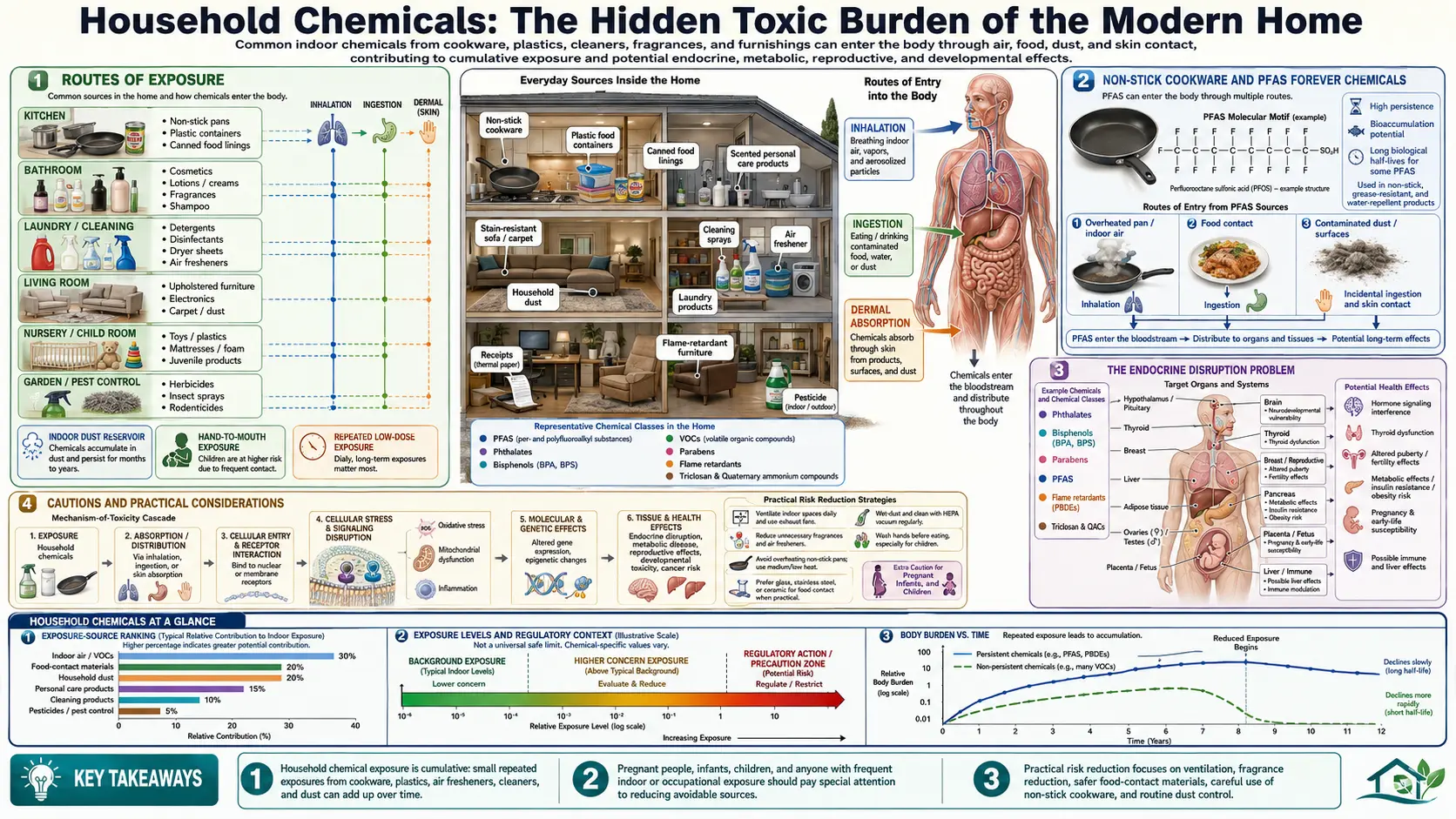
The average modern home contains between 500 and 1,000 synthetic chemicals, many of which have never been adequately tested for long-term human safety. From the moment you wake up and apply personal care products, walk across chemically treated carpet, clean your kitchen counters with commercial sprays, and cook dinner on non-stick pans, you are immersed in a chemical environment that would have been unrecognizable to our grandparents. As a naturopathic physician, I consider household chemical exposure one of the most significant yet overlooked contributors to chronic illness, hormonal disruption, and the rising tide of cancers, autoimmune conditions, and neurodevelopmental disorders affecting modern populations.
What makes household chemical exposure particularly insidious is its cumulative, low-dose nature. No single product will cause immediate illness in most people, but the combined daily exposure to dozens or hundreds of chemicals over years and decades creates a toxic burden that overwhelms the body's detoxification capacity. The liver, kidneys, lungs, and skin were never designed to process the volume and variety of synthetic chemicals that characterize modern indoor living. Understanding these exposures and choosing safer alternatives is one of the most impactful steps you can take toward protecting your health and that of your family.
Table of Contents
- Routes of Exposure
- Cleaning Products
- Laundry Products
- Air Fresheners and Scented Candles
- Personal Care Products
- Non-Stick Cookware and PFAS Forever Chemicals
- Flame Retardants in Furniture and Electronics
- VOCs from Paint, Carpet, and New Furniture
- Pesticides Used Indoors
- The Endocrine Disruption Problem
- Children's Vulnerability
- Natural Alternatives for Cleaning
- Safer Personal Care Products
- Reducing Indoor Air Pollution
- Cautions and Practical Considerations
- Connections
- Featured Videos
Routes of Exposure
Household chemicals enter the body through three primary pathways, and understanding these routes is essential for reducing your overall toxic burden. Most people drastically underestimate how much chemical exposure occurs through the skin and lungs, focusing only on what they eat and drink.
- Inhalation: Volatile organic compounds (VOCs), aerosol sprays, synthetic fragrances, and off-gassing from furniture, carpet, and building materials are continuously inhaled. The lungs provide an enormous surface area for absorption, and inhaled chemicals bypass the liver's first-pass detoxification, entering the bloodstream directly. Indoor air is typically two to five times more polluted than outdoor air, and in some cases up to 100 times more polluted
- Skin absorption (dermal exposure): The skin is not an impermeable barrier. Many chemicals readily pass through the skin and enter the bloodstream, particularly in areas where skin is thin such as the face, underarms, and groin. Personal care products, laundry detergent residues on clothing, cleaning product residues on surfaces, and chemicals in household dust all contribute to dermal absorption. Unlike ingested chemicals that pass through the liver before reaching systemic circulation, dermally absorbed chemicals enter the bloodstream directly
- Ingestion: Chemical residues on dishes and cookware, contaminated drinking water, hand-to-mouth transfer (particularly important in children), and dust particles containing settled chemicals are all ingested. Young children crawling on treated floors and putting objects in their mouths face especially high ingestion exposure
- Combined and cumulative exposure: The critical point is that these routes operate simultaneously. You may be inhaling fragrance chemicals from a plug-in air freshener while absorbing laundry detergent residues through your clothing while ingesting PFAS from your non-stick cookware, all at the same time. Regulatory testing evaluates chemicals individually, but the human body must process them in combination
Cleaning Products
Commercial cleaning products are among the most chemically concentrated items in the home. A 2018 study published in the American Journal of Respiratory and Critical Care Medicine found that regular use of cleaning sprays was associated with accelerated lung function decline comparable to smoking 20 cigarettes per day over a 20-year period. The chemicals of greatest concern include the following.
- Bleach (sodium hypochlorite): One of the most widely used household chemicals, bleach releases chlorine gas and chloroform when used, both of which are respiratory irritants. Mixing bleach with ammonia or acids produces extremely dangerous chloramine or chlorine gas. Chronic low-level exposure to bleach fumes has been associated with increased asthma risk and respiratory damage
- Ammonia: Found in glass cleaners and multi-surface cleaners, ammonia is a potent respiratory irritant that can cause bronchial inflammation and aggravate asthma. People with chronic respiratory conditions are particularly vulnerable
- Phthalates in fragrances: Most scented cleaning products contain phthalates as fragrance carriers. These chemicals are known endocrine disruptors that interfere with testosterone production, reproductive development, and thyroid function. They are not required to be listed on product labels because they are considered part of the proprietary fragrance formulation
- Triclosan: Although banned from hand soaps in 2016, triclosan persists in some cleaning products, dish soaps, and antibacterial formulations. It disrupts thyroid hormone metabolism, promotes antibiotic-resistant bacteria, and accumulates in the environment. Triclosan has been detected in the blood and urine of the majority of Americans tested
- 2-Butoxyethanol: A solvent found in many all-purpose cleaners, kitchen degreasers, and window cleaners, 2-butoxyethanol causes red blood cell damage, liver and kidney injury, and respiratory irritation. Manufacturers are not required to list it on product labels when the product is designed for consumer use
- Quaternary ammonium compounds (quats): Common in antibacterial sprays, disinfecting wipes, and fabric softeners, quats are skin sensitizers and respiratory irritants that have been linked to occupational asthma. Studies have also shown that quats can promote antibiotic-resistant bacteria and cause reproductive toxicity in animal studies
Laundry Products
Laundry products deserve special attention because their residues remain on clothing and bedding in direct, prolonged contact with the skin. You spend roughly one-third of your life in bed, with your face pressed against pillowcases that have been washed in and retain residues from these chemicals.
- Synthetic fragrances: Conventional laundry detergents and fabric softeners are among the most heavily fragranced products in the home. A single fragrance can contain dozens to hundreds of individual chemicals, many of which are VOCs. Studies analyzing dryer vent emissions from fragranced laundry products have identified over 25 VOCs, including seven classified as hazardous air pollutants
- Optical brighteners: These synthetic chemicals do not actually clean clothing but coat fabric fibers to absorb ultraviolet light and emit blue light, making clothes appear whiter and brighter. They remain on clothing after washing and are in continuous skin contact. Optical brighteners are known skin sensitizers that can cause contact dermatitis, and they are toxic to aquatic organisms when released into waterways
- 1,4-Dioxane: This probable human carcinogen is not intentionally added to laundry products but forms as a contamination byproduct during the manufacturing of common surfactants like sodium laureth sulfate. It is readily absorbed through the skin and by inhalation and has been classified by the EPA as a likely human carcinogen. Independent testing has found 1,4-dioxane in numerous laundry detergent brands
- Fabric softeners and dryer sheets: These products coat fabrics with a layer of positively charged chemical compounds (quats) and synthetic fragrances. The residue designed to remain on clothing is in constant skin contact. The heated drying process volatilizes fragrance chemicals, releasing them both indoors through dryer vents and onto the clothing itself
- Chlorine bleach in laundry: Adding chlorine bleach to laundry can react with organic compounds in clothing fibers and soil to produce chloroform and other chlorinated byproducts, which are released as gases during washing and drying
Air Fresheners and Scented Candles
The air freshener industry generates billions of dollars annually by convincing consumers that their homes need to smell like synthetic approximations of lavender, ocean breeze, or fresh linen. In reality, these products do not freshen air but contaminate it with a complex mixture of volatile chemicals that degrade indoor air quality.
- Volatile organic compounds (VOCs): Air fresheners, plug-ins, sprays, and scented candles emit a wide range of VOCs including limonene, alpha-pinene, and linalool. While some of these compounds occur naturally, in indoor environments they react with ozone to form secondary pollutants including formaldehyde, ultrafine particles, and other oxidation products that are more toxic than the parent compounds
- Formaldehyde: A known human carcinogen classified by the International Agency for Research on Cancer as Group 1, formaldehyde is emitted directly by some air fresheners and is also formed as a secondary reaction product when terpene-based fragrances react with indoor ozone. Chronic exposure to even low levels of formaldehyde increases the risk of nasopharyngeal cancer and leukemia
- Benzene: Some scented candles, particularly those made from paraffin wax (a petroleum byproduct), emit benzene when burned. Benzene is a known human carcinogen strongly linked to leukemia. Paraffin candles also emit toluene, acetaldehyde, and acrolein, along with soot particles that contribute to indoor particulate matter pollution
- Phthalates: Present in many air freshener formulations as fragrance solvents and plasticizers, phthalates are released into indoor air where they are inhaled and also settle onto surfaces and dust as semi-volatile organic compounds. Studies have found that homes using air fresheners have significantly higher levels of phthalates in indoor air and household dust
- Naphthalene: Found in some mothballs and certain air freshener products, naphthalene is classified as a possible human carcinogen and can cause hemolytic anemia, liver damage, and neurological effects with chronic exposure
Personal Care Products
The average woman applies 12 personal care products containing 168 unique chemical ingredients to her body every day. The average man uses 6 products with 85 chemicals. These products are applied directly to the skin, the body's largest organ, and many of their chemical ingredients are readily absorbed into the bloodstream. The personal care product industry remains largely self-regulated, with the FDA lacking the authority to require safety testing before products reach the market.
- Parabens (methylparaben, propylparaben, butylparaben): Used as preservatives in shampoos, lotions, deodorants, and cosmetics, parabens are xenoestrogens that mimic estrogen in the body. They have been detected in breast tumor tissue and are associated with hormonal disruption, early puberty in girls, and reproductive abnormalities. While the industry maintains they are safe at low levels, cumulative daily exposure from multiple products is not accounted for in safety assessments
- Sodium lauryl sulfate (SLS) and sodium laureth sulfate (SLES): These foaming agents are found in the majority of shampoos, body washes, toothpastes, and facial cleansers. SLS is a known skin irritant that strips the skin's natural protective lipid barrier. SLES can be contaminated with 1,4-dioxane, a probable carcinogen, as a manufacturing byproduct
- Diethanolamine (DEA), monoethanolamine (MEA), and triethanolamine (TEA): These emulsifiers and pH adjusters are found in shampoos, shaving creams, and lotions. They can react with other ingredients to form nitrosamines, which are potent carcinogens. DEA itself has been shown to inhibit fetal brain development in animal studies and is classified as a possible human carcinogen
- Propylene glycol: A penetration enhancer used in lotions, deodorants, and cosmetics, propylene glycol is designed to help other chemicals penetrate the skin more effectively. This means it not only enters the body itself but facilitates the absorption of every other chemical present in the product. It can cause skin irritation, allergic reactions, and organ system toxicity at high doses
- Synthetic fragrances: The single word "fragrance" or "parfum" on an ingredient label can represent a mixture of dozens to hundreds of individual chemicals, none of which are required to be disclosed. This proprietary loophole, protected as a trade secret, means that products labeled with fragrance may contain phthalates, synthetic musks, allergens, and sensitizers without consumer knowledge. The International Fragrance Association lists over 3,000 chemicals used in fragrance formulations
- Aluminum compounds: Found in antiperspirant deodorants, aluminum chlorohydrate and aluminum zirconium block sweat glands and have been a subject of concern regarding breast cancer risk, as they are applied in direct proximity to breast tissue and have estrogen-mimicking properties
Non-Stick Cookware and PFAS Forever Chemicals
Per- and polyfluoroalkyl substances (PFAS) represent one of the most pervasive and persistent chemical contamination problems in human history. Known as "forever chemicals" because they do not break down in the environment or the human body, PFAS have been detected in the blood of 98% of Americans tested. Non-stick cookware is one of the most direct household sources of exposure.
- PFOA (perfluorooctanoic acid): Used in the production of Teflon and other non-stick coatings until 2015, PFOA is classified as a possible human carcinogen and has been linked to kidney cancer, testicular cancer, thyroid disease, liver damage, immune suppression, and reproductive problems. Although manufacturers phased out PFOA, it persists in older cookware, the environment, and human blood for years to decades
- PFOS (perfluorooctane sulfonate): Used in stain-resistant fabric treatments (Scotchgard), food packaging, and firefighting foams, PFOS is similarly persistent and toxic. It has been associated with immune system suppression, elevated cholesterol, and thyroid disruption
- Overheated non-stick pans: When non-stick cookware is heated above 500 degrees Fahrenheit, the coating begins to decompose and release toxic fumes including PFOA and other fluorinated gases. This can cause polymer fume fever in humans and is instantly lethal to pet birds, whose respiratory systems are far more sensitive
- Replacement chemicals: The chemicals that replaced PFOA and PFOS in newer products, known as short-chain PFAS and GenX chemicals, are similarly persistent and are increasingly being linked to the same health concerns. The replacement strategy has been criticized as a "regrettable substitution" that swaps one forever chemical for another
- Beyond cookware: PFAS contamination extends well beyond non-stick pans. These chemicals are found in stain-resistant carpets and furniture, waterproof clothing, fast food wrappers and microwave popcorn bags, dental floss, and contaminated drinking water. Total PFAS exposure from all household sources is a significant contributor to body burden
Flame Retardants in Furniture and Electronics
For decades, chemical flame retardants have been added to upholstered furniture, mattresses, carpet padding, curtains, and electronics in response to flammability standards. These chemicals migrate out of products over time and accumulate in household dust, where they are inhaled and ingested. Research has increasingly shown that these chemicals provide minimal fire safety benefit while posing significant health risks.
- Polybrominated diphenyl ethers (PBDEs): Once the most widely used flame retardants, PBDEs were phased out between 2004 and 2013 due to evidence of thyroid disruption, neurodevelopmental toxicity, reproductive harm, and potential carcinogenicity. However, they persist in older furniture, household dust, and human body tissues for years. PBDEs have been detected in the breast milk of virtually all American women tested, at levels among the highest in the world
- Replacement flame retardants: The chemicals that replaced PBDEs, including TDCIPP, TCEP, and organophosphate flame retardants, are increasingly being found to carry similar or even greater health risks, including carcinogenicity and neurotoxicity. This pattern of replacing one toxic chemical with an untested one that later proves equally harmful has been termed the "toxic treadmill"
- Household dust exposure: Flame retardants leach out of treated products and bind to household dust particles. Studies have found that Americans have some of the highest levels of flame retardant chemicals in their blood compared to other populations, directly correlated with flame retardant levels in household dust
- Children's elevated exposure: Children have significantly higher blood levels of flame retardants than adults in the same household because they spend more time on the floor, engage in more hand-to-mouth behavior, and have faster respiration rates relative to body weight
VOCs from Paint, Carpet, and New Furniture
The distinctive smell of a new car, freshly painted room, or new furniture is the smell of volatile organic compounds off-gassing into your breathing space. Off-gassing is the process by which chemicals used in manufacturing are released as gases at room temperature, and it can continue for months to years after a product is installed in the home.
- Formaldehyde in building materials: Pressed wood products (particleboard, plywood, MDF), which are used extensively in furniture, cabinetry, and flooring, emit formaldehyde from the urea-formaldehyde resins used as adhesives. Formaldehyde is a known human carcinogen, and indoor levels in new or recently renovated homes can exceed health-based guidelines by several times
- New carpet emissions: New synthetic carpet releases a cocktail of VOCs including 4-phenylcyclohexene (the "new carpet smell"), styrene, toluene, xylene, and formaldehyde. Carpet adhesives and padding can add additional chemicals. The EPA recommends ventilating rooms with new carpet for at least 72 hours before occupying them
- Paint and coatings: Conventional paints and varnishes can emit VOCs for weeks to months after application. Chemicals of concern include toluene, xylene, ethylbenzene, and formaldehyde. Even "low-VOC" paints still contain some volatile compounds and may use more toxic biocides and fungicides than conventional formulations
- Furniture and mattresses: New upholstered furniture and mattresses can off-gas flame retardants, formaldehyde from adhesives, polyurethane foam breakdown products (toluene diisocyanate), and fabric treatment chemicals for months after purchase
- Cumulative indoor air degradation: The combined off-gassing from all sources in a home, including building materials, furniture, flooring, and household products, creates a chronic low-level VOC exposure that is significantly higher indoors than outdoors. Modern energy-efficient homes with tight building envelopes and reduced air exchange rates can trap these chemicals indoors at even higher concentrations
Pesticides Used Indoors
An estimated 80% of pesticide exposure for the average person occurs indoors, not from food but from pesticides applied directly inside the home and tracked in from outdoors. Indoor pesticide residues persist far longer than outdoor applications because they are protected from sunlight, rain, and microbial degradation.
- Insecticide sprays and foggers: Products containing pyrethroids, organophosphates, or carbamates leave residues on surfaces, in carpet fibers, and in household dust that persist for months to years. Bug bombs (total release foggers) are particularly concerning because they coat every surface in the home with pesticide residue
- Lawn and garden chemicals tracked indoors: Herbicides like 2,4-D and glyphosate applied to lawns are tracked indoors on shoes, where they contaminate carpet and floor dust. Studies using the "track-in" pathway have found that lawn pesticides are detectable in household dust and indoor air for weeks after outdoor application
- Mothballs: Traditional mothballs contain either naphthalene or paradichlorobenzene, both of which are volatile and fill enclosed spaces with carcinogenic fumes. Naphthalene is a possible human carcinogen, and paradichlorobenzene has been classified as a possible carcinogen by the IARC
- Flea and tick treatments: Pet flea collars and topical treatments release pesticides (often organophosphates or pyrethroids) that transfer to household surfaces, furniture, and human skin through contact with treated pets
- Termite treatments: Homes treated for termites with chlorpyrifos or other persistent pesticides can have measurable residues in indoor air and dust for years after application
The Endocrine Disruption Problem
Perhaps the most alarming aspect of household chemical exposure is the widespread presence of endocrine-disrupting chemicals (EDCs), substances that interfere with the body's hormonal signaling at extraordinarily low doses. The endocrine system operates at parts-per-trillion concentrations, which means that even trace amounts of hormonally active chemicals can have significant biological effects.
- Xenoestrogens: Many household chemicals mimic estrogen in the body, binding to estrogen receptors and activating estrogenic pathways. These include parabens, phthalates, BPA and its replacements, some UV filters in sunscreens, and certain pesticides. The cumulative estrogenic burden from daily exposure to multiple xenoestrogens is implicated in rising rates of hormone-sensitive cancers, early puberty, endometriosis, and declining male fertility
- Thyroid disruptors: PFAS, flame retardants (PBDEs), triclosan, and perchlorate (found in some water supplies) all interfere with thyroid hormone production, transport, or metabolism. Thyroid hormones are critical for brain development, metabolism, and virtually every organ system. Subclinical thyroid disruption from chemical exposure may contribute to fatigue, weight gain, cognitive impairment, and developmental delays in children
- Anti-androgenic effects: Phthalates and certain pesticides have anti-androgenic properties, blocking testosterone signaling and interfering with male reproductive development. Prenatal exposure to phthalates has been associated with reduced anogenital distance in male infants (a marker of feminization), and male reproductive health metrics including sperm counts have declined dramatically over recent decades
- Non-monotonic dose responses: Unlike traditional toxicology where higher doses produce greater effects, many EDCs exhibit non-monotonic dose-response curves, meaning they can cause effects at very low doses that disappear at higher doses and reappear at even higher doses. This phenomenon undermines the conventional regulatory assumption that "the dose makes the poison" and means that current safety thresholds may not be protective
- Developmental windows of vulnerability: Endocrine disruption during critical developmental windows, particularly prenatal development, infancy, and puberty, can cause permanent changes that manifest as disease later in life. Exposure to EDCs during these periods can alter gene expression through epigenetic mechanisms, potentially affecting not only the exposed individual but future generations
Children's Vulnerability
Children are not small adults when it comes to chemical exposure. Their unique physiology, behavior, and developmental stage make them dramatically more susceptible to harm from household chemicals than adults living in the same environment.
- Higher exposure per body weight: Pound for pound, children breathe more air, drink more water, and eat more food than adults. An infant's air intake per unit of body weight is approximately twice that of an adult, meaning they inhale proportionally twice the concentration of airborne chemicals
- Floor-level exposure: Infants and toddlers spend most of their time on or near the floor, where heavier chemical vapors and contaminated dust settle. Carpeted floors act as reservoirs for pesticides, flame retardants, lead dust, and other chemicals that are continuously re-released into the air at the child's breathing zone
- Hand-to-mouth behavior: Young children explore the world by putting objects in their mouths. This normal developmental behavior results in significant ingestion of household dust containing a mixture of pesticides, flame retardants, phthalates, lead, and other chemicals that have settled on surfaces and objects
- Immature detoxification systems: Children's livers and kidneys are not fully developed and have reduced capacity to metabolize and excrete many chemicals. The blood-brain barrier is more permeable in infants, allowing neurotoxic chemicals greater access to the developing brain
- Rapid development creates vulnerability: The rapid cell division and organ development occurring in children means that toxic interference during these critical periods can cause permanent structural and functional changes. Neurodevelopmental effects of chemical exposure during early childhood can include reduced IQ, learning disabilities, attention deficits, and behavioral problems
- Longer lifetime of exposure: Chemicals that accumulate in the body, such as PFAS and heavy metals, will have decades longer to build up in a child exposed from birth compared to an adult who begins exposure later in life. This longer exposure window translates directly to greater cumulative risk
Natural Alternatives for Cleaning
Effective cleaning does not require toxic chemicals. For the vast majority of household cleaning tasks, simple, time-tested natural ingredients perform as well as or better than their commercial counterparts, without the health risks. Transitioning to natural cleaning products is one of the simplest and most impactful changes you can make to reduce your household chemical burden.
- White distilled vinegar: A 5% acetic acid solution that effectively cuts grease, dissolves mineral deposits, kills many common bacteria and molds, and works as a natural deodorizer. Diluted 1:1 with water, vinegar is an excellent all-purpose surface cleaner, glass cleaner, and bathroom cleaner. Do not use on natural stone surfaces as the acid can etch marble and granite
- Baking soda (sodium bicarbonate): A gentle abrasive and natural deodorizer that is effective for scrubbing sinks, tubs, and ovens, neutralizing odors in refrigerators and carpets, and softening water for laundry. Combined with vinegar, it creates a fizzing reaction useful for clearing drains and loosening baked-on food
- Castile soap: A vegetable oil-based soap (traditionally made from olive oil) that serves as a gentle but effective all-purpose cleaner, dish soap, hand soap, and laundry detergent. A small amount of liquid castile soap diluted in water can replace most commercial cleaning products in the home
- Hydrogen peroxide (3%): An effective disinfectant that kills bacteria, viruses, and mold on surfaces. It breaks down into water and oxygen, leaving no toxic residues. It can be used as a bathroom disinfectant, mold treatment, and stain remover for fabrics. Keep in a dark spray bottle as it degrades in light
- Essential oils: Tea tree oil has well-documented antimicrobial properties and can be added to homemade cleaning solutions for additional disinfecting power. Lavender, lemon, eucalyptus, and peppermint oils provide natural fragrance and additional antimicrobial benefits. Use sparingly and with caution around pets, particularly cats, which lack certain liver enzymes needed to metabolize some essential oil compounds
- Washing soda (sodium carbonate): A stronger alkaline cleaner than baking soda, washing soda is effective for heavy-duty cleaning, degreasing, and laundry. It can be used to make homemade laundry detergent and all-purpose cleaning solutions
Safer Personal Care Products
Choosing safer personal care products requires becoming an informed label reader and taking advantage of independent resources that evaluate product safety. The personal care industry's self-regulation means that the responsibility for avoiding harmful ingredients falls largely on the consumer.
- EWG Skin Deep database: The Environmental Working Group's Skin Deep database (ewg.org/skindeep) rates over 90,000 personal care products on a hazard scale of 1 to 10, based on the toxicity data available for each ingredient. This free resource allows consumers to check the safety profile of products before purchasing
- Avoid synthetic fragrance: Choose products labeled "fragrance-free" rather than "unscented" (which may still contain masking fragrances). If a product lists "fragrance" or "parfum" as an ingredient, assume it contains a proprietary mixture of potentially harmful chemicals including phthalates
- Read ingredient lists: Avoid products containing parabens (methylparaben, propylparaben, butylparaben), sodium lauryl sulfate, DEA/MEA/TEA, propylene glycol, oxybenzone, retinyl palmitate, and formaldehyde-releasing preservatives (DMDM hydantoin, quaternium-15, imidazolidinyl urea)
- Simplify your routine: One of the most effective strategies for reducing personal care product exposure is simply to use fewer products. Evaluate whether each product in your routine is truly necessary. Multi-purpose products reduce the total number of chemical ingredients applied to your body
- Choose certified products: Look for certifications such as USDA Organic, EWG Verified, MADE SAFE, or NSF/ANSI 305, which indicate that products have been independently evaluated for safety and ingredient transparency
- Natural alternatives: Coconut oil can serve as a moisturizer, makeup remover, and hair treatment. Apple cider vinegar makes an effective hair rinse. Mineral sunscreens using zinc oxide or titanium dioxide avoid the endocrine-disrupting chemical UV filters found in most conventional sunscreens
Reducing Indoor Air Pollution
Given that most people spend approximately 90% of their time indoors, improving indoor air quality is one of the most impactful steps for reducing total chemical exposure. A multi-faceted approach combining source reduction, ventilation, and filtration produces the best results.
- Ventilation: Open windows whenever weather permits to allow fresh air exchange and dilute indoor pollutants. Use exhaust fans in kitchens and bathrooms during and after activities that generate pollutants (cooking, cleaning, showering). If you live in a tightly sealed energy-efficient home, consider a heat recovery ventilator (HRV) or energy recovery ventilator (ERV) to maintain fresh air exchange without significant energy loss
- HEPA air filtration: High-efficiency particulate air (HEPA) filters capture 99.97% of particles 0.3 microns and larger, including dust, pollen, mold spores, and particulate-bound chemicals such as flame retardants and pesticides. Place HEPA air purifiers in bedrooms and main living areas. For whole-house filtration, consider upgrading HVAC filters to MERV 13 or higher
- Activated carbon filtration: While HEPA filters capture particles, activated carbon filters adsorb gaseous pollutants including VOCs, formaldehyde, and fragrance chemicals. Air purifiers combining HEPA and activated carbon filtration address both particulate and gaseous indoor pollutants
- Houseplants: NASA research and subsequent studies have identified several houseplant species that can help remove VOCs from indoor air, including spider plants, peace lilies, Boston ferns, bamboo palms, and rubber plants. While the air-cleaning capacity of individual plants is modest, a well-planted home provides cumulative benefit along with humidity regulation and psychological well-being
- Source reduction: The most effective strategy is to prevent chemicals from entering your home in the first place. Remove shoes at the door to prevent tracking in pesticides and pollutants, choose unscented or naturally scented products, avoid air fresheners entirely, use natural cleaning products, and select furniture and building materials with low or no VOC emissions
- Regular dusting and vacuuming: Household dust is a significant reservoir of chemicals including flame retardants, phthalates, pesticides, and PFAS. Frequent wet dusting (dry dusting merely redistributes particles) and vacuuming with a HEPA-filtered vacuum significantly reduce dust-borne chemical exposure
Cautions and Practical Considerations
While reducing household chemical exposure is a worthy and important goal, it is essential to approach the transition thoughtfully and without creating unnecessary anxiety or making changes that could introduce different risks.
- Do not mix cleaning chemicals: Whether using conventional or natural products, never mix cleaning agents without understanding the chemistry involved. Bleach and ammonia produce toxic chloramine gas. Bleach and vinegar produce toxic chlorine gas. Hydrogen peroxide and vinegar produce peracetic acid, which can irritate skin, eyes, and lungs
- Essential oil safety: Essential oils are concentrated plant compounds and are not inherently safe simply because they are natural. Some essential oils are toxic to cats (tea tree, peppermint, eucalyptus, clove) and can cause serious illness. Essential oils should be diluted before skin application and kept away from children. Pregnant women should consult a knowledgeable practitioner before using essential oils
- Disinfection when needed: In situations requiring true disinfection, such as during illness, after handling raw meat, or in immunocompromised households, natural cleaners may not be sufficient. Hydrogen peroxide at 3% concentration provides genuine disinfection without the risks of bleach or quats. In healthcare settings or during outbreaks, appropriate conventional disinfectants may be necessary
- Gradual transition: Attempting to eliminate all household chemicals overnight is overwhelming and unnecessary. Replace products as they run out, starting with the highest-exposure items: products applied directly to the skin, products used in the bedroom, and products used around children
- Cost considerations: Natural alternatives like vinegar, baking soda, and castile soap are generally far less expensive than commercial cleaning products. However, safer personal care products and low-VOC building materials may cost more. Prioritize changes based on exposure level and health impact rather than trying to replace everything at once
- Avoiding "greenwashing": Many products marketed as "natural," "green," or "eco-friendly" still contain harmful chemicals. The terms "natural" and "green" are not regulated and carry no legal meaning on product labels. Always read the full ingredient list rather than relying on front-of-package marketing claims. Use independent databases like EWG Skin Deep and the Good Guide to verify product safety claims
- Consult healthcare professionals: If you suspect that household chemical exposure has contributed to health problems, consult with a naturopathic doctor, integrative medicine physician, or environmental medicine specialist who can assess your total chemical burden, recommend appropriate testing, and guide a targeted reduction strategy. Do not attempt chelation or aggressive detoxification protocols without professional supervision
Connections
- All Toxins
- PFAS
- Pesticides
- Lead
- Cancer
- Asthma
- Leukemia
- Detoxification
- Heavy Metals
- Lavender
- Tea Tree
- Eucalyptus
- Peppermint
- Glyphosate
- Endometriosis
- Anxiety
- Preservatives
- Liver Cleansing
- BPA and Plastics
- Flame Retardants — PBDEs and their replacements in furniture, mattresses and household dust.