Heavy Metals in Food: Lead, Mercury, Arsenic, and Cadmium

Table of Contents
- Lead in Food
- Mercury in Food
- Arsenic in Food
- Cadmium in Food
- Bioaccumulation
- Children's Neurodevelopmental Vulnerability
- U.S. Food and Drug Administration Allowable Limits Debate
- Testing Results and Investigations
- Foods with Highest Heavy Metal Contamination
- Chelation and Detoxification
- Ways Heavy Metal Exposure Is Reduced
- Connections
- Featured Videos
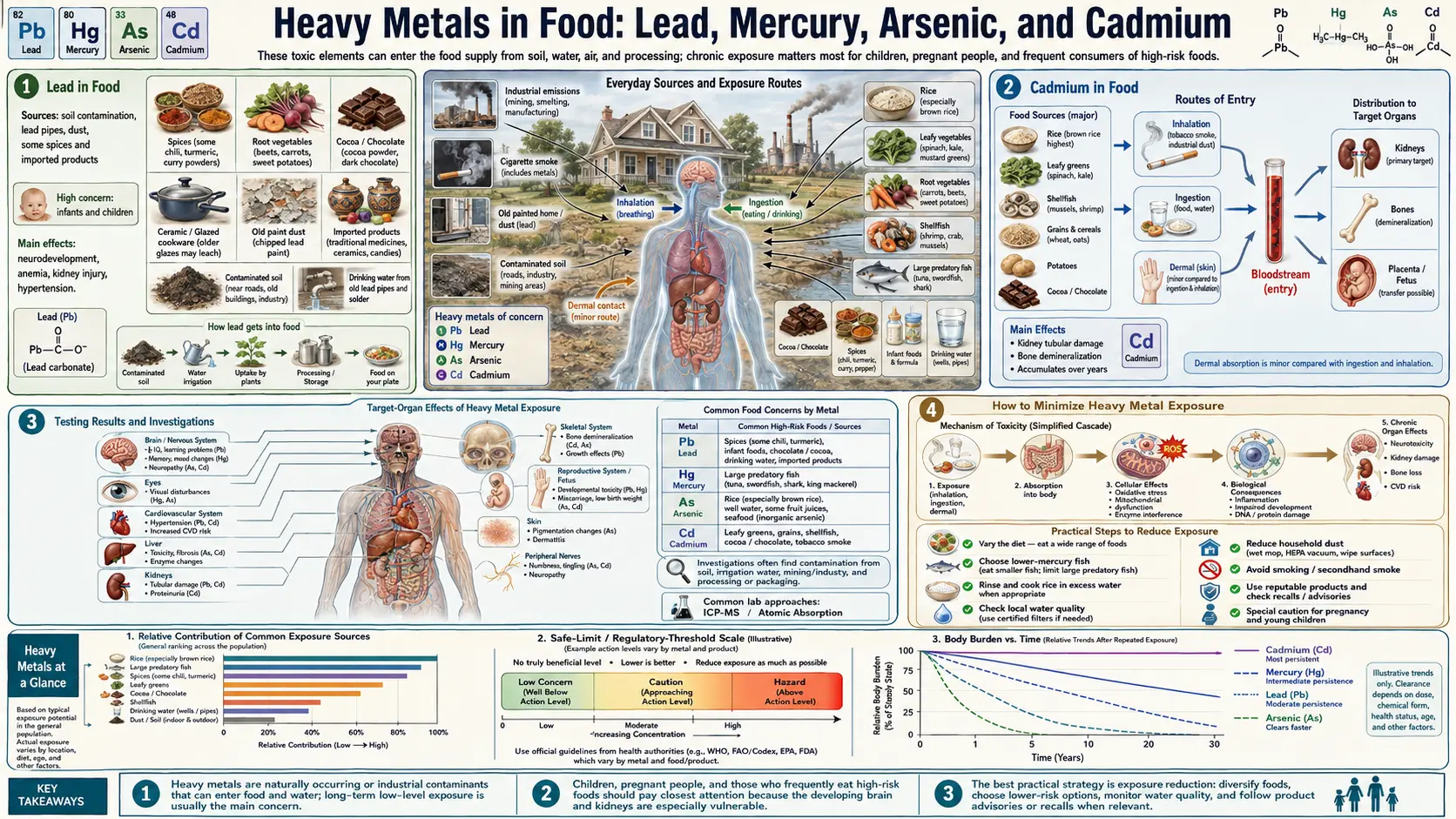
Heavy metals are among the most insidious contaminants in our food supply. Unlike many toxins that the body can metabolize and eliminate, heavy metals accumulate in tissues over time, building up in bones, organs, and the brain over years and decades of chronic low-level exposure. Lead, mercury, arsenic, and cadmium, the four heavy metals of greatest concern in food, are all toxic at levels commonly found in everyday foods, and there is no known safe level of exposure for lead.
The sources of heavy metal contamination in food are both natural and industrial. Decades of industrial pollution, leaded gasoline, pesticide application, mining operations, and coal burning have deposited heavy metals into soils and waterways worldwide. These metals are then taken up by crops, concentrated through the food chain, and ultimately consumed by humans. Children are particularly vulnerable because their developing brains and bodies absorb heavy metals more readily and are more susceptible to their toxic effects.
Lead in Food
Sources and Contaminated Foods
- Baby food contamination: A 2021 report by the U.S. House Oversight Subcommittee on Economic and Consumer Policy found significant levels of lead, arsenic, cadmium, and mercury in baby foods from four large U.S. baby-food makers. The subcommittee reported that the companies' internal test results showed the contamination while the products stayed on sale
- Spices: Imported spices, particularly turmeric, chili powder, paprika, and cinnamon, have been found to contain elevated lead levels, sometimes due to the deliberate addition of lead chromate as a colorant
- Chocolate: Cocoa products frequently contain measurable levels of lead and cadmium, with contamination occurring both during growing (cadmium from soil) and processing (lead from environmental contamination during drying and shipping)
- Root vegetables: Carrots, sweet potatoes, and other root vegetables absorb lead from contaminated soil, particularly in areas near highways, industrial sites, or older buildings with lead paint
- Fruit juices: Consumer Reports testing found concerning levels of lead and arsenic in many popular fruit juice brands, including apple juice and grape juice marketed to children
- Bone broth: Because lead accumulates in bones, bone broth made by simmering animal bones can contain elevated lead levels
- Protein powders: The Clean Label Project found that many popular protein powder supplements contained measurable levels of lead and other heavy metals
Health Effects of Lead
- No safe level: The U.S. Centers for Disease Control and Prevention (CDC), WHO, and AAP all agree that there is no known safe blood lead level in children. Even very low levels of exposure can cause measurable harm
- Neurodevelopmental damage: Lead exposure in children causes irreversible reductions in IQ, learning disabilities, attention deficits, behavioral problems, and impaired executive function
- Bone accumulation: Over 90% of the body's lead burden is stored in bones, where it can be released back into the bloodstream during pregnancy, lactation, menopause, or bone loss, causing delayed toxicity decades after exposure
- Cardiovascular effects: Chronic lead exposure in adults is associated with hypertension, coronary artery disease, and increased cardiovascular mortality
- Kidney damage: Lead accumulates in the kidneys and can cause chronic nephropathy and reduced kidney function over time
- Reproductive harm: Lead exposure is linked to reduced fertility, miscarriage, preterm birth, and low birth weight in pregnant women
Mercury in Food
Sources and Contaminated Foods
- Fish and seafood: Mercury enters waterways primarily through coal-burning power plant emissions and industrial discharges. Bacteria in aquatic environments convert inorganic mercury into methylmercury, which bioaccumulates up the food chain, reaching the highest concentrations in large predatory fish
- Highest mercury fish: Shark, swordfish, king mackerel, tilefish, bigeye tuna, marlin, and orange roughy contain the highest mercury levels; the FDA/EPA fish advice for pregnant or breastfeeding women and for children lists them as “choices to avoid”
- Moderate mercury fish: Albacore (white) tuna, yellowfin tuna, halibut, grouper, and Chilean sea bass contain moderate mercury levels; the FDA/EPA advice lists them as “good choices” at one serving a week
- Lower mercury options: Salmon, sardines, anchovies, herring, shrimp, pollock, catfish, and tilapia generally contain lower mercury levels; the FDA/EPA advice lists them as “best choices” at two to three servings a week
- High fructose corn syrup: Studies have detected mercury in some high fructose corn syrup samples and in processed foods containing HFCS, originating from the chlor-alkali process used in production
- Rice: Rice grown in areas with mercury-contaminated water can contain measurable levels of methylmercury
Health Effects of Mercury
- Neurotoxicity: Methylmercury is a potent neurotoxin that crosses both the blood-brain barrier and the placental barrier, making it particularly dangerous to developing brains
- Prenatal harm: Prenatal mercury exposure can cause cognitive deficits, motor impairment, language delays, and attention problems in children, even at levels previously considered safe
- Adult neurological effects: Chronic mercury exposure in adults can cause memory loss, tremor, vision and hearing impairment, numbness and tingling in extremities, and mood disturbances
- Cardiovascular effects: Mercury exposure has been associated with increased risk of heart attack and hypertension, potentially offsetting the cardiovascular benefits of fish consumption
- Immune disruption: Mercury suppresses immune function and has been linked to autoimmune conditions, though the mechanisms are complex and not fully understood
- Kidney damage: Inorganic mercury preferentially accumulates in the kidneys, where it can cause tubular necrosis and chronic kidney damage
Arsenic in Food
Sources and Contaminated Foods
- Rice: Rice is the single largest dietary source of inorganic arsenic because rice paddies are flooded with water, allowing arsenic in the soil to dissolve and be absorbed by the rice plant at rates 10 times higher than other grain crops
- Rice products: Rice cereal, rice milk, rice cakes, rice-based baby cereal, rice pasta, rice syrup (used as a sweetener in many "natural" products), and rice flour all concentrate arsenic from contaminated rice
- Apple juice: U.S. Food and Drug Administration (FDA) testing and Consumer Reports investigations have found concerning levels of arsenic in many apple juice brands, with arsenic originating from contaminated groundwater and historical use of arsenic-based pesticides in orchards
- Chicken: Until 2013 (roxarsone) and the end of 2015 (nitarsone, the last arsenic-based animal drug, withdrawn by the FDA as of 31 December 2015), arsenic-based drugs were routinely fed to conventional chickens to promote growth, kill parasites, and improve meat coloring. Residues of arsenic were found in chicken meat
- Groundwater: Naturally occurring arsenic in groundwater affects drinking water in many regions worldwide, including parts of Bangladesh, India, China, and the western United States
- Seaweed: Certain seaweed varieties, particularly hijiki, can contain very high levels of inorganic arsenic and have been subject to consumption advisories in several countries
Health Effects of Arsenic
- Known carcinogen: Inorganic arsenic is classified as a Group 1 human carcinogen by the WHO, with strong links to cancers of the skin, lung, bladder, kidney, and liver
- Cardiovascular disease: Chronic arsenic exposure is associated with increased risk of heart disease, peripheral vascular disease, and hypertension
- Diabetes: Multiple epidemiological studies have linked arsenic exposure to increased risk of type 2 diabetes, potentially through interference with insulin signaling and beta cell function
- Neurodevelopmental effects: Prenatal and early childhood arsenic exposure has been associated with reduced IQ, learning disabilities, and impaired cognitive function
- Skin effects: Chronic arsenic exposure causes characteristic skin changes including darkening, thickening, and the development of keratoses that can progress to skin cancer
- Immune suppression: Arsenic impairs immune function and has been associated with increased susceptibility to infections
Cadmium in Food
Sources and Contaminated Foods
- Chocolate and cocoa: Consumer Reports testing found significant cadmium levels in many dark chocolate brands, with cocoa trees absorbing cadmium from volcanic soils common in major cocoa-growing regions of Central and South America
- Spinach and leafy greens: Spinach, lettuce, and other leafy green vegetables are efficient cadmium accumulators, absorbing the metal from soil contaminated by fertilizers, industrial emissions, and sewage sludge
- Potatoes: As root vegetables, potatoes can accumulate cadmium from contaminated soil, with levels varying by growing region and soil conditions
- Sunflower seeds: Sunflower kernels have been found to contain relatively high cadmium levels compared to other seeds and nuts
- Phosphate fertilizers: A major source of cadmium contamination in agricultural soil is phosphate fertilizer, which naturally contains cadmium from the rock phosphate ore from which it is manufactured
- Shellfish: Oysters, mussels, scallops, and other shellfish can accumulate cadmium from contaminated marine environments
- Organ meats: Liver and kidney from animals accumulate cadmium, making organ meats a potential source of significant cadmium exposure
Health Effects of Cadmium
- Kidney damage: The kidney is the primary target organ for chronic cadmium toxicity, with long-term exposure causing tubular dysfunction, proteinuria, and progressive renal failure
- Bone disease: Cadmium interferes with calcium metabolism, causing bone demineralization, osteoporosis, and increased fracture risk, as documented in the "itai-itai" disease epidemic in Japan
- Cancer: Cadmium is classified as a Group 1 human carcinogen, with established links to lung cancer and emerging evidence for prostate, kidney, breast, and endometrial cancer
- Long half-life: Cadmium has a biological half-life of 10-30 years in the human body, meaning it accumulates relentlessly throughout life with virtually no ability for the body to eliminate it
- Reproductive harm: Cadmium exposure has been associated with reduced fertility, altered hormone levels, and adverse pregnancy outcomes
Bioaccumulation
- Tissue storage: Heavy metals accumulate in specific tissues over time: lead in bones, mercury in the brain and kidneys, cadmium in the kidneys and liver, and arsenic in skin, hair, and nails
- Decades of accumulation: Because heavy metals are eliminated very slowly (or in the case of lead stored in bones, not at all until bone is remodeled), body burdens increase continuously throughout life from chronic low-level dietary exposure
- Food chain concentration: Mercury is the classic example of biomagnification, where concentrations increase at each level of the food chain, with large predatory fish containing mercury levels millions of times higher than the surrounding water
- Synergistic toxicity: Exposure to multiple heavy metals simultaneously can produce toxic effects greater than the sum of individual exposures, as metals may interfere with each other's metabolism and amplify cellular damage
- Prenatal transfer: All four major heavy metals can cross the placenta, exposing the developing fetus. Lead stored in maternal bones can be mobilized during pregnancy and transferred to the fetus
Children's Neurodevelopmental Vulnerability
- Greater absorption: Children absorb a much higher percentage of ingested heavy metals than adults. Children absorb up to 50% of ingested lead compared to approximately 10% in adults
- Higher intake per body weight: Children consume more food and water relative to their body weight, resulting in proportionally higher heavy metal intake
- Developing brain sensitivity: The developing brain is exquisitely sensitive to heavy metal toxicity, with exposure during critical developmental windows causing irreversible damage to neural circuitry
- IQ impacts: Studies estimate that each 1 microgram per deciliter increase in blood lead level is associated with a 1-2 point decrease in IQ, with effects that persist into adulthood
- Behavioral effects: Heavy metal exposure in children has been linked to increased aggression, impulsivity, attention deficits, and conduct problems
- Baby food risk: Infants and toddlers face disproportionate risk because rice cereal, fruit juices, sweet potatoes, and other commonly consumed baby foods are among the highest sources of heavy metal contamination
U.S. Food and Drug Administration Allowable Limits Debate
- No federal limits for many foods: The U.S. Food and Drug Administration has not established maximum allowable levels of lead, arsenic, cadmium, or mercury for most food categories; lead in processed foods for babies and young children is one of the few categories with FDA action levels
- Baby food action levels: Under its Closer to Zero plan, the U.S. Food and Drug Administration issued final guidance in January 2025 setting action levels for lead in processed foods for babies and young children: 10 parts per billion (ppb) for fruits, most vegetables, mixtures, yogurts, custards and single-ingredient meats, and 20 ppb for single-ingredient root vegetables and for dry infant cereals. Critics argue these levels are too high and the timeline for implementation is too slow
- Internal industry testing: The congressional investigation reported that the baby food companies' own internal testing showed high heavy metal levels, and that these results had not been disclosed to consumers
- International comparisons: The European Union generally has stricter limits on heavy metals in food than the United States, particularly for lead and cadmium in baby foods and chocolate
- Proposition 65: California's Proposition 65 requires warning labels on products containing chemicals known to cause cancer or reproductive harm, including lead, arsenic, cadmium, and mercury. Many food products sold in California carry Prop 65 warnings for heavy metal content
- Testing limitations: The U.S. Food and Drug Administration tests only a tiny fraction of the food supply for heavy metals, and testing protocols may not capture the full range of contamination present in the marketplace
Testing Results and Investigations
- Consumer Reports: Extensive testing by Consumer Reports has found concerning levels of heavy metals in baby food, rice products, fruit juices, dark chocolate, protein powders, and many other common food products
- Clean Label Project: In 2017 this nonprofit tested 530 baby food and infant formula products and reported that 65% tested positive for arsenic, 36% for lead, 58% for cadmium, and 10% for acrylamide, with organic products faring no better than conventional; the findings were not published in a peer-reviewed journal
- Congressional investigation (2021): The U.S. House Oversight Subcommittee on Economic and Consumer Policy reported that four large U.S. baby-food makers sold products with significant levels of heavy metals, with test results of baby foods and their ingredients reaching up to 91 times the arsenic level, 177 times the lead level, 69 times the cadmium level and 5 times the mercury level that U.S. regulators allow in bottled or drinking water
- Healthy Babies Bright Futures: This organization tested 168 baby food products and found that 95% contained at least one heavy metal, with 25% containing all four (lead, arsenic, cadmium, and mercury)
Foods with Highest Heavy Metal Contamination
- Rice and rice products: Rice cereal, rice cakes, rice milk, and rice-based snacks consistently show among the highest arsenic levels of any food category
- Dark chocolate: Multiple testing programs have found high cadmium and lead levels in many dark chocolate brands, with levels varying significantly by brand and origin
- Baby food (sweet potato, carrot): Root vegetable-based baby foods frequently contain elevated levels of lead and cadmium absorbed from soil
- Fruit juices: Apple juice and grape juice have been found to contain concerning levels of lead and arsenic across multiple brands
- Large predatory fish: Shark, swordfish, king mackerel, and bigeye tuna contain the highest mercury levels of any common food
- Imported spices: Turmeric, chili powder, and other imported spices can contain very high lead levels, sometimes from intentional adulteration
- Protein powders and supplements: Many dietary supplements and protein powders contain measurable levels of lead, arsenic, and cadmium
Chelation and Detoxification
- Medical chelation therapy: For acute or severe heavy metal poisoning, chelation therapy using agents like DMSA, DMPS, EDTA, or BAL can bind metals in the bloodstream and promote their excretion through the kidneys
- Not for chronic low-level exposure: Medical chelation carries its own risks and is generally not recommended for chronic low-level dietary exposure. Clinical practice focuses on reducing ongoing exposure rather than attempting to remove metals already stored in tissues
- Dietary support: Adequate intake of calcium, iron, zinc, and selenium can help reduce heavy metal absorption by competing for the same absorption pathways in the intestines
- Fiber and phytochemicals: Dietary fiber, chlorella, cilantro, and foods rich in sulfur-containing compounds (garlic, onions, cruciferous vegetables) may support the body's natural detoxification processes
- Vitamin C: Adequate vitamin C intake has been shown to reduce lead absorption and may support the body's ability to process and excrete heavy metals
Ways Heavy Metal Exposure Is Reduced
- Diverse grains: Quinoa, millet, oats, barley, and other grains accumulate less arsenic than rice, so a diet that rotates grains carries less arsenic than one built mainly on rice
- Rinsing and cooking rice: Rinsing rice thoroughly and cooking it in excess water (6:1 water to rice ratio, then draining) can reduce arsenic content by up to 60%
- Low-mercury fish: Salmon, sardines, anchovies, herring, and shrimp carry less mercury than high-mercury predatory fish like shark, swordfish, and bigeye tuna
- Varied baby foods: Rice cereal and sweet potato-based baby foods are among the larger single sources; a diverse range of foods lowers the cumulative exposure from any one source
- Water testing: A tap-water test for lead and arsenic shows whether water is a source, which matters most in older homes with lead pipes and in areas with naturally occurring arsenic in groundwater
- Chocolate: Cadmium and lead levels vary widely between dark chocolate products; some makers test for and disclose heavy metal levels, and the amount of dark chocolate eaten sets the total exposure
- Water filters: Water filters certified to remove lead and arsenic are sold for home use (reverse osmosis systems are most effective for both)
- Peeling root vegetables: Heavy metals tend to concentrate in the outer layers of root vegetables, so peeling can reduce exposure
- Adequate nutrition: Deficiencies in calcium, iron, zinc, and vitamin C increase heavy metal absorption
Connections
- All Minerals
- Lead
- Mercury
- Arsenic
- Cadmium
- Chlorella
- Vitamin C
- Selenium
- Zinc
- Detoxification
- Cancer
- Hypertension
- Tuna
- Pesticides
- Detox Protocols
- Kidney Function
- Calcium
- Cysteine
- Iodine
- Conditions on this site that reference this page: Reverse T3 and Low-T3 Syndrome in Hashimoto's · Amyotrophic Lateral Sclerosis (ALS) · Lung Cancer · Infertility · Numbness and Tingling
- Toxins
- Metals in Cosmetics
Featured Videos