The Oral Microbiome: The Second Most Important Microbial Ecosystem in Your Body
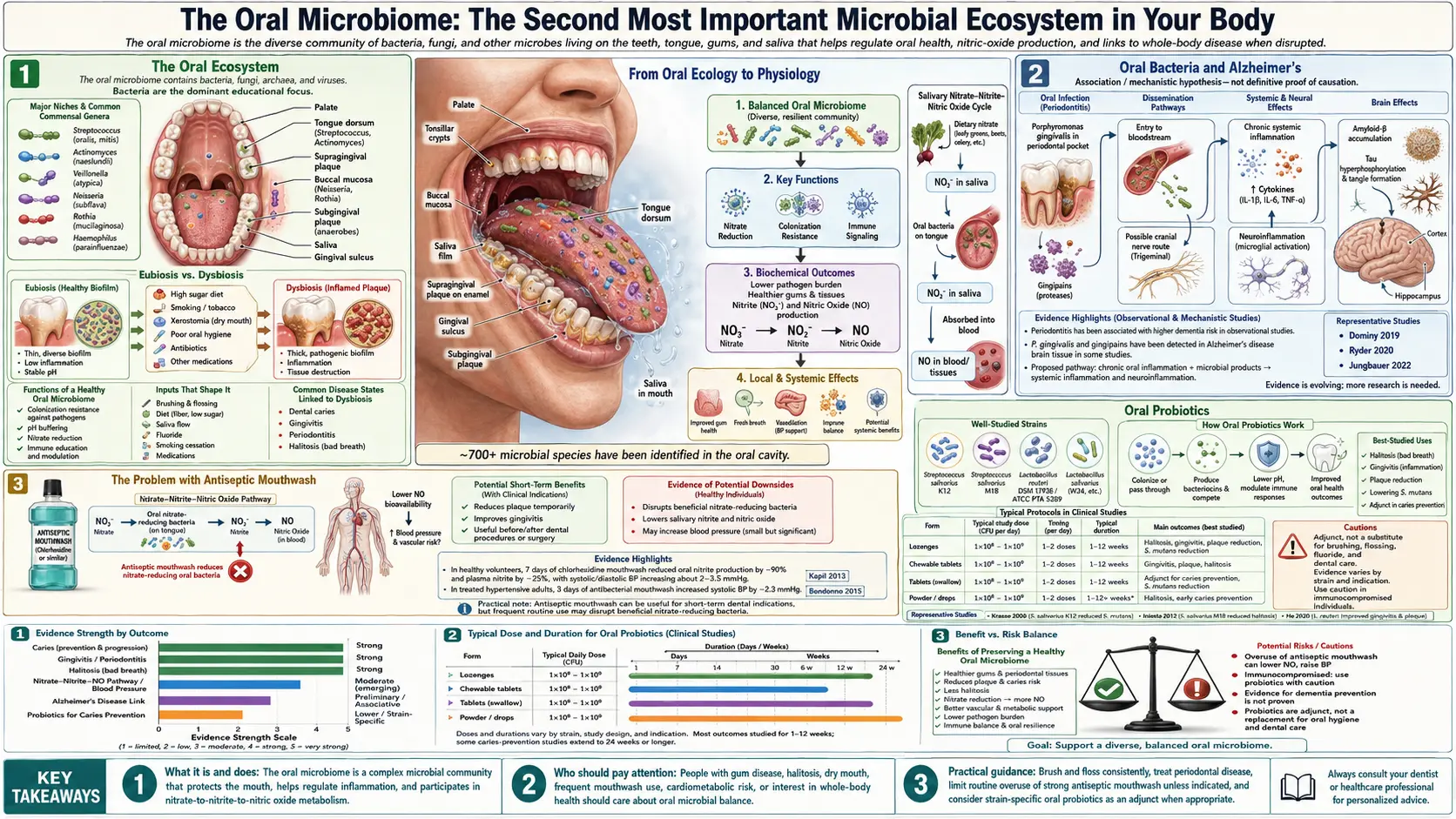
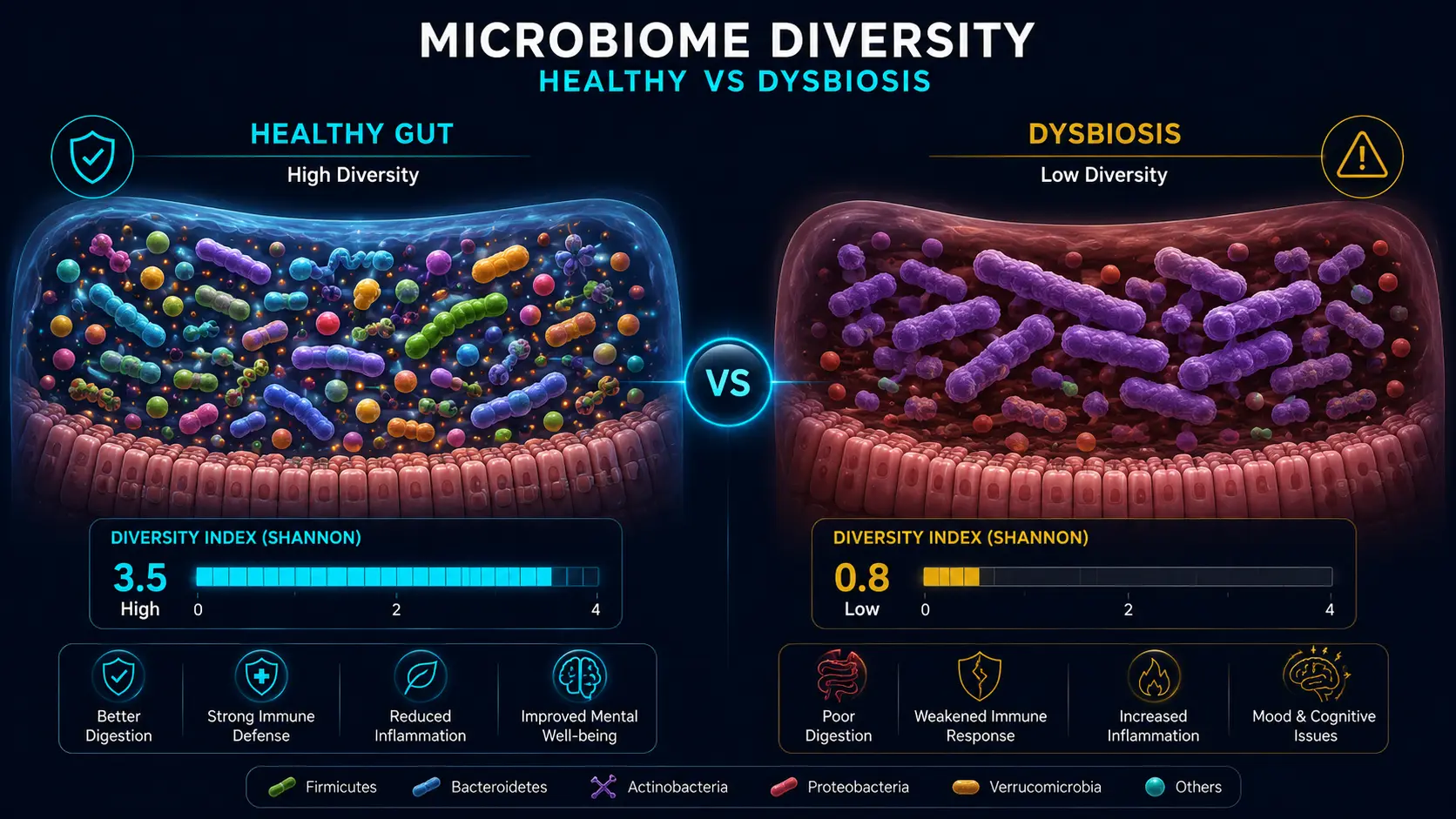
The mouth hosts over 700 distinct bacterial species, making it the second most diverse microbial ecosystem in the human body after the gut. Unlike the gut, however, the oral microbiome is exposed to the external environment with every breath and every swallow, and its composition directly influences cardiovascular disease, Alzheimer’s pathology, blood pressure regulation, rheumatoid arthritis, pregnancy outcomes, and even mood. Modern dental hygiene — with its antiseptic mouthwashes, chlorinated drinking water, and ultra-processed diet — has produced a measurably less diverse oral microbiome than observed in hunter-gatherer populations or in skeletal remains from the pre-industrial era.
This article explores how oral bacteria reach the bloodstream, which species drive systemic disease, how nitric-oxide metabolism connects oral microbes to blood pressure, and evidence-informed approaches to nurturing a healthy oral ecosystem.
Table of Contents
- The Oral Ecosystem
- The Oral–Cardiovascular Axis
- Oral Bacteria and Alzheimer’s
- Nitric Oxide and Blood Pressure
- Oral Bacteria in Autoimmunity
- The Problem with Antiseptic Mouthwash
- How to Nurture a Healthy Oral Microbiome
- Oral Probiotics
- Connections
- Featured Videos
The Oral Ecosystem
The mouth contains many distinct microbial niches: tooth enamel, gingival sulci, tongue dorsum, hard palate, buccal mucosa, and saliva itself. Each supports different communities. A healthy mouth contains a balanced mix of Streptococcus, Neisseria, Veillonella, Fusobacterium, and many others. Pathogenic dominance of Streptococcus mutans and Porphyromonas gingivalis is a hallmark of dental caries and periodontitis respectively.
The Oral–Cardiovascular Axis
Every time you brush your teeth, chew, or have dental work done, small numbers of oral bacteria enter the bloodstream — a phenomenon called transient bacteremia. In healthy people with well-maintained gums these incursions are cleared quickly. In people with periodontitis, the daily bacterial load is higher and the organisms are more aggressive. Porphyromonas gingivalis and its proteolytic enzymes, gingipains, have been found embedded in atherosclerotic plaque, and large epidemiological studies consistently show a 20–50% elevated cardiovascular-disease risk in people with moderate-to-severe periodontitis.
Oral Bacteria and Alzheimer’s
A landmark 2019 paper in Science Advances demonstrated that P. gingivalis and its gingipains were present in the brains of Alzheimer’s patients in concentrations correlating with disease severity. Animal models showed that oral infection with P. gingivalis produced amyloid-beta accumulation characteristic of Alzheimer’s. A phase-2/3 trial of the gingipain inhibitor atuzaginstat did not meet primary endpoints, but subgroup analyses suggested benefit in patients with documented infection. The oral–brain axis remains an active frontier.
Nitric Oxide and Blood Pressure
Green leafy vegetables and beets contain dietary nitrate, which must be reduced to nitrite by oral bacteria on the tongue dorsum before the body can use it to make nitric oxide. This is one of the clearest examples of a specific microbial function the human body has outsourced. Without these oral nitrate-reducing bacteria, dietary nitrate cannot support vascular nitric-oxide production. Antiseptic mouthwashes that kill these bacteria have been shown in small trials to raise blood pressure by roughly 2–5 mmHg within a week — a clinically meaningful signal.
Oral Bacteria in Autoimmunity
Aggregatibacter actinomycetemcomitans has been implicated in the generation of citrullinated proteins that drive rheumatoid arthritis autoimmunity. Periodontitis is a consistent risk factor for RA severity, and intensive periodontal treatment has been reported to reduce RA flares. Similar dysbiosis patterns have been observed in inflammatory bowel disease, psoriasis, and preterm-birth-associated inflammation.
The Problem with Antiseptic Mouthwash
Broad-spectrum antiseptic mouthwashes — containing chlorhexidine, cetylpyridinium chloride, or alcohol — kill beneficial bacteria along with pathogens. Benefit in acute infection or post-surgical settings is genuine; chronic daily use is harder to justify and can raise blood pressure, disrupt dietary nitrate metabolism, and lower oral microbial diversity. Evidence-informed dentistry has been moving toward selective rather than scorched-earth antimicrobial approaches.
How to Nurture a Healthy Oral Microbiome
- Mechanical disruption of plaque. Gentle brushing twice daily, interdental cleaning (floss or water flosser) once daily. Technique matters more than toothpaste.
- Tongue care without over-scraping. Light tongue brushing preserves the nitrate-reducing community.
- Hydroxyapatite or fluoride toothpaste — both rebuild enamel; hydroxyapatite is microbiome-friendlier.
- Xylitol gums or mints (2–6 g/day divided) suppress S. mutans without harming beneficial species.
- Avoid daily antiseptic mouthwash unless prescribed.
- Nasal breathing and adequate saliva. Saliva carries antimicrobial peptides; mouth-breathing dries it away.
- Whole-food diet rich in fiber, polyphenols, and leafy greens.
- Avoid daily acidic sodas and frequent snacking, which keep oral pH low and favor pathogenic species.
- Address gum bleeding. Any bleeding on brushing deserves a dental evaluation — it is not “normal.”
Oral Probiotics
Streptococcus salivarius K12 and M18 are the best-studied oral probiotic strains. They colonize the oral cavity and produce bacteriocins (lantibiotics) that suppress pathogenic streptococci while leaving the broader community intact. Randomized trials have shown reductions in sore throats, tonsil recurrences, halitosis, and dental caries markers. They come as lozenges taken after oral hygiene at bedtime. Lactobacillus reuteri is another strain with periodontal benefit in several trials.
Research Papers
Selected PubMed topic searches relevant to oral microbiome composition, dysbiosis, and its links to systemic disease.
- PubMed: Oral microbiome and periodontitis
- PubMed: P. gingivalis and cardiovascular disease
- PubMed: Oral microbiome and Alzheimer's
- PubMed: Oral bacteria, nitric oxide, and blood pressure
- PubMed: Mouthwash and oral microbiome
- PubMed: Xylitol and S. mutans
- PubMed: Oil pulling and oral health
- PubMed: Oral probiotics
- PubMed: Tongue scraping and halitosis
- PubMed: Dental caries and oral dysbiosis
- PubMed: Periodontal disease and systemic inflammation
- PubMed: Salivary microbiome as diagnostic
Connections
- All Remedies
- Mastic Gum — the original chewing gum, with plaque-reduction studies
- Probiotics
- Cardiovascular Disease
- Hypertension
- Arthritis
- Dementia
- Gut Healing
- Fermented Foods
- Mouth Taping
- Breathwork
- Beets
- Gut-Brain Axis
- Fluoride
- Inflammatory Bowel Disease
- Anti-Inflammatory Diet
- Garlic
- Psoriasis
- Silver Nanoparticles
- Aspirin
- Conditions on this site that reference this page: Bacillus subtilis · Gingivitis · Halitosis (Chronic Bad Breath) · Periodontitis (Gum Disease) · Dentistry & Oral Health · Canker Sores (Aphthous Ulcers) · Sinusitis · Tooth Decay (Dental Caries)