Iodine: The Essential Trace Mineral for Thyroid Hormones
An Overview of the Research
Written for general readers. It reports what studies, official reference values and guideline panels state, and what proponents of other views argue; it gives no medical advice.
Interactive Visualization How Your Thyroid Is Controlled — run the feedback loop Watch TSH drive the thyroid, T4 convert to T3, and the loop feed back — then switch on Hashimoto's, Graves', or iodine deficiency. Launch →
Table of Contents
- Introduction — What Iodine Does
- Historical Context
- Biochemistry of Iodine in the Human Body
- Iodine and the Thyroid Gland — The Foundation of Metabolism
- Iodine Deficiency, Hypothyroidism, and Hashimoto's Thyroiditis
- Iodine and Breast Health
- Iodine and Reproductive Health — Pregnancy and Fetal Development
- Iodine and Brain Health — Cognition, IQ, and Neurological Development
- Iodine and Immune System Function
- The Halide-Displacement Claim — Bromide, Fluoride and Heavy Metals
- Iodine and Cancer — What the Research Shows
- Iodine and Skin, Hair, and Nail Health
- Iodine and Cardiovascular Health
- Iodine, Metabolic Syndrome, and Weight Management
- Iodine and Gastrointestinal Health
- Iodine and Eye Health
- Iodine as an Antimicrobial Agent
- Recognizing Iodine Deficiency — Clinical Signs and Symptoms
- Testing for Iodine Status
- Dietary and Supplemental Sources of Iodine
- Intake Levels — The RDA, the UL and the High-Dose Protocol
- Companion Nutrients in the High-Dose Protocol
- Safety, Excess Iodine and the Wolff-Chaikoff Effect
- Summary
- Key Research Papers
- Connections
- Featured Videos
1. Introduction — What Iodine Does
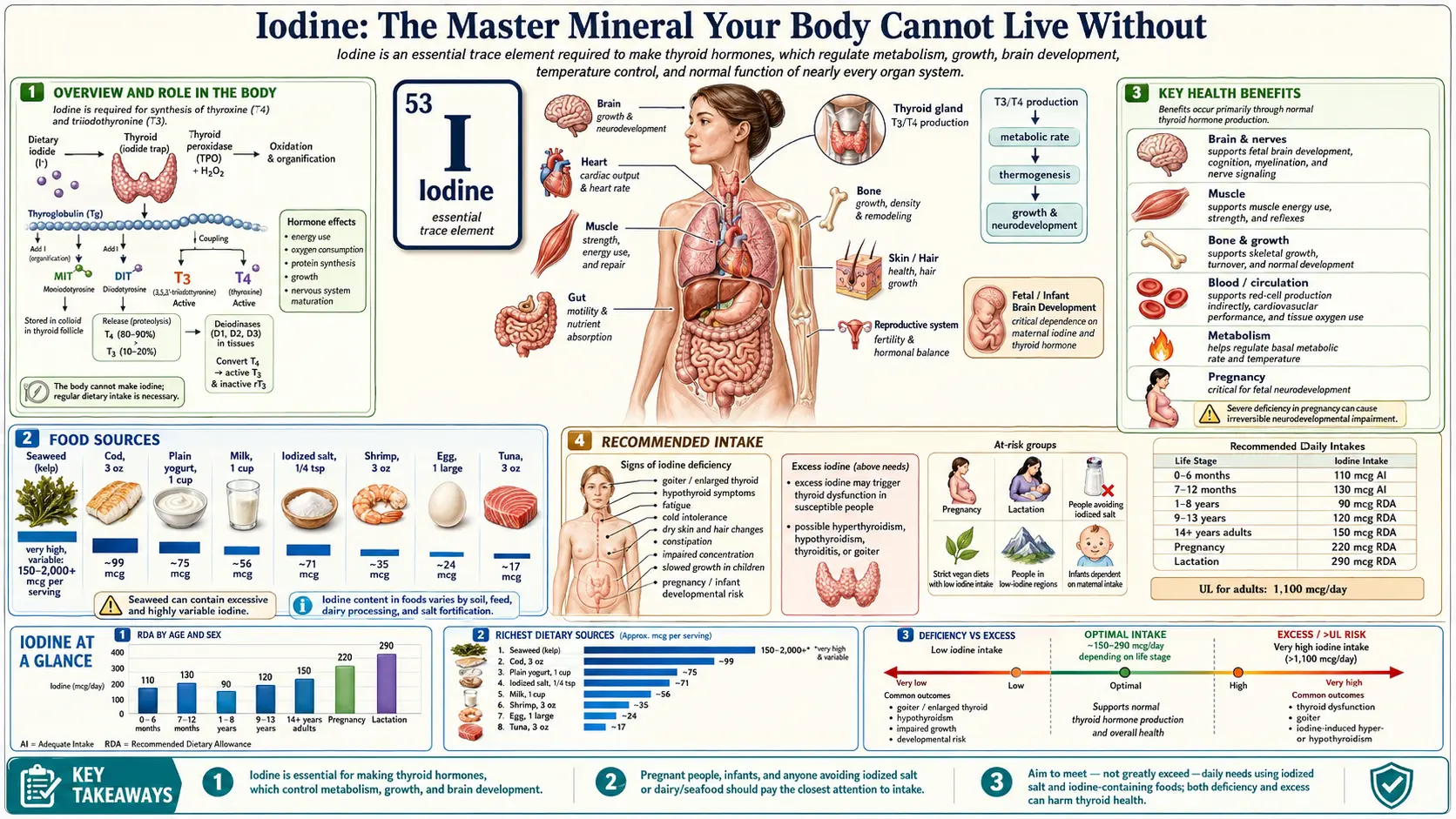
Iodine is a trace element found naturally in some foods, added to some types of salt, and sold as a dietary supplement. It is an essential component of the thyroid hormones thyroxine (T4) and triiodothyronine (T3), which regulate protein synthesis and enzyme activity, are critical determinants of metabolic activity, and are required for normal skeletal and central nervous system development in fetuses and infants (NIH Office of Dietary Supplements, ODS). The iodine-replete healthy adult body holds about 15–20 mg of iodine, 70–80% of it in the thyroid (ODS). Other tissues, including the breast, also take up iodine; whether iodine has roles there beyond making thyroid hormone is an open research question (Aceves 2013).
A 2008 Lancet review estimated that 2 billion people worldwide have insufficient iodine intake, with south Asia and sub-Saharan Africa most affected, and described iodine deficiency as the most common cause of preventable mental impairment worldwide (Zimmermann 2008). In the United States, the median urinary iodine concentration measured by the National Health and Nutrition Examination Survey (NHANES) fell by more than 50% between 1971–1974 (32.0 µg/dL) and 1988–1994 (14.5 µg/dL), though it still indicated adequate intake for the population as a whole (Hollowell 1998). Later surveys show the decline stabilized: the median was 164 µg/L in NHANES participants aged 6 and older in 2007–2008, and 119 µg/L among women of reproductive age in 2007–2014 (ODS).
This article covers iodine's role in the thyroid and in pregnancy and child development, the research on breast tissue and cancer, testing, food sources, official intake levels, the risks of too much iodine, and the high-dose iodine protocol promoted by a group of practitioners, which differs sharply from the official reference values.
2. Historical Context
The element iodine was discovered by accident in 1811, when the French saltpetre maker Bernard Courtois saw a violet vapor rise from seaweed ash, and over the following century researchers traced its essential role in the thyroid and the goiter-fighting success of iodized salt (first sold in the United States in 1924). Iodine deficiency is still described as the most common cause of preventable mental impairment worldwide (Zimmermann 2008), and US urinary iodine levels fell substantially between the 1970s and the 1990s before stabilizing (Hollowell 1998; ODS) — the fuller story is told in the dedicated History article.
3. Biochemistry of Iodine in the Human Body
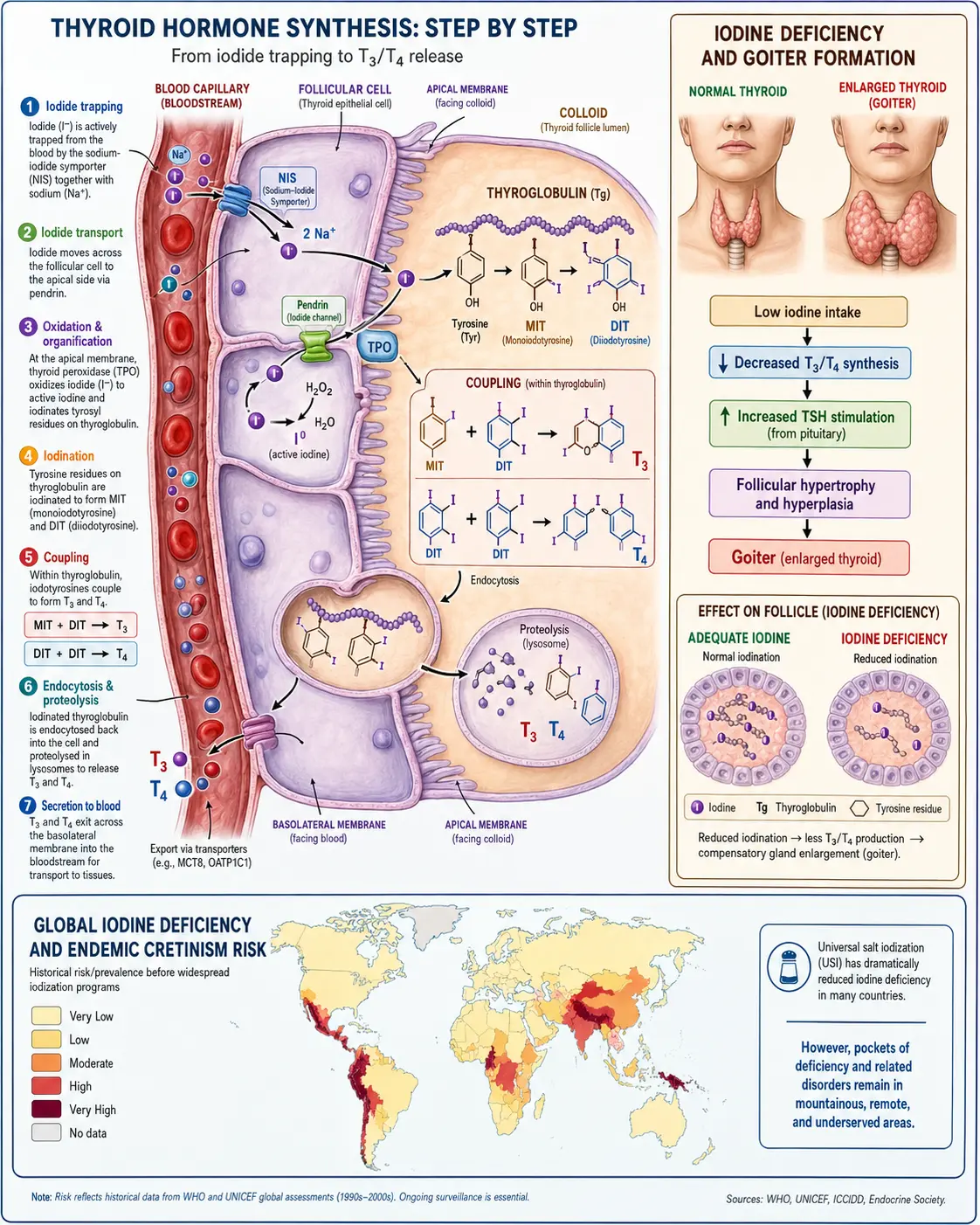
Iodine in food and iodized salt occurs in several chemical forms, including iodide (I⁻), iodate and molecular iodine (I₂). Iodide is quickly and almost completely absorbed in the stomach and duodenum; iodate is reduced in the gut and absorbed as iodide. The thyroid takes up what it needs for hormone synthesis, and more than 90% of dietary iodine is eventually excreted in the urine (ODS). The thyroid concentrates iodide through the sodium-iodide symporter (NIS), a transport protein in the membrane of thyroid cells.
A research group at the National Autonomous University of Mexico has reviewed evidence that molecular iodine (I₂) acts in some tissues independently of thyroid hormone — as an antioxidant and as an antiproliferative and differentiation agent — mainly from animal and cell studies, and has proposed intakes of at least 3 mg/day of I₂ for specific conditions (Aceves 2013). That proposal is the authors' own; it is far above the official adult reference values described in section 21.
The physician Guy Abraham and the practitioner David Brownstein have argued that whole-body iodine "sufficiency" requires stores far larger than the measured body content — around 1,500 mg (1.5 g) — and that the Recommended Dietary Allowance (RDA) of 150 µg/day for adults only prevents goiter. These are their own estimates and arguments. The ODS figure for the iodine-replete adult is about 15–20 mg, and the RDA is defined as the intake sufficient to meet the needs of nearly all (97–98%) healthy people (ODS).
4. Iodine and the Thyroid Gland — The Foundation of Metabolism
The thyroid produces two hormones: thyroxine (T4), which carries four iodine atoms, and triiodothyronine (T3), which carries three. T4 is the main circulating form; T3 is the more active form, and T4 is converted to T3 in tissues by selenium-containing deiodinase enzymes. Inside thyroid cells, iodide is oxidized by thyroid peroxidase (TPO) and attached to tyrosine residues on the protein thyroglobulin; the iodinated tyrosines are then coupled to form T4 and T3, stored in the follicle and released as needed.
Thyroid function is controlled by thyroid-stimulating hormone (TSH) from the pituitary. When iodine is insufficient, TSH stays elevated and the gland enlarges — a goiter, which is usually the earliest clinical sign of iodine deficiency. If intake falls below roughly 10–20 µg/day, hypothyroidism occurs (ODS). A review of animal and human studies concluded that iodine deficiency is a risk factor for thyroid cancer, particularly the follicular type, with chronic TSH stimulation as the plausible mechanism (Zimmermann and Galetti 2015).
Hypothyroidism produces nonspecific symptoms — fatigue, cold intolerance, constipation, dry skin, slow thinking and poor memory among them (van Zuuren 2013). Iodine deficiency is one cause of hypothyroidism; autoimmune (Hashimoto's) thyroiditis is another (see section 5).
5. Iodine Deficiency, Hypothyroidism, and Hashimoto's Thyroiditis
Hashimoto's thyroiditis is a common autoimmune disorder in which antibodies against thyroid peroxidase (TPO) and thyroglobulin accompany gradual damage to the thyroid; it is treated with thyroid hormone replacement, usually levothyroxine (van Zuuren 2013). The relationship between iodine intake and thyroid autoimmunity is one of the most disputed questions in this field.
Population studies show that more iodine is not always better for the thyroid. A five-year Chinese cohort of 3,018 people compared three regions: mildly deficient (median urinary iodine 84 µg/L), more than adequate (243 µg/L) and excessive (651 µg/L). The cumulative incidence of subclinical hypothyroidism was 0.2%, 2.6% and 2.9%, and of autoimmune thyroiditis 0.2%, 1.0% and 1.3%, respectively; among people who had thyroid antibodies but normal function at baseline, elevated TSH developed more often with higher iodine intake. The authors concluded that more than adequate or excessive iodine intake may lead to hypothyroidism and autoimmune thyroiditis (Teng 2006). A Lancet review noted that introducing iodised salt into chronically deficient regions might transiently increase thyroid disorders, while judging that the small risks of iodine excess are far outweighed by the substantial risks of deficiency at the population level (Zimmermann 2008). In rats, excess iodide lowers TPO expression, which the researchers suggested may contribute to the iodine-induced hypothyroidism that is common in patients with Hashimoto's thyroiditis (Eng 1999).
Practitioners including David Brownstein, Jorge Flechas and Guy Abraham argue that the rise in autoimmunity seen after iodine is introduced reflects inadequate selenium and unchecked oxidative stress rather than iodine itself: hydrogen peroxide is generated when TPO incorporates iodine, and the selenium-dependent glutathione peroxidase enzymes help neutralize it. On that basis they describe giving selenium before or alongside iodine in people with thyroid autoimmunity. This is their clinical position, not a trial finding. A Cochrane review of selenium in Hashimoto's thyroiditis found four trials (463 participants) at unclear to high risk of bias; selenomethionine 200 µg/day lowered TPO antibody levels in two of them, but the clinical relevance was unclear and the authors judged the evidence incomplete (van Zuuren 2013). The adult Tolerable Upper Intake Level (UL) for selenium is 400 µg/day (ODS selenium fact sheet).
6. Iodine and Breast Health
Breast tissue has a high concentration of iodine, especially during pregnancy and lactation, when iodine is secreted into breast milk (ODS).
Animal work by Bernard Eskin's group found that blocking iodine uptake in rats produced breast changes: in older rats treated with perchlorate, the researchers described intralobular fibrosis and cystic changes resembling human fibrocystic disease, and in the oldest group atypical lobules, papillomatosis and dysplastic-type changes (Krouse 1979). These are rat findings.
In people, the best-known report is Ghent et al. (1993), a review of three studies begun in 1975. In an uncontrolled study, 70% of 233 women given sodium iodide improved clinically, but the rate of side effects was high; 40% of 588 given protein-bound iodide improved. In a crossover series, 74% improved after switching to molecular iodine. In the small controlled, double-blind study, 65% of 23 women given molecular iodine (0.07–0.09 mg per kg body weight) had subjective and objective improvement, against a 33% subjective placebo response among 33 controls (Ghent 1993). A later randomized, double-blind, placebo-controlled trial in 111 women with cyclic breast pain tested 1.5, 3.0 and 6.0 mg/day of molecular iodine for six months; pain scores improved with dose compared with placebo, and more than half of the 6.0 mg group recorded a clinically significant reduction in overall pain (Kessler 2004). The ODS notes that the doses in these studies (roughly 1,500–6,000 µg/day) are several times the adult UL of 1,100 µg, and that more research is needed to clarify iodine's role in fibrocystic breast disease.
The Mexican group's review describes mechanisms seen mostly in laboratory and animal studies: oxidized iodine disrupting mitochondria and triggering apoptosis, and iodine-containing lipids (iodolactones) activating PPAR-gamma receptors (Aceves 2013).
7. Iodine and Reproductive Health — Pregnancy and Fetal Development
During early pregnancy, before the fetal thyroid is fully developed, the fetus depends entirely on the mother's T4 and therefore on her iodine intake; T4 production rises by about 50% during pregnancy (ODS). The US RDA is 220 µg/day in pregnancy and 290 µg/day during lactation, and the WHO, UNICEF and the International Council for the Control of Iodine Deficiency Disorders recommend 250 µg/day for pregnant women (ODS). Severe deficiency in pregnancy can cause miscarriage, stillbirth, growth retardation and major neurodevelopmental deficits; chronic severe deficiency in the womb causes cretinism, with intellectual disability, deaf-mutism, motor spasticity and stunted growth (ODS). Deficiency during pregnancy and infancy may also increase infant mortality (Zimmermann 2009).
Milder deficiency has been linked with smaller effects in observational studies. In the UK Avon Longitudinal Study of Parents and Children (ALSPAC), first-trimester urine samples from 1,040 women showed mild-to-moderate deficiency (median 91.1 µg/L). After adjusting for 21 confounders, children of women with an iodine-to-creatinine ratio below 150 µg/g were more likely to score in the lowest quarter for verbal IQ at age 8 (odds ratio 1.58) and for reading accuracy and comprehension at age 9 (Bath 2013). A pooled analysis of 6,180 mother-child pairs from cohorts in the Netherlands, Spain and the UK also linked lower first-trimester iodine status with lower child verbal IQ (as summarized by the ODS).
Randomized trials of supplementation in mildly deficient pregnant women have not shown the expected benefit. In a double-blind trial in Bangalore and Bangkok, 832 women received 200 µg/day of iodine or placebo from early pregnancy; at age 5–6, verbal IQ, performance IQ and executive function did not differ between the groups (Gowachirapant 2017). A 2020 systematic review found that a meta-analysis of two trials showed no effect on child cognitive, language or motor scores, and concluded that good-quality evidence was insufficient to support current supplementation recommendations in areas of mild-to-moderate deficiency (Dineva 2020).
Recommendations nonetheless exist: the American Thyroid Association's 2017 guideline recommends that women planning a pregnancy, pregnant or breastfeeding take 150 µg/day of iodine as potassium iodide, and the American Academy of Pediatrics gives similar advice (ODS; Alexander 2017). The ATA published updated pregnancy guidelines in 2026 that include recommendations on iodine supplementation (Korevaar 2026); their exact wording was not checked for this page. Of 59 best-selling US prenatal multivitamins examined in 2016–2017, 34 contained iodine (ODS). Specific claims made in earlier versions of this page about iodine in the ovary, luteal-phase defects, sperm, testosterone and the prostate were not supported by sources found for it and have been removed.
8. Iodine and Brain Health — Cognition, IQ, and Neurological Development
Thyroid hormones, which require iodine, are needed for normal development of the central nervous system in fetuses and infants (ODS). A meta-analysis of 37 Chinese studies covering 12,291 children compared children in naturally iodine-sufficient areas with those in severely deficient areas. Children in severely deficient areas without supplementation scored 12.45 IQ points lower, and iodine supplementation of mothers before and during pregnancy was associated with a recovery of 8.7 IQ points (Qian 2005). Those results come from severe deficiency; for mild deficiency, see the trial results in section 7.
In older children, a 2009 randomized trial in New Zealand gave 184 mildly deficient children aged 10–13 years (median urinary iodine 63 µg/L) 150 µg/day of iodine or placebo for 28 weeks; supplementation improved iodine status and measures of perceptual reasoning and overall cognitive score compared with placebo (as summarized by the ODS).
Claims that iodine protects against brain fog, depression or dementia in adults, independently of thyroid function, were not supported by sources found for this page.
9. Iodine and Immune System Function
Peroxidase enzymes in saliva, breast milk and white blood cells can use iodide, along with other ions, to form antimicrobial oxidants; this is part of the background for interest in iodine and innate immunity. Specific claims made in earlier versions of this page — that the thymus concentrates iodine, that iodine-derived oxidants are "more effective and less inflammatory" than chlorine-derived ones, and that correcting iodine status reduces recurrent sinus, urinary or dental infections — came from clinical impressions and were not supported by sources found for this page, and have been removed.
10. The Halide-Displacement Claim — Bromide, Fluoride and Heavy Metals
Proponents of high-dose iodine, principally Guy Abraham and David Brownstein, argue that bromide and fluoride compete with iodide in iodine-concentrating tissues, and that milligram doses of iodine "displace" stored bromide and fluoride so that they are excreted. They describe the rashes, acne, metallic taste, headache, sinus congestion and stomach upset that some people report when starting iodine as a "detox reaction" from bromide release, and describe using salt, water and vitamin C to ease it. Their evidence consists largely of their own urine-excretion reports, published mainly in The Original Internist; controlled trials testing the idea were not found for this page.
Two facts are relevant. First, the same symptoms are listed by the FDA as known side effects of potassium iodide itself: skin rashes, swelling of the salivary glands, and "iodism" — metallic taste, burning mouth and throat, sore teeth and gums, head-cold symptoms and sometimes upset stomach and diarrhea (FDA potassium iodide FAQ). Second, one dietary source of bromine has been withdrawn in the United States: on July 3, 2024 the FDA revoked the regulation allowing brominated vegetable oil (BVO) in food, effective August 2, 2024, after studies found potential health effects in rodents, with the thyroid a target organ (FDA, BVO).
Some practitioners also report that iodine increases urinary excretion of mercury, lead, cadmium or aluminum; published evidence for this was not found for this page. Fluoride is covered separately on the site's Fluoride page.
11. Iodine and Cancer — What the Research Shows
Japanese iodine intake, largely from seaweed, is among the highest in the world; a literature-based analysis estimated it averages 1,000–3,000 µg/day (1–3 mg/day) and warned that both over- and underestimates of it have produced misleading and potentially dangerous supplementation recommendations (Zava 2011). Breast cancer rates have historically been 4–7 times higher in the United States than in China or Japan, and among Chinese, Japanese and Filipino women who migrate to the United States, risk rises over several generations toward that of US White women; the authors of that study attributed the change to exposure to Western lifestyles in general, and iodine was not among the factors they measured (Ziegler 1993). An iodine explanation for the pattern is a hypothesis advanced by the Mexican research group and others (Aceves 2013).
In animal and human studies reviewed by that group, molecular iodine had a suppressive effect on the development and size of benign and cancerous breast growths, with laboratory evidence for mitochondria-mediated apoptosis and for iodolactones acting through PPAR-gamma (Aceves 2013). These findings come mostly from cell lines, animal models and small clinical studies; a trial showing that iodine prevents breast cancer in people was not found for this page.
For the thyroid, a comprehensive review concluded that iodine deficiency is a risk factor for thyroid cancer, particularly follicular and possibly anaplastic cancer, and that iodine prophylaxis has been followed by declines in those types (Zimmermann and Galetti 2015). At the other end, the ODS notes that studies have linked excessive iodine intakes with thyroiditis and papillary thyroid cancer. For the stomach, Venturi and colleagues hypothesized that iodine deficiency or excess is associated with some gastric cancers (Venturi 2000); it remains a hypothesis.
12. Iodine and Skin, Hair, and Nail Health
Hypothyroidism, whatever its cause, is associated with dry skin (van Zuuren 2013); in its severe form the skin becomes thick and waxy (myxedema), hair may become brittle and thin, and thinning of the outer third of the eyebrows is a traditional clinical sign. These changes reflect thyroid hormone status rather than a separate action of iodine on skin.
Topically, iodine has long been used as an antiseptic, and povidone-iodine remains a widely used surgical skin preparation. Some practitioners interpret acne or rashes that appear when iodine is started as "bromoderma" from released bromide (see section 10); the FDA lists skin rashes among the known side effects of potassium iodide.
13. Iodine and Cardiovascular Health
Thyroid hormones influence heart rate, cardiac contractility, vascular resistance and cholesterol metabolism, and hypothyroidism is associated with raised LDL cholesterol. Any cardiovascular effect of iodine deficiency therefore runs through thyroid function. Claims in earlier versions of this page that iodine lowers blood pressure in resistant hypertension, or that bromide displacement protects against arrhythmias, came from practitioner reports and were not supported by sources found for this page; they have been removed.
14. Iodine, Metabolic Syndrome, and Weight Management
Thyroid hormones are critical determinants of metabolic activity (ODS), and hypothyroidism can lower the resting metabolic rate and contribute to weight gain. Iodine is not a weight-loss supplement: in people whose iodine intake and thyroid function are already normal, there is no evidence that extra iodine causes weight loss, and the risks of excess iodine (section 23) apply.
15. Iodine and Gastrointestinal Health
The stomach lining and the salivary glands take up iodide and secrete it into gastric juice and saliva. A review by Venturi and colleagues proposed that this reflects an ancient antioxidant role of iodide in the digestive tract and hypothesized that iodine deficiency or excess is associated with some gastric and breast cancers; they reported that in Italy gastric cancer is more frequent in iodine-deficient mountain populations than in fishermen (Venturi 2000). This remains a hypothesis. Constipation is a common symptom of hypothyroidism (van Zuuren 2013). Claims that iodine deficiency increases susceptibility to Helicobacter pylori, dental caries or oral candidiasis were not supported by sources found for this page.
16. Iodine and Eye Health
Hypothyroidism can cause puffy eyes (van Zuuren 2013), and Graves' ophthalmopathy is a feature of Graves' disease, an autoimmune cause of hyperthyroidism. Some practitioners report improvement in dry eye after iodine supplementation, and an antioxidant role in preventing cataract has been proposed; trials supporting either claim were not found for this page.
17. Iodine as an Antimicrobial Agent
Iodine is one of the oldest antiseptics in medicine. It is a strong oxidant that damages microbial proteins, membranes and nucleic acids, and it acts against bacteria, viruses and fungi. Iodine-based antiseptics, including povidone-iodine, Lugol's solution and cadexomer iodine, are used in wound care and surgical skin preparation. Inside the body, peroxidase systems in saliva, milk and white blood cells can use iodide to form antimicrobial oxidants (see section 9). Earlier claims on this page that no microbial resistance to iodine has ever been documented, and about trials of povidone-iodine nasal sprays, were not supported by sources found for it and have been removed.
18. Recognizing Iodine Deficiency — Clinical Signs and Symptoms
Both too little and too much iodine cause problems. Deficiency presents along a spectrum — from subtle, nonspecific complaints (fatigue, weight gain, cold intolerance, dry skin, hair loss, brain fog, goiter) that are easily blamed on other causes, to severe disease and, in pregnancy and infancy, irreversible developmental harm. Excess iodine, by contrast, can trigger or unmask thyroid dysfunction. For a full, patient-friendly guide to the symptoms, causes, testing, and treatment of each, see Iodine Deficiency: Symptoms, Causes, and Recovery and Iodine Excess (Too Much Iodine): Symptoms, Causes, and Risks.
19. Testing for Iodine Status
Urinary iodine concentration: Because more than 90% of dietary iodine is excreted in urine, urinary iodine reflects recent intake. Spot samples from a survey can characterize a population, but they are not a suitable indicator of an individual's status; multiple 24-hour or multiple spot samples are more accurate for individuals (ODS). For a population of school-age children or non-pregnant adults, a median of 100–199 µg/L indicates adequate intake, values below 100 µg/L indicate insufficiency, and deficiency is not classed as severe until the median falls below 20 µg/L (ODS). The WHO classifies 200–299 µg/L as more than adequate (Zimmermann 2013), and in a 12-country study of 2,512 children, elevated thyroglobulin values were more common both below 100 µg/L and above 300 µg/L (Zimmermann 2013). In pregnancy, a median of 150–249 µg/L indicates adequacy and below 150 µg/L insufficiency; in lactation, above 100 µg/L is adequate (ODS).
Iodine loading test: Developed by Guy Abraham, this test gives a 50 mg dose of iodine/iodide and collects urine for 24 hours. Its premise, as Abraham described it, is that an iodine-sufficient body excretes about 90% or more of the dose and a depleted body retains more. It is used in integrative practice. It is not among the assessment methods described in the major reviews and WHO guidance — urinary iodine, goitre, newborn TSH and blood thyroglobulin (Zimmermann 2008; WHO 2007) — and validation of its 90% threshold against an independent measure of body iodine was not found for this page.
Serum iodine can be measured but mainly reflects very recent intake.
Thyroglobulin (Tg): In school-age children, blood thyroglobulin follows a U-shaped curve, rising with both deficient and excessive iodine intake. The UNICEF/ICCIDD study group concluded that a population median Tg below 13 µg/L, and/or fewer than 3% of values above 40 µg/L, indicates iodine sufficiency (Zimmermann 2013). These are population cut-offs, not individual ones.
Thyroid function tests (TSH, free T4, free T3) and thyroid antibodies show how the thyroid is functioning, not iodine intake itself.
20. Dietary and Supplemental Sources of Iodine
Most fruits and vegetables are poor sources of iodine, and the iodine content of plant and animal foods depends on soil, fertilizer and irrigation practices, so food values are approximate (ODS). The figures below are from the ODS table, which draws on the USDA, FDA and ODS-NIH Database for the Iodine Content of Common Foods.
- Seafood: cod, baked, 3 ounces: 146 µg; oysters, cooked, 3 ounces: 93 µg; shrimp, cooked, 3 ounces: 13 µg; tuna canned in water, 3 ounces: 7 µg (ODS).
- Seaweed: dried flaked nori, 2 tablespoons (5 g): 116 µg (ODS). Seaweed iodine varies enormously by species, harvest and processing. Commercially available seaweeds in whole or sheet form ranged from 16 µg/g to 2,984 µg/g (ODS). A US study of 12 species found a range from 16 µg/g in nori to more than 8,165 µg/g in a processed kelp-granule salt substitute; in Namibian kelp, sun-bleached blades held 514 µg/g and freshly cut juvenile blades 6,571 µg/g. Iodine is water-soluble in cooking and can be lost in humid storage, and the authors noted that some Asian seaweed dishes may exceed the 1,100 µg/day adult UL (Teas 2004).
- Eggs: one large hard-boiled egg: 31 µg (ODS).
- Dairy: iodine in milk depends on whether cows received iodine feed supplements and whether iodophor sanitizers were used on cows and equipment; an analysis of 59 milk samples (the database's nonfat-milk entry) found 38–160 µg per cup (ODS). Cheddar cheese, 1 ounce: 14 µg (ODS).
- Bread: bread made with an iodate dough conditioner can be a large source (296 µg in 2 slices of white bread), but only about 20% of US bread products list iodate conditioners, and bread made without them contains very little (ODS).
- Iodized salt: ¼ teaspoon: 78 µg (ODS). US iodized salt is labelled at 45 µg iodine per gram; measured samples averaged 47.5–50.7 µg/g. Iodization is voluntary in the US, most salt in processed foods is not iodized, and specialty salts such as sea salt, kosher salt and Himalayan salt are usually not iodized; non-iodized sea salt provides virtually no iodine (ODS).
Supplements: Iodine in supplements is usually potassium iodide or sodium iodide, and people absorb potassium iodide almost completely (96.4% in a small study); kelp supplements are also sold (ODS). Lugol's solution combines molecular iodine and potassium iodide in water, and tablet versions of the same mixture are sold for the high-dose protocol. Products marketed as "nascent" or atomic iodine claim special bioavailability; published evidence for that claim was not found for this page. The American Thyroid Association's public health committee has noted that many iodine, potassium iodide and kelp supplements contain amounts up to a hundred times higher than the daily UL (Leung 2015). Kelp-based products can vary in content (Teas 2004).
21. Intake Levels — The RDA, the UL and the High-Dose Protocol
Official reference values and the high-dose protocol promoted by a group of practitioners differ by orders of magnitude. Both are reported here.
Official reference values: The US RDA for iodine is 150 µg per day for adults, 220 µg per day during pregnancy and 290 µg per day during lactation; children need 90–120 µg depending on age, and the Adequate Intake for infants is 110–130 µg (ODS). The Tolerable Upper Intake Level (UL) is 1,100 µg (1.1 mg) per day for adults, 900 µg for ages 14–18 and lower for younger children. Long-term intakes above the UL increase the risk of adverse effects; the UL does not apply to people receiving iodine for medical treatment under a physician's care (ODS). The American Thyroid Association's public health committee states that it advises against iodine and kelp supplements containing more than 500 µg of iodine daily for children and adults and during pregnancy and lactation, and that there are only equivocal data supporting benefit at higher doses (Leung 2015).
The high-dose ("orthoiodosupplementation") protocol: Guy Abraham, David Brownstein and Jorge Flechas describe the RDA as a minimum that prevents goiter rather than an optimum, and describe giving 12.5 to 50 mg of iodine per day (combined iodine and iodide) together with the companion nutrients in section 22. They point to Japan as evidence that milligram intakes are tolerated; the estimate cited most often for average Japanese intake is 1–3 mg/day (Zava 2011). These are the proponents' own positions. The trials that tested milligram doses did so for breast pain (0.07–0.09 mg/kg in Ghent 1993; 1.5–6.0 mg/day in Kessler 2004), and the ODS notes those doses exceed the UL.
22. Companion Nutrients in the High-Dose Protocol
Proponents of the high-dose protocol describe a set of "companion nutrients" given alongside iodine. The list below reports what they describe and what independent sources state.
- Selenium: The protocol's proponents describe 200–400 µg/day. Selenium-containing enzymes convert T4 to T3 and help neutralize the hydrogen peroxide generated during hormone synthesis. Trials in Hashimoto's thyroiditis used 200 µg/day and gave incomplete evidence of benefit (van Zuuren 2013). The adult UL for selenium is 400 µg/day (ODS selenium fact sheet).
- Vitamin C: Proponents describe 1,000–3,000 mg/day to ease "detox" symptoms. Earlier versions of this page said vitamin C aids absorption by reducing iodate to iodide; the ODS states that iodate is reduced in the gastrointestinal tract and absorbed as iodide, without naming vitamin C.
- Magnesium: Proponents describe 400–600 mg/day; a specific role in iodine metabolism was not supported by sources found for this page.
- Riboflavin (B2) and niacin (B3): The thyroid's hydrogen-peroxide-generating enzymes use NADPH, a niacin-derived cofactor; proponents describe B-vitamin supplements as part of the protocol, and evidence that they change iodine use was not found for this page.
- Zinc: Proponents describe 15–30 mg/day and cite zinc's role in thyroid hormone metabolism.
- Unrefined salt: Proponents describe ½ teaspoon/day of unrefined salt, on the reasoning that chloride speeds renal excretion of bromide. Most such salts are not iodized (ODS).
- Tyrosine: T4 is built from two tyrosine residues and four iodine atoms; proponents describe 500–1,000 mg/day of L-tyrosine for people with low protein intake.
23. Safety, Excess Iodine and the Wolff-Chaikoff Effect
The Wolff-Chaikoff effect. In 1948 Jan Wolff and Israel Chaikoff reported that in rats, organic binding of iodide in the thyroid fell when plasma iodide levels were raised (the acute Wolff-Chaikoff effect), and that the thyroid adapted, or "escaped", in about two days despite continued high iodide levels (Wolff and Chaikoff 1948; Eng 1999). Later work showed the escape occurs because the thyroid reduces iodide transport by lowering NIS levels (Eng 1999). Guy Abraham argues that this rat finding was over-extrapolated to humans and produced what he calls "medical iodophobia". Human research shows that the effect matters clinically in some people: in susceptible individuals — those with pre-existing thyroid disease, the elderly, fetuses and newborns — excess iodine can cause either hypothyroidism or hyperthyroidism, subclinical or overt (Leung and Braverman 2014), and iodine-induced hypothyroidism is common in Hashimoto's thyroiditis (Eng 1999).
What excess iodine does. High intakes can cause some of the same problems as deficiency — goiter, raised TSH and hypothyroidism — because in susceptible people excess iodine inhibits hormone synthesis. Iodine-induced hyperthyroidism can also occur, including when iodine is given to treat deficiency, and excessive intakes have been linked with thyroiditis and papillary thyroid cancer. Acute poisoning is rare and usually involves doses of many grams, with burning of the mouth, throat and stomach, fever, abdominal pain, nausea, vomiting, diarrhea, weak pulse and coma (ODS). The Chinese cohort in section 5 found more hypothyroidism and autoimmune thyroiditis at higher population intakes (Teng 2006).
Conditions in which the research raises concern:
- Autonomous thyroid nodules and multinodular goiter: nodules that function independently of TSH can overproduce hormone when iodine is supplied (iodine-induced hyperthyroidism, or Jod-Basedow phenomenon) (ODS; Leung and Braverman 2014). The FDA states that people with nodular thyroid disease and heart disease should not take potassium iodide, and that people with multinodular goiter, Graves' disease or autoimmune thyroiditis should be treated with caution, especially beyond a few days.
- Graves' disease: listed by the FDA among the conditions calling for caution with potassium iodide.
- Dermatitis herpetiformis and hypocomplementemic vasculitis: the FDA describes these as extremely rare conditions associated with an increased risk of iodine hypersensitivity and lists them among the reasons to avoid potassium iodide.
- "Iodine allergy": the FDA notes that a seafood or shellfish allergy does not necessarily mean a person is allergic or hypersensitive to iodine.
- Medications: high-dose iodine with antithyroid drugs such as methimazole can have an additive effect and could cause hypothyroidism; potassium iodide taken with ACE inhibitors or potassium-sparing diuretics can raise blood potassium (ODS).
Potassium iodide in radiation emergencies. The FDA has approved potassium iodide (KI) as a thyroid-blocking agent to reduce the risk of thyroid cancer when radioactive iodine is released; it floods the thyroid with non-radioactive iodine, protects for about 24 hours, works only against radioactive iodine and is not a general radioprotective agent. FDA guidance lists doses by age: 130 mg for adults, including pregnant and lactating women; 65 mg for ages 3–18 (adolescents over 70 kg receive the adult dose); 32 mg for children from 1 month to 3 years; and 16 mg from birth to 1 month. The FDA states that KI is not to be taken preventively before exposure, that local public health officials announce when it is needed, and that higher or more frequent doses offer no more protection and can cause severe illness or death (FDA potassium iodide FAQ). After the 1986 Chernobyl accident, KI was widely used in Poland and childhood thyroid cancer rates did not rise substantially, whereas incidence rose sharply among children in areas without prophylaxis, such as Belarus and Ukraine (ODS).
At the population level, the Lancet review cited above judged that the small risks of iodine excess from salt iodization are far outweighed by the risks of deficiency (Zimmermann 2008). That judgement concerns intakes near the reference values, not the milligram doses of the high-dose protocol.
24. Summary
Iodine is essential: it is part of the thyroid hormones, and severe deficiency causes goiter, hypothyroidism and, in pregnancy, lasting harm to the child's development. About 2 billion people worldwide have insufficient intake (Zimmermann 2008). Too much iodine also causes thyroid disease, especially in people with existing thyroid conditions (Leung and Braverman 2014; Teng 2006).
The official adult reference values are an RDA of 150 µg/day and a UL of 1,100 µg/day (ODS). Observational studies link mild deficiency in pregnancy with lower child verbal IQ (Bath 2013), but randomized trials in mildly deficient pregnant women have not found a benefit of supplementation for child development (Gowachirapant 2017; Dineva 2020). Small trials of milligram doses of molecular iodine for breast pain reported improvement (Ghent 1993; Kessler 2004). The high-dose protocol of 12.5–50 mg/day, the iodine loading test and the halide-displacement idea are positions of their proponents that rest mainly on their own observations. Decisions about iodine supplements belong with a clinician.
Key Research Papers
- Ghent WR, Eskin BA, Low DA, Hill LP (1993). Iodine replacement in fibrocystic disease of the breast. Canadian Journal of Surgery 36(5):453-460 — PubMed PMID: 8221402
- Aceves C, Anguiano B, Delgado G (2013). The extrathyronine actions of iodine as antioxidant, apoptotic, and differentiation factor in various tissues. Thyroid 23(8):938-946 — PubMed PMID: 23607319
- Qian M, Wang D, Watkins WE, Gebski V, et al. (2005). The effects of iodine on intelligence in children: a meta-analysis of studies conducted in China. Asia Pacific Journal of Clinical Nutrition 14(1):32-42 — PubMed PMID: 15734706
- Bath SC, Steer CD, Golding J, Emmett P, Rayman MP (2013). Effect of inadequate iodine status in UK pregnant women on cognitive outcomes in their children: results from the Avon Longitudinal Study of Parents and Children (ALSPAC). The Lancet 382(9889):331-337 — PubMed PMID: 23706508
- Venturi S, Donati FM, Venturi A, Venturi M, et al. (2000). Role of iodine in evolution and carcinogenesis of thyroid, breast and stomach. Advances in Clinical Pathology 4(1):11-17 — PubMed PMID: 10936894
- Zimmermann MB (2009). Iodine deficiency. Endocrine Reviews 30(4):376-408 — PubMed PMID: 19460960
- World Health Organization, UNICEF, ICCIDD (2007). Assessment of iodine deficiency disorders and monitoring their elimination: a guide for programme managers. 3rd edition. Geneva: WHO — WHO IRIS 10665/43781
- Zimmermann MB, Jooste PL, Pandav CS (2008). Iodine-deficiency disorders. The Lancet 372(9645):1251-1262 — PubMed PMID: 18676011
- Hollowell JG, Staehling NW, Hannon WH, Flanders DW, et al. (1998). Iodine nutrition in the United States. Trends and public health implications: iodine excretion data from National Health and Nutrition Examination Surveys I and III (1971-1974 and 1988-1994). Journal of Clinical Endocrinology & Metabolism 83(10):3401-3408 — PubMed PMID: 9768638
- Teng W, Shan Z, Teng X, Guan H, et al. (2006). Effect of iodine intake on thyroid diseases in China. New England Journal of Medicine 354(26):2783-2793 — PubMed PMID: 16807415
- Leung AM, Braverman LE (2014). Consequences of excess iodine. Nature Reviews Endocrinology 10(3):136-142 — PubMed PMID: 24342882
- Leung AM, Avram AM, Brenner AV, Duntas LH, et al., for the American Thyroid Association Public Health Committee (2015). Potential risks of excess iodine ingestion and exposure: statement by the American Thyroid Association Public Health Committee. Thyroid 25(2):145-146 — PubMed PMID: 25275241
- Wolff J, Chaikoff IL (1948). Plasma inorganic iodide as a homeostatic regulator of thyroid function. Journal of Biological Chemistry 174(2):555-564 — PubMed PMID: 18865621
- Eng PH, Cardona GR, Fang SL, Previti M, et al. (1999). Escape from the acute Wolff-Chaikoff effect is associated with a decrease in thyroid sodium/iodide symporter messenger ribonucleic acid and protein. Endocrinology 140(8):3404-3410 — PubMed PMID: 10433193
- Teas J, Pino S, Critchley A, Braverman LE (2004). Variability of iodine content in common commercially available edible seaweeds. Thyroid 14(10):836-841 — PubMed PMID: 15588380
- Zava TT, Zava DT (2011). Assessment of Japanese iodine intake based on seaweed consumption in Japan: a literature-based analysis. Thyroid Research 4:14 — PubMed PMID: 21975053
- Gowachirapant S, Jaiswal N, Melse-Boonstra A, Galetti V, et al. (2017). Effect of iodine supplementation in pregnant women on child neurodevelopment: a randomised, double-blind, placebo-controlled trial. Lancet Diabetes & Endocrinology 5(11):853-863 — PubMed PMID: 29030199
- Dineva M, Fishpool H, Rayman MP, Mendis J, Bath SC (2020). Systematic review and meta-analysis of the effects of iodine supplementation on thyroid function and child neurodevelopment in mildly-to-moderately iodine-deficient pregnant women. American Journal of Clinical Nutrition 112(2):389-412 — PubMed PMID: 32320029
- Alexander EK, Pearce EN, Brent GA, Brown RS, et al. (2017). 2017 Guidelines of the American Thyroid Association for the diagnosis and management of thyroid disease during pregnancy and the postpartum. Thyroid 27(3):315-389 — PubMed PMID: 28056690
- Korevaar TIM, Leung AM, Alexander EK, Bliddal S, et al. (2026). American Thyroid Association 2026 guidelines for thyroid disease in preconception, pregnancy, and postpartum. Thyroid 36(5):481-544 — PubMed PMID: 42219800
- Kessler JH (2004). The effect of supraphysiologic levels of iodine on patients with cyclic mastalgia. Breast Journal 10(4):328-336 — PubMed PMID: 15239792
- Krouse TB, Eskin BA, Mobini J (1979). Age-related changes resembling fibrocystic disease in iodine-blocked rat breasts. Archives of Pathology & Laboratory Medicine 103(12):631-634 — PubMed PMID: 583121
- Zimmermann MB, Aeberli I, Andersson M, Assey V, et al. (2013). Thyroglobulin is a sensitive measure of both deficient and excess iodine intakes in children and indicates no adverse effects on thyroid function in the UIC range of 100-299 μg/L: a UNICEF/ICCIDD study group report. Journal of Clinical Endocrinology & Metabolism 98(3):1271-1280 — PubMed PMID: 23345097
- Zimmermann MB, Galetti V (2015). Iodine intake as a risk factor for thyroid cancer: a comprehensive review of animal and human studies. Thyroid Research 8:8 — PubMed PMID: 26146517
- Ziegler RG, Hoover RN, Pike MC, Hildesheim A, et al. (1993). Migration patterns and breast cancer risk in Asian-American women. Journal of the National Cancer Institute 85(22):1819-1827 — PubMed PMID: 8230262
- van Zuuren EJ, Albusta AY, Fedorowicz Z, Carter B, Pijl H (2013). Selenium supplementation for Hashimoto's thyroiditis. Cochrane Database of Systematic Reviews (6):CD010223 — PubMed PMID: 23744563
- NIH Office of Dietary Supplements. Iodine: Fact Sheet for Health Professionals (updated November 5, 2024) — ods.od.nih.gov
- NIH Office of Dietary Supplements. Selenium: Fact Sheet for Health Professionals — ods.od.nih.gov
- U.S. Food and Drug Administration. Frequently Asked Questions on Potassium Iodide (KI) — fda.gov
- U.S. Food and Drug Administration. Brominated Vegetable Oil (BVO) — fda.gov
Books and Practitioner Publications
- Brownstein, D. Iodine: Why You Need It, Why You Can't Live Without It. 5th edition. Medical Alternatives Press.
- Abraham, G.E. The Original Internist — collected iodine research publications.
- Abraham, G.E. "The safe and effective implementation of orthoiodosupplementation in medical practice." The Original Internist, 2004;11:17-36.
- Flechas, J.D. Clinical publications on iodine and breast disease, thyroid disease, and diabetes.
- Eskin, B.A. Iodine in breast disease — collected research published in various peer-reviewed journals.
Professional Organizations and Resources
- World Health Organization — Iodine Deficiency Disorders Program
- American Thyroid Association — Iodine Guidelines
- Iodine Global Network (IGN)
- The Iodine Project (iodineresearch.com)
PubMed Topic Searches
- PubMed: Iodine supplementation in pregnancy and child neurodevelopment
- PubMed: Excess iodine and thyroid dysfunction
- PubMed: Molecular iodine and fibrocystic breast disease
Disclaimer: This article is for general information. It reports research findings, official reference values and the positions of named practitioners; it does not give medical advice, diagnosis or treatment. Decisions about iodine supplements belong with a clinician.
Connections
- Fluoride Chelation — the halide-displacement protocol
- All Minerals
- How Your Thyroid Is Controlled — interactive animation
- Iodine Deficiency: Symptoms, Causes, and Recovery
- Iodine Excess (Too Much Iodine): Symptoms, Causes, and Risks
- Iodine Benefits Deep Dive
- Lugol's Iodine — the concentrated iodine preparation: antiseptic, Graves' prep, and thyroid radiation blockade
- Selenium
- Hashimoto's Thyroiditis
- Thyroid Disorders
- Thyroid Cancer
- Tyrosine
- Zinc
- Magnesium
- Vitamin C
- Fluoride
- Heavy Metals
- Cancer
- Infertility
- Fatigue
- Depression
- Milk
- Brain Fog
- Metabolic Syndrome
- Eggs
- Theodor Kocher: iodine, goitre and the thyroid — why Alpine Switzerland had endemic goitre, why salt iodisation is one of public health’s great successes — and why iodine excess causes thyroid trouble too
- Conditions on this site that reference this page: Graves’ Disease · Hashimoto's, POTS & MCAS Overlap · Levothyroxine vs NDT vs Combination T4+T3 for Hashimoto's · Pregnancy and Hashimoto's Thyroiditis · Reverse T3 and Low-T3 Syndrome in Hashimoto's · Selenium, Zinc, Iron, and Iodine for Hashimoto's · TPO and TgAb Antibodies Explained · TSH, Free T4, Free T3 Optimal Ranges