Magnesium – Essential Mineral for Human Health
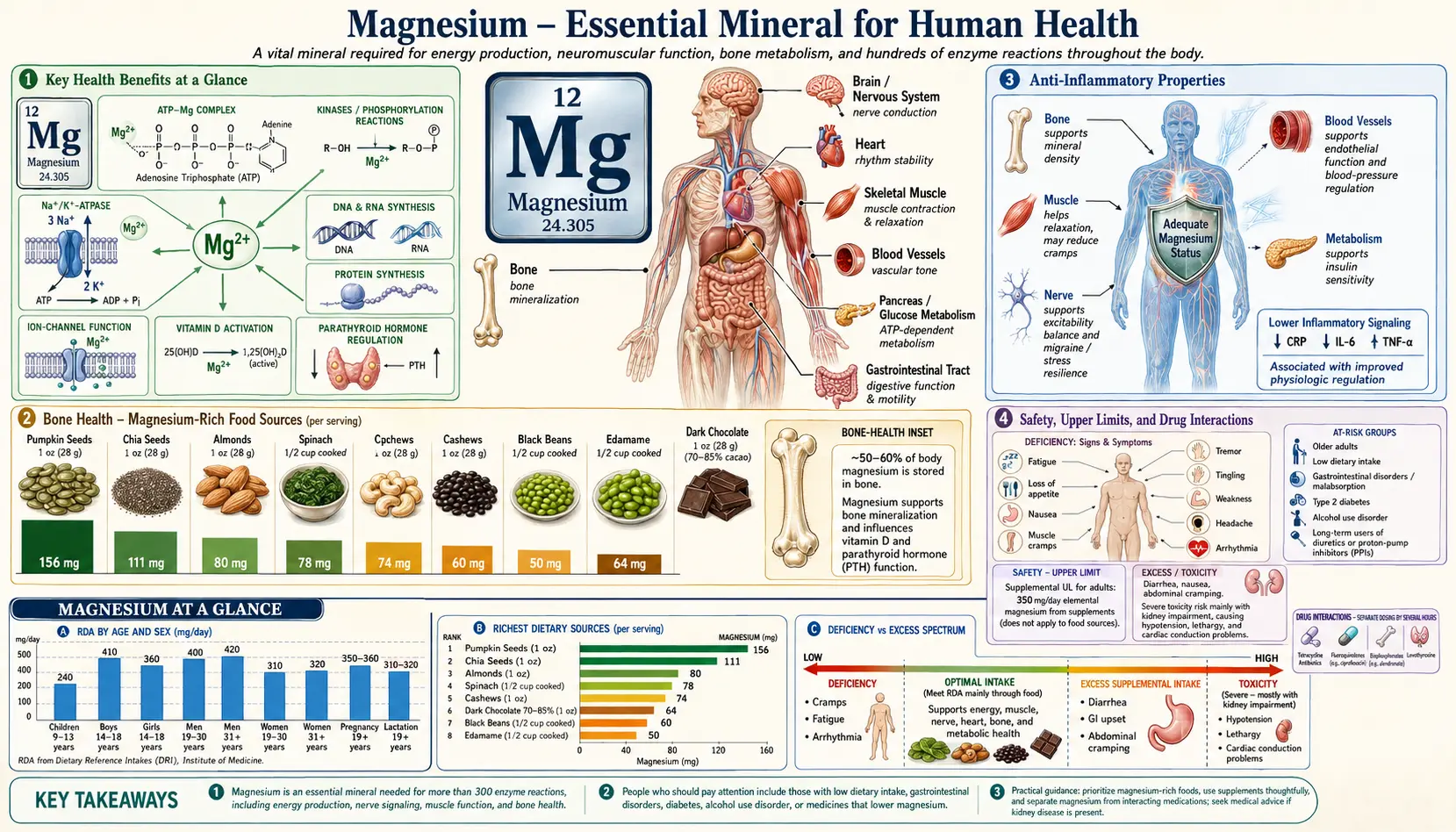
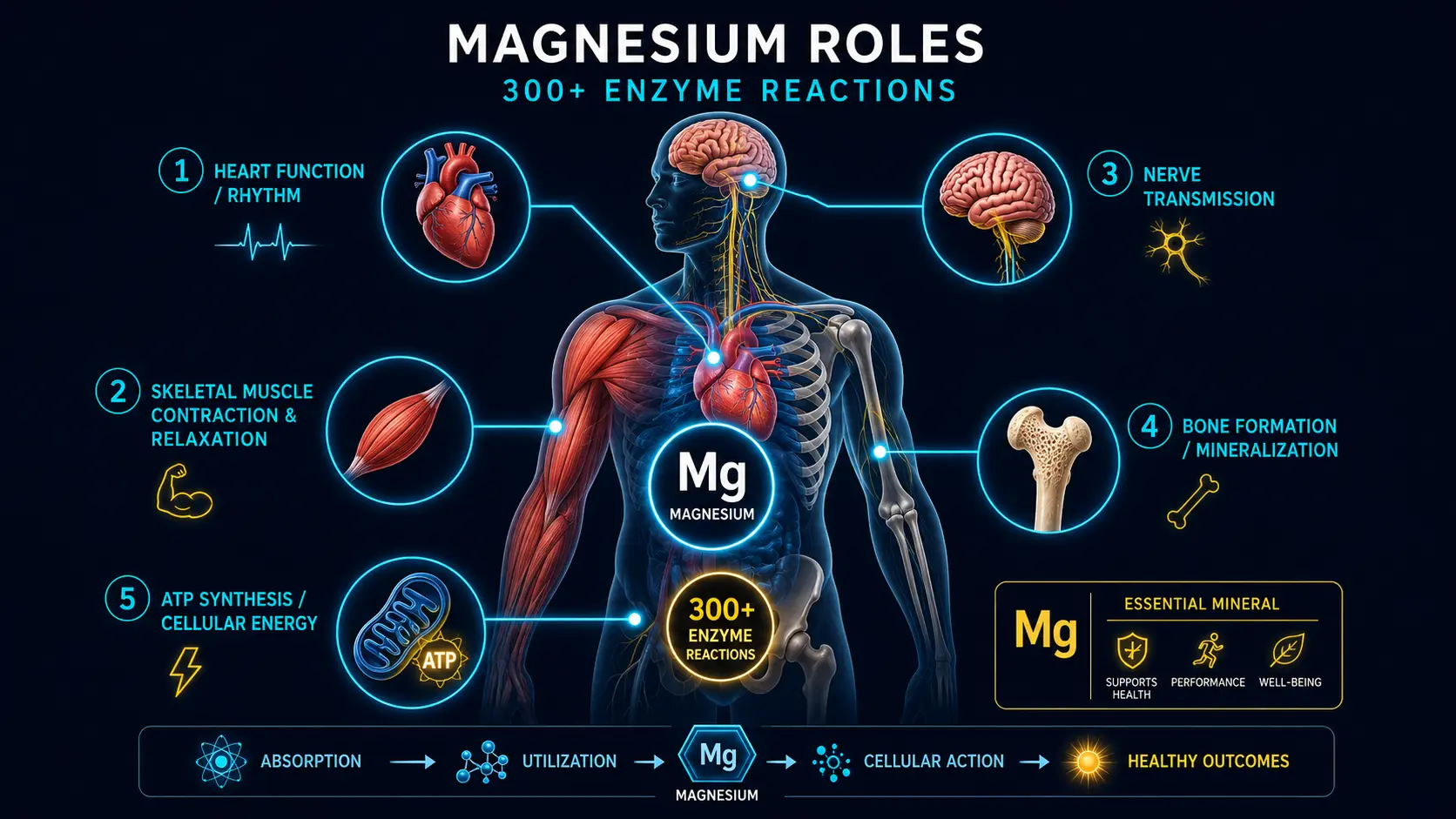
Magnesium is the fourth most abundant mineral in the body (Gröber 2015) and, after potassium, the second most abundant cation inside cells (de Baaij 2015). According to the 1997 Institute of Medicine report, the adult body contains about 25 grams of magnesium, of which 50 to 60 percent resides in bone, while magnesium outside the cells, including the blood, accounts for about 1 percent of the total (Institute of Medicine 1997). Measuring total serum magnesium therefore does not necessarily reflect total body magnesium content (Jahnen-Dechent 2012). A 2015 review describes magnesium as involved in over 600 enzymatic reactions, including energy metabolism and protein synthesis (de Baaij 2015); its roles include ATP metabolism, DNA and RNA synthesis, muscle contraction, nerve transmission, cardiac excitability and blood pressure regulation (Gröber 2015).
In the United States, a 2012 review reported that almost half (48%) of the population consumed less than the required amount of magnesium from food in 2005-2006, down from 56% in 2001-2002 (Rosanoff 2012). Low magnesium intake and blood levels have been associated in observational research with type 2 diabetes, metabolic syndrome, elevated C-reactive protein, hypertension, atherosclerotic vascular disease, sudden cardiac death, osteoporosis, migraine headache, asthma and colon cancer (Rosanoff 2012). Associations of this kind do not show that magnesium supplements prevent these conditions. This page summarizes the mechanisms, the clinical evidence, the symptoms of deficiency, the dietary sources, and the research papers on magnesium.
Interactive Visualization How Your Skin Makes Vitamin D Hit 7-dehydrocholesterol with UVB and follow it through liver and kidney to the active hormone — then try winter, sunscreen, darker skin, or low magnesium. Launch → Interactive Visualization Magnesium — the mineral that makes ATP work Bare ATP is useless and enzymes reject it. Watch magnesium clamp the phosphates and switch it on, plug the NMDA channel, and let a cramping muscle finally let go. Launch → Interactive Visualization Stomach Acid & PPIs — run the proton pump Drive your stomach to pH 2, activate pepsin and free your B12 and iron — then take a PPI and watch the pH climb while the nutrients stop being released. Launch → Interactive Visualization The Sodium–Potassium Pump — why you have a voltage Run the pump that gives every cell its charge — three sodium out, two potassium in, on Mg-ATP — then drop the magnesium and see exactly why low potassium refuses to correct. Launch → Interactive Visualization Inside the Beta Cell — release insulin yourself Zoom inside a beta cell and watch glucose close the K-ATP channel, calcium flood in, and insulin granules pop out — then force it with a sulfonylurea or silence it with diazoxide. Launch → Interactive Visualization Potassium & the Heartbeat — bend the ECG with one slider Slide your blood potassium up and down and watch the ECG morph in real time — peaked T waves and a widening QRS as it climbs, U waves and a stretched QT as it falls. Launch → Interactive Visualization Glycolysis & the Krebs Cycle — turn sugar into energy carriers Split glucose into pyruvate through ten enzyme steps, feed the Krebs cycle, and load the NADH and FADH₂ carriers the mitochondria turn into ATP — then cut the oxygen and watch it fall to lactate. Launch → Interactive Visualization Lactate & the Cori Cycle — bust the muscle-burn myth Sprint until lactate floods your blood, follow it to the liver to be rebuilt into glucose — and bury the myth that lactic acid causes the burn or next-day soreness. Launch → Interactive Visualization Enzymes: How They Speed Up Life Drop a substrate into an enzyme's active site and watch induced-fit catalysis fly — then heat it, swing the pH, or add an inhibitor and watch it stall. Many enzymes need a vitamin or mineral cofactor. Launch →Table of Contents
- The Research at a Glance
- Enzymatic Functions
- Energy Production and ATP Synthesis
- Nervous System Function
- Muscle Function
- Cardiovascular Health
- Bone Health
- Blood Sugar Regulation and Type 2 Diabetes
- Sleep and Relaxation
- Brain Health and Cognitive Function
- Migraine Prevention and Treatment
- Mood, Anxiety, and Depression
- Immune Function
- Anti-Inflammatory Properties
- Pregnancy and Women’s Health
- Dietary Sources of Magnesium
- Recommended Daily Intake (RDA)
- Signs of Magnesium Deficiency
- Forms of Supplemental Magnesium
- Safety, Upper Limits, and Drug Interactions
- Key Research Papers
- Connections
- Featured Videos
The Research at a Glance
Before the mechanism-level detail, the following is a summary of what the research reports. Each point is explored in more depth below, and the papers are listed in the Key Research Papers section.
- Blood pressure – A 2016 meta-analysis of 34 double-blind placebo-controlled trials (2,028 participants) found that magnesium at a median dose of 368 mg a day for a median of 3 months reduced systolic blood pressure by 2.00 mmHg and diastolic by 1.78 mmHg (Zhang 2016).
- Type 2 diabetes risk – In meta-analyses of prospective cohort studies, each 100 mg/day increment in magnesium intake was associated with a relative risk of type 2 diabetes of 0.86 (Dong 2011), or with an 8–13% lower risk after adjustment for age and body mass index (Fang 2016). These are associations, not trial results.
- Sleep in older adults – In a double-blind trial in 46 elderly people with primary insomnia, magnesium (500 mg a day as magnesium oxide for 8 weeks) improved insomnia severity scores, sleep onset latency, sleep time and sleep efficiency compared with placebo; total sleep time did not differ significantly (Abbasi 2012).
- Anxiety – A 2017 systematic review of 18 studies in groups vulnerable to anxiety concluded that the evidence is suggestive of a beneficial effect on subjective anxiety but that its quality is poor; no included study used a validated measure of stress (Boyle 2017).
- Migraine – The 2012 evidence-based guideline of the American Academy of Neurology and the American Headache Society rated magnesium as “probably effective” for episodic migraine prevention (Level B) (Holland 2012).
- Bone – In 73,684 postmenopausal women, higher magnesium intake was associated with higher hip and whole-body bone mineral density, but hip and total fracture rates did not differ by intake, and lower-arm and wrist fractures were more frequent at the highest intakes (Orchard 2014).
- Heart – In a meta-analysis of prospective studies, higher circulating magnesium was associated with a lower risk of cardiovascular disease and higher dietary magnesium with a lower risk of ischemic heart disease (Del Gobbo 2013); in the Nurses’ Health Study, higher plasma magnesium was associated with a lower risk of sudden cardiac death (Chiuve 2011). These are associations.
- Muscle cramps – A 2020 Cochrane review of 11 trials (735 participants) found that, in older adults with presumed nocturnal leg cramps, differences in cramp frequency between magnesium and placebo were small and not statistically significant; for pregnancy-associated cramps the evidence was conflicting, and no trials of exercise-associated cramps were found (Garrison 2020).
- Immune cells – A 2022 laboratory study found that the T-cell surface molecule LFA-1 requires magnesium to adopt its active conformation on CD8+ T cells, and that low serum magnesium was associated with faster disease progression in patients treated with certain cancer immunotherapies (Lötscher 2022).
Enzymatic Functions
The 1997 Institute of Medicine report describes magnesium as a required cofactor for over 300 enzyme systems (Institute of Medicine 1997); a 2015 review gives a figure of over 600 enzymatic reactions (de Baaij 2015).
- Enzyme Cofactor – Magnesium is required by enzymes involved in energy production, nucleic acid synthesis, protein synthesis, ion transport, cell signaling, and structural functions.
- Kinase Activation – Nearly all enzymes that use or synthesize ATP (adenosine triphosphate) require magnesium. Kinases, which transfer phosphate groups from ATP to target molecules, are dependent on magnesium-ATP complexes for their catalytic activity.
- DNA and RNA Polymerase – Magnesium is essential for the function of DNA and RNA polymerases, the enzymes responsible for DNA replication and RNA transcription. This makes magnesium fundamental to cell division and gene expression.
- Phosphatase and Phospholipase Activity – Magnesium activates phosphatases (which remove phosphate groups) and phospholipases (which break down phospholipids), both critical for cell signaling and membrane remodeling.
Energy Production and ATP Synthesis
Magnesium is often referred to as the “energy mineral” because of its role in the use of ATP, the energy currency of cells. The Mg-ATP complex is the form in which cells use ATP (de Baaij 2015), and the 1997 Institute of Medicine report describes magnesium as required for both anaerobic and aerobic energy generation and for glycolysis, either as part of the Mg-ATP complex or directly as an enzyme activator (Institute of Medicine 1997).
- ATP-Magnesium Complex – ATP exists in cells primarily as a complex with magnesium (Mg-ATP), the form that ATP-using enzymes act on.
- Glycolysis – Several enzymes in the glycolytic pathway, including hexokinase and pyruvate kinase, require magnesium for catalytic activity. Glycolysis is the initial stage of glucose metabolism and a primary source of cellular energy.
- Citric Acid Cycle (Krebs Cycle) – Magnesium is needed by key enzymes in the citric acid cycle, including isocitrate dehydrogenase and alpha-ketoglutarate dehydrogenase, which drive the oxidative generation of NADH and FADH2 for the electron transport chain.
- Oxidative Phosphorylation – Magnesium has been shown to be required for mitochondria to carry out oxidative phosphorylation, and mitochondrial enzymes use the magnesium chelate of ATP and ADP as the substrates for phosphate transfer (Institute of Medicine 1997).
- Creatine Kinase – This enzyme, which maintains energy reserves in muscle and brain tissue by converting creatine to phosphocreatine, is magnesium-dependent. This is particularly important during high-energy-demand states such as exercise.
Nervous System Function
Magnesium plays several roles in the nervous system, influencing neurotransmitter release, receptor function and nerve conduction. Its best-established neural action is blocking the NMDA glutamate receptor at resting membrane potential; effects on GABA receptors and on the hypothalamic-pituitary-adrenal (HPA) stress axis have also been proposed, mainly from laboratory and animal research.
Neurotransmitter Regulation
- Serotonin and Other Transmitters – A 2012 review states that lack of magnesium may affect serotonin receptor function and influence the synthesis and release of a variety of neurotransmitters (Mauskop 2012).
- Acetylcholine Release – At neuromuscular junctions, magnesium influences the release of acetylcholine, the neurotransmitter that triggers muscle contraction. This helps maintain appropriate neuromuscular signaling.
GABA Support and NMDA Blockade
- GABA Receptors – Magnesium is described as having GABA-agonist activity (Abbasi 2012). The evidence for an interaction with benzodiazepine/GABA-A receptors comes from mouse studies (Poleszak 2008); how strongly oral magnesium supplements change GABA signalling in people has not been measured in the studies cited here.
- NMDA Receptor Blockade – At resting membrane potential, a magnesium ion sits in the channel of the NMDA (N-methyl-D-aspartate) glutamate receptor and blocks calcium entry; the block is voltage-dependent and lifts when the neuron is depolarised. Magnesium is described as a natural NMDA antagonist (Abbasi 2012).
- Stress Response – A 2020 review states that magnesium plays an inhibitory key role in the regulation and neurotransmission of the normal stress response (Pickering 2020). In one human trial, in 46 elderly people with primary insomnia, magnesium lowered serum cortisol compared with placebo (Abbasi 2012).
Nerve Conduction and Neuroprotection
- Ion Channel Regulation – Magnesium regulates the flow of calcium and potassium through ion channels in nerve cell membranes, which is essential for proper action potential generation and propagation.
- Neuroprotection – By limiting calcium influx into neurons through NMDA channels, magnesium has been studied as a protection against excitotoxic nerve-cell injury; the results of a large stroke trial are described under Brain Health below.
Muscle Function
Magnesium is involved in muscle contraction and relaxation in skeletal, smooth, and cardiac muscle. See Magnesium for Muscle Function for a deeper discussion.
Muscle Contraction and Relaxation
- Calcium Counterbalance – Muscle contraction is triggered by calcium influx into muscle cells, while magnesium promotes muscle relaxation by competing with calcium at binding sites on muscle proteins. This calcium-magnesium balance is fundamental to normal muscle function.
- Sarcoplasmic Reticulum Function – Magnesium regulates calcium release and reuptake by the sarcoplasmic reticulum, the intracellular calcium store in muscle cells. Proper magnesium levels ensure smooth contraction-relaxation cycling.
- Cramps – Neuromuscular hyperexcitability, including spasm, is the initial problem described in people developing magnesium deficiency (Institute of Medicine 1997). For the common situation of idiopathic cramps, however, a 2020 Cochrane review of 11 trials (735 participants) found that, largely in older adults presumed to have nocturnal leg cramps, differences in cramp frequency between magnesium and placebo were small and not statistically significant; the reviewers concluded that magnesium supplementation is unlikely to provide clinically meaningful cramp prophylaxis to older adults (Garrison 2020).
- ATP for Muscle Energy – Muscles require large amounts of ATP during contraction. Cells use ATP as the Mg-ATP complex (de Baaij 2015), so magnesium is involved in muscular energy use.
Exercise Performance
- Muscle Soreness – A 2024 systematic review that included 4 studies reported that magnesium supplementation reduced muscle soreness, improved performance and recovery and had a protective effect on muscle damage; with only four studies, the evidence base is small (Tarsitano 2024).
- Requirement in Athletes – The authors of the same review concluded that people engaged in intense exercise may have a magnesium requirement 10–20% higher than sedentary people (Tarsitano 2024). No trials of exercise-associated cramps were found by the 2020 Cochrane review (Garrison 2020).
Cardiovascular Health
Magnesium is involved in blood pressure regulation, heart rhythm and vascular function. For a deeper dive see Magnesium for Heart Health.
Blood Pressure Regulation
- Vasodilation – Magnesium promotes relaxation of vascular smooth muscle, leading to vasodilation and reduced peripheral resistance; this is one proposed mechanism for its effect on blood pressure.
- Endothelial Function – Nitric oxide from endothelial cells is the main signaling molecule for vasodilation; in a 2022 meta-analysis of 17 randomised trials, magnesium supplementation increased serum nitric oxide levels (Veronese 2022).
- Renin-Angiotensin System – Magnesium modulates the renin-angiotensin-aldosterone system (RAAS), which controls blood pressure and fluid balance. Adequate magnesium may reduce excessive activation of this system.
- Clinical Evidence – A 2016 meta-analysis of 34 double-blind placebo-controlled trials (2,028 participants) found that magnesium at a median dose of 368 mg a day for a median of 3 months reduced systolic blood pressure by 2.00 mmHg and diastolic by 1.78 mmHg, and that 300 mg a day or a duration of 1 month was sufficient to raise serum magnesium and reduce blood pressure (Zhang 2016).
Heart Rhythm
- Cardiac Ion Channel Regulation – Magnesium regulates sodium, potassium, and calcium channels in cardiac muscle cells. Proper channel function is essential for maintaining normal heart rhythm (sinus rhythm).
- Arrhythmia – Clinical hypomagnesemia and experimental restriction of dietary magnesium increase cardiac arrhythmias (Del Gobbo 2013). Intravenous magnesium is used in hospital medicine to treat certain acute arrhythmias, including torsades de pointes.
- QT Interval – Magnesium helps maintain a normal QT interval on electrocardiography. Hypomagnesemia can prolong the QT interval, increasing the risk of dangerous ventricular arrhythmias.
- Sudden Cardiac Death – In a nested case-control analysis within the Nurses’ Health Study, each 0.25 mg/dL (1 SD) increment in plasma magnesium was associated with a 41% lower risk of sudden cardiac death (Chiuve 2011).
Atherosclerosis and Vascular Protection
- Inflammatory Markers – In a 2022 meta-analysis of randomised trials, magnesium supplementation lowered serum C-reactive protein (CRP), a marker of inflammation (Veronese 2022).
- Platelet Aggregation – A 2012 review states that lack of magnesium may promote hyperaggregation of platelets (Mauskop 2012).
Bone Health
Calcium and vitamin D receive the most attention for bone health, but 50 to 60 percent of the body’s magnesium resides in bone (Institute of Medicine 1997), where it is involved in the bone mineral, in vitamin D activation, and in the activity of osteoblasts and osteoclasts.
- Bone Mineral – Bone magnesium sits largely as surface substituents of the hydroxyapatite mineral (Jahnen-Dechent 2012).
- Vitamin D Activation – A 2018 review states that all of the enzymes that metabolise vitamin D seem to require magnesium as a cofactor in the liver and kidneys, so magnesium assists in the activation of vitamin D, which in turn regulates calcium and phosphate balance and bone maintenance (Uwitonze 2018).
- Parathyroid Hormone Regulation – Magnesium modulates the secretion of parathyroid hormone (PTH), which governs calcium and phosphorus homeostasis. Magnesium deficiency can lead to dysregulated PTH secretion and disrupted bone metabolism.
- Osteoblast and Osteoclast Balance – Magnesium influences the activity of osteoblasts (bone-forming cells) and osteoclasts (bone-resorbing cells).
- Bone Density and Fractures – In the Women’s Health Initiative Observational Study of 73,684 postmenopausal women, hip bone mineral density was 3% higher and whole-body density 2% higher in women consuming more than 422.5 mg of magnesium a day than in those consuming less than 206.5 mg. Hip and total fractures did not differ across intake levels, while lower-arm and wrist fractures were more frequent at the highest intakes, possibly related to more physical activity and falls (Orchard 2014).
Blood Sugar Regulation and Type 2 Diabetes
Magnesium is involved in glucose metabolism and insulin signaling. A chronic latent magnesium deficit or overt hypomagnesemia is common in people with type 2 diabetes, especially those with poorly controlled blood glucose (Barbagallo 2015).
- Insulin Action – A 2015 review states that intracellular magnesium plays a key role in regulating insulin action and insulin-mediated glucose uptake, and that reduced intracellular magnesium results in defective tyrosine-kinase activity, impaired insulin action after the receptor, and worsening insulin resistance in diabetic patients (Barbagallo 2015).
- Pancreatic Beta-Cell Function – Magnesium influences insulin secretion from pancreatic beta cells.
- Dose-Response Evidence – A 2016 meta-regression of 25 prospective cohort studies (637,922 individuals) found a linear dose-response relationship: after adjustment for age and body mass index, the risk of type 2 diabetes was 8–13% lower per 100 mg/day increment in dietary magnesium (Fang 2016). A 2011 meta-analysis of 13 cohorts reported a relative risk of 0.86 per 100 mg/day increment (Dong 2011).
- Supplementation Trials – A 2016 meta-analysis of 18 double-blind randomised trials found that, compared with placebo, magnesium reduced fasting plasma glucose in people with diabetes, and in people at high risk of diabetes improved plasma glucose 2 hours after an oral glucose tolerance test, with a trend-level reduction in HOMA-IR (Veronese 2016).
- Metabolic Syndrome – Low magnesium intake and blood levels have been associated with type 2 diabetes and metabolic syndrome (Rosanoff 2012).
Sleep and Relaxation
Magnesium has been studied for sleep quality through several proposed neurochemical and physiological mechanisms. See the dedicated article Magnesium for Sleep for a deeper discussion of the forms and clinical trial evidence.
- Proposed Mechanism – The authors of the Abbasi trial describe magnesium as a natural NMDA antagonist and GABA agonist, which is the mechanism usually proposed for its effect on sleep (Abbasi 2012).
- Melatonin and Cortisol – In that trial, the magnesium group had higher serum melatonin and lower serum cortisol than the placebo group (Abbasi 2012).
- Night Cramps – The 2020 Cochrane review did not find a clinically meaningful effect of magnesium on nocturnal leg cramps in older adults (Garrison 2020).
- Restless Legs Syndrome – A 2019 systematic review found eight studies with relevant data, only one of them a randomised placebo-controlled trial, which did not find a significant effect; the reviewers were unable to reach a conclusion on the effectiveness of magnesium for restless legs syndrome or periodic limb movement disorder (Marshall 2019).
- Clinical Evidence – In a double-blind trial in 46 elderly people with primary insomnia, 500 mg elemental magnesium a day as magnesium oxide, or placebo, was given for 8 weeks. Compared with placebo, the magnesium group had a significant decrease in Insomnia Severity Index score and sleep onset latency and increases in sleep time and sleep efficiency; total sleep time did not differ significantly between groups (Abbasi 2012).
- Combination Product – In 43 long-term care residents with primary insomnia, a nightly supplement of 5 mg melatonin, 225 mg magnesium and 11.25 mg zinc for 8 weeks improved Pittsburgh Sleep Quality Index scores and total sleep time compared with placebo (Rondanelli 2011); the trial did not test magnesium on its own.
Brain Health and Cognitive Function
Magnesium is studied for its role in cognitive health, memory and neurodegenerative disease risk. In the brain, magnesium regulates the NMDA receptor, which is involved in synaptic plasticity, and one compound, magnesium L-threonate, was developed to raise brain magnesium levels (Slutsky 2010).
- Synaptic Plasticity – NMDA receptor function, gated by magnesium, underlies long-term potentiation (LTP), the cellular basis of learning and memory. Adequate brain magnesium maintains the threshold for synaptic strengthening.
- Magnesium L-Threonate Research – In a 2010 study in Neuron, raising brain magnesium with magnesium L-threonate enhanced learning abilities, working memory and short- and long-term memory in rats, and improved pattern completion in aged rats (Slutsky 2010). This is an animal study.
- Excitotoxicity – By blocking the NMDA receptor, magnesium limits glutamate-driven calcium entry, the process (excitotoxicity) implicated in nerve-cell injury after stroke and brain trauma.
- Dementia Risk – In 9,569 participants of the population-based Rotterdam Study followed for a median of 7.8 years, both low serum magnesium (0.79 mmol/L or less) and high serum magnesium (0.90 mmol/L or more) were associated with an increased risk of all-cause dementia; the authors called for replication (Kieboom 2017).
- Stroke Neuroprotection – In the FAST-MAG trial, 1,700 patients with suspected stroke received intravenous magnesium sulfate or placebo, started by paramedics within 2 hours of symptom onset; the treatment was safe but did not improve disability outcomes at 90 days (Saver 2015).
Migraine Prevention and Treatment
A 1998 review states that up to 50% of patients during an acute migraine attack have lowered levels of ionized magnesium (Mauskop 1998), and a 1991 study found intracellular magnesium reduced in women with menstrual migraine compared with controls (Facchinetti 1991). Magnesium is among the treatments rated in a migraine-prevention guideline (Holland 2012). See Magnesium for Migraines for a deeper discussion.
- Proposed Mechanism – A 2012 review states that lack of magnesium may promote cortical spreading depression (the event thought to underlie migraine aura), hyperaggregation of platelets, and altered serotonin receptor function (Mauskop 2012).
- Guideline Rating – The 2012 evidence-based guideline of the American Academy of Neurology and the American Headache Society rated magnesium, along with riboflavin and several other treatments, as “probably effective” for episodic migraine prevention (Level B) (Holland 2012).
- Trial Doses – A 1996 placebo-controlled trial gave 81 adults with migraine 600 mg of magnesium a day as trimagnesium dicitrate, or placebo, for 12 weeks. In weeks 9–12, attack frequency fell by 41.6% with magnesium and by 15.8% with placebo; diarrhoea was reported by 18.6% of the magnesium group (Peikert 1996). A 2016 meta-analysis of 10 trials of oral magnesium (789 participants) found that it alleviated the frequency and intensity of migraine (Chiu 2016).
- Acute Treatment – The same meta-analysis pooled 11 trials of intravenous magnesium (948 participants) and found that it relieved acute migraine within 15–45 minutes, 120 minutes and 24 hours after infusion (Chiu 2016). In a 2002 placebo-controlled trial of 1,000 mg intravenous magnesium sulphate, pain improved significantly in migraine with aura but not in migraine without aura (Bigal 2002).
- Menstrual Migraine – In a double-blind trial in 20 women with menstrual migraine, 360 mg of magnesium a day from day 15 of the cycle until menstruation for two months gave a lower Pain Total Index than placebo and reduced the number of days with headache (Facchinetti 1991).
Mood, Anxiety, and Depression
Magnesium’s actions at NMDA receptors and its proposed effects on GABA signaling and the HPA axis have made it a subject of psychiatric research. The quality of the human evidence is uneven.
- Anxiety – A 2017 systematic review of the effects of magnesium supplementation on subjective anxiety and stress included 18 studies, all in groups with an existing vulnerability to anxiety: mildly anxious people, premenstrual syndrome, postpartum women and people with hypertension. Four of eight studies in anxious samples, four of seven in premenstrual samples and one of two in hypertensive samples reported positive effects on subjective anxiety; magnesium had no effect on postpartum anxiety, and no study used a validated measure of stress. The authors concluded that the evidence is suggestive of a beneficial effect in anxiety-vulnerable samples but that its quality is poor (Boyle 2017).
- Depression – In an open-label, randomised, crossover trial in 126 adults with mild-to-moderate depressive symptoms, six weeks of 248 mg elemental magnesium a day as magnesium chloride, compared with six weeks of no treatment, gave a net improvement of −6.0 points on the PHQ-9 depression score; effects were observed within two weeks. The comparison was with no treatment rather than a placebo (Tarleton 2017).
- Stress Reactivity – A 2020 review states that magnesium plays an inhibitory key role in the regulation and neurotransmission of the normal stress response (Pickering 2020); in one trial in elderly people with insomnia, magnesium lowered serum cortisol compared with placebo (Abbasi 2012).
- NMDA Antagonism – Ketamine, a drug with rapid antidepressant effects, also blocks NMDA receptors, the receptor at which magnesium acts as a natural antagonist (Abbasi 2012). The studies cited here do not show that dietary or supplemental magnesium has a comparable effect.
- Combination with Vitamin B6 – Magnesium is often combined with vitamin B6. In a crossover study in 44 women, 200 mg magnesium plus 50 mg vitamin B6 had a small effect on anxiety-related premenstrual symptoms, while neither alone differed from placebo overall; the authors stated that further studies are needed (De Souza 2000).
Immune Function
Magnesium is studied as a modulator of innate and adaptive immune responses. Recent laboratory work, including a 2022 study in Cell, has linked magnesium to the function of cytotoxic T cells.
- Cytotoxic T-Cell Activation (Cell, 2022) – The co-stimulatory molecule LFA-1 requires magnesium to adopt its active conformation on CD8+ T cells, which augments calcium flux, signal transduction, immune synapse formation and cytotoxicity. In patients treated with CAR T cells or immune checkpoint antibodies, low serum magnesium was associated with more rapid disease progression and shorter overall survival (Lötscher 2022). The mechanism was shown in laboratory studies; the patient data are observational.
- Natural Killer and CD8+ T Cells – In people with an inherited deficiency of the magnesium transporter MAGT1, low intracellular free magnesium caused defective expression of the activating receptor NKG2D on natural killer and CD8+ T cells and impaired their responses against Epstein-Barr virus; magnesium supplementation in these patients restored NKG2D and reduced EBV-infected cells (Chaigne-Delalande 2013).
- T-Cell Deficiency – Mutations in the magnesium transporter MagT1 have been linked to T-cell deficiency (de Baaij 2015).
Anti-Inflammatory Properties
Low magnesium status has been linked to inflammation. A 2012 review states that cellular magnesium deficit, perhaps involving TRPM6/7 channels, elicits calcium-activated inflammatory cascades independent of injury or pathogens (Rosanoff 2012).
- C-Reactive Protein (CRP) – Trials – A 2022 meta-analysis of 17 randomised controlled trials (889 participants) found that oral magnesium supplementation significantly decreased serum CRP and increased nitric oxide levels compared with placebo (Veronese 2022).
- C-Reactive Protein (CRP) – Diet – A 2014 meta-analysis of cross-sectional studies (32,918 participants) found dietary magnesium intake significantly and inversely associated with serum CRP levels (Dibaba 2014).
- Other Markers – In descriptive findings, the 2022 meta-analysis reported that magnesium supplementation reduced plasma fibrinogen, IL-1 and several other inflammatory markers (Veronese 2022).
Pregnancy and Women’s Health
Magnesium has several established roles in obstetrics, where intravenous magnesium sulfate is used for pre-eclampsia and for fetal neuroprotection.
- Preeclampsia and Eclampsia – Intravenous magnesium sulfate is used to prevent seizures in pre-eclampsia and to treat eclamptic seizures. In the Magpie Trial of 10,141 women with pre-eclampsia in 33 countries, women allocated magnesium sulphate had a 58% lower risk of eclampsia than those allocated placebo (0.8% vs 1.9%); there was no clear difference in the risk of the baby dying, and 24% of women given magnesium sulphate reported side-effects versus 5% given placebo (Magpie Trial 2002).
- Preterm Labor & Neuroprotection – A 2009 Cochrane review (5 trials, 6,145 babies) found that antenatal magnesium sulfate given to women at risk of preterm birth reduced the risk of cerebral palsy in their children (RR 0.68) (Doyle 2009). Its 2024 update (6 trials) found that it reduced cerebral palsy up to two years’ corrected age (RR 0.71), may make little to no difference in outcomes at school age, and probably increases maternal adverse effects severe enough to stop treatment (Shepherd 2024).
- Leg Cramps in Pregnancy – For pregnancy-associated leg cramps, the 2020 Cochrane review found the trial evidence conflicting (Garrison 2020).
- Premenstrual Syndrome (PMS) – Small trials have tested 200–360 mg a day. In a double-blind crossover study, 200 mg a day as magnesium oxide had no effect in the first month but in the second month reduced premenstrual symptoms of fluid retention, including abdominal bloating, more than placebo (Walker 1998); 200 mg magnesium plus 50 mg vitamin B6 had a small effect on anxiety-related premenstrual symptoms (De Souza 2000); and in women with menstrual migraine, 360 mg a day also reduced Menstrual Distress Questionnaire scores (Facchinetti 1991).
- Bone Health in Postmenopause – In postmenopausal women, lower magnesium intake was associated with lower hip and whole-body bone density, but this did not translate into more fractures (Orchard 2014).
Dietary Sources of Magnesium
- Dark Leafy Greens – Spinach, Swiss chard, and kale are among the richest vegetable sources of magnesium, as magnesium is the central atom in the chlorophyll molecule.
- Nuts and Seeds – Pumpkin seeds, almonds, cashews, and Brazil nuts are rich sources; in USDA FoodData Central, roasted pumpkin seed kernels contain 550 mg and almonds 270 mg of magnesium per 100 g.
- Legumes – Black beans, chickpeas, and lentils contain magnesium.
- Whole Grains – Brown rice, quinoa, oats, and whole wheat contain significant magnesium, much of which is lost during the refining process.
- Dark Chocolate – Dark chocolate with a high cacao content contains magnesium.
- Fish – Fish such as mackerel, salmon, and halibut contain magnesium.
- Avocado – Avocado contains magnesium along with fats and fiber.
- Mineral Water – Some mineral waters and hard waters contain magnesium; the amount varies widely by source.
A ranked table of food sources is on the Magnesium Food Sources page.
Recommended Daily Intake (RDA)
- Adult Men (19–30 years) – 400 mg/day
- Adult Men (31+ years) – 420 mg/day
- Adult Women (19–30 years) – 310 mg/day
- Adult Women (31+ years) – 320 mg/day
- Pregnancy – 350–360 mg/day at ages 19–50 (400 mg/day at 14–18)
- Lactation – 310–320 mg/day at ages 19–50 (360 mg/day at 14–18)
These are the Recommended Dietary Allowances set in the 1997 Institute of Medicine report; the values for men and women aged 31–50 also apply at 51 and over (Institute of Medicine 1997).
Signs of Magnesium Deficiency
Too little or too much magnesium both cause problems. The 1997 Institute of Medicine report describes neuromuscular hyperexcitability as the initial problem in people developing magnesium deficiency, with latent tetany or spontaneous carpal-pedal spasm, and generalized seizures in some cases (Institute of Medicine 1997); clinical hypomagnesemia also increases cardiac arrhythmias (Del Gobbo 2013). Because extracellular magnesium is only about 1% of the body’s total, serum magnesium does not necessarily reflect total body magnesium content (Jahnen-Dechent 2012). MedlinePlus gives the normal range for blood magnesium as 1.7 to 2.2 mg/dL (0.70 to 0.91 mmol/L), noting that ranges vary slightly between laboratories. At the other extreme, magnesium can build to harmful levels, most often in people with reduced kidney function or during intravenous treatment (Institute of Medicine 1997).
For a full, patient-friendly guide to the symptoms, causes, and treatment, see Hypomagnesemia (Low Magnesium) and Hypermagnesemia (High Magnesium).
Forms of Supplemental Magnesium
- Magnesium Glycinate – Magnesium bound to the amino acid glycine. In the only isotope trial of magnesium diglycinate against oxide, in 12 patients who had had ileal resections, absorption did not differ overall (23.5% vs 22.8%), and the chelate was better tolerated (Schuette 1994). See Magnesium Glycinate for detailed discussion.
- Magnesium L-Threonate – A compound developed to raise brain magnesium; the memory findings come from rats (Slutsky 2010).
- Magnesium Citrate – In a 60-day randomised trial in 46 healthy adults comparing an amino-acid chelate, citrate and oxide, both the chelate and citrate gave greater absorption than oxide by 24-hour urinary magnesium, and citrate gave the highest serum magnesium (Walker 2003). Citrate draws water into the intestine and is used as a laxative.
- Magnesium Taurate – Magnesium combined with taurine; marketed for heart uses. The studies cited on this page did not compare its absorption with other forms.
- Magnesium Malate – Magnesium bound to malic acid, a Krebs-cycle compound; marketed for energy uses. The studies cited on this page did not compare its absorption with other forms.
- Magnesium Oxide – Carries more magnesium per gram than organic salts and chelates; in healthy volunteers it showed relatively poor bioavailability, with a fractional absorption of 4% (Firoz 2001). Used as an antacid and laxative.
- Magnesium Chloride – Significantly and equally better absorbed than oxide in healthy volunteers, together with magnesium lactate and aspartate (Firoz 2001). Also sold for application to the skin; absorption through the skin was not measured in the studies cited here.
- Magnesium L-Aspartate – Better absorbed than oxide in the same study of healthy volunteers (Firoz 2001).
- Magnesium Sulfate – Used intravenously in clinical medicine for preeclampsia, torsades de pointes, severe asthma, and hypomagnesemia. Also sold as Epsom salt for topical/bath use.
Widely circulated single-number absorption percentages for each magnesium form were not found in these studies, and none of them measured magnesium glycinate alongside all the other forms.
Safety, Upper Limits, and Drug Interactions
- Tolerable Upper Intake Level (UL) – The tolerable upper intake level for magnesium from supplements, set by the Institute of Medicine (now the National Academy of Medicine), is 350 mg a day for adults. It applies to supplemental magnesium, not to magnesium in food — there is no UL from food, because the kidneys efficiently excrete dietary excess in healthy individuals — and it is based on diarrhoea as the effect seen at higher supplemental intakes (Institute of Medicine 1997).
- Common Side Effect – The most common side effect of oral magnesium is diarrhoea and other gastrointestinal upset; magnesium citrate and oxide are both used as laxatives. In the isotope trial, the diglycinate chelate was better tolerated than oxide (Schuette 1994).
- Kidney Disease – The kidneys excrete excess magnesium, so people with chronic kidney disease or significantly impaired kidney function are at risk of magnesium accumulation (hypermagnesemia) (Jahnen-Dechent 2012).
- Drug Interactions
- Proton Pump Inhibitors (PPIs) – In a 2011 drug safety communication, the FDA stated that prescription PPIs may cause low serum magnesium if taken for prolonged periods (in most cases, longer than one year), and that in about one-quarter of the cases reviewed, magnesium supplementation alone did not correct it.
- Diuretics – Diuretics and proton pump inhibitors are among the drugs known to cause hypomagnesemia (de Baaij 2015).
- Tetracycline Antibiotics – Absorption of tetracyclines (such as doxycycline) is impaired by antacids containing aluminium, calcium or magnesium, according to the doxycycline label.
- Fluoroquinolone Antibiotics – The ciprofloxacin label instructs that it be taken at least 2 hours before or 6 hours after magnesium/aluminium antacids and other products containing multivalent cations.
- Levothyroxine – The label lists antacids containing aluminium and magnesium hydroxides among products that reduce its absorption, and states that it be taken at least 4 hours before or after such drugs.
- Bisphosphonates – The alendronate label states that calcium supplements, antacids and oral medicines containing multivalent cations interfere with its absorption, and that it be taken at least 30 minutes before the first food, drink or medicine of the day.
- Insulin and Oral Diabetes Medications – In trials in people with diabetes, magnesium supplementation lowered fasting plasma glucose compared with placebo (Veronese 2016); no interaction study with diabetes medicines is among the papers cited here.
This content is provided for informational purposes only and does not constitute medical advice. Decisions about supplements, especially with kidney disease or with medicines that affect magnesium levels, belong with a clinician.
Key Research Papers
The following are landmark and frequently cited research papers underpinning the claims on this page. Links resolve to the publisher DOI or PubMed record.
Foundational Reviews
- de Baaij JH, Hoenderop JG, Bindels RJ. Magnesium in man: implications for health and disease. Physiological Reviews. 2015;95(1):1-46. — doi:10.1152/physrev.00012.2014
- Rosanoff A, Weaver CM, Rude RK. Suboptimal magnesium status in the United States: are the health consequences underestimated? Nutrition Reviews. 2012;70(3):153-164. — doi:10.1111/j.1753-4887.2011.00465.x
- Gröber U, Schmidt J, Kisters K. Magnesium in prevention and therapy. Nutrients. 2015;7(9):8199-8226. — doi:10.3390/nu7095388
Blood Pressure and Cardiovascular Disease
- Zhang X, Li Y, Del Gobbo LC, et al. Effects of magnesium supplementation on blood pressure: a meta-analysis of randomized double-blind placebo-controlled trials. Hypertension. 2016;68(2):324-333. — doi:10.1161/HYPERTENSIONAHA.116.07664
- Del Gobbo LC, Imamura F, Wu JH, de Oliveira Otto MC, Chiuve SE, Mozaffarian D. Circulating and dietary magnesium and risk of cardiovascular disease: a systematic review and meta-analysis of prospective studies. American Journal of Clinical Nutrition. 2013;98(1):160-173. — doi:10.3945/ajcn.112.053132
- Qu X, Jin F, Hao Y, et al. Magnesium and the risk of cardiovascular events: a meta-analysis of prospective cohort studies. PLoS ONE. 2013;8(3):e57720. — doi:10.1371/journal.pone.0057720
Type 2 Diabetes and Metabolic Syndrome
- Dong JY, Xun P, He K, Qin LQ. Magnesium intake and risk of type 2 diabetes: meta-analysis of prospective cohort studies. Diabetes Care. 2011;34(9):2116-2122. — doi:10.2337/dc11-0518
- Fang X, Han H, Li M, et al. Dose-response relationship between dietary magnesium intake and risk of type 2 diabetes mellitus: a systematic review and meta-regression analysis of prospective cohort studies. Nutrients. 2016;8(11):739. — doi:10.3390/nu8110739
- Veronese N, Watutantrige-Fernando S, Luchini C, et al. Effect of magnesium supplementation on glucose metabolism in people with or at risk of diabetes: a systematic review and meta-analysis of double-blind randomized controlled trials. European Journal of Clinical Nutrition. 2016;70(12):1354-1359. — doi:10.1038/ejcn.2016.154
- Barbagallo M, Dominguez LJ. Magnesium and type 2 diabetes. World Journal of Diabetes. 2015;6(10):1152-1157. — doi:10.4239/wjd.v6.i10.1152
Sleep, Anxiety, and Mood
- Abbasi B, Kimiagar M, Sadeghniiat K, Shirazi MM, Hedayati M, Rashidkhani B. The effect of magnesium supplementation on primary insomnia in elderly: a double-blind placebo-controlled clinical trial. Journal of Research in Medical Sciences. 2012;17(12):1161-1169. — PubMed PMID: 23853635
- Rondanelli M, Opizzi A, Monteferrario F, Antoniello N, Manni R, Klersy C. The effect of melatonin, magnesium, and zinc on primary insomnia in long-term care facility residents in Italy: a double-blind, placebo-controlled clinical trial. Journal of the American Geriatrics Society. 2011;59(1):82-90. — doi:10.1111/j.1532-5415.2010.03232.x
- Boyle NB, Lawton C, Dye L. The effects of magnesium supplementation on subjective anxiety and stress — a systematic review. Nutrients. 2017;9(5):429. — doi:10.3390/nu9050429
- Tarleton EK, Littenberg B, MacLean CD, Kennedy AG, Daley C. Role of magnesium supplementation in the treatment of depression: a randomized clinical trial. PLOS ONE. 2017;12(6):e0180067. — doi:10.1371/journal.pone.0180067
Migraine
- Mauskop A, Varughese J. Why all migraine patients should be treated with magnesium. Journal of Neural Transmission. 2012;119(5):575-579. — doi:10.1007/s00702-012-0790-2
- Chiu HY, Yeh TH, Huang YC, Chen PY. Effects of intravenous and oral magnesium on reducing migraine: a meta-analysis of randomized controlled trials. Pain Physician. 2016;19(1):E97-E112. — PubMed PMID: 26752497
Bone Health
- Orchard TS, Larson JC, Alghothani N, et al. Magnesium intake, bone mineral density, and fractures: results from the Women’s Health Initiative Observational Study. American Journal of Clinical Nutrition. 2014;99(4):926-933. — doi:10.3945/ajcn.113.067488
Brain, Memory, and Neuroscience
- Slutsky I, Abumaria N, Wu LJ, et al. Enhancement of learning and memory by elevating brain magnesium. Neuron. 2010;65(2):165-177. — doi:10.1016/j.neuron.2009.12.026
Immunity
- Lötscher J, Martí i Líndez AA, Kirchhammer N, et al. Magnesium sensing via LFA-1 regulates CD8+ T cell effector function. Cell. 2022;185(4):585-602.e29. — doi:10.1016/j.cell.2021.12.039
Obstetrics
- Altman D, Carroli G, Duley L, et al. (Magpie Trial Collaboration Group). Do women with pre-eclampsia, and their babies, benefit from magnesium sulphate? The Magpie Trial: a randomised placebo-controlled trial. Lancet. 2002;359(9321):1877-1890. — doi:10.1016/S0140-6736(02)08778-0
- Doyle LW, Crowther CA, Middleton P, Marret S, Rouse D. Magnesium sulphate for women at risk of preterm birth for neuroprotection of the fetus. Cochrane Database of Systematic Reviews. 2009;(1):CD004661. — doi:10.1002/14651858.CD004661.pub3
- Shepherd ES, Goldsmith S, Doyle LW, Middleton P, Marret S, Rouse DJ, Pryde P, Wolf HT, Crowther CA. Magnesium sulphate for women at risk of preterm birth for neuroprotection of the fetus. Cochrane Database of Systematic Reviews. 2024;5(5):CD004661. — PubMed PMID: 38726883
Dietary Reference Intakes
- Institute of Medicine, Standing Committee on the Scientific Evaluation of Dietary Reference Intakes. Magnesium (chapter 6). In: Dietary Reference Intakes for Calcium, Phosphorus, Magnesium, Vitamin D, and Fluoride. Washington, DC: National Academies Press; 1997. — NCBI Bookshelf NBK109816
Additional Papers Cited on This Page
- Holland S, Silberstein SD, Freitag F, Dodick DW, Argoff C, Ashman E. Evidence-based guideline update: NSAIDs and other complementary treatments for episodic migraine prevention in adults. Neurology. 2012;78(17):1346-1353. — doi:10.1212/WNL.0b013e3182535d0c
- Peikert A, Wilimzig C, Köhne-Volland R. Prophylaxis of migraine with oral magnesium: results from a prospective, multi-center, placebo-controlled and double-blind randomized study. Cephalalgia. 1996;16(4):257-263. — PubMed PMID: 8792038
- Mauskop A, Altura BM. Role of magnesium in the pathogenesis and treatment of migraines. Clinical Neuroscience. 1998;5(1):24-27. — PubMed PMID: 9523054
- Bigal ME, Bordini CA, Tepper SJ, Speciali JG. Intravenous magnesium sulphate in the acute treatment of migraine without aura and migraine with aura: a randomized, double-blind, placebo-controlled study. Cephalalgia. 2002;22(5):345-353. — PubMed PMID: 12110110
- Facchinetti F, Sances G, Borella P, Genazzani AR, Nappi G. Magnesium prophylaxis of menstrual migraine: effects on intracellular magnesium. Headache. 1991;31(5):298-301. — PubMed PMID: 1860787
- Garrison SR, Korownyk CS, Kolber MR, Allan GM, Musini VM, Sekhon RK, Dugré N. Magnesium for skeletal muscle cramps. Cochrane Database of Systematic Reviews. 2020;9:CD009402. — PubMed PMID: 32956536
- Chiuve SE, Korngold EC, Januzzi JL Jr, Gantzer ML, Albert CM. Plasma and dietary magnesium and risk of sudden cardiac death in women. American Journal of Clinical Nutrition. 2011;93(2):253-260. — PubMed PMID: 21106914
- Kieboom BCT, Licher S, Wolters FJ, Ikram MK, Hoorn EJ, Zietse R, Stricker BH, Ikram MA. Serum magnesium is associated with the risk of dementia. Neurology. 2017;89(16):1716-1722. — PubMed PMID: 28931641
- Saver JL, Starkman S, Eckstein M, et al. (FAST-MAG Investigators and Coordinators). Prehospital use of magnesium sulfate as neuroprotection in acute stroke. New England Journal of Medicine. 2015;372(6):528-536. — PubMed PMID: 25651247
- Marshall NS, Serinel Y, Killick R, et al. Magnesium supplementation for the treatment of restless legs syndrome and periodic limb movement disorder: a systematic review. Sleep Medicine Reviews. 2019;48:101218. — PubMed PMID: 31678660
- Veronese N, Pizzol D, Smith L, Dominguez LJ, Barbagallo M. Effect of magnesium supplementation on inflammatory parameters: a meta-analysis of randomized controlled trials. Nutrients. 2022;14(3):679. — PubMed PMID: 35277037
- Dibaba DT, Xun P, He K. Dietary magnesium intake is inversely associated with serum C-reactive protein levels: meta-analysis and systematic review. European Journal of Clinical Nutrition. 2014;68(4):510-516. — PubMed PMID: 24518747
- Chaigne-Delalande B, Li FY, O’Connor GM, et al. Mg2+ regulates cytotoxic functions of NK and CD8 T cells in chronic EBV infection through NKG2D. Science. 2013;341(6142):186-191. — PubMed PMID: 23846901
- Jahnen-Dechent W, Ketteler M. Magnesium basics. Clinical Kidney Journal. 2012;5(Suppl 1):i3-i14. — PubMed PMID: 26069819
- Uwitonze AM, Razzaque MS. Role of magnesium in vitamin D activation and function. Journal of the American Osteopathic Association. 2018;118(3):181-189. — PubMed PMID: 29480918
- Poleszak E. Benzodiazepine/GABA(A) receptors are involved in magnesium-induced anxiolytic-like behavior in mice. Pharmacological Reports. 2008;60(4):483-489. — PubMed PMID: 18799816
- Pickering G, Mazur A, Trousselard M, et al. Magnesium status and stress: the vicious circle concept revisited. Nutrients. 2020;12(12):3672. — doi:10.3390/nu12123672
- Walker AF, De Souza MC, Vickers MF, Abeyasekera S, Collins ML, Trinca LA. Magnesium supplementation alleviates premenstrual symptoms of fluid retention. Journal of Women’s Health. 1998;7(9):1157-1165. — PubMed PMID: 9861593
- De Souza MC, Walker AF, Robinson PA, Bolland K. A synergistic effect of a daily supplement for 1 month of 200 mg magnesium plus 50 mg vitamin B6 for the relief of anxiety-related premenstrual symptoms: a randomized, double-blind, crossover study. Journal of Women’s Health and Gender-Based Medicine. 2000;9(2):131-139. — PubMed PMID: 10746516
- Tarsitano MG, Quinzi F, Folino K, et al. Effects of magnesium supplementation on muscle soreness in different type of physical activities: a systematic review. Journal of Translational Medicine. 2024;22:629. — doi:10.1186/s12967-024-05434-x
- Firoz M, Graber M. Bioavailability of US commercial magnesium preparations. Magnesium Research. 2001;14(4):257-262. — PubMed PMID: 11794633
- Walker AF, Marakis G, Christie S, Byng M. Mg citrate found more bioavailable than other Mg preparations in a randomised, double-blind study. Magnesium Research. 2003;16(3):183-191. — PubMed PMID: 14596323
- Schuette SA, Lashner BA, Janghorbani M. Bioavailability of magnesium diglycinate vs magnesium oxide in patients with ileal resection. JPEN Journal of Parenteral and Enteral Nutrition. 1994;18(5):430-435. — PubMed PMID: 7815675
External Authoritative Resources
- NIH Office of Dietary Supplements — Magnesium Fact Sheet for Health Professionals
- Harvard T.H. Chan School of Public Health — The Nutrition Source: Magnesium
- MedlinePlus — Magnesium blood test (normal range)
- FDA Drug Safety Communication (2011): Low magnesium levels can be associated with long-term use of proton pump inhibitor drugs (archived copy)
- USDA FoodData Central
- PubMed — Magnesium supplementation RCT search
Connections
- Fluoride Chelation — binds fluoride, and the required partner to a boron protocol
- Hydration — the third electrolyte in the fluid story
- All Minerals
- Enzymes: How They Speed Up Life — interactive animation
- Lactate, the Cori Cycle & the Muscle-Burn Myth — interactive animation
- From Sugar to Energy: Glycolysis & the Krebs Cycle — interactive animation
- Potassium & the Heartbeat — interactive animation
- Inside the Beta Cell: How Insulin Is Released — interactive animation
- The Sodium–Potassium Pump — interactive animation
- Stomach Acid, pH & the PPI Trade-off — interactive animation
- Magnesium: The Mineral That Makes ATP Work — interactive animation
- How Your Skin Makes Vitamin D — interactive animation
- Magnesium Benefits Deep Dive
- Magnesium for Heart Health
- Magnesium for Sleep
- Magnesium for Muscle Function
- Magnesium for Migraines
- Hypomagnesemia (Low Magnesium)
- Hypermagnesemia (High Magnesium)
- Magnesium Glycinate
- Magnesium Sulfate (Epsom Salt)
- Hypertension
- Atrial Fibrillation
- Migraine
- Anxiety
- Depression
- Insomnia
- Osteoporosis
- Insulin Resistance
- Calcium
- Calcium and Muscle Function — excitation-contraction coupling, cramps, tetany, and the calcium-magnesium balance for cardiac and skeletal muscle.
- Potassium
- Zinc
- Vitamin D3
- Vitamin K
- Sleep Hygiene
- Stress Management
- Conditions on this site that reference this page: Angina (Angina Pectoris) · Aortic Aneurysm · Aortic Stenosis · Arrhythmia · Atherosclerosis · Atrial Flutter · Brugada Syndrome · Cardiomyopathy
- Blood Sugar Remedies — the full index of herbs, nutrients, foods and practices that act on blood glucose