Iron Deficiency Anemia
Iron deficiency anemia (IDA) is the most common form of anemia globally, affecting approximately 1.2 billion people according to the World Health Organization. It represents the end stage of a progressive continuum of iron depletion in which body iron stores become insufficient to support normal erythropoiesis, resulting in a reduction in hemoglobin concentration below age- and sex-specific reference ranges. IDA is not a diagnosis in itself but rather a manifestation of an underlying cause that must always be identified.
Table of Contents
- Pathophysiology
- Stages of Iron Depletion
- Signs and Symptoms
- Risk Groups
- Laboratory Markers
- Differential Diagnosis
- Treatment Approaches
- Research Papers
- Connections
Pathophysiology
Iron deficiency anemia develops when the rate of iron loss or utilization chronically exceeds the rate of iron absorption from the gastrointestinal tract. Because the body lacks a regulated mechanism for iron excretion, the primary determinants of iron balance are dietary intake, intestinal absorption efficiency, and iron losses through blood loss, desquamation of epithelial cells, and menstruation.
When iron supply to the bone marrow becomes inadequate, erythroid precursors produce red blood cells with insufficient hemoglobin. The resulting erythrocytes are smaller than normal (microcytic) and contain less hemoglobin than normal (hypochromic). As the condition worsens, the red cell distribution width (RDW) increases, reflecting the growing heterogeneity between older normocytic cells and newer microcytic cells (anisocytosis). Compensatory mechanisms include increased erythropoietin production by the kidneys and suppression of hepcidin synthesis to maximize iron absorption, but these adaptations eventually become insufficient to maintain adequate hemoglobin levels.
At the cellular level, iron deficiency impairs the function of iron-dependent enzymes throughout the body, producing symptoms that may precede or exist independently of anemia. Reduced cytochrome and iron-sulfur cluster activity diminishes oxidative phosphorylation. Decreased ribonucleotide reductase activity impairs DNA synthesis in rapidly dividing cells. Altered neurotransmitter metabolism disrupts dopaminergic and serotonergic signaling in the central nervous system.
Stages of Iron Depletion
The progression from iron sufficiency to frank iron deficiency anemia occurs in three well-characterized stages:
Stage 1: Iron Store Depletion
- Description: Total body iron stores are reduced, but iron supply to erythropoietic tissue remains adequate. The individual is clinically asymptomatic.
- Laboratory findings: Serum ferritin falls below 20 ng/mL. Bone marrow iron staining shows absent or diminished hemosiderin. Serum iron, transferrin saturation, and hemoglobin remain within normal limits.
- Functional impact: Minimal. The body compensates by increasing intestinal iron absorption through downregulation of hepcidin.
Stage 2: Iron-Deficient Erythropoiesis
- Description: Iron stores are exhausted, and supply to the bone marrow is insufficient to meet erythropoietic demands. Hemoglobin has not yet dropped below the diagnostic threshold for anemia, but functional impairment may be present.
- Laboratory findings: Serum ferritin falls below 12 ng/mL. Serum iron decreases. Total iron-binding capacity (TIBC) increases as the liver produces more transferrin in response to low iron. Transferrin saturation falls below 16 percent. Soluble transferrin receptor (sTfR) concentration rises. Free erythrocyte protoporphyrin (FEP) increases as protoporphyrin IX accumulates in the absence of sufficient iron to form heme. Hemoglobin remains in the low-normal range.
- Functional impact: Fatigue, decreased exercise tolerance, and subtle cognitive impairment may emerge even before hemoglobin declines significantly.
Stage 3: Iron Deficiency Anemia
- Description: Hemoglobin concentration falls below sex-specific thresholds (less than 13 g/dL in men, less than 12 g/dL in non-pregnant women, less than 11 g/dL in pregnant women), confirming anemia.
- Laboratory findings: All stage 2 abnormalities are present, with more marked changes. Hemoglobin and hematocrit are reduced. Mean corpuscular volume (MCV) falls below 80 fL (microcytosis). Mean corpuscular hemoglobin (MCH) and mean corpuscular hemoglobin concentration (MCHC) are decreased (hypochromia). Red cell distribution width (RDW) is elevated. Peripheral blood smear shows microcytic, hypochromic red cells with target cells, pencil cells (elliptocytes), and occasional thrombocytosis.
- Functional impact: Pronounced symptoms including fatigue, dyspnea on exertion, pallor, tachycardia, and impaired work capacity.
Signs and Symptoms
The clinical presentation of iron deficiency anemia varies with the severity and chronicity of the condition. Many patients with mild anemia are asymptomatic, while others develop symptoms even before hemoglobin falls below the anemia threshold.
General Symptoms
- Fatigue and weakness: The most common presenting complaint, resulting from both reduced oxygen-carrying capacity and impaired mitochondrial energy production.
- Exertional dyspnea: Increased respiratory rate and depth compensate for reduced oxygen delivery.
- Dizziness and lightheadedness: Particularly with positional changes, reflecting decreased cerebral oxygen delivery.
- Pallor: Most reliably assessed in the conjunctivae, nail beds, and palmar creases.
- Tachycardia and palpitations: Compensatory increase in cardiac output to maintain oxygen delivery.
- Headache: Common, particularly during exertion.
Iron-Specific Findings
- Pica: Compulsive craving for non-nutritive substances, most commonly ice (pagophagia), starch (amylophagia), or clay (geophagia). Pagophagia is highly specific for iron deficiency.
- Restless legs syndrome (RLS): An irresistible urge to move the legs, often accompanied by uncomfortable paresthesias, that worsens at rest and improves with activity. Iron is a cofactor for tyrosine hydroxylase, and CNS iron deficiency impairs dopamine synthesis in pathways implicated in RLS.
- Koilonychia: Spoon-shaped nails with raised lateral and distal edges, typically seen in chronic severe iron deficiency.
- Angular cheilitis: Fissuring and inflammation at the corners of the mouth.
- Glossitis: Smooth, painful tongue with atrophy of filiform papillae.
- Plummer-Vinson syndrome: The triad of iron deficiency anemia, esophageal webs, and dysphagia. A rare but classic association that may predispose to squamous cell carcinoma of the upper esophagus and hypopharynx.
- Beeturia: Red discoloration of urine after consuming beets, which occurs more frequently in iron-deficient individuals due to reduced oxalic acid degradation.
Cardiovascular Complications
- High-output heart failure: In severe chronic anemia, prolonged compensatory increases in cardiac output can lead to ventricular dilatation and eventual heart failure.
- Systolic flow murmurs: Low blood viscosity and increased cardiac output may produce benign systolic ejection murmurs.
Risk Groups
Women of Reproductive Age
Menstrual blood loss is the most common cause of iron deficiency in premenopausal women. Average menstrual iron loss is approximately 0.5 mg/day over the course of a cycle, but women with menorrhagia (heavy menstrual bleeding) may lose substantially more. The prevalence of iron deficiency in this population ranges from 10 to 30 percent in developed countries and is considerably higher in low-resource settings.
Pregnant Women
Pregnancy increases iron requirements to approximately 27 mg/day to support expanded maternal red cell mass, placental development, and fetal growth. Total iron demand during pregnancy is approximately 1,000 mg, of which roughly 300 mg is transferred to the fetus and placenta, 500 mg is used for maternal red cell expansion, and 200 mg is lost through normal basal routes. Without supplementation, most women cannot meet these demands through diet alone.
Infants and Young Children
Term infants are born with approximately 75 mg/kg of iron, largely acquired during the third trimester. These stores are typically sufficient for the first 4 to 6 months of life, after which dietary iron intake becomes critical. Breast milk contains relatively little iron (0.3 mg/L), though its bioavailability is high (approximately 50 percent). Premature infants are at particular risk because they miss the period of maximal placental iron transfer. Rapid growth during infancy and early childhood further increases iron demands.
Adolescents
The pubertal growth spurt increases iron requirements for both sexes. Adolescent girls face the additional demand imposed by the onset of menstruation, while adolescent boys require iron for expansion of muscle mass and blood volume.
Vegetarians and Vegans
Plant-based diets provide exclusively non-heme iron, which has lower bioavailability (2 to 20 percent) than heme iron from animal sources (15 to 35 percent). Additionally, plant foods are rich in phytates and polyphenols that inhibit non-heme iron absorption. Studies consistently show that vegetarians have lower ferritin levels than omnivores, though the clinical significance varies. Strategic dietary planning, including pairing iron-rich foods with vitamin C and avoiding tea or coffee with meals, can substantially improve iron status.
Individuals with Chronic Blood Loss
- Gastrointestinal losses: In men and postmenopausal women, occult GI blood loss is the most important cause of iron deficiency. Causes include peptic ulcer disease, erosive gastritis (often NSAID-related), colorectal polyps and carcinoma, inflammatory bowel disease, celiac disease, and hookworm infection (the leading cause globally).
- Frequent blood donors: Each whole blood donation removes approximately 200 to 250 mg of iron, and frequent donors may deplete stores without adequate repletion time.
- Hemodialysis patients: Chronic losses from dialysis circuits, frequent phlebotomy, and reduced erythropoietin production contribute to iron deficiency in this population.
Laboratory Markers
Serum Ferritin
- Interpretation: The single most useful initial test for iron deficiency. A serum ferritin below 15 ng/mL is virtually diagnostic (specificity greater than 99 percent). A value below 30 ng/mL has a sensitivity of approximately 92 percent for iron deficiency.
- Limitations: Ferritin is an acute-phase reactant that rises with inflammation, infection, liver disease, and malignancy. In the presence of chronic inflammation, a ferritin level below 100 ng/mL may still indicate iron deficiency.
Serum Iron and Total Iron-Binding Capacity (TIBC)
- Serum iron: Measures the amount of iron bound to transferrin in the circulation. Normal range is approximately 60 to 170 mcg/dL. Decreased in iron deficiency and anemia of chronic disease.
- TIBC: An indirect measure of transferrin concentration, reflecting the total capacity of plasma to bind iron. Normal range is approximately 250 to 370 mcg/dL. Elevated in iron deficiency (the liver produces more transferrin to scavenge available iron); decreased or normal in anemia of chronic disease.
- Transferrin saturation: Calculated as (serum iron / TIBC) x 100. Values below 16 percent suggest inadequate iron supply for erythropoiesis. Values below 10 percent are strongly indicative of iron deficiency.
Soluble Transferrin Receptor (sTfR)
- Clinical utility: sTfR reflects erythropoietic demand for iron and is elevated in iron deficiency but not affected by inflammation, making it particularly valuable for distinguishing iron deficiency from anemia of chronic disease in patients with elevated inflammatory markers.
- sTfR/log ferritin ratio: This calculated index improves diagnostic accuracy in complex clinical settings. A ratio greater than 2 strongly suggests iron deficiency, even in the presence of inflammation.
Complete Blood Count Indices
- Hemoglobin/Hematocrit: Decreased in established IDA. Diagnostic thresholds for anemia: less than 13 g/dL (men), less than 12 g/dL (non-pregnant women).
- Mean corpuscular volume (MCV): Below 80 fL indicates microcytosis. However, early iron deficiency may present with normocytic indices.
- Red cell distribution width (RDW): Elevated (greater than 14.5 percent) in iron deficiency, reflecting the heterogeneity of red cell size. This feature helps distinguish IDA from thalassemia trait, which typically has a normal RDW.
- Reticulocyte hemoglobin content (CHr/Ret-He): A measure of the iron available to newly forming red cells. Values below 28 pg indicate functional iron deficiency and are among the earliest markers of inadequate iron supply.
Peripheral Blood Smear
- Microcytic hypochromic red cells: Small, pale red cells with increased central pallor.
- Anisocytosis and poikilocytosis: Variation in cell size and shape, including target cells and pencil cells (elongated elliptocytes).
- Thrombocytosis: Reactive elevation of the platelet count is common in IDA, possibly due to cross-reactivity between erythropoietin and the thrombopoietin receptor.
Differential Diagnosis
Microcytic anemia has a limited differential diagnosis, and distinguishing among the causes is essential for appropriate management:
- Thalassemia trait: Both alpha and beta thalassemia trait produce microcytosis, often with a disproportionately low MCV relative to the degree of anemia. Unlike IDA, ferritin and iron studies are normal or elevated, RDW is typically normal, and hemoglobin electrophoresis may show elevated HbA2 (in beta thalassemia trait). The Mentzer index (MCV/RBC count) may help: values below 13 favor thalassemia, while values above 13 favor iron deficiency.
- Anemia of chronic disease (ACD): The most important differential diagnosis. ACD results from inflammation-mediated iron sequestration via hepcidin upregulation. Serum iron is low in both conditions, but ferritin is elevated (or inappropriately normal) in ACD, TIBC is low or normal (not elevated as in IDA), and sTfR is normal. Combined iron deficiency and ACD is common and may require bone marrow examination or sTfR/log ferritin ratio for diagnosis.
- Sideroblastic anemia: A heterogeneous group of disorders characterized by defective heme synthesis and ring sideroblasts on bone marrow examination. Iron studies show elevated ferritin and iron, with normal or increased transferrin saturation.
- Lead poisoning: Chronic lead exposure inhibits several enzymes in heme synthesis, producing microcytic anemia with basophilic stippling on the peripheral smear and elevated free erythrocyte protoporphyrin. Serum lead levels confirm the diagnosis.
Treatment Approaches
Identifying and Treating the Underlying Cause
Iron replacement without investigation of the cause is inappropriate in most clinical settings. In men and postmenopausal women, iron deficiency anemia should prompt evaluation for occult gastrointestinal blood loss, including upper endoscopy and colonoscopy. In premenopausal women, menstrual history should be carefully assessed, and gynecological evaluation considered for women with heavy menstrual bleeding. Celiac disease screening with tissue transglutaminase antibodies should be considered when no other cause is identified, as malabsorption may be the sole presentation.
Oral Iron Therapy
- First-line treatment: Ferrous salts (ferrous sulfate, ferrous gluconate, ferrous fumarate) are the standard of care. Ferrous sulfate 325 mg (containing 65 mg elemental iron) given one to three times daily on an empty stomach is the most commonly used regimen.
- Alternate-day dosing: Recent evidence suggests that alternate-day dosing may be as effective as daily dosing due to the inhibitory effect of hepcidin on iron absorption. When a dose of oral iron is absorbed, hepcidin levels rise within hours and remain elevated for approximately 24 hours, blocking further absorption. Alternate-day dosing allows hepcidin to return to baseline, resulting in improved fractional absorption per dose and fewer gastrointestinal side effects.
- Enhancing absorption: Taking iron with vitamin C (250 mg or a glass of orange juice) increases non-heme iron absorption by maintaining iron in the ferrous state and forming a soluble chelate. Iron should be taken separately from calcium supplements, antacids, proton pump inhibitors, tea, coffee, and dairy products.
- Side effects: Gastrointestinal symptoms (nausea, constipation, abdominal discomfort, dark stools) are common and are the leading cause of non-adherence. Reducing the dose, taking iron with food (at the cost of reduced absorption), switching to a different ferrous salt, or using alternate-day dosing can improve tolerability.
- Monitoring response: Reticulocyte count peaks at 7 to 10 days after starting therapy. Hemoglobin should rise by approximately 1 g/dL every 2 to 3 weeks. Treatment should continue for 3 to 6 months after hemoglobin normalizes to replenish iron stores, confirmed by ferritin above 50 ng/mL.
Intravenous Iron Therapy
Intravenous iron is indicated when oral iron is ineffective, poorly tolerated, or insufficient to meet iron demands:
- Indications: Intolerance or non-adherence to oral iron, malabsorptive conditions (celiac disease, inflammatory bowel disease, post-bariatric surgery), ongoing blood loss exceeding the capacity for oral repletion, chronic kidney disease (particularly in dialysis patients), need for rapid repletion (severe symptomatic anemia, preoperative optimization, late pregnancy), and concurrent erythropoietin-stimulating agent therapy.
- Available formulations: Iron sucrose, ferric gluconate, ferric carboxymaltose, iron isomaltoside (ferric derisomaltose), and low-molecular-weight iron dextran. Newer formulations (ferric carboxymaltose and ferric derisomaltose) allow large doses (up to 1,000 to 1,500 mg) to be administered in a single infusion.
- Safety: Serious anaphylactic reactions are rare with modern formulations (less than 1 in 200,000 for non-dextran products). Minor infusion-related reactions including transient hypotension, flushing, myalgia, and nausea occur in 1 to 3 percent of administrations. Ferric carboxymaltose may cause transient hypophosphatemia through increased FGF23 production.
Blood Transfusion
- Indications: Reserved for patients with hemodynamic instability, active hemorrhage, symptomatic anemia unresponsive to other measures, or very severe anemia (hemoglobin below 7 g/dL) with comorbid conditions such as coronary artery disease.
- Caution: Transfusion addresses the hemoglobin deficit but does not replenish iron stores and carries risks including transfusion reactions, infection, volume overload, and alloimmunization.
Dietary Counseling
While dietary modification alone is usually insufficient to treat established iron deficiency anemia, nutritional counseling is an important component of long-term prevention. Patients should be advised to include heme iron sources (red meat, poultry, fish) when possible, pair non-heme iron sources (legumes, fortified cereals, dark leafy greens) with vitamin C-rich foods, and avoid consuming iron-rich meals with tea, coffee, or calcium supplements.
Research Papers
The following PubMed topic searches compile peer-reviewed literature on iron deficiency anemia. Each link opens the current PubMed results for that query.
- Iron deficiency anemia
- Serum ferritin and iron deficiency
- Hepcidin and iron absorption
- Alternate-day oral iron supplementation
- Intravenous iron (ferric carboxymaltose)
- Iron deficiency in pregnancy
- Soluble transferrin receptor in anemia
- Anemia of chronic disease
- Restless legs syndrome and iron
- Pica and pagophagia in iron deficiency
- Iron deficiency and GI bleeding evaluation
- Celiac disease and iron deficiency
Connections
- Iron
- Heme vs Non-Heme Iron
- Anemia
- Vitamin C
- Vitamin B12
- Folate (Vitamin B9)
- Copper
- Hemoglobin and Ceruloplasmin
- Zinc
- Beef
- Lentils
- Thalassemia
- Fatigue
- Complete Blood Count
- Celiac Disease
- Lead
- Fatigue Anemia and Nutrient Deficiencies
- Uterine Fibroids
Featured Videos
Iron Deficiency Anemia Treatment, Nursing, Pathophysiology, Symptoms w/ Nursing Interventions
Iron Deficiency Anemia: Causes, Symptoms, Treatment and Prevention
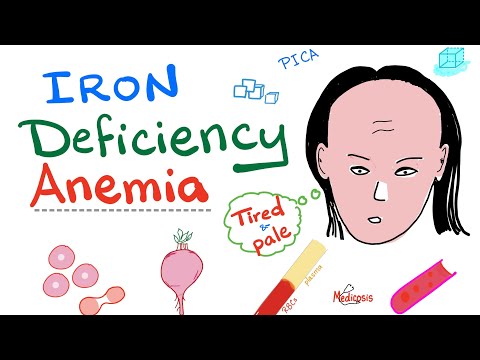
Iron Deficiency Anemia - All you need to know - Causes, Symptoms, Diagnosis, Treatment
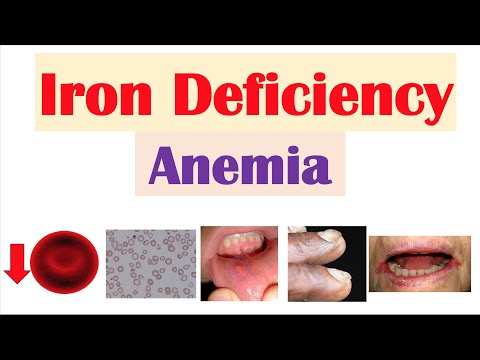
Iron-Deficiency Anemia (Overview) | Causes, Pathophysiology, Signs & Symptoms, Diagnosis, Treatment

Iron Deficiency Anemia - Everything You Need to Know!

What It Feels like to Have Anemia

Top 11 Symptoms of Iron Deficiency and What to Do

The 3 Key Issues To Treating Iron Deficiency Anemia Successfully

5 Step Process to Treat Anemia Naturally