Glutathione (GSH — The Master Antioxidant)
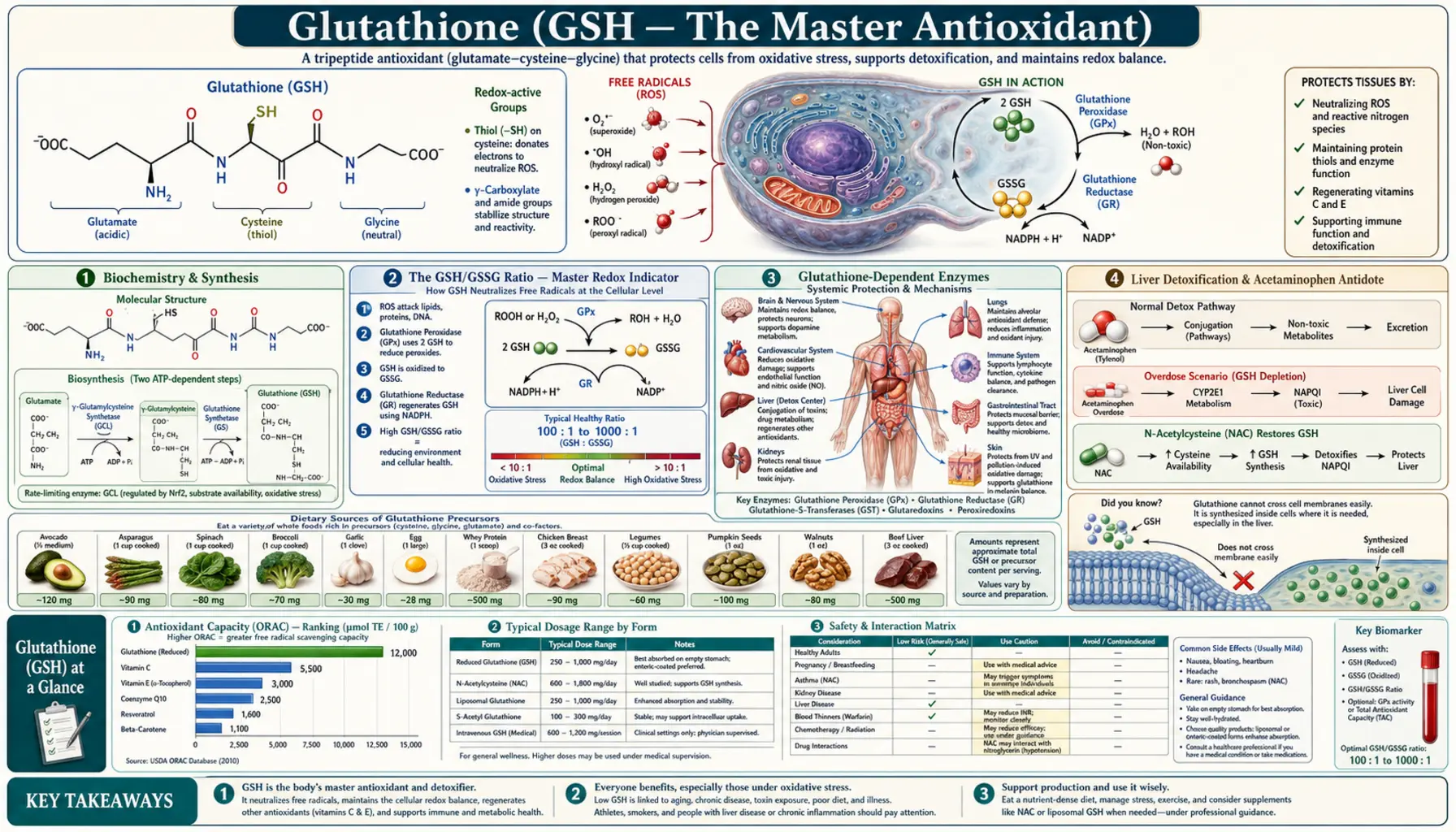
Glutathione (GSH) is a tripeptide of glutamate, cysteine, and glycine and the most abundant non-protein thiol in mammalian tissues, present inside cells at millimolar concentrations. It detoxifies hydrogen peroxide and lipid peroxides via the glutathione peroxidase / selenium system, conjugates drugs and environmental toxins for excretion through the glutathione-S-transferases, helps regenerate oxidized vitamin C and vitamin E, and serves as a major thiol buffer that maintains cellular protein structure. Lower glutathione has been reported in aging and in many chronic diseases; whether raising it changes health outcomes is being tested in mostly small trials, summarized below.
Interactive Visualization The Methylation Cycle — hand off a methyl group Watch folate and B12 recycle homocysteine into methionine — then knock out B12 and see the folate trap slam shut. Launch → Interactive Visualization How Your Liver Actually Detoxifies Watch Phase I make a toxin *more* reactive and Phase II neutralise it — and see exactly why a juice cleanse changes nothing. Launch → Interactive Visualization Free Radicals & Your Antioxidant Network Follow one superoxide radical down the whole relay — SOD, catalase, glutathione, vitamin E, vitamin C, NADPH — then release free iron and watch a membrane tear itself apart. Launch →
Table of Contents
- Biochemistry & Synthesis
- The GSH/GSSG Ratio — Master Redox Indicator
- Glutathione-Dependent Enzymes
- Liver Detoxification & Acetaminophen Antidote
- Age-Related Decline & the GlyNAC Studies
- Parkinson's Disease & Neurodegeneration
- Lung Disease (Cystic Fibrosis, COPD, ARDS)
- Cardiovascular & Endothelial Function
- Immune Function & T-Cell Regulation
- Autism Spectrum & Oxidative Subtypes
- Insulin Sensitivity & Diabetes
- Skin Lightening & Warnings on IV Cosmetic Use
- Forms: Oral, S-Acetyl, Liposomal, Sublingual, IV, Nebulized
- Precursor Strategies (NAC, Glycine, Whey, SAMe)
- Doses Used in Studies
- Cautions and Contraindications
- Key Research Papers
- Connections
- Featured Videos
Biochemistry & Synthesis
Glutathione is a tripeptide composed of three amino acids: glutamate, cysteine, and glycine. What makes it unusual is its bond chemistry — the glutamate is attached to cysteine through its γ-carboxyl group rather than the typical α-carboxyl. This γ-glutamyl peptide bond resists most peptidases, which helps intact glutathione accumulate inside cells at millimolar concentrations. A 2013 review describes it as the most abundant non-protein thiol in mammalian tissues (Lu 2013).
The redox-active center is the thiol group (−SH) of the cysteine residue. Two reduced glutathione molecules can each give up one electron and become linked through a disulfide bond, forming oxidized glutathione disulfide (GSSG). The thiol is what reduces peroxides, conjugates with electrophilic toxins, and carries reducing equivalents through the cell.
Synthesis — two ATP-dependent steps
Glutathione is made in the cytosol of cells through a two-enzyme pathway:
- Glutamate-cysteine ligase (GCL, also called γ-glutamylcysteine synthetase) — joins glutamate and cysteine through the γ-bond, producing γ-glutamylcysteine. This is the rate-limiting step; reviews name cysteine availability and GCL activity as the main determinants of how much glutathione is made, and GCL is feedback-inhibited by glutathione (Lu 2013).
- Glutathione synthetase (GS) — adds the glycine residue to form the complete tripeptide. Inherited deficiency of this enzyme is a rare cause of glutathione deficiency presenting in infancy.
Both steps consume ATP. Because cysteine supply limits synthesis, N-Acetylcysteine (NAC) is widely studied as a way to raise glutathione. From experiments on human red cells and a mathematical model, Whillier 2009 concluded that NAC given as a drug acts mainly by reducing plasma cystine to cysteine, which then enters cells and supports glutathione synthesis.
The cysteine that feeds glutathione synthesis comes from three sources: dietary sulfur amino acids (cysteine, and methionine via the transsulfuration pathway), the turnover of body proteins, and the breakdown of glutathione itself. The methylation cycle — SAMe, homocysteine, B12, B6, folate and choline — feeds into transsulfuration, which links glutathione supply to homocysteine metabolism.
The GSH/GSSG Ratio — Master Redox Indicator
Intracellular glutathione exists in two pools: reduced glutathione (GSH) and oxidized glutathione disulfide (GSSG). In healthy cells the great majority is in the reduced form, a strongly reducing environment compared with the extracellular space. The ratio of the two is widely used in research as an indicator of cellular redox status.
When oxidant production exceeds antioxidant capacity, GSH is consumed and GSSG forms. The cell then either regenerates GSH from GSSG (via the NADPH-dependent enzyme glutathione reductase) or exports GSSG. Both responses cost energy and reducing equivalents.
Research laboratories measure total glutathione and the GSH/GSSG ratio in blood and tissues, and lower ratios have been reported in many chronic conditions; examples on this page include children with autism (James 2004) and older adults (Lizzo 2022 reported higher oxidative-stress markers in older than in young adults).
The total glutathione pool also matters: a cell with severely depleted total glutathione (for example after acetaminophen overdose) is in metabolic crisis even if the small amount remaining is fully reduced. Both the quantity (total GSH) and the ratio (GSH/GSSG) are measured in studies.
Glutathione-Dependent Enzymes
Glutathione works through four major enzyme families, each catalyzing a different reaction:
- Glutathione peroxidases (GPx) — use GSH as the electron donor to reduce hydrogen peroxide (H₂O₂) to water and lipid hydroperoxides to their alcohols. Mammals have eight GPx enzymes (GPx1 to GPx8); five of them (GPx1 to GPx4 and GPx6) contain selenium, while GPx5, GPx7 and GPx8 do not (Brigelius-Flohé 2013). This is the link between selenium status and the peroxidase arm of the glutathione system.
- Glutathione reductase (GR) — the regenerator — converts GSSG back to two molecules of GSH, using NADPH as the electron source; NADPH is supplied mainly by the pentose phosphate pathway. GR uses FAD, made from vitamin B2 (riboflavin), as its cofactor, and red-cell GR activity is the basis of a laboratory test of riboflavin status.
- Glutathione-S-transferases (GST) — Phase II detoxification — conjugate GSH onto electrophilic drugs, carcinogens and environmental toxins, making them more water-soluble for excretion in bile or urine. Substrates include reactive drug metabolites such as the acetaminophen metabolite NAPQI, polycyclic aromatic hydrocarbons from smoke, and some chemotherapy drugs. Common deletion variants of the GSTM1 and GSTT1 genes vary between people and are studied as factors in susceptibility to chemical exposures.
- γ-Glutamyltransferase (GGT) — the recycler — breaks down extracellular glutathione so its amino acids can be taken back into cells and reused. Serum GGT is mainly used as a marker of liver disease and alcohol use; epidemiological studies by Lee and colleagues found that serum GGT within the normal range predicted later F2-isoprostanes and inflammation markers, and they proposed it as a possible marker related to oxidative stress (Lee 2004).
Beyond these enzymes, reduced glutathione converts oxidized vitamin C (dehydroascorbate) back to ascorbate, which in turn helps regenerate oxidized vitamin E in membranes. Related antioxidants such as alpha lipoic acid and CoQ10 are described on their own pages.
Liver Detoxification & Acetaminophen Antidote
The liver is a major site of glutathione synthesis and export, reflecting its role as the body's main organ for processing drugs and environmental chemicals through a two-phase system:
- Phase I (cytochrome P450 enzymes) — oxidize, reduce or hydrolyze fat-soluble compounds to add reactive sites. Phase I can produce reactive intermediates that are MORE toxic than the parent compound.
- Phase II conjugation (including glutathione-S-transferases) — attaches glutathione, glucuronic acid, sulfate, glycine, taurine or methyl groups to the Phase-I products, making them water-soluble and excretable. Glutathione conjugation handles many of the most reactive intermediates.
The acetaminophen antidote — NAC as glutathione precursor
Acetaminophen (paracetamol) is the classic example. At therapeutic doses it is cleared mainly by glucuronidation and sulfation, while a small fraction is oxidized by cytochrome P450 enzymes to NAPQI (N-acetyl-p-benzoquinone imine), a highly reactive liver toxin. At normal doses, liver glutathione conjugates NAPQI and it is excreted. In overdose, the main pathways saturate, more NAPQI forms, liver glutathione is used up, and unconjugated NAPQI binds liver proteins, causing liver-cell death and, in severe cases, acute liver failure.
N-acetylcysteine (NAC) is the FDA-approved antidote; it replenishes liver cysteine so that new glutathione can be made. In a US multicenter study of 2,540 patients given oral NAC (140 mg/kg loading dose, then 70 mg/kg every 4 hours for 17 further doses), hepatotoxicity developed in 6.1% of patients at probable risk when NAC was started within 10 hours of ingestion, and in 26.4% when it was started 10 to 24 hours after; given within 8 hours, NAC was protective regardless of the initial acetaminophen level (Smilkstein 1988). In Prescott's 1979 series of 100 severe poisonings treated with intravenous NAC, protection against liver damage was virtually complete in the 40 patients treated within 8 hours, efficacy fell with longer delay, and treatment after 15 hours was ineffective (Prescott 1979).
Glutathione is also involved in the handling of other chemicals and metals, many of which bind its thiol group or are conjugated by GST enzymes. Some practitioners pair glutathione or NAC with structured detox protocols; no controlled trial of such protocols was found for this page.
Age-Related Decline & the GlyNAC Studies
Several studies have found lower glutathione in the red blood cells of older adults than in younger adults, but the size of the gap depends on the study. In a 1992 study of 169 healthy adults aged 20 to 94, red-cell glutathione in the 60-to-79 age group was 17% lower than in the 20-to-39 group (Lang 1992). In a 2011 study of 8 older and 8 younger adults, red-cell glutathione was 1.12 versus 2.08 mmol/L, with lower red-cell glycine and cysteine and a slower synthesis rate in the older group (Sekhar 2011). These are small cross-sectional comparisons; they do not show that low glutathione causes aging. Full detail is on the Aging and GlyNAC page.
The GlyNAC studies (Sekhar group, Baylor College of Medicine)
Rajagopal Sekhar's group at Baylor has tested combined glycine and NAC, which it named "GlyNAC". Nearly all of the human GlyNAC evidence comes from this one group:
- Sekhar 2011 — after 2 weeks of cysteine and glycine, the 8 older adults' red-cell glutathione was 94.6% higher and plasma oxidative stress and F2-isoprostanes were lower; the authors reported no remaining difference from the younger group. Before-and-after design, no placebo.
- Kumar 2021 (Clinical and Translational Medicine) — a 36-week open-label pilot with no placebo group: 8 older adults (aged 71 to 80) received glycine 1.33 mmol/kg/day and cysteine 0.81 mmol/kg/day (given as NAC) for 24 weeks, then stopped for 12 weeks; 8 young adults were studied once at baseline for comparison. The authors reported that GlyNAC corrected red-cell glutathione deficiency, oxidative stress and mitochondrial dysfunction, and improved inflammation, insulin resistance, endothelial function, genomic damage, cognition, strength, gait speed, exercise capacity, body fat and waist circumference. The benefits declined during the 12 weeks off GlyNAC. The authors named the small sample and the lack of a placebo group as limitations.
- Kumar 2023 (Journals of Gerontology: Medical Sciences) — the group's one randomized, placebo-controlled trial: 24 older adults given GlyNAC (12) or an alanine placebo (12) for 16 weeks. The authors reported that GlyNAC, and not placebo, improved glutathione, oxidative stress, mitochondrial fatty-acid oxidation, inflammation, endothelial function, insulin resistance, aging-hallmark measures, gait speed, muscle strength, exercise capacity and waist circumference, and that it was well tolerated. The PubMed abstract does not state the dose.
- Kumar 2022 (mice) — in an animal study of 32 mice, those fed GlyNAC lived 24% longer than controls. The authors call it a pilot exploratory study; a lifespan result in mice has not been tested in people.
A placebo-controlled trial outside the Baylor group (Lizzo 2022) gave 114 healthy older volunteers glycine plus NAC at 2.4, 4.8 or 7.2 g/day, or placebo, for 2 weeks. GlyNAC was well tolerated, but it did not raise total glutathione or the reduced-to-oxidized glutathione ratio, its primary endpoint; a post-hoc analysis found a rise in a subgroup with high oxidative stress and low baseline glutathione. Most of its authors were employees of a nutrition company whose subsidiary, per the paper's disclosure, holds patents on and markets glycine-and-NAC products. The Baylor papers checked for this page state that their authors have no conflicts of interest; the disclosure statement of the 2023 trial was not in its openly available record.
The Baylor group has also studied people with HIV (Nguyen 2014; Kumar 2020) and people with type 2 diabetes (Sekhar 2011), described in the sections below. No GlyNAC trial in fatty liver disease could be found in PubMed; an earlier version of this page described one.
On glutathione taken by mouth instead of its precursors: a 4-week randomized trial in 40 healthy adults found no significant change in oxidative-stress markers or red-cell glutathione with 500 mg twice daily (Allen 2011), while a 6-month randomized trial in 54 adults found that 250 or 1,000 mg/day raised glutathione in blood, with the high dose raising mean levels 30–35% in red cells, plasma and lymphocytes (Richie 2015).
Parkinson's Disease & Neurodegeneration
Parkinson's disease involves loss of dopamine-producing neurons in the substantia nigra, and oxidative stress is proposed as one contributor. In post-mortem brain tissue, reduced glutathione in the substantia nigra was 40% lower in people who had died with Parkinson's disease than in controls, with no change in other brain areas, and the reduction was not found in other disorders with similar nigral cell loss (Sian 1994). In people with incidental Lewy bodies at autopsy, regarded by the authors as possible presymptomatic Parkinson's disease, nigral reduced glutathione was 35% lower (Dexter 1994). Whether the depletion is a cause or a consequence of the disease is not settled.
Sechi 1996 (Progress in Neuro-Psychopharmacology & Biological Psychiatry) gave intravenous glutathione 600 mg twice daily for 30 days, open-label, to 9 patients with early, untreated Parkinson's disease. The authors reported a 42% decline in disability, with the effect lasting 2 to 4 months after stopping. There was no control group.
Later placebo-controlled trials did not confirm a benefit. Hauser 2009 randomized 21 patients to intravenous glutathione 1,400 mg or placebo three times a week for 4 weeks; there were no significant differences in Unified Parkinson's Disease Rating Scale (UPDRS) changes, glutathione was well tolerated, and the authors wrote that a mild symptomatic effect remained to be tested in a larger study. Mischley 2017 (Journal of Parkinson's Disease) randomized 45 people to intranasal placebo or glutathione 100 mg or 200 mg three times daily for 3 months; all groups improved, including placebo, and neither glutathione dose was superior to placebo.
For other neurodegenerative conditions — Alzheimer's, multiple sclerosis, ALS — glutathione changes have been studied, but no supplementation trial is described on this page.
Lung Disease (Cystic Fibrosis, COPD, ARDS)
The lungs receive the whole output of the right heart and are exposed to inhaled oxidants and pollutants. In healthy people, the fluid lining the alveoli contained total glutathione at a concentration 140-fold higher than in plasma, 96% of it in the reduced form, and smokers had 80% higher levels than nonsmokers (Cantin 1987).
Cystic fibrosis
In young adults with cystic fibrosis (CF), the alveolar lining fluid was deficient in reduced glutathione compared with healthy subjects, and reduced glutathione was also low in plasma, which the authors described as a systemic deficiency (Roum 1993). The largest trial of inhaled glutathione randomized 153 people with CF to 646 mg of glutathione or placebo by nebulizer every 12 hours for 6 months; lung function (FEV1), the primary endpoint, did not differ between groups, and there were no fewer exacerbations or better quality-of-life scores, although glutathione reached the lungs (Griese 2013). A 2019 Cochrane review found that inhaled glutathione probably improves FEV1 at 3 months but not at 6 months, and that NAC by mouth probably increased FEV1 at 6 months in two studies; it concluded that a firm conclusion on antioxidants in CF needs further studies (Ciofu 2019).
COPD and chronic bronchitis
Oral NAC has been studied for decades in chronic bronchitis and COPD. The PANTHEON trial (Zheng 2014, Lancet Respiratory Medicine) randomized 1,006 patients with moderate-to-severe COPD at 34 hospitals in China to NAC 600 mg twice daily or placebo for 1 year; there were 1.16 exacerbations per patient-year with NAC versus 1.49 with placebo (risk ratio 0.78). The trial was funded by a pharmaceutical company, and three authors were affiliated with that company or its parent. The proposed mechanisms include antioxidant effects and the breaking of disulfide bonds in mucus.
ARDS and acute lung injury
Acute respiratory distress syndrome (ARDS) involves oxidative damage to the alveolar-capillary barrier. In a randomized, placebo-controlled trial in ARDS patients on mechanical ventilation, intravenous NAC or another cysteine prodrug for 10 days raised red-cell glutathione by 47% and 49%, with no difference in mortality; the authors wrote that larger studies were needed (Bernard 1997).
Cardiovascular & Endothelial Function
Glutathione helps protect nitric oxide, the signal that relaxes blood vessels, from oxidative inactivation, and oxidative stress is studied as a factor in cardiovascular disease, hypertension and metabolic syndrome.
The GlyNAC pilot in older adults reported improved markers of endothelial function (Kumar 2021). NAC also interacts with nitrate medicines: in a trial of 46 patients with severe unstable angina, intravenous NAC added to intravenous nitroglycerin was followed by symptomatic low blood pressure in 7 of 24 patients, versus none of 22 on nitroglycerin alone (Horowitz 1988), and in a randomized trial of 200 patients, transdermal nitroglycerin plus oral NAC was associated with side effects, mainly intolerable headache, in 35% (Ardissino 1997).
Immune Function & T-Cell Regulation
Glutathione is involved in the function of T lymphocytes. In mice, glutathione levels in antigen-presenting cells determined whether Th1 (cell-mediated) or Th2 response patterns predominated (Peterson 1998); this is an animal finding.
In people with HIV, Herzenberg and colleagues found that glutathione deficiency in CD4 T cells was associated with markedly decreased survival 2 to 3 years later (Herzenberg 1997). The Baylor group's HIV studies measured metabolism rather than immune outcomes: in an open-label study of 8 older men with HIV and glutathione deficiency, 14 days of cysteine and glycine restored glutathione synthesis and improved mitochondrial fuel oxidation, insulin sensitivity, body composition and muscle strength (Nguyen 2014); in a 2020 open-label trial, 8 people with HIV received GlyNAC for 12 weeks, measured defects improved, and the benefits receded after it was stopped (Kumar 2020).
Cysteine, glycine and selenium status all feed the glutathione system; no trial described here tested glutathione supplements for immune outcomes in healthy adults.
Autism Spectrum & Oxidative Subtypes
Studies have found evidence of impaired methylation and oxidative stress in some children with autism. The Jill James group at the University of Arkansas measured plasma metabolites in 20 children with autism and 33 control children: the children with autism had significantly lower methionine, SAMe, cysteine and total glutathione, higher oxidized glutathione, and a lower ratio of reduced to oxidized glutathione (James 2004).
Trials have been small. In an 8-week open-label trial in 26 children, oral liposomal glutathione raised plasma reduced glutathione but not whole-blood glutathione, and transdermal glutathione did not raise plasma glutathione, though both groups showed rises in plasma sulfate, cysteine and taurine (Kern 2011). In a 12-week randomized, placebo-controlled pilot trial in 33 children, oral NAC (900 mg daily rising to 900 mg three times daily) improved irritability scores compared with placebo (Hardan 2012). A 12-month randomized, single-blind trial by James B. Adams's group at Arizona State University tested a multi-component vitamin and mineral supplement, essential fatty acids, carnitine, digestive enzymes, Epsom salt baths and a diet in 67 people with autism, and reported greater improvement in nonverbal IQ and autism symptoms than in the untreated group (Adams 2018). That paper discloses that its first author leads a non-profit that produces an improved version of the supplement, and that two authors work for or advise commercial testing laboratories.
The evidence is limited to small studies with heterogeneous results, and none established glutathione supplementation as a treatment for autism.
Insulin Sensitivity & Diabetes
Oxidative stress in muscle and fat tissue is linked to insulin resistance, and the GlyNAC trials reported lower insulin resistance (HOMA-IR) after supplementation.
In Sekhar 2011 (Diabetes Care), 12 patients with uncontrolled type 2 diabetes (mean fasting glucose 10.7 mmol/L) and 12 non-diabetic controls were infused with a labelled-glycine tracer. The patients had lower red-cell glycine, cysteine and glutathione and slower glutathione synthesis. After 2 weeks of cysteine and glycine, their glutathione synthesis and concentrations increased and plasma oxidative stress and lipid peroxides decreased. The 2-week study did not report HbA1c outcomes. A 2022 pilot from the same group (14 days of GlyNAC in 10 adults with type 2 diabetes) reported improved mitochondrial fatty-acid oxidation and lower insulin resistance; the controls were not supplemented.
Whether glutathione precursors change long-term diabetes outcomes has not been tested in these trials. The alpha lipoic acid page covers that compound's separate diabetes research.
Skin Lightening & Warnings on IV Cosmetic Use
Glutathione is widely marketed in parts of Asia and elsewhere for skin lightening. A 2016 review attributes the proposed effect to direct and indirect inhibition of tyrosinase, the enzyme that starts melanin production, and to a shift from dark eumelanin toward lighter pheomelanin (Sonthalia 2016).
The oral trials are small. In a randomized, double-blind trial in 60 medical students, 500 mg/day of oral glutathione for 4 weeks lowered the melanin index at all six sites measured, with differences from placebo significant at two of them (Arjinpathana 2012); the authors noted that long-term safety had not been established. In a 12-week randomized trial in healthy women, 250 mg/day of reduced or oxidized glutathione produced melanin indices that tended to be lower than placebo, with significant wrinkle reduction at some sites (Weschawalit 2017).
Intravenous glutathione for skin lightening is a separate matter. The same review states that there is no evidence of its efficacy and that its adverse effects led the Food and Drug Administration of the Philippines to issue a public warning against its use for off-label indications such as skin lightening (Sonthalia 2016). No glutathione product is approved by the US FDA for skin lightening.
Forms: Oral, S-Acetyl, Liposomal, Sublingual, IV, Nebulized
- Reduced glutathione (GSH) oral capsules or powder — the original form. Glutathione is broken down by intestinal and liver γ-glutamyltransferase, and a single 3 g dose did not significantly raise plasma glutathione in 7 healthy volunteers (Witschi 1992). Longer trials differ: no significant change after 4 weeks of 500 mg twice daily (Allen 2011), but a 30–35% rise in red-cell, plasma and lymphocyte glutathione after 6 months of 1,000 mg/day (Richie 2015).
- S-Acetyl glutathione — carries an acetyl group on the cysteine sulfur, which manufacturers describe as protecting it from digestion. No published human study comparing its absorption with that of reduced glutathione was found in PubMed for this page. A 2026 European Food Safety Authority opinion assessed it as a novel food and concluded it is safe at up to 300 mg/day for adults, excluding pregnant and lactating women (EFSA 2026).
- Liposomal glutathione — glutathione enclosed in phospholipid vesicles. In a 1-month pilot study in 12 healthy adults given 500 or 1,000 mg/day, glutathione rose by up to 40% in whole blood, 25% in red cells, 28% in plasma and 100% in blood mononuclear cells by 2 weeks, and natural killer cell activity rose by up to 400% (Sinha 2018). Two authors received research funding for the study from a nutraceutical company that supplies liposomal glutathione.
- Sublingual glutathione spray or lozenge — intended to be absorbed across the lining of the mouth. Bioavailability data are limited.
- Intravenous glutathione — given in clinics; the Parkinson's trials used 600 mg twice daily (Sechi 1996) and 1,400 mg three times a week (Hauser 2009). For acetaminophen overdose, intravenous NAC rather than glutathione is the standard antidote. IV glutathione is also offered off-label for a range of conditions and for cosmetic skin lightening (see the warnings above).
- Nebulized glutathione — inhaled as a solution, delivering glutathione to the airways; the largest CF trial used 646 mg every 12 hours (Griese 2013). In 8 patients with mild asthma, 600 mg of nebulized glutathione caused marked airway narrowing (Marrades 1997).
- Transdermal glutathione — cream or patch applications; in the 8-week autism trial it did not raise plasma glutathione (Kern 2011).
- Suppository glutathione — rectal forms are also sold; no trial data were found for this page.
Comparisons between forms come from separate small trials with different doses, durations and measures; no head-to-head trial of all forms was found.
Precursor Strategies (NAC, Glycine, Whey, SAMe)
Because swallowed glutathione is largely broken down in the gut, much of the research supplies the building blocks instead and relies on the body's own synthesis. The approaches studied:
- N-Acetylcysteine (NAC) — the most widely studied precursor. It supplies cysteine, mainly by reducing plasma cystine (Whillier 2009). Doses in the trials on this page range from 600 mg twice daily (PANTHEON) to weight-based doses in the GlyNAC studies.
- Glycine — the third amino acid in the glutathione tripeptide. In Sekhar 2011, older adults had lower red-cell glycine than younger adults (218.0 versus 486.7 µmol/L). The Baylor 2021 pilot used glycine 1.33 mmol/kg/day with cysteine 0.81 mmol/kg/day (as NAC); the independent Lizzo 2022 trial used 2.4 to 7.2 g/day of glycine and NAC combined.
- Cysteine-rich whey protein — whey provides cysteine, partly as cystine-containing peptides; undenatured whey has been studied as a cysteine source.
- SAMe (S-adenosylmethionine) — the methyl donor at the start of the pathway that turns methionine into cysteine (transsulfuration).
- Sulforaphane (broccoli sprouts) — activates Nrf2, a transcription factor that regulates the GCL genes (Lu 2013), so it is studied as a way to increase synthesis capacity rather than supply precursors.
- Selenium — not a precursor, but part of five of the eight glutathione peroxidases (Brigelius-Flohé 2013).
- Vitamin B2 (Riboflavin) — as FAD, the cofactor of glutathione reductase.
Some practitioners combine NAC, glycine, selenium and sulforaphane in a single regimen; no trial of that combination was found.
Doses Used in Studies
The doses below are those reported in the studies and labelling cited on this page. They describe what was tested, not a dosing guide.
- GlyNAC, Baylor pilot (Kumar 2021) — glycine 1.33 mmol/kg/day and cysteine 0.81 mmol/kg/day (given as NAC), in capsules, for 24 weeks. The dose of the 2023 randomized trial is not stated in its PubMed abstract.
- GlyNAC, independent trial (Lizzo 2022) — 2.4, 4.8 or 7.2 g/day of glycine and NAC combined (1:1) for 2 weeks; none of the doses met the primary endpoint.
- NAC in COPD (PANTHEON) — 600 mg twice daily for 1 year.
- Reduced glutathione by mouth — 500 mg twice daily for 4 weeks (Allen 2011, no significant change); 250 or 1,000 mg/day for 6 months (Richie 2015).
- Liposomal glutathione — 500 or 1,000 mg/day for 1 month (Sinha 2018).
- Intravenous glutathione in Parkinson's disease — 600 mg twice daily for 30 days (Sechi 1996, open-label); 1,400 mg three times a week for 4 weeks (Hauser 2009, no significant difference from placebo).
- Inhaled glutathione in cystic fibrosis — 646 mg every 12 hours for 6 months (Griese 2013, primary endpoint not met).
- NAC for acetaminophen overdose — an emergency hospital treatment. The US multicenter study used 140 mg/kg by mouth, then 70 mg/kg every 4 hours for 17 further doses (Smilkstein 1988); intravenous regimens are given over about 20 hours (Prescott 1979).
- Oral glutathione for skin lightening — 500 mg/day for 4 weeks (Arjinpathana 2012); 250 mg/day for 12 weeks (Weschawalit 2017).
The trials did not compare timing with or without meals, and most were small and short.
Cautions and Contraindications
The trials cited here generally reported glutathione and its precursors as well tolerated over short periods, but several findings and open questions apply:
- Asthma — inhaled forms — in a randomized crossover study in 8 patients with mild asthma, 600 mg of nebulized glutathione caused marked airway narrowing (FEV1 fell 19%) with cough or breathlessness; pretreatment with salbutamol blocked it, and the authors attributed the effect to sulfite formation (Marrades 1997). Inhaled NAC can also provoke bronchospasm in people with asthma.
- Nitrate medicines — NAC combined with nitroglycerin was followed by symptomatic low blood pressure (Horowitz 1988) and frequent severe headache (Ardissino 1997) in angina trials.
- Pregnancy and breastfeeding — NAC is used in pregnancy to treat acetaminophen overdose, a life-threatening emergency. No safety data on routine glutathione or GlyNAC supplementation in pregnancy were found, and the 2026 EFSA opinion on S-acetyl glutathione excluded pregnant and lactating women.
- IV glutathione — the small Parkinson's trial reported intravenous glutathione as well tolerated (Hauser 2009). For cosmetic skin lightening, a review describes adverse effects that led the Philippines FDA to warn against the practice (Sonthalia 2016).
- Cancer — in mice, NAC and vitamin E added to the diet markedly increased tumor progression and reduced survival in models of lung cancer (Sayin 2014), and NAC increased lymph-node metastases in a mouse melanoma model (Le Gal 2015). These are animal findings; whether they apply to people is not known.
- Sulfa allergy — glutathione is not a sulfa drug: sulfa drugs contain a sulfonamide group, not the thiol of glutathione and cysteine.
- Sulfur odor and stomach upset — a sulfurous smell and mild gastrointestinal effects such as nausea are commonly described with NAC and glutathione products.
Decisions about NAC, glutathione or other supplements belong with a clinician, particularly for people taking nitrate medicines, with asthma, during pregnancy or with a history of cancer.
Key Research Papers
- Kumar P, Liu C, Hsu JW, Chacko S, Minard C, Jahoor F, Sekhar RV (2021). Glycine and N-acetylcysteine (GlyNAC) supplementation in older adults improves glutathione deficiency, oxidative stress, mitochondrial dysfunction, inflammation, insulin resistance, endothelial dysfunction, genotoxicity, muscle strength, and cognition: Results of a pilot clinical trial. Clinical and Translational Medicine 11(3):e372. — PubMed PMID: 33783984
- Kumar P, Liu C, Suliburk J, Hsu JW, Muthupillai R, Jahoor F, Minard CG, Taffet GE, Sekhar RV (2023). Supplementing Glycine and N-Acetylcysteine (GlyNAC) in Older Adults Improves Glutathione Deficiency, Oxidative Stress, Mitochondrial Dysfunction, Inflammation, Physical Function, and Aging Hallmarks: A Randomized Clinical Trial. Journals of Gerontology Series A: Biological Sciences and Medical Sciences 78(1):75-89. — PubMed PMID: 35975308
- Sekhar RV, Patel SG, Guthikonda AP, Reid M, Balasubramanyam A, Taffet GE, Jahoor F (2011). Deficient synthesis of glutathione underlies oxidative stress in aging and can be corrected by dietary cysteine and glycine supplementation. American Journal of Clinical Nutrition 94(3):847-53. — PubMed PMID: 21795440
- Sekhar RV, McKay SV, Patel SG, Guthikonda AP, Reddy VT, Balasubramanyam A, Jahoor F (2011). Glutathione synthesis is diminished in patients with uncontrolled diabetes and restored by dietary supplementation with cysteine and glycine. Diabetes Care 34(1):162-7. — PubMed PMID: 20929994
- Sekhar RV (2022). GlyNAC (Glycine and N-Acetylcysteine) Supplementation Improves Impaired Mitochondrial Fuel Oxidation and Lowers Insulin Resistance in Patients with Type 2 Diabetes: Results of a Pilot Study. Antioxidants 11(1):154. — PubMed PMID: 35052658
- Nguyen D, Hsu JW, Jahoor F, Sekhar RV (2014). Effect of increasing glutathione with cysteine and glycine supplementation on mitochondrial fuel oxidation, insulin sensitivity, and body composition in older HIV-infected patients. Journal of Clinical Endocrinology & Metabolism 99(1):169-77. — PubMed PMID: 24081740
- Kumar P, Liu C, Suliburk JW, Minard CG, Muthupillai R, Chacko S, Hsu JW, Jahoor F, Sekhar RV (2020). Supplementing Glycine and N-acetylcysteine (GlyNAC) in Aging HIV Patients Improves Oxidative Stress, Mitochondrial Dysfunction, Inflammation, Endothelial Dysfunction, Insulin Resistance, Genotoxicity, Strength, and Cognition: Results of an Open-Label Clinical Trial. Biomedicines 8(10):390. — PubMed PMID: 33007928
- Kumar P, Osahon OW, Sekhar RV (2022). GlyNAC (Glycine and N-Acetylcysteine) Supplementation in Mice Increases Length of Life by Correcting Glutathione Deficiency, Oxidative Stress, Mitochondrial Dysfunction, Abnormalities in Mitophagy and Nutrient Sensing, and Genomic Damage. Nutrients 14(5):1114. — PubMed PMID: 35268089
- Lizzo G, Migliavacca E, Lamers D, Frézal A, Corthesy J, Vinyes-Parès G, Bosco N, Karagounis LG, Hövelmann U, Heise T, von Eynatten M, Gut P (2022). A Randomized Controlled Clinical Trial in Healthy Older Adults to Determine Efficacy of Glycine and N-Acetylcysteine Supplementation on Glutathione Redox Status and Oxidative Damage. Frontiers in Aging 3:852569. — PubMed PMID: 35821844
- Lang CA, Naryshkin S, Schneider DL, Mills BJ, Lindeman RD (1992). Low blood glutathione levels in healthy aging adults. Journal of Laboratory and Clinical Medicine 120(5):720-5. — PubMed PMID: 1431500
- Lu SC (2013). Glutathione synthesis. Biochimica et Biophysica Acta 1830(5):3143-53. — PubMed PMID: 22995213
- Brigelius-Flohé R, Maiorino M (2013). Glutathione peroxidases. Biochimica et Biophysica Acta 1830(5):3289-303. — PubMed PMID: 23201771
- Whillier S, Raftos JE, Chapman B, Kuchel PW (2009). Role of N-acetylcysteine and cystine in glutathione synthesis in human erythrocytes. Redox Report 14(3):115-24. — PubMed PMID: 19490753
- Lee DH, Blomhoff R, Jacobs DR Jr (2004). Is serum gamma glutamyltransferase a marker of oxidative stress? Free Radical Research 38(6):535-9. — PubMed PMID: 15346644
- Prescott LF, Illingworth RN, Critchley JA, Stewart MJ, Adam RD, Proudfoot AT (1979). Intravenous N-acetylcystine: the treatment of choice for paracetamol poisoning. British Medical Journal 2(6198):1097-100. — PubMed PMID: 519312
- Smilkstein MJ, Knapp GL, Kulig KW, Rumack BH (1988). Efficacy of oral N-acetylcysteine in the treatment of acetaminophen overdose. Analysis of the national multicenter study (1976 to 1985). New England Journal of Medicine 319(24):1557-62. — PubMed PMID: 3059186
- Sian J, Dexter DT, Lees AJ, Daniel S, Agid Y, Javoy-Agid F, Jenner P, Marsden CD (1994). Alterations in glutathione levels in Parkinson's disease and other neurodegenerative disorders affecting basal ganglia. Annals of Neurology 36(3):348-55. — PubMed PMID: 8080242
- Dexter DT, Sian J, Rose S, Hindmarsh JG, Mann VM, Cooper JM, Wells FR, Daniel SE, Lees AJ, Schapira AH, et al. (1994). Indices of oxidative stress and mitochondrial function in individuals with incidental Lewy body disease. Annals of Neurology 35(1):38-44. — PubMed PMID: 8285590
- Sechi G, Deledda MG, Bua G, Satta WM, Deiana GA, Pes GM, Rosati G (1996). Reduced intravenous glutathione in the treatment of early Parkinson's disease. Progress in Neuro-Psychopharmacology & Biological Psychiatry 20(7):1159-70. — PubMed PMID: 8938817
- Hauser RA, Lyons KE, McClain T, Carter S, Perlmutter D (2009). Randomized, double-blind, pilot evaluation of intravenous glutathione in Parkinson's disease. Movement Disorders 24(7):979-83. — PubMed PMID: 19230029
- Mischley LK, Lau RC, Shankland EG, Wilbur TK, Padowski JM (2017). Phase IIb Study of Intranasal Glutathione in Parkinson's Disease. Journal of Parkinson's Disease 7(2):289-299. — PubMed PMID: 28436395
- Cantin AM, North SL, Hubbard RC, Crystal RG (1987). Normal alveolar epithelial lining fluid contains high levels of glutathione. Journal of Applied Physiology 63(1):152-7. — PubMed PMID: 3040659
- Roum JH, Buhl R, McElvaney NG, Borok Z, Crystal RG (1993). Systemic deficiency of glutathione in cystic fibrosis. Journal of Applied Physiology 75(6):2419-24. — PubMed PMID: 8125859
- Griese M, Kappler M, Eismann C, Ballmann M, Junge S, Rietschel E, et al.; Glutathione Study Group (2013). Inhalation treatment with glutathione in patients with cystic fibrosis. A randomized clinical trial. American Journal of Respiratory and Critical Care Medicine 188(1):83-9. — PubMed PMID: 23631796
- Ciofu O, Smith S, Lykkesfeldt J (2019). Antioxidant supplementation for lung disease in cystic fibrosis. Cochrane Database of Systematic Reviews 10:CD007020. — PubMed PMID: 31580490
- Zheng JP, Wen FQ, Bai CX, Wan HY, Kang J, Chen P, et al.; PANTHEON study group (2014). Twice daily N-acetylcysteine 600 mg for exacerbations of chronic obstructive pulmonary disease (PANTHEON): a randomised, double-blind placebo-controlled trial. Lancet Respiratory Medicine 2(3):187-94. — PubMed PMID: 24621680
- Bernard GR, Wheeler AP, Arons MM, Morris PE, Paz HL, Russell JA, Wright PE (1997). A trial of antioxidants N-acetylcysteine and procysteine in ARDS. The Antioxidant in ARDS Study Group. Chest 112(1):164-72. — PubMed PMID: 9228372
- Peterson JD, Herzenberg LA, Vasquez K, Waltenbaugh C (1998). Glutathione levels in antigen-presenting cells modulate Th1 versus Th2 response patterns. Proceedings of the National Academy of Sciences USA 95(6):3071-6. — PubMed PMID: 9501217
- Herzenberg LA, De Rosa SC, Dubs JG, Roederer M, Anderson MT, Ela SW, Deresinski SC, Herzenberg LA (1997). Glutathione deficiency is associated with impaired survival in HIV disease. Proceedings of the National Academy of Sciences USA 94(5):1967-72. — PubMed PMID: 9050888
- James SJ, Cutler P, Melnyk S, Jernigan S, Janak L, Gaylor DW, Neubrander JA (2004). Metabolic biomarkers of increased oxidative stress and impaired methylation capacity in children with autism. American Journal of Clinical Nutrition 80(6):1611-7. — PubMed PMID: 15585776
- Kern JK, Geier DA, Adams JB, Garver CR, Audhya T, Geier MR (2011). A clinical trial of glutathione supplementation in autism spectrum disorders. Medical Science Monitor 17(12):CR677-82. — PubMed PMID: 22129897
- Hardan AY, Fung LK, Libove RA, Obukhanych TV, Nair S, Herzenberg LA, Frazier TW, Tirouvanziam R (2012). A randomized controlled pilot trial of oral N-acetylcysteine in children with autism. Biological Psychiatry 71(11):956-61. — PubMed PMID: 22342106
- Adams JB, Audhya T, Geis E, Gehn E, Fimbres V, Pollard EL, et al. (2018). Comprehensive Nutritional and Dietary Intervention for Autism Spectrum Disorder — A Randomized, Controlled 12-Month Trial. Nutrients 10(3):369. — PubMed PMID: 29562612
- Arjinpathana N, Asawanonda P (2012). Glutathione as an oral whitening agent: a randomized, double-blind, placebo-controlled study. Journal of Dermatological Treatment 23(2):97-102. — PubMed PMID: 20524875
- Weschawalit S, Thongthip S, Phutrakool P, Asawanonda P (2017). Glutathione and its antiaging and antimelanogenic effects. Clinical, Cosmetic and Investigational Dermatology 10:147-153. — PubMed PMID: 28490897
- Sonthalia S, Daulatabad D, Sarkar R (2016). Glutathione as a skin whitening agent: Facts, myths, evidence and controversies. Indian Journal of Dermatology, Venereology and Leprology 82(3):262-72. — PubMed PMID: 27088927
- Witschi A, Reddy S, Stofer B, Lauterburg BH (1992). The systemic availability of oral glutathione. European Journal of Clinical Pharmacology 43(6):667-9. — PubMed PMID: 1362956
- Allen J, Bradley RD (2011). Effects of oral glutathione supplementation on systemic oxidative stress biomarkers in human volunteers. Journal of Alternative and Complementary Medicine 17(9):827-33. — PubMed PMID: 21875351
- Richie JP Jr, Nichenametla S, Neidig W, Calcagnotto A, Haley JS, Schell TD, Muscat JE (2015). Randomized controlled trial of oral glutathione supplementation on body stores of glutathione. European Journal of Nutrition 54(2):251-63. — PubMed PMID: 24791752
- Sinha R, Sinha I, Calcagnotto A, Trushin N, Haley JS, Schell TD, Richie JP Jr (2018). Oral supplementation with liposomal glutathione elevates body stores of glutathione and markers of immune function. European Journal of Clinical Nutrition 72(1):105-111. — PubMed PMID: 28853742
- EFSA Panel on Nutrition, Novel Foods and Food Allergens (NDA) (2026). Safety of S-acetyl glutathione as an novel food pursuant to Regulation (EU) 2015/2283. EFSA Journal 24(9):e10258. — PubMed PMID: 42683004
- Marrades RM, Roca J, Barberà JA, de Jover L, MacNee W, Rodriguez-Roisin R (1997). Nebulized glutathione induces bronchoconstriction in patients with mild asthma. American Journal of Respiratory and Critical Care Medicine 156(2 Pt 1):425-30. — PubMed PMID: 9279219
- Horowitz JD, Henry CA, Syrjanen ML, Louis WJ, Fish RD, Smith TW, Antman EM (1988). Combined use of nitroglycerin and N-acetylcysteine in the management of unstable angina pectoris. Circulation 77(4):787-94. — PubMed PMID: 3127076
- Ardissino D, Merlini PA, Savonitto S, Demicheli G, Zanini P, Bertocchi F, Falcone C, Ghio S, Marinoni G, Montemartini C, Mussini A (1997). Effect of transdermal nitroglycerin or N-acetylcysteine, or both, in the long-term treatment of unstable angina pectoris. Journal of the American College of Cardiology 29(5):941-7. — PubMed PMID: 9120179
- Sayin VI, Ibrahim MX, Larsson E, Nilsson JA, Lindahl P, Bergo MO (2014). Antioxidants accelerate lung cancer progression in mice. Science Translational Medicine 6(221):221ra15. — PubMed PMID: 24477002
- Le Gal K, Ibrahim MX, Wiel C, Sayin VI, Akula MK, Karlsson C, Dalin MG, Akyürek LM, Lindahl P, Nilsson J, Bergo MO (2015). Antioxidants can increase melanoma metastasis in mice. Science Translational Medicine 7(308):308re8. — PubMed PMID: 26446958
PubMed Topic Searches
- GlyNAC for healthy aging (Sekhar Baylor program) — PubMed: GlyNAC glycine NAC glutathione aging
- Glutathione in Parkinson's disease (Sechi IV trial, Hauser, Mischley) — PubMed: glutathione Parkinson disease
- NAC for COPD (PANTHEON, BRONCUS) — PubMed: NAC COPD PANTHEON BRONCUS
- NAC for acetaminophen overdose (Prescott protocol) — PubMed: NAC acetaminophen Prescott
- Inhaled glutathione in cystic fibrosis — PubMed: glutathione inhaled cystic fibrosis
- Glutathione in autism spectrum disorders (James et al.) — PubMed: glutathione autism oxidative
- Glutathione in type 2 diabetes & insulin sensitivity — PubMed: glutathione diabetes insulin sensitivity
- Glutathione age-related decline (Sekhar 2011) — PubMed: glutathione aging decline
- Glutathione and cardiovascular / endothelial function — PubMed: glutathione endothelial cardiovascular
- Glutathione and T-cell / immune function — PubMed: glutathione T-cell immune
- Oral glutathione bioavailability (Richie 2015) — PubMed: oral glutathione bioavailability
- Liposomal glutathione clinical trials (Sinha) — PubMed: liposomal glutathione
- Glutathione skin lightening & IV cosmetic safety concerns — PubMed: glutathione skin lightening safety
- Glutathione peroxidase & selenium dependency — PubMed: glutathione peroxidase selenium
- Glutathione-S-transferases & Phase II detoxification — PubMed: glutathione S-transferase detoxification
External Authoritative Resources
Connections
- Free Radicals & Your Antioxidant Network — interactive animation
- How Your Liver Actually Detoxifies — interactive animation
- The Methylation Cycle & Homocysteine — interactive animation
- All Antioxidants
- NAC (Primary Precursor)
- Alpha Lipoic Acid
- CoQ10
- NAD+ & NMN
- Methylene Blue
- Cysteine
- Glycine
- Glutamic Acid
- Glutamine
- Methionine
- Taurine
- Selenium
- Selenium and Cancer Prevention — selenoprotein biology, the NPC and SELECT trials, evidence across prostate/colorectal/lung cancers, and the U-shaped dose-response curve.
- Sulfur
- Zinc
- Vitamin B2 (Riboflavin)
- Vitamin B6
- Vitamin B9 (Folate)
- Vitamin B12
- Vitamin C
- Vitamin E
- Oxidative Stress
- Liver Cleansing
- Detox Protocols
- Longevity Protocols
- Milk Thistle
- Turmeric (Curcumin)
- Spirulina
- Broccoli (Sulforaphane)
- Parkinson's Disease
- Cystic Fibrosis
- COPD
- Diabetes
- Autism Spectrum
- Mercury
- Lead
- Arsenic
- GGT
- Homocysteine
- Inflammatory Markers