Vitamin C (Ascorbic Acid): Functions, Food Sources and the Research
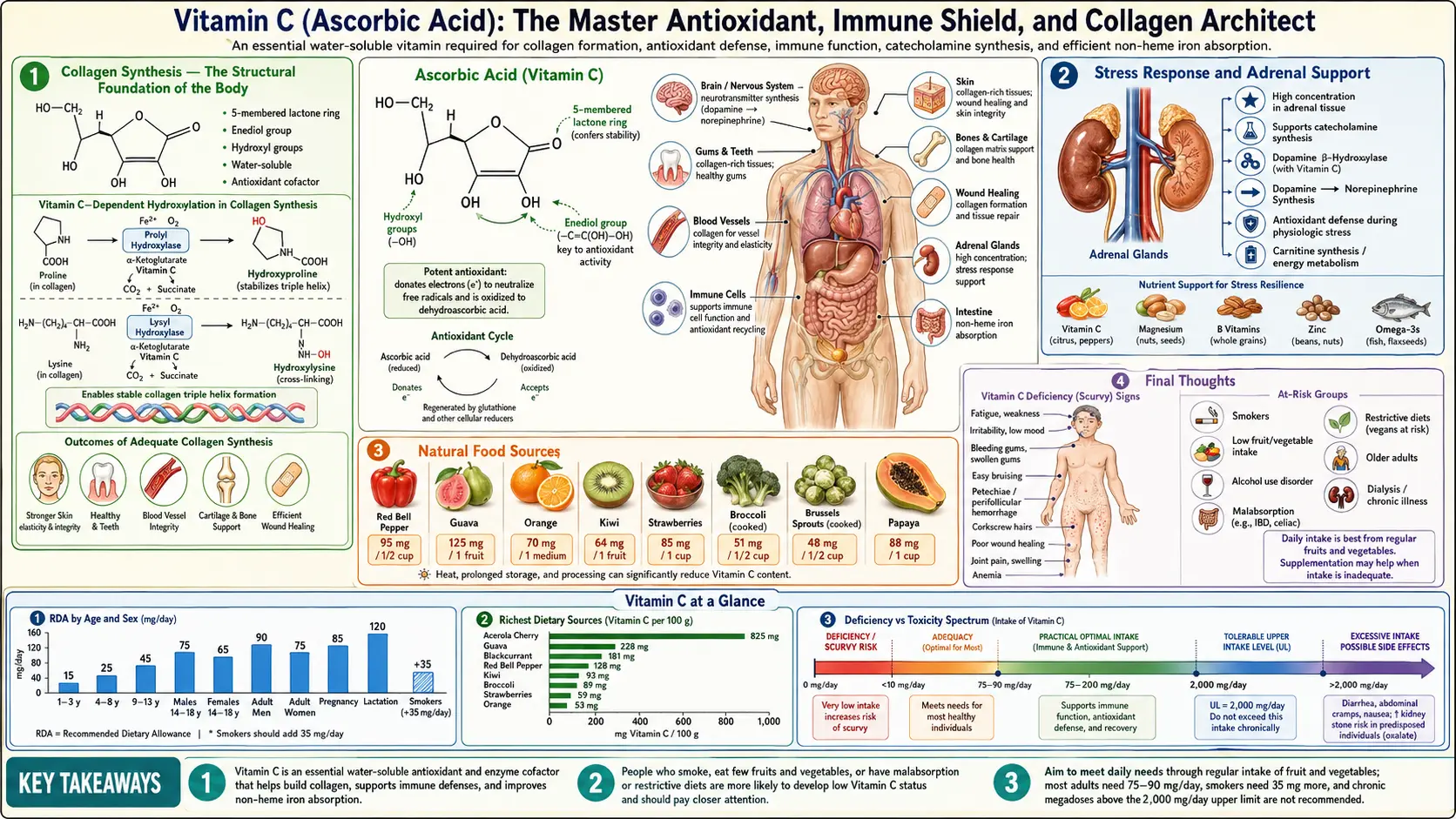
Vitamin C, known chemically as ascorbic acid (the name refers to its ability to prevent scurvy), is a water-soluble vitamin with a long place in the history of medicine and nutrition. Its absence causes scurvy, the disease that afflicted sailors on long voyages for centuries; the chemist Linus Pauling popularized high-dose vitamin C from the 1970s onward; and it is one of the most widely used supplements today. Biochemically, vitamin C is an electron donor: it is a water-soluble antioxidant and a cofactor for a family of biosynthetic and gene-regulatory enzymes (Carr & Maggini 2017), including the enzymes that stabilize collagen and those that make norepinephrine, carnitine and amidated peptide hormones (Carr & Vissers 2013). Humans cannot make vitamin C: the gene for L-gulono-gamma-lactone oxidase, the enzyme that catalyzes the last step of its synthesis, survives in humans only as a nonfunctional pseudogene (Nishikimi 1994). The same loss is found in other anthropoid primates, guinea pigs, some bats and some birds, and in teleost fishes, while most vertebrates can make their own (Drouin 2011). Humans therefore depend entirely on dietary intake.
Interactive Visualization Immune Response — inject a pathogen and watch the defence Innate cells swarm, T cells activate B cells, antibodies rise — then vaccinate and compare the fast, strong secondary response. Launch → Interactive Visualization Free Radicals & Your Antioxidant Network Follow one superoxide radical down the whole relay — SOD, catalase, glutathione, vitamin E, vitamin C, NADPH — then release free iron and watch a membrane tear itself apart. Launch → Interactive Visualization Vitamin C, Collagen & Why Sailors Fell Apart Zip three protein chains into the strongest rope in biology — then take the vitamin C away and watch the helix unravel, and old healed scars split back open. Launch → Interactive Visualization Histamine, Mast Cells & Allergy — trigger a mast cell yourself Arm a mast cell with IgE, let the allergen cross-link it, and watch histamine burst out to raise a wheal — then block the H1 receptor and see symptoms fall while histamine still pours out. Launch → Interactive Visualization How a Wound Heals — run all four phases Follow a cut through platelet plug, immune clean-up, collagen and new vessels, and the long remodel into a scar — then watch diabetes or low vitamin C stall it. Launch →Table of Contents
- Collagen Synthesis — The Structural Foundation of the Body
- Antioxidant Defense — A Water-Soluble Antioxidant
- Immune System — Mechanisms and Clinical Trials
- Iron Absorption and Utilization
- Neurotransmitter and Hormone Synthesis
- Cardiovascular Health
- Cancer — Prevention and Treatment Research
- Stress Response and the Adrenal Glands
- Brain Health and Cognitive Function
- Eye Health
- Skin Health and Anti-Aging
- Bone, Joint, and Connective Tissue Health
- Histamine Regulation and Allergy
- Epigenetic Regulation — TET Enzymes and DNA Demethylation
- Detoxification and Environmental Exposures
- Natural Food Sources
- Recommended Intakes and Upper Limit
- Supplemental Forms
- Synergistic Nutrients
- Populations at Higher Risk of Deficiency
- Signs of Deficiency and Toxicity
- Doses Used in Trials and Studies
- Final Thoughts
- Key Research Papers
- Connections
- Featured Videos
1. Collagen Synthesis — The Structural Foundation of the Body
Vitamin C's best-established biochemical role is in the synthesis of collagen, the family of proteins that are the most abundant proteins in mammals (Ricard-Blum 2011).
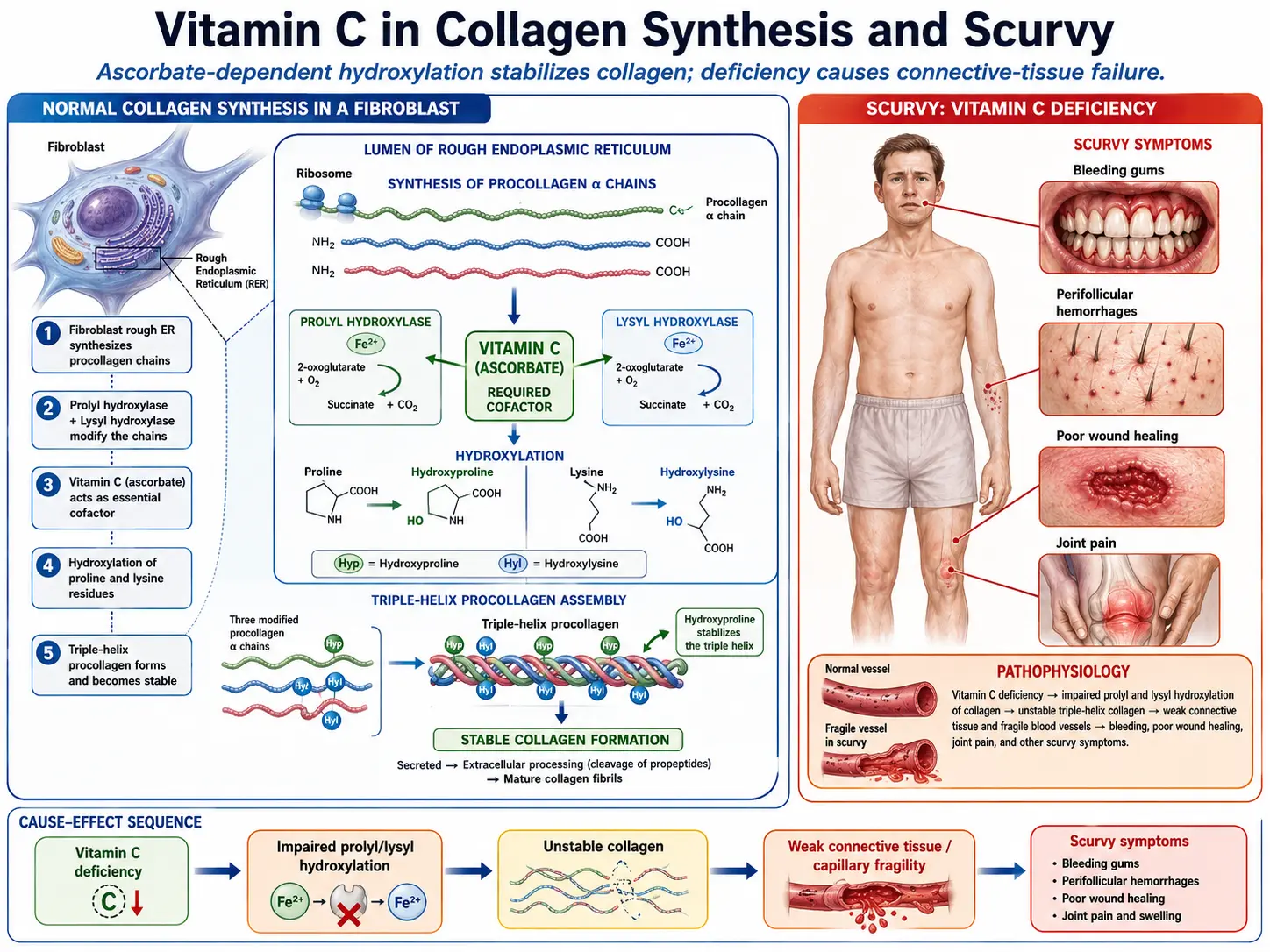
- Prolyl and Lysyl Hydroxylation: Vitamin C is the cofactor for prolyl hydroxylase and lysyl hydroxylase, the enzymes that hydroxylate proline and lysine residues in procollagen chains. These hydroxylations stabilize and cross-link the collagen triple helix; without them collagen is unstable — the molecular basis of scurvy (Carr & Vissers 2013).
- Skin Integrity: Collagen types I and III form the structural matrix of the dermis. In vitamin C deficiency, skin becomes fragile, bruises easily and heals poorly (NIH ODS).
- Blood Vessel Integrity: Collagen is a structural protein of blood vessel walls. Weakened collagen in deficiency shows up as capillary fragility, petechiae (pinpoint hemorrhages), bruising and, in scurvy, bleeding gums (NIH ODS).
- Bone and Cartilage: Type I collagen forms most of the organic matrix of bone, and type II collagen is the main structural collagen of cartilage. In children with scurvy, bone disease can be present (NIH ODS).
- Tendons and Ligaments: These connective tissues are made largely of type I collagen.
- Teeth and Gums: Swollen, bleeding gums and loosening or loss of teeth are among the classic signs of scurvy (NIH ODS).
- Wound Healing: Wound repair depends on new collagen, and poor wound healing is a recognized sign of vitamin C deficiency (NIH ODS).
2. Antioxidant Defense — A Water-Soluble Antioxidant
Vitamin C is a potent water-soluble antioxidant: as an electron donor it acts in the aqueous (water-based) compartments of cells and body fluids (Padayatty 2003).
- Direct Free Radical Scavenging: Ascorbic acid donates electrons to reactive oxygen and nitrogen species. In doing so it is oxidized, first to the relatively stable ascorbyl radical and then to dehydroascorbic acid (DHA), which cells can take up and reduce back to ascorbate (Harrison & May 2009).
- Vitamin E Regeneration: Vitamin C can regenerate vitamin E (alpha-tocopherol) at the water–lipid interface of membranes, restoring the tocopheroxyl radical to its active form, so the two vitamins work across the aqueous and lipid compartments.
- Glutathione Interplay: Glutathione-dependent systems recycle dehydroascorbic acid back to ascorbic acid, linking vitamin C to the cell's main thiol antioxidant system.
- Lipid, DNA and Protein Oxidation: Antioxidant effects of vitamin C on lipids, DNA and proteins have been shown in many laboratory experiments. In humans, the biomarkers used to measure such oxidation are not yet validated or standardized, and intervention studies with vitamin C have shown no change in markers of oxidation or clinical benefit (Padayatty 2003).
- Smoking and Oxidant Exposure: People who smoke consistently have lower plasma and white-blood-cell vitamin C levels, due in part to increased oxidative stress; exposure to secondhand smoke also lowers vitamin C levels (NIH ODS).
- Exercise-Induced Oxidative Stress: Intense exercise generates reactive oxygen species. Whether supplemental antioxidants help or hinder training is debated, because some oxidative signaling is part of the normal adaptation to training.
3. Immune System — Mechanisms and Clinical Trials
Vitamin C's role in immunity is its most widely known one. A 2017 review summarizes the laboratory and human evidence (Carr & Maggini 2017); the clinical trial results are summarized after it.
- Epithelial Barrier Function: Vitamin C supports epithelial barrier function against pathogens and the oxidant-scavenging activity of the skin (Carr & Maggini 2017).
- Neutrophil Function: Vitamin C accumulates in phagocytic cells such as neutrophils and can enhance chemotaxis (movement toward infection), phagocytosis, generation of reactive oxygen species and microbial killing (Carr & Maggini 2017). In a hospital study of healthy volunteers, neutrophils, monocytes and lymphocytes saturated at 100 mg a day and held concentrations at least 14-fold higher than plasma (Levine 1996).
- Clearing Spent Neutrophils: Vitamin C is needed for the programmed death (apoptosis) of spent neutrophils and their clearance by macrophages, which the review links to less necrosis, NETosis and tissue damage (Carr & Maggini 2017).
- Lymphocytes: The role of vitamin C in lymphocytes is less clear; it has been shown to enhance differentiation and proliferation of B and T cells, likely through its gene-regulating effects (Carr & Maggini 2017).
- Deficiency and Infection: Vitamin C deficiency results in impaired immunity and higher susceptibility to infections, and infections in turn lower vitamin C levels through inflammation and increased metabolic demand (Carr & Maggini 2017).
- Common Cold: A 2013 Cochrane review of placebo-controlled trials using at least 200 mg a day found that regular supplementation did not reduce how often colds occurred in the general population (risk ratio 0.97). In five trials of 598 marathon runners, skiers and soldiers on subarctic exercises, the risk of a cold was roughly halved (risk ratio 0.48). Regular supplementation shortened colds by 8% in adults and 14% in children and reduced their severity, but vitamin C started after symptoms began showed no consistent effect on duration or severity (Hemilä 2013).
- Pneumonia: A 2013 Cochrane review found three prophylactic trials (two in military recruits, one in a UK boarding school during World War II) that each reported fewer pneumonia cases with vitamin C, and two small treatment trials; the reviewers judged the evidence too weak to support preventive use in the general population and called for further trials, particularly in people with low vitamin C levels (Hemilä 2013, pneumonia).
- Sepsis and Critical Care: Critically ill patients often have low plasma vitamin C despite standard ICU nutrition (Carr 2017). Intravenous vitamin C, alone or combined with thiamine and hydrocortisone, has been tested in randomized trials with negative results: the VITAMINS trial (216 patients with septic shock) found no improvement in time alive and free of vasopressors (Fujii 2020); CITRIS-ALI (167 patients with sepsis and acute respiratory distress syndrome) found no improvement in organ-failure scores or inflammation markers (Fowler 2019); and LOVIT (872 patients) found a higher risk of the combined outcome of death or persistent organ dysfunction at 28 days with vitamin C than with placebo (44.5% vs 38.5%; risk ratio 1.21) (Lamontagne 2022). See Vitamin C and ICU Recovery.
4. Iron Absorption and Utilization
- Non-Heme Iron Absorption: Vitamin C is a powerful enhancer of non-heme iron absorption (the form of iron in plant foods, eggs and most supplements). It forms a chelate with ferric iron at acid pH that stays soluble at the alkaline pH of the duodenum, and the enhancement from a vegetable meal is directly proportional to the amount of ascorbic acid present (Lynch & Cook 1980). It also keeps iron in the more absorbable ferrous form (NIH ODS).
- Overcoming Absorption Inhibitors: Ascorbic acid can reverse the inhibiting effect of tea and of calcium/phosphate on iron absorption (Lynch & Cook 1980), and in a study of wheat rolls it significantly counteracted the inhibition caused by phytate (Hallberg 1989).
- Single Meals Versus Whole Diets: The pronounced effect seen in single-meal studies is far smaller across a whole diet: in 12 people, mean iron absorption did not differ significantly as daily dietary vitamin C ranged from 51 to 247 mg (Cook & Reddy 2001). In a randomized trial in 440 adults with iron-deficiency anemia, oral iron plus 200 mg vitamin C was equivalent to iron alone for the rise in hemoglobin at two weeks (Li 2020). See Vitamin C and Iron Absorption.
- Iron Overload: In healthy people, extra iron absorption from vitamin C does not appear to be a concern; in hereditary hemochromatosis, chronic high doses could worsen iron overload and result in tissue damage (NIH ODS). In the presence of excess free iron, vitamin C can also act as a pro-oxidant through Fenton chemistry. The details are on the Vitamin C Toxicity page.
5. Neurotransmitter and Hormone Synthesis
- Dopamine Beta-Hydroxylase: Vitamin C is a cofactor for dopamine beta-hydroxylase, the enzyme that converts dopamine to norepinephrine in the adrenal medulla and sympathetic neurons, part of its role in catecholamine synthesis (Harrison & May 2009).
- Neuropeptide Hormones: Vitamin C is a cofactor for the synthesis of neuropeptide hormones (Carr & Vissers 2013) through peptidylglycine alpha-amidating monooxygenase (PAM), the enzyme that adds the C-terminal amide many peptide hormones need for activity, including oxytocin, vasopressin, cholecystokinin, gastrin, calcitonin and corticotropin-releasing hormone.
- Adrenal and Neuroendocrine Tissue: The highest concentrations of ascorbate in the body are found in the brain and in neuroendocrine tissues such as the adrenal glands (Harrison & May 2009); the NIH lists leukocytes, eyes, adrenal glands, the pituitary gland and the brain as the tissues with the highest levels (NIH ODS).
- Carnitine Synthesis: Ascorbate is a cofactor for two enzymes in the biosynthesis of carnitine (epsilon-N-trimethyllysine hydroxylase and gamma-butyrobetaine hydroxylase), the molecule that carries long-chain fatty acids into mitochondria. It has been suggested that the early fatigue and weakness of scurvy may be due to carnitine deficiency; whether vitamin C deficiency significantly slows overall carnitine synthesis remains unclear (Rebouche 1991).
- Tyrosine Metabolism: Vitamin C also takes part in tyrosine breakdown, as a cofactor for 4-hydroxyphenylpyruvate dioxygenase.
6. Cardiovascular Health
- Endothelial Function: Vitamin C has been studied for its effects on endothelial nitric oxide and blood-vessel function; the clinical outcome trials are summarized below.
- Blood Pressure: A 2012 meta-analysis of 29 short-term randomized trials (median dose 500 mg a day, median duration 8 weeks) found pooled reductions of 3.84 mmHg systolic and 1.48 mmHg diastolic; in trials in people with hypertension the reductions were 4.85 mmHg systolic (significant) and 1.67 mmHg diastolic (not significant). The authors note that long-term trials on blood pressure and clinical events are needed (Juraschek 2012).
- LDL Oxidation: Oxidized LDL is taken up by macrophages to form the foam cells of atherosclerotic plaque, and vitamin C protects lipids from oxidation in laboratory studies. Human intervention studies with vitamin C have not shown changes in markers of oxidation or clinical benefit (Padayatty 2003).
- Heart Attack and Stroke Prevention: In the Physicians' Health Study II, 14,641 male physicians aged 50 or older took 500 mg of vitamin C daily or placebo for a mean of 8 years; vitamin C had no significant effect on major cardiovascular events, heart attack, stroke or cardiovascular death (Sesso 2008).
- The Pauling–Rath Hypothesis: In 1990 Matthias Rath and Linus Pauling proposed that lipoprotein(a), a lipoprotein found mainly in species that cannot make vitamin C, acts as a surrogate for ascorbate — strengthening blood vessel walls and aiding repair — and linked low vitamin C to atherosclerosis (Rath & Pauling 1990). The hypothesis remains contested, and the large vitamin C trial above found no reduction in cardiovascular events.
- C-Reactive Protein (CRP): In a 2-month trial in 396 healthy nonsmokers, 1,000 mg of vitamin C a day had no effect on CRP overall; among participants whose CRP was 1.0 mg/L or higher, it lowered median CRP by 25.3% compared with placebo (Block 2009).
7. Cancer — Prevention and Treatment Research
Vitamin C and cancer is a long-debated topic. The evidence differs sharply by route: oral vitamin C produces plasma concentrations the body tightly controls, while intravenous infusion produces far higher ones (Padayatty 2004).
- Cancer Prevention: Case-control studies have reported that people with high dietary vitamin C intakes have a lower risk of certain cancers, but prospective cohort studies are inconsistent and most randomized trials have not found that supplements reduce cancer risk (NIH ODS). Proposed mechanisms include limiting the formation of carcinogens such as nitrosamines, modulating immune responses and antioxidant protection (NIH ODS).
- TET Enzymes and DNA Methylation: Vitamin C is a cofactor for the TET (ten-eleven translocation) enzymes, which convert 5-methylcytosine to 5-hydroxymethylcytosine, the first step of active DNA demethylation. Loss-of-function mutations in TET2 are common in some blood cancers; in mouse models and human leukemia cells, vitamin C treatment mimicked restoration of TET2 function and suppressed leukemia progression in laboratory and animal experiments (Cimmino 2017). These are laboratory and animal findings, not human treatment results.
- Intravenous (IV) High-Dose Vitamin C: In cell experiments, ascorbate at concentrations reached only by intravenous administration generated hydrogen peroxide outside cells and killed several cancer cell lines while leaving normal cells unaffected (Chen 2005). In NIH pharmacokinetic studies in 17 healthy volunteers, a 1.25 g oral dose produced a mean peak plasma level of about 135 µmol/L versus about 885 µmol/L for the same dose given intravenously; modeling predicted a peak of 220 µmol/L for the maximum tolerated oral dose (3 g every 4 hours) and 13,400 µmol/L for a 50 g intravenous dose (Padayatty 2004).
- IV Vitamin C Clinical Evidence: A phase I trial in advanced cancer (0.4 to 1.5 g/kg body weight three times weekly) found the infusions well tolerated but saw no objective anticancer response (Hoffer 2008). A 2014 systematic review of 37 human studies (2 randomized trials) found doses ranging from 1 g to more than 200 g per infusion, usually 2 to 3 times weekly; it described the evidence as limited and preliminary, suggestive of a good safety profile and possible improvements in quality of life, and called for well-designed controlled studies (Fritz 2014). Serious complications have been reported in people with kidney impairment or G6PD deficiency (Padayatty 2010).
- HIF-1α Regulation: Vitamin C is a cofactor for the hydroxylases that regulate hypoxia-inducible factor 1-alpha (HIF-1α), which marks it for breakdown (Harrison & May 2009). Many tumors have stabilized HIF-1α, which is why this pathway is studied in cancer research.
- Oral Versus IV: Oral vitamin C cannot reach the plasma concentrations used in the laboratory pro-oxidant studies; only intravenous administration produces them (Padayatty 2004).
8. Stress Response and the Adrenal Glands
- High Concentration in the Adrenals: The adrenal glands are among the tissues with the highest vitamin C concentrations (Harrison & May 2009; NIH ODS), where it serves catecholamine synthesis through dopamine beta-hydroxylase.
- Depletion During Illness: Infections and inflammation lower vitamin C levels (Carr & Maggini 2017). In 44 critically ill patients, mean plasma vitamin C was in the hypovitaminosis range and one-third were deficient despite standard ICU nutrition; patients in septic shock had lower levels than non-septic patients (Carr 2017).
- Psychological Stress Trial: In a 14-day randomized trial in 120 healthy young adults, sustained-release ascorbic acid (3 × 1,000 mg a day) produced smaller blood-pressure and subjective stress responses to a public-speaking and mental-arithmetic stress test and faster salivary cortisol recovery, but not a smaller overall cortisol response (Brody 2002).
- Anxiety: In a 14-day randomized trial in 42 high-school students, 500 mg of vitamin C a day lowered anxiety scores compared with placebo (de Oliveira 2015).
- Physical Stress: Intense exercise is a physical stressor. In the common-cold trials, regular vitamin C roughly halved the risk of colds in marathon runners, skiers and soldiers on subarctic exercises (Hemilä 2013).
9. Brain Health and Cognitive Function
- Brain Concentration: The brain holds some of the highest ascorbate concentrations in the body and is the most difficult organ to deplete of it. The sodium-dependent vitamin C transporter SVCT2 carries ascorbate into neurons against a concentration gradient (Harrison & May 2009).
- Neurotransmission: Ascorbate is a cofactor for catecholamine synthesis and has been proposed as a modulator of glutamatergic, dopaminergic, cholinergic and GABAergic transmission (Harrison & May 2009).
- Neuroprotection: Neurodegenerative diseases involve high oxidative stress, and ascorbate has been proposed to have potential roles in stroke, Alzheimer's, Parkinson's and Huntington's disease (Harrison & May 2009). These are hypotheses based mainly on laboratory work.
- Cognitive Decline and Alzheimer's Disease: A 2012 critical review found the literature equivocal, partly because many studies did not measure plasma vitamin C. It concluded that maintaining healthy vitamin C levels may protect against age-related cognitive decline and Alzheimer's disease, but that avoiding deficiency is likely more beneficial than taking supplements on top of a normal, healthy diet (Harrison 2012).
- Mood: In a double-blind trial in acutely hospitalized patients, many of whom had low vitamin C, 500 mg of vitamin C twice daily was associated with a 34% reduction in mood disturbance, while vitamin D had no significant effect (Zhang 2011). Depression is also listed among the signs of scurvy (NIH ODS).
10. Eye Health
- Eye Tissue Concentration: The eye is among the tissues with the highest vitamin C levels (NIH ODS). In 265 cataract patients, aqueous humor and plasma vitamin C rose with intake and appeared saturated at intakes below 250 mg a day (Taylor 1997).
- Cataract: Some cohort and case-control studies have linked higher vitamin C intake with fewer cataracts, but one Swedish cohort linked vitamin C supplements with more cataract extractions, and in AREDS a daily formulation of vitamin C 500 mg, vitamin E 400 IU and beta-carotene 15 mg for an average of 6.3 years had no significant effect on the development or progression of lens opacities (AREDS report no. 9; NIH ODS).
- Age-Related Macular Degeneration (AMD): In the Age-Related Eye Disease Study (AREDS), a daily combination of vitamin C 500 mg, vitamin E 400 IU, beta-carotene 15 mg, zinc 80 mg and copper 2 mg reduced the odds of developing advanced AMD compared with placebo among the 3,640 participants of the AMD trial (odds ratio 0.72), with a larger estimate (odds ratio 0.66) once the lowest-risk participants were excluded (AREDS report no. 8). The later AREDS2 study replaced beta-carotene with lutein and zeaxanthin. The trial tested the combination, so the contribution of vitamin C alone is not known; the NIH notes that the available evidence does not indicate that vitamin C, alone or with other antioxidants, affects the risk of developing AMD, although the AREDS formulations might slow progression in people at high risk (NIH ODS).
- Glaucoma and Diabetic Retinopathy: Antioxidant roles have been proposed for these conditions, but clinical evidence is lacking.
11. Skin Health and Anti-Aging
- Collagen Production: As the cofactor for prolyl and lysyl hydroxylase, vitamin C is required for dermal collagen synthesis (Carr & Vissers 2013).
- Photoaging and Photoprotection: Ultraviolet light generates reactive oxygen species that contribute to photoaging. Topical vitamin C is used in dermatology to treat and prevent photoaging changes; it is not a sunscreen (Telang 2013).
- Hyperpigmentation: Topical vitamin C is also used for hyperpigmentation (Telang 2013).
- Wound Healing: Poor wound healing is a sign of deficiency, reflecting vitamin C's role in collagen synthesis (NIH ODS).
- Topical Formulation: In pig-skin absorption studies, L-ascorbic acid entered the skin only when formulated below pH 3.5, absorption was maximal at a 20% concentration, and derivatives including magnesium ascorbyl phosphate and ascorbyl palmitate did not raise skin levels of L-ascorbic acid (Pinnell 2001). Vitamin C is unstable and difficult to deliver into the dermis, which drives research into more stable forms (Telang 2013).
- Oral and Topical Routes: Oral vitamin C reaches the skin through the blood, while topical products deliver it directly to the outer skin layers; some practitioners describe using both.
12. Bone, Joint, and Connective Tissue Health
- Bone Matrix: Type I collagen forms the organic framework of bone, and its synthesis depends on vitamin C.
- Bone Density and Osteoporosis: A 2018 meta-analysis of observational studies linked higher dietary vitamin C intake with higher bone mineral density at the femoral neck and lumbar spine and a 33% lower risk of osteoporosis; the association with hip fracture was not statistically significant (relative risk 0.74, 95% CI 0.51 to 1.08) (Malmir 2018).
- Osteoarthritis: In the Framingham cohort, vitamin C intake was not associated with new knee osteoarthritis, but people in the middle and highest thirds of intake had about a 3-fold lower risk of osteoarthritis progression, mainly less cartilage loss (McAlindon 1996).
- Gout and Uric Acid: In a 2-month randomized trial in 184 nonsmokers, 500 mg of vitamin C a day lowered serum uric acid by 0.5 mg/dL (Huang 2005), and a meta-analysis of 13 trials found a pooled reduction of 0.35 mg/dL (Juraschek 2011). In a pilot trial in 40 patients who already had gout, however, 500 mg a day for 8 weeks had no clinically significant urate-lowering effect (Stamp 2013). In 46,994 men followed for 20 years, higher vitamin C intake was associated with lower gout risk (relative risk 0.55 at 1,500 mg a day or more versus under 250 mg) (Choi 2009).
- Tendons, Ligaments and Exercise: In a crossover study of 8 healthy men, 15 g of vitamin C-enriched gelatin taken 1 hour before 6 minutes of rope-skipping doubled a blood marker of collagen synthesis (Shaw 2017).
13. Histamine Regulation and Allergy
- Blood Histamine: In 437 blood samples, whole-blood histamine rose exponentially when plasma ascorbic acid fell below 1 mg/100 mL, and 1 g of ascorbic acid daily for 3 days lowered blood histamine in all 11 volunteers tested (Clemetson 1980). In 10 healthy adults, 2 g a day for 2 weeks lowered blood histamine by 38%, while a single 2 g dose did not change it (Johnston 1992).
- Allergic Rhinitis: Vitamin C has been studied in allergic rhinitis in small trials; the evidence is limited.
- Asthma: A 2013 Cochrane review of 11 trials (419 participants) concluded that the evidence does not allow a robust assessment of vitamin C in asthma or exercise-induced bronchoconstriction; the one trial of 201 adults that measured quality of life found no significant difference, and small studies hinting at benefit in exercise-induced breathlessness were inconclusive (Milan 2013).
- Histamine Intolerance: Some practitioners include vitamin C in approaches to histamine intolerance; it has not been tested for this in controlled trials.
14. Epigenetic Regulation — TET Enzymes and DNA Demethylation
- TET Dioxygenase Cofactor: Vitamin C is a cofactor for the hydroxylases that regulate gene transcription and epigenetics (Carr & Vissers 2013). In mouse embryonic stem cells, adding vitamin C promoted the activity of the TET enzymes, causing a rapid rise in 5-hydroxymethylcytosine followed by demethylation of many gene promoters; the effect disappeared in cells lacking Tet1 and Tet2 (Blaschke 2013).
- Gene Reactivation: DNA methylation at gene promoters generally silences genes, and TET-driven demethylation can switch them back on. In mouse and human leukemia models, vitamin C drove DNA demethylation and expression of a TET2-dependent gene program (Cimmino 2017).
- Stem Cell Reprogramming: In cell culture, vitamin C increased the efficiency and speed of generating induced pluripotent stem cells from mouse and human cells, partly by easing cell senescence (Esteban 2010).
- Histone Demethylases: Vitamin C is also studied as a cofactor for JmjC-domain histone demethylases, another family of iron- and 2-oxoglutarate-dependent enzymes.
- What This Means: These findings come from cell and animal research; they show vitamin C acting as an enzyme cofactor in gene regulation, and human clinical relevance is still being studied.
15. Detoxification and Environmental Exposures
- Lead: Some animal studies suggest that oral ascorbic acid may chelate lead. In the US NHANES III survey, people with higher serum ascorbic acid were less likely to have elevated blood lead levels, a cross-sectional association (Simon & Hudes 1999). In a 4-week trial in 75 young men who smoked, 1,000 mg of ascorbic acid a day lowered blood lead levels while 200 mg did not (Dawson 1999).
- Cigarette Smoke: People who smoke have lower plasma and white-blood-cell vitamin C, and the Food and Nutrition Board concluded that they need 35 mg a day more than people who do not smoke (NIH ODS).
- Nitrosamines: Vitamin C can limit the formation of carcinogens such as nitrosamines in the body (NIH ODS), one of the mechanisms proposed for the link between fruit and vegetable intake and lower cancer risk.
- Air Pollution and Other Exposures: Vitamin C is present in the fluid lining the lungs, which is one reason it has been studied as a defense against inhaled oxidants (Milan 2013); clinical benefit has not been established.
16. Natural Food Sources
Fruits and vegetables are the best sources of vitamin C, especially citrus fruits, red and green peppers, kiwifruit, broccoli, strawberries, Brussels sprouts and cantaloupe; vitamin C is not naturally present in grains (NIH ODS). The full list is on the Vitamin C Food Sources page.
Vitamin C in Common Foods (NIH ODS)
- Red bell pepper, raw: 95 mg per ½ cup
- Orange: 70 mg per medium fruit
- Kiwifruit: 64 mg per medium fruit
- Green bell pepper, raw: 60 mg per ½ cup
- Broccoli, cooked: 51 mg per ½ cup (39 mg raw)
- Strawberries, sliced: 49 mg per ½ cup
- Brussels sprouts, cooked: 48 mg per ½ cup
- Grapefruit: 39 mg per ½ medium fruit
- Cantaloupe: 29 mg per ½ cup
- Cabbage, cooked: 28 mg per ½ cup
- Cauliflower, raw: 26 mg per ½ cup
- Potato, baked: 17 mg per medium potato
- Tomato, raw: 17 mg per medium tomato
- Spinach, cooked: 9 mg per ½ cup
Especially Concentrated Sources
- Kakadu Plum (Terminalia ferdinandiana): An Australian native fruit with abundant vitamin C; wild-harvested Western Australian fruit measured 25.2 to 131.5 mg per gram of dry weight (Bobasa 2024).
- Acerola, Camu Camu and Rose Hips: Often cited as concentrated vitamin C sources and used in whole-food supplements.
Cooking and Storage
- Heat and Water: Ascorbic acid is water-soluble and destroyed by heat, so cooking and prolonged storage reduce the vitamin C content of food; steaming or microwaving may lessen cooking losses (NIH ODS).
- Raw Produce: Many of the best sources, such as fruits and vegetables, are usually eaten raw (NIH ODS).
- Oxidation: Vitamin C is readily oxidized, so cut produce and juices lose it over time.
17. Recommended Intakes and Upper Limit
Recommended Dietary Allowances set by the Food and Nutrition Board (NIH ODS):
- Adult Men (19+): 90 mg per day
- Adult Women (19+): 75 mg per day
- Pregnancy (19+): 85 mg per day
- Breastfeeding (19+): 120 mg per day
- People Who Smoke: 35 mg per day more than people who do not smoke
- Children 1–3 years: 15 mg per day
- Children 4–8 years: 25 mg per day
- Children 9–13 years: 45 mg per day
- Teens 14–18 years: 75 mg (boys) and 65 mg (girls) per day
The Upper Limit: The Tolerable Upper Intake Level (UL) for adults is 2,000 mg/day, based on the diarrhea, nausea and abdominal cramps caused by the osmotic effect of unabsorbed vitamin C; it is lower for children (400 to 2,000 mg depending on age) (NIH ODS). The Vitamin C Toxicity page covers the effects of high intakes, including the link between supplemental intakes of 1,000 mg a day or more and kidney stones in men (hazard ratio 1.19) (Ferraro 2016).
Absorption Limits: In an NIH hospital study, absorption was complete for a single 200 mg dose, declined at single doses of 500 mg and higher, and plasma was fully saturated at 1,000 mg a day; the authors concluded that daily doses above 400 mg have no evident value (Levine 1996). The NIH summarizes absorption as about 70% to 90% at intakes of 30 to 180 mg a day, falling to less than 50% above 1 g a day (NIH ODS).
Higher-Dose Views: Some practitioners regard the RDA as the amount that prevents deficiency rather than an optimal intake and describe much higher doses; Linus Pauling was the best-known advocate of gram-level intakes. The physician Robert Cathcart described “titrating to bowel tolerance”: raising oral ascorbic acid to just short of the dose that causes diarrhea, and reported that the amount tolerated rises roughly in proportion to the stress or toxicity of an illness (Cathcart 1981). These are clinical observations and proposals rather than results of controlled trials.
18. Supplemental Forms
- Ascorbic Acid (L-Ascorbic Acid): The most common supplemental form. Its bioavailability is equivalent to that of the ascorbic acid naturally present in foods such as orange juice and broccoli (NIH ODS). Absorption is complete for a single 200 mg dose and declines at single doses of 500 mg and higher (Levine 1996).
- Mineral Ascorbates (Sodium, Calcium, Magnesium Ascorbate): Buffered, less acidic salts of ascorbic acid that also supply the mineral. In human studies, one combination calcium-ascorbate product produced the same plasma vitamin C as ascorbic acid but higher white-blood-cell levels at 24 hours, and another study found no differences in plasma levels or urinary excretion among ascorbic acid, that product and ascorbic acid with bioflavonoids (NIH ODS).
- Liposomal Vitamin C: Ascorbic acid encapsulated in phospholipid liposomes. In a study of 11 adults given 4 g by each route, liposomal vitamin C produced higher blood levels than ordinary oral vitamin C but lower levels than intravenous vitamin C (Davis 2016).
- Ascorbyl Palmitate: A fat-soluble ester of ascorbic acid used mainly as an antioxidant in foods and topical products; in skin studies it did not raise skin levels of L-ascorbic acid (Pinnell 2001).
- Whole-Food Vitamin C: Supplements made from acerola, camu camu, rose hips or amla supply vitamin C in a food matrix with flavonoids. All steady-state human studies have found no difference in bioavailability between synthetic and food-derived vitamin C (Carr & Vissers 2013).
- Intravenous (IV) Vitamin C: Given by infusion, it bypasses intestinal absorption limits: a 1.25 g dose given intravenously produced a mean peak plasma level of about 885 µmol/L, against about 135 µmol/L by mouth (Padayatty 2004). In a survey of complementary and alternative medicine practitioners, the average dose was 28 g every 4 days, and common reasons for treatment were infection, cancer and fatigue. Serious adverse events, including two deaths, were documented in people known to be at risk, and the known complications occur in people with kidney impairment or G6PD deficiency (Padayatty 2010).
19. Synergistic Nutrients
- Vitamin E: Vitamin C can regenerate vitamin E at the water–lipid interface, linking the aqueous and lipid antioxidant systems. In the Physicians' Health Study II, neither vitamin, taken separately, reduced cardiovascular events (Sesso 2008).
- Bioflavonoids (Quercetin, Rutin, Hesperidin): Flavonoids occur alongside vitamin C in fruits and vegetables. Their effect on vitamin C bioavailability has been studied most of all, with human steady-state studies finding no difference between synthetic vitamin C and vitamin C from foods or with bioflavonoids (Carr & Vissers 2013).
- Iron: Vitamin C enhances non-heme iron absorption from a meal (Lynch & Cook 1980), although the effect across a whole diet is much smaller (Cook & Reddy 2001).
- Glutathione: Glutathione-dependent systems recycle oxidized vitamin C (dehydroascorbic acid) back to ascorbic acid.
- Collagen and Gelatin: Collagen synthesis needs both amino acids (glycine, proline, lysine) and vitamin C as cofactor; one small study combined the two as vitamin C-enriched gelatin before exercise (Shaw 2017).
- Zinc and Selenium: Both are also involved in immune function and antioxidant enzymes (selenium through glutathione peroxidase), and they are often combined with vitamin C in supplements.
20. Populations at Higher Risk of Deficiency
The NIH lists these groups as more likely than others to have inadequate vitamin C (NIH ODS):
- People Who Smoke and People Exposed to Secondhand Smoke: Smoking lowers plasma and white-blood-cell vitamin C, in part through increased oxidative stress.
- People with Limited Food Variety: Including some older, low-income people who prepare their own food, people who abuse alcohol or drugs, people with restrictive diets, people with mental illness and, occasionally, children.
- People with Malabsorption and Certain Chronic Diseases: Including severe intestinal malabsorption, cachexia and some cancers; low vitamin C also occurs in end-stage kidney disease treated with chronic hemodialysis.
- Infants Fed Evaporated or Boiled Cow's Milk: Breast milk and infant formula supply adequate vitamin C; heated cow's milk does not.
- Critically Ill Patients: In an ICU study, mean plasma vitamin C was in the hypovitaminosis range and one-third of patients were deficient despite standard nutrition, with septic shock patients the most depleted (Carr 2017).
- People with Infections and Inflammation: Infections lower vitamin C levels through inflammation and increased metabolic requirements (Carr & Maggini 2017).
- Pregnancy and Breastfeeding: The RDA is higher in pregnancy and highest during breastfeeding (NIH ODS).
21. Signs of Deficiency and Toxicity
Scurvy can appear within about a month of intakes below roughly 10 mg a day. Its signs include fatigue, petechiae, bruising, purpura, joint pain, poor wound healing, hyperkeratosis and corkscrew hairs, depression, swollen and bleeding gums with loosening or loss of teeth, and iron-deficiency anemia; untreated, scurvy is fatal (NIH ODS). At the other end, high oral doses can cause diarrhea, nausea and abdominal cramps, and the research raises concerns about kidney stones in some people and about iron overload in people with hemochromatosis (NIH ODS).
Both too little and too much Vitamin C cause problems. For a full, patient-friendly guide to the symptoms, causes, and treatment, see Vitamin C Deficiency and Vitamin C Toxicity.
22. Doses Used in Trials and Studies
The doses below are those reported in the trials and surveys cited on this page, with what each found. They are reported findings, not dosing instructions; decisions about medicines and supplements belong with a clinician.
- Common Cold: Trials in the Cochrane review used at least 200 mg a day taken regularly; vitamin C started at the onset of symptoms showed no consistent effect (Hemilä 2013).
- Iron Absorption: In the anemia trial, 200 mg of vitamin C with each 100 mg iron tablet, every 8 hours, gave hemoglobin results equivalent to iron alone (Li 2020).
- Blood Pressure: The trials in the meta-analysis used a median of 500 mg a day for a median of 8 weeks (Juraschek 2012).
- Uric Acid: 500 mg a day lowered serum uric acid in healthy volunteers (Huang 2005) but had no clinically significant effect in people with gout (Stamp 2013).
- CRP: 1,000 mg a day lowered CRP only in people whose CRP was 1.0 mg/L or higher (Block 2009).
- Psychological Stress and Mood: Trials used 3,000 mg a day of a sustained-release form for 14 days (Brody 2002), 500 mg a day for 14 days (de Oliveira 2015) and 500 mg twice daily in hospitalized patients (Zhang 2011).
- Skin (Topical): Absorption studies found L-ascorbic acid entered the skin only below pH 3.5, with maximal absorption at 20% (Pinnell 2001).
- Collagen Synthesis with Exercise: 15 g of vitamin C-enriched gelatin 1 hour before exercise doubled a collagen-synthesis marker in 8 men (Shaw 2017).
- Cancer (Intravenous): A phase I trial used 0.4 to 1.5 g/kg three times weekly with no objective anticancer response (Hoffer 2008); studies in a systematic review used 1 g to more than 200 g per infusion, usually 2 to 3 times weekly (Fritz 2014). The known complications of IV vitamin C occur in people with kidney impairment or G6PD deficiency (Padayatty 2010).
- Sepsis (Intravenous): The vitamin C, hydrocortisone and thiamine combination was proposed after a 2017 single-centre retrospective before-after study (Marik 2017). The VITAMINS trial tested vitamin C 1.5 g every 6 hours with hydrocortisone 50 mg every 6 hours and thiamine 200 mg every 12 hours and found no benefit (Fujii 2020); CITRIS-ALI and LOVIT used 50 mg/kg every 6 hours for 96 hours, and LOVIT found a higher risk of death or persistent organ dysfunction at 28 days (Fowler 2019; Lamontagne 2022).
Final Thoughts
Vitamin C is an essential nutrient that humans cannot make. Its best-established roles are as a cofactor for the enzymes that stabilize collagen, make norepinephrine, carnitine and amidated peptide hormones, and regulate genes, and as a water-soluble antioxidant. Its absence causes scurvy, which an adequate diet of fruits and vegetables prevents. The clinical picture for supplements is more mixed: regular supplementation shortens colds modestly and roughly halves colds in people under heavy physical stress, short-term trials show small blood-pressure reductions, and vitamin C enhances iron absorption from a meal. Large trials did not find that vitamin C supplements prevent heart attacks or strokes, and intravenous vitamin C did not help patients with sepsis, with one large trial reporting harm. Intravenous vitamin C for cancer remains under study, supported mainly by laboratory work and early-phase trials.
The sub-pages linked above cover deficiency, toxicity, food sources, history, and the research on collagen, immunity, iron absorption and intensive-care use in more detail.
Key Research Papers
- Nishikimi M, Fukuyama R, Minoshima S, et al. (1994). Cloning and chromosomal mapping of the human nonfunctional gene for L-gulono-gamma-lactone oxidase, the enzyme for L-ascorbic acid biosynthesis missing in man. J Biol Chem;269(18):13685-8. PubMed PMID: 8175804
- Drouin G, Godin JR, Pagé B (2011). The genetics of vitamin C loss in vertebrates. Curr Genomics;12(5):371-8. PubMed PMID: 22294879
- Carr AC, Vissers MC (2013). Synthetic or food-derived vitamin C--are they equally bioavailable?. Nutrients;5(11):4284-304. PubMed PMID: 24169506
- Ricard-Blum S (2011). The collagen family. Cold Spring Harb Perspect Biol;3(1):a004978. PubMed PMID: 21421911
- Rebouche CJ (1991). Ascorbic acid and carnitine biosynthesis. Am J Clin Nutr;54(6 Suppl):1147S-1152S. PubMed PMID: 1962562
- Padayatty SJ, Katz A, Wang Y, et al. (2003). Vitamin C as an antioxidant: evaluation of its role in disease prevention. J Am Coll Nutr;22(1):18-35. PubMed PMID: 12569111
- Carr AC, Maggini S (2017). Vitamin C and Immune Function. Nutrients;9(11):1211. PubMed PMID: 29099763
- Levine M, Conry-Cantilena C, Wang Y, et al. (1996). Vitamin C pharmacokinetics in healthy volunteers: evidence for a recommended dietary allowance. Proc Natl Acad Sci U S A;93(8):3704-9. PubMed PMID: 8623000
- Hemilä H, Chalker E (2013). Vitamin C for preventing and treating the common cold. Cochrane Database Syst Rev;2013(1):CD000980. PubMed PMID: 23440782
- Hemilä H, Louhiala P (2013). Vitamin C for preventing and treating pneumonia. Cochrane Database Syst Rev;(8):CD005532. PubMed PMID: 23925826
- Fujii T, Luethi N, Young PJ, et al. (2020). Effect of Vitamin C, Hydrocortisone, and Thiamine vs Hydrocortisone Alone on Time Alive and Free of Vasopressor Support Among Patients With Septic Shock: The VITAMINS Randomized Clinical Trial. JAMA;323(5):423-431. PubMed PMID: 31950979
- Fowler AA 3rd, Truwit JD, Hite RD, et al. (2019). Effect of Vitamin C Infusion on Organ Failure and Biomarkers of Inflammation and Vascular Injury in Patients With Sepsis and Severe Acute Respiratory Failure: The CITRIS-ALI Randomized Clinical Trial. JAMA;322(13):1261-1270. PubMed PMID: 31573637
- Lamontagne F, Masse MH, Menard J, et al. (2022). Intravenous Vitamin C in Adults with Sepsis in the Intensive Care Unit. N Engl J Med;386(25):2387-2398. PubMed PMID: 35704292
- Marik PE, Khangoora V, Rivera R, et al. (2017). Hydrocortisone, Vitamin C, and Thiamine for the Treatment of Severe Sepsis and Septic Shock: A Retrospective Before-After Study. Chest;151(6):1229-1238. PubMed PMID: 27940189 — the journal attached an editor’s note to this paper in 2023 (doi:10.1016/j.chest.2023.04.021)
- Lynch SR, Cook JD (1980). Interaction of vitamin C and iron. Ann N Y Acad Sci;355:32-44. PubMed PMID: 6940487
- Hallberg L, Brune M, Rossander L (1989). Iron absorption in man: ascorbic acid and dose-dependent inhibition by phytate. Am J Clin Nutr;49(1):140-4. PubMed PMID: 2911999
- Cook JD, Reddy MB (2001). Effect of ascorbic acid intake on nonheme-iron absorption from a complete diet. Am J Clin Nutr;73(1):93-8. PubMed PMID: 11124756
- Li N, Zhao G, Wu W, et al. (2020). The Efficacy and Safety of Vitamin C for Iron Supplementation in Adult Patients With Iron Deficiency Anemia: A Randomized Clinical Trial. JAMA Netw Open;3(11):e2023644. PubMed PMID: 33136134
- Harrison FE, May JM (2009). Vitamin C function in the brain: vital role of the ascorbate transporter SVCT2. Free Radic Biol Med;46(6):719-30. PubMed PMID: 19162177
- Juraschek SP, Guallar E, Appel LJ, et al. (2012). Effects of vitamin C supplementation on blood pressure: a meta-analysis of randomized controlled trials. Am J Clin Nutr;95(5):1079-88. PubMed PMID: 22492364
- Sesso HD, Buring JE, Christen WG, et al. (2008). Vitamins E and C in the prevention of cardiovascular disease in men: the Physicians' Health Study II randomized controlled trial. JAMA;300(18):2123-33. PubMed PMID: 18997197
- Rath M, Pauling L (1990). Hypothesis: lipoprotein(a) is a surrogate for ascorbate. Proc Natl Acad Sci U S A;87(16):6204-7. PubMed PMID: 2143582
- Block G, Jensen CD, Dalvi TB, et al. (2009). Vitamin C treatment reduces elevated C-reactive protein. Free Radic Biol Med;46(1):70-7. PubMed PMID: 18952164
- Chen Q, Espey MG, Krishna MC, et al. (2005). Pharmacologic ascorbic acid concentrations selectively kill cancer cells: action as a pro-drug to deliver hydrogen peroxide to tissues. Proc Natl Acad Sci U S A;102(38):13604-9. PubMed PMID: 16157892
- Padayatty SJ, Sun H, Wang Y, et al. (2004). Vitamin C pharmacokinetics: implications for oral and intravenous use. Ann Intern Med;140(7):533-7. PubMed PMID: 15068981
- Hoffer LJ, Levine M, Assouline S, et al. (2008). Phase I clinical trial of i.v. ascorbic acid in advanced malignancy. Ann Oncol;19(11):1969-74. PubMed PMID: 18544557
- Fritz H, Flower G, Weeks L, et al. (2014). Intravenous Vitamin C and Cancer: A Systematic Review. Integr Cancer Ther;13(4):280-300. PubMed PMID: 24867961
- Cimmino L, Dolgalev I, Wang Y, et al. (2017). Restoration of TET2 Function Blocks Aberrant Self-Renewal and Leukemia Progression. Cell;170(6):1079-1095.e20. PubMed PMID: 28823558
- Blaschke K, Ebata KT, Karimi MM, et al. (2013). Vitamin C induces Tet-dependent DNA demethylation and a blastocyst-like state in ES cells. Nature;500(7461):222-6. PubMed PMID: 23812591
- Esteban MA, Wang T, Qin B, et al. (2010). Vitamin C enhances the generation of mouse and human induced pluripotent stem cells. Cell Stem Cell;6(1):71-9. PubMed PMID: 20036631
- Brody S, Preut R, Schommer K, et al. (2002). A randomized controlled trial of high dose ascorbic acid for reduction of blood pressure, cortisol, and subjective responses to psychological stress. Psychopharmacology (Berl);159(3):319-24. PubMed PMID: 11862365
- de Oliveira IJ, de Souza VV, Motta V, et al. (2015). Effects of Oral Vitamin C Supplementation on Anxiety in Students: A Double-Blind, Randomized, Placebo-Controlled Trial. Pak J Biol Sci;18(1):11-8. PubMed PMID: 26353411
- Zhang M, Robitaille L, Eintracht S, et al. (2011). Vitamin C provision improves mood in acutely hospitalized patients. Nutrition;27(5):530-3. PubMed PMID: 20688474
- Harrison FE (2012). A critical review of vitamin C for the prevention of age-related cognitive decline and Alzheimer's disease. J Alzheimers Dis;29(4):711-26. PubMed PMID: 22366772
- Taylor A, Jacques PF, Nowell T, et al. (1997). Vitamin C in human and guinea pig aqueous, lens and plasma in relation to intake. Curr Eye Res;16(9):857-64. PubMed PMID: 9288446
- Age-Related Eye Disease Study Research Group (2001). A randomized, placebo-controlled, clinical trial of high-dose supplementation with vitamins C and E, beta carotene, and zinc for age-related macular degeneration and vision loss: AREDS report no. 8. Arch Ophthalmol;119(10):1417-36. PubMed PMID: 11594942
- Age-Related Eye Disease Study Research Group (2001). A randomized, placebo-controlled, clinical trial of high-dose supplementation with vitamins C and E and beta carotene for age-related cataract and vision loss: AREDS report no. 9. Arch Ophthalmol;119(10):1439-52. PubMed PMID: 11594943
- Pinnell SR, Yang H, Omar M, et al. (2001). Topical L-ascorbic acid: percutaneous absorption studies. Dermatol Surg;27(2):137-42. PubMed PMID: 11207686
- Telang PS (2013). Vitamin C in dermatology. Indian Dermatol Online J;4(2):143-6. PubMed PMID: 23741676
- Malmir H, Shab-Bidar S, Djafarian K (2018). Vitamin C intake in relation to bone mineral density and risk of hip fracture and osteoporosis: a systematic review and meta-analysis of observational studies. Br J Nutr;119(8):847-858. PubMed PMID: 29644950
- McAlindon TE, Jacques P, Zhang Y, et al. (1996). Do antioxidant micronutrients protect against the development and progression of knee osteoarthritis?. Arthritis Rheum;39(4):648-56. PubMed PMID: 8630116
- Huang HY, Appel LJ, Choi MJ, et al. (2005). The effects of vitamin C supplementation on serum concentrations of uric acid: results of a randomized controlled trial. Arthritis Rheum;52(6):1843-7. PubMed PMID: 15934094
- Juraschek SP, Miller ER 3rd, Gelber AC (2011). Effect of oral vitamin C supplementation on serum uric acid: a meta-analysis of randomized controlled trials. Arthritis Care Res (Hoboken);63(9):1295-306. PubMed PMID: 21671418
- Stamp LK, O'Donnell JL, Frampton C, et al. (2013). Clinically insignificant effect of supplemental vitamin C on serum urate in patients with gout: a pilot randomized controlled trial. Arthritis Rheum;65(6):1636-42. PubMed PMID: 23681955
- Choi HK, Gao X, Curhan G (2009). Vitamin C intake and the risk of gout in men: a prospective study. Arch Intern Med;169(5):502-7. PubMed PMID: 19273781
- Shaw G, Lee-Barthel A, Ross ML, et al. (2017). Vitamin C-enriched gelatin supplementation before intermittent activity augments collagen synthesis. Am J Clin Nutr;105(1):136-143. PubMed PMID: 27852613
- Clemetson CA (1980). Histamine and ascorbic acid in human blood. J Nutr;110(4):662-8. PubMed PMID: 7365537
- Johnston CS, Martin LJ, Cai X (1992). Antihistamine effect of supplemental ascorbic acid and neutrophil chemotaxis. J Am Coll Nutr;11(2):172-6. PubMed PMID: 1578094
- Milan SJ, Hart A, Wilkinson M (2013). Vitamin C for asthma and exercise-induced bronchoconstriction. Cochrane Database Syst Rev;2013(10):CD010391. PubMed PMID: 24154977
- Simon JA, Hudes ES (1999). Relationship of ascorbic acid to blood lead levels. JAMA;281(24):2289-93. PubMed PMID: 10386552
- Dawson EB, Evans DR, Harris WA, et al. (1999). The effect of ascorbic acid supplementation on the blood lead levels of smokers. J Am Coll Nutr;18(2):166-70. PubMed PMID: 10204833
- Bobasa EM, Phan ADT, Netzel ME, et al. (2024). Nutritional and Functional Properties of Terminalia ferdinandiana Fruits Wild Harvested from Western Australia. Foods;13(18):2888. PubMed PMID: 39335818
- Davis JL, Paris HL, Beals JW, et al. (2016). Liposomal-encapsulated Ascorbic Acid: Influence on Vitamin C Bioavailability and Capacity to Protect Against Ischemia-Reperfusion Injury. Nutr Metab Insights;9:25-30. PubMed PMID: 27375360
- Padayatty SJ, Sun AY, Chen Q, et al. (2010). Vitamin C: intravenous use by complementary and alternative medicine practitioners and adverse effects. PLoS One;5(7):e11414. PubMed PMID: 20628650
- Cathcart RF (1981). Vitamin C, titrating to bowel tolerance, anascorbemia, and acute induced scurvy. Med Hypotheses;7(11):1359-76. PubMed PMID: 7321921
- Carr AC, Rosengrave PC, Bayer S, et al. (2017). Hypovitaminosis C and vitamin C deficiency in critically ill patients despite recommended enteral and parenteral intakes. Crit Care;21(1):300. PubMed PMID: 29228951
- Ferraro PM, Curhan GC, Gambaro G, et al. (2016). Total, Dietary, and Supplemental Vitamin C Intake and Risk of Incident Kidney Stones. Am J Kidney Dis;67(3):400-7. PubMed PMID: 26463139
- National Institutes of Health, Office of Dietary Supplements. Vitamin C: Fact Sheet for Health Professionals (agency fact sheet; source of the RDAs, UL, food values, absorption figures and risk groups quoted on this page, cited as “NIH ODS”). ods.od.nih.gov: Vitamin C fact sheet
PubMed Topic Searches
Connections
- Fluoride Chelation — in every fluoride protocol ever written
- All Vitamins
- Albert Szent-Györgyi — the Nobel laureate who discovered and isolated vitamin C
- Vitamin C and ICU Recovery — the 18-trial meta-analysis on ICU length of stay and ventilation time
- Linus Pauling — the man who made vitamin C famous: claims, trials, and legacy
- How a Wound Heals: The Four Overlapping Phases — interactive animation
- Histamine, Mast Cells & Allergy — interactive animation
- Vitamin C, Collagen & Why Sailors Fell Apart — interactive animation
- Free Radicals & Your Antioxidant Network — interactive animation
- Immune Response — interactive animation
- Vitamin C Deficiency
- Vitamin C Toxicity
- Hesperidin
- Rutin
- Collagen
- Iron
- Vitamin E
- Vitamin C and Collagen
- Vitamin C and Immune Defense
- Vitamin C and Iron Absorption
- Sepsis
- Glutathione
- Oxidative Stress
- Magnesium
- Cancer
- Zinc
- Selenium
- Calcium
- Anemia
- Pneumonia
- Vitamin K
- Quercetin
- Scurvy: Nosebleeds & Capillary Fragility — when a nosebleed is a vitamin C sign, and when it is not
- Conditions on this site that reference this page: Gingivitis · Periodontitis (Gum Disease) · Dentistry & Oral Health · Folliculitis · Melasma · Scleroderma (Systemic Sclerosis) · Epistaxis (Nosebleed) · Gum Disease