Nicotinamide Adenine Dinucleotide (NAD+) and Nicotinamide Mononucleotide (NMN): Cellular Energy and the Science of Aging
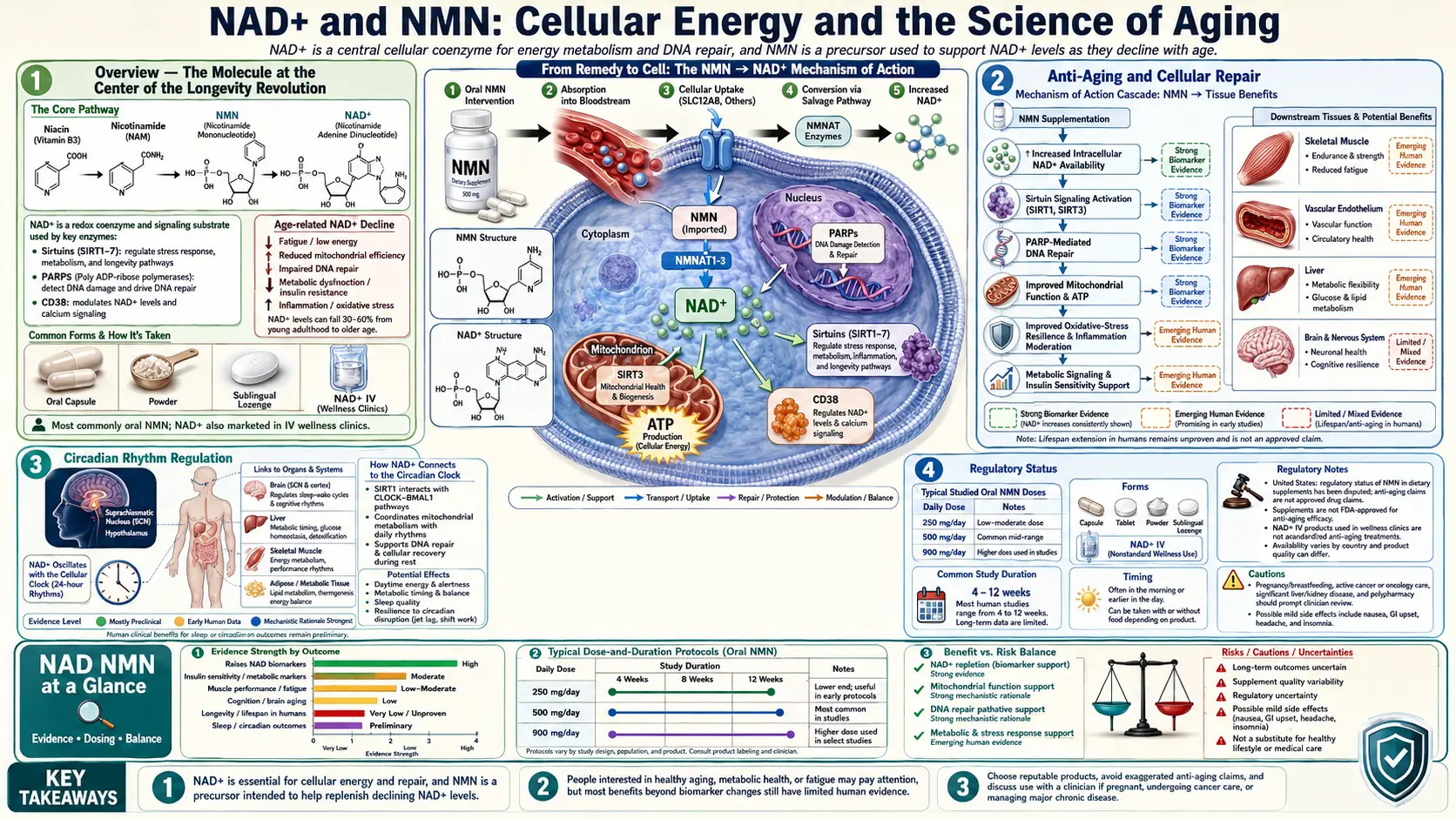
Few molecules in modern biochemistry have generated as much excitement — or as much debate — as nicotinamide adenine dinucleotide (NAD+). Present in every living cell, nicotinamide adenine dinucleotide sits at the crossroads of energy metabolism, DNA repair, gene regulation, and cellular defense. Studies in mice, and some in human tissues, report lower nicotinamide adenine dinucleotide levels with age, and a field of longevity research has grown up around the question of whether replenishing this coenzyme can slow or reverse aspects of biological aging. Nicotinamide mononucleotide (NMN), a direct precursor to nicotinamide adenine dinucleotide, has become one of the most widely studied and commercially popular supplements in this field.
This article covers nicotinamide adenine dinucleotide biology, the research on nicotinamide mononucleotide and nicotinamide riboside (NR), what the human trials measured and found, the safety findings, and the regulatory history of nicotinamide mononucleotide in the United States. It separates results in mice and cells from results in people throughout. Decisions about supplements belong with a clinician.
Table of Contents
- Overview — Nicotinamide Adenine Dinucleotide and the Longevity Debate
- What Is Nicotinamide Adenine Dinucleotide
- Nicotinamide Adenine Dinucleotide Decline with Age — Mice and Humans
- Nicotinamide Mononucleotide vs Nicotinamide Riboside — The Precursor Debate
- David Sinclair's Research and the Sirtuin Theory
- How Nicotinamide Adenine Dinucleotide Works — Energy Metabolism, DNA Repair, Sirtuins, PARPs, and CD38
- Mitochondrial Function
- Anti-Aging Claims and the Lifespan Data
- Cognitive Function and Brain Health
- Cardiovascular Health
- Metabolic Health and Insulin Sensitivity
- Exercise Performance
- Immune Function
- Fertility and Reproductive Aging
- Circadian Rhythm Regulation
- The Human Clinical Trials
- Intravenous Nicotinamide Adenine Dinucleotide Therapy
- Sublingual Nicotinamide Mononucleotide vs Oral Supplementation
- Doses Used in Trials, and the Timing Question
- Combinations Discussed — Resveratrol, TMG, and Quercetin
- Safety and Side Effects
- Regulatory Status
- Key Research Papers
- Connections
- Featured Videos
1. Overview — Nicotinamide Adenine Dinucleotide and the Longevity Debate
Nicotinamide adenine dinucleotide is a coenzyme for a large number of enzyme reactions. Cells use it to produce energy, and enzymes that repair DNA and regulate genes consume it. A 2021 review in Nature Reviews Molecular Cell Biology (Covarrubias and colleagues) describes a gradual decline in tissue and cellular nicotinamide adenine dinucleotide with age in several model organisms, including rodents and humans, and notes that much remains to be learnt — including whether restoring nicotinamide adenine dinucleotide in ageing humans is safe and whether it has benefits.
Nicotinamide mononucleotide joins nicotinamide riboside (NR), nicotinamide (NAM) and niacin (nicotinic acid) in the vitamin B3 family of nicotinamide adenine dinucleotide precursors. In mice, long-term nicotinamide mononucleotide treatment improved several measures of age-related decline (Mills and colleagues, 2016). In people, small randomized trials consistently show that nicotinamide mononucleotide and nicotinamide riboside raise nicotinamide adenine dinucleotide or its metabolites in blood; effects on clinical outcomes have been small, mixed or absent, as the trial-by-trial account in section 16 shows.
The field has attracted both careful science and considerable commercial promotion, and many of the human trials were funded by, supplied by, or partly staffed by companies that make these compounds. This article reports the funding of each major trial by category, from the papers' own disclosures, and reflects evidence available through October 2026.
2. What Is Nicotinamide Adenine Dinucleotide
Nicotinamide adenine dinucleotide (NAD+) is a coenzyme found in all living cells. Its story begins in 1906, when British biochemists Arthur Harden and William John Young reported that a boiled, filtered yeast extract greatly accelerated fermentation by yeast juice — evidence of a heat-stable helper factor later called cozymase. Harden shared the 1929 Nobel Prize in Chemistry with Hans von Euler-Chelpin, whose laboratory went on to work out much of the factor's chemical makeup, and in the 1930s Otto Warburg's laboratory identified the nicotinamide portion as the site where the molecule carries hydrogen in redox reactions. The history is told in more detail on the History page of this section.
Structurally, nicotinamide adenine dinucleotide is a dinucleotide: two nucleotides joined through their phosphate groups. One contains an adenine base, and the other contains nicotinamide, a form of vitamin B3. Nicotinamide adenine dinucleotide exists in an oxidized form (nicotinamide adenine dinucleotide) and a reduced form (reduced nicotinamide adenine dinucleotide, NADH). In its oxidized form, nicotinamide adenine dinucleotide accepts electrons from fuel-burning reactions; as reduced nicotinamide adenine dinucleotide, it donates those electrons to the mitochondrial electron transport chain, which drives the production of adenosine triphosphate (ATP), the cell's main energy currency.
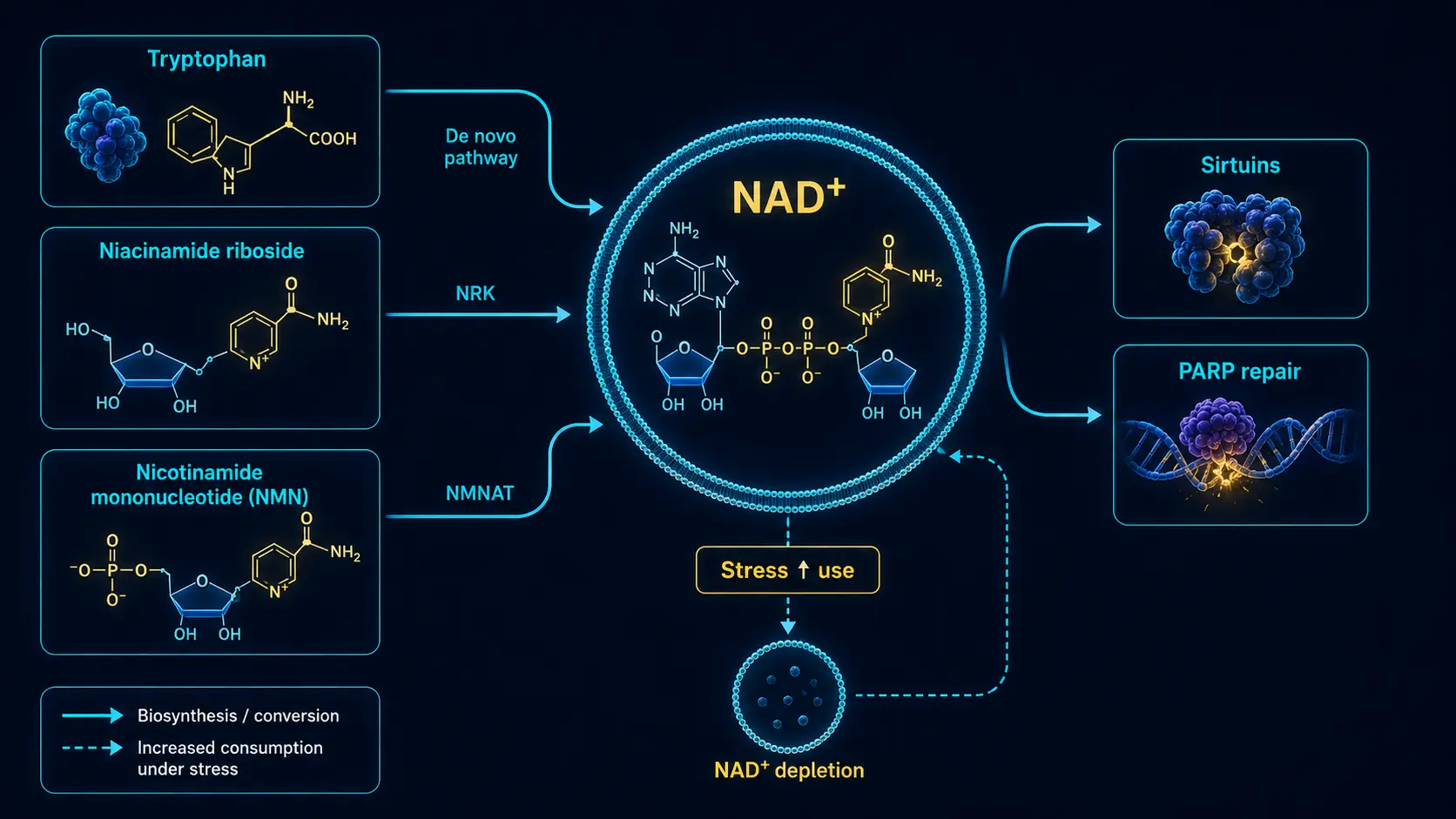
Nicotinamide adenine dinucleotide is also consumed as a substrate by three major classes of enzymes: sirtuins (protein deacetylases involved in gene regulation and DNA repair), poly(ADP-ribose) polymerases (PARPs, which signal and help repair DNA damage), and NADases such as CD38 and CD157 (involved in calcium signaling and immune function). Each time one of these enzymes uses nicotinamide adenine dinucleotide, the molecule is broken down and must be rebuilt, so the balance between nicotinamide adenine dinucleotide synthesis and consumption shapes how much is available.
3. Nicotinamide Adenine Dinucleotide Decline with Age — Mice and Humans
"nicotinamide adenine dinucleotide declines with age" is one of the most repeated statements in this field. The evidence behind it differs by species and by tissue, and the human blood data are not consistent.
In mice
Lower tissue nicotinamide adenine dinucleotide in old mice is well documented. Using isotope tracing across tissues, McReynolds and colleagues (2021) found a modest depletion in aged mice — a median decrease of about 30% — with nicotinamide adenine dinucleotide production maintained and turnover of the smaller pool slightly faster, which the authors attributed to increased consumption; they described the decline with normal aging as "relatively subtle." Camacho-Pereira and colleagues (2016) reported that expression and activity of the nicotinamide adenine dinucleotide-degrading enzyme CD38 rise with age in mice and that CD38 was required for the age-related nicotinamide adenine dinucleotide decline in their experiments.
In human tissues
- Skin: in pelvic skin samples from 49 people (newborns to age 77), nicotinamide adenine dinucleotide levels correlated negatively with age in both males and females, while PARP activity rose with age in males (Massudi and colleagues, 2012).
- Brain: a magnetic-resonance method used in healthy volunteers found age-dependent reductions in brain nicotinamide adenine dinucleotide and total nicotinamide adenine dinucleotide (NAD), with an age-dependent increase in reduced nicotinamide adenine dinucleotide (Zhu and colleagues, 2015).
- Skeletal muscle: in a cross-sectional study, muscle nicotinamide adenine dinucleotide was lower in older than in younger adults, lowest in physically impaired older people, and closer to young levels in exercise-trained older people (Janssens and colleagues, 2022).
In human blood
Blood results are mixed. One study reported lower plasma nicotinamide adenine dinucleotide with age in healthy people aged 20 to 87 (Clement and colleagues, 2019). In 1,518 community participants, whole-blood nicotinamide adenine dinucleotide showed a decline with age in men but not in women (Yang and colleagues, 2022). In 2026, a study that measured whole-blood nicotinamide adenine dinucleotide with a validated mass-spectrometry method in seven independent cohorts found levels "remarkably stable with age and across lifestyle interventions" — though they rose with nicotinamide riboside supplementation — and questioned the use of blood nicotinamide adenine dinucleotide as a biomarker of ageing (Trętowicz and colleagues, 2026).
A frequently quoted figure — that nicotinamide adenine dinucleotide falls by about 50 percent between young adulthood and middle age — was not found as a measured human result in the papers checked for this page, so it is not repeated here. Researchers link lower nicotinamide adenine dinucleotide to mitochondrial dysfunction, DNA-repair capacity and inflammation largely through animal and cell work; whether the human decline causes these changes, or is one of their consequences, is not settled.
4. Nicotinamide Mononucleotide vs Nicotinamide Riboside — The Precursor Debate
The two most widely studied and commercially available nicotinamide adenine dinucleotide precursors are nicotinamide mononucleotide (NMN) and nicotinamide riboside (NR). Both are forms of vitamin B3 that the body can convert into nicotinamide adenine dinucleotide. The question of which is "better" has generated scientific debate and commercial rivalry, and researchers on both sides have commercial ties disclosed in their papers.
Structurally, nicotinamide mononucleotide is nicotinamide riboside with an added phosphate group. Inside cells, nicotinamide riboside is phosphorylated by nicotinamide riboside kinases (NRK1 and NRK2) to form nicotinamide mononucleotide, which the enzyme NMNAT (nicotinamide mononucleotide adenylyltransferase) converts to nicotinamide adenine dinucleotide. In the salvage pathway, the body makes nicotinamide mononucleotide from nicotinamide via the enzyme NAMPT.
How nicotinamide mononucleotide enters cells is disputed. A 2019 mouse study reported that the gene Slc12a8 encodes a nicotinamide mononucleotide transporter that is highly expressed in the mouse small intestine (Grozio and colleagues, 2019); other researchers published a reply arguing that the evidence did not show this (Schmidt and Brenner, 2019). A 2025 mouse study in Science Advances found that only a small portion of oral nicotinamide mononucleotide and nicotinamide riboside was directly absorbed from the small intestine; most was converted by gut bacteria to nicotinic acid, which then fed nicotinamide adenine dinucleotide synthesis, mainly in the liver (Yaku and colleagues, 2025).
A 2026 randomized, open-label, placebo-controlled study in 65 healthy adults compared the three precursors directly: 14 days of nicotinamide riboside or nicotinamide mononucleotide comparably increased circulating nicotinamide adenine dinucleotide, while nicotinamide did not; laboratory work in the same paper pointed to gut-microbial conversion to nicotinic acid as the route (Christen and colleagues, 2026). Most of that paper's authors are employees of a food and nutrition company. More human trials have used nicotinamide riboside than nicotinamide mononucleotide, because nicotinamide riboside has been studied clinically for longer.
5. David Sinclair's Research and the Sirtuin Theory
The scientist most associated with popularizing nicotinamide adenine dinucleotide science is David A. Sinclair, a professor of genetics at Harvard Medical School and co-director of the Paul F. Glenn Center for Biology of Aging Research there. He trained in molecular genetics at the University of New South Wales and did postdoctoral research at MIT in the laboratory of Leonard Guarente, where work on yeast linked the sirtuin Sir2 to aging.
Sirtuins are a family of seven enzymes in mammals (SIRT1 through SIRT7) that use nicotinamide adenine dinucleotide to remove acetyl and related groups from proteins. In 2003, Sinclair's group reported that resveratrol and related molecules activated sirtuins and extended the lifespan of yeast by 70% (Howitz and colleagues, 2003). The mammalian picture since then is mixed:
- Mice moderately overexpressing SIRT1 throughout the body were healthier in old age, with fewer spontaneous cancers, but did not live longer (Herranz and colleagues, 2010). Mice overexpressing SIRT1 only in the brain lived longer in both sexes (Satoh and colleagues, 2013).
- Mice overexpressing SIRT6 lived longer — males only in a 2012 study (Kanfi and colleagues), and both sexes in a 2021 study on a different background (Roichman and colleagues).
- Resveratrol improved health measures in mice but did not extend lifespan on a standard diet (Pearson and colleagues, 2008), and the US National Institute on Aging's Interventions Testing Program found no lifespan effect (Miller and colleagues, 2011). A 2010 study found that resveratrol and several synthetic "sirtuin activators" activated SIRT1 only with an artificial fluorescent test substrate, not with native substrates (Pacholec and colleagues, 2010).
- The synthetic SIRT1 activator SRT2104 extended mean and maximal lifespan of male mice on a standard diet (Mercken and colleagues, 2014).
Sinclair's Information Theory of Aging proposes that aging is driven largely by loss of epigenetic information — the cell's ability to read its own DNA correctly — and that this may be reversible, with nicotinamide adenine dinucleotide and sirtuins part of the proposed machinery. It remains a hypothesis supported by laboratory and animal work; it has not been tested as a treatment in people.
6. How Nicotinamide Adenine Dinucleotide Works — Energy Metabolism, DNA Repair, Sirtuins, PARPs, and CD38
Nicotinamide adenine dinucleotide acts through several connected mechanisms. Most of what is known about them comes from cell and animal studies.
Energy Metabolism
Nicotinamide adenine dinucleotide is an electron carrier. During glycolysis and the citric acid cycle, nicotinamide adenine dinucleotide accepts electrons from fuel molecules (glucose, fatty acids, amino acids) to become reduced nicotinamide adenine dinucleotide. Reduced nicotinamide adenine dinucleotide then donates those electrons to Complex I of the mitochondrial electron transport chain, driving protons across the inner mitochondrial membrane and powering adenosine triphosphate synthase. The same chain uses coenzyme Q10 as the carrier between its first stages and the later ones (see the coenzyme Q10 (CoQ10) page).
DNA Repair via PARPs
Poly(ADP-ribose) polymerases, particularly PARP1 and PARP2, sense breaks in DNA. When PARP1 binds damaged DNA, it uses nicotinamide adenine dinucleotide to build chains of poly(ADP-ribose) that recruit repair proteins. Under severe DNA damage in cells, PARP activation can deplete nicotinamide adenine dinucleotide sharply and quickly. In the human skin study described above, PARP activity rose with age in males and was inversely related to tissue nicotinamide adenine dinucleotide (Massudi and colleagues, 2012).
Gene Regulation via Sirtuins
The seven mammalian sirtuins (SIRT1–SIRT7) are nicotinamide adenine dinucleotide-dependent enzymes that regulate many cellular processes. SIRT1 and SIRT6 work in the nucleus on DNA repair and chromatin; SIRT3, in mitochondria, regulates metabolic and antioxidant enzymes. Because sirtuins and PARPs draw on the same nicotinamide adenine dinucleotide pool, researchers have proposed that lower nicotinamide adenine dinucleotide in aging limits sirtuin activity — a hypothesis based mainly on mouse and cell studies.
CD38 — The Nicotinamide Adenine Dinucleotide Consumer
CD38 is a surface enzyme that breaks down nicotinamide adenine dinucleotide, producing cyclic ADP-ribose and nicotinamide. In mice, its expression and activity increase with age, it was required for the age-related decline in nicotinamide adenine dinucleotide and mitochondrial dysfunction through a pathway involving SIRT3, and it was the main enzyme degrading nicotinamide mononucleotide in the body (Camacho-Pereira and colleagues, 2016). A 2023 study by some of the same researchers reported that CD38 may not dictate nicotinamide adenine dinucleotide levels in brain mitochondria of aged mice. Whether blocking CD38 helps in people has not been shown.
7. Mitochondrial Function
Mitochondria depend on nicotinamide adenine dinucleotide: reduced nicotinamide adenine dinucleotide feeds electrons into Complex I to build the proton gradient that drives adenosine triphosphate synthesis, and nicotinamide adenine dinucleotide-dependent sirtuins regulate mitochondrial enzymes. When nicotinamide adenine dinucleotide is scarce in cell and animal experiments, less adenosine triphosphate is made and more reactive oxygen species (ROS) leak from the chain.
In a 2013 mouse study from Sinclair's laboratory, aging was accompanied by a specific loss of mitochondrially encoded respiratory-chain subunits. The authors traced it to a decline in nuclear nicotinamide adenine dinucleotide and build-up of the protein HIF-1α, acting through a pathway of nuclear–mitochondrial communication that was independent of PGC-1α/β; raising nicotinamide adenine dinucleotide in old mice for one week restored mitochondrial function to that of young mice in a SIRT1-dependent manner (Gomes and colleagues, 2013). In the 12-month mouse study, nicotinamide mononucleotide enhanced mitochondrial oxidative metabolism in skeletal muscle (Mills and colleagues, 2016).
The human muscle data so far do not show a mitochondrial effect. In 12 older men, nicotinamide riboside at 1 g a day for 21 days raised the muscle nicotinamide adenine dinucleotide metabolome and lowered circulating inflammatory cytokines but did not change mitochondrial bioenergetics (Elhassan and colleagues, 2019). In a small 2026 crossover trial in 11 untrained young men, nicotinamide mononucleotide at 1,200 mg a day for 7 days blunted inflammatory signaling in muscle after blood-flow-restricted exercise but abolished the exercise-induced rise in muscle mitochondrial content (Yang and colleagues, 2026).
8. Anti-Aging Claims and the Lifespan Data
The case for nicotinamide adenine dinucleotide repletion as an anti-aging strategy rests on a biological rationale: if lower nicotinamide adenine dinucleotide drives several hallmarks of aging, restoring it might slow them. In aged mice, nicotinamide adenine dinucleotide precursors have improved stem-cell function, metabolic measures, physical activity, and organ function in a number of studies. Whether they extend lifespan is a separate question, and the mouse results are mixed:
- Nicotinamide mononucleotide, 12 months (Mills and colleagues, 2016): nicotinamide mononucleotide given to normal mice for 12 months during aging suppressed age-related weight gain, enhanced energy metabolism and physical activity, and improved insulin sensitivity, lipids and eye function, without obvious toxicity. The study did not report a lifespan result; it was not designed as a lifespan study.
- Nicotinamide riboside (Zhang and colleagues, 2016): nicotinamide riboside rejuvenated muscle stem cells in aged mice and increased mouse life span when started late in life.
- Nicotinamide riboside in the Interventions Testing Program (Harrison and colleagues, 2021): in this multi-site program that uses genetically diverse mice, nicotinamide riboside did not significantly increase lifespan in either sex at the dose tested.
- Nicotinamide (Mitchell and colleagues, 2018): improved aspects of healthspan in mice but not lifespan.
- Nicotinamide mononucleotide, long-term (Kane and colleagues, preprint): a study from Sinclair's laboratory, posted as a preprint in 2024 and revised in 2026 but not yet published in a peer-reviewed journal at the time of writing, reports that nicotinamide mononucleotide from middle age reduced frailty in both sexes and increased median lifespan by 8.5% in female mice but not in males.
No study has measured lifespan in people taking nicotinamide mononucleotide or nicotinamide riboside, and no human trial has shown a slowing of aging itself.
Mechanistically, SIRT1 promotes autophagy (the recycling of damaged cell components), and SIRT6 takes part in DNA double-strand break repair and telomere maintenance; SIRT6-overexpressing mice live longer, as described in section 5. These are the main routes by which researchers propose that more nicotinamide adenine dinucleotide could help aging cells.
9. Cognitive Function and Brain Health
The brain uses a large share of the body's energy for its size, and in the magnetic-resonance study described in section 3, brain nicotinamide adenine dinucleotide was lower and reduced nicotinamide adenine dinucleotide higher in older healthy volunteers (Zhu and colleagues, 2015). Lower brain nicotinamide adenine dinucleotide has been linked in animal studies to impaired neuronal mitochondria, reduced blood-flow responses and neuroinflammation.
The preclinical evidence comes from mice. In 24-month-old mice, two weeks of nicotinamide mononucleotide restored neurovascular coupling — the increase in blood flow to active brain regions — through endothelial nitric oxide, and was associated with better spatial working memory and gait coordination (Tarantini and colleagues, 2019). In mice engineered to develop Alzheimer's-like amyloid pathology, nicotinamide mononucleotide improved behavioral measures of cognition and reduced amyloid-β production, plaque burden, synaptic loss and inflammatory responses (Yao and colleagues, 2017).
Human trials have not found a cognitive effect so far:
- In the trial of nicotinamide mononucleotide 250 mg a day in men aged 65 or older (Igarashi and colleagues, 2022), overall cognitive function on two standard screening tests did not change.
- In 20 older adults with mild cognitive impairment, nicotinamide riboside at 1 g a day for 10 weeks raised blood nicotinamide adenine dinucleotide 2.6-fold but did not change cognition; a reduction in cerebral blood flow in one network would not have survived correction for multiple comparisons (Orr and colleagues, 2024). Nicotinamide riboside was supplied by its manufacturer, and one co-author advises that manufacturer.
These trials were small and short, which limits what they can detect. Larger and longer trials in people with cognitive decline have not yet reported.
10. Cardiovascular Health
The heart relies heavily on mitochondrial energy production, and in animal models nicotinamide adenine dinucleotide boosting has improved several forms of cardiac and vascular disease, including models of heart failure and age-related vascular dysfunction. A 2018 review by Kane and Sinclair summarizes that preclinical literature.
Human data are limited and mostly exploratory:
- Nicotinamide riboside, Martens and colleagues (2018): in 24 healthy middle-aged and older adults who completed a 6-week crossover, nicotinamide riboside tended to lower systolic and diastolic blood pressure, but the differences were not statistically significant after correction for multiple comparisons. In a follow-up analysis of the 13 participants with elevated blood pressure or stage 1 hypertension at the start, systolic pressure averaged 9 mmHg lower after nicotinamide riboside than after placebo. The authors framed blood pressure and arterial stiffness as outcomes for future trials.
- Nicotinamide mononucleotide, Pencina and colleagues (2023): in 30 overweight or obese adults aged 45 or older, randomized 2:1 to a pharmaceutical-grade nicotinamide mononucleotide tablet (1,000 mg twice daily) or placebo for 28 days, body weight, diastolic blood pressure, total and low-density lipoprotein (LDL) cholesterol fell more with nicotinamide mononucleotide than with placebo; muscle strength, aerobic capacity, insulin sensitivity and liver fat did not differ. The trial was funded partly by the drug's developer and partly by U.S. National Institutes of Health (NIH) grants.
- Meta-analysis, Lei and colleagues (2023): pooling 29 articles with 8,664 participants, nicotinamide adenine dinucleotide precursor supplementation was associated with small reductions in systolic (−2.54 mmHg) and diastolic (−2.15 mmHg) blood pressure and in C-reactive protein. Most of the pooled evidence came from niacin, and the authors reported a greater effect for niacin than for the other precursors; few nicotinamide mononucleotide or nicotinamide riboside trials existed at the time.
A figure often repeated online — that immune-cell nicotinamide adenine dinucleotide is 44 percent lower in people with hypertension — could not be traced to a paper for this page and is not repeated here.
11. Metabolic Health and Insulin Sensitivity
Nicotinamide adenine dinucleotide is central to glucose and fat metabolism, and in rodents obesity and aging impair nicotinamide adenine dinucleotide synthesis. Sirtuins, particularly SIRT1 and SIRT3, regulate insulin signaling, liver glucose production and fat burning in animal studies.
The most cited human result is a 2021 trial in Science (Yoshino and colleagues). Twenty-five postmenopausal women with prediabetes who were overweight or obese completed a 10-week randomized, placebo-controlled, double-blind trial: 13 took nicotinamide mononucleotide 250 mg a day and 12 took placebo. Insulin-stimulated glucose disposal, measured with the hyperinsulinemic-euglycemic clamp, and skeletal-muscle insulin signaling increased after nicotinamide mononucleotide but not after placebo, and nicotinamide mononucleotide up-regulated platelet-derived growth factor receptor β and other muscle-remodeling genes. The study was funded by U.S. National Institutes of Health and foundation grants; the nicotinamide mononucleotide and placebo capsules were supplied by a nicotinamide mononucleotide manufacturer, and one author receives a share of nicotinamide mononucleotide-related patent-licensing fees through his university.
Other trials have not found broad metabolic effects. In obese, insulin-resistant men, nicotinamide riboside at 2,000 mg a day for 12 weeks did not improve insulin sensitivity or glucose metabolism (Dollerup and colleagues, 2018). A 2024 meta-analysis of eight nicotinamide mononucleotide trials (342 middle-aged and older adults, mainly without diabetes; 250 to 2,000 mg a day for 14 days to 12 weeks) found no significant effect on fasting glucose, fasting insulin, hemoglobin A1c (HbA1c), homeostatic model assessment of insulin resistance (HOMA-IR) or lipids (Chen and colleagues, 2024). A second meta-analysis (12 studies, 513 participants) found that nicotinamide mononucleotide raised blood nicotinamide adenine dinucleotide but that most clinically relevant outcomes did not differ from control; it rated seven studies as having some concerns and five as high risk of bias, and its authors wrote that "an exaggeration of the benefits of nicotinamide mononucleotide supplementation may exist in the field" (Zhang and colleagues, 2025).
Whether the positive 2021 result reflects the population studied (women with prediabetes), the measurement method (the clamp, which is more sensitive than fasting markers), or chance in a small trial is not known.
12. Exercise Performance
In animal studies nicotinamide mononucleotide supports mitochondrial and muscle energy metabolism, which led researchers to test it alongside training.
In a 6-week randomized, double-blind trial in 48 recreational runners (ten men and two women per group), participants received nicotinamide mononucleotide at 300, 600 or 1,200 mg a day or placebo while training 5 to 6 times a week. Oxygen uptake, the percentage of VO2max at which they worked, and power at the first and second ventilatory thresholds rose more in the 600 mg and 1,200 mg groups than with placebo; VO2max itself, O2-pulse and peak power did not change in any group (Liao and colleagues, 2021). The trial was funded by a national government research program.
In 108 older Japanese adults given nicotinamide mononucleotide 250 mg a day or placebo for 12 weeks, either in the morning or the afternoon, sit-to-stand times improved in all four groups, including placebo; the afternoon nicotinamide mononucleotide group showed the largest effect sizes for the sit-to-stand test and for drowsiness (Kim and colleagues, 2022). In the 2026 muscle-biopsy trial described in section 7, nicotinamide mononucleotide at 1,200 mg a day for 7 days suppressed some inflammatory signals after exercise but also abolished the exercise-induced increase in muscle mitochondrial content, and moderately delayed the clearing of damaged tissue (Yang and colleagues, 2026). A 2025 meta-analysis of nicotinamide mononucleotide and nicotinamide riboside trials in adults with a mean age over 60 found no significant effect of nicotinamide mononucleotide on muscle mass, grip strength, gait speed or chair-stand time, and concluded that current evidence does not support nicotinamide mononucleotide or nicotinamide riboside for preserving muscle mass and function in that age group (Prokopidis and colleagues, 2025).
Taken together, the exercise evidence consists of a few small trials with mixed findings; none tested competitive performance.
13. Immune Function
The aging immune system shows immunosenescence — declining innate and adaptive immunity — and inflammaging, a chronic low-grade inflammation linked to frailty and age-related disease. Nicotinamide adenine dinucleotide metabolism is involved in both, mainly on the evidence of laboratory studies.
In mouse and human macrophages, nicotinamide adenine dinucleotide made from tryptophan through the kynurenine pathway (de novo synthesis) regulated immune function; blocking it impaired phagocytosis and the resolution of inflammation, a profile also seen in aging macrophages, and increasing de novo nicotinamide adenine dinucleotide generation in immune-challenged or aged macrophages restored their metabolism and responses (Minhas and colleagues, 2019). In mice, CD38 on inflammatory immune cells rises with age and consumes nicotinamide adenine dinucleotide, as described in section 6.
In people, the trial of nicotinamide riboside in 12 older men found lower levels of circulating inflammatory cytokines after 21 days (Elhassan and colleagues, 2019). Human trials of nicotinamide mononucleotide or nicotinamide riboside measuring infections or vaccine responses as outcomes were not found for this page.
14. Fertility and Reproductive Aging
Some of the most striking nicotinamide mononucleotide results come from mouse fertility research. Reproductive aging in female mammals is marked by declining oocyte (egg) quality. In aged mice, nicotinamide mononucleotide restored oocyte quality and fertility, an effect reproduced by overexpressing the sirtuin SIRT2, and improved developmental milestones in embryos (Bertoldo and colleagues, 2020). Several of that study's authors disclosed that they co-founded or hold shares in a company formed to develop the work. A separate mouse study found that nicotinamide mononucleotide increased ovulation of aged oocytes and improved their meiotic competence and fertilization ability, with single-cell data pointing to restored mitochondrial function and lower reactive oxygen species (Miao and colleagues, 2020).
A 2026 systematic review of seven preclinical studies found that nicotinamide mononucleotide improved oocyte function across models of metabolic, environmental and ageing stress; it found no clinical trials and concluded that standardized protocols and trials are needed to judge whether the results apply to human reproduction (Noh and colleagues, 2026).
There are no published trials of nicotinamide mononucleotide in women trying to conceive or undergoing in vitro fertilization, and its safety in pregnancy has not been studied.
15. Circadian Rhythm Regulation
Nicotinamide adenine dinucleotide metabolism and the body clock are linked. Two 2009 studies in Science showed that intracellular nicotinamide adenine dinucleotide levels cycle with a 24-hour rhythm in mouse cells and tissues. The core clock proteins CLOCK and BMAL1 drive the daily expression of NAMPT, the rate-limiting enzyme of the salvage pathway; SIRT1 is recruited to the NAMPT gene and contributes to the daily synthesis of its own coenzyme (Nakahata and colleagues, 2009, in mouse embryo cells). Blocking NAMPT promoted oscillation of the clock gene Per2 by releasing CLOCK:BMAL1 from suppression by SIRT1, completing a feedback loop (Ramsey and colleagues, 2009, in mice).
That loop is not equally important in every tissue. In mice, brown fat needed NAMPT to sustain the amplitude of its clock, white fat depended on it only moderately, and the skeletal-muscle clock was completely unaffected by loss of NAMPT (Basse and colleagues, 2023).
Whether the time of day a nicotinamide adenine dinucleotide precursor is taken matters in people has been tested once: in the 12-week trial in older Japanese adults, the afternoon nicotinamide mononucleotide group showed the largest effect sizes for lower-limb function and drowsiness (Kim and colleagues, 2022). The claim, common in marketing, that nicotinamide mononucleotide works best in the morning was not supported by that trial.
16. The Human Clinical Trials
Many randomized, placebo-controlled trials of nicotinamide mononucleotide and nicotinamide riboside are now published. Most were small (12 to 80 participants) and short (3 to 12 weeks), and many were funded by, supplied by, or partly staffed by companies that make these compounds. Their consistent finding is that blood (and, in one study, muscle) nicotinamide adenine dinucleotide or its metabolites rise; effects on clinical outcomes have been small, mixed or absent. Funding is described below by category, from each paper's disclosures.
Yoshino and colleagues, 2021 (Science) — Nicotinamide Mononucleotide in women with prediabetes
Design: 10-week randomized, placebo-controlled, double-blind trial. Participants: 25 postmenopausal women with prediabetes who were overweight or obese (13 nicotinamide mononucleotide, 12 placebo). Dose: nicotinamide mononucleotide 250 mg a day. Outcome: muscle insulin sensitivity and insulin signaling increased with nicotinamide mononucleotide and not with placebo. Funding: U.S. National Institutes of Health and foundation grants; capsules supplied by a nicotinamide mononucleotide manufacturer; one author receives nicotinamide mononucleotide-related patent-licensing fees.
Igarashi and colleagues, 2022 (npj Aging) — Nicotinamide Mononucleotide in older men
Design: randomized, double-blind, placebo-controlled, parallel-group trial. Participants: 42 healthy men aged 65 or older were randomized; 12-week data were available for 20 (10 per group). Dose: nicotinamide mononucleotide 250 mg a day for 6 or 12 weeks. Outcome: nicotinamide mononucleotide was well tolerated and raised whole-blood nicotinamide adenine dinucleotide and its metabolites; improvements in gait speed and left-hand grip were only nominally significant, which the authors said need validation in larger studies; body composition and cognition did not change. Funding: funded by a nicotinamide mononucleotide manufacturer, which supplied the nicotinamide mononucleotide; three authors were its employees.
Yi and colleagues, 2023 (GeroScience) — Nicotinamide Mononucleotide dose-ranging in healthy adults
Design: randomized, multicenter, double-blind, placebo-controlled, dose-ranging trial. Participants: 80 healthy middle-aged adults. Dose: placebo or nicotinamide mononucleotide 300, 600 or 900 mg once a day for 60 days. Outcome: blood nicotinamide adenine dinucleotide rose in all nicotinamide mononucleotide groups, highest at 600 and 900 mg; six-minute walking distance increased more in all nicotinamide mononucleotide groups than with placebo; a calculated "blood biological age" rose with placebo and stayed unchanged with nicotinamide mononucleotide; homeostatic model assessment of insulin resistance did not differ; no safety issues were found. Funding: three authors are employees of chemical-manufacturing companies.
Martens and colleagues, 2018 (Nature Communications) — Nicotinamide Riboside in healthy middle-aged and older adults
Design: randomized, double-blind, placebo-controlled crossover (2 × 6 weeks). Participants: 30 randomized, 24 completed. Dose: nicotinamide riboside 500 mg twice daily (1,000 mg a day). Outcome: nicotinamide riboside was well tolerated and raised nicotinamide adenine dinucleotide in blood cells; blood-pressure and arterial-stiffness findings were exploratory (section 10). Funding: U.S. National Institutes of Health grants; the nicotinamide riboside manufacturer provided the study pills and partial funding.
Elhassan and colleagues, 2019 (Cell Reports) — Nicotinamide Riboside in older men's muscle
Design: randomized, double-blind, placebo-controlled crossover. Participants: 12 older men. Dose: nicotinamide riboside 1 g a day for 21 days. Outcome: nicotinamide riboside raised the muscle nicotinamide adenine dinucleotide metabolome and lowered circulating inflammatory cytokines but did not alter mitochondrial bioenergetics. Funding: UK charity and government research grants and a U.S. National Institutes of Health grant; the nicotinamide riboside manufacturer supplied the capsules, and one author holds patents and shares connected to it.
Dollerup and colleagues, 2018 (American Journal of Clinical Nutrition) — Nicotinamide Riboside in obese men
Design: investigator-initiated randomized, placebo-controlled, double-blind, parallel-group trial. Participants: 40 healthy, sedentary men with obesity, aged 40 to 70. Dose: nicotinamide riboside 1,000 mg twice daily (2,000 mg a day) for 12 weeks. Outcome: insulin sensitivity, glucose production and disposal, energy expenditure, fat metabolism and body composition did not improve; no serious adverse events occurred. Funding: foundation and national research-council grants.
Other trials
A 14-day pharmacology trial of a pharmaceutical-grade nicotinamide mononucleotide tablet in 32 overweight or obese adults aged 55 to 80 (1,000 mg once or twice daily, or placebo) found the product well tolerated, with substantial dose-related increases in blood nicotinamide adenine dinucleotide (Pencina and colleagues, 2023, Journal of Gerontology); its 28-day follow-up study is described in section 10. A 60-day trial of nicotinamide mononucleotide 300 mg a day in 66 healthy adults aged 40 to 65, written by a single author employed by the nicotinamide mononucleotide's manufacturer, reported a 38% rise in serum nicotinamide adenine dinucleotide/reduced nicotinamide adenine dinucleotide from baseline with nicotinamide mononucleotide versus 14.3% with placebo (Huang, 2022).
Larger and longer trials, with independent funding and clinical rather than biomarker outcomes, would be needed to show whether raising nicotinamide adenine dinucleotide in people produces lasting health benefits.
17. Intravenous Nicotinamide Adenine Dinucleotide Therapy
Intravenous nicotinamide adenine dinucleotide is offered in longevity clinics and wellness centers as a drip. Proponents say bypassing the gut gives higher blood levels than oral supplements. Session lengths, doses and schedules are set by the clinics; they come from clinic practice, not from trials.
The published human data are very limited. A 2019 pilot study in 11 healthy men aged 30 to 55 gave 8 of them 750 mg of nicotinamide adenine dinucleotide by infusion over 6 hours and 3 a saline infusion (Grant and colleagues, 2019). Plasma nicotinamide adenine dinucleotide and its metabolites did not change for the first 2 hours, indicating that the infused nicotinamide adenine dinucleotide was rapidly and completely removed from the plasma; the metabolite pattern pointed to breakdown by nicotinamide adenine dinucleotide-degrading enzymes, and nicotinamide adenine dinucleotide itself and methylnicotinamide appeared in urine. No adverse events were observed during the infusions. The study measured blood and urine chemistry, not clinical outcomes. Nicotinamide adenine dinucleotide is a large, charged molecule that does not readily cross cell membranes, and how much infused nicotinamide adenine dinucleotide reaches the inside of cells is unknown.
Intravenous (IV) nicotinamide adenine dinucleotide is not a U.S. Food and Drug Administration-approved treatment for any condition. Side-effect rates in routine clinic use have not been reported in controlled studies found for this page. The clinical claims made for intravenous nicotinamide adenine dinucleotide have not been tested in controlled trials.
18. Sublingual Nicotinamide Mononucleotide vs Oral Supplementation
Nicotinamide mononucleotide is sold as capsules and powders to swallow and as sublingual (under-the-tongue) tablets and powders. Marketing materials for sublingual products often claim much higher bioavailability, with specific percentages; no peer-reviewed human trial comparing the two routes head to head was found for this page, so those figures are not repeated here.
The idea behind sublingual delivery is that the thin, blood-vessel-rich tissue under the tongue lets a substance enter the bloodstream directly, bypassing the gut and first-pass liver metabolism. That would also bypass the gut bacteria that, in mice and in the 2026 human comparison study, convert much of oral nicotinamide mononucleotide and nicotinamide riboside to nicotinic acid (section 4).
The research suggests bypassing gut bacteria is not clearly an advantage: in those studies, the microbial conversion to nicotinic acid appears to be a main route by which oral nicotinamide mononucleotide and nicotinamide riboside raise nicotinamide adenine dinucleotide (Yaku and colleagues, 2025; Christen and colleagues, 2026). The controlled human trials in section 16 used oral capsules or tablets and consistently raised blood nicotinamide adenine dinucleotide. Liposomal and other formulations have not been compared with standard oral nicotinamide mononucleotide in published human trials.
19. Doses Used in Trials, and the Timing Question
Human nicotinamide mononucleotide trials have used 250 mg to 2,000 mg a day, most often 250 to 900 mg, for 14 days to 12 weeks; the longest trials in the 2026 safety meta-analysis ran 24 weeks (section 21). In the dose-ranging trial, blood nicotinamide adenine dinucleotide was highest at 600 and 900 mg (Yi and colleagues, 2023); in runners, aerobic measures improved at 600 and 1,200 mg but not 300 mg (Liao and colleagues, 2021). Nicotinamide riboside trials have mostly used 1,000 to 2,000 mg a day. These are the doses tested, not established effective doses; no dose of nicotinamide mononucleotide or nicotinamide riboside has been shown to produce a lasting clinical benefit.
On timing, the one trial that compared morning and afternoon intake found larger effects with afternoon nicotinamide mononucleotide (Kim and colleagues, 2022; section 15). Claims that nicotinamide mononucleotide works best in the morning or on an empty stomach have not been supported by trials.
Blood nicotinamide adenine dinucleotide tests are sold to consumers, but the 2026 seven-cohort study found whole-blood nicotinamide adenine dinucleotide stable with age and lifestyle and questioned its value as a marker (section 3). Long-term effects of nicotinamide mononucleotide beyond a few months are not known. Decisions about supplements, especially for people with medical conditions or taking prescription medicines, belong with a clinician.
20. Combinations Discussed — Resveratrol, TMG, and Quercetin
Longevity writers and practitioners often discuss combining nicotinamide mononucleotide with other supplements on mechanistic grounds. None of these combinations has been tested for clinical benefit in a published human trial found for this page.
Resveratrol
Resveratrol, a polyphenol in grapes and red wine, was reported in 2003 to activate sirtuins (Howitz and colleagues, 2003). The proposed rationale for pairing is that nicotinamide mononucleotide supplies the nicotinamide adenine dinucleotide that sirtuins consume while resveratrol speeds the enzyme. A 2010 study found that resveratrol did not activate SIRT1 with native substrates, only with an artificial fluorescent test substrate (Pacholec and colleagues, 2010), and in the Interventions Testing Program resveratrol did not extend mouse lifespan (Miller and colleagues, 2011). Resveratrol is covered in the Antioxidants section.
Trimethylglycine (TMG)
TMG (betaine) is a methyl donor. When nicotinamide adenine dinucleotide is used by sirtuins, PARPs and CD38, nicotinamide is released, and much of it is methylated by the enzyme NNMT before excretion. Some writers argue that high-dose nicotinamide mononucleotide could therefore draw down the body's methyl-donor pool and propose TMG to offset it. This is a theoretical concern; it has not been measured in nicotinamide mononucleotide trials found for this page.
Quercetin
Quercetin, a flavonoid in onions, apples and capers, was identified with the cancer drug dasatinib as a senolytic — a treatment that clears senescent cells, which secrete inflammatory signals; in mice the combination reduced senescent-cell burden (Zhu and colleagues, 2015). The rationale for pairing it with nicotinamide mononucleotide is that less inflammation could mean less CD38 and less nicotinamide adenine dinucleotide consumption; this has not been tested. Quercetin is poorly absorbed on its own. See the Quercetin page.
21. Safety and Side Effects
In the short human trials published so far, nicotinamide mononucleotide and nicotinamide riboside have been well tolerated. A 2026 meta-analysis of 15 randomized trials (10 contributing safety data; nicotinamide mononucleotide 250 to 2,000 mg a day for 14 days to 24 weeks) found that nicotinamide mononucleotide did not increase overall, serious or withdrawal-related adverse events and did not raise the liver enzymes alanine aminotransferase (ALT) or aspartate aminotransferase (AST) (Yang and colleagues, 2026). A safety trial in 31 healthy adults aged 20 to 65 given 1,250 mg of nicotinamide mononucleotide a day for up to 4 weeks found no changes beyond normal variation in blood, urine or body measures and no severe adverse events; it was funded by a nicotinamide mononucleotide manufacturer, which supplied the test product, and most of its authors were the manufacturer's employees (Fukamizu and colleagues, 2022). In obese men, nicotinamide riboside at 2,000 mg a day for 12 weeks caused no serious adverse events (Dollerup and colleagues, 2018).
Side effects reported in trials and product literature are generally mild: digestive upset (nausea, diarrhea, abdominal discomfort), headache and flushing.
The cancer question
Because cancer cells depend on nicotinamide adenine dinucleotide, and several cancer drugs in development block nicotinamide adenine dinucleotide synthesis, researchers have asked whether raising nicotinamide adenine dinucleotide could help existing tumors. Preclinical studies report findings in both directions; the ones raising a concern are:
- Pancreatic cancer, senescence (Nacarelli and colleagues, 2019): nicotinamide adenine dinucleotide metabolism drove the pro-inflammatory secretions of senescent cells, and nicotinamide mononucleotide supplementation promoted progression of pancreatic cancer in a mouse model driven by an oncogenic Kras mutation. The authors wrote that dietary nicotinamide adenine dinucleotide augmentation "should be administered with precision."
- Breast cancer metastasis (Maric and colleagues, 2023): in a mouse model of triple-negative breast cancer, nicotinamide riboside supplementation significantly increased cancer prevalence and metastasis to the brain.
- Chemotherapy resistance (Nakazzi and colleagues, 2026): in pancreatic cancer cells and mice, nicotinamide mononucleotide and nicotinamide made cancer cells more resistant to standard chemotherapy drugs and supported tumor growth; in cells, nicotinamide mononucleotide had the strongest protective effect on cancer cells of the precursors tested.
Other studies point the other way: overexpressing SIRT1 reduced spontaneous cancers in mice (Herranz and colleagues, 2010), and the long-term nicotinamide mononucleotide preprint reported no increase in tumor counts (Kane and colleagues, preprint). There are no human data on nicotinamide mononucleotide or nicotinamide riboside and cancer risk. The research raises a concern mainly for people with an existing or past cancer, and for people receiving chemotherapy.
22. Regulatory Status
In the United States, nicotinamide mononucleotide's status as a dietary supplement ingredient has been reversed once. The primary documents are U.S. Food and Drug Administration (FDA) letters in public dockets on regulations.gov; the full account, with quotations, is in the U.S. Food and Drug Administration section's page U.S. Food and Drug Administration Reverses Course: nicotinamide mononucleotide Allowed in Dietary Supplements (2025).
2022: Nicotinamide Mononucleotide excluded
The federal Food, Drug, and Cosmetic Act excludes from the definition of a dietary supplement any article that was authorized for investigation as a new drug, with substantial clinical investigations instituted and made public, before it was marketed as a supplement or food (the "race to market" clause of section 201(ff)(3)(B)). On 11 October 2022, the U.S. Food and Drug Administration wrote to a company that had filed a new dietary ingredient notification for nicotinamide mononucleotide that nicotinamide mononucleotide is excluded, because, in the agency's words, "nicotinamide mononucleotide was not marketed as a dietary supplement, except unlawfully without an NDI notification, or as a food before U.S. Food and Drug Administration authorized it for investigation as a new drug"; similar letters went to other firms that had filed nicotinamide mononucleotide notifications, and a supplemental response followed on 4 November 2022. The drug investigation concerned was a drug developer's nicotinamide mononucleotide candidate known by a code name.
2025: the reversal
In March 2023 a dietary-supplement trade association and a natural-health advocacy group filed a citizen petition (docket FDA-2023-P-0872), amended in December 2024; a second trade association filed another petition in May 2023. On 29 September 2025, the U.S. Food and Drug Administration granted the first petition in part and concluded that nicotinamide mononucleotide "is not excluded from the definition of dietary supplement." The reason was a change in legal interpretation: the agency no longer requires that earlier marketing have been lawful, only that the product was actually sold as a supplement or food in the United States, and it stated that it was "aware of evidence that nicotinamide mononucleotide was marketed as a dietary supplement in the United States as early as 2017," before the drug authorization.
Status as of October 2026
The September 2025 letter is the agency's final response to the petition; no later primary U.S. Food and Drug Administration document reviewed for this page withdraws or changes it. Nicotinamide mononucleotide remains a new dietary ingredient, so a supplement containing it generally requires a new dietary ingredient notification to the U.S. Food and Drug Administration at least 75 days before marketing, and the letter rejected the argument that "self-GRAS" status removes that requirement. The letter states that it is not a safety finding. Reports of later U.S. Food and Drug Administration letters to individual nicotinamide mononucleotide ingredient makers were not confirmed in a primary document for this page.
Outside the United States, regulation differs by country; it was not verified against primary documents for this page and is not summarized here. Supplement quality, including whether a product contains the amount of nicotinamide mononucleotide on its label, is not checked by the U.S. Food and Drug Administration before sale.
Key Research Papers
- Harden, A., Young, W.J. (1906). The Alcoholic Ferment of Yeast-Juice. Proceedings of the Royal Society of London B 77(519), 405–420. — doi:10.1098/rspb.1906.0029
- Yoshino, J., Baur, J.A., Imai, S. (2018). NAD+ Intermediates: The Biology and Therapeutic Potential of NMN and NR. Cell Metabolism 27(3), 513–528. — doi:10.1016/j.cmet.2017.11.002
- Camacho-Pereira, J., et al. (2016). CD38 Dictates Age-Related NAD Decline and Mitochondrial Dysfunction Through a SIRT3-Dependent Mechanism. Cell Metabolism, 23(6), 1127– 1139. — doi:10.1016/j.cmet.2016.05.006
- Imai, S., Guarente, L. (2014). NAD+ and Sirtuins in Aging and Disease. Trends in Cell Biology 24(8), 464–471. — doi:10.1016/j.tcb.2014.04.002
- Mills, K.F., et al. (2016). Long-Term Administration of Nicotinamide Mononucleotide Mitigates Age-Associated Physiological Decline in Mice. Cell Metabolism 24(6), 795–806. — doi:10.1016/j.cmet.2016.09.013
- Yoshino, M., et al. (2021). Nicotinamide Mononucleotide Increases Muscle Insulin Sensitivity in Prediabetic Women. Science, 372(6547), 1224– 1229. — doi:10.1126/science.abe9985
- Liao, B., et al. (2021). Nicotinamide Mononucleotide Supplementation Enhances Aerobic Capacity in Amateur Runners: A Randomized, Double-Blind Study. Journal of the International Society of Sports Nutrition 18(1), 54. — doi:10.1186/s12970-021-00442-4
- Bertoldo, M.J., et al. (2020). NAD+ Repletion Rescues Female Fertility During Reproductive Aging. Cell Reports, 30(6), 1670– 1681. — doi:10.1016/j.celrep.2020.01.058
- Miao, Y., et al. (2020). Nicotinamide Mononucleotide Supplementation Reverses the Declining Quality of Maternally Aged Oocytes. Cell Reports 32(5), 107987. — doi:10.1016/j.celrep.2020.107987
- Tarantini, S., et al. Nicotinamide Mononucleotide (NMN) Supplementation Rescues Cerebromicrovascular Endothelial Function and Neurovascular Coupling Responses and Improves Cognitive Function in Aged Mice. Redox Biology. 2019;24:101192. — doi:10.1016/j.redox.2019.101192
- Nakahata, Y., et al. (2009). Circadian Control of the NAD+ Salvage Pathway by CLOCK-SIRT1. Science 324(5927), 654–657. — doi:10.1126/science.1170803
- Ramsey, K.M., et al. (2009). Circadian Clock Feedback Cycle Through NAMPT-Mediated NAD+ Biosynthesis. Science 324(5927), 651–654. — doi:10.1126/science.1171641
- Martens, C.R., et al. (2018). Chronic Nicotinamide Riboside Supplementation Is Well-Tolerated and Elevates NAD+ in Healthy Middle-Aged and Older Adults. Nature Communications, 9(1), 1286. — doi:10.1038/s41467-018-03421-7
- Yi, L., et al. (2023). The efficacy and safety of β-nicotinamide mononucleotide (NMN) supplementation in healthy middle-aged adults: a randomized, multicenter, double-blind, placebo-controlled, parallel-group, dose-dependent clinical trial. GeroScience 45(1), 29–43. — doi:10.1007/s11357-022-00705-1
- Pencina, K.M., et al. (2023). MIB-626, an Oral Formulation of a Microcrystalline Unique Polymorph of Beta-Nicotinamide Mononucleotide, Increases Circulating NMN and NAD in a Randomized Clinical Trial. The Journals of Gerontology: Series A 78(1), 90–96. — doi:10.1093/gerona/glac049
- Shade, C. (2020). The Science Behind NMN–A Stable, Reliable NAD+ Activator and Anti-Aging Molecule. Integrative Medicine 19(1), 12–14. — PubMed PMID: 32549859
- Covarrubias, A.J., et al. (2021). NAD+ Metabolism and Its Roles in Cellular Processes During Ageing. Nature Reviews Molecular Cell Biology 22(2), 119–141. — doi:10.1038/s41580-020-00313-x
- Verdin, E. (2015). NAD+ in Aging, Metabolism, and Neurodegeneration. Science, 350(6265), 1208– 1213. — doi:10.1126/science.aac4854
- Bonkowski, M.S., Sinclair, D.A. (2016). Slowing Ageing by Design: The Rise of NAD+ and Sirtuin-Activating Compounds. Nature Reviews Molecular Cell Biology 17(11), 679–690. — doi:10.1038/nrm.2016.93
- Kane, A.E., Sinclair, D.A. (2018). Sirtuins and NAD+ in the Development and Treatment of Metabolic and Cardiovascular Diseases. Circulation Research 123(7), 868–885. — doi:10.1161/CIRCRESAHA.118.312498
- Khatri, S., Abdellatif, M., Sedej, S. (2025). Clinical Evidence for the Use of NAD+ Precursors to Slow Aging. Geromedicine 2025, 0008. — doi:10.70401/geromedicine.2025.0008
- Yang, X., et al. (2025). An Updated Review on the Mechanisms, Pre-Clinical and Clinical Comparisons of Nicotinamide Mononucleotide (NMN) and Nicotinamide Riboside (NR). Food Frontiers 6(2), 630–643. — doi:10.1002/fft2.511
- U.S. Food and Drug Administration, Human Foods Program (2025). Response letter to citizen petition on the regulatory status of beta-nicotinamide mononucleotide (NMN), signed 29 September 2025. Docket No. FDA-2023-P-0872. — regulations.gov FDA-2023-P-0872-2754
- U.S. Food and Drug Administration (2022). Letters of 11 October and 4 November 2022 concluding that NMN is excluded from the dietary supplement definition (NDI 1259). — regulations.gov FDA-2022-S-0023-0051
- Massudi, H., et al. (2012). Age-associated changes in oxidative stress and NAD+ metabolism in human tissue. PloS one 7, e42357. — PubMed PMID: 22848760
- Zhu, X.H., et al. (2015). In vivo NAD assay reveals the intracellular NAD contents and redox state in healthy human brain and their age dependences. Proceedings of the National Academy of Sciences of the United States of America 112, 2876-81. — PubMed PMID: 25730862
- Clement, J., et al. (2019). The Plasma NAD(+) Metabolome Is Dysregulated in "Normal" Aging. Rejuvenation research 22, 121-130. — PubMed PMID: 30124109
- Janssens, G.E., et al. (2022). Healthy aging and muscle function are positively associated with NAD(+) abundance in humans. Nature aging 2, 254-263. — PubMed PMID: 37118369
- Yang, F., et al. (2022). Association of Human Whole Blood NAD(+) Contents With Aging. Frontiers in endocrinology 13, 829658. — PubMed PMID: 35388296
- Trętowicz, M.M., et al. (2026). Human whole-blood NAD(+) levels do not vary with age or lifestyle interventions. Nature metabolism 8, 1282-1290. — PubMed PMID: 42135539
- McReynolds, M.R., et al. (2021). NAD(+) flux is maintained in aged mice despite lower tissue concentrations. Cell systems 12, 1160-1172.e4. — PubMed PMID: 34559996
- Grozio, A., et al. (2019). Slc12a8 is a nicotinamide mononucleotide transporter. Nature metabolism 1, 47-57. — PubMed PMID: 31131364
- Schmidt, M.S., Brenner, C. (2019). Absence of evidence that Slc12a8 encodes a nicotinamide mononucleotide transporter. Nature metabolism 1, 660-661. — PubMed PMID: 32694648
- Yaku, K., et al. (2025). Nicotinamide riboside and nicotinamide mononucleotide facilitate NAD(+) synthesis via enterohepatic circulation. Science advances 11, eadr1538. — PubMed PMID: 40117359
- Christen, S., et al. (2026). The differential impact of three different NAD(+) boosters on circulatory NAD and microbial metabolism in humans. Nature metabolism 8, 62-73. — PubMed PMID: 41540253
- Howitz, K.T., et al. (2003). Small molecule activators of sirtuins extend Saccharomyces cerevisiae lifespan. Nature 425, 191-6. — PubMed PMID: 12939617
- Herranz, D., et al. (2010). Sirt1 improves healthy ageing and protects from metabolic syndrome-associated cancer. Nature communications 1, 3. — PubMed PMID: 20975665
- Satoh, A., et al. (2013). Sirt1 extends life span and delays aging in mice through the regulation of Nk2 homeobox 1 in the DMH and LH. Cell metabolism 18, 416-30. — PubMed PMID: 24011076
- Kanfi, Y., et al. (2012). The sirtuin SIRT6 regulates lifespan in male mice. Nature 483, 218-21. — PubMed PMID: 22367546
- Roichman, A., et al. (2021). Restoration of energy homeostasis by SIRT6 extends healthy lifespan. Nature communications 12, 3208. — PubMed PMID: 34050173
- Pearson, K.J., et al. (2008). Resveratrol delays age-related deterioration and mimics transcriptional aspects of dietary restriction without extending life span. Cell metabolism 8, 157-68. — PubMed PMID: 18599363
- Miller, R.A., et al. (2011). Rapamycin, but not resveratrol or simvastatin, extends life span of genetically heterogeneous mice. The journals of gerontology. Series A, Biological sciences and medical sciences 66, 191-201. — PubMed PMID: 20974732
- Pacholec, M., et al. (2010). SRT1720, SRT2183, SRT1460, and resveratrol are not direct activators of SIRT1. The Journal of biological chemistry 285, 8340-51. — PubMed PMID: 20061378
- Mercken, E.M., et al. (2014). SRT2104 extends survival of male mice on a standard diet and preserves bone and muscle mass. Aging cell 13, 787-96. — PubMed PMID: 24931715
- Gomes, A.P., et al. (2013). Declining NAD(+) induces a pseudohypoxic state disrupting nuclear-mitochondrial communication during aging. Cell 155, 1624-38. — PubMed PMID: 24360282
- Zhang, H., et al. (2016). NAD⁺ repletion improves mitochondrial and stem cell function and enhances life span in mice. Science (New York, N.Y.) 352, 1436-43. — PubMed PMID: 27127236
- Harrison, D.E., et al. (2021). 17-a-estradiol late in life extends lifespan in aging UM-HET3 male mice; nicotinamide riboside and three other drugs do not affect lifespan in either sex. Aging cell 20, e13328. — PubMed PMID: 33788371
- Mitchell, S.J., et al. (2018). Nicotinamide Improves Aspects of Healthspan, but Not Lifespan, in Mice. Cell metabolism 27, 667-676.e4. — PubMed PMID: 29514072
- Yao, Z., et al. (2017). Nicotinamide mononucleotide inhibits JNK activation to reverse Alzheimer disease. Neuroscience letters 647, 133-140. — PubMed PMID: 28330719
- Igarashi, M., et al. (2022). Chronic nicotinamide mononucleotide supplementation elevates blood nicotinamide adenine dinucleotide levels and alters muscle function in healthy older men. npj aging 8, 5. — PubMed PMID: 35927255
- Orr, M.E., et al. (2024). A randomized placebo-controlled trial of nicotinamide riboside in older adults with mild cognitive impairment. GeroScience 46, 665-682. — PubMed PMID: 37994989
- Pencina, K.M., et al. (2023). Nicotinamide Adenine Dinucleotide Augmentation in Overweight or Obese Middle-Aged and Older Adults: A Physiologic Study. The Journal of clinical endocrinology and metabolism 108, 1968-1980. — PubMed PMID: 36740954
- Lei, L., et al. (2023). Effects of NAD+ precursors on blood pressure, C-reactive protein concentration and carotid intima-media thickness: A meta-analysis of randomized controlled trials. European journal of clinical investigation 53, e14078. — PubMed PMID: 37593976
- Dollerup, O.L., et al. (2018). A randomized placebo-controlled clinical trial of nicotinamide riboside in obese men: safety, insulin-sensitivity, and lipid-mobilizing effects. The American journal of clinical nutrition 108, 343-353. — PubMed PMID: 29992272
- Chen, F., et al. (2024). Effects of Nicotinamide Mononucleotide on Glucose and Lipid Metabolism in Adults: A Systematic Review and Meta-analysis of Randomised Controlled Trials. Current diabetes reports 25, 4. — PubMed PMID: 39531138
- Zhang, J., et al. (2025). Efficacy of oral nicotinamide mononucleotide supplementation on glucose and lipid metabolism for adults: a systematic review with meta-analysis on randomized controlled trials. Critical reviews in food science and nutrition 65, 4382-4400. — PubMed PMID: 39116016
- Yang, D.L., et al. (2026). Anti-inflammatory effects of nicotinamide mononucleotide (NMN) in human skeletal muscle after BFR-exercise. Journal of the International Society of Sports Nutrition 23, 2632284. — PubMed PMID: 41705654
- Kim, M., et al. (2022). Effect of 12-Week Intake of Nicotinamide Mononucleotide on Sleep Quality, Fatigue, and Physical Performance in Older Japanese Adults: A Randomized, Double-Blind Placebo-Controlled Study. Nutrients 14(4), 755. — PubMed PMID: 35215405
- Prokopidis, K., et al. (2025). The Effect of Nicotinamide Mononucleotide and Riboside on Skeletal Muscle Mass and Function: A Systematic Review and Meta-Analysis. Journal of cachexia, sarcopenia and muscle 16, e13799. — PubMed PMID: 40275690
- Minhas, P.S., et al. (2019). Macrophage de novo NAD(+) synthesis specifies immune function in aging and inflammation. Nature immunology 20, 50-63. — PubMed PMID: 30478397
- Elhassan, Y.S., et al. (2019). Nicotinamide Riboside Augments the Aged Human Skeletal Muscle NAD(+) Metabolome and Induces Transcriptomic and Anti-inflammatory Signatures. Cell reports 28, 1717-1728.e6. — PubMed PMID: 31412242
- Noh, H., et al. (2026). NMN supplementation as a strategy to improve oocyte quality: a systematic review and transcriptomic analysis. Journal of assisted reproduction and genetics 43, 51-65. — PubMed PMID: 41160202
- Basse, A.L., et al. (2023). NAMPT-dependent NAD(+) biosynthesis controls circadian metabolism in a tissue-specific manner. Proceedings of the National Academy of Sciences of the United States of America 120, e2220102120. — PubMed PMID: 36996103
- Huang, H. (2022). A Multicentre, Randomised, Double Blind, Parallel Design, Placebo Controlled Study to Evaluate the Efficacy and Safety of Uthever (NMN Supplement), an Orally Administered Supplementation in Middle Aged and Older Adults. Frontiers in aging 3, 851698. — PubMed PMID: 35821806
- Grant, R., et al. (2019). A Pilot Study Investigating Changes in the Human Plasma and Urine NAD+ Metabolome During a 6 Hour Intravenous Infusion of NAD. Frontiers in aging neuroscience 11, 257. — PubMed PMID: 31572171
- Zhu, Y., et al. (2015). The Achilles' heel of senescent cells: from transcriptome to senolytic drugs. Aging cell 14, 644-58. — PubMed PMID: 25754370
- Yang, W., et al. (2026). Safety and Metabolism-Related Outcomes of Oral Nicotinamide Mononucleotide Supplementation in Adults: A Systematic Review and Meta-Analysis. Nutrients 18(14), 2251. — PubMed PMID: 42514320
- Fukamizu, Y., et al. (2022). Safety evaluation of β-nicotinamide mononucleotide oral administration in healthy adult men and women. Scientific reports 12, 14442. — PubMed PMID: 36002548
- Nacarelli, T., et al. (2019). NAD(+) metabolism governs the proinflammatory senescence-associated secretome. Nature cell biology 21, 397-407. — PubMed PMID: 30778219
- Maric, T., et al. (2023). A bioluminescent-based probe for in vivo non-invasive monitoring of nicotinamide riboside uptake reveals a link between metastasis and NAD(+) metabolism. Biosensors & bioelectronics 220, 114826. — PubMed PMID: 36371959
- Nakazzi, F., et al. (2026). Vitamin B3 derivatives support pancreatic cancer cell survival and chemotherapy resistance. Cancer letters 645, 218334. — PubMed PMID: 41724424
- Camacho-Pereira, J., et al. (2023). The NADase CD38 may not dictate NAD levels in brain mitochondria of aged mice but regulates hydrogen peroxide generation. Free radical biology & medicine 209, 29-39. — PubMed PMID: 37774804
- Kane, A.E., et al. (2026). Long-term NMN treatment increases lifespan and healthspan in mice in a sex dependent manner. Preprint, Research Square (earlier version posted to bioRxiv 2024); not peer-reviewed. — doi:10.21203/rs.3.rs-10913337/v1
PubMed Topic Searches
Selected PubMed topic searches relevant to nicotinamide adenine dinucleotide biology, nicotinamide adenine dinucleotide precursors (nicotinamide mononucleotide, nicotinamide riboside), and their role in aging and metabolism.
- PubMed: Nicotinamide mononucleotide (NMN) and aging
- PubMed: Nicotinamide riboside and NAD+ supplementation
- PubMed: NAD+ decline with aging
- PubMed: Sirtuins, SIRT1, and NAD+
- PubMed: CD38, NAD+, and inflammaging
- PubMed: PARP, DNA damage, and NAD+
- PubMed: NAD+ and mitochondrial function
- PubMed: NMN human clinical trials
- PubMed: NAD+ and cardiovascular aging
- PubMed: NAD+ precursors in metabolic syndrome
- PubMed: NAD+ and neurodegeneration
- PubMed: Tryptophan-kynurenine and de novo NAD+ synthesis
Connections
- Apigenin
- Benefits Hub (Deep Dives)
- Nicotinamide Adenine Dinucleotide for Longevity & Sirtuins
- Nicotinamide Adenine Dinucleotide for Cognition
- Nicotinamide Adenine Dinucleotide for Energy & Mitochondria
- Nicotinamide Adenine Dinucleotide Precursors Compared
- Vitamin B3 (Niacin)
- Rapamycin
- Methylene Blue
- Longevity Protocols
- Creatine
- N-Acetylcysteine
- Alzheimer's Disease
- Magnesium
- Sleep Hygiene
- Fasting
- Quercetin
- Oxidative Stress
- Cardiovascular Disease
- Insulin Resistance
- Dementia
- Cancer
- Fisetin
- Glucagon-Like Peptide-1 Receptor Agonists