Zinc – Essential Trace Mineral for Human Health
Interactive Visualization Immune Response — inject a pathogen and watch the defence Innate cells swarm, T cells activate B cells, antibodies rise — then vaccinate and compare the fast, strong secondary response. Launch → Interactive Visualization Stomach Acid & PPIs — run the proton pump Drive your stomach to pH 2, activate pepsin and free your B12 and iron — then take a PPI and watch the pH climb while the nutrients stop being released. Launch → Interactive Visualization How a Wound Heals — run all four phases Follow a cut through platelet plug, immune clean-up, collagen and new vessels, and the long remodel into a scar — then watch diabetes or low vitamin C stall it. Launch → Interactive Visualization Taste — fire each of the five basic tastes Fire sweet, salty, sour, bitter and umami and watch each one's molecular trick — then discover that 'spicy' is pain, not taste, and the tongue map is a myth. Launch → Interactive Visualization Enzymes: How They Speed Up Life Drop a substrate into an enzyme's active site and watch induced-fit catalysis fly — then heat it, swing the pH, or add an inhibitor and watch it stall. Many enzymes need a vitamin or mineral cofactor. Launch → Interactive Visualization Testosterone: The Male Hormone Axis Follow the GnRH to LH to testosterone chain from brain to testes, watch negative feedback hold it steady — then see what puberty, ageing and anabolic steroids do to it. Launch →
Table of Contents
- Enzymatic Functions
- Immune System Function
- Wound Healing
- Protein Synthesis
- DNA Synthesis and Cell Division
- Taste and Smell
- Reproductive Health
- Growth and Development
- Antioxidant Defense
- Skin Health
- Neurological Function
- Intake, Food Sources and Absorption
- What Trials Report: Colds, Eyes and Safety
- Deficiency and Excess
- Key Research Papers
- Connections
- Featured Videos
Zinc is an essential trace mineral present in every cell, and it takes part in a wide range of biological processes including enzymatic catalysis, immune defense, wound repair, growth, and nerve signaling. A 2017 review puts the body's total zinc at 2–3 grams and lists the prostate, pancreas and bone among the tissues with the highest concentrations (Wessels 2017). The body has only small zinc pools to draw on rather than a large store (King 2011), so its supply depends on regular intake from food.
Enzymatic Functions
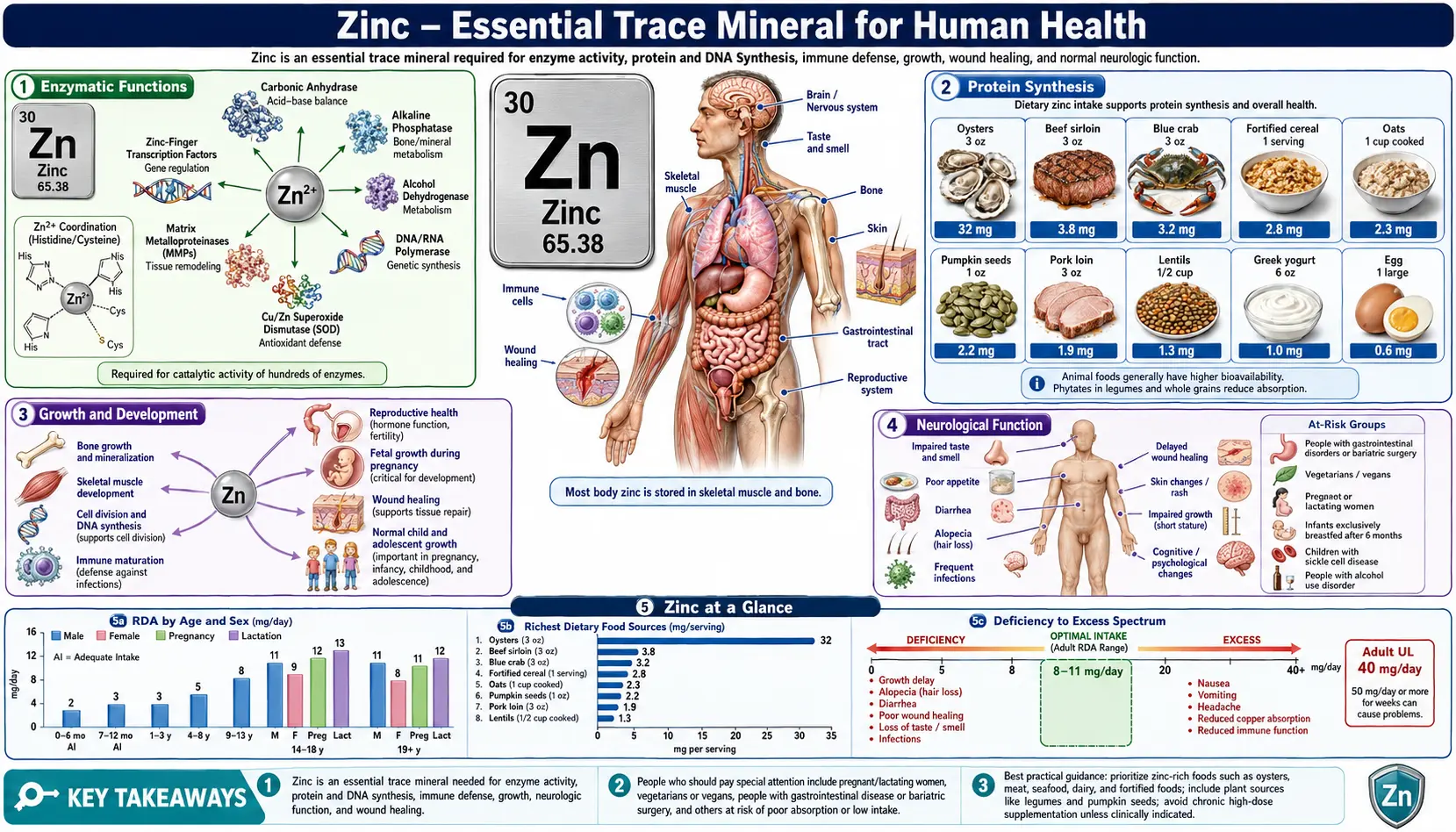
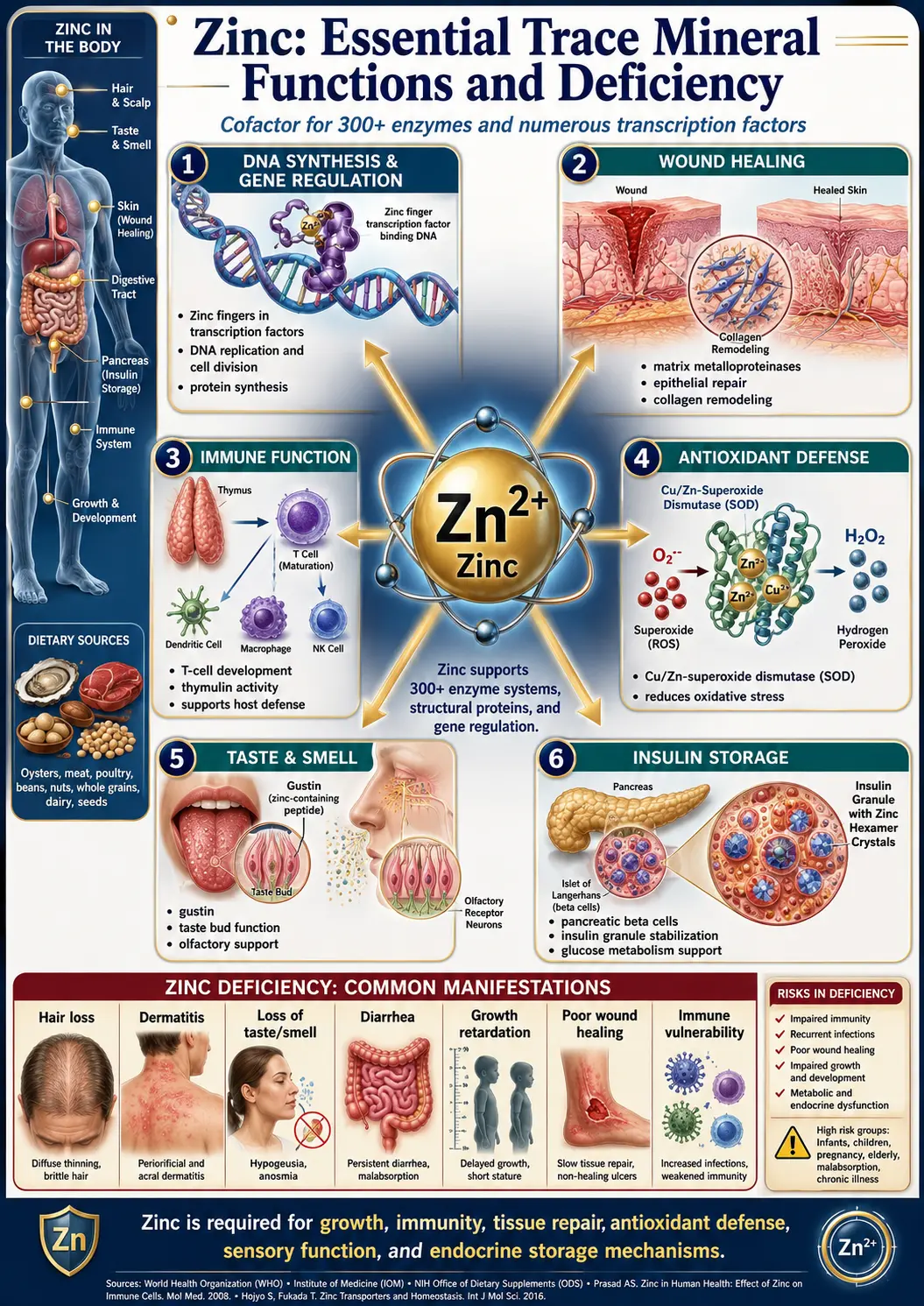
Zinc serves as a structural or catalytic cofactor in more than 300 enzymes (Prasad 2013); the NIH Office of Dietary Supplements describes it as required for the catalytic activity of hundreds of enzymes.
- Carbonic anhydrase – Zinc is essential for this enzyme, which catalyzes the reversible hydration of carbon dioxide. Carbonic anhydrase is critical for respiration, acid–base balance, and renal tubular reabsorption of bicarbonate.
- Alcohol dehydrogenase – A zinc-dependent enzyme in the liver responsible for the metabolism of ethanol and other alcohols, as well as the interconversion of retinol and retinal in vitamin A metabolism.
- Carboxypeptidases – Zinc-containing digestive enzymes that cleave peptide bonds at the carboxyl terminus of proteins, facilitating protein digestion in the small intestine.
- Alkaline phosphatase – Requires zinc for catalytic activity. This enzyme is involved in dephosphorylation reactions across many tissues including bone, liver, and kidney.
- RNA polymerase – Zinc is required for RNA polymerase function, linking the mineral directly to gene transcription and the production of messenger RNA.
- Superoxide dismutase (Cu/Zn-SOD) – The cytoplasmic form of this antioxidant enzyme depends on both copper and zinc for its structure and catalytic action.
- Matrix metalloproteinases (MMPs) – A family of zinc-dependent endopeptidases that degrade extracellular matrix components, playing roles in tissue remodeling, wound healing, and embryonic development.
- Zinc finger proteins – Zinc stabilizes the finger-like protein domains that bind DNA and regulate gene expression. A 2006 genome analysis estimated that about 2,800 human proteins, roughly 10% of the proteome, may bind zinc; zinc fingers were the largest class, and most of these proteins are involved in regulating gene expression (Andreini 2006). Prasad's 2013 review counts more than 1,000 transcription factors that require zinc.
Immune System Function
A 2017 review calls zinc a "gatekeeper of immune function" because of its broad influence on both innate and adaptive immunity (Wessels 2017). In Prasad's studies of mild human zinc deficiency, natural killer cell activity, T-helper cell IL-2 activity and serum thymulin activity all fell (Prasad 2013).
- T-cell development and function – Zinc is required for the maturation of T lymphocytes in the thymus. Thymulin, a thymic hormone involved in T-cell development, needs zinc for its activity, and its activity is severely disturbed in zinc deficiency (Wessels 2017). Cell-mediated immune dysfunction is one of the main clinical problems of zinc deficiency (Prasad 2013).
- Natural killer (NK) cell activity – NK cells provide a first line of defense against virally infected and malignant cells. In zinc deficiency, their recognition of target cells and their lytic activity decrease (Wessels 2017).
- Neutrophil and macrophage function – Zinc supports phagocytosis, oxidative burst, and chemotaxis in neutrophils and macrophages. These innate immune cells depend on zinc-containing enzymes for their antimicrobial activity.
- Cytokine regulation – Zinc modulates the production of pro-inflammatory cytokines such as interleukin-1 beta (IL-1β), interleukin-6 (IL-6), and tumor necrosis factor alpha (TNF-α). Both deficiency and excess zinc can dysregulate cytokine balance.
- Barrier function – Zinc maintains the integrity of skin and mucosal membranes, which serve as physical barriers to pathogen entry.
For a detailed discussion, see Zinc for Immune Function.
Wound Healing
Zinc participates in every phase of wound repair, from initial hemostasis and inflammation through proliferation and tissue remodeling.
- Collagen synthesis – Zinc is a cofactor for enzymes involved in collagen cross-linking and maturation. Adequate zinc ensures that newly formed collagen has proper tensile strength.
- Cell proliferation – Zinc is required for DNA synthesis and mitosis, both of which are essential for the rapid cell division that occurs during wound closure. Keratinocyte and fibroblast proliferation depend on zinc availability.
- Inflammatory modulation – Zinc helps regulate the inflammatory phase so that it is effective against pathogens without causing excessive tissue damage. It influences neutrophil recruitment and the resolution of inflammation.
- Metalloproteinase activity – Zinc-dependent matrix metalloproteinases (MMPs) remodel the extracellular matrix during the proliferative and remodeling phases, enabling scar maturation and tissue restoration.
- Clinical significance – Delayed wound healing is one of the signs of moderate zinc deficiency (Prasad 2013). Whether extra zinc speeds healing in people who are not deficient is less clear: a Cochrane review of six small trials (183 participants) found no evidence that oral zinc sulphate improves the healing of arterial or venous leg ulcers, and noted that all the trials were small (Wilkinson 2014).
For a detailed discussion, see Zinc for Wound Healing.
Protein Synthesis
Zinc is integral to the machinery of protein synthesis at multiple levels.
- Ribosomal structure – Zinc ions are incorporated into ribosomal proteins and are necessary for the structural integrity of ribosomes, the cellular organelles where translation of mRNA into protein occurs.
- Transfer RNA (tRNA) metabolism – Zinc-dependent enzymes participate in tRNA processing and aminoacyl-tRNA synthetase activity, ensuring the accurate delivery of amino acids during translation.
- Transcription factor activity – Many transcription factors contain zinc finger motifs. These proteins regulate the expression of genes encoding structural proteins, enzymes, hormones, and receptors.
- Protein folding – Zinc ions serve as structural elements that stabilize the three-dimensional conformation of numerous proteins, ensuring their proper folding and biological activity.
DNA Synthesis and Cell Division
Zinc is essential for faithful DNA replication and orderly cell division, making it critically important during periods of rapid growth.
- DNA polymerase – The enzymes that copy DNA during the S phase of the cell cycle include zinc-binding domains, and zinc deprivation impairs DNA synthesis in cell studies.
- Thymidine kinase – An enzyme of the salvage pathway for thymidine, a nucleoside required for DNA synthesis; Prasad's review describes zinc as upregulating its activity, one of the ways zinc supports cell division and growth (Prasad 2013).
- DNA repair – Zinc is a component of several DNA repair enzymes, including poly(ADP-ribose) polymerase (PARP), which detects and signals DNA strand breaks. Zinc deficiency increases susceptibility to DNA damage and genomic instability.
- Cell cycle regulation – Zinc influences the activity of cyclin-dependent kinases and other cell cycle regulators, ensuring that cells progress through division checkpoints in an orderly manner.
- Apoptosis – Zinc modulates programmed cell death. Both excessive and insufficient zinc levels can trigger aberrant apoptosis, with implications for cancer, immune function, and tissue homeostasis.
Taste and Smell
Zinc plays a specialized role in the chemical senses of taste (gustation) and smell (olfaction).
- Gustin (carbonic anhydrase VI) – Gustin is a zinc-containing protein of parotid saliva; in 1998 it was shown to be identical to carbonic anhydrase VI. It was found to be decreased in the saliva of patients with loss of taste whose taste buds showed a specific abnormal appearance (Thatcher 1998). Reduced taste acuity is called hypogeusia.
- Olfactory receptor neurons – Zinc is concentrated in the olfactory epithelium and the olfactory bulb of the brain. It modulates neurotransmission in olfactory pathways, and deficiency can cause hyposmia (reduced sense of smell) or anosmia (complete loss of smell).
- Clinical relevance – Hypogeusia was among the findings in Prasad's studies of mild zinc deficiency (Prasad 2013), and the NIH Office of Dietary Supplements lists changes in taste and smell among the effects of deficiency. A 2017 Cochrane review of nine placebo-controlled zinc trials found only very low-quality evidence that zinc improves taste acuity in people with zinc-deficiency or idiopathic taste disorders (Kumbargere Nagraj 2017).
Reproductive Health
Zinc is vital for reproductive function in both males and females.
Male Reproductive Function
- Spermatogenesis – Zinc is present at high concentrations in the prostate gland and seminal fluid. It is required for normal sperm development, motility, and membrane stability. Zinc deficiency is associated with reduced sperm count and impaired fertility.
- Testosterone metabolism – Severe and moderate zinc deficiency are associated with hypogonadism in men. In a 1996 study, 20 weeks of dietary zinc restriction in four healthy young men lowered mean serum testosterone from 39.9 to 10.6 nmol/L, and six months of zinc supplementation in nine marginally zinc-deficient elderly men raised it from 8.3 to 16.0 nmol/L (Prasad 1996).
- Prostate health – The prostate gland accumulates more zinc than any other soft tissue in the body. Adequate zinc levels are believed to support normal prostate cell function, and research has explored the relationship between zinc status and prostate pathology.
Female Reproductive Function
- Oocyte development – Zinc is essential for oocyte maturation and the meiotic cell divisions that produce viable eggs. In mouse eggs, fertilization triggers bursts of zinc release known as "zinc sparks"; the fall in egg zinc they cause is needed for the egg to resume its cell cycle (Kim 2011), and the released zinc changes the zona pellucida so that fewer sperm bind, contributing to the block to polyspermy (Que 2017). Zinc sparks have also been recorded when human eggs are activated in the laboratory (Duncan 2016).
- Pregnancy – Zinc requirements increase during pregnancy: the adult RDA rises from 8 mg to 11 mg a day (NIH Office of Dietary Supplements). In populations with low intakes of absorbable zinc, deficiency is linked to higher risks of premature birth and low birthweight. Supplementation trials have not shown a clear benefit, however: a 2021 Cochrane review of 25 trials found that zinc supplementation may make little or no difference to preterm births (RR 0.87, 95% CI 0.74 to 1.03; 21 studies, 9,851 participants) and probably makes little or no difference to low birthweight (Carducci 2021).
- Lactation – Breast milk provides zinc to the nursing infant. Maternal zinc intake during lactation influences milk zinc concentration and the infant's zinc status during the critical early months of development.
Growth and Development
Zinc is indispensable for normal growth from conception through adolescence.
- Prenatal development – Zinc is required for embryogenesis, organogenesis, and fetal skeletal development. Zinc-dependent transcription factors regulate the genes that guide tissue differentiation during embryonic development.
- Childhood growth – Growth retardation is one of the main clinical problems of zinc deficiency (Prasad 2013). A 2002 meta-analysis of 33 trials in prepubertal children found that zinc supplementation produced significant positive responses in height and weight gain, with larger responses in children who were underweight or stunted at the start (Brown 2002).
- Growth hormone signaling – Zinc influences the growth hormone–insulin-like growth factor 1 (GH-IGF-1) axis. Zinc deficiency decreases circulating IGF-1 independent of total energy intake, and zinc is involved in IGF-1 generation and IGF-1 receptor signaling (Prasad 2013).
- Bone development – Laboratory and animal studies describe zinc stimulating osteoblasts (bone-forming cells) and inhibiting osteoclasts (bone-resorbing cells); bone is among the tissues richest in zinc (Wessels 2017).
- Pubertal development – Adequate zinc is necessary for the hormonal changes of puberty. Prasad's original patients, adolescent and young men with zinc deficiency, had growth retardation and hypogonadism that improved with zinc supplementation (Prasad 2013).
Antioxidant Defense
Although zinc is not a classical antioxidant in the way that vitamins C and E are, it contributes significantly to the body's antioxidant defense systems.
- Cu/Zn superoxide dismutase (SOD1) – This cytoplasmic enzyme converts superoxide radicals into hydrogen peroxide and molecular oxygen, representing a critical first step in neutralizing reactive oxygen species (ROS). Zinc provides structural stability to the enzyme, while copper participates directly in catalysis.
- Metallothionein induction – Zinc induces the synthesis of metallothioneins, a family of cysteine-rich proteins that scavenge free radicals, sequester toxic metals such as cadmium and mercury, and buffer zinc inside cells; they bind about 20% of intracellular zinc (Wessels 2017).
- Protection of sulfhydryl groups – Zinc binds to thiol groups on proteins, shielding them from oxidative damage. This protective effect helps preserve the function of enzymes and structural proteins that contain critical cysteine residues.
- Inhibition of NADPH oxidase – Prasad's 2013 review describes zinc inhibiting NADPH oxidase, an enzyme that generates superoxide radicals, as one of its antioxidant mechanisms (Prasad 2013).
- NF-kB modulation – Zinc regulates the nuclear factor kappa-B (NF-κB) signaling pathway, which controls the expression of genes involved in inflammation and oxidative stress. In cell studies zinc reduced NF-κB activation, and in healthy volunteers given 45 mg/day of zinc, TNF-α and IL-1β mRNA in blood mononuclear cells fell (Prasad 2013).
Skin Health
The skin contains approximately 5% of the body's total zinc (Ogawa 2018).
- Keratinocyte differentiation – Zinc regulates the proliferation and differentiation of keratinocytes, the predominant cell type in the epidermis. Proper zinc status supports normal epidermal turnover and barrier function.
- Sebaceous gland function – Zinc has been studied for its effects on the sebaceous gland, and oral and topical zinc have been tested in acne; that evidence is reviewed on the Zinc for Skin Health page.
- Photoprotection – Zinc oxide is widely used in topical sunscreens as a physical UV filter. Laboratory studies have also examined zinc's antioxidant effects in skin cells exposed to ultraviolet light.
- Dermatological conditions – Acrodermatitis enteropathica is a rare inherited defect in the absorption of dietary zinc, caused by mutations in the SLC39A4 gene for the intestinal zinc transporter ZIP4 (Wang 2002); the resulting zinc deficiency produces severe dermatitis, diarrhea, and hair loss. Acquired zinc deficiency can produce similar skin lesions. Zinc oxide pastes are used on diaper dermatitis, and oral zinc has been tested for warts: in a 2002 placebo-controlled trial in people with recalcitrant warts and low serum zinc, zinc sulphate at 10 mg/kg a day (up to 600 mg a day, far above the adult upper limit) cleared warts in 20 of the 23 patients who completed the zinc arm, against none on placebo; only 43 of the 80 enrolled completed the study (Al-Gurairi 2002).
- Collagen and elastin maintenance – Zinc supports the enzymes responsible for collagen and elastin cross-linking, which maintain skin firmness and elasticity.
Neurological Function
Zinc is highly concentrated in the brain, particularly in the hippocampus, amygdala, and cerebral cortex, where it plays roles in neurotransmission, synaptic plasticity, and neuroprotection.
- Synaptic zinc signaling – A subset of glutamatergic neurons in the forebrain sequester free zinc in synaptic vesicles and release it during neurotransmission. This synaptically released zinc modulates the activity of NMDA receptors, GABA receptors, and glycine receptors, influencing excitatory and inhibitory signaling.
- Learning and memory – Zinc is involved in long-term potentiation (LTP), the synaptic mechanism underlying memory formation. Disruptions in brain zinc homeostasis have been linked to cognitive impairment and memory deficits.
- Neurodevelopment – Zinc is critical for brain development during fetal life and early childhood. Deficiency during these periods can lead to impaired cognitive development, behavioral abnormalities, and attention deficits.
- Neuroprotection – Through its antioxidant functions and its ability to regulate apoptotic pathways, zinc helps protect neurons from excitotoxicity and oxidative damage. However, excessive free zinc release during ischemic events can paradoxically contribute to neuronal death, highlighting the importance of tightly regulated zinc homeostasis in the brain.
- Mood regulation – Zinc modulates serotonergic and dopaminergic neurotransmission. A 2013 meta-analysis of 17 studies (1,643 depressed and 804 control participants) found blood zinc about 1.85 µmol/L lower in people with depression, with lower zinc in more severe depression; its authors called the potential benefits of supplementation a question for further research (Swardfager 2013).
- Neurodegenerative disease – Dysregulated zinc metabolism has been implicated in Alzheimer's disease, where zinc interacts with amyloid-beta peptides and may influence plaque formation. Research continues to explore the complex relationship between zinc homeostasis and neurodegeneration.
Intake, Food Sources and Absorption
The US Food and Nutrition Board set the Recommended Dietary Allowance (RDA) for adults aged 19 and over at 11 mg of zinc a day for men and 8 mg for women, 11 mg in pregnancy and 12 mg during lactation. The Tolerable Upper Intake Level (UL) for adults is 40 mg a day from food and supplements combined; it was set on the basis of intakes that have an adverse effect on copper status, and it does not apply to people receiving zinc as medical treatment. These figures are as tabulated in the NIH Office of Dietary Supplements zinc fact sheet (updated September 28, 2022). The full table by age is on the Zinc: Food Sources & Daily Intake page.
According to the same fact sheet, the richest food sources of zinc are meat, fish and seafood. Oysters contain more zinc per serving than any other food (3 ounces of raw farmed Eastern oysters: 32 mg), but beef supplies 20% of the zinc Americans get from food because it is eaten so often. Eggs and dairy foods also contain zinc, and fruits and vegetables contain very little. The table gives zinc per 100 g as listed in USDA FoodData Central (SR Legacy data), with each record linked:
| Food (USDA description, shortened) | Zinc, mg per 100 g | FDC ID |
|---|---|---|
| Oysters, Eastern, wild, cooked (moist heat) | 78.6 | 171980 |
| Oysters, Pacific, cooked (moist heat) | 33.2 | 174250 |
| Hemp seed, hulled | 9.9 | 170148 |
| Pumpkin and squash seed kernels, dried | 7.81 | 170556 |
| Crab, Alaska king, cooked (moist heat) | 7.62 | 174202 |
| Beef, composite of trimmed retail cuts, lean and fat, cooked | 6.34 | 170609 |
| Cashew nuts, raw | 5.78 | 170162 |
| Beef liver, braised | 5.3 | 168626 |
| Lamb, ground, broiled | 4.67 | 172544 |
| Cheddar cheese, sharp | 3.74 | 170899 |
| Natto (fermented soybeans) | 3.03 | 172443 |
| Chickpeas, cooked (boiled) | 1.53 | 173799 |
| Egg, whole, fried | 1.39 | 173423 |
| Lentils, cooked (boiled) | 1.27 | 175254 |
| Brown rice, long-grain, cooked | 0.71 | 169704 |
Phytate and absorption. Beans, nuts, seeds and whole grains contain zinc, but less of it is absorbed than from animal foods, because these plant foods contain phytates (the storage form of phosphorus in plants), which bind zinc in the intestine into an insoluble complex. The fact sheet gives the share of zinc absorbed from food as ranging from 5% to more than 50%, depending on how much plant food, and so phytate, the diet contains. A review of dietary factors identifies phytate as having a strong negative effect on zinc absorption from composite meals, names inositol hexaphosphate and pentaphosphate as the forms responsible, and reports that reducing phytate by phytase enzymes, germination or fermentation markedly improves absorption, while more protein in a meal increases it (Lönnerdal 2000). The fact sheet also describes soaking beans, grains and seeds for several hours before cooking as reducing phytate's binding of zinc, and organic acids in fermented foods as possibly increasing absorption.
What Trials Report: Colds, Eyes and Safety
Zinc lozenges and the common cold
The current Cochrane review (Nault 2024) included 34 placebo-controlled trials with 8,526 participants; 17 tested lozenges, and zinc gluconate lozenge doses ranged from 45 to 276 mg a day. It found that zinc may make little or no difference to the risk of catching a cold (RR 0.93, 95% CI 0.85 to 1.01; low-certainty evidence). Used as treatment, zinc may shorten a cold, by a mean of 2.37 days (95% CI 0.53 to 4.21 days; 8 studies, 972 participants; low-certainty evidence), and it probably increases non-serious adverse events such as unpleasant taste and stomach upset (RR 1.34, 95% CI 1.15 to 1.55). The authors noted wide variation in the interventions and incomplete reporting across the trials.
A 2017 meta-analysis limited to lozenge trials giving more than 75 mg of zinc a day (seven trials, 575 participants) found colds 33% shorter on average (95% CI 21% to 45%): 40% in the three zinc acetate trials and 28% in the four zinc gluconate trials, a difference that was not significant. Trials giving 192–207 mg a day did not find a larger effect than trials giving 80–92 mg a day (Hemilä 2017). An earlier Cochrane review of zinc for the common cold (Singh 2013) was withdrawn in April 2015 over concerns about the calculation and analysis of its data, and remains withdrawn after a 2016 editorial investigation; its figures are not used here.
Zinc in the AREDS eye-disease trial
The Age-Related Eye Disease Study enrolled 3,640 people aged 55–80 with signs of age-related macular degeneration (AMD) and followed them for an average of 6.3 years. Participants took antioxidants (vitamin C, vitamin E and beta carotene), zinc 80 mg as zinc oxide with copper 2 mg as cupric oxide, both, or placebo. Antioxidants plus zinc significantly reduced the odds of developing advanced AMD (OR 0.72, 99% CI 0.52 to 0.98); for zinc alone the reduction (OR 0.75, 99% CI 0.55 to 1.03) was significant only in the higher-risk group (AREDS Research Group 2001). The NIH fact sheet adds that the follow-up AREDS2 study found a formula with 25 mg of zinc gave the same protection, a finding its researchers viewed as preliminary. Prasad's review describes the copper as added to prevent zinc-induced copper deficiency (Prasad 2013).
Zinc-induced copper deficiency
The NIH fact sheet states that zinc doses of 50 mg or more, if used for weeks, can interfere with copper absorption, reduce immune function and lower HDL cholesterol, and that the adult upper limit was set on the basis of zinc's effect on copper status. Chronic, excessive use of zinc-containing denture adhesive creams has been linked to copper deficiency and neurologic disease. A 2005 report described three patients whose zinc-induced copper deficiency was first recognized on bone marrow examination; they had anemia and severe or moderate neutropenia, and two had progressive peripheral neuropathy (Willis 2005). The Zinc Toxicity: Copper Deficiency page covers this in detail.
Intranasal zinc and loss of smell
On June 16, 2009 the US Food and Drug Administration advised consumers to stop using three over-the-counter intranasal zinc cold remedies, a nasal gel and two nasal swab products, because they were associated with loss of the sense of smell (anosmia), which the agency said may be long-lasting or permanent. The FDA had received more than 130 reports; many people said the loss occurred with the first dose (FDA news release, June 16, 2009, archived copy). A 2006 case series of 17 patients with anosmia after intranasal zinc gluconate gel described deep sniffing during application, an immediate burning sensation, and loss of smell within 48 hours (Alexander 2006). The warning concerns zinc applied inside the nose, not zinc taken by mouth.
Deficiency and Excess
Too little or too much zinc both cause problems. Deficiency impairs immunity, healing, taste and smell, growth, and skin health, while chronic excess can trigger copper deficiency, nausea, and immune suppression. Symptoms, causes, and treatment of each are covered in Zinc Deficiency and Zinc Toxicity (Excess Zinc).
Key Research Papers
- Prasad AS (2013). Discovery of human zinc deficiency: its impact on human health and disease. Advances in Nutrition 4(2):176-90. — PubMed PMID: 23493534
- Wessels I, Maywald M, Rink L (2017). Zinc as a gatekeeper of immune function. Nutrients 9(12):1286. — PubMed PMID: 29186856
- King JC (2011). Zinc: an essential but elusive nutrient. American Journal of Clinical Nutrition 94(2):679S-84S. — PubMed PMID: 21715515
- Andreini C, Banci L, Bertini I, Rosato A (2006). Counting the zinc-proteins encoded in the human genome. Journal of Proteome Research 5(1):196-201. — PubMed PMID: 16396512
- Lönnerdal B (2000). Dietary factors influencing zinc absorption. Journal of Nutrition 130(5S Suppl):1378S-83S. — PubMed PMID: 10801947
- Nault D, Machingo TA, Shipper AG, et al. (2024). Zinc for prevention and treatment of the common cold. Cochrane Database of Systematic Reviews 5:CD014914. — PubMed PMID: 38719213
- Hemilä H (2017). Zinc lozenges and the common cold: a meta-analysis comparing zinc acetate and zinc gluconate, and the role of zinc dosage. JRSM Open 8(5):2054270417694291. — PubMed PMID: 28515951
- Singh M, Das RR (2013). Zinc for the common cold. Cochrane Database of Systematic Reviews (6):CD001364. — PubMed PMID: 23775705 — Withdrawn (withdrawn by Cochrane in April 2015 over concerns about the calculation and analysis of its data, and kept withdrawn in 2016 after an editorial investigation of how some means and standard deviations were derived; superseded by Nault et al. 2024, above; withdrawal notice: PubMed PMID: 25924708)
- Age-Related Eye Disease Study Research Group (2001). A randomized, placebo-controlled, clinical trial of high-dose supplementation with vitamins C and E, beta carotene, and zinc for age-related macular degeneration and vision loss: AREDS report no. 8. Archives of Ophthalmology 119(10):1417-36. — PubMed PMID: 11594942
- Willis MS, Monaghan SA, Miller ML, et al. (2005). Zinc-induced copper deficiency: a report of three cases initially recognized on bone marrow examination. American Journal of Clinical Pathology 123(1):125-31. — PubMed PMID: 15762288
- Alexander TH, Davidson TM (2006). Intranasal zinc and anosmia: the zinc-induced anosmia syndrome. Laryngoscope 116(2):217-20. — PubMed PMID: 16467707
- Wilkinson EA (2014). Oral zinc for arterial and venous leg ulcers. Cochrane Database of Systematic Reviews 9:CD001273. — PubMed PMID: 25202988
- Thatcher BJ, Doherty AE, Orvisky E, et al. (1998). Gustin from human parotid saliva is carbonic anhydrase VI. Biochemical and Biophysical Research Communications 250(3):635-41. — PubMed PMID: 9784398
- Kumbargere Nagraj S, George RP, Shetty N, et al. (2017). Interventions for managing taste disturbances. Cochrane Database of Systematic Reviews 12:CD010470. — PubMed PMID: 29260510
- Prasad AS, Mantzoros CS, Beck FW, et al. (1996). Zinc status and serum testosterone levels of healthy adults. Nutrition 12(5):344-8. — PubMed PMID: 8875519
- Kim AM, Bernhardt ML, Kong BY, et al. (2011). Zinc sparks are triggered by fertilization and facilitate cell cycle resumption in mammalian eggs. ACS Chemical Biology 6(7):716-23. — PubMed PMID: 21526836
- Que EL, Duncan FE, Bayer AR, et al. (2017). Zinc sparks induce physiochemical changes in the egg zona pellucida that prevent polyspermy. Integrative Biology 9(2):135-44. — PubMed PMID: 28102396
- Duncan FE, Que EL, Zhang N, et al. (2016). The zinc spark is an inorganic signature of human egg activation. Scientific Reports 6:24737. — PubMed PMID: 27113677
- Carducci B, Keats EC, Bhutta ZA (2021). Zinc supplementation for improving pregnancy and infant outcome. Cochrane Database of Systematic Reviews 3:CD000230. — PubMed PMID: 33724446
- Brown KH, Peerson JM, Rivera J, Allen LH (2002). Effect of supplemental zinc on the growth and serum zinc concentrations of prepubertal children: a meta-analysis of randomized controlled trials. American Journal of Clinical Nutrition 75(6):1062-71. — PubMed PMID: 12036814
- Ogawa Y, Kinoshita M, Shimada S, Kawamura T (2018). Zinc in keratinocytes and Langerhans cells: relevance to the epidermal homeostasis. Journal of Immunology Research 2018:5404093. — PubMed PMID: 30622978
- Wang K, Zhou B, Kuo YM, et al. (2002). A novel member of a zinc transporter family is defective in acrodermatitis enteropathica. American Journal of Human Genetics 71(1):66-73. — PubMed PMID: 12032886
- Al-Gurairi FT, Al-Waiz M, Sharquie KE (2002). Oral zinc sulphate in the treatment of recalcitrant viral warts: randomized placebo-controlled clinical trial. British Journal of Dermatology 146(3):423-31. — PubMed PMID: 11952542
- Swardfager W, Herrmann N, Mazereeuw G, et al. (2013). Zinc in depression: a meta-analysis. Biological Psychiatry 74(12):872-8. — PubMed PMID: 23806573
PubMed Topic Searches
Connections
- Fake Meat — Where the zinc bioavailability gap between meat and analogues actually sits
- All Minerals
- Wound Healing — where zinc genuinely helps and where it does not
- Testosterone: The Male Hormone Axis — interactive animation
- Enzymes: How They Speed Up Life — interactive animation
- Taste: The Five Basic Tastes & How Your Tongue Reads Them — interactive animation
- How a Wound Heals: The Four Overlapping Phases — interactive animation
- Stomach Acid, pH & the PPI Trade-off — interactive animation
- Immune Response — interactive animation
- Zinc Deficiency
- Zinc Toxicity (Excess Zinc)
- Zinc Toxicity
- Zinc Benefits Deep Dive
- Zinc for Immune Function
- Zinc for Wound Healing
- Zinc for Testosterone
- Zinc for Skin Health
- Copper
- Relationship Between Hemoglobin and Ceruloplasmin — why ceruloplasmin (the copper ferroxidase) is required to load iron into hemoglobin, and why "iron-deficiency anemia" is often functional copper deficiency.
- Selenium
- Iron
- Vitamin A
- Vitamin C
- Vitamin D3
- Collagen
- Testosterone Test
- Glycine
- Cysteine
- Acne
- Alopecia
- Depression
- Lead
- Copper-Iron Dysregulation
- Eggs
- Conditions on this site that reference this page: Pseudomonas aeruginosa · Cholera in Children and Vulnerable Populations · Contact Dermatitis · Folliculitis · Fungal Infections · Hidradenitis Suppurativa · Psoriasis · Rosacea