Natural Detox Protocols
Interactive Visualization How Your Liver Actually Detoxifies Watch Phase I make a toxin more reactive and Phase II neutralise it. Launch →
Table of Contents
- What Detoxification Actually Means
- Modern Chemical Exposures
- Symptoms Detox Programs Attribute to “Toxicity”
- The Liver as the Primary Detox Organ
- Phase I Detoxification: Cytochrome P450
- Phase II Detoxification: Conjugation Pathways
- Phase III Detoxification: Transport and Elimination
- Heavy Metals: Chelation and Binders
- Foods and Supplements Studied for Detox Pathways
- The Lymphatic System
- Sweating and Sauna
- Colon Health and Elimination
- Hydration and Detoxification
- Juice Cleansing: Claims and Findings
- What Detox Diets Include and Exclude
- Detox Reactions and the Herxheimer Response
- Program Timelines: What Has Been Tested
- Cautions and Contraindications
- Key Research Papers
- Connections
- Featured Videos
What Detoxification Actually Means
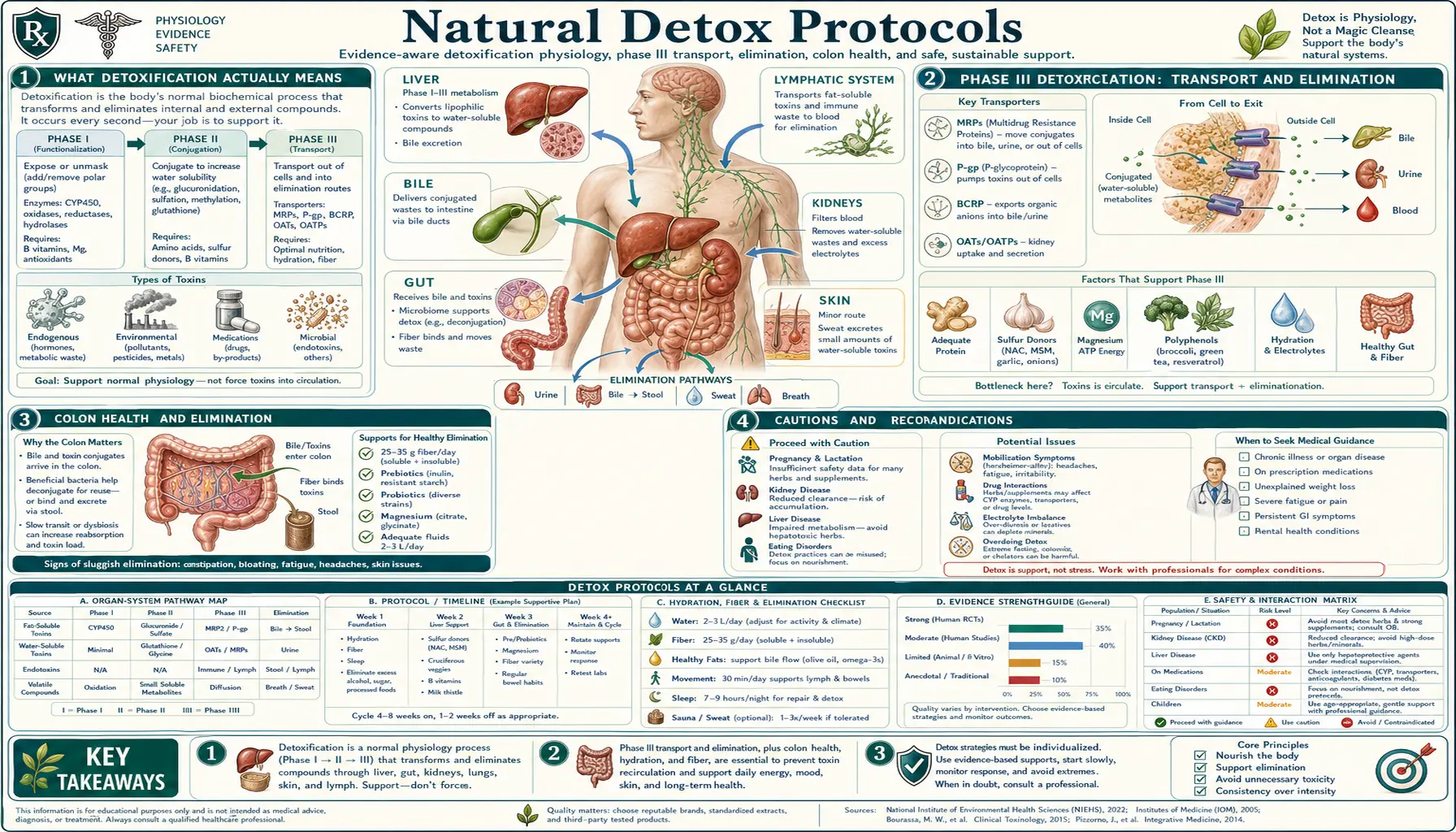
In physiology, detoxification (biotransformation) is the continuous process by which the body chemically changes and eliminates foreign compounds and its own metabolic waste. It takes place mainly in the liver, with the kidneys, gut, lungs and skin also involved. In medicine, “detoxification” also names specific treatments for poisoning, drug overdose or alcohol withdrawal. Commercial “detox” programs and products are a third, separate use of the word: a 2015 critical review found very little clinical evidence for detox diets and, to the authors’ knowledge, no randomized controlled trials of commercial detox diets in humans (Klein & Kiat 2015).
Textbooks and reviews describe the liver’s handling of fat-soluble chemicals in phases:
- Phase I (Functionalization): Enzymes of the cytochrome P450 family modify compounds by oxidation, reduction or hydrolysis. Some products are more reactive, and occasionally more toxic, than the original compound.
- Phase II (Conjugation): The products of Phase I, or the original compounds, are joined to water-soluble molecules through pathways including glutathione conjugation, methylation, sulfation, glucuronidation, acetylation and amino acid conjugation, which generally makes them less reactive and easier to excrete.
- Phase III (Transport and Elimination): Membrane transporter proteins move conjugated compounds out of cells into bile or urine.
Naturopathic writers present detox programs as a way of supplying the nutrients and conditions these pathways use. A 2015 review of clinical and in vivo studies of foods and food-derived compounds cautions that current research has limitations, that many nutrients have biphasic, dose-dependent effects, and that genetic differences can change outcomes; one such review concluded that a whole-foods approach may be prudent (Hodges & Minich 2015). The sections below separate what the physiology shows from what detox programs claim. The liver’s chemistry is covered in depth on the Liver Phase 1 and Phase 2 page, and the evidence on commercial cleanses on the Liver Detox page.
Modern Chemical Exposures
Detox programs start from the premise that modern chemical exposure exceeds the body’s capacity to clear it. Exposure to industrial chemicals is real and measurable; whether it overwhelms normal clearance in a given person, and whether a detox program changes that, are separate questions that the research has not answered for commercial programs.
- Industrial chemicals: A 2020 analysis of 22 chemical inventories from 19 countries and regions counted more than 350,000 chemicals and mixtures registered for production and use, and found that the identities of many are publicly unknown because they are claimed as confidential (over 50,000) or ambiguously described (up to 70,000) (Wang 2020). These include industrial solvents, flame retardants, per- and polyfluoroalkyl substances (PFAS) and volatile organic compounds.
- Heavy metals: Commonly described exposure sources include mercury from dental amalgam and some fish, lead from old paint and plumbing, arsenic in some well water and rice, and cadmium from cigarette smoke and industrial emissions. Lead and cadmium are retained in the body for long periods.
- Pesticides and herbicides: Agricultural chemicals such as glyphosate and organophosphates are found as residues in food and water.
- Plastics and endocrine disruptors: Bisphenol A (BPA) and phthalates are widespread in packaging and consumer products. The Endocrine Society’s 2015 scientific statement concluded that the evidence for endocrine-related health effects of such chemicals has strengthened, citing nonmonotonic dose-responses, low-dose effects and vulnerability during development, while cautioning about inferring causality in humans (Gore 2015).
- Air pollution: Particulate matter, ozone, nitrogen dioxide and sulfur dioxide are linked to inflammation and oxidative stress.
- Medications: Prescribed and over-the-counter drugs are processed by the same liver enzymes, which is the basis of many drug and herb interactions (see Cautions).
Detox literature uses the term total body burden for the sum of these exposures. Some persistent pollutants are measurable in blood, fat and other tissues, but no study found has validated a test for a “toxic overload” that a detox program then corrects.
Symptoms Detox Programs Attribute to “Toxicity”
Naturopathic and detox-program writers list the following symptoms as possible signs that detoxification pathways are overloaded:
- Persistent fatigue that does not improve with rest
- Brain fog, difficulty concentrating and poor memory
- Skin problems including acne, eczema, rashes and dull complexion
- Digestive complaints such as bloating, constipation, gas and food sensitivities
- Headaches and migraines without clear cause
- Joint and muscle pain with no obvious injury
- Chemical sensitivity to perfumes, cleaning products or exhaust fumes
- Hormonal complaints including PMS, irregular cycles and what proponents call “estrogen dominance”
- Weight gain or difficulty losing weight, which proponents attribute to toxins stored in fat tissue
- Mood disturbances including anxiety, depression and irritability
- Recurrent infections
- Bad breath and body odor
- Dark circles under the eyes (“allergic shiners”)
These symptoms are common and have many causes. No study found has validated this list as a way to identify impaired detoxification, and the 2015 Klein & Kiat review found no randomized controlled trial showing that a commercial detox diet relieves them. Several of them have treatable medical causes.
The Liver as the Primary Detox Organ
The liver is the main organ of biotransformation. It receives blood from the gut through the portal vein, so most compounds absorbed from food pass through it before reaching the rest of the body.
- Blood filtration: Kupffer cells, the macrophages lining the liver’s sinusoids, are constantly exposed to gut-derived bacteria, microbial debris and bacterial endotoxins; a 2006 review states that they make up 80 to 90 percent of the tissue macrophages in the body (Bilzer 2006).
- Bile production: The liver secretes bile, which carries cholesterol, bilirubin and many conjugated compounds into the intestine. About 95% of bile acids are reabsorbed in the terminal ileum and returned to the liver (the enterohepatic circulation), as described on the Binders page.
- Nutrient metabolism: The liver converts nutrients into active forms, stores several vitamins and minerals, and helps regulate blood sugar.
- Nitrogen waste: It converts the nitrogen from protein breakdown into urea, which the kidneys excrete.
Alcohol, some medications (most prominently acetaminophen in overdose), viral hepatitis and fatty liver disease are the established causes of liver damage; these are covered, with sources, on the Liver Detox page.
Phase I Detoxification: Cytochrome P450
Phase I is carried out mainly by the cytochrome P450 (CYP) enzymes, located in the endoplasmic reticulum of liver cells and other tissues. Of 57 putatively functional human CYPs, about a dozen, in the CYP1, 2 and 3 families, are responsible for the biotransformation of most foreign substances, including 70–80% of drugs in clinical use; the most highly expressed in the liver are CYP3A4, 2C9, 2C8, 2E1 and 1A2 (Zanger & Schwab 2013).
Oxidation
Oxidation, which adds an oxygen atom or removes hydrogen, is the most common Phase I reaction and the main route for many drugs, environmental chemicals and steroid hormones. Enzymes involved include CYP1A2, CYP2D6, CYP2C9, CYP2C19 and CYP3A4. Genetic variants in several of these (notably CYP2D6, 2C19 and 2C9) produce poor, intermediate, extensive and ultrarapid metabolizer types (Zanger & Schwab 2013).
Reduction
Some compounds undergo reduction, in which electrons are added to the molecule; nitro and azo compounds are examples.
Hydrolysis
Hydrolysis uses water to split chemical bonds, commonly ester and amide bonds.
Reactive intermediates: Some chemicals are turned into more toxic metabolites along the way (Grant 1991). The best-known example is acetaminophen, whose reactive metabolite is normally neutralized by glutathione; acetylcysteine is the standard treatment for acetaminophen poisoning (Heard 2008). Detox writers describe an “overactive Phase I with a sluggish Phase II” as a dangerous imbalance; that framing comes from the naturopathic literature, and no test or trial found measures it in otherwise healthy people.
Nutrients named for Phase I: A 1998 review in an alternative-medicine journal lists riboflavin, niacin, vitamin B6, folic acid, vitamin B12, glutathione, branched-chain amino acids, flavonoids and phospholipids as nutrients used in Phase I, and carotenes, vitamins C and E, selenium, copper, zinc, manganese, coenzyme Q10 and other plant compounds as antioxidant protection against its reactive by-products (Liska 1998). Some are genuine enzyme cofactors (riboflavin and niacin in the NADPH system that supplies electrons to P450 enzymes). No trial found has shown that taking extra amounts improves detoxification in people who are not deficient.
Phase II Detoxification: Conjugation Pathways
Phase II attaches a water-soluble group to a compound so that it can be excreted in bile or urine. Several types of conjugation reaction are described, including glucuronidation, sulfation, and glutathione and amino acid conjugation, each requiring cofactors replenished from the diet (Liska 1998); detox literature usually lists six.
Glutathione Conjugation
Glutathione S-transferases join glutathione, a tripeptide of cysteine, glutamic acid and glycine, to reactive electrophiles, including some Phase I intermediates and carcinogens. Glutathione is the most abundant antioxidant the body makes (Richie 2015), and detox writers often call it the “master antioxidant.” Its depletion is the key step in acetaminophen liver injury (Heard 2008). Detox protocols name N-acetylcysteine (NAC), alpha-lipoic acid, selenium, vitamins C and E and sulfur-containing foods as supports for glutathione; the human evidence for those used as supplements is described under Foods and Supplements below.
Methylation
Methylation transfers a methyl group from S-adenosylmethionine (SAMe). It is used for catechol estrogens and dopamine (via COMT), histamine and inorganic arsenic. Folate, vitamin B12, vitamin B6, betaine (trimethylglycine) and choline feed the methyl-donor cycle. A common variant in the MTHFR gene lowers that enzyme’s activity and, in people who carry two copies, raises blood homocysteine (Frosst 1995).
Sulfation
Sulfation attaches a sulfate group to compounds including thyroid and steroid hormones, bile acids, neurotransmitters and many drugs. The sulfate comes largely from the breakdown of sulfur amino acids in foods such as eggs, garlic, onions and cruciferous vegetables; molybdenum is the cofactor of sulfite oxidase, which converts sulfite to sulfate. The claim, common in detox literature, that sulfation capacity is depleted by chronic toxic exposure is not supported by any study found.
Glucuronidation
Glucuronidation joins compounds to glucuronic acid. It handles bilirubin, steroid and thyroid hormones, many drugs and environmental chemicals. Beta-glucuronidase, an enzyme present in tissues and produced by gut bacteria, can split these conjugates and release the original compound. D-glucaric acid, found in grapefruit, apples, oranges and cruciferous vegetables, forms D-glucaro-1,4-lactone, a beta-glucuronidase inhibitor; calcium D-glucarate supplements are a source of it, and most of the studies of it found are in animal models of cancer (Zółtaszek 2008).
Acetylation
N-acetyltransferase enzymes attach an acetyl group from acetyl-CoA to aromatic amines, hydrazines and sulfonamide drugs. Coenzyme A is made from pantothenic acid (vitamin B5). Inherited differences in these enzymes produce slow and fast acetylators, who process some drugs, such as isoniazid, at different rates.
Amino Acid Conjugation
This pathway joins compounds to amino acids, mainly glycine, taurine and glutamine. Glycine conjugation converts benzoic acid, a food preservative, to hippuric acid, and salicylic acid to salicyluric acid. Detox writers present bone broth, collagen and glycine supplements as supports for this pathway; no trial found has tested that.
Phase III Detoxification: Transport and Elimination
“Phase III” is the name given to the membrane transporters that move compounds and their conjugates across cell membranes, into bile, the gut or urine. Without efficient transport, conjugates can accumulate within cells.
- P-glycoprotein (P-gp): An efflux pump in the liver, intestine, kidneys and blood-brain barrier that moves many drugs out of cells.
- Multidrug resistance-associated proteins (MRPs): Transporters that move glutathione and glucuronide conjugates out of cells for biliary and renal excretion.
- Organic anion transporting polypeptides (OATPs): Mainly uptake transporters that carry bile acids, hormones and many drugs into liver cells.
Factors detox protocols name for Phase III:
- Fiber, which binds bile acids and some compounds excreted in bile and reduces their reabsorption
- Gut bacteria, because bacterial beta-glucuronidase can release conjugated compounds for reabsorption (see Colon Health)
- Regular bowel movements
- Curcumin and quercetin, which change the activity of several transporters in laboratory studies; effects on detoxification in people have not been shown
Heavy Metals: Chelation and Binders
Metals are elements and are not broken down; some, such as lead and cadmium, are retained for years in bone and kidney. Toxic-metal exposure is diagnosed by blood or urine testing, and the evidence on specific metals is covered on the Heavy Metals page. Detox protocols use two kinds of agents: chelators that act in the body, and binders that act in the gut.
Chelation
Chelating drugs, including succimer (DMSA), dimercaprol, D-penicillamine and calcium disodium EDTA, bind lead and other metals and increase their excretion; they also remove minerals such as zinc and, in some cases, calcium. A 2006 CDC report described three deaths from chelation-related hypocalcemia leading to cardiac arrest, advised clinicians unfamiliar with chelation to consult an expert, and stated that disodium EDTA (Na2EDTA) should not be given to children (CDC 2006). The U.S. National Center for Complementary and Integrative Health (NCCIH) notes that CDC recommends chelation for removing toxic metals only in some specific serious cases. Plant foods and supplements described as “natural chelators” have not been tested against these drugs in comparable trials, with the exception of the small garlic trial described below.
Binders and Other Agents Used in Detox Protocols
- Chlorella: Chlorella increased fecal excretion of methylmercury, cadmium and dioxins in rodent studies; in mice given methylmercury, blood and organ mercury did not differ, and the authors concluded it did not affect absorption from the gut (Uchikawa 2010). In humans, a study of 16 people with long-term amalgam fillings and titanium implants who took chlorella with a Fucus seaweed extract and sulfur amino acids for 90 days reported lower hair mercury, silver, tin and lead than at baseline; it had no placebo group and tested a combination (Merino 2019). No trial has established a chlorella dose for removing metals in people.
- Cilantro (Coriandrum sativum): The claim that cilantro mobilizes mercury traces largely to a 1996 case report by Yoshiaki Omura, who described mercury deposits after amalgam removal, detected with his Bi-Digital O-Ring Test, as eliminated by cilantro tablets taken with his “drug-uptake enhancement” methods (Omura 1996). In mice drinking lead-containing water, cilantro given by stomach tube reduced lead deposition in bone and lead-induced kidney injury (Aga 2001). The 2015 Klein & Kiat review lists coriander among foods with preliminary detoxification evidence, mostly from animal studies. The practice of pairing cilantro with a binder to prevent “redistribution” comes from practitioners; no human trial found has tested cilantro for metal removal.
- Activated charcoal: Activated charcoal is the most frequently used method of gastrointestinal decontamination in poisoning, but the joint position papers of the American Academy of Clinical Toxicology and the European Association of Poisons Centres and Clinical Toxicologists state that single-dose activated charcoal should not be given routinely to poisoned patients; it may be considered up to one hour after a potentially toxic ingestion of a poison known to be adsorbed by charcoal, and the 2005 paper found no evidence that it improves clinical outcome (Chyka 2005). A 1988 review lists metals such as iron and lithium, along with alcohols and cyanide, as known exceptions to charcoal’s adsorption (Neuvonen & Olkkola 1988). The position papers address acute poisoning only and give no dose for chronic detox use. Charcoal also adsorbs most drugs.
- Bentonite and montmorillonite clay: Clays are aluminosilicates with cation-exchange capacity. The strongest human evidence is for one refined calcium montmorillonite clay against aflatoxin: in a 3-month placebo-controlled trial in Ghanaians at high risk of aflatoxin exposure, 1.5 g or 3.0 g of clay a day lowered serum aflatoxin-albumin adducts (Wang 2008). The trials used one specific clay, so results may not transfer to other clays.
- Zeolite (clinoptilolite): A 2018 critical review summarizes in-vivo studies of clinoptilolite in veterinary and human medicine and notes that public concerns have been raised about its safety (Kraljević Pavelić 2018). Zeolite is largely not absorbed from the gut; its human evidence for metal removal is less developed than the clay evidence for aflatoxin.
- Modified citrus pectin: In a 6-day pilot study in healthy adults, urinary arsenic and cadmium excretion rose significantly; the authors suggested systemic chelation by a component of the pectin as part of the explanation (Eliaz 2006). The study had no control group.
The “mobilize and bind” principle: Detox practitioners teach that metals mobilized from tissue need a binder in the gut, or they may be redistributed to more sensitive organs such as the brain. This principle comes from practitioner protocols; no clinical trial found has tested it. The binder evidence is set out in detail on the Binders: Charcoal, Chlorella, and Beyond page.
Foods and Supplements Studied for Detox Pathways
Detox protocols name specific foods, herbs and supplements as supports for the liver’s pathways. Some have been tested in people; many have been studied only in cells or animals.
Cruciferous Vegetables
Broccoli, cauliflower, Brussels sprouts, cabbage and kale contain glucosinolates, which form isothiocyanates such as sulforaphane, potent inducers of Phase II enzymes. Three-day-old sprouts of certain broccoli and cauliflower cultivars contain 10 to 100 times more glucoraphanin, the precursor of sulforaphane, than the mature plants (Fahey 1997). In a 12-week randomized trial in 291 participants from a rural area of China with substantial exposure to airborne pollutants, a broccoli-sprout beverage increased urinary excretion of the glutathione-derived conjugates of benzene (61%) and acrolein (23%), but not crotonaldehyde, compared with placebo (Egner 2014).
Sulfur-Rich Foods
Garlic, onions, leeks, shallots and eggs supply sulfur amino acids, which are raw materials for glutathione and sulfation. In a randomized trial in workers with chronic occupational lead poisoning, garlic (1,200 µg allicin three times daily for 4 weeks) lowered blood lead with no significant difference from the chelating drug D-penicillamine, and the authors judged garlic safer clinically (Kianoush 2012).
Supplements Named in Detox Protocols
- Milk thistle (Silybum marianum): A Cochrane systematic review of 18 randomized trials in 1,088 patients with alcohol-related or hepatitis B/C liver disease found no significant effect on mortality, complications of liver disease or liver histology (Rambaldi 2007). A 2012 placebo-controlled trial in 154 people with chronic hepatitis C found that silymarin at 420 mg or 700 mg three times a day for 24 weeks did not lower ALT significantly more than placebo (Fried 2012). Neither tested milk thistle as a “detox” for healthy people.
- N-acetylcysteine (NAC): NAC supplies cysteine, a building block of glutathione, and acetylcysteine is the standard treatment for acetaminophen poisoning (Heard 2008). Its use as a general detox supplement in healthy people has not been tested in trials found.
- Glutathione: In a 6-month randomized, placebo-controlled trial in 54 adults, oral glutathione at 250 or 1,000 mg a day raised glutathione levels in blood and other compartments, and levels returned to baseline after a 1-month washout (Richie 2015). An earlier 4-week trial in 40 adults using 500 mg twice daily found no change in oxidative-stress markers or glutathione status (Allen & Bradley 2011).
- Alpha-lipoic acid (ALA): A 1995 review describes lipoate and its reduced form, dihydrolipoate, as reacting with several reactive oxygen species and interacting with vitamin C and glutathione, which may in turn recycle vitamin E; it also notes that dihydrolipoate may act as a prooxidant through reduction of iron (Packer 1995). Trials of ALA as a detox agent were not found.
- Vitamin C: In a 4-week randomized trial in 75 male smokers, 1,000 mg of vitamin C a day lowered blood lead, while 200 mg a day and placebo had no effect; the authors suggested reduced intestinal absorption of lead as a possible mechanism (Dawson 1999).
Detox protocols often give daily doses for these supplements; the doses above are the ones the trials used, and none was a trial of a detox program.
The Lymphatic System
The lymphatic system returns fluid, proteins, fats and immune cells from the tissues to the bloodstream, passing through lymph nodes on the way. It has no central pump; it uses extrinsic pumping, from the compression of lymphatic vessels by surrounding tissue forces such as muscle movement, and intrinsic pumping, from rapid contractions of the lymphatic vessels’ own muscle (Zawieja 2009). Detox protocols describe it as a waste-removal network and offer several practices to move lymph.
Dry Brushing
Dry skin brushing, in which a natural-bristle brush is stroked over dry skin toward the heart, is described by proponents as stimulating lymph flow and exfoliating the skin. A PubMed search found no controlled study of dry brushing and lymph flow or detoxification.
Rebounding
Proponents describe bouncing on a mini trampoline (rebounding) as opening and closing lymphatic valves, and often cite a NASA study. That 1980 study, in 8 young men, compared body acceleration and oxygen uptake during treadmill running and trampoline jumping, and found that at similar heart rates and oxygen uptake the biomechanical stimulus was greater with jumping; it was aimed at preventing deconditioning in weightlessness and did not measure lymph flow (Bhattacharya 1980). The “68 percent more efficient than jogging” figure often attributed to it does not appear in the abstract.
Movement
Muscle contraction during walking, swimming, yoga and other activity is one of the extrinsic forces that move lymph (Zawieja 2009). Studies of physical activity and detoxification as an outcome were not found.
Sweating and Sauna
Sweat carries small amounts of metals and some industrial chemicals out of the body. Small descriptive studies led by Stephen Genuis (20 participants each, no comparison group) found arsenic, cadmium, lead, mercury, BPA, phthalates and some PCB congeners in induced sweat (Genuis 2011), and a 2012 systematic review by Margaret Sears and colleagues called for properly sized trials (Sears 2012). A 2019 review of sweat-gland physiology concluded that the role of sweating in eliminating waste products and toxicants “seems to be minor” compared with the kidneys and gastrointestinal tract, and that studies suggesting a larger role may reflect methodological problems such as skin-surface contamination (Baker 2019).
Sauna Types
- Traditional Finnish sauna: A dry, stove-heated room. In the Finnish Kuopio Ischemic Heart Disease (KIHD) cohort of 2,315 men, those who used a sauna 4–7 times a week had lower rates of sudden cardiac death, fatal cardiovascular disease and all-cause death than men who used one once a week (Laukkanen 2015). It is an observational study and cannot show cause.
- Infrared sauna: Panels warm the body at a lower air temperature. A 2021 review gives typical sauna temperatures of 45 °C to 100 °C (113–212 °F), depending on the type (Patrick & Johnson 2021). Claims that infrared heat penetrates tissue more deeply and removes more toxicants come from proponents; in the BUS study of BPA, sweat BPA did not differ significantly between infrared sauna, steam sauna and exercise (Genuis 2012).
- Steam rooms: A humid room at a lower air temperature, where sweat cannot evaporate.
Exercise-Induced Sweating
The BUS studies also collected sweat during exercise. The suggestion, found in detox protocols, that showering promptly prevents excreted toxins from being reabsorbed through the skin has not been tested in any study found.
Fluids and electrolytes: The 2019 review gives sweat concentrations of roughly 10–90 mmol/L for sodium and for chloride and 2–8 mmol/L for potassium; it found people with high sweat sodium at increased risk of salt imbalance during prolonged heavy sweating (Baker 2019). Among deaths in Finnish saunas in 1990–2002, half of those who died were under the influence of alcohol (Kenttämies & Karkola 2008). Session schedules, temperatures, the Hubbard niacin-sauna regimen and its trial, and the full list of hazards are covered on the Sweating and Sauna Therapy page.
Colon Health and Elimination
Compounds that the liver excretes into bile pass into the intestine, where some are reabsorbed and returned to the liver (enterohepatic recirculation). Detox protocols therefore treat bowel regularity as part of detoxification.
- Fiber: Soluble fiber binds bile acids and feeds gut bacteria; insoluble fiber adds bulk and speeds transit. Detox protocols often name ground flaxseed, chia seeds and psyllium husk alongside vegetables and fruits.
- Gut bacteria and beta-glucuronidase: In a 1984 study in 21 people, 4 weeks of milk containing Lactobacillus acidophilus lowered the activity of the fecal bacterial enzymes beta-glucuronidase, nitroreductase and azoreductase 2- to 4-fold, and the levels returned to normal 4 weeks after the lactobacilli were stopped (Goldin & Gorbach 1984). Fermented foods such as sauerkraut, kimchi, kefir and miso contain live bacteria.
- Bowel regularity: Constipation slows transit. Magnesium salts, such as magnesium citrate and oxide, act as osmotic laxatives.
- Coffee enemas: Coffee enemas are part of the Gerson therapy and other naturopathic protocols. They are often said to raise the liver enzyme glutathione S-transferase by “up to 700 percent.” That claim traces to a 1982 mouse study in which green coffee beans fed in the diet increased glutathione S-transferase activity in the small-intestinal lining and liver; the active compounds were the coffee diterpenes kahweol palmitate and cafestol palmitate, not caffeine, and the abstract gives no 700 percent figure (Lam 1982). No study found tested coffee enemas for this effect. The Coffee Enemas page covers the practice in detail.
- Colonic hydrotherapy: A 2009 systematic review found no methodologically rigorous controlled trials of colonic cleansing for general health promotion, and multiple case reports and case series describing adverse effects (Acosta & Cash 2009).
Hydration and Detoxification
The kidneys excrete water-soluble compounds and conjugates in urine, and dehydration reduces urine output and contributes to constipation. Detox protocols commonly set water targets, such as half the body weight (in pounds) as ounces of water a day. A 2002 review that looked for the origin of the “eight glasses a day” advice found no scientific studies supporting it for healthy adults in a temperate climate, while noting that larger intakes are called for in some diseases and with vigorous work and exercise, especially in heat (Valtin 2002). No study found has shown that drinking extra water during a detox program increases toxin removal. NCCIH notes that drinking large amounts of water and herbal tea while eating nothing for days could lead to dangerous electrolyte imbalances.
- Water quality: Detox protocols commonly use filtered water. Filter types differ in what they remove, and reverse osmosis also removes minerals.
- Lemon water: Warm water with lemon juice provides some vitamin C. Claims that it stimulates bile production or “alkalizes the body” were not supported by any study found; blood pH is held in a narrow range by the lungs and kidneys.
- Herbal teas: Dandelion root, nettle leaf, ginger and red clover teas are used traditionally for the liver, kidneys, digestion and “blood purification.” Their evidence is covered on the individual herb pages, including Dandelion.
Juice Cleansing: Claims and Findings
Juice cleanses are among the most popular detox approaches. A 2017 review of popular weight-loss strategies attributes the short-term weight loss of juicing and detox diets to extremely low calorie intake and found that they tend to lead to weight gain once a normal diet resumes (Obert 2017).
Claims Made for Juice Cleanses
- Concentrated nutrients: Fresh vegetable and fruit juices supply vitamins, minerals and plant compounds.
- “Digestive rest”: Proponents say that removing solid food redirects energy toward repair and detoxification; this has not been tested.
- More vegetables: Many people drink more vegetables during a cleanse than they normally eat.
- Fluid intake: Juice adds to daily fluid.
Concerns Raised in the Research
- Low protein: Juices provide little protein, while glutathione and amino acid conjugation use cysteine, glycine, taurine and glutamine. Detox writers themselves raise the concern that a protein-poor fast may limit Phase II; it has not been measured in trials.
- Sugar without fiber: Fruit-heavy juices deliver sugars without the fiber that slows their absorption.
- Fiber removal: Juicing removes most of the fiber that binds bile acids and feeds gut bacteria.
- Oxalate: A 2013 case report described acute kidney failure from oxalate nephropathy in a person drinking oxalate-rich juices, and the authors concluded that juicing followed by heavy consumption of oxalate-rich juices appears to be a potential cause, particularly in people with chronic kidney disease (Getting 2013). NCCIH notes that juices made from high-oxalate foods such as leafy greens and beets can be a health threat for people prone to kidney stones.
- Unpasteurized juice: NCCIH notes that unpasteurized juices can cause illness that can be serious in children, older people and people with weakened immune systems.
Naturopathic writers commonly describe limiting a juice cleanse to three to five days, favoring vegetable juices over fruit, and adding protein and a separate fiber source. These are practitioner conventions; no trial compared them.
What Detox Diets Include and Exclude
Naturopathic detox eating plans are built from whole foods and exclude processed foods. They have not been tested as detox programs in randomized trials (Klein & Kiat 2015), though many of the foods they include are part of ordinary healthy diets.
Foods Commonly Included
- Cruciferous vegetables: Broccoli, broccoli sprouts, cauliflower, Brussels sprouts, cabbage, kale, arugula and radishes
- Allium family: Garlic, onions, leeks, shallots and chives for sulfur compounds
- Leafy greens: Spinach, Swiss chard, collard greens and dandelion greens
- Berries: Blueberries, raspberries and blackberries for flavonoids
- Citrus fruits: Lemons, limes and grapefruit for vitamin C and limonene (grapefruit interacts with many drugs; see Cautions)
- Protein foods: Wild-caught fish, pasture-raised eggs, organic poultry and legumes, as sources of the amino acids used in Phase II conjugation
- Fats: Extra virgin olive oil, avocado, coconut oil, and raw nuts and seeds
- Bitter foods: Dandelion greens, arugula, endive and artichoke, which proponents say stimulate bile flow
- Fermented foods: Sauerkraut, kimchi, miso and coconut yogurt
Foods Commonly Excluded, and the Reasons Given
- Processed foods: Packaged, refined and chemically preserved foods
- Sugar and artificial sweeteners: Proponents say they deplete B vitamins and glutathione; this has not been shown in detox studies
- Alcohol: An established cause of liver disease, processed by the same liver enzymes
- Caffeine: Often reduced during a program because it is metabolized by CYP1A2
- Gluten and dairy: Excluded as possible triggers; gluten causes intestinal damage in people with celiac disease, and dairy causes symptoms in people with lactose intolerance or milk allergy
- Conventionally raised meat: Excluded because of possible antibiotic, hormone and pesticide residues
- Refined vegetable oils: Soybean, corn, canola and cottonseed oils, which proponents describe as pro-inflammatory
Detox Reactions and the Herxheimer Response
Detox protocols describe a temporary worsening of symptoms early in a program, which they call a “healing crisis” or “Herxheimer reaction” and attribute to toxins being mobilized faster than they are eliminated, or to the die-off of microorganisms.
In medicine, the Jarisch–Herxheimer reaction is a specific event: within 24 hours of antibiotic treatment for the spirochetal infections syphilis, Lyme disease, leptospirosis and relapsing fever, patients develop shaking chills, a rise in temperature and intensified skin rashes, which usually resolve a few hours later. It is regarded as an adverse effect of antibiotics, is caused by spirochetal components and inflammatory cytokines, and is rarely fatal except in newborns and in pregnancy (Butler 2017). No study found has shown that detox programs produce a reaction of this kind, or that symptoms during a detox program are a sign of toxins leaving the body.
Symptoms Reported During Detox Programs
- Fatigue and lethargy
- Headaches
- Muscle and joint aches
- Skin breakouts including rashes, acne and hives
- Digestive upset including nausea, diarrhea or bloating
- Flu-like symptoms
- Mood changes including irritability, anxiety or emotional sensitivity
- Brain fog
Several of these can also come from ordinary causes during a program, such as caffeine withdrawal, low calorie intake, laxatives or dehydration; NCCIH notes that detox programs may include laxatives, which can cause diarrhea and dehydration.
What Practitioners Describe Doing
Practitioners describe slowing the program down, drinking more water, keeping bowel movements regular, using binders, resting, and taking Epsom salt baths. The claim that magnesium sulfate baths “draw toxins through the skin” or deliver useful magnesium is not supported: a 2017 review concluded that the promotion of transdermal magnesium is scientifically unsupported (Gröber 2017). Severe or persistent symptoms during a program are a reason for medical assessment.
Program Timelines: What Has Been Tested
Naturopathic programs are commonly structured in phases. The schedule below is how such programs are described; it is a practitioner framework, and no trial found has compared one detox schedule with another or with no program.
Preparation Phase (1 to 2 Weeks)
- Processed foods, sugar, alcohol and caffeine are gradually removed
- Vegetable intake, especially cruciferous vegetables, is increased
- Fluid intake is increased
- Milk thistle and dandelion root tea are often added
- Regular bowel movements are established before the active phase
Active Detox Phase (2 to 6 Weeks)
- The detox diet is followed
- Supplements such as NAC, glutathione, ALA, milk thistle, vitamin C and B vitamins are added
- Dry brushing and daily movement
- Sauna sessions several times a week
- Binders when heavy metals are the focus
Transition Phase (1 to 2 Weeks)
- Excluded foods are reintroduced one at a time to look for reactions
- Supplements are reduced
- Sauna and movement continue
Maintenance Phase (Ongoing)
- A whole-foods diet
- Some programs continue NAC, vitamin C and a multivitamin
- Regular sauna, exercise and stress management
- Some programs repeat a focused detox one to four times a year
The closest thing to a tested program is the Hubbard regimen of niacin, exercise and several hours a day of sauna for four to six weeks: its one randomized trial, a 2019 pilot in 32 veterans with Gulf War illness, did not report toxicant levels (covered on the Sweating and Sauna Therapy page). Practitioners often describe heavy-metal programs as lasting months; there are no trial data on how long such programs take or whether they lower body burden.
Cautions and Contraindications
The research raises concerns about several detox practices and about particular groups of people.
- Pregnancy and breastfeeding: There is little safety data on detox programs, supplements, binders or fasting in pregnancy or lactation. Heat exposure in early pregnancy has been studied as a risk factor for neural tube defects (see the Sweating and Sauna Therapy page).
- Medications: Many foods and supplements change the activity of drug-metabolizing enzymes. Grapefruit juice reduces the breakdown of some drugs in the intestinal wall by down-regulating CYP3A4, an effect that can last 24 hours; a 1998 review found clinically relevant interactions likely for most dihydropyridine calcium-channel blockers and for cyclosporin, saquinavir, midazolam, triazolam and verapamil, among others (Bailey 1998). In a 14-day study in 12 healthy volunteers, St John’s wort induced CYP3A4, with a 2-fold decrease in the area under the curve for the probe drug alprazolam; the authors noted that CYP3A4 substrates make up at least 50% of marketed medications (Markowitz 2003). Binders and activated charcoal reduce the absorption of drugs taken at the same time.
- Chelation: Chelating drugs remove essential minerals as well as toxic metals, and disodium EDTA has caused deaths from hypocalcemia (CDC 2006).
- “Too-aggressive” detox: Practitioners teach that mobilizing toxins faster than they can be eliminated redistributes them from fat tissue to more sensitive organs, and advise starting slowly. This is a practitioner principle; it has not been tested in trials.
- Kidney and liver disease: People with reduced kidney or liver function clear drugs and supplements more slowly. Colon-cleansing procedures carry more risk for people with kidney disease, heart disease, a history of gastrointestinal disease or colon surgery, or severe hemorrhoids, according to NCCIH. Some supplements, including products sold as cleanses, have been linked to liver injury (see the Liver Detox page).
- Eating disorders: Programs built on fasting, juice-only days or food elimination raise a concern for people with a history of eating disorders.
- Children: There is little research on detox programs in children. The CDC report on chelation deaths states that disodium EDTA should not be given to children.
- Dental amalgams: Some practitioners teach that mercury detoxification should wait until amalgam fillings have been removed. That view is the practitioners’; no trial found has tested it.
- Electrolyte imbalances: Extended fasting, heavy sweating, laxatives and binders can deplete sodium, potassium and magnesium. NCCIH notes that laxative use can cause dehydration and that days of water and tea with no food could lead to dangerous electrolyte imbalances.
- Unpasteurized juices carry a risk of foodborne illness (NCCIH).
Naturopathic detoxification is framed by its practitioners as supporting the body’s own capacity to heal. Decisions about detox programs, supplements and chelation, especially alongside prescription medicines, belong with a clinician.
Key Research Papers
- Klein AV, Kiat H (2015). Detox diets for toxin elimination and weight management: a critical review of the evidence. J Hum Nutr Diet 28(6):675-86 — PubMed PMID: 25522674
- National Center for Complementary and Integrative Health (NIH). “Detoxes” and “Cleanses”: What You Need To Know — nccih.nih.gov
- Hodges RE, Minich DM (2015). Modulation of Metabolic Detoxification Pathways Using Foods and Food-Derived Components: A Scientific Review with Clinical Application. J Nutr Metab 2015:760689 — PubMed PMID: 26167297
- Liska DJ (1998). The detoxification enzyme systems. Altern Med Rev 3(3):187-98 — PubMed PMID: 9630736
- Grant DM (1991). Detoxification pathways in the liver. J Inherit Metab Dis 14(4):421-30 — PubMed PMID: 1749210
- Zanger UM, Schwab M (2013). Cytochrome P450 enzymes in drug metabolism: regulation of gene expression, enzyme activities, and impact of genetic variation. Pharmacol Ther 138(1):103-41 — PubMed PMID: 23333322
- Wang Z, Walker GW, Muir DCG, Nagatani-Yoshida K (2020). Toward a Global Understanding of Chemical Pollution: A First Comprehensive Analysis of National and Regional Chemical Inventories. Environ Sci Technol 54(5):2575-2584 — PubMed PMID: 31968937
- Gore AC, Chappell VA, Fenton SE, et al. (2015). EDC-2: The Endocrine Society’s Second Scientific Statement on Endocrine-Disrupting Chemicals. Endocr Rev 36(6):E1-E150 — PubMed PMID: 26544531
- Bilzer M, Roggel F, Gerbes AL (2006). Role of Kupffer cells in host defense and liver disease. Liver Int 26(10):1175-86 — PubMed PMID: 17105582
- Heard KJ (2008). Acetylcysteine for acetaminophen poisoning. N Engl J Med 359(3):285-92 — PubMed PMID: 18635433
- Frosst P, Blom HJ, Milos R, et al. (1995). A candidate genetic risk factor for vascular disease: a common mutation in methylenetetrahydrofolate reductase. Nat Genet 10(1):111-3 — PubMed PMID: 7647779
- Zółtaszek R, Hanausek M, Kiliańska ZM, Walaszek Z (2008). [The biological role of D-glucaric acid and its derivatives: potential use in medicine] (article in Polish, English abstract). Postepy Hig Med Dosw (Online) 62:451-62 — PubMed PMID: 18772850
- Centers for Disease Control and Prevention (2006). Deaths associated with hypocalcemia from chelation therapy — Texas, Pennsylvania, and Oregon, 2003-2005. MMWR Morb Mortal Wkly Rep 55(8):204-7 — PubMed PMID: 16511441
- Uchikawa T, Yasutake A, Kumamoto Y, et al. (2010). The influence of Parachlorella beyerinckii CK-5 on the absorption and excretion of methylmercury (MeHg) in mice. J Toxicol Sci 35(1):101-5 — PubMed PMID: 20118630
- Merino JJ, Parmigiani-Izquierdo JM, Toledano Gasca A, Cabaña-Muñoz ME (2019). The Long-Term Algae Extract (Chlorella and Fucus sp) and Aminosulphurate Supplementation Modulate SOD-1 Activity and Decrease Heavy Metals (Hg++, Sn) Levels in Patients with Long-Term Dental Titanium Implants and Amalgam Fillings Restorations. Antioxidants (Basel) 8(4):101 — PubMed PMID: 31014007
- Omura Y, Shimotsuura Y, Fukuoka A, Fukuoka H, Nomoto T (1996). Significant mercury deposits in internal organs following the removal of dental amalgam, & development of pre-cancer on the gingiva and the sides of the tongue and their represented organs as a result of inadvertent exposure to strong curing light & effective treatment: a clinical case report. Acupunct Electrother Res 21(2):133-60 — PubMed PMID: 8914687
- Aga M, Iwaki K, Ueda Y, et al. (2001). Preventive effect of Coriandrum sativum (Chinese parsley) on localized lead deposition in ICR mice. J Ethnopharmacol 77(2-3):203-8 — PubMed PMID: 11535365
- Chyka PA, Seger D, Krenzelok EP, Vale JA; American Academy of Clinical Toxicology; European Association of Poisons Centres and Clinical Toxicologists (2005). Position paper: Single-dose activated charcoal. Clin Toxicol (Phila) 43(2):61-87 — PubMed PMID: 15822758
- Neuvonen PJ, Olkkola KT (1988). Oral activated charcoal in the treatment of intoxications. Role of single and repeated doses. Med Toxicol Adverse Drug Exp 3(1):33-58 — PubMed PMID: 3285126
- Wang P, Afriyie-Gyawu E, Tang Y, et al. (2008). NovaSil clay intervention in Ghanaians at high risk for aflatoxicosis: II. Reduction in biomarkers of aflatoxin exposure in blood and urine. Food Addit Contam Part A 25(5):622-34 — PubMed PMID: 18478481
- Kraljević Pavelić S, Simović Medica J, Gumbarević D, Filošević A, Pržulj N, Pavelić K (2018). Critical Review on Zeolite Clinoptilolite Safety and Medical Applications in vivo. Front Pharmacol 9:1350 — PubMed PMID: 30538633
- Eliaz I, Hotchkiss AT, Fishman ML, Rode D (2006). The effect of modified citrus pectin on urinary excretion of toxic elements. Phytother Res 20(10):859-64 — PubMed PMID: 16835878
- Fahey JW, Zhang Y, Talalay P (1997). Broccoli sprouts: an exceptionally rich source of inducers of enzymes that protect against chemical carcinogens. Proc Natl Acad Sci U S A 94(19):10367-72 — PubMed PMID: 9294217
- Egner PA, Chen JG, Zarth AT, et al. (2014). Rapid and sustainable detoxication of airborne pollutants by broccoli sprout beverage: results of a randomized clinical trial in China. Cancer Prev Res (Phila) 7(8):813-823 — PubMed PMID: 24913818
- Kianoush S, Balali-Mood M, Mousavi SR, et al. (2012). Comparison of therapeutic effects of garlic and d-Penicillamine in patients with chronic occupational lead poisoning. Basic Clin Pharmacol Toxicol 110(5):476-81 — PubMed PMID: 22151785
- Rambaldi A, Jacobs BP, Gluud C (2007). Milk thistle for alcoholic and/or hepatitis B or C virus liver diseases. Cochrane Database Syst Rev (4):CD003620 — PubMed PMID: 17943794
- Fried MW, Navarro VJ, Afdhal N, et al. (2012). Effect of silymarin (milk thistle) on liver disease in patients with chronic hepatitis C unsuccessfully treated with interferon therapy: a randomized controlled trial. JAMA 308(3):274-82 — PubMed PMID: 22797645
- Richie JP Jr, Nichenametla S, Neidig W, et al. (2015). Randomized controlled trial of oral glutathione supplementation on body stores of glutathione. Eur J Nutr 54(2):251-63 — PubMed PMID: 24791752
- Allen J, Bradley RD (2011). Effects of oral glutathione supplementation on systemic oxidative stress biomarkers in human volunteers. J Altern Complement Med 17(9):827-33 — PubMed PMID: 21875351
- Packer L, Witt EH, Tritschler HJ (1995). alpha-Lipoic acid as a biological antioxidant. Free Radic Biol Med 19(2):227-50 — PubMed PMID: 7649494
- Dawson EB, Evans DR, Harris WA, et al. (1999). The effect of ascorbic acid supplementation on the blood lead levels of smokers. J Am Coll Nutr 18(2):166-70 — PubMed PMID: 10204833
- Zawieja DC (2009). Contractile physiology of lymphatics. Lymphat Res Biol 7(2):87-96 — PubMed PMID: 19534632
- Bhattacharya A, McCutcheon EP, Shvartz E, Greenleaf JE (1980). Body acceleration distribution and O2 uptake in humans during running and jumping. J Appl Physiol Respir Environ Exerc Physiol 49(5):881-7 — PubMed PMID: 7429911
- Genuis SJ, Birkholz D, Rodushkin I, Beesoon S (2011). Blood, urine, and sweat (BUS) study: monitoring and elimination of bioaccumulated toxic elements. Arch Environ Contam Toxicol 61(2):344-57 — PubMed PMID: 21057782
- Genuis SJ, Beesoon S, Birkholz D, Lobo RA (2012). Human excretion of bisphenol A: blood, urine, and sweat (BUS) study. J Environ Public Health 2012:185731 — PubMed PMID: 22253637
- Sears ME, Kerr KJ, Bray RI (2012). Arsenic, cadmium, lead, and mercury in sweat: a systematic review. J Environ Public Health 2012:184745 — PubMed PMID: 22505948
- Baker LB (2019). Physiology of sweat gland function: The roles of sweating and sweat composition in human health. Temperature (Austin) 6(3):211-259 — PubMed PMID: 31608304
- Laukkanen T, Khan H, Zaccardi F, Laukkanen JA (2015). Association between sauna bathing and fatal cardiovascular and all-cause mortality events. JAMA Intern Med 175(4):542-8 — PubMed PMID: 25705824
- Patrick RP, Johnson TL (2021). Sauna use as a lifestyle practice to extend healthspan. Exp Gerontol 154:111509 — PubMed PMID: 34363927
- Kenttämies A, Karkola K (2008). Death in sauna. J Forensic Sci 53(3):724-9 — PubMed PMID: 18471223
- Goldin BR, Gorbach SL (1984). The effect of milk and lactobacillus feeding on human intestinal bacterial enzyme activity. Am J Clin Nutr 39(5):756-61 — PubMed PMID: 6424430
- Lam LK, Sparnins VL, Wattenberg LW (1982). Isolation and identification of kahweol palmitate and cafestol palmitate as active constituents of green coffee beans that enhance glutathione S-transferase activity in the mouse. Cancer Res 42(4):1193-8 — PubMed PMID: 7059995
- Acosta RD, Cash BD (2009). Clinical effects of colonic cleansing for general health promotion: a systematic review. Am J Gastroenterol 104(11):2830-6 — PubMed PMID: 19724266
- Valtin H (2002). “Drink at least eight glasses of water a day.” Really? Is there scientific evidence for “8 x 8”? Am J Physiol Regul Integr Comp Physiol 283(5):R993-1004 — PubMed PMID: 12376390
- Obert J, Pearlman M, Obert L, Chapin S (2017). Popular Weight Loss Strategies: a Review of Four Weight Loss Techniques. Curr Gastroenterol Rep 19(12):61 — PubMed PMID: 29124370
- Getting JE, Gregoire JR, Phul A, Kasten MJ (2013). Oxalate nephropathy due to ‘juicing’: case report and review. Am J Med 126(9):768-72 — PubMed PMID: 23830537
- Butler T (2017). The Jarisch-Herxheimer Reaction After Antibiotic Treatment of Spirochetal Infections: A Review of Recent Cases and Our Understanding of Pathogenesis. Am J Trop Med Hyg 96(1):46-52 — PubMed PMID: 28077740
- Gröber U, Werner T, Vormann J, Kisters K (2017). Myth or Reality-Transdermal Magnesium? Nutrients 9(8):813 — PubMed PMID: 28788060
- Bailey DG, Malcolm J, Arnold O, Spence JD (1998). Grapefruit juice-drug interactions. Br J Clin Pharmacol 46(2):101-10 — PubMed PMID: 9723817
- Markowitz JS, Donovan JL, DeVane CL, et al. (2003). Effect of St John’s wort on drug metabolism by induction of cytochrome P450 3A4 enzyme. JAMA 290(11):1500-4 — PubMed PMID: 13129991
PubMed Topic Searches
- Glutathione and detoxification — PubMed search
- Cytochrome P450 phase I detoxification — PubMed search
- Heavy metal chelation therapy — PubMed search
- Sauna and sweat toxin excretion — PubMed search
- Cruciferous vegetables and liver detoxification — PubMed search
- Milk thistle (silymarin) and liver function — PubMed search
- Herxheimer reaction research — PubMed search
Connections
- Fluoride Chelation — the fluoride-specific protocol
- Bentonite Clay — where the binder claims meet the evidence
- All Remedies
- How Your Liver Actually Detoxifies — interactive animation
- Heavy Metals
- Glutathione
- Milk Thistle
- Fasting
- Dandelion
- Chlorella
- Liver Cleansing
- Gut Healing
- Bryan Ardis
- Detox and Recovery
- Mercury
- Lead
- Pesticides
- NAC
- Vitamin C
- Gerson Detoxification
- Sulfur
- Broccoli
- Salt in Socks — the claim that salt “draws moisture and toxins out” through the soles, and why skin does not work that way
Featured Videos