Vitamin B12 (Cobalamin): The Nerve, Blood, and Vitality Vitamin
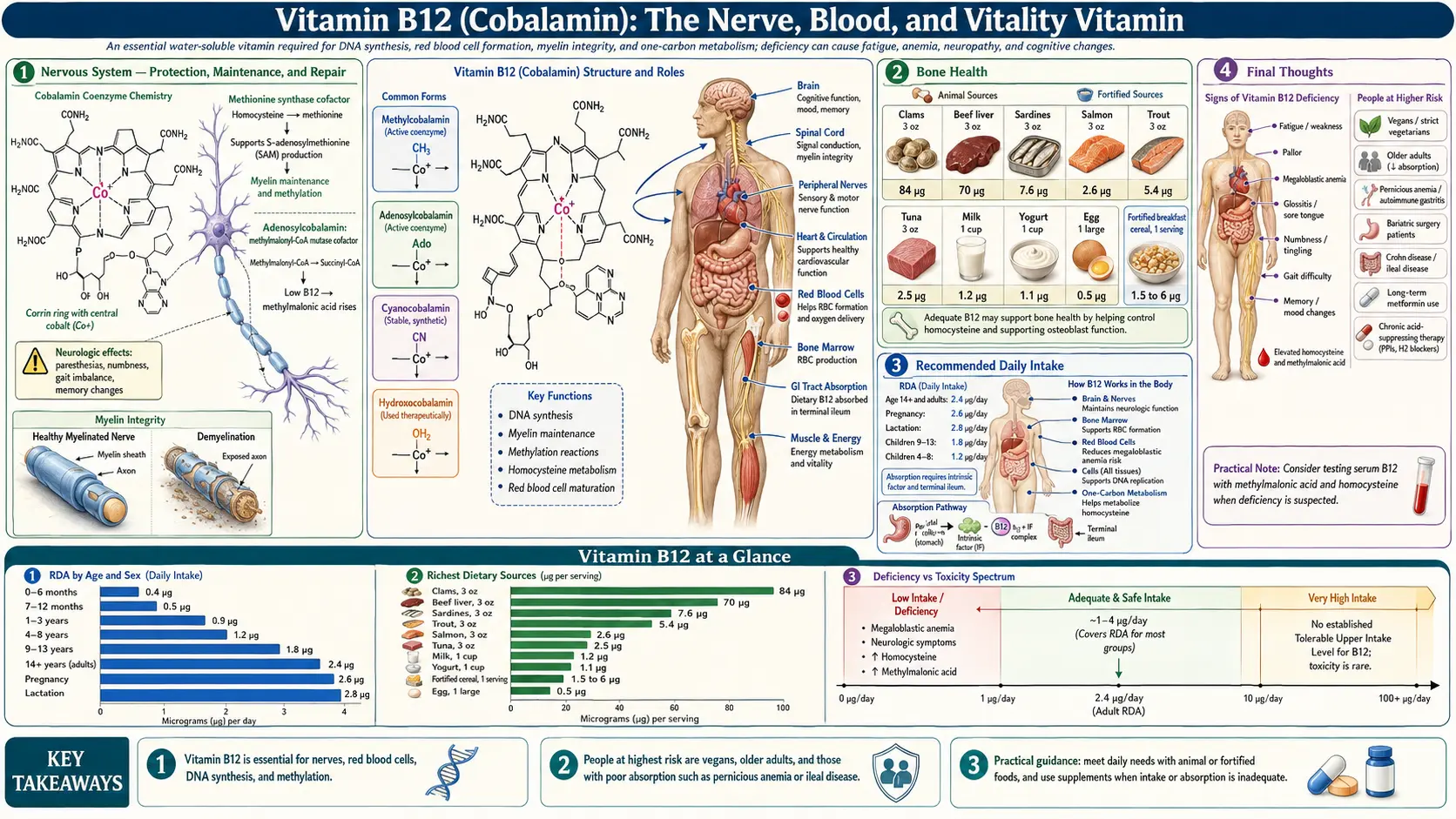
Vitamin B12, known scientifically as cobalamin, is a water-soluble vitamin built around a single atom of the trace mineral cobalt; "cobalamin" is the general term for a group of cobalt-containing compounds (IOM 1998). It has important roles in DNA synthesis, methylation, and mitochondrial metabolism, and its deficiency causes blood and nerve disease (Green 2017). How common low B12 status is depends on the definition used: a 2017 review puts subclinical deficiency at between 2.5% and 26% of the general population, adding that its clinical relevance is unclear, while clinical deficiency with the classic blood and nerve findings is relatively uncommon (Green 2017). In the Framingham Offspring Study of 2,999 adults, 39% had plasma B12 below 258 pmol/L, 17% below 185 pmol/L, and 9% below 148 pmol/L (Tucker 2000).
Interactive Visualization The Methylation Cycle — hand off a methyl group Watch folate and B12 recycle homocysteine into methionine — then knock out B12 and see the folate trap slam shut. Launch → Interactive Visualization Vitamin B12’s Impossible Journey Five stages, two carrier proteins, a working stomach and one specific stretch of gut. Break any link — a PPI, metformin, pernicious anaemia — and absorption collapses. Launch → Interactive Visualization Stomach Acid & PPIs — run the proton pump Drive your stomach to pH 2, activate pepsin and free your B12 and iron — then take a PPI and watch the pH climb while the nutrients stop being released. Launch → Interactive Visualization Enzymes: How They Speed Up Life Drop a substrate into an enzyme's active site and watch induced-fit catalysis fly — then heat it, swing the pH, or add an inhibitor and watch it stall. Many enzymes need a vitamin or mineral cofactor. Launch →Table of Contents
- Nervous System — Protection, Maintenance, and Repair
- Methylation — The Engine of Cellular Function
- Red Blood Cell Formation and Megaloblastic Anemia
- Brain Health, Cognitive Function, and Dementia
- Mental Health — Depression, Anxiety, and Psychosis
- Energy Production and Mitochondrial Function
- Cardiovascular Health
- Bone Health
- Digestive Health and the Absorption Cascade
- Immune System Function
- Fertility and Reproductive Health
- Skin, Hair, and Mucous Membranes
- Detoxification and Cellular Protection
- Natural Food Sources
- Recommended Daily Intake
- Supplemental Forms
- Assessment of B12 Status — Beyond Serum B12
- Synergistic Nutrients
- Populations at Higher Risk of Deficiency
- Signs of Deficiency and Toxicity
- Treatment Uses Reported in Guidelines and Trials
- Summary
- Key Research Papers
- Connections
- Featured Videos
1. Nervous System — Protection, Maintenance, and Repair
B12 deficiency can damage the brain, spinal cord, and peripheral nerves, and the nerve damage can appear without anemia.
- Myelin: B12 deficiency is associated with demyelination — loss of the fatty, insulating myelin sheath that wraps nerve fibers in the brain, spinal cord, and peripheral nerves and allows fast signal transmission.
- S-Adenosylmethionine (SAMe) and Myelin: One proposed mechanism for this damage runs through the methylation cycle: B12-dependent methionine synthase supplies the methionine used to make SAMe, the methyl donor needed for many methylation reactions in nerve tissue.
- Subacute Combined Degeneration: Prolonged deficiency can cause subacute combined degeneration of the spinal cord, a demyelination of the dorsal and lateral columns that produces numbness, tingling, loss of position sense, and an unsteady gait. In a systematic review of 91 published cases of nitrous oxide abuse (an anesthetic gas that oxidizes the cobalt ion of B12; Patel 2018), 72 reported neurologic effects, including myeloneuropathy and subacute combined degeneration (Garakani 2016).
- Nerve Damage Without Anemia: Among 141 consecutive patients with neuropsychiatric abnormalities due to B12 deficiency, 40 (28%) had no anemia or macrocytosis. Their features included paresthesia (tingling), sensory loss, ataxia, dementia, and psychiatric disorders, with markedly raised methylmalonic acid and homocysteine; 39 of 39 evaluated patients improved neurologically with B12 therapy (Lindenbaum 1988).
- Reversibility: Neurological damage from prolonged deficiency may be only partly reversible. The British Society for Haematology guideline states that when test results conflict with strong clinical features of deficiency, treatment is not delayed, because of the risk of neurological impairment (Devalia 2014).
2. Methylation — The Engine of Cellular Function
B12 and folate work together in the methionine cycle, one part of the body's methylation chemistry.
- Methionine Synthase: B12, as methylcobalamin, is the coenzyme for methionine synthase, which transfers a methyl group from 5-methyltetrahydrofolate (5-MTHF) to homocysteine, regenerating methionine (Obeid 2015). This reaction links folate metabolism, homocysteine clearance, and SAMe production.
- SAMe Production: Methionine is converted to S-adenosylmethionine (SAMe), the main methyl donor for the methylation of DNA, proteins, neurotransmitters, and phospholipids.
- The Methyl Trap: When B12 is deficient, 5-MTHF cannot pass on its methyl group and becomes "trapped" in that form. This creates a functional folate deficiency even when folate intake is adequate, disrupting DNA synthesis (causing megaloblastic anemia) and methylation at the same time. This "methyl trap" is why B12 deficiency and folate deficiency produce the same blood picture.
- Epigenetic Regulation: Through SAMe, the methionine cycle supplies the methyl groups used for DNA methylation, one of the ways cells switch genes on and off.
- Homocysteine Clearance: B12 deficiency raises homocysteine. In the HOME trial, people who had B12 deficiency at the end of the study had a mean homocysteine of 23.7 µmol/L, compared with 14.9 µmol/L in those with normal B12 (de Jager 2010). Raised homocysteine is a postulated cardiovascular risk factor, but trials that lowered it with B vitamins did not reduce heart attacks (Martí-Carvajal 2017; see Cardiovascular Health below).
3. Red Blood Cell Formation and Megaloblastic Anemia
- DNA Synthesis for Erythropoiesis: Red blood cell precursors in the bone marrow divide rapidly. B12, by releasing folate from the methyl trap, is needed for the thymidine synthesis that DNA replication depends on.
- Megaloblastic Anemia: B12 deficiency produces megaloblastic (macrocytic) anemia, as folate deficiency does: red cell precursors cannot replicate their DNA properly, and the red cells that result are abnormally large. Macrocytosis is generally defined as a mean cell volume (MCV) greater than 100 fL; a 2009 review lists alcoholism, vitamin B12 and folate deficiencies, and medications as its most common causes (Kaferle 2009). Weakness and fatigue are common presenting symptoms (Lahner 2009).
- Pernicious Anemia: Pernicious anemia is a macrocytic anemia caused by B12 deficiency as a result of intrinsic factor deficiency, and it is associated with autoimmune atrophic gastritis of the stomach body. Intrinsic factor and parietal cell antibodies are used as markers of the disease, with a reported 73% sensitivity and 100% specificity; it is managed by B12 replacement (Lahner 2009). Without intrinsic factor, normal dietary amounts of B12 are not absorbed in the ileum.
- Other Blood Cells: In severe deficiency, white blood cell and platelet production can also fall. A 2025 review lists vitamin B12, folate, and copper deficiency among the nutritional causes of acquired neutropenia (a low neutrophil count) (Kim 2025).
- Hypersegmented Neutrophils: As with folate deficiency, hypersegmented neutrophils (white cells with five or more nuclear lobes) can appear on a blood smear. A peripheral smear and a reticulocyte count help separate megaloblastic causes of macrocytosis from drug or alcohol toxicity and from hemolysis or hemorrhage (Kaferle 2009).
- Folic Acid and B12 Deficiency: In the 1940s and 1950s, high-dose folic acid (more than 5 mg/day) was used to reverse the megaloblastic anemia of B12 deficiency caused by pernicious anemia; this masked the underlying B12 deficiency and possibly worsened its neurological progression. A 2024 review describes the evidence that excess folic acid worsens B12 deficiency as mainly correlative or from uncontrolled observations, but sufficient to warrant increased vigilance for B12 deficiency in at-risk people who take excessive or high-dose folic acid (Miller 2024).
4. Brain Health, Cognitive Function, and Dementia
- Brain Atrophy: In the VITACOG trial, 271 people over 70 with mild cognitive impairment took folic acid (0.8 mg/day), vitamin B12 (0.5 mg/day), and vitamin B6 (20 mg/day), or placebo, for 24 months. Among the 168 who completed the MRI part of the trial, the mean rate of brain atrophy was 0.76% per year with treatment and 1.08% per year with placebo; in participants whose homocysteine was above 13 µmol/L at the start, the rate was 53% lower with treatment. The trial measured brain shrinkage, not dementia; its authors called for trials to test whether the same treatment delays Alzheimer's disease (Smith 2010).
- Alzheimer's Disease and Dementia: The VITACOG authors describe homocysteine as a risk factor for brain atrophy, cognitive impairment, and dementia (Smith 2010). Trials have not shown that B12 supplements prevent dementia.
- Cognitive Performance: A 2021 meta-analysis of 16 randomized trials (6,276 participants) in people without advanced neurological disorders or overt B12 deficiency found no evidence that B12 alone, or B12 with folic acid with or without B6, improved any area of cognitive function (Markun 2021).
- Reversible Cognitive Impairment: B12 deficiency itself can cause cognitive impairment, including dementia, that improves with treatment, sometimes with no anemia present (Lindenbaum 1988).
5. Mental Health — Depression, Anxiety, and Psychosis
- Neurotransmitter Metabolism: SAMe from the methionine cycle takes part in the metabolism of neurotransmitters such as serotonin, dopamine, and norepinephrine, which is one proposed link between B12 status and mood.
- Depression: The 2021 meta-analysis found no overall effect of B12 supplementation on measures of depression in people without advanced neurological disorders or overt deficiency, and concluded that supplementation is likely ineffective for depressive symptoms in that group (Markun 2021).
- Psychiatric Manifestations of Deficiency: Psychiatric disorders are among the features of B12 deficiency, including in patients without anemia (Lindenbaum 1988). A 1960 paper titled "Megaloblastic Madness" described these presentations (Smith 1960), and in the systematic review of nitrous oxide abuse cases, 11 cases had psychiatric effects, including psychosis (Garakani 2016).
6. Energy Production and Mitochondrial Function
- Methylmalonyl-CoA Mutase: B12, as adenosylcobalamin, is the coenzyme for methylmalonyl-CoA mutase (Obeid 2015), the mitochondrial enzyme that converts methylmalonyl-CoA to succinyl-CoA, a step that feeds odd-chain fatty acids and some amino acids (such as valine and isoleucine) into the Krebs cycle.
- Methylmalonic Acid (MMA) Accumulation: When B12 is deficient, methylmalonyl-CoA cannot be converted, and methylmalonic acid (MMA) rises in blood and urine. The Institute of Medicine (IOM) review describes MMA and homocysteine as more sensitive indicators than serum B12: in patients with pernicious anemia or previous gastrectomy who relapsed, MMA, homocysteine, or both were raised in 95% of relapses, while serum B12 was low in 69% (IOM 1998). The British guideline uses plasma MMA as a second-line test (Devalia 2014).
- Mitochondrial Metabolism: Succinyl-CoA is a Krebs cycle intermediate, which places this B12-dependent reaction inside mitochondrial energy metabolism.
- Fatigue: Weakness and fatigue are common symptoms that bring people with pernicious anemia to a doctor (Lahner 2009). For fatigue without B12 deficiency, the 2021 meta-analysis found only one trial, too few for analysis (Markun 2021).
7. Cardiovascular Health
- Homocysteine: B12's cardiovascular relevance runs through homocysteine, which B12-dependent methionine synthase converts back to methionine. Raised homocysteine is a postulated risk factor for cardiovascular disease (Martí-Carvajal 2017).
- The B12-Folate-B6 Triad: Folate and B12 remove homocysteine by remethylation, and B6 removes it by transsulfuration, so a shortfall in any of the three can raise homocysteine.
- What the Trials Found: A 2017 Cochrane review of 15 randomized trials (71,422 participants) found no difference between homocysteine-lowering B vitamins (B6, folic acid, or B12, alone or combined) and placebo for heart attack (7.1% vs 6.0%; RR 1.02), death from any cause, or serious adverse events. It found a small reduction in stroke (4.3% vs 5.1%; RR 0.90, 95% CI 0.82 to 0.99) (Martí-Carvajal 2017).
8. Bone Health
- Observational Studies: A 2013 meta-analysis of four prospective studies (7,475 people) found a 4% lower fracture risk per 50 pmol/L higher B12 level, which was borderline significant (RR 0.96, 95% CI 0.92 to 1.00), and a 4% higher fracture risk per µmol/L higher homocysteine. Analyses of B12, folate, and homocysteine against bone mineral density, possible in women only, showed no associations (van Wijngaarden 2013).
- The B-PROOF Trial: In 2,919 people aged 65 or older with raised homocysteine, 500 µg of B12 plus 400 µg of folic acid daily for two years did not change osteoporotic fracture incidence (HR 0.84, 95% CI 0.58 to 1.21). More participants in the vitamin group reported incident cancer (HR 1.56), although the trial was not designed to assess cancer, and the authors concluded that the combination could not be recommended for fracture prevention in older people (van Wijngaarden 2014).
9. Digestive Health and the Absorption Cascade
B12 absorption takes several steps, and each can be disrupted.
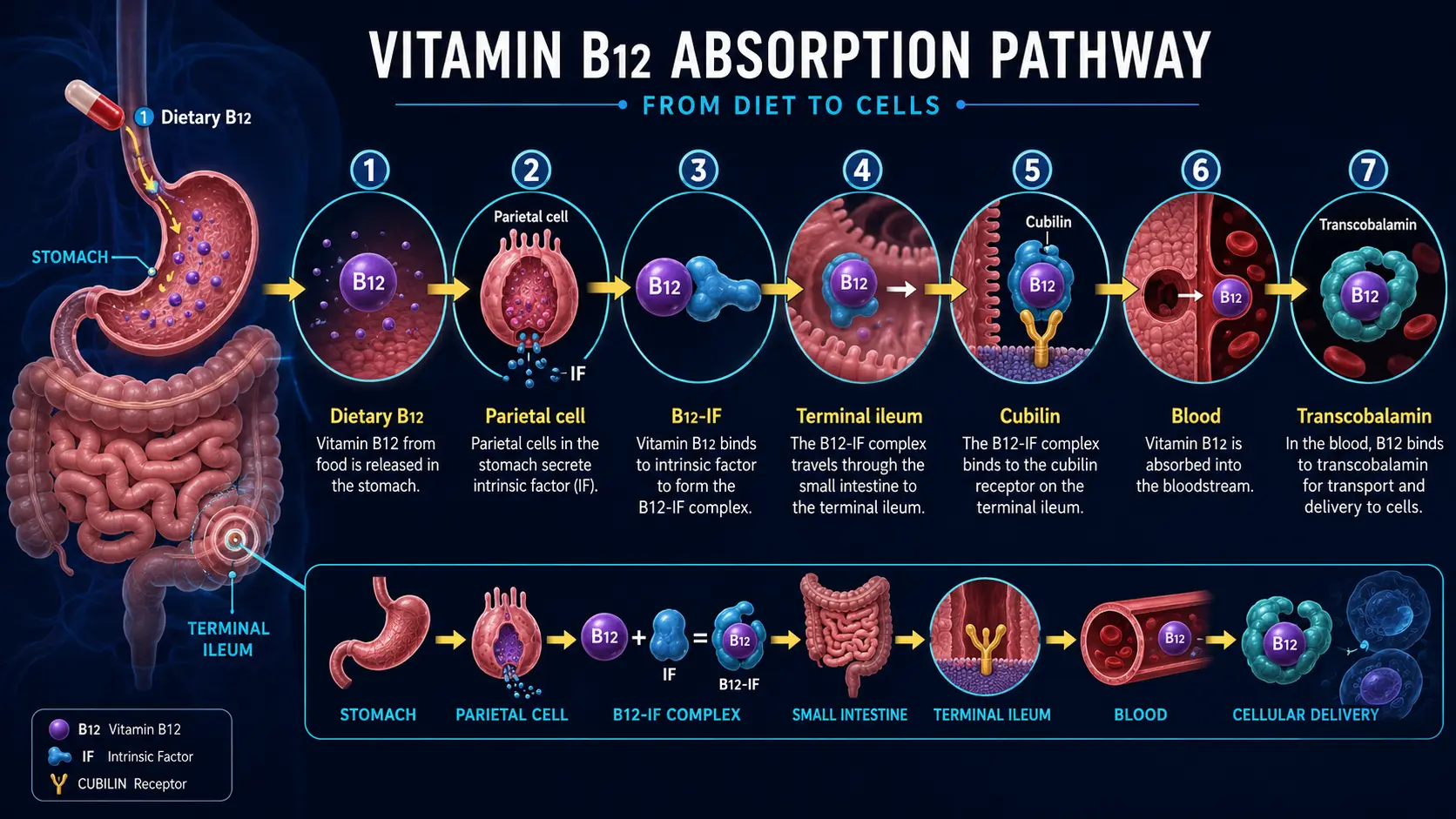
- Step 1 — Stomach Acid Release: B12 in food is bound to proteins. Hydrochloric acid (HCl) and pepsin in the stomach free it. The IOM review states that people with atrophic gastritis or prolonged acid-suppressing treatment have decreased bioavailability of food-bound B12 but absorb crystalline B12, the form in fortified foods and supplements (IOM 1998).
- Step 2 — Haptocorrin Binding: Free B12 binds to haptocorrin (R-protein), a binding protein from saliva and the stomach, which protects it as it passes through the stomach.
- Step 3 — Intrinsic Factor: In the duodenum, pancreatic enzymes break down haptocorrin, and B12 binds to intrinsic factor (IF), a glycoprotein made by the parietal cells of the stomach. This B12-IF complex is needed for normal absorption.
- Step 4 — Ileal Absorption: The B12-IF complex travels to the terminal ileum, where it binds to receptors (the cubilin-amnionless complex) and is taken up by receptor-mediated endocytosis. This is the only efficient absorption route for normal dietary amounts of B12.
- Step 5 — Transport: In the blood, B12 bound to transcobalamin (called holotranscobalamin or holoTC, or "active B12") is the fraction delivered to cells. The British guideline states that serum holoTC has the potential to be a first-line test, but that an indeterminate "grey area" may still exist (Devalia 2014).
- Enterohepatic Recirculation: B12 is continually secreted in bile, and in healthy people most of it is reabsorbed; one study measured biliary secretion averaging 1.4 µg/day in eight patients (IOM 1998). Ileal disease or resection interrupts this recycling.
- Passive Absorption: When large doses of crystalline B12 are swallowed, up to approximately 1% of the dose may be absorbed by mass action even without intrinsic factor (IOM 1998, citing Berlin 1968). This is the basis for treating B12 deficiency with high oral doses: a Cochrane review of 3 trials found that oral and intramuscular B12 normalized serum B12 levels similarly (Wang 2018).
10. Immune System Function
- Immune Cell Proliferation: T cells, B cells, and natural killer (NK) cells need DNA synthesis to multiply during an immune response, and B12 takes part in DNA synthesis through the methyl trap described above.
- NK Cells and T Cells: In a small study of 11 patients with B12 deficiency anemia and 13 controls, the patients had fewer lymphocytes and CD8+ cells, an abnormally high CD4/CD8 ratio, and suppressed NK cell activity; these improved after methylcobalamin injections. Serum immunoglobulin (antibody) levels were not changed by treatment (Tamura 1999).
- Autoimmunity Connection: Pernicious anemia is an autoimmune disease. It is frequently associated with autoimmune thyroid disease (40%) and with other autoimmune disorders such as diabetes mellitus (10%), as part of the autoimmune polyendocrine syndrome (Lahner 2009). Vitiligo is also among the conditions related to B12 status (Brescoll 2015).
11. Fertility and Reproductive Health
- Male Fertility: A 2017 review of studies of B12 and sperm reports that most published work shows positive effects of B12 on semen quality — higher sperm count, better motility, and less sperm DNA damage — and states that more research, mainly clinical, is still needed to confirm these effects (Banihani 2017).
- Neural Tube Defects: In three nested case-control groups of Irish women, studied when vitamin supplements and folic acid fortification were rare, mothers in the lowest B12 quartile had a two- to threefold higher adjusted odds of a neural-tube-defect pregnancy than those in the highest (Molloy 2009).
- Preterm Birth and Birth Weight: An individual-participant meta-analysis (18 studies, 11,216 observations) found that maternal B12 deficiency (below 148 pmol/L) was associated with a higher risk of low birth weight (adjusted RR 1.15, 95% CI 1.01 to 1.31). Higher maternal B12 was linearly associated with a lower risk of preterm birth (RR 0.89 per standard deviation); the estimate for deficiency and preterm birth was RR 1.21 (95% CI 0.99 to 1.49). The authors called for randomized trials of B12 in pregnancy (Rogne 2017).
- Polycystic Ovary Syndrome (PCOS): Metformin is also used in PCOS. In a trial in type 2 diabetes, long-term metformin lowered B12 levels and increased the risk of deficiency (de Jager 2010; see Populations below).
12. Skin, Hair, and Mucous Membranes
A 2015 dermatology review lists the skin findings of B12 deficiency as hyperpigmentation (the most common), hair and nail changes, and oral changes including glossitis (Brescoll 2015).
- Hyperpigmentation: Darkening of the skin is the most common skin manifestation of B12 deficiency (Brescoll 2015).
- Vitiligo and Other Conditions: The same review lists vitiligo, aphthous stomatitis (canker sores), atopic dermatitis, and acne among dermatologic conditions related to B12 excess or deficiency (Brescoll 2015).
- Glossitis and Oral Changes: A smooth, red, sore tongue (glossitis, sometimes called Hunter's glossitis) is a classic sign of B12 deficiency (Brescoll 2015).
- Hair and Nail Changes: Hair and nail changes are among the reported skin manifestations of deficiency (Brescoll 2015).
- Skin Reactions to Treatment: The review also lists acne, rosacea, injection-site allergic reactions, and anaphylaxis with B12 injections among the skin complications of B12 therapy, and notes reactions in people with cobalt sensitivity (Brescoll 2015).
13. Detoxification and Cellular Protection
- Glutathione Pathway: The B12-dependent methionine cycle feeds, through homocysteine and the B6-dependent transsulfuration pathway, into cysteine, a building block of glutathione, one of the body's main antioxidants.
- Cyanide Antidote: Hydroxocobalamin, a natural form of B12, binds cyanide to form a stable, less toxic complex, and is one of the antidotes used for acute cyanide poisoning; a review describes it as safer than the methemoglobin-inducing antidotes in people with smoke inhalation (Borron 2012). In an observational case series of 69 smoke-inhalation victims with suspected cyanide poisoning, given 5 g intravenously (up to 15 g), 67% of those with confirmed cyanide poisoning survived; the most common adverse events were red urine and pink or red skin (Borron 2007).
14. Natural Food Sources
Humans ordinarily obtain vitamin B12 from animal foods. Unlike other B vitamins, B12 is not a normal constituent of plant foods, except certain algae, unless they have been exposed to bacterial action that produced it (IOM 1998).
Whole Food Sources
- Clams and Other Shellfish: Shellfish are among the foods MedlinePlus lists as B12 sources (MedlinePlus)
- Beef Liver and Organ Meats: Liver is concentrated in B12; liver feeding was the treatment for pernicious anemia that won the 1934 Nobel Prize
- Sardines, Mackerel, and Herring: Small, oily fish that provide B12 along with omega-3 fatty acids
- Wild-Caught Salmon and Trout: Fish sources of B12
- Beef, Lamb, and Venison (grass-fed): Red meat provides B12 along with iron and zinc
- Eggs (pasture-raised): B12 is found mainly in the yolk
- Dairy Products (grass-fed): Yogurt, cheese, and milk; in the Framingham Offspring Study, higher dairy intake was associated with fewer low B12 levels among people who did not take supplements (Tucker 2000)
- Chicken and Turkey: Poultry is among the B12 sources MedlinePlus lists (MedlinePlus)
- Nutritional Yeast (fortified): Only fortified nutritional yeast contains B12; unfortified nutritional yeast does not
- Nori Seaweed: A 2014 review identified dried purple laver (nori) as the most suitable naturally occurring plant source of B12 then available (Watanabe 2014)
Critical Note for Vegans and Vegetarians
- Few Reliable Plant Sources: Some plant and algal foods contain B12 analogues that do not work as the vitamin. In spirulina tablets, most of the B12 measured by a microbiological assay came from substitute compounds or inactive analogues; of the two intrinsic-factor-binding forms purified, 83% was pseudovitamin B12 and 17% was B12 (Watanabe 1999).
- Supplementation in the Research: A review of 18 studies that measured methylmalonic acid or holotranscobalamin concluded that vegetarians develop B12 depletion or deficiency regardless of demographic characteristics, place of residence, age, or type of vegetarian diet, and that vegetarians should take preventive measures, including regular use of B12-containing supplements (Pawlak 2013).
- Body Stores: Average total-body B12 stores are estimated at 2 to 3 mg, with the highest individual estimate found at 11.1 mg; studies indicate losses of 0.1% to 0.2% of the body pool per day regardless of its size (IOM 1998). Nerve damage can occur before anemia appears (Lindenbaum 1988).
15. Recommended Daily Intake
The Institute of Medicine's 1998 Recommended Dietary Allowances (RDAs), in micrograms (mcg) per day (IOM 1998):
- Adults (and teens 14–18): 2.4 mcg per day
- Pregnancy: 2.6 mcg per day
- Breastfeeding: 2.8 mcg per day
- Children (1–3 years): 0.9 mcg per day
- Children (4–8 years): 1.2 mcg per day
- Children (9–13 years): 1.8 mcg per day
- Adults over 50: Because 10 to 30 percent of older people may be unable to absorb naturally occurring B12, the IOM states that it is advisable for those older than 50 to meet their RDA mainly by consuming foods fortified with B12 or a B12-containing supplement (IOM 1998)
Doses Used in Treatment Studies: The oral arms of the trials in the Cochrane review used 1,000 µg/day (two trials) or 2,000 µg/day (one trial) (Wang 2018); a trial comparing sublingual with swallowed tablets used 500 µg/day (Sharabi 2003). Upper limit: The IOM found the evidence insufficient to set a Tolerable Upper Intake Level (UL) for B12; it noted extensive data showing no adverse effects of high supplemental intakes, though the studies were not designed to assess adverse effects (IOM 1998). Skin reactions and, rarely, anaphylaxis with injections are reported (Brescoll 2015).
16. Supplemental Forms
Four forms of B12 are used in supplements and treatment. A 2015 review concluded that supplementing the coenzyme forms (methylcobalamin or adenosylcobalamin) is unlikely to be advantageous compared with cyanocobalamin, because the transport proteins carry all forms and cells process all of them through the same intracellular route before making the two coenzymes (Obeid 2015).
- Methylcobalamin: The coenzyme for methionine synthase (the methylation cycle). Supplement marketing often describes it as superior for methylation and nerve health; the 2015 review found the chemistry and physiology do not support an advantage over cyanocobalamin (Obeid 2015).
- Hydroxocobalamin: A naturally occurring form. The 2015 review notes clear advantages of high parenteral doses (1–2 mg) of hydroxocobalamin in treating inborn errors of B12 metabolism (Obeid 2015), and it is the form used as a cyanide antidote (Borron 2012).
- Adenosylcobalamin (Dibencozide): The coenzyme for methylmalonyl-CoA mutase in the mitochondria; the same review conclusion applies (Obeid 2015).
- Cyanocobalamin: The synthetic, stable form used in most fortified foods and many supplements. Cells remove its cyanide group (decyanation) and convert it to the two coenzyme forms (Obeid 2015).
- Delivery Methods:
- Sublingual tablets and lozenges: In a randomized trial of 30 people with low B12, 500 µg/day taken sublingually or swallowed raised serum B12 similarly over 4 weeks (Sharabi 2003).
- Intramuscular (IM) injections: Injections bypass intestinal absorption. A Cochrane review of 3 trials (153 participants) found low-quality evidence that oral B12 and intramuscular B12 normalize serum B12 levels similarly, with lower treatment costs for the oral route (Wang 2018).
- High-dose oral: Up to approximately 1% of a large oral dose may be absorbed without intrinsic factor (IOM 1998, citing Berlin 1968).
- Nasal sprays and transdermal patches: Also sold; the sources cited on this page do not evaluate them.
17. Assessment of B12 Status — Beyond Serum B12
The British Society for Haematology guideline states that there is no “gold standard” test for cobalamin (B12) deficiency, and that the clinical picture is the most important factor in interpreting test results (Devalia 2014).
- Serum B12: The first-line test (Devalia 2014). It measures total circulating B12. The IOM review put the lower limit at approximately 120 to 180 pmol/L (170 to 250 pg/mL) for adults, varying with the method and laboratory (IOM 1998).
- Methylmalonic Acid (MMA): A second-line test that helps clarify uncertain results (Devalia 2014). MMA rises when B12 is insufficient for the methylmalonyl-CoA mutase reaction.
- Homocysteine: Rises when B12 or folate is insufficient for the methionine synthase reaction. It may be helpful as a second-line test but is less specific than MMA (Devalia 2014); folate, B6, and kidney function also affect it.
- Holotranscobalamin (HoloTC): Measures the B12 bound to transcobalamin, the fraction delivered to cells. The guideline describes it as having potential as a first-line test, with an indeterminate “grey area” (Devalia 2014).
- Complete Blood Count (CBC): May show macrocytosis (MCV above 100 fL) and hypersegmented neutrophils (Kaferle 2009), but neuropsychiatric disease can occur with no anemia or macrocytosis (Lindenbaum 1988).
- Cut-Off Points: The guideline concludes that definitive cut-off points for clinical and subclinical deficiency are not possible because of differences in methods, and that local reference ranges are to be established (Devalia 2014); a 2017 review also describes the exact cut-offs as debated (Green 2017). Some functional and natural medicine practitioners aim for serum B12 above 500 pg/mL; that target does not come from the guideline.
18. Synergistic Nutrients
- Folate (Vitamin B9): B12 and folate are metabolically linked: B12 releases folate from the methyl trap, and folate supplies the methyl group that B12-dependent methionine synthase uses to clear homocysteine. A deficiency of either one impairs the other's function.
- Vitamin B6 (Pyridoxine): B6 clears homocysteine through the transsulfuration pathway, alongside the remethylation pathway driven by B12 and folate.
- Vitamin B2 (Riboflavin): FAD (from riboflavin) is the cofactor for MTHFR, the enzyme that makes 5-MTHF, the methyl donor for B12-dependent methionine synthase.
- Iron: B12 deficiency and iron deficiency both cause anemia and can coexist; people with pernicious anemia are monitored for the onset of iron deficiency (Lahner 2009).
- Betaine (TMG): An alternative methyl donor that converts homocysteine to methionine through the BHMT enzyme, a second remethylation pathway that does not use B12.
- Intrinsic Factor: Not a nutrient, but the binding protein needed for normal B12 absorption. Its absence, in pernicious anemia or after stomach surgery, is a major cause of deficiency.
- Stomach Acid (HCl): Gastric acid frees B12 from food proteins. People with atrophic gastritis or prolonged acid-suppressing treatment absorb food-bound B12 less well (IOM 1998).
19. Populations at Higher Risk of Deficiency
- Vegans and Vegetarians: In studies that measured MMA or holotranscobalamin, B12 deficiency rates among vegetarians were 62% among pregnant women, between 25% and almost 86% among children, 21–41% among adolescents, and 11–90% among the elderly, with higher rates in vegans than in other vegetarians and in people vegetarian since birth (Pawlak 2013).
- Older Adults: The IOM review estimated that 10 to 30 percent of people older than 50 have atrophic gastritis with low stomach acid secretion, which reduces absorption of B12 from food (IOM 1998). A 2017 review describes B12 deficiency as affecting all ages but most particularly elderly people (Green 2017).
- People Taking Acid-Suppressing Medicines: In a case-control study of 25,956 people with newly diagnosed B12 deficiency and 184,199 without, a 2-year or longer supply of proton pump inhibitors (PPIs) was associated with deficiency (OR 1.65, 95% CI 1.58 to 1.73), as was a 2-year or longer supply of histamine-2 receptor antagonists (OR 1.25); more than 1.5 PPI pills a day carried a stronger association (OR 1.95) than less than 0.75 pills a day (OR 1.63) (Lam 2013).
- People Taking Metformin: In the HOME trial, 390 people with type 2 diabetes on insulin took metformin 850 mg or placebo three times a day for 4.3 years. Metformin lowered B12 concentration by 19% compared with placebo, and the absolute risk of B12 deficiency (below 150 pmol/L) at the end of the study was 7.2 percentage points higher (number needed to harm 13.8 over 4.3 years). The authors concluded that regular measurement of B12 during long-term metformin treatment should be strongly considered (de Jager 2010).
- People with Pernicious Anemia: Intrinsic factor deficiency prevents normal B12 absorption (Lahner 2009). Pernicious anemia is mainly a disease of older people, but about 15% of patients are younger (Lahner 2009).
- People with Gastrointestinal Conditions or Surgery: MedlinePlus lists pernicious anemia, surgery that removes parts of the stomach or small intestine (including some weight-loss surgeries), Crohn disease, celiac disease, fish tapeworm infection, alcohol use, long-term antacid and heartburn medicines, long-term metformin, and nitrous oxide abuse among causes of poor absorption (MedlinePlus). The IOM review adds bacterial overgrowth and states that people with any malabsorption syndrome will likely need increased amounts (IOM 1998). Long-standing Helicobacter pylori infection probably plays a role in many cases of pernicious anemia (Lahner 2009).
- Pregnant and Breastfeeding Women: The RDA rises to 2.6 mcg in pregnancy and 2.8 mcg during breastfeeding (IOM 1998).
- Infants of B12-Deficient Mothers: An infant may be born with low B12 stores and receive breast milk low in B12 if the mother is vegan or has untreated pernicious anemia; the IOM review states that such infants begin to show clinical signs of B12 deficiency at about 4 months (IOM 1998).
- People Exposed to Nitrous Oxide: Nitrous oxide (N₂O, "laughing gas") oxidizes the cobalt ion of B12, interfering with its function as a coenzyme. A systematic review of 37 reported cases of subacute combined degeneration after nitrous oxide anesthesia found that, where a cause of the underlying subclinical deficiency was identified (30 reports), 25 were due to malabsorption from a gastrointestinal disorder, and that B12 treatment can result in significant neurological improvement (Patel 2018). A separate systematic review of the case literature on nitrous oxide abuse included 91 cases in 77 publications: 72 reported neurologic effects, including myeloneuropathy and subacute combined degeneration, and B12 levels were low or low-normal in 52; 11 further publications reported 29 deaths related to nitrous oxide abuse (Garakani 2016).
20. Signs of Deficiency and Toxicity
B12 deficiency often develops slowly and can produce hematological (fatigue, anemia), neurological (numbness, tingling, balance problems), and psychiatric (depression, memory loss) features (Lindenbaum 1988). For high intakes, the IOM found the evidence insufficient to set an upper limit (IOM 1998). For a full guide to the symptoms, causes, and treatment of both, see Vitamin B12 Deficiency and Vitamin B12 Toxicity.
21. Treatment Uses Reported in Guidelines and Trials
- B12 Deficiency and Pernicious Anemia: Pernicious anemia is managed by B12 replacement, with monitoring for iron deficiency (Lahner 2009). A Cochrane review found low-quality evidence that oral B12 (1,000 or 2,000 µg/day) and intramuscular B12 normalize serum B12 similarly (Wang 2018). The British guideline states that oral therapy may be suitable provided appropriate doses are taken and adherence is not an issue (Devalia 2014).
- Neurological Involvement: When results conflict with strong clinical features of deficiency, the British guideline states that treatment is not delayed, because of the risk of neurological impairment (Devalia 2014). In the 1988 series, every evaluated patient with neuropsychiatric disease improved with B12 therapy (Lindenbaum 1988).
- Depression and Cognition: In people without overt deficiency or advanced neurological disorders, the 2021 meta-analysis found no effect of B12 supplementation on cognitive function or depression (Markun 2021).
- Brain Atrophy in Mild Cognitive Impairment: The VITACOG combination of folic acid, B12, and B6 slowed brain atrophy over 24 months, most in people with higher homocysteine (Smith 2010).
- Homocysteine Lowering: B-vitamin trials lowered homocysteine without reducing heart attacks or deaths, with a small reduction in stroke (Martí-Carvajal 2017).
- Metformin Users: The HOME trial authors concluded that regular measurement of B12 during long-term metformin treatment should be strongly considered (de Jager 2010).
- Vegans and Vegetarians: The 2013 review concluded that vegetarians should take preventive measures, including regular use of B12-containing supplements (Pawlak 2013).
- Nitrous Oxide Toxicity: The systematic review of case reports collected the treatments and outcomes reported for nitrous-oxide-related B12 deficiency (Garakani 2016), and a review of cases after nitrous oxide anesthesia reports that B12 treatment can result in significant neurological improvement (Patel 2018).
- Cyanide Poisoning: Hydroxocobalamin is one of the antidotes for acute cyanide poisoning (Borron 2012); in a case series of smoke-inhalation victims it was given as 5 g intravenously, up to 15 g (Borron 2007).
Decisions about supplements and medicines belong with a clinician.
Summary
Vitamin B12 is needed for the nervous system, red blood cell formation, DNA synthesis, and the methylation cycle. Its absorption depends on stomach acid, intrinsic factor, and the terminal ileum, so pernicious anemia, atrophic gastritis, gut surgery and disease, long-term acid-suppressing medicines, metformin, and nitrous oxide can all lead to deficiency, as can diets without animal foods. Deficiency can damage nerves even without anemia, and it is treatable with oral or injected B12. In people who are not deficient, trials have not shown that B12 supplements improve cognition, depression, heart attacks, or fractures.
Key Research Papers
- Institute of Medicine (US) Standing Committee on the Scientific Evaluation of Dietary Reference Intakes and its Panel on Folate, Other B Vitamins, and Choline (1998). Vitamin B12. In: Dietary Reference Intakes for Thiamin, Riboflavin, Niacin, Vitamin B6, Folate, Vitamin B12, Pantothenic Acid, Biotin, and Choline. Washington (DC): National Academies Press — NCBI Bookshelf NBK114302
- Berlin H, Berlin R, Brante G (1968). Oral treatment of pernicious anemia with high doses of vitamin B12 without intrinsic factor. Acta Medica Scandinavica 184(4):247-258 — PubMed PMID: 5751528
- Devalia V, Hamilton MS, Molloy AM; British Committee for Standards in Haematology (2014). Guidelines for the diagnosis and treatment of cobalamin and folate disorders. British Journal of Haematology 166(4):496-513 — PubMed PMID: 24942828
- Wang H, Li L, Qin LL, Song Y, Vidal-Alaball J, Liu TH (2018). Oral vitamin B12 versus intramuscular vitamin B12 for vitamin B12 deficiency. Cochrane Database of Systematic Reviews 3:CD004655 — PubMed PMID: 29543316
- Miller JW, Smith A, Troen AM, Mason JB, Jacques PF, Selhub J (2024). Excess Folic Acid and Vitamin B12 Deficiency: Clinical Implications? Food and Nutrition Bulletin 45(1 Suppl):S67-S72 — PubMed PMID: 38987872
- Kaferle J, Strzoda CE (2009). Evaluation of macrocytosis. American Family Physician 79(3):203-208 — PubMed PMID: 19202968
- Kim MJ, Forlini C, Kremsreiter K (2025). Neutropenia: Evaluation and Management in the Primary Care Setting. American Family Physician 112(6):618-628 — PubMed PMID: 41533406
- Lahner E, Annibale B (2009). Pernicious anemia: new insights from a gastroenterological point of view. World Journal of Gastroenterology 15(41):5121-5128 — PubMed PMID: 19891010
- Lindenbaum J, Healton EB, Savage DG, et al. (1988). Neuropsychiatric disorders caused by cobalamin deficiency in the absence of anemia or macrocytosis. New England Journal of Medicine 318(26):1720-1728 — PubMed PMID: 3374544
- Garakani A, Jaffe RJ, Savla D, et al. (2016). Neurologic, psychiatric, and other medical manifestations of nitrous oxide abuse: A systematic review of the case literature. American Journal on Addictions 25(5):358-369 — PubMed PMID: 27037733
- Patel KK, Mejia Munne JC, Gunness VRN, et al. (2018). Subacute combined degeneration of the spinal cord following nitrous oxide anesthesia: A systematic review of cases. Clinical Neurology and Neurosurgery 173:163-168 — PubMed PMID: 30144777
- Smith AD (1960). Megaloblastic Madness. British Medical Journal 2(5216):1840-1845 — PubMed PMID: 20789014
- Obeid R, Fedosov SN, Nexo E (2015). Cobalamin coenzyme forms are not likely to be superior to cyano- and hydroxyl-cobalamin in prevention or treatment of cobalamin deficiency. Molecular Nutrition & Food Research 59(7):1364-1372 — PubMed PMID: 25820384
- de Jager J, Kooy A, Lehert P, et al. (2010). Long term treatment with metformin in patients with type 2 diabetes and risk of vitamin B-12 deficiency: randomised placebo controlled trial. BMJ 340:c2181 — PubMed PMID: 20488910
- Lam JR, Schneider JL, Zhao W, Corley DA (2013). Proton pump inhibitor and histamine 2 receptor antagonist use and vitamin B12 deficiency. JAMA 310(22):2435-2442 — PubMed PMID: 24327038
- Pawlak R, Parrott SJ, Raj S, Cullum-Dugan D, Lucus D (2013). How prevalent is vitamin B12 deficiency among vegetarians? Nutrition Reviews 71(2):110-117 — PubMed PMID: 23356638
- Tucker KL, Rich S, Rosenberg I, et al. (2000). Plasma vitamin B-12 concentrations relate to intake source in the Framingham Offspring study. American Journal of Clinical Nutrition 71(2):514-522 — PubMed PMID: 10648266
- Green R, Allen LH, Bjørke-Monsen AL, et al. (2017). Vitamin B12 deficiency. Nature Reviews Disease Primers 3:17040 — PubMed PMID: 28660890
- Smith AD, Smith SM, de Jager CA, et al. (2010). Homocysteine-lowering by B vitamins slows the rate of accelerated brain atrophy in mild cognitive impairment: a randomized controlled trial. PLoS One 5(9):e12244 — PubMed PMID: 20838622
- Markun S, Gravestock I, Jäger L, Rosemann T, Pichierri G, Burgstaller JM (2021). Effects of Vitamin B12 Supplementation on Cognitive Function, Depressive Symptoms, and Fatigue: A Systematic Review, Meta-Analysis, and Meta-Regression. Nutrients 13(3):923 — PubMed PMID: 33809274
- Martí-Carvajal AJ, Solà I, Lathyris D, Dayer M (2017). Homocysteine-lowering interventions for preventing cardiovascular events. Cochrane Database of Systematic Reviews 8:CD006612 — PubMed PMID: 28816346
- van Wijngaarden JP, Doets EL, Szczecińska A, et al. (2013). Vitamin B12, folate, homocysteine, and bone health in adults and elderly people: a systematic review with meta-analyses. Journal of Nutrition and Metabolism 2013:486186 — PubMed PMID: 23509616
- van Wijngaarden JP, Swart KM, Enneman AW, et al. (2014). Effect of daily vitamin B-12 and folic acid supplementation on fracture incidence in elderly individuals with an elevated plasma homocysteine concentration: B-PROOF, a randomized controlled trial. American Journal of Clinical Nutrition 100(6):1578-1586 — PubMed PMID: 25411293
- Tamura J, Kubota K, Murakami H, et al. (1999). Immunomodulation by vitamin B12: augmentation of CD8+ T lymphocytes and natural killer (NK) cell activity in vitamin B12-deficient patients by methyl-B12 treatment. Clinical and Experimental Immunology 116(1):28-32 — PubMed PMID: 10209501
- Brescoll J, Daveluy S (2015). A review of vitamin B12 in dermatology. American Journal of Clinical Dermatology 16(1):27-33 — PubMed PMID: 25559140
- Banihani SA (2017). Vitamin B12 and Semen Quality. Biomolecules 7(2):42 — PubMed PMID: 28598359
- Molloy AM, Kirke PN, Troendle JF, et al. (2009). Maternal vitamin B12 status and risk of neural tube defects in a population with high neural tube defect prevalence and no folic acid fortification. Pediatrics 123(3):917-923 — PubMed PMID: 19255021
- Rogne T, Tielemans MJ, Chong MF, et al. (2017). Associations of Maternal Vitamin B12 Concentration in Pregnancy With the Risks of Preterm Birth and Low Birth Weight: A Systematic Review and Meta-Analysis of Individual Participant Data. American Journal of Epidemiology 185(3):212-223 — PubMed PMID: 28108470
- Borron SW, Baud FJ (2012). Antidotes for acute cyanide poisoning. Current Pharmaceutical Biotechnology 13(10):1940-1948 — PubMed PMID: 22352728
- Borron SW, Baud FJ, Barriot P, Imbert M, Bismuth C (2007). Prospective study of hydroxocobalamin for acute cyanide poisoning in smoke inhalation. Annals of Emergency Medicine 49(6):794-801 — PubMed PMID: 17481777
- Watanabe F, Yabuta Y, Bito T, Teng F (2014). Vitamin B12-containing plant food sources for vegetarians. Nutrients 6(5):1861-1873 — PubMed PMID: 24803097
- Watanabe F, Katsura H, Takenaka S, et al. (1999). Pseudovitamin B12 is the predominant cobamide of an algal health food, spirulina tablets. Journal of Agricultural and Food Chemistry 47(11):4736-4741 — PubMed PMID: 10552882
- Sharabi A, Cohen E, Sulkes J, Garty M (2003). Replacement therapy for vitamin B12 deficiency: comparison between the sublingual and oral route. British Journal of Clinical Pharmacology 56(6):635-638 — PubMed PMID: 14616423
PubMed Topic Searches
- Vitamin B12 deficiency diagnosis — PubMed literature search
- Oral versus intramuscular vitamin B12 — PubMed literature search
External Authoritative Resources
Connections
- Fake Meat — Fortification rates in meat alternatives, and the gap they leave
- All Vitamins
- Enzymes: How They Speed Up Life — interactive animation
- Stomach Acid, pH & the PPI Trade-off — interactive animation
- Vitamin B12’s Impossible Journey — interactive animation
- The Methylation Cycle & Homocysteine — interactive animation
- Vitamin B12 Deficiency
- Vitamin B12 Toxicity
- Active B12 (Holotranscobalamin) Testing
- B12 Deficiency Diagnosis
- B12 and the Nervous System
- Anemia
- Homocysteine
- Vitamin B12 Test
- Methionine
- Dementia
- Depression
- Fatigue
- Alzheimer's Disease
- Peripheral Neuropathy
- Vitamin B9
- Vitamin B6
- Vitamin B2
- Iron
- Complete Blood Count
- SIBO
- Celiac Disease
- Whipple, Minot & Murphy — the 1934 Nobel that led to this vitamin's discovery
- Conditions on this site that reference this page: Vitiligo · Canker Sores (Aphthous Ulcers) · Dysphagia (Difficulty Swallowing) · Hearing Loss · Laryngopharyngeal Reflux (LPR) · Tinnitus · Adrenal Fatigue (HPA Axis Dysfunction) · Selenium, Zinc, Iron, and Iodine for Hashimoto's
- Nutritional Yeast