Gamma-Glutamyl Transferase (GGT): Liver Health and Oxidative Stress


Gamma-glutamyl transferase (GGT) is the most sensitive of the liver enzyme panel markers, responding to hepatic injury, biliary disease, alcohol consumption, and systemic oxidative stress before other enzymes become abnormal. Beyond its role as a liver health indicator, emerging research positions gamma-glutamyl transferase as an independent biomarker of cardiometabolic risk and chronic disease burden.
Interactive Visualization What Alcohol Actually Does Inside Your Liver Ethanol becomes acetaldehyde becomes acetate — and the reduced nicotinamide adenine dinucleotide (NADH) that piles up shuts down fat burning, stalls your blood sugar and drives uric acid up. Nothing speeds it up. Launch →Table of Contents
- Overview
- When Ordered
- Reference Ranges
- Liver Disease Indicator
- Alcohol Use Biomarker
- Cardiovascular Risk
- Oxidative Stress Marker
- Medications That Raise Gamma-Glutamyl Transferase
- Gamma-Glutamyl Transferase vs Alanine Aminotransferase vs Aspartate Aminotransferase Comparison
- Key Research Papers
- Featured Videos
Overview
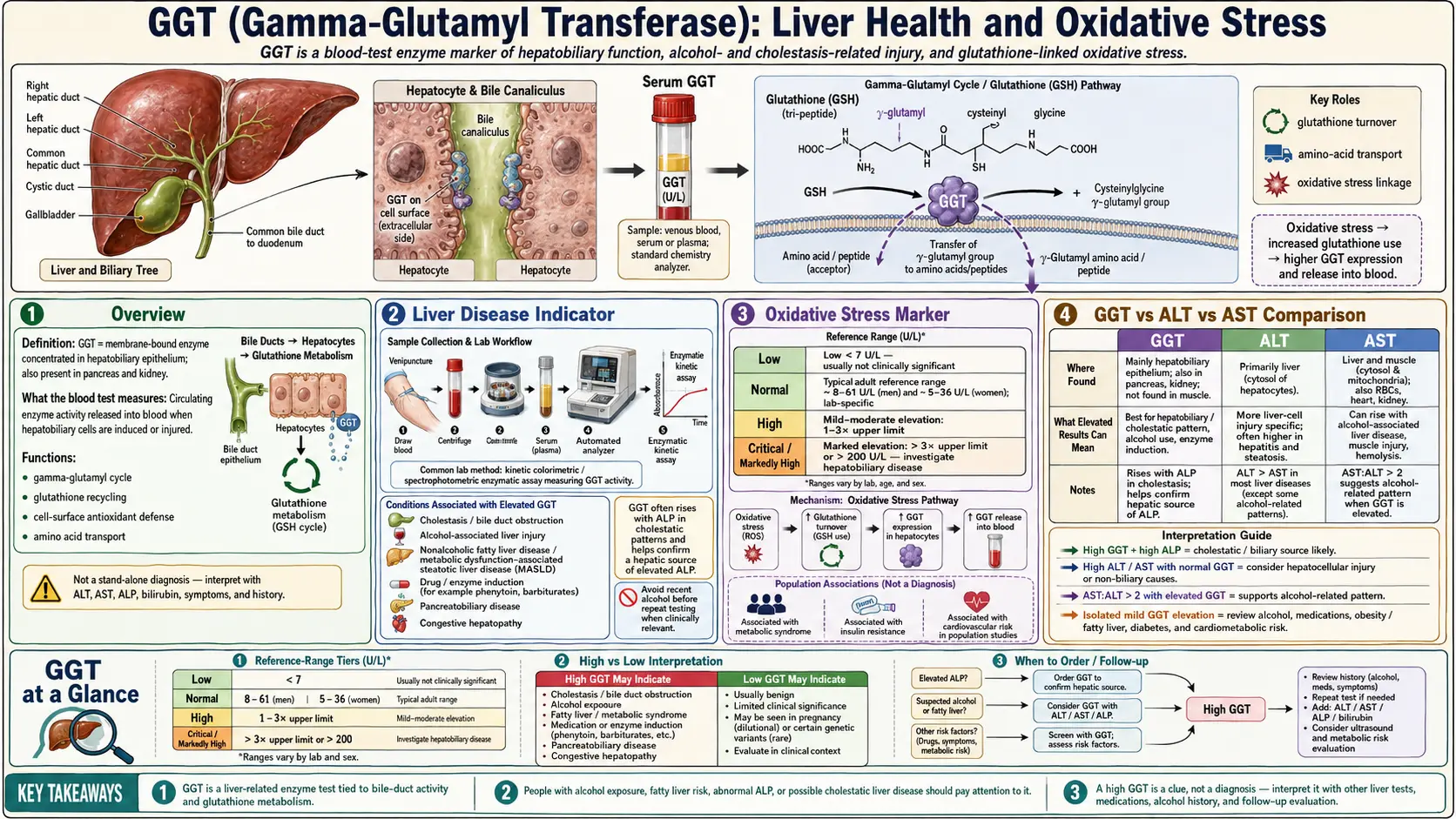
Gamma-glutamyl transferase is a membrane-bound enzyme found predominantly in the liver, kidneys, pancreas, and intestines. Its primary physiological function is to catalyze the transfer of gamma-glutamyl groups from glutathione and other gamma-glutamyl peptides to acceptor molecules. This reaction is the critical first step in extracellular glutathione breakdown and the recycling of cysteine — the rate-limiting amino acid for intracellular glutathione synthesis.
Because glutathione is the body's primary antioxidant defense molecule, gamma-glutamyl transferase activity serves as a direct readout of oxidative stress burden. When cells face elevated oxidative stress, they accelerate glutathione turnover, upregulating gamma-glutamyl transferase expression. The serum gamma-glutamyl transferase level thus reflects both hepatobiliary integrity and the systemic antioxidant balance. This dual role makes gamma-glutamyl transferase a uniquely informative biomarker that bridges hepatology, cardiology, and metabolic medicine.
When Ordered
Gamma-glutamyl transferase is included in comprehensive metabolic panels and is also ordered specifically in the following clinical scenarios:
- Evaluation of abnormal alkaline phosphatase (ALP) — a concurrent gamma-glutamyl transferase elevation confirms hepatobiliary rather than bone origin of elevated alkaline phosphatase
- Screening for liver disease in patients with risk factors including obesity, metabolic syndrome, type 2 diabetes, or heavy alcohol use
- Monitoring patients on hepatotoxic medications including statins, anticonvulsants, antifungals, and antibiotics
- Assessment of alcohol use and monitoring abstinence in alcohol use disorder — gamma-glutamyl transferase normalizes within 2–6 weeks of cessation
- Workup of unexplained fatigue, right upper quadrant discomfort, or jaundice
- Cardiovascular risk stratification as an adjunct to traditional lipid and inflammatory markers
- Evaluation of non-alcoholic fatty liver disease (NAFLD) and non-alcoholic steatohepatitis (NASH)
- Routine metabolic health monitoring in preventive and integrative medicine settings
Reference Ranges
Gamma-glutamyl transferase — Male (U/L)
Gamma-glutamyl transferase — Female (U/L)
Reference ranges vary modestly between laboratories. Notably, population-based studies suggest that even gamma-glutamyl transferase values within the upper half of the conventional "normal" range carry incrementally elevated cardiovascular and metabolic risk. Some preventive medicine practitioners use an optimal target of below 25 U/L for men and below 18 U/L for women. Markedly elevated gamma-glutamyl transferase (greater than 3–5 times the upper limit of normal) warrants urgent hepatological evaluation.
Liver Disease Indicator
Gamma-glutamyl transferase is the liver enzyme with the greatest sensitivity for detecting hepatic injury and biliary dysfunction. It rises earlier and in response to a broader range of hepatic insults than alanine aminotransferase (ALT), aspartate aminotransferase (AST), or alkaline phosphatase individually.
Key hepatobiliary conditions associated with gamma-glutamyl transferase elevation include:
- Non-alcoholic fatty liver disease (NAFLD) and non-alcoholic steatohepatitis: gamma-glutamyl transferase rises proportionally to hepatic steatosis and inflammation. In non-alcoholic fatty liver disease, gamma-glutamyl transferase correlates with liver fibrosis stage and predicts progression to cirrhosis.
- Alcoholic liver disease: gamma-glutamyl transferase is dramatically elevated in alcoholic hepatitis and cirrhosis, often disproportionately more than alanine aminotransferase or aspartate aminotransferase.
- Cholestasis and biliary obstruction: Both intrahepatic cholestasis (e.g., primary biliary cholangitis, intrahepatic cholestasis of pregnancy) and extrahepatic obstruction (e.g., bile duct stones, pancreatic cancer) cause gamma-glutamyl transferase elevation through biliary back-pressure and bile acid toxicity.
- Viral hepatitis: gamma-glutamyl transferase may be elevated in hepatitis B and C, particularly in chronic active disease.
- Drug-induced liver injury: gamma-glutamyl transferase is among the first enzymes to rise with hepatotoxic drug exposure, often preceding clinical symptoms.
- Liver cancer: Both primary hepatocellular carcinoma and liver metastases are associated with significantly elevated gamma-glutamyl transferase.
Gamma-glutamyl transferase's high sensitivity but relatively lower specificity means that isolated mild elevations require context. Concurrent measurement of alanine aminotransferase, aspartate aminotransferase, alkaline phosphatase, bilirubin, and albumin is essential for accurate interpretation.
Alcohol Use Biomarker
Gamma-glutamyl transferase has been used as a biomarker of chronic alcohol use for decades. Alcohol is among the most potent inducers of hepatic gamma-glutamyl transferase expression, acting through multiple mechanisms including direct liver toxicity, microsomal enzyme induction, and increased oxidative stress and glutathione turnover.
Key characteristics of gamma-glutamyl transferase as an alcohol biomarker:
- Sensitivity for heavy use: gamma-glutamyl transferase is elevated in approximately 52–94% of individuals with chronic heavy alcohol use (typically more than 50–80 g/day), though sensitivity is lower for moderate consumption.
- Response to cessation: gamma-glutamyl transferase normalizes within 2–6 weeks of complete alcohol abstinence, making it useful for monitoring treatment adherence and relapse in alcohol use disorder.
- Half-life: The biological half-life of elevated gamma-glutamyl transferase following cessation is approximately 14–26 days, distinguishing it from shorter-lived markers like carbohydrate-deficient transferrin (CDT).
- Combination testing: gamma-glutamyl transferase combined with CDT (the GGT-CDT index) substantially improves specificity for alcohol use compared to either test alone, particularly in distinguishing alcohol-related from non-alcohol-related liver disease.
- Limitations: gamma-glutamyl transferase is not specific for alcohol. It will be elevated by many non-alcohol hepatic and systemic conditions, requiring careful clinical interpretation.
Cardiovascular Risk
Perhaps the most clinically underappreciated aspect of gamma-glutamyl transferase is its role as an independent predictor of cardiovascular events. Numerous large prospective cohort studies have established that elevated gamma-glutamyl transferase — even within the conventional normal range — is associated with increased risk of myocardial infarction, stroke, heart failure, and cardiovascular mortality.
The cardiovascular risk associated with gamma-glutamyl transferase is independent of traditional risk factors including age, sex, blood pressure, cholesterol, body mass index, smoking, and alcohol consumption. Key findings from epidemiological research include:
- The MONICA/KORA Augsburg cohort study found that men in the highest gamma-glutamyl transferase quartile had a 2.5-fold greater risk of fatal myocardial infarction compared to those in the lowest quartile.
- A meta-analysis of over 220,000 participants found a graded relationship between gamma-glutamyl transferase levels and incident type 2 diabetes, with those in the highest quartile having approximately 2.4 times greater risk than the lowest quartile.
- Gamma-glutamyl transferase predicts heart failure incidence and mortality independently in community-based populations, with a hazard ratio of approximately 1.4–1.8 per standard deviation increase in log-GGT.
- Elevated gamma-glutamyl transferase in the setting of metabolic syndrome synergistically amplifies cardiovascular risk beyond either condition alone.
The cardiovascular predictive value of gamma-glutamyl transferase is thought to reflect its role as a surrogate marker of systemic oxidative stress and chronic subclinical inflammation — processes central to atherogenesis and endothelial dysfunction.
Oxidative Stress Marker
Gamma-glutamyl transferase's position in glutathione metabolism makes it a direct functional indicator of oxidative stress status. The connection is mechanistic: under conditions of elevated reactive oxygen species (ROS), cells accelerate glutathione consumption to neutralize oxidative damage. Extracellular glutathione breakdown — catalyzed by gamma-glutamyl transferase — provides cysteine for resynthesis of intracellular glutathione. Thus, gamma-glutamyl transferase activity is upregulated when the demand for antioxidant defense exceeds basal production.
Elevated serum gamma-glutamyl transferase reflects and contributes to oxidative stress through a paradoxical mechanism: gamma-glutamyl transferase on the surface of atherosclerotic plaques catalyzes the breakdown of glutathione-conjugated lipids, releasing free iron from ferritin and generating highly reactive hydroxyl radicals via the Fenton reaction. This gamma-glutamyl transferase-driven pro-oxidant activity within plaques contributes directly to plaque instability and rupture risk.
Conditions associated with elevated gamma-glutamyl transferase and systemic oxidative stress include:
- Metabolic syndrome and insulin resistance
- Obesity, particularly visceral adiposity
- Chronic kidney disease
- Obstructive sleep apnea
- Chronic inflammatory conditions including rheumatoid arthritis and inflammatory bowel disease
- Heavy metal exposure (lead, cadmium, mercury)
Medications That Raise Gamma-Glutamyl Transferase
A wide variety of medications induce hepatic CYP450 enzymes and gamma-glutamyl transferase, or cause direct hepatotoxicity that elevates gamma-glutamyl transferase. Clinicians must account for medication exposure when interpreting an elevated gamma-glutamyl transferase result:
- Anticonvulsants: Phenytoin, carbamazepine, phenobarbital, and valproate are potent enzyme inducers that can double or triple gamma-glutamyl transferase levels without significant hepatocellular injury. Gamma-glutamyl transferase elevation in this context is typically an induction effect rather than a sign of toxicity.
- Statins: HMG-CoA reductase inhibitors can cause mild gamma-glutamyl transferase elevation, usually transient. Severe elevation warrants evaluation for drug-induced liver injury.
- Antibiotics: Amoxicillin-clavulanate, fluoroquinolones, and macrolides are among the most common antibiotic causes of drug-induced liver injury with gamma-glutamyl transferase elevation.
- Antifungals: Azole antifungals (fluconazole, itraconazole, voriconazole) are hepatotoxic and routinely monitored via liver enzymes including gamma-glutamyl transferase.
- Methotrexate: Can cause chronic hepatic fibrosis with persistently elevated gamma-glutamyl transferase, particularly at cumulative high doses.
- Glucocorticoids: Long-term corticosteroid use promotes fatty liver and hepatic enzyme induction, raising gamma-glutamyl transferase.
- Hormonal therapies: Oral contraceptives and anabolic steroids can elevate gamma-glutamyl transferase through cholestatic and hepatotoxic mechanisms.
Gamma-Glutamyl Transferase vs Alanine Aminotransferase vs Aspartate Aminotransferase Comparison
Understanding gamma-glutamyl transferase in the context of other liver enzymes is essential for accurate clinical interpretation. Each enzyme has distinct tissue distribution, sensitivity, and specificity profiles:
- Gamma-glutamyl transferase: The most sensitive liver enzyme. Found in liver, kidney, pancreas, and intestine. Rises with virtually any hepatobiliary insult, alcohol use, enzyme-inducing medications, and systemic oxidative stress. Lacks specificity — any interpretation requires clinical context. Useful for confirming hepatic origin of alkaline phosphatase elevation (gamma-glutamyl transferase is not produced in bone, unlike alkaline phosphatase).
- alanine aminotransferase (ALT): More hepatocyte-specific than aspartate aminotransferase. The preferred marker for hepatocellular injury. Predominates over aspartate aminotransferase in most non-alcoholic liver diseases including viral hepatitis and non-alcoholic fatty liver disease. Does not rise with obstructive biliary disease or alcohol-induced enzyme induction in the absence of hepatocyte damage.
- aspartate aminotransferase (AST): Less liver-specific — also found in cardiac and skeletal muscle, kidney, and red blood cells. An aspartate aminotransferase:alanine aminotransferase ratio greater than 2:1 is a classic indicator of alcoholic liver disease, as alcohol preferentially damages mitochondria (which are rich in aspartate aminotransferase) and depletes pyridoxal phosphate needed for alanine aminotransferase synthesis. Aspartate aminotransferase elevates in myocardial infarction and rhabdomyolysis independently of liver disease.
A practical interpretation framework: isolated gamma-glutamyl transferase elevation often indicates alcohol use, medication induction, or early metabolic liver disease. Gamma-glutamyl transferase elevated alongside alanine aminotransferase indicates hepatocellular injury. Gamma-glutamyl transferase elevated alongside alkaline phosphatase (with normal alanine aminotransferase) points toward biliary/cholestatic disease. Gamma-glutamyl transferase with alanine aminotransferase:aspartate aminotransferase ratio greater than 2:1 suggests alcoholic hepatitis. The pattern of elevation across all four enzymes, combined with clinical history and imaging, guides definitive diagnosis.
Key Research Papers
The following are curated PubMed literature searches covering the evidence base for gamma-glutamyl transferase testing, interpretation, and clinical management. Each link opens a live, filtered PubMed query so the results stay current as new studies are indexed.
- GGT liver disease biomarker — PubMed literature search
- GGT alcohol consumption — PubMed literature search
- GGT cardiovascular mortality — PubMed literature search
- GGT oxidative stress glutathione — PubMed literature search
- GGT non-alcoholic fatty liver — PubMed literature search
- GGT metabolic syndrome — PubMed literature search
- GGT type 2 diabetes risk — PubMed literature search
- GGT all-cause mortality — PubMed literature search
- GGT cholestasis — PubMed literature search
- GGT and medications — PubMed literature search
External Authoritative Resources
Connections
- All Lab Tests
- What Alcohol Does Inside Your Liver — interactive animation
- Comprehensive Metabolic Panel
- Fatty Liver Disease
- Oxidative Stress
- Liver Disease
- Glutathione
- Metabolic Syndrome
- Hepatitis
- Type 2 Diabetes
- Non-Alcoholic Fatty Liver Disease
- Cirrhosis
- Cysteine
- N-Acetylcysteine and Liver Health
- Milk Thistle
- Inflammatory Markers
- Lead
- Mercury
- Liver Cleansing
- Jaundice
- Liver Detox
Featured Videos