Vitamin B9 (Folate)
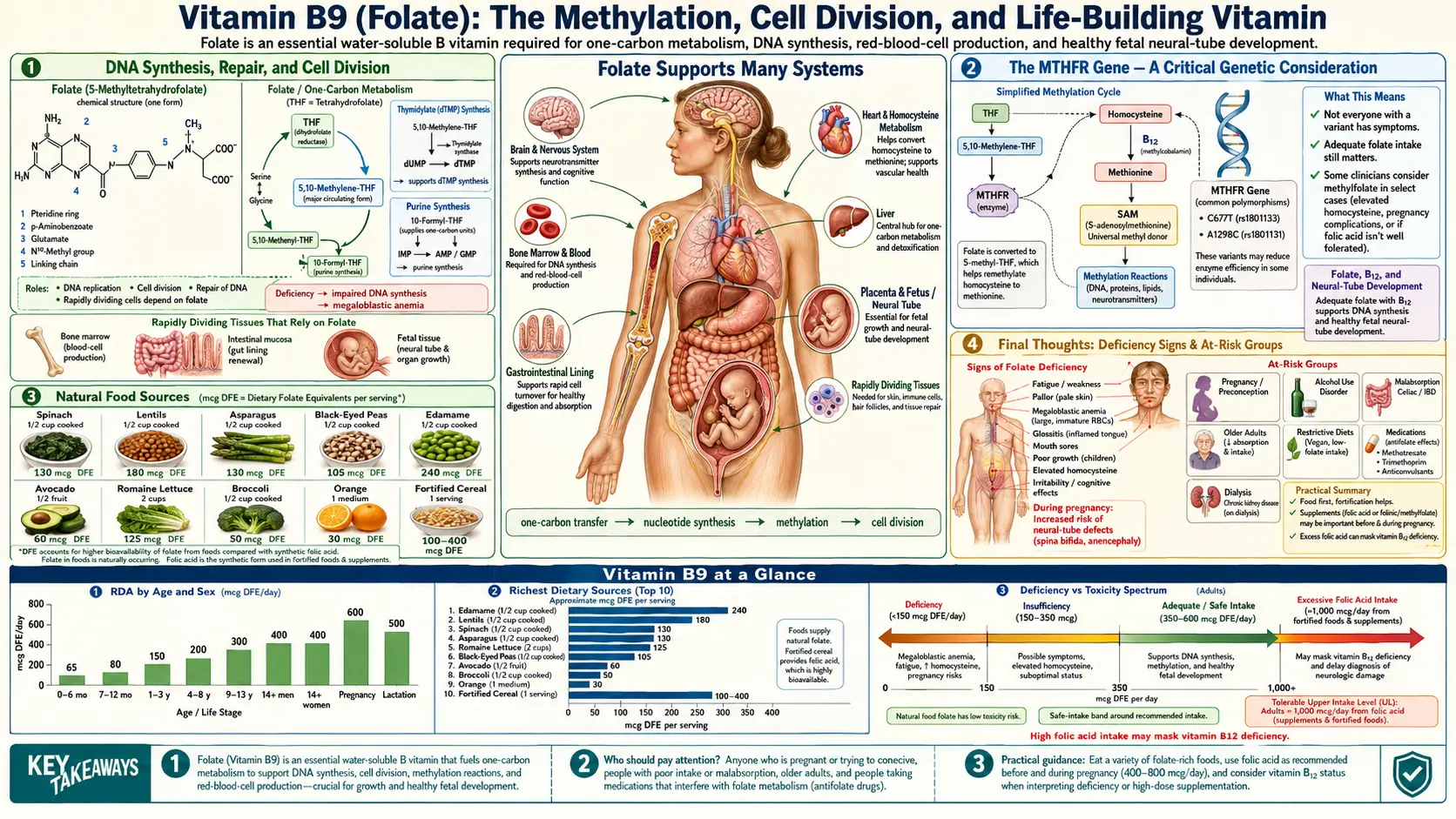
Vitamin B9 is the name for the folates, a group of water-soluble B vitamins. Folate is the form found naturally in food; folic acid is a synthetic form found only in fortified foods, supplements and medicines, and it must be reduced inside the cell before it becomes active (Pietrzik 2010). The Institute of Medicine (IOM) describes folate coenzymes as needed for DNA synthesis and therefore for normal cell division, for purine synthesis, and for amino acid conversions that include turning homocysteine back into methionine (IOM 1998). Folic acid taken around conception lowers the risk of neural tube defects in randomized trials (MRC 1991; Czeizel 1992), and the US Preventive Services Task Force recommends 0.4 to 0.8 mg of folic acid a day for anyone planning to or able to become pregnant (USPSTF 2023). CDC states that people with an MTHFR gene variant can process all types of folate, including folic acid. Large trials of folic acid for heart disease, cancer and cognitive aging found no effect on those outcomes, with stroke as the one outcome where a reduction was reported. This page summarizes what the research and the guideline bodies report; the corrected sub-pages on pregnancy and neural tube defects and on methylation and homocysteine go into more depth.
Interactive Visualization The Methylation Cycle — hand off a methyl group Watch folate and B12 recycle homocysteine into methionine — then knock out B12 and see the folate trap slam shut. Launch →Table of Contents
- DNA Synthesis and Cell Division
- Methylation and the Folate Cycle
- Pregnancy, Neural Tube Defects, and Fetal Development
- Homocysteine and Cardiovascular Trials
- Depression, Schizophrenia, and Cognitive Function
- Red Blood Cell Formation and Megaloblastic Anemia
- Folate and Cancer
- The MTHFR Gene Variants
- Folate vs. Folic Acid — What Studies Compared
- Folate and Immune Function
- Alcohol, Methotrexate, and the Liver
- Absorption in the Gut
- Homocysteine and Fracture Risk
- Natural Food Sources
- Recommended Daily Intake and Upper Limit
- Supplemental Forms
- Related Nutrients: B12 and B2
- Populations at Higher Risk of Deficiency
- Signs of Deficiency
- Uses Studied in Clinical Trials
- Key Research Papers
- Connections
- Featured Videos
1. DNA Synthesis and Cell Division
The IOM's 1998 review lists the reactions that depend on folate coenzymes: DNA synthesis, which needs a folate coenzyme to make the pyrimidine nucleotide thymidylate and is therefore required for normal cell division; purine synthesis; the formate pool; and amino acid conversions, including the conversion of homocysteine to methionine (IOM 1998).
- Thymidylate: 5,10-methylenetetrahydrofolate delivers its one-carbon group to deoxyuridylate to make thymidylate for DNA (IOM 1998).
- Purines: folate coenzymes take part in purine synthesis, in the formation of glycinamide ribonucleotide and 5-amino-4-imidazole carboxamide ribonucleotide (IOM 1998).
- Rapidly dividing tissues: inadequate folate intake first lowers serum folate, then red blood cell folate, then raises homocysteine and produces megaloblastic changes in the bone marrow and other tissues with rapidly dividing cells (IOM 1998).
- Uracil Misincorporation: Blount and colleagues reported that folate deficiency causes massive incorporation of uracil into human DNA (about 4 million per cell) and chromosome breaks. They proposed that the cause is deficient methylation of dUMP to dTMP, and that transient nicks formed while uracil is repaired could lead to chromosome breaks. Both the high DNA uracil levels and the raised micronucleus frequency were reversed by folate. The authors suggested such breaks could contribute to the increased risk of cancer and cognitive defects associated with folate deficiency (Blount 1997).
2. Methylation and the Folate Cycle
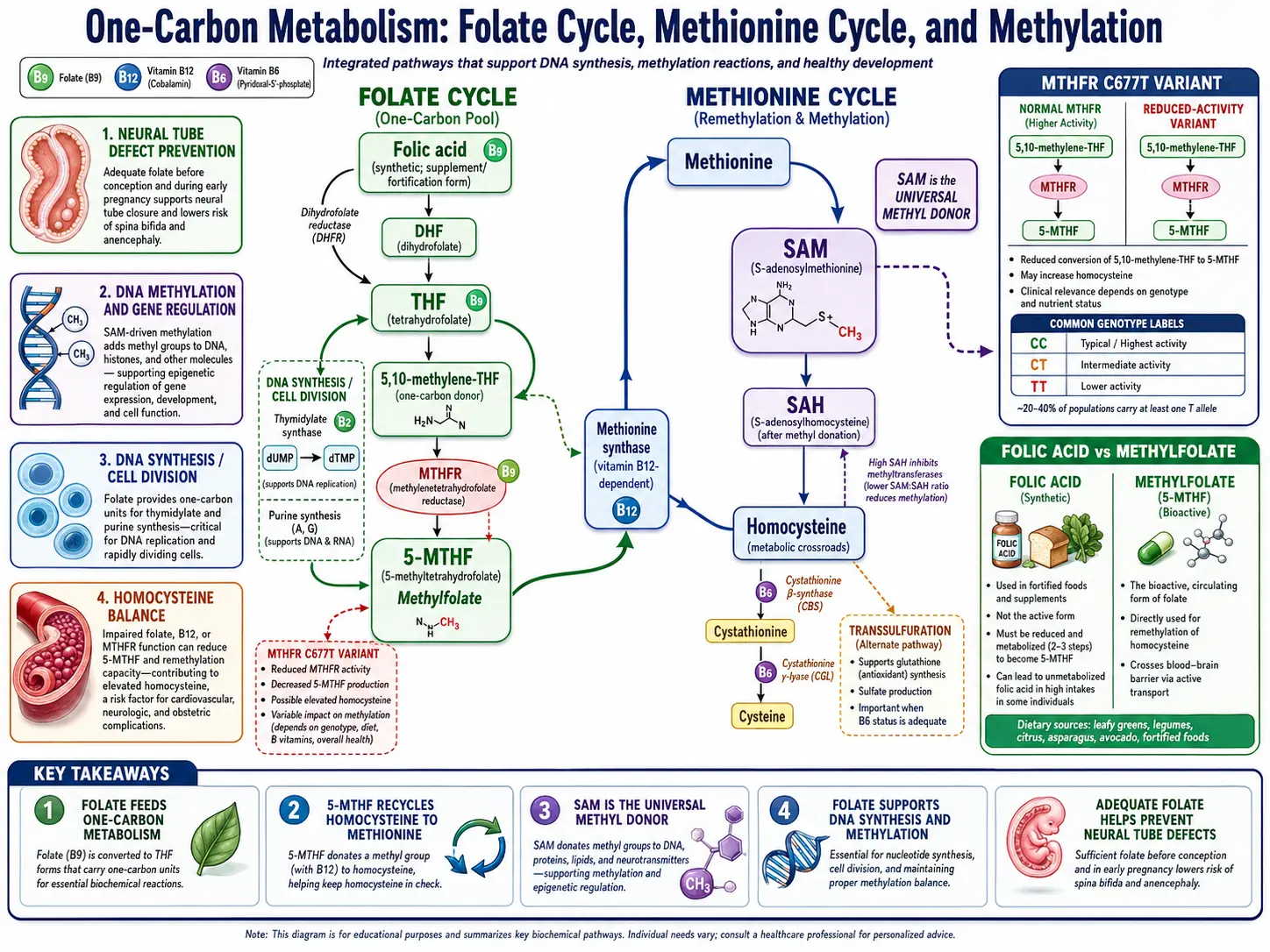
The enzyme MTHFR reduces 5,10-methylenetetrahydrofolate to 5-methyltetrahydrofolate (5-MTHF), the predominant circulating form of folate and the carbon donor that turns homocysteine back into methionine (Frosst 1995). In that reaction folate is the substrate and vitamin B12 the coenzyme (IOM 1998).
- The Methylation Cycle: 5-MTHF gives its methyl group to homocysteine, making methionine through the B12-dependent enzyme methionine synthase (Frosst 1995; IOM 1998). Methionine is then made into S-adenosylmethionine (SAMe), which a 2008 review describes as involved in numerous methyl donation reactions, including those that form the monoamine neurotransmitters (Miller 2008).
- Regenerating THF: the IOM notes that making 5,10-methylenetetrahydrofolate depends on regenerating tetrahydrofolate in the homocysteine-to-methionine reaction, which may explain why a deficiency of either folate or B12 produces the same blood changes (IOM 1998).
- DNA Methylation: Crider and colleagues describe DNA methylation as an epigenetic modification critical to normal genome regulation and development, and folate as a key source of the one-carbon group used to methylate DNA. Their review assesses whether changes in folate intake alter DNA methylation, as a biomarker and as a possible link to developmental disorders and chronic diseases including cancer (Crider 2012).
- Neurotransmitters: the 2008 review states that folate is necessary for the biosynthesis of serotonin, epinephrine and dopamine, and that 5-MTHF appears to stabilize or enhance production of tetrahydrobiopterin (BH4), a cofactor in their synthesis (Miller 2008).
3. Pregnancy, Neural Tube Defects, and Fetal Development
Neural tube defects are major birth defects of the brain and spine that occur early in pregnancy when the embryonic neural tube does not close properly; the two most common are anencephaly and spina bifida (Williams 2015). The trials below are covered in full on the Pregnancy & Neural Tube page.
- Neural Tube Closure: the USPSTF states that the neural plate completes its formation and closure early in pregnancy, usually 26 to 28 days after fertilization, and that the critical period for folic acid supplementation starts at least 1 month before conception and continues through the first 2 to 3 months of pregnancy (USPSTF recommendation). The Task Force also notes that nearly half of all US pregnancies are unplanned.
- The Trials: in the MRC Vitamin Study, 1,817 women with a previous affected pregnancy were randomized; folic acid gave a 72% protective effect against a recurrence (relative risk 0.28, 95% CI 0.12-0.71), while seven other vitamins showed no significant effect (MRC 1991). In Hungary, a multivitamin containing 0.8 mg of folic acid was followed by no neural tube defects in 2,104 pregnancies, against six in 2,052 pregnancies on a trace-element tablet (Czeizel 1992). A 2015 Cochrane review found a protective effect of daily folic acid, alone or with other vitamins and minerals (risk ratio 0.31, 95% CI 0.17-0.58; five studies, 6,708 births) (De-Regil 2015).
- Guidelines: the USPSTF (2023, grade A) recommends that all persons planning to or who could become pregnant take a daily supplement containing 0.4 to 0.8 mg (400 to 800 mcg) of folic acid (USPSTF 2023). The 1992 US Public Health Service recommendation set 0.4 mg a day for all women of childbearing age capable of becoming pregnant (USPHS 1992).
- Fortification: since 1998 US enriched cereal grain products have been fortified with 140 mcg of folic acid per 100 g. CDC estimated that about 1,326 births a year (95% CI 1,122-1,531) that would otherwise have been affected by a neural tube defect occur without one, and concluded that mandatory fortification remains an effective public health intervention (Williams 2015).
- Congenital Heart Defects and Clefts: Bailey and Berry's review reports that observational studies generally support an association between multivitamins containing folic acid and fewer congenital heart defects and orofacial clefts; one randomized trial gave the strongest evidence for heart defects but no evidence for clefts, and most studies cannot separate folic acid from the other vitamins (Bailey 2005). The 2015 Cochrane review found no evidence of an effect on cleft palate, cleft lip or congenital cardiovascular defects (low-quality evidence) or on miscarriage (De-Regil 2015).
- Autism (observational): in 85,176 Norwegian children, maternal folic acid use from 4 weeks before to 8 weeks after the start of pregnancy was associated with a lower risk of autistic disorder (0.10% vs 0.21%; adjusted odds ratio 0.61, 95% CI 0.41-0.90). No association was found with Asperger syndrome or PDD-NOS. The authors state the findings cannot establish causality (Surén 2013).
4. Homocysteine and Cardiovascular Trials
Folic acid lowers homocysteine; in a meta-analysis of the large trials it lowered it by an average of 25% (Clarke 2010). Whether that changes heart disease and stroke was tested in randomized trials, which are covered in more depth on the Methylation & Homocysteine page.
- Homocysteine Remethylation: 5-MTHF donates a methyl group to homocysteine, converting it back to methionine through methionine synthase, with vitamin B12 as the coenzyme (Frosst 1995; IOM 1998).
- Cardiovascular Risk — and an honest caveat: Elevated homocysteine is associated with higher cardiovascular risk in observational studies (Lonn 2006), but lowering the number has not translated into fewer heart attacks. A meta-analysis of 8 randomized trials in 37,485 people found folic acid lowered homocysteine 25% with no effect on major vascular events (rate ratio 1.01, 95% CI 0.97-1.05), coronary events (1.03), or mortality (1.02) (Clarke 2010). Genetically lifelong-elevated homocysteine carries no excess coronary risk either: in unpublished datasets of 48,175 cases, the MTHFR TT versus CC odds ratio for coronary heart disease was 1.02 (Clarke 2012). See Does Lowering Homocysteine Actually Help? for the full evidence.
- HOPE-2, NORVIT, VISP: in HOPE-2 (5,522 people with vascular disease or diabetes; 2.5 mg folic acid with B6 and B12 for about five years) the combined outcome did not differ (relative risk 0.95, 95% CI 0.84-1.07), fewer people had a stroke (0.75, 0.59-0.97) and more were hospitalized for unstable angina (1.24) (Lonn 2006). In NORVIT (3,749 people after a heart attack), folic acid plus B12 had no significant effect (risk ratio 1.08, 0.93-1.25), and the authors concluded that a harmful effect from the combined B vitamins was suggested (Bønaa 2006). In VISP (3,680 adults after an ischemic stroke), there was no treatment effect on any end point (Toole 2004).
- Cochrane Review: across 15 randomized trials with 71,422 participants, homocysteine-lowering B vitamins made no difference to heart attack (RR 1.02, 95% CI 0.95-1.10) or death from any cause (RR 1.01), and stroke was slightly reduced (4.3% vs 5.1%; RR 0.90, 95% CI 0.82-0.99) (Martí-Carvajal 2017).
- Endothelial Function: in vessels from 117 patients undergoing coronary bypass surgery, 5-MTHF given in the laboratory or by intravenous infusion improved nitric-oxide-mediated vessel responses, reduced vascular superoxide and reversed endothelial nitric oxide synthase (eNOS) uncoupling. The effect was not explained by changes in homocysteine (Antoniades 2006). This was a study of vessel function, not of clinical events.
- Stroke Prevention — the one outcome that holds up: Stroke is the exception to the trials above. The CSPPT trial randomized 20,702 hypertensive Chinese adults with no history of stroke or heart attack to enalapril with 0.8 mg/day of folic acid or enalapril alone; first stroke fell from 3.4% to 2.7% (hazard ratio 0.79, 95% CI 0.68-0.93) over a median 4.5 years, with no significant difference in heart attack (HR 1.04) or death (HR 0.94). The authors described the findings as consistent with benefits from folate use among adults with hypertension and low baseline folate levels (Huo 2015).
- Vitamin Combinations: HOPE-2, NORVIT and VISP gave folic acid together with vitamins B12 and B6 (Lonn 2006; Bønaa 2006; Toole 2004).
5. Depression, Schizophrenia, and Cognitive Function
Research on folate and mental health includes observational findings of low folate in depression and a small number of randomized add-on trials. The Folate and Mental Health page covers the topic further.
- Mechanism (proposed): a 2008 review describes 5-MTHF as appearing to support tetrahydrobiopterin (BH4), a cofactor for making serotonin, dopamine and norepinephrine, and states that SAMe supplementation was shown to improve depressive symptoms (Miller 2008).
- Low Folate in Depression: in a 1990 London trial, 41 (33%) of 123 patients with acute major depression or schizophrenia had borderline or definite folate deficiency (red-cell folate below 200 micrograms/l) (Godfrey 1990). Coppen and Bailey describe low plasma and red cell folate as a consistent finding in major depression, linked to poor response to antidepressants (Coppen 2000).
- Folic Acid with Fluoxetine: in 127 patients with major depression, 500 mcg of folic acid added to fluoxetine gave a significantly greater improvement than placebo; the benefit was confined to women (Coppen 2000).
- L-Methylfolate as Adjunctive Therapy: in two trials in SSRI-resistant major depression, L-methylfolate (7.5 then 15 mg/day) made no significant difference in the first trial (148 patients); in the second (75 patients), 15 mg/day was more effective than placebo on both primary outcomes, with a number needed to treat of about six and adverse event rates no different from placebo (Papakostas 2012).
- Cognitive Decline and Dementia: elevated homocysteine is described as a risk factor for brain atrophy, cognitive impairment and dementia (Smith 2010). A small trial (168 participants with mild cognitive impairment completing MRI) found B vitamins slowed brain atrophy on MRI (0.76% vs 1.08% a year) (Smith 2010). However, 11 trials pooling cognitive data on roughly 22,000 people found no effect of B-vitamin homocysteine lowering on any cognitive domain (z-score difference 0.00, 95% CI −0.05 to 0.06) (Clarke 2014). Brain volume is a surrogate measure; in the large trials, cognitive outcomes did not differ.
- Schizophrenia: in the 1990 trial, 15 mg of methylfolate a day for 6 months, added to standard treatment in folate-deficient patients, significantly improved clinical and social recovery in both depressed and schizophrenic patients (Godfrey 1990). In a 2013 US trial of 140 outpatients, 2 mg of folic acid plus 400 mcg of B12 improved negative symptoms only when genotype was taken into account, and positive and total symptoms did not differ from placebo (Roffman 2013).
6. Red Blood Cell Formation and Megaloblastic Anemia
- Megaloblastic Anemia: when folate supply to the bone marrow becomes rate limiting for red cell production, macrocytic (large) cells are produced (IOM 1998). In folate deficiency, the IOM review describes weakness, fatigue, difficulty concentrating, irritability, headache, palpitations and shortness of breath as typically appearing at an advanced stage of anemia, sometimes earlier in the elderly; atrophic glossitis may also occur (IOM 1998).
- Distinguishing from B12 Deficiency: a deficiency of either folate or vitamin B12 leads to the same blood changes, and folate can correct the blood changes of either. In B12 deficiency, the neurological complications do not respond to folate (IOM 1998). The IOM based the folate upper limit on case reports of neurological effects progressing in B12-deficient patients taking folate supplements (IOM 1998), and the 1992 US Public Health Service recommendation advised keeping total folate below 1 mg a day, except under a physician's supervision, because higher intakes can complicate the diagnosis of B12 deficiency (USPHS 1992).
- Neutrophil Hypersegmentation: within weeks of the first marrow changes, hypersegmentation of the neutrophils appears in the blood; in two volunteers on a diet with less than 20 mcg a day of folate, it appeared about 2 weeks before red cell folate fell below 305 nmol/L (IOM 1998).
7. Folate and Cancer
Folate deficiency damages DNA in laboratory and human studies (Blount 1997), but randomized trials of folic acid supplements did not find fewer cancers.
- DNA Stability: folate deficiency causes uracil misincorporation into DNA and chromosome breaks, which the authors suggested could contribute to the increased cancer risk associated with folate deficiency (Blount 1997).
- Trials of Folic Acid and Cancer: a meta-analysis of all 13 eligible trials (49,621 participants, about 5.2 years of treatment) found folic acid had no significant effect on overall cancer incidence (RR 1.06, 95% CI 0.99-1.13) and no significant effect on cancer of the large intestine, prostate, lung, breast or any other specific site. The authors note that fortification uses doses about an order of magnitude smaller than the trials (Vollset 2013).
- Colorectal Adenomas: in a trial of 1,021 people with a recent history of colorectal adenomas, 1 mg/day of folic acid did not reduce adenoma risk. At the second follow-up, advanced lesions occurred in 11.6% with folic acid and 6.9% with placebo (risk ratio 1.67, 95% CI 1.00-2.80, P=0.05), and folic acid was associated with higher risks of three or more adenomas and of noncolorectal cancers. The authors called for further research into whether folic acid might increase the risk of colorectal neoplasia (Cole 2007).
- Why Some Countries Do Not Fortify: the Vollset meta-analysis notes that some countries do not fortify flour partly because of concerns about possible cancer risks; the trials did not show a substantial increase or decrease in site-specific cancer during the first 5 years of treatment (Vollset 2013).
8. The MTHFR Gene Variants
The MTHFR gene encodes methylenetetrahydrofolate reductase, the enzyme that makes 5-MTHF. Two common variants lower its activity. The Methylation & Homocysteine page covers them in detail.
- The MTHFR Enzyme: MTHFR catalyzes the reduction of 5,10-methylenetetrahydrofolate to 5-methyltetrahydrofolate (5-MTHF), the predominant circulating form of folate and the carbon donor for remethylating homocysteine (Frosst 1995).
- C677T Polymorphism: Frosst and colleagues found the substitution on about 38% of unselected chromosomes; in one or two copies it was linked to reduced enzyme activity and greater heat-sensitivity, and people with two copies had significantly higher plasma homocysteine (Frosst 1995). The TT genotype ranges from 1% or less among Black populations in Africa and the US to 20% or more among Italians and US Hispanics (Botto 2000), and about 10% of North Americans (Weisberg 1998). CDC states: "More people in the United States have one or two copies of the MTHFR C677T variant than don't have it."
- A1298C Polymorphism: homozygosity was found in about 10% of Canadian individuals, with about 60% of control enzyme activity; about 15% carried one copy of each variant (compound heterozygotes), with 50-60% of control activity (Weisberg 1998).
- What the Variants Are Linked To: TT individuals are predisposed to mildly raised homocysteine when their folate status is low (Weisberg 1998). TT in the infant was associated with a moderately higher risk of spina bifida (odds ratio 1.8, 95% CI 1.4-2.2), and maternal TT also appeared to be a moderate risk factor (odds ratio 2.0, 95% CI 1.5-2.8) (Botto 2000). For coronary heart disease, the large unpublished datasets showed that lifelong moderate homocysteine elevation from the TT genotype had little or no effect (Clarke 2012).
- Folic Acid and MTHFR Variants: CDC states: "People with an MTHFR gene variant can process all types of folate, including folic acid," and "Folic acid is the only type of folate shown to help prevent neural tube defects (NTDs)." On the claim that people with a variant should avoid folic acid and take other types of folate such as 5-MTHF, CDC says: "However, this is not true." It adds: "Your folic acid intake is more important than your MTHFR genotype for determining the amount of folate in your blood" (CDC: MTHFR Gene Variant and Folic Acid Facts). In a trial of 932 genotyped Chinese women, folate was lower in TT women at every folic acid dose, but genotype did not significantly interact with dose (Crider 2011). In a meta-analysis of 40 studies, red blood cell folate was 16% higher in CC than in TT women (95% credible interval 12-20%) (Tsang 2015). The studies comparing 5-MTHF with folic acid by genotype are summarized in the next section.
- Riboflavin Connection: riboflavin is the cofactor for MTHFR. In 31 patients with cardiovascular disease and the TT genotype, riboflavin (1.6 mg/day for 16 weeks) lowered systolic blood pressure by 9.2 mm Hg and diastolic by 6.0 mm Hg on average; the authors note the findings need confirming in the general population (Wilson 2012).
9. Folate vs. Folic Acid — What Studies Compared
Folate in food and folic acid in supplements differ in chemistry and in how they are handled after absorption. The comparison studies below measured blood folate, homocysteine and unmetabolized folic acid, not birth defects or other clinical outcomes.
- Natural Folate: most naturally occurring folates are pteroylpolyglutamates, carrying one to six extra glutamate molecules (IOM 1998). L-5-MTHF is the predominant form of dietary folate and the only form normally found in the circulation (Pietrzik 2010).
- Folic Acid: a synthetic form found only in fortified foods, supplements and pharmaceuticals; it lacks coenzyme activity and must be reduced to tetrahydrofolate within the cell (Pietrzik 2010). In six human liver samples, the enzyme that does this (dihydrofolate reductase, DHFR) reduced folic acid at, on average, less than 2% of the rate in rat liver, with almost a 5-fold variation between people; the authors suggested the benefit of high doses will be limited by saturation of DHFR (Bailey 2009).
- Bioavailability: the IOM cites a study concluding that the bioavailability of food folate was no more than 50 percent that of folic acid, and it defines 1 mcg of dietary folate equivalent as 1 mcg of food folate, 0.6 mcg of folic acid from fortified food or a supplement taken with meals, or 0.5 mcg of a supplement taken on an empty stomach (IOM 1998).
- Unmetabolized Folic Acid (UMFA): in acute studies, unaltered folic acid appeared in serum above a threshold of 266 mcg per meal with fortified cereal and bread, and above 200 mcg when given in saline, milk or white bread (Kelly 1997). In NHANES 2007-2008, UMFA was detectable in more than 95% of US serum samples from both supplement users and non-users (Pfeiffer 2015). Among 105 postmenopausal women, natural killer cell cytotoxicity was about 23% lower in women with detectable UMFA; this was an observational study (Troen 2006). What UMFA means for health has not been established in these studies.
- 5-MTHF (L-Methylfolate): a review by Pietrzik, Bailey and Shane reports comparable physiological activity, bioavailability and absorption at equimolar doses, with 5-MTHF at least as effective as folic acid at improving folate status. It describes two possible advantages: a reduced potential for masking the blood signs of B12 deficiency, and less interaction with drugs that inhibit DHFR (Pietrzik 2010). After a single dose, unmetabolized folic acid appeared regularly in plasma with folic acid but rarely with 5-MTHF (Prinz-Langenohl 2009).
- Comparison Trials: over 24 weeks, red cell folate rose more with 416 mcg of [6S]-5-MTHF than with 400 mcg of folic acid (Lamers 2006), while 113 mcg of 5-MTHF and 100 mcg of folic acid raised it similarly (Venn 2002). In a single-dose study of 16 TT and 8 CC women, plasma folate rose more after 5-MTHF in both genotypes (Prinz-Langenohl 2009). Over 8 weeks, folic acid lowered homocysteine by at least 13% in all three genotypes, while 5-MTHF significantly lowered it only in CT women; the authors concluded that in CT and CC women folic acid lowered homocysteine more than 5-MTHF (Fohr 2002).
- Folinic Acid (5-Formyltetrahydrofolate): in rheumatoid arthritis, folic or folinic acid taken with methotrexate reduced gastrointestinal side effects, abnormal liver enzymes and withdrawal from treatment without a significant effect on methotrexate's efficacy (Shea 2013). In cerebral folate deficiency, oral folinic acid normalized 5-MTHF in the cerebrospinal fluid and was followed by clinical improvement (Ramaekers 2005).
- Food Fortification: CDC's 2015 report found that mandatory folic acid fortification remains an effective public health intervention against neural tube defects (Williams 2015). CDC states that folic acid is the only type of folate shown to help prevent neural tube defects.
10. Folate and Immune Function
- NK Cell Activity: among 105 healthy postmenopausal women, those with a low-folate diet who used folic acid supplements had greater natural killer cell cytotoxicity, while those with a folate-rich diet who also took more than 400 mcg a day of folic acid had lower NK cytotoxicity than women on a low-folate diet without supplements. NK cytotoxicity was about 23% lower in women with detectable unmetabolized folic acid. The authors called for further studies of long-term high folic acid intake on immune function (Troen 2006).
11. Alcohol, Methotrexate, and the Liver
- Alcohol and Folate: the IOM reports that surveys of chronic alcoholics suggest inadequate intake is a major cause of the folate deficiency often seen in chronic alcohol users, and that ethanol may aggravate the deficiency by impairing intestinal folate absorption and hepatobiliary metabolism and by increasing renal folate excretion (IOM 1998).
- Methotrexate and Liver Enzymes: in the Cochrane review of six trials (624 patients with rheumatoid arthritis), folic or folinic acid taken with methotrexate reduced abnormal serum transaminase elevation (RR 0.23, 95% CI 0.15-0.34) and gastrointestinal side effects (RR 0.74), with no significant effect on methotrexate's efficacy (Shea 2013).
12. Absorption in the Gut
- Folate Absorption: folates are absorbed in the acidic environment of the upper small intestine. Qiu and colleagues identified the proton-coupled folate transporter (PCFT) and showed that a loss-of-function mutation in its gene causes hereditary folate malabsorption (Qiu 2006).
- The Large Intestine: the IOM notes that folate is transported into the mucosa of the human colon by facilitated diffusion, allowing for the possibility that folate made by intestinal bacteria is absorbed there (IOM 1998).
13. Homocysteine and Fracture Risk
- The Hypothesis: because osteoporosis is common in homocystinuria, researchers proposed that high homocysteine may weaken bone by interfering with collagen cross-linking (McLean 2004).
- Observational Studies: in the Framingham Study (825 men and 1,174 women aged 59 to 91), people in the highest homocysteine quartile had a greater risk of hip fracture than those in the lowest, almost four times as high for men and 1.9 times for women (McLean 2004). In two Dutch population-based studies (2,406 people aged 55 or older), each 1 SD increase in log homocysteine was associated with a relative risk of osteoporotic fracture of 1.4 (95% CI 1.2-1.6), apparently independent of bone mineral density (van Meurs 2004). These are associations; the studies did not test folate supplements.
14. Natural Food Sources
Folate content per 100 g, as listed in USDA FoodData Central (SR Legacy). All values below are food folate, with no added folic acid.
Whole Food Sources (mcg DFE per 100 g)
- Liver: chicken liver, simmered, 578 (FDC 171061); beef liver, braised, 253 (FDC 168626)
- Dark Leafy Greens: spinach, raw, 194 (FDC 168462), boiled, 146 (FDC 168463); turnip greens, raw, 194 (FDC 170061); romaine lettuce, raw, 136 (FDC 169247); collards, raw, 129 (FDC 170406); kale, raw, 62 (FDC 168421); mustard greens, raw, 12 (FDC 169256)
- Lentils: boiled, 181 (FDC 172421)
- Chickpeas, Black Beans, and Kidney Beans: chickpeas, boiled, 172 (FDC 173757); black beans, boiled, 149 (FDC 173735); kidney beans, boiled, 130 (FDC 173740)
- Asparagus: boiled, 149 (FDC 168390); raw, 52 (FDC 168389)
- Broccoli and Brussels Sprouts: broccoli, raw, 63 (FDC 170379); Brussels sprouts, raw, 61 (FDC 170383)
- Avocados: raw, 81 (FDC 171705)
- Beets: raw, 109 (FDC 169145)
- Citrus Fruits: oranges, 30 (FDC 169097); pink or red grapefruit, 13 (FDC 174673); lemons without peel, 11 (FDC 167746)
- Eggs: whole, raw, 47 (FDC 171287)
- Sunflower Seeds and Flaxseeds: sunflower seed kernels, dried, 227 (FDC 170562); flaxseed, 87 (FDC 169414)
Cooking and Folate Retention
- Boiling vs. Steaming: in a UK study of typical cooking methods, boiling left only 49% of the folate in spinach and 44% in broccoli, while steaming spinach or broccoli caused no significant loss, even at the longest steaming times tested (McKillop 2002).
- Other Foods: in the same study, grilling beef for up to 16 minutes and boiling whole potatoes for 60 minutes did not significantly change their folate content. The authors concluded that retention depends both on the food and on the cooking method (McKillop 2002).
15. Recommended Daily Intake and Upper Limit
The Institute of Medicine's 1998 Dietary Reference Intakes express folate in Dietary Folate Equivalents (DFE): 1 mcg DFE = 1 mcg food folate = 0.6 mcg folic acid from fortified food or a supplement taken with meals = 0.5 mcg of a supplement taken on an empty stomach (IOM 1998).
- Adult Men and Women (19 and older): 400 mcg DFE per day
- Pregnancy: 600 mcg DFE per day
- Lactation: 500 mcg DFE per day
- Women Capable of Becoming Pregnant: the IOM recommends that they take 400 mcg a day of folate from fortified foods and/or a supplement, as well as food folate from a varied diet, to reduce the risk of neural tube defects (IOM 1998). The USPSTF (2023) recommends a daily supplement containing 0.4 to 0.8 mg of folic acid (USPSTF 2023).
- Children (1–3 years): 150 mcg DFE per day
- Children (4–8 years): 200 mcg DFE per day
- Children (9–13 years): 300 mcg DFE per day
- Adolescents (14–18 years): 400 mcg DFE per day
The IOM notes that intakes higher than the RDA may be needed by women pregnant with more than one fetus, mothers nursing more than one infant, people with chronic heavy alcohol intake, and people on long-term anticonvulsant or methotrexate therapy (IOM 1998).
Tolerable Upper Intake Level (UL): the adult UL is 1,000 mcg a day of folate from fortified food or supplements, exclusive of food folate (300, 400, 600 and 800 mcg for ages 1–3, 4–8, 9–13 and 14–18). It is based on case studies of neurological effects progressing in vitamin B12-deficient patients taking folate supplements, and the IOM notes that it does not apply to high doses taken under medical supervision (IOM 1998). Doses used in trials: the depression trials of L-methylfolate used 7.5 and 15 mg a day (Papakostas 2012), and the 1990 psychiatric trial used 15 mg of methylfolate a day (Godfrey 1990).
16. Supplemental Forms
- L-5-Methyltetrahydrofolate (5-MTHF / L-Methylfolate): the main circulating form of folate. L-5-MTHF is sold as a crystalline calcium salt with the stability needed for a supplement (Pietrzik 2010), and a 5-MTHF glucosamine salt is also sold; the comparison found for the glucosamine salt is a single-dose pharmacokinetic study in rats (three groups of six), which reported higher plasma 5-MTHF than with the calcium salt or folic acid (Miraglia 2016). The calcium and glucosamine salts are both 5-MTHF; the human comparison trials on this page used [6S]-5-MTHF (Lamers 2006; Venn 2002; Prinz-Langenohl 2009).
- Folinic Acid (5-Formyltetrahydrofolate / Leucovorin): a reduced folate used with methotrexate in rheumatoid arthritis (Shea 2013) and studied in cerebral folate deficiency, where oral folinic acid normalized cerebrospinal-fluid 5-MTHF (Ramaekers 2005).
- Folic Acid (Pteroylglutamic Acid): the synthetic form used in food fortification and supplements (Pietrzik 2010). It is the form used in the neural tube defect trials (MRC 1991; Czeizel 1992) and the form the USPSTF recommendation names (USPSTF 2023). Unmetabolized folic acid appears in plasma after folic acid doses (Kelly 1997; Prinz-Langenohl 2009); CDC states that people with an MTHFR variant can process folic acid.
17. Related Nutrients: B12 and B2
- Vitamin B12 (Cobalamin): B12 is the coenzyme for the homocysteine-to-methionine reaction in which 5-MTHF is the substrate (IOM 1998). Shane and Stokstad's review explains the link between the two vitamins with the "methyl trap" hypothesis: B12 deficiency can lower methionine synthase, trapping an increasing share of folate as 5-MTHF and producing a functional folate deficiency; because 5-MTHF is a poor substrate for the enzyme that lets cells retain folate, tissue folate also falls (Shane 1985).
- Vitamin B2 (Riboflavin): riboflavin is the cofactor for MTHFR; in people with the TT genotype, riboflavin lowered blood pressure in a small trial (Wilson 2012).
- Vitamin B6: the large homocysteine-lowering trials gave B6 together with folic acid and B12 (Lonn 2006; Bønaa 2006; Toole 2004).
18. Populations at Higher Risk of Deficiency
- People Who Could Become Pregnant: the neural tube closes 26 to 28 days after fertilization, and nearly half of US pregnancies are unplanned (USPSTF recommendation).
- Pregnant and Breastfeeding Women: the IOM describes folate requirements as increasing substantially in pregnancy because of the marked acceleration in one-carbon transfer reactions needed for cell division, and sets higher RDAs for pregnancy and lactation (IOM 1998).
- Individuals with the MTHFR TT Genotype: TT women had lower blood folate than CC women at every folic acid dose tested (Crider 2011). CDC states that people with a variant can process all types of folate, including folic acid.
- Individuals with Alcohol Use Disorders: low intake is a major cause of folate deficiency in chronic alcohol users, and ethanol may impair absorption and increase urinary loss (IOM 1998).
- Hereditary Folate Malabsorption: a loss-of-function mutation in the intestinal folate transporter PCFT causes this inherited disorder (Qiu 2006).
- Individuals on Methotrexate: methotrexate is an antimetabolite that antagonizes folic acid metabolism (Shea 2013); the IOM notes that folate stores are decreased in patients with rheumatoid arthritis taking it (IOM 1998).
- Individuals on Anticonvulsants: in 2,730 treated patients, carbamazepine, gabapentin, oxcarbazepine, phenytoin, primidone and valproate were associated with lower serum folate, and folate or B12 levels below the reference range with higher homocysteine (Linnebank 2011).
- Oral Contraceptives: early studies of high-estrogen pills suggested an adverse effect on folate status, but the IOM reports that oral contraceptive use has not been found to influence folate status in large population surveys or controlled metabolic studies (IOM 1998).
- Smokers: blood folate has been reported to be lower in smokers; the IOM notes data suggesting low intake, rather than a higher requirement, may account for this (IOM 1998).
19. Signs of Deficiency
Folate deficiency first lowers blood folate, then raises homocysteine and causes megaloblastic changes in the bone marrow (IOM 1998). The anemia brings weakness, fatigue, difficulty concentrating, irritability, headache, palpitations and shortness of breath, usually at an advanced stage, and atrophic glossitis may occur; the USPSTF states that many neural tube defects are caused by low folate levels (USPSTF 2023). Excess is a different concern: high doses of synthetic folic acid leave unmetabolized folic acid in the blood (Kelly 1997), and the IOM upper limit rests on case reports of B12-deficient patients whose neurological damage progressed while taking folate (IOM 1998). For a full, patient-friendly guide to the symptoms, causes, and treatment of each, see Folate Deficiency and Folate / Folic Acid Excess.
20. Uses Studied in Clinical Trials
- Neural Tube Defect Prevention: folic acid before conception lowered recurrence by 72% (MRC 1991); the USPSTF recommends 0.4 to 0.8 mg a day for anyone who could become pregnant (USPSTF 2023).
- Depression (Adjunctive Therapy): 15 mg/day of L-methylfolate added to an SSRI was better than placebo in one of two trials (Papakostas 2012); 500 mcg of folic acid with fluoxetine improved response in women (Coppen 2000).
- Stroke: 0.8 mg/day of folic acid with enalapril lowered first stroke in Chinese adults with hypertension (Huo 2015); across 10 trials, stroke was slightly reduced (Martí-Carvajal 2017).
- Heart Attack and Death: no effect in the large trials (Clarke 2010; Martí-Carvajal 2017).
- Cognitive Decline: slower brain atrophy in one 168-person MRI trial (Smith 2010); no effect on cognition across 11 trials (Clarke 2014).
- Cancer: no effect on cancer incidence across 13 trials (Vollset 2013).
- Methotrexate: folic or folinic acid reduced side effects in rheumatoid arthritis without a significant loss of efficacy (Shea 2013).
- Cerebral Folate Deficiency: oral folinic acid normalized cerebrospinal-fluid 5-MTHF in affected children (Ramaekers 2005).
- Schizophrenia: methylfolate improved recovery in folate-deficient patients (Godfrey 1990); folic acid with B12 improved negative symptoms only when genotype was taken into account (Roffman 2013).
Decisions about folate supplements belong with a clinician.
Summary
Folate is needed for DNA synthesis, cell division and the methylation cycle (IOM 1998). The best-established finding is that folic acid around conception prevents neural tube defects (MRC 1991; Czeizel 1992; De-Regil 2015), and the guideline bodies state their recommendations in terms of folic acid (USPSTF 2023). CDC states that people with an MTHFR variant can process all forms of folate, including folic acid. Studies comparing 5-MTHF with folic acid measured blood markers, with mixed results. Folic acid lowers homocysteine, but trials found no effect on heart attack, death, cancer or cognitive aging, and a small reduction in stroke (Clarke 2010; Martí-Carvajal 2017; Vollset 2013; Clarke 2014).
Key Research Papers
- Institute of Medicine, Food and Nutrition Board (1998). Chapter 8: Folate. In: Dietary Reference Intakes for Thiamin, Riboflavin, Niacin, Vitamin B6, Folate, Vitamin B12, Pantothenic Acid, Biotin, and Choline. Washington, DC: National Academies Press — doi:10.17226/6015
- Pietrzik K, Bailey L, Shane B (2010). Folic acid and L-5-methyltetrahydrofolate: comparison of clinical pharmacokinetics and pharmacodynamics. Clin Pharmacokinet 49:535-48 — PubMed PMID: 20608755
- MRC Vitamin Study Research Group (1991). Prevention of neural tube defects: results of the Medical Research Council Vitamin Study. MRC Vitamin Study Research Group. Lancet 338:131-7 — PubMed PMID: 1677062
- Czeizel AE, Dudás I (1992). Prevention of the first occurrence of neural-tube defects by periconceptional vitamin supplementation. N Engl J Med 327:1832-5 — PubMed PMID: 1307234
- US Preventive Services Task Force; Barry MJ, Nicholson WK, Silverstein M, et al. (2023). Folic Acid Supplementation to Prevent Neural Tube Defects: US Preventive Services Task Force Reaffirmation Recommendation Statement. JAMA 330:454-459 — PubMed PMID: 37526713
- US Public Health Service / CDC (1992). Recommendations for the use of folic acid to reduce the number of cases of spina bifida and other neural tube defects. MMWR Recomm Rep 41:1-7 — PubMed PMID: 1522835
- De-Regil LM, Peña-Rosas JP, Fernández-Gaxiola AC, et al. (2015). Effects and safety of periconceptional oral folate supplementation for preventing birth defects. Cochrane Database Syst Rev 2015:CD007950 — PubMed PMID: 26662928
- Centers for Disease Control and Prevention; Williams J, Mai CT, Mulinare J, et al. (2015). Updated estimates of neural tube defects prevented by mandatory folic Acid fortification - United States, 1995-2011. MMWR Morb Mortal Wkly Rep 64:1-5 — PubMed PMID: 25590678
- Bailey LB, Berry RJ (2005). Folic acid supplementation and the occurrence of congenital heart defects, orofacial clefts, multiple births, and miscarriage. Am J Clin Nutr 81:1213S-1217S — PubMed PMID: 15883454
- Surén P, Roth C, Bresnahan M, et al. (2013). Association between maternal use of folic acid supplements and risk of autism spectrum disorders in children. JAMA 309:570-7 — PubMed PMID: 23403681
- Blount BC, Mack MM, Wehr CM, et al. (1997). Folate deficiency causes uracil misincorporation into human DNA and chromosome breakage: implications for cancer and neuronal damage. Proc Natl Acad Sci U S A 94:3290-5 — PubMed PMID: 9096386
- Frosst P, Blom HJ, Milos R, et al. (1995). A candidate genetic risk factor for vascular disease: a common mutation in methylenetetrahydrofolate reductase. Nat Genet 10:111-3 — PubMed PMID: 7647779
- Crider KS, Yang TP, Berry RJ, et al. (2012). Folate and DNA methylation: a review of molecular mechanisms and the evidence for folate's role. Adv Nutr 3:21-38 — PubMed PMID: 22332098
- Miller AL (2008). The methylation, neurotransmitter, and antioxidant connections between folate and depression. Altern Med Rev 13:216-26 — PubMed PMID: 18950248
- B-Vitamin Treatment Trialists' Collaboration; Clarke R, Halsey J, Lewington S, et al. (2010). Effects of lowering homocysteine levels with B vitamins on cardiovascular disease, cancer, and cause-specific mortality: Meta-analysis of 8 randomized trials involving 37 485 individuals. Arch Intern Med 170:1622-31 — PubMed PMID: 20937919
- MTHFR Studies Collaborative Group; Clarke R, Bennett DA, Parish S, et al. (2012). Homocysteine and coronary heart disease: meta-analysis of MTHFR case-control studies, avoiding publication bias. PLoS Med 9:e1001177 — PubMed PMID: 22363213
- Heart Outcomes Prevention Evaluation (HOPE) 2 Investigators; Lonn E, Yusuf S, Arnold MJ, et al. (2006). Homocysteine lowering with folic acid and B vitamins in vascular disease. N Engl J Med 354:1567-77 — PubMed PMID: 16531613
- NORVIT Trial Investigators; Bønaa KH, Njølstad I, Ueland PM, et al. (2006). Homocysteine lowering and cardiovascular events after acute myocardial infarction. N Engl J Med 354:1578-88 — PubMed PMID: 16531614
- Toole JF, Malinow MR, Chambless LE, et al. (2004). Lowering homocysteine in patients with ischemic stroke to prevent recurrent stroke, myocardial infarction, and death: the Vitamin Intervention for Stroke Prevention (VISP) randomized controlled trial. JAMA 291:565-75 — PubMed PMID: 14762035
- Martí-Carvajal AJ, Solà I, Lathyris D, et al. (2017). Homocysteine-lowering interventions for preventing cardiovascular events. Cochrane Database Syst Rev 8:CD006612 — PubMed PMID: 28816346
- CSPPT Investigators; Huo Y, Li J, Qin X, et al. (2015). Efficacy of folic acid therapy in primary prevention of stroke among adults with hypertension in China: the CSPPT randomized clinical trial. JAMA 313:1325-35 — PubMed PMID: 25771069
- Antoniades C, Shirodaria C, Warrick N, et al. (2006). 5-methyltetrahydrofolate rapidly improves endothelial function and decreases superoxide production in human vessels: effects on vascular tetrahydrobiopterin availability and endothelial nitric oxide synthase coupling. Circulation 114:1193-201 — PubMed PMID: 16940192
- Godfrey PS, Toone BK, Carney MW, et al. (1990). Enhancement of recovery from psychiatric illness by methylfolate. Lancet 336:392-5 — PubMed PMID: 1974941
- Coppen A, Bailey J (2000). Enhancement of the antidepressant action of fluoxetine by folic acid: a randomised, placebo controlled trial. J Affect Disord 60:121-30 — PubMed PMID: 10967371
- Papakostas GI, Shelton RC, Zajecka JM, et al. (2012). L-methylfolate as adjunctive therapy for SSRI-resistant major depression: results of two randomized, double-blind, parallel-sequential trials. Am J Psychiatry 169:1267-74 — PubMed PMID: 23212058
- Smith AD, Smith SM, de Jager CA, et al. (2010). Homocysteine-lowering by B vitamins slows the rate of accelerated brain atrophy in mild cognitive impairment: a randomized controlled trial. PLoS One 5:e12244 — PubMed PMID: 20838622
- B-Vitamin Treatment Trialists’ Collaboration; Clarke R, Bennett D, Parish S, et al. (2014). Effects of homocysteine lowering with B vitamins on cognitive aging: meta-analysis of 11 trials with cognitive data on 22,000 individuals. Am J Clin Nutr 100:657-66 — PubMed PMID: 24965307
- Roffman JL, Lamberti JS, Achtyes E, et al. (2013). Randomized multicenter investigation of folate plus vitamin B12 supplementation in schizophrenia. JAMA Psychiatry 70:481-9 — PubMed PMID: 23467813
- B-Vitamin Treatment Trialists' Collaboration; Vollset SE, Clarke R, Lewington S, et al. (2013). Effects of folic acid supplementation on overall and site-specific cancer incidence during the randomised trials: meta-analyses of data on 50,000 individuals. Lancet 381:1029-36 — PubMed PMID: 23352552
- Polyp Prevention Study Group; Cole BF, Baron JA, Sandler RS, et al. (2007). Folic acid for the prevention of colorectal adenomas: a randomized clinical trial. JAMA 297:2351-9 — PubMed PMID: 17551129
- Botto LD, Yang Q (2000). 5,10-Methylenetetrahydrofolate reductase gene variants and congenital anomalies: a HuGE review. Am J Epidemiol 151:862-77 — PubMed PMID: 10791559
- Weisberg I, Tran P, Christensen B, et al. (1998). A second genetic polymorphism in methylenetetrahydrofolate reductase (MTHFR) associated with decreased enzyme activity. Mol Genet Metab 64:169-72 — PubMed PMID: 9719624
- Crider KS, Zhu JH, Hao L, et al. (2011). MTHFR 677C->T genotype is associated with folate and homocysteine concentrations in a large, population-based, double-blind trial of folic acid supplementation. Am J Clin Nutr 93:1365-72 — PubMed PMID: 21508090
- Tsang BL, Devine OJ, Cordero AM, et al. (2015). Assessing the association between the methylenetetrahydrofolate reductase (MTHFR) 677C>T polymorphism and blood folate concentrations: a systematic review and meta-analysis of trials and observational studies. Am J Clin Nutr 101:1286-94 — PubMed PMID: 25788000
- Wilson CP, Ward M, McNulty H, et al. (2012). Riboflavin offers a targeted strategy for managing hypertension in patients with the MTHFR 677TT genotype: a 4-y follow-up. Am J Clin Nutr 95:766-72 — PubMed PMID: 22277556
- Bailey SW, Ayling JE (2009). The extremely slow and variable activity of dihydrofolate reductase in human liver and its implications for high folic acid intake. Proc Natl Acad Sci U S A 106:15424-9 — PubMed PMID: 19706381
- Kelly P, McPartlin J, Goggins M, et al. (1997). Unmetabolized folic acid in serum: acute studies in subjects consuming fortified food and supplements. Am J Clin Nutr 65:1790-5 — PubMed PMID: 9174474
- Pfeiffer CM, Sternberg MR, Fazili Z, et al. (2015). Unmetabolized folic acid is detected in nearly all serum samples from US children, adolescents, and adults. J Nutr 145:520-31 — PubMed PMID: 25733468
- Troen AM, Mitchell B, Sorensen B, et al. (2006). Unmetabolized folic acid in plasma is associated with reduced natural killer cell cytotoxicity among postmenopausal women. J Nutr 136:189-94 — PubMed PMID: 16365081
- Prinz-Langenohl R, Brämswig S, Tobolski O, et al. (2009). [6S]-5-methyltetrahydrofolate increases plasma folate more effectively than folic acid in women with the homozygous or wild-type 677C-->T polymorphism of methylenetetrahydrofolate reductase. Br J Pharmacol 158:2014-21 — PubMed PMID: 19917061
- Lamers Y, Prinz-Langenohl R, Brämswig S, et al. (2006). Red blood cell folate concentrations increase more after supplementation with [6S]-5-methyltetrahydrofolate than with folic acid in women of childbearing age. Am J Clin Nutr 84:156-61 — PubMed PMID: 16825690
- Venn BJ, Green TJ, Moser R, et al. (2002). Increases in blood folate indices are similar in women of childbearing age supplemented with [6S]-5-methyltetrahydrofolate and folic acid. J Nutr 132:3353-5 — PubMed PMID: 12421850
- Fohr IP, Prinz-Langenohl R, Brönstrup A, et al. (2002). 5,10-Methylenetetrahydrofolate reductase genotype determines the plasma homocysteine-lowering effect of supplementation with 5-methyltetrahydrofolate or folic acid in healthy young women. Am J Clin Nutr 75:275-82 — PubMed PMID: 11815318
- Shea B, Swinden MV, Tanjong Ghogomu E, et al. (2013). Folic acid and folinic acid for reducing side effects in patients receiving methotrexate for rheumatoid arthritis. Cochrane Database Syst Rev 2013:CD000951 — PubMed PMID: 23728635
- Ramaekers VT, Rothenberg SP, Sequeira JM, et al. (2005). Autoantibodies to folate receptors in the cerebral folate deficiency syndrome. N Engl J Med 352:1985-91 — PubMed PMID: 15888699
- Qiu A, Jansen M, Sakaris A, et al. (2006). Identification of an intestinal folate transporter and the molecular basis for hereditary folate malabsorption. Cell 127:917-28 — PubMed PMID: 17129779
- McLean RR, Jacques PF, Selhub J, et al. (2004). Homocysteine as a predictive factor for hip fracture in older persons. N Engl J Med 350:2042-9 — PubMed PMID: 15141042
- van Meurs JB, Dhonukshe-Rutten RA, Pluijm SM, et al. (2004). Homocysteine levels and the risk of osteoporotic fracture. N Engl J Med 350:2033-41 — PubMed PMID: 15141041
- McKillop DJ, Pentieva K, Daly D, et al. (2002). The effect of different cooking methods on folate retention in various foods that are amongst the major contributors to folate intake in the UK diet. Br J Nutr 88:681-8 — PubMed PMID: 12493090
- Miraglia N, Agostinetto M, Bianchi D, et al. (2016). Enhanced oral bioavailability of a novel folate salt: comparison with folic acid and a calcium folate salt in a pharmacokinetic study in rats. Minerva Ginecol 68:99-105 — PubMed PMID: 27008238
- Shane B, Stokstad EL (1985). Vitamin B12-folate interrelationships. Annu Rev Nutr 5:115-41 — PubMed PMID: 3927946
- Linnebank M, Moskau S, Semmler A, et al. (2011). Antiepileptic drugs interact with folate and vitamin B12 serum levels. Ann Neurol 69:352-9 — PubMed PMID: 21246600
PubMed Topic Searches
Connections
- All Vitamins
- The Methylation Cycle & Homocysteine — interactive animation
- Folate Deficiency
- Folate / Folic Acid Excess
- Anemia
- Depression
- Homocysteine
- Cancer
- Vitamin B12
- Vitamin B6
- Folate and Mental Health
- Folate and Pregnancy
- Anxiety
- Methionine
- Choline
- Vitamin C
- Iron
- B12 Deficiency Diagnosis
- Alzheimer's Disease
- Dementia
- Lentils
- Broccoli
- Conditions on this site that reference this page: Canker Sores (Aphthous Ulcers) · Hearing Loss · Homocystinuria · Anemia · G6PD Deficiency · Leukopenia · Myelodysplastic Syndrome (MDS) · Pernicious Anemia