Food Preservatives: Extending Shelf Life at What Cost?
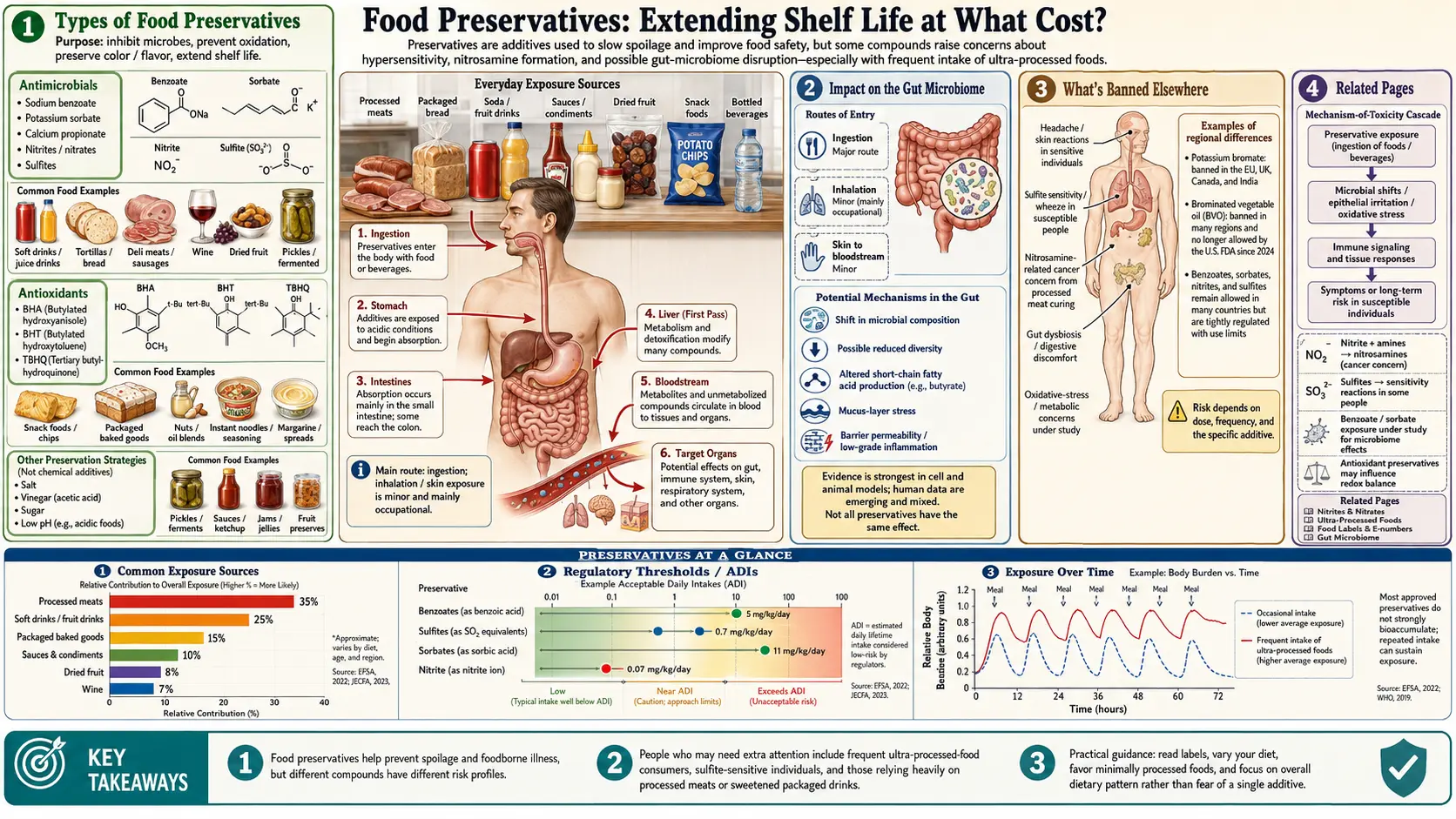
Table of Contents
- Types of Food Preservatives
- The Most Concerning Preservatives
- Cumulative Daily Exposure: The Hidden Danger
- Children's Vulnerability
- Impact on the Gut Microbiome
- Endocrine Disruption
- Cancer Links
- What's Banned Elsewhere
- Natural Preservation Alternatives
- A Label Reading Guide for Preservatives
- The Bottom Line
- Related Pages
- Connections
- Featured Videos
Food preservatives are substances added to food products to prevent spoilage, maintain freshness, and extend shelf life. While the concept of food preservation is as old as civilization itself — salt, smoke, vinegar, and fermentation have been used for thousands of years — the modern food industry relies heavily on synthetic chemical preservatives that raise serious health concerns. The average American consumes an estimated 3 to 5 pounds of food additives per year, and preservatives make up a significant portion of that intake.
Understanding the types of preservatives in your food, how they affect your body, and which ones are most concerning is essential for making informed dietary choices and protecting your family's health.
Types of Food Preservatives
Chemical preservatives fall into several broad categories based on how they prevent food from degrading. Each category works through a different mechanism, and each carries its own set of health risks.
Antimicrobial Preservatives
Antimicrobial preservatives work by killing or inhibiting the growth of bacteria, molds, and yeasts that cause food to spoil and can cause foodborne illness. While preventing bacterial contamination is critical for food safety, many of the chemicals used for this purpose have troubling side effects.
- Sodium benzoate (E211) — Widely used in acidic foods such as soft drinks, fruit juices, pickles, and salad dressings. When combined with ascorbic acid (vitamin C), sodium benzoate can form benzene, a known carcinogen. Studies have also linked it to hyperactivity in children and damage to mitochondrial DNA. Learn more.
- Sodium nitrite (E250) and sodium nitrate (E251) — Used primarily in processed meats such as bacon, hot dogs, deli meats, and sausages. These compounds form nitrosamines when heated or combined with stomach acid, and nitrosamines are among the most potent carcinogens known to science. The WHO classifies processed meat as a Group 1 carcinogen largely because of these compounds. Learn more.
- Potassium sorbate (E202) — Found in cheese, wine, baked goods, and personal care products. Generally considered one of the safer synthetic preservatives, though studies have raised concerns about genotoxicity at food-relevant concentrations. Learn more.
- Sulfites (E220-E228) — A family of preservatives including sulfur dioxide, sodium sulfite, sodium bisulfite, and potassium metabisulfite. Used extensively in wine, dried fruits, shrimp, and processed potatoes. Sulfites can trigger severe asthmatic reactions, anaphylaxis, and other allergic responses in sensitive individuals. An estimated 1 in 100 people is sulfite-sensitive. Learn more.
- Natamycin (E235) — An antifungal antibiotic used on cheese surfaces and in some beverages. While generally regarded as safe in small amounts, its classification as an antibiotic raises concerns about contributing to antimicrobial resistance. Learn more.
- Nisin (E234) — A naturally occurring antimicrobial peptide produced by certain bacteria. Used in processed cheese, canned foods, and meat products. Considered relatively safe but may affect gut bacteria balance. Learn more.
Antioxidant Preservatives
Antioxidant preservatives prevent oxidation — the chemical reaction that causes fats and oils to become rancid and foods to turn brown or lose flavor. While preventing oxidation sounds beneficial, the synthetic antioxidants used in processed foods are among the most controversial additives in the food supply.
- BHA (butylated hydroxyanisole, E320) — A petroleum-derived antioxidant classified by the US National Toxicology Program as "reasonably anticipated to be a human carcinogen." Found in cereals, snack foods, chewing gum, butter, and even cosmetics. Banned or restricted in Japan and parts of the EU. Read more about BHA and BHT.
- BHT (butylated hydroxytoluene, E321) — Chemically similar to BHA and used in many of the same products. While slightly less concerning than BHA in some studies, BHT has still been linked to organ toxicity, behavioral effects in children, and possible carcinogenicity. Read more about BHA and BHT.
- TBHQ (tert-butylhydroquinone, E319) — A synthetic antioxidant derived from butane, used in fast food, frozen meals, crackers, chips, and cooking oils. The FDA limits TBHQ to 0.02% of a food's oil or fat content because higher doses have caused stomach tumors in lab animals. It has also been associated with vision disturbances, liver enlargement, neurotoxic effects, and immune system suppression. A 2019 study from Michigan State University found that TBHQ suppresses the immune response to influenza infection. Learn more.
- Propyl gallate (E310) — Often used in combination with BHA and BHT in products containing fats and oils, including meat products, chicken soup base, and chewing gum. Associated with kidney and liver damage in animal studies and suspected endocrine disruption.
Chelating Agents
Chelating agents bind to metal ions in food that would otherwise catalyze oxidation and spoilage. They work synergistically with antioxidant preservatives to extend shelf life further.
- EDTA (ethylenediaminetetraacetic acid, E385) — Found in canned foods, salad dressings, sandwich spreads, and soft drinks. While EDTA is generally recognized as safe in food amounts, it is a potent chelator that can bind essential minerals like zinc, calcium, and iron, potentially affecting nutritional status. EDTA is also used medically for heavy metal detoxification, raising questions about its long-term dietary effects on mineral balance.
- Citric acid (E330) — A naturally occurring acid found in citrus fruits, widely used as both a preservative and flavoring agent. While citric acid itself is safe, the industrially produced version (manufactured using the mold Aspergillus niger) may cause inflammatory reactions in some individuals.
- Phosphoric acid (E338) — Used primarily in cola soft drinks. High phosphoric acid intake has been associated with reduced bone mineral density and increased risk of osteoporosis, as it may interfere with calcium absorption.
The Most Concerning Preservatives
While all synthetic preservatives deserve scrutiny, several stand out as particularly worrisome based on the strength of scientific evidence linking them to adverse health effects.
- BHA (butylated hydroxyanisole) — Classified as a reasonably anticipated human carcinogen. Causes stomach and liver tumors in animals. Acts as an endocrine disruptor with estrogenic activity. Found in hundreds of common food products. Full article on BHA and BHT.
- Sodium nitrite — Forms carcinogenic nitrosamines during cooking and digestion. Central to the mechanism by which processed meat causes colorectal cancer. Used in nearly all conventional processed meats. Full article on Sodium Nitrite.
- TBHQ — Derived from butane gas. Causes tumors at doses only 5 times higher than the FDA-permitted level. Shown to suppress immune function. Widely present in fast food and snack products. Full article on TBHQ.
- Sodium benzoate — Forms the known carcinogen benzene when combined with vitamin C. Linked to hyperactivity in children in multiple peer-reviewed studies. Damages mitochondrial DNA. Full article on Sodium Benzoate.
- Sulfites — Can cause life-threatening reactions in sensitive individuals. Associated with respiratory distress, headaches, and skin reactions. Required to carry warning labels, yet still widely used. Full article on Sulfites.
- Propylparaben — A preservative used in some foods and extensively in cosmetics. A known endocrine disruptor that mimics estrogen. Has been detected in breast cancer tissue. Banned as a food additive in the EU since 2006.
Cumulative Daily Exposure: The Hidden Danger
One of the most significant yet overlooked risks of food preservatives is cumulative exposure. Regulatory agencies set acceptable daily intake (ADI) levels for individual preservatives based on isolated toxicology studies. However, the average person does not consume just one preservative per day — they consume dozens, often in every meal and snack.
Consider a typical day of eating processed food: cereal with BHT for breakfast, a sandwich with sodium nitrite-laden deli meat for lunch, crackers with TBHQ for a snack, and a frozen dinner containing multiple preservatives for supper, washed down with a soft drink containing sodium benzoate. This cumulative chemical burden is rarely studied and never accounted for in safety assessments.
Furthermore, preservatives do not act in isolation within the body. They interact with each other, with other food additives, with medications, and with naturally occurring compounds in food. The sodium benzoate plus vitamin C reaction that produces benzene is just one well-documented example of these interactions. Many others likely exist but have never been studied.
Children's Vulnerability
Children are disproportionately affected by food preservatives for several critical reasons:
- Higher relative intake — Children eat more food relative to their body weight than adults, resulting in higher per-kilogram exposure to preservatives and other additives.
- Developing organ systems — Children's livers, kidneys, brains, and immune systems are still developing and are more susceptible to chemical disruption. The blood-brain barrier is not fully formed in young children.
- Endocrine sensitivity — Children's endocrine systems are extremely sensitive during critical developmental windows. Preservatives with estrogenic activity (BHA, propylparaben) can interfere with normal hormonal development, potentially contributing to early puberty and reproductive disorders.
- Longer lifetime exposure — A child born today will accumulate decades more exposure to these chemicals than previous generations, and the long-term effects of lifelong cumulative exposure are completely unknown.
- Behavioral effects — Multiple studies, including a landmark 2007 study published in The Lancet (the "Southampton Study"), found that mixtures of preservatives and artificial colors increased hyperactive behavior in children. This study was influential in the EU's decision to require warning labels on products containing certain artificial colors.
- Targeted marketing — Many of the most preservative-laden foods — cereals, snack foods, candy, fast food — are aggressively marketed directly to children.
Impact on the Gut Microbiome
Emerging research reveals that food preservatives may cause significant damage to the gut microbiome — the trillions of bacteria, fungi, and other microorganisms that inhabit the digestive tract and play crucial roles in immunity, metabolism, mental health, and overall well-being.
This should come as no surprise: antimicrobial preservatives are specifically designed to kill or inhibit microorganisms. The same properties that prevent bacterial growth in a package of food continue to exert antimicrobial effects inside the gut. Research published in journals including Nature, Gut, and the Journal of Nutritional Biochemistry has demonstrated that common preservatives alter the composition of gut bacteria, reduce microbial diversity, promote the growth of harmful bacteria, and compromise the intestinal barrier ("leaky gut").
- Sodium benzoate — Shown to reduce populations of beneficial Lactobacillus and Bifidobacterium species while promoting potentially harmful bacteria.
- Sodium nitrite — Alters gut microbial composition and has been linked to increased intestinal inflammation in animal studies.
- Sulfites — Toxic to many beneficial gut bacteria, particularly those involved in producing short-chain fatty acids that nourish the intestinal lining.
- Potassium sorbate — Even this "safer" preservative has been shown to inhibit beneficial gut bacteria at concentrations achievable through normal dietary intake.
Disruption of the gut microbiome has been linked to a wide range of chronic diseases, including inflammatory bowel disease, obesity, type 2 diabetes, autoimmune disorders, depression, anxiety, and even neurodegenerative conditions like Parkinson's disease. The preservative-driven degradation of gut health may be an underappreciated driver of the chronic disease epidemic.
Endocrine Disruption
Several common food preservatives are confirmed or suspected endocrine disruptors — chemicals that interfere with the body's hormonal system. The endocrine system regulates virtually every physiological process, including growth, development, reproduction, metabolism, and mood. Even extremely small doses of endocrine disruptors can have significant effects, particularly during critical developmental windows in utero and during childhood.
- BHA — Demonstrated estrogenic activity in multiple studies. Can bind to estrogen receptors and stimulate estrogen-responsive gene expression. Associated with reproductive toxicity in animal studies.
- Propylparaben — One of the most potent estrogenic food preservatives. Mimics estrogen so effectively that it has been found in breast cancer tissue and is suspected of contributing to breast cancer development. Banned as a food additive in the EU.
- BHT — Shows anti-androgenic activity in some studies, meaning it can interfere with male hormones. Associated with developmental and reproductive effects in animal models.
- TBHQ — Emerging evidence suggests immune system disruption, which is regulated in part by the endocrine system. May affect thyroid hormone function.
- 4-hexylresorcinol — Used to prevent browning in shrimp and other shellfish. Has demonstrated estrogenic activity and can interfere with testosterone metabolism.
Cancer Links
The relationship between food preservatives and cancer is supported by a growing body of scientific evidence:
- BHA — Classified by the US National Toxicology Program as "reasonably anticipated to be a human carcinogen" based on sufficient evidence of carcinogenicity in animal studies. The International Agency for Research on Cancer (IARC) classifies it as a Group 2B possible human carcinogen. BHA causes forestomach tumors in rodents at doses not dramatically higher than human exposure levels.
- Sodium nitrite and nitrosamines — The IARC classifies processed meat as a Group 1 carcinogen (the highest classification, shared with tobacco smoking and asbestos), primarily due to the nitrosamines formed from sodium nitrite. An estimated 34,000 cancer deaths per year worldwide are attributable to diets high in processed meat.
- Sodium benzoate and benzene — When sodium benzoate reacts with ascorbic acid, it can form benzene, which is classified as a Group 1 carcinogen by the IARC. While the levels formed in beverages are typically low, any benzene exposure carries some cancer risk, as there is no known safe threshold for a genotoxic carcinogen.
- TBHQ — Has produced stomach tumors in rats and has shown evidence of promoting tumor growth in some cancer models. The FDA allows TBHQ only at very low concentrations, implicitly acknowledging its toxicity.
What's Banned Elsewhere
Many preservatives commonly used in the United States are banned, restricted, or require warning labels in other developed nations. This regulatory gap reflects a fundamental difference in approach: the European Union applies the precautionary principle (restricting substances until they are proven safe), while the United States generally allows substances until they are proven harmful.
- BHA — Banned in Japan. Restricted in the EU for certain food uses. Allowed without restriction in the US.
- Propylparaben — Banned as a food additive in the EU since 2006. Still permitted in US foods.
- Potassium bromate — Though technically a dough conditioner rather than a preservative, it is banned in the EU, UK, Canada, Brazil, and China but still allowed in US bread products.
- rBGH/rBST — A growth hormone used in US dairy production that requires antimicrobial treatments. Banned in the EU, Canada, Australia, and Japan.
For a comprehensive comparison, see our page on Food Additives Banned in Other Countries But Legal in the US and our US vs EU Food Safety Regulation comparison.
Natural Preservation Alternatives
The food industry often argues that synthetic preservatives are essential for food safety and preventing waste. However, numerous natural alternatives exist that can preserve food effectively without the health risks associated with synthetic chemicals.
- Rosemary extract — A powerful natural antioxidant that is already used by many European food manufacturers as a replacement for BHA and BHT. Effective at preventing lipid oxidation in meat, oils, and snack foods.
- Tocopherols (vitamin E) — Natural antioxidants that prevent rancidity in oils and fats. Many organic and natural food brands already use mixed tocopherols instead of BHA, BHT, or TBHQ.
- Citric acid and ascorbic acid — Naturally derived acids that act as both antioxidants and chelating agents. Effective preservatives with excellent safety profiles when used individually (the problem arises only when sodium benzoate is combined with ascorbic acid).
- Vinegar (acetic acid) — One of the oldest preservatives known to humanity, effective against many pathogenic bacteria. Still used extensively in pickling and condiment production.
- Salt and sugar — Traditional preservatives that work by reducing water activity. While excess salt and sugar carry their own health concerns, they do not have the carcinogenic or endocrine-disrupting properties of synthetic preservatives.
- Fermentation — Produces natural antimicrobial compounds (lactic acid, acetic acid, bacteriocins) while simultaneously creating beneficial probiotics. Fermented foods actively promote gut health rather than destroying it.
- Green tea extract — Contains catechins with strong antioxidant and antimicrobial properties. Used in some natural food products as a preservative and shown to be effective in extending the shelf life of meat and seafood.
- Oregano oil and thyme oil — Contain carvacrol and thymol, compounds with potent antimicrobial activity against foodborne pathogens including E. coli, Salmonella, and Listeria.
- Modified atmosphere packaging (MAP) — A non-chemical preservation method that replaces oxygen in packaging with nitrogen or carbon dioxide to slow spoilage. Widely used in Europe as an alternative to chemical preservatives.
- High-pressure processing (HPP) — A technology that uses extreme pressure to kill pathogens without heat or chemicals. Already used for some juices, deli meats, and ready-to-eat meals.
A Label Reading Guide for Preservatives
Understanding food labels is your first line of defense against unwanted preservatives. Here is what to look for and what the common terms mean:
Names to Watch For
- BHA or butylated hydroxyanisole — Possible carcinogen. Avoid.
- BHT or butylated hydroxytoluene — Controversial antioxidant. Best avoided.
- TBHQ or tert-butylhydroquinone — Butane-derived antioxidant. Avoid.
- Sodium nitrite or sodium nitrate — Found in processed meats. Forms carcinogenic nitrosamines. Avoid or minimize.
- Sodium benzoate or potassium benzoate — Especially concerning in products that also contain vitamin C or citric acid. Avoid this combination.
- Sulfur dioxide, sodium sulfite, sodium bisulfite, sodium metabisulfite, potassium bisulfite, potassium metabisulfite — All are sulfites. Avoid if you have asthma or sulfite sensitivity.
- Propylparaben, methylparaben, ethylparaben — Endocrine-disrupting parabens. Avoid.
- EDTA (calcium disodium EDTA, disodium EDTA) — Chelating agent. Less concerning than others but may affect mineral absorption.
Safer Preservative Alternatives on Labels
- Tocopherols or mixed tocopherols — Vitamin E. A safe, natural antioxidant.
- Rosemary extract — A natural antioxidant preservative.
- Ascorbic acid (vitamin C) — Safe when not combined with sodium benzoate.
- Citric acid — Generally safe natural preservative.
Tips for Reducing Preservative Exposure
- Choose fresh, whole foods — Fruits, vegetables, whole grains, fresh meats, and legumes do not contain added preservatives.
- Buy organic when possible — Organic standards prohibit most synthetic preservatives, though some (like citric acid and ascorbic acid) are allowed.
- Cook from scratch — Preparing meals at home from basic ingredients eliminates preservative exposure from processed foods.
- Read every label — Even products marketed as "natural" or "healthy" may contain synthetic preservatives. Always check the ingredient list.
- Avoid processed meats — Or choose truly uncured options that do not use celery powder (which is a hidden source of nitrates).
- Choose products preserved with natural alternatives — Look for products that use tocopherols, rosemary extract, or other natural preservatives instead of BHA, BHT, or TBHQ.
- Shop the perimeter of the grocery store — Fresh produce, dairy, meat, and bakery items along the store's outer edges generally contain fewer preservatives than the processed foods in center aisles.
- Support brands that reformulate — Some companies have voluntarily removed controversial preservatives in response to consumer demand. Supporting these brands incentivizes the rest of the industry to follow.
The Bottom Line
Food preservatives serve a legitimate purpose in preventing spoilage and foodborne illness. However, the synthetic chemical preservatives that dominate the modern processed food supply carry real health risks, from cancer and endocrine disruption to gut microbiome damage and behavioral effects in children. The regulatory framework in the United States is inadequate, allowing chemicals that other developed nations have deemed too dangerous for their food supply.
Consumers do not have to wait for regulatory agencies to act. By reading labels, choosing whole foods, cooking from scratch, and selecting products preserved with natural alternatives, you can dramatically reduce your family's exposure to the most concerning preservatives. Your health is worth more than a longer shelf life.
Related Pages
Preservative Deep Dives
- BHA and BHT: Petroleum-Derived Preservatives in Your Food
- Sodium Nitrite: The Processed Meat Preservative Linked to Cancer
- Potassium Sorbate (E202): The 'Safer' Preservative Under Scrutiny
- Natamycin (E235): The Antibiotic Preservative on Your Cheese
- Nisin (E234): The Bacterial Weapon in Your Food
- Sodium Benzoate: Benzene Formation and Hyperactivity
- Sulfites: Allergic Reactions and Hidden Dangers in Food and Wine
- TBHQ: The Petroleum-Derived Preservative in Fast Food
Broader Context
- Food Additives: What's Really in Your Food
- Food Additives Banned in Other Countries But Legal in the US
- US vs EU Food Safety Regulation Compared
Connections
- All Toxins
- Sodium Nitrite
- BHA and BHT
- Potassium Sorbate
- Sodium Benzoate
- Food Additives
- TBHQ
- Sulfites
- Nisin
- Natamycin
- US vs EU Food Safety
- Banned Additives
- Sodium Nitrite and Sodium Nitrate
- BHT
- Cancer
- BHA
- Vitamin C
- Ultra Processed Foods
- Gut-Brain Axis