Peppermint (Mentha × piperita)
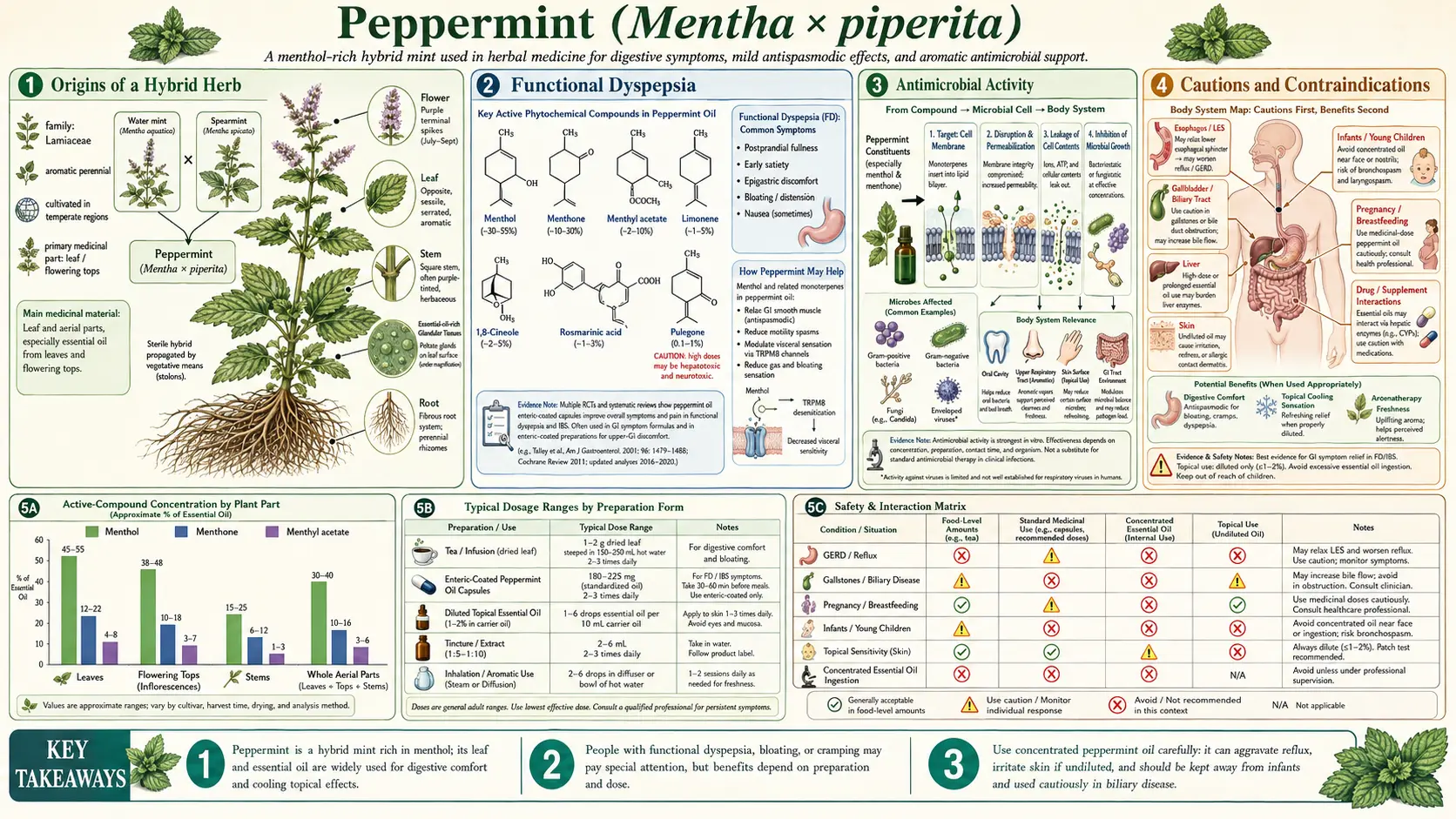
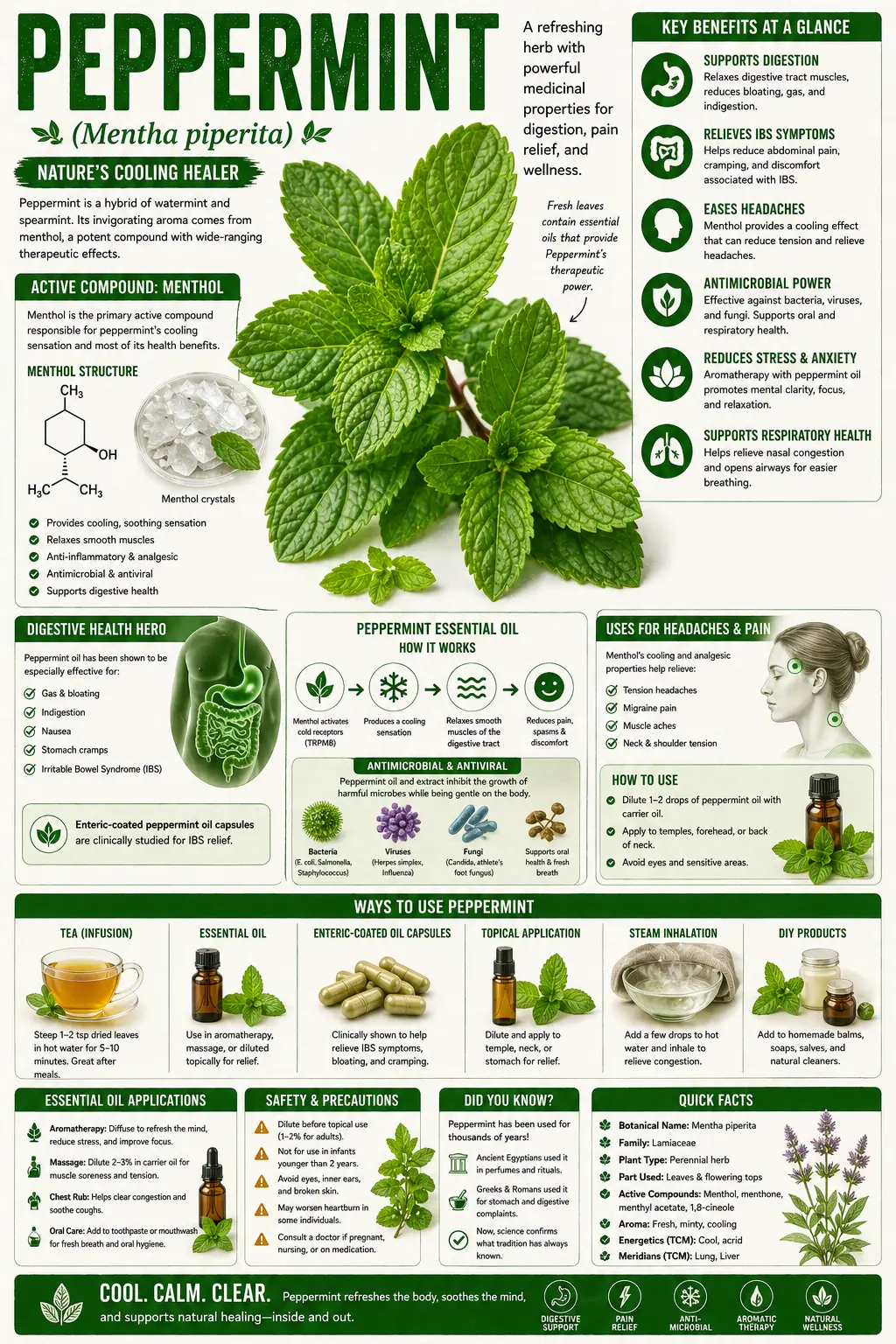
Table of Contents
- Origins of a Hybrid Herb
- Active Compounds
- Irritable Bowel Syndrome
- Functional Dyspepsia
- Tension Headache
- Respiratory Use
- Antimicrobial Activity
- Forms and Preparations
- Recommended Dosage
- Cautions and Contraindications
- Featured Videos
Origins of a Hybrid Herb
Peppermint is a sterile hybrid of watermint (Mentha aquatica) and spearmint (Mentha spicata) that was first documented in England in the 1690s and named Mentha piperita by Linnaeus in 1753 — making it one of the younger herbs in the Western tradition, even though the genus reaches back to Greek myth. The plant carries the ancient digestive reputation of mint generally, and its cooling compound, menthol, was first isolated in 1771. — the fuller story is told in the dedicated History & Traditional Use article.
Active Compounds
The principal active component is menthol, a cyclic terpene alcohol that constitutes 35-55% of peppermint essential oil. Menthol activates the TRPM8 cold-sensing receptor on sensory neurons, producing the characteristic cooling sensation, and has multiple additional pharmacological effects:
- Smooth muscle relaxation — inhibits calcium channels in intestinal smooth muscle, producing antispasmodic effects
- Local anesthetic activity — desensitizes pain receptors at higher concentrations
- Antimicrobial activity — against many bacteria, fungi, and viruses
- Anti-inflammatory effects — reduces inflammatory cytokine production
Other significant constituents include menthone, menthyl acetate, 1,8-cineole, limonene, and pulegone. The full essential oil profile produces synergistic effects beyond what isolated menthol can achieve.
Irritable Bowel Syndrome
The strongest clinical evidence for peppermint is in irritable bowel syndrome. Multiple randomized controlled trials and meta-analyses have shown that enteric-coated peppermint oil capsules (typically 0.2 mL of oil per capsule, taken twice or three times daily) produce significant improvements in:
- Abdominal pain and discomfort
- Bloating and abdominal distension
- Stool urgency and frequency
- Overall symptom severity scores
The American College of Gastroenterology and the British Society of Gastroenterology both endorse peppermint oil as a first-line therapy for global IBS symptoms. The number needed to treat (NNT) for clinically meaningful improvement is approximately 3 — comparable to or better than many pharmaceutical IBS therapies.
Enteric coating is essential. Uncoated peppermint oil is absorbed in the upper GI tract and may cause heartburn or burning belches; the enteric coating ensures the oil is released in the small intestine and colon where it is needed.
Functional Dyspepsia
Peppermint oil, often combined with caraway oil, has been studied for functional dyspepsia (chronic indigestion without identifiable structural disease) with positive results. The standardized combination product Iberogast (containing peppermint and other herbs) is one of the most-studied botanical treatments for functional GI disorders in Europe.
Peppermint relaxes the lower esophageal sphincter and the pyloric sphincter, which can either help or harm depending on the underlying problem. In dyspepsia from delayed gastric emptying, peppermint can speed transit. In gastroesophageal reflux, it can worsen symptoms by relaxing the LES — so peppermint should generally be avoided in GERD.
Tension Headache
Topical peppermint oil applied to the forehead and temples has been shown in controlled trials to reduce tension headache severity, with effects comparable to acetaminophen at 30 minutes post-application. The mechanism likely involves cold-receptor activation, mild local muscle relaxation, and a counterirritant effect.
Topical use requires dilution — typically a 10% peppermint oil in a carrier oil base, applied to the temples, behind the ears, and across the forehead. Avoid contact with eyes and mucous membranes. Direct application of undiluted peppermint oil can cause skin irritation and is not appropriate.
Respiratory Use
Inhaled peppermint vapor has classical use for upper respiratory congestion. Menthol activates cold-sensing receptors in the nasal mucosa, producing a sensation of clearer breathing even when objective measures of airflow do not change significantly. Peppermint is a common ingredient in cough drops, chest rubs (combined with eucalyptus and camphor), and steam inhalation preparations.
Caution: avoid menthol-containing products in infants and very young children, where they have been associated with respiratory problems and rare cases of laryngospasm.
Antimicrobial Activity
Peppermint oil has documented activity against a broad spectrum of bacteria, fungi, and protozoa in laboratory studies. Clinically relevant applications include:
- Topical use for fungal skin infections (athlete's foot, ringworm) in dilute form
- Oral hygiene: peppermint is a common ingredient in toothpastes and mouthwashes for breath freshening and mild antibacterial activity
- Some integrative protocols include enteric-coated peppermint oil as a component of broader botanical antimicrobial regimens for SIBO and intestinal dysbiosis
Forms and Preparations
- Enteric-coated peppermint oil capsules — the form used in IBS trials; typically 0.2 mL of oil per capsule
- Peppermint tea — 1-2 teaspoons of dried leaf in hot water for 10 minutes; gentle digestive support and mild relaxant
- Peppermint essential oil (undiluted) — intended only for inhalation or for dilution; never apply undiluted to skin or take orally without enteric coating
- Topical preparations — 10% peppermint oil in a carrier (jojoba, almond, fractionated coconut oil) for headache application
- Tinctures — 1:5 alcohol extracts; less commonly used clinically
- Fresh leaves — in salads, beverages, garnishes
Recommended Dosage
- Enteric-coated capsules for IBS — 0.2 mL of peppermint oil per capsule, two or three times daily, 30-60 minutes before meals
- Peppermint tea — 1-3 cups daily for digestive support
- Topical headache use — apply 10% diluted peppermint oil to forehead and temples; reapply after 30-60 minutes if needed
- Inhalation — a few drops of essential oil in a bowl of hot water; lean over with a towel to capture the steam
- Duration — safe for indefinite daily use of tea; capsule courses for IBS typically run 4-12 weeks with reassessment
Cautions and Contraindications
- GERD — relaxes the lower esophageal sphincter; can worsen reflux; avoid in GERD
- Hiatal hernia — same mechanism; generally avoid
- Gallstones — can increase bile flow and may precipitate biliary colic in patients with stones
- Infants and young children — avoid menthol-containing products in children under 2 (some sources say under 5); risk of laryngospasm; never apply menthol products to the face or chest of infants
- Pregnancy and breastfeeding — moderate dietary use is fine; avoid high-dose essential oil supplementation during pregnancy
- Allergic skin reaction — topical peppermint can cause contact dermatitis in sensitive individuals; test on a small skin area first
- Drug interactions — mild CYP3A4 inhibition; monitor when combined with drugs heavily metabolized by this enzyme (cyclosporine, certain statins, calcium channel blockers)
Research Papers and References
The following PubMed search links provide curated entry points into the published clinical and mechanistic literature on Peppermint (Mentha × piperita). Each link opens directly in PubMed at the National Library of Medicine.
- Enteric-coated peppermint oil for IBS — PubMed: peppermint oil IBS enteric
- Peppermint oil for tension headache — PubMed: peppermint oil headache
- Peppermint and gastric emptying / dyspepsia — PubMed: peppermint dyspepsia
- Menthol mechanism TRPM8 cooling receptor — PubMed: menthol TRPM8
- Peppermint antimicrobial activity — PubMed: peppermint antimicrobial
- Peppermint for endoscopy and antispasmodic use — PubMed: peppermint endoscopy antispasmodic
- Peppermint safety and reflux — PubMed: peppermint reflux safety
External Authoritative Resources
- NCCIH — Herbs at a Glance
- MedlinePlus — Herbs and Supplements
- PubMed — All research on Mentha × piperita
Connections
- All Herbs
- Peppermint Benefits Deep Dive
- Irritable Bowel Syndrome
- Ginger
- Lemon Balm
- Fennel
- Migraine
- Chamomile
- Headache
- Reflux and Heartburn
- Bloating
- SIBO
- Oregano
- Turmeric
- Abdominal Pain
- Eucalyptus
- Gut Healing
- Herbal Antimicrobials
- Low FODMAP Diet
- Sinusitis
- Mullein
- Conditions on this site that reference this page: IBS Medications Guide · Peppermint, Probiotics & Herbals for IBS · Chronic Diarrhea · ENT (Ear, Nose & Throat)