Licorice (Glycyrrhiza glabra)
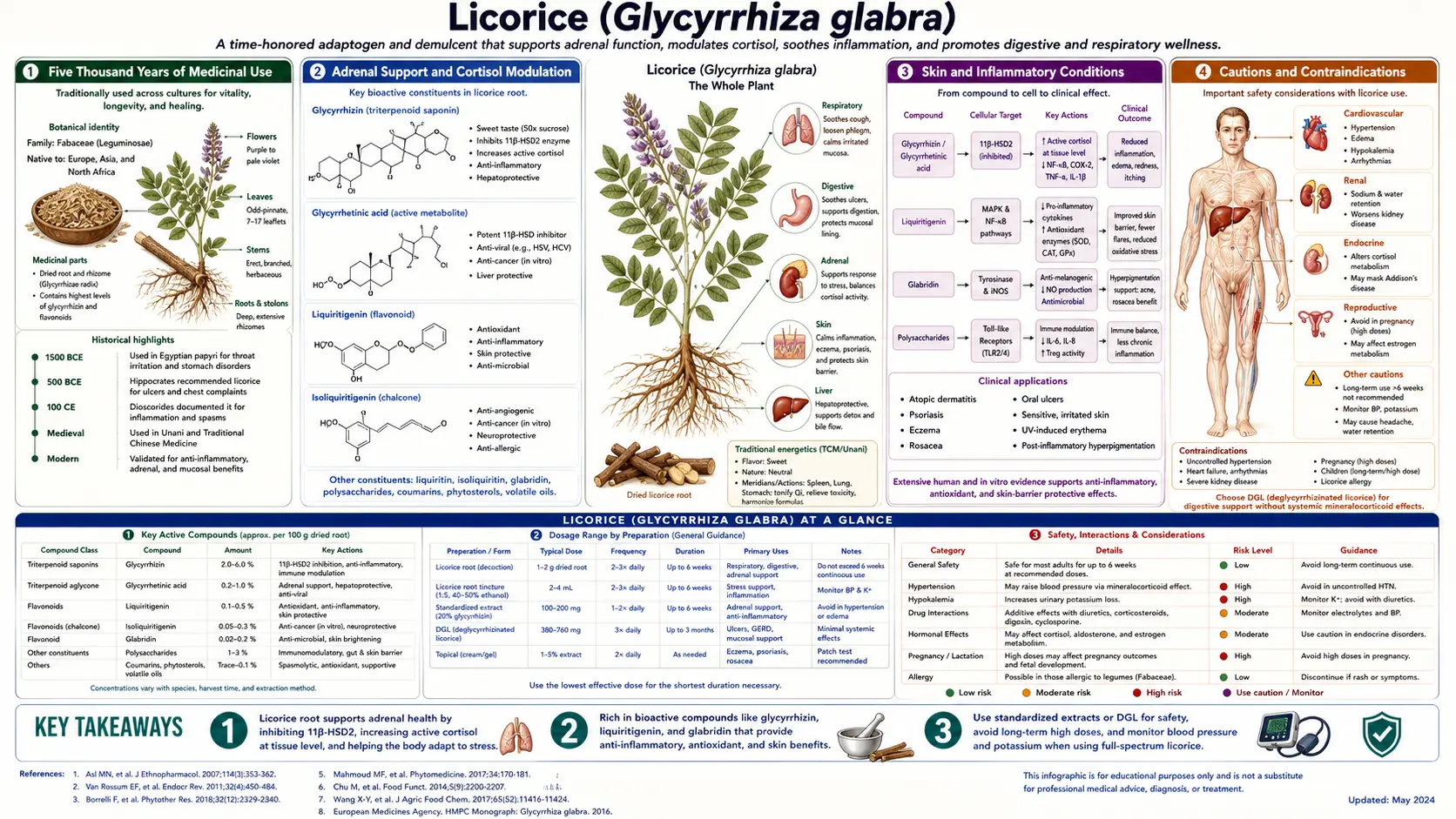
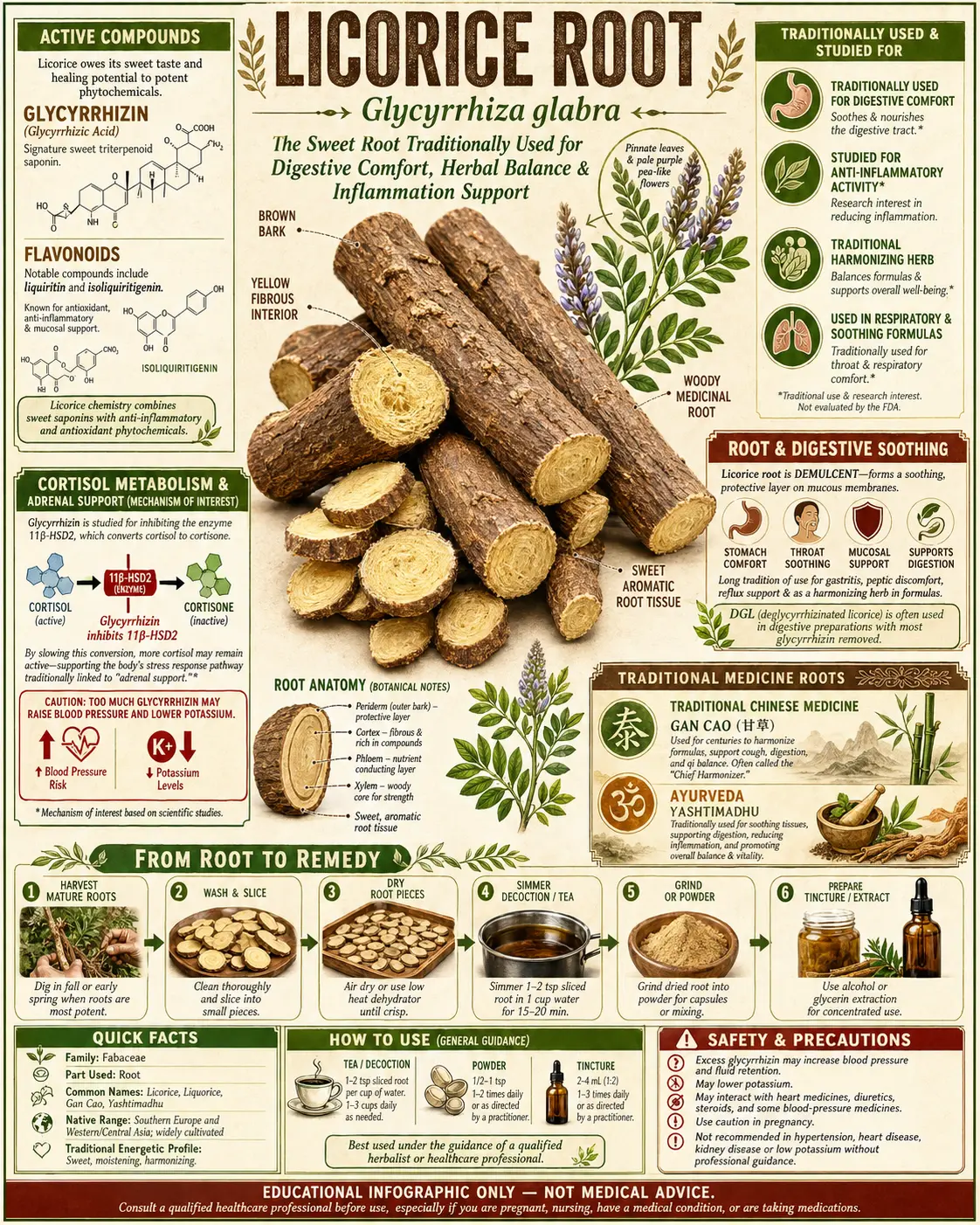
Table of Contents
- Five Thousand Years of Medicinal Use
- Active Compounds
- Peptic Ulcers and Gastritis (DGL)
- Adrenal Support and Cortisol Modulation
- Cough and Respiratory Conditions
- Antiviral Activity and Liver Support
- Skin and Inflammatory Conditions
- Forms and Preparations
- Recommended Dosage
- Cautions and Contraindications
- Featured Videos
Five Thousand Years of Medicinal Use
Licorice (the root of Glycyrrhiza glabra and related species) is one of the oldest and most widely travelled medicinal plants in the world — its very name comes from the Greek for “sweet root.” From the physicians of ancient Egypt, Greece, and Rome to its central place in Chinese medicine and its later fame in the sweet-shops of England, the same sweet root was prized across cultures for soothing the cough and throat, calming the stomach, and serving as a gentle restorative — the fuller story is told in the dedicated History & Traditional Use article.
Active Compounds
- Glycyrrhizin (glycyrrhizic acid) — the principal active compound; responsible for the sweetness, the cortisol-prolonging effect, the antiviral activity, and the potential side effects
- Glycyrrhetinic acid — the metabolite of glycyrrhizin; the active form responsible for inhibition of 11-beta-HSD2 (the enzyme that converts cortisol to inactive cortisone)
- Flavonoids — including liquiritin, liquiritigenin, and isoliquiritigenin, with antioxidant, anti-inflammatory, and gastroprotective activity
- Isoflavonoids — including glabridin and glabrene, with weak phytoestrogenic and antimicrobial activity
- Triterpenoid saponins — including soyasaponins, with mild expectorant and adrenal-supporting activity
Peptic Ulcers and Gastritis (DGL)
Deglycyrrhizinated licorice (DGL) is one of the best-studied botanical interventions for peptic ulcer disease, gastritis, and functional dyspepsia. By removing glycyrrhizin (and with it the cortisol-related side effect profile), DGL retains the gastric-protective properties of the flavonoid fraction without the potential for hypertension or fluid retention.
Mechanisms of DGL's GI-protective action include:
- Stimulation of mucin production from gastric epithelial cells, thickening the protective mucus layer
- Promotion of cell turnover in the gastric and duodenal lining
- Anti-inflammatory effects on the gastric epithelium
- Direct inhibitory activity against Helicobacter pylori (the bacterium implicated in most peptic ulcers)
- Soothing of esophageal and gastric irritation in reflux
DGL is best taken in chewable form (380-760 mg, chewed before meals) because chewing stimulates mucus production. Capsule forms appear to be less effective for ulcer protection though they remain useful for symptomatic gastritis.
Adrenal Support and Cortisol Modulation
Glycyrrhizin (and its metabolite glycyrrhetinic acid) inhibits the enzyme 11-beta-hydroxysteroid dehydrogenase type 2 (11-beta-HSD2), which normally converts active cortisol into inactive cortisone in target tissues. Inhibiting this enzyme effectively prolongs the action of endogenous cortisol throughout the body.
This mechanism produces a recognizable clinical pattern — both the desired effect and the dose-limiting toxicity:
- Therapeutic application — in patients with documented hypocortisolism, late-stage HPA-axis depletion, or treatment-resistant fatigue with low salivary cortisol, low-dose licorice can extend the activity of the body's own (low) cortisol output, supporting energy and stress tolerance
- Dose-limiting toxicity — at higher doses or prolonged use, the same mechanism produces apparent mineralocorticoid excess: sodium retention, potassium loss, fluid retention, and hypertension. This is called pseudohyperaldosteronism
Therapeutic use of glycyrrhizin-containing licorice for adrenal support requires careful clinical supervision, monitoring of blood pressure and electrolytes, and limited duration (typically 4-12 weeks). Many integrative protocols use small doses (75-150 mg of glycyrrhizin per day) with regular monitoring.
Cough and Respiratory Conditions
Licorice has classical use as a demulcent and expectorant for cough, sore throat, bronchitis, and asthma. The flavonoids reduce inflammation in the airway mucosa, the saponins thin and mobilize mucus, and the sweetness coats and soothes the throat. Licorice is one of the few herbs traditionally used as a daily tea for chronic dry cough.
Antiviral activity has been documented against several respiratory viruses in laboratory studies. While clinical evidence in human respiratory infection is limited, the long traditional record and favorable mechanism support its inclusion in formulas for cough and bronchitis.
Antiviral Activity and Liver Support
Glycyrrhizin has documented antiviral activity in laboratory studies against herpes simplex virus, cytomegalovirus, and hepatitis viruses. In Japan, an intravenous glycyrrhizin preparation (Stronger Neo-Minophagen C) has been used for decades in chronic hepatitis B and C, with reductions in liver enzyme elevation and possible reduction of hepatocellular carcinoma risk in some long-term studies.
Oral licorice is unlikely to achieve the systemic levels of intravenous glycyrrhizin used in hepatitis trials, but topical licorice preparations (gels, creams) have been studied for herpes simplex outbreaks and aphthous (canker sore) ulcers with positive results.
Skin and Inflammatory Conditions
Topical licorice preparations have anti-inflammatory and skin-lightening properties. Glabridin, found in the root, inhibits tyrosinase (the enzyme that produces melanin) and is used in cosmetic preparations for hyperpigmentation, melasma, and post-inflammatory dark spots. Topical licorice extracts also reduce erythema (redness) in eczema and rosacea, with milder effects than topical corticosteroids and a much better safety profile for long-term use.
Forms and Preparations
- DGL (deglycyrrhizinated licorice) — chewable tablets typically 380-760 mg; preferred form for GI protection without cortisol-related side effects
- Whole licorice root tea — 1-3 g of dried root simmered in water; classical preparation with full constituent profile
- Standardized whole-root extract — often calibrated to glycyrrhizin content (commonly 4-12%); used for adrenal/cortisol support under clinical supervision
- Tinctures — 1:5 alcohol extracts; convenient but contain glycyrrhizin
- Glycyrrhizin-only preparations — highly concentrated; used in Asian hepatology under medical supervision
- Topical licorice extract — creams, gels, and serums for skin
- Licorice candy — variable in actual licorice content; some "licorice" candy is anise-flavored with little or no actual Glycyrrhiza; check labels
Recommended Dosage
- DGL chewable — 380-760 mg, chewed thoroughly 15-20 minutes before each meal and at bedtime; safe for indefinite use
- Whole root for cough/throat — 1-3 g of dried root in tea two to three times daily, short-term (days to a few weeks)
- Whole-root standardized extract for adrenal support — 100-300 mg twice daily of an extract delivering 75-150 mg of glycyrrhizin daily; only under clinical supervision with BP and electrolyte monitoring; limited to 4-12 weeks at a time
- Topical preparations — as directed by the product
- Daily licorice candy — limit to small amounts due to glycyrrhizin content; many cases of pseudohyperaldosteronism have come from heavy licorice candy consumption
Cautions and Contraindications
- Hypertension — whole licorice and glycyrrhizin can raise blood pressure; contraindicated in uncontrolled hypertension; use only DGL
- Heart failure and edema — can cause sodium and fluid retention worsening congestive heart failure; use only DGL
- Hypokalemia — causes potassium loss; particularly dangerous when combined with thiazide and loop diuretics, leading to severe hypokalemia and cardiac arrhythmia; use only DGL in these patients
- Pregnancy — whole licorice associated with increased risk of preterm delivery and effects on fetal cortisol; limit consumption during pregnancy
- Drug interactions — digoxin (potassium loss potentiates toxicity), corticosteroids (potentiates effect), oral contraceptives (variable), antihypertensives (antagonizes effect)
- Liver disease — avoid high-dose preparations except under hepatology supervision (paradoxically, glycyrrhizin is used therapeutically in some hepatology protocols)
- Duration of use — whole licorice should not be used continuously for more than 4-6 weeks at therapeutic doses; DGL is safe for indefinite use
Research Papers and References
The following PubMed search links provide curated entry points into the published clinical and mechanistic literature on Licorice (Glycyrrhiza glabra). Each link opens directly in PubMed at the National Library of Medicine.
- DGL deglycyrrhizinated licorice for peptic ulcer — PubMed: DGL licorice peptic ulcer
- Glycyrrhizin and cortisol metabolism — PubMed: glycyrrhizin cortisol 11-beta-HSD
- Licorice for adrenal fatigue and HPA axis — PubMed: licorice HPA adrenal
- Glycyrrhiza antiviral activity hepatitis HSV — PubMed: Glycyrrhiza antiviral hepatitis
- Licorice and hypertension / pseudohyperaldosteronism — PubMed: licorice pseudohyperaldosteronism
- Licorice for functional dyspepsia and gastritis — PubMed: licorice dyspepsia gastritis
- Licorice safety and adverse effects review — PubMed: licorice safety review
External Authoritative Resources
- NCCIH — Herbs at a Glance
- MedlinePlus — Herbs and Supplements
- PubMed — All research on Glycyrrhiza glabra
Connections
- All Herbs
- Licorice Benefits Deep Dive
- Holy Basil
- Ashwagandha
- Rhodiola Rosea
- Cortisol Test
- Hypertension
- Hepatitis
- Potassium
- Asthma
- Adrenal Fatigue
- Peptic Ulcer Disease
- Reflux and Heartburn
- Liver Disease
- Anxiety
- Irritable Bowel Syndrome
- SIBO
- Gut Healing
- Ginger
- Gastroesophageal Reflux Disease
- Mullein
- Chen Pi (Aged Tangerine Peel) — aged citrus peel used to keep tonic formulas from causing bloating
- White Peony Root (Bai Shao) — source of Total Glucosides of Paeony, an approved rheumatoid-arthritis drug in China
- Codonopsis (Dang Shen) — the gentle, non-stimulant qi tonic used in place of ginseng
- Atractylodes (Bai Zhu) — the spleen-qi and digestion tonic paired with it in the classical Four Gentlemen formula
- Nhan Tran (Adenosma caeruleum) — Vietnam's everyday liver tea, and the species confusion surrounding it
- Conditions on this site that reference this page: Rosacea · Barrett's Esophagus · Gastritis · Sore Throat · Arrhythmia · Heart Failure · Canker Sores (Aphthous Ulcers) · Herpes Simplex