Coffee: Active Compounds and Health Research
Coffee Deep-Dive Articles
Coffee Enemas
The Gerson-style detox practice — mechanism, protocol, and what the evidence says about safety.
Read the deep dive →Coffee Grounds
Practical reuse of spent coffee grounds — skincare, household, and garden applications.
Read the deep dive →Health Benefits Overview
The big-picture summary of coffee's evidence-based health benefits.
Read the deep dive →Cardiovascular Health
Coffee, blood pressure, and cardiovascular-disease risk.
Read the deep dive →Liver Disease
Coffee's protective association with liver fibrosis and chronic liver disease.
Read the deep dive →Type 2 Diabetes
How habitual coffee intake associates with reduced diabetes risk.
Read the deep dive →Cancer Prevention
Coffee and cancer-risk research across multiple cancer types.
Read the deep dive →Parkinson's Disease
Caffeine's neuroprotective association with lower Parkinson's risk.
Read the deep dive →Mental Health
Coffee's links to mood, depression risk, and cognition.
Read the deep dive →Kidney Injury
Coffee intake and acute and chronic kidney outcomes.
Read the deep dive →Interactive Visualization Caffeine, Adenosine & Why Coffee Stops Working Caffeine doesn’t give you energy — it blocks the tiredness signal while adenosine keeps piling up behind the blockade. Move your coffee to 2 p.m. and watch your deep sleep vanish. Launch →
Table of Contents
- Deep-Dive Articles
- Table of Contents
- Introduction and History
- Nutritional Profile and Active Compounds
- Cognitive Function and Brain Health
- Cardiovascular Health
- Liver Health Research
- Type 2 Diabetes Research
- Cancer Research
- Antioxidant Properties
- Physical Performance and Metabolism
- Mental Health and Mood
- Gut Microbiome
- Longevity and All-Cause Mortality
- Amounts Studied, Timing and Brewing Methods
- Potential Risks and Considerations
- Key Research Papers
- Connections
- Featured Videos
1. Introduction and History
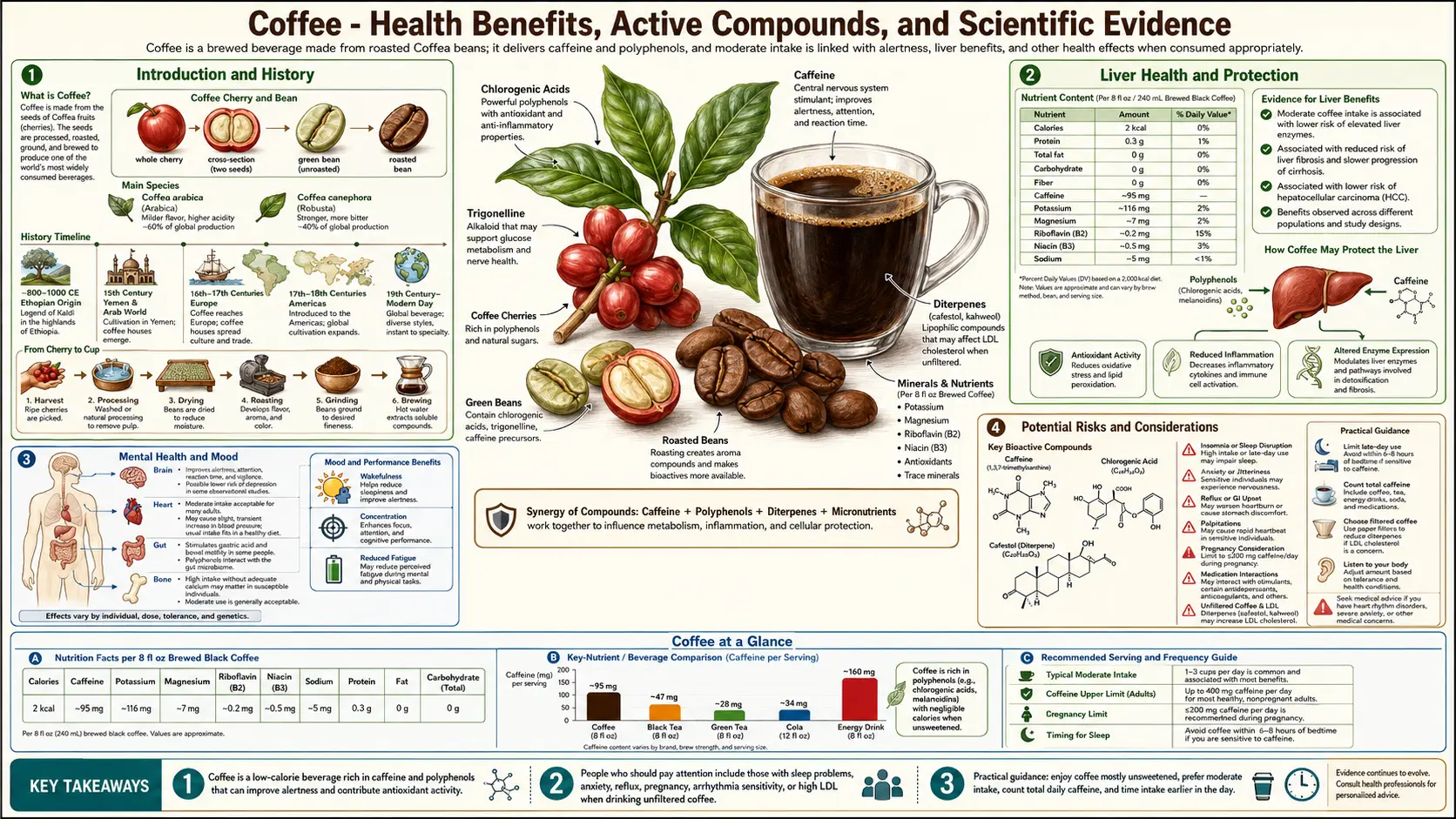
Coffee is brewed from the roasted seeds of plants in the genus Coffea, chiefly arabica and robusta. It is one of the most heavily studied parts of the diet: a 2017 umbrella review in the BMJ identified 201 meta-analyses of observational research covering 67 health outcomes, and 17 meta-analyses of interventional research covering nine outcomes (Poole 2017).
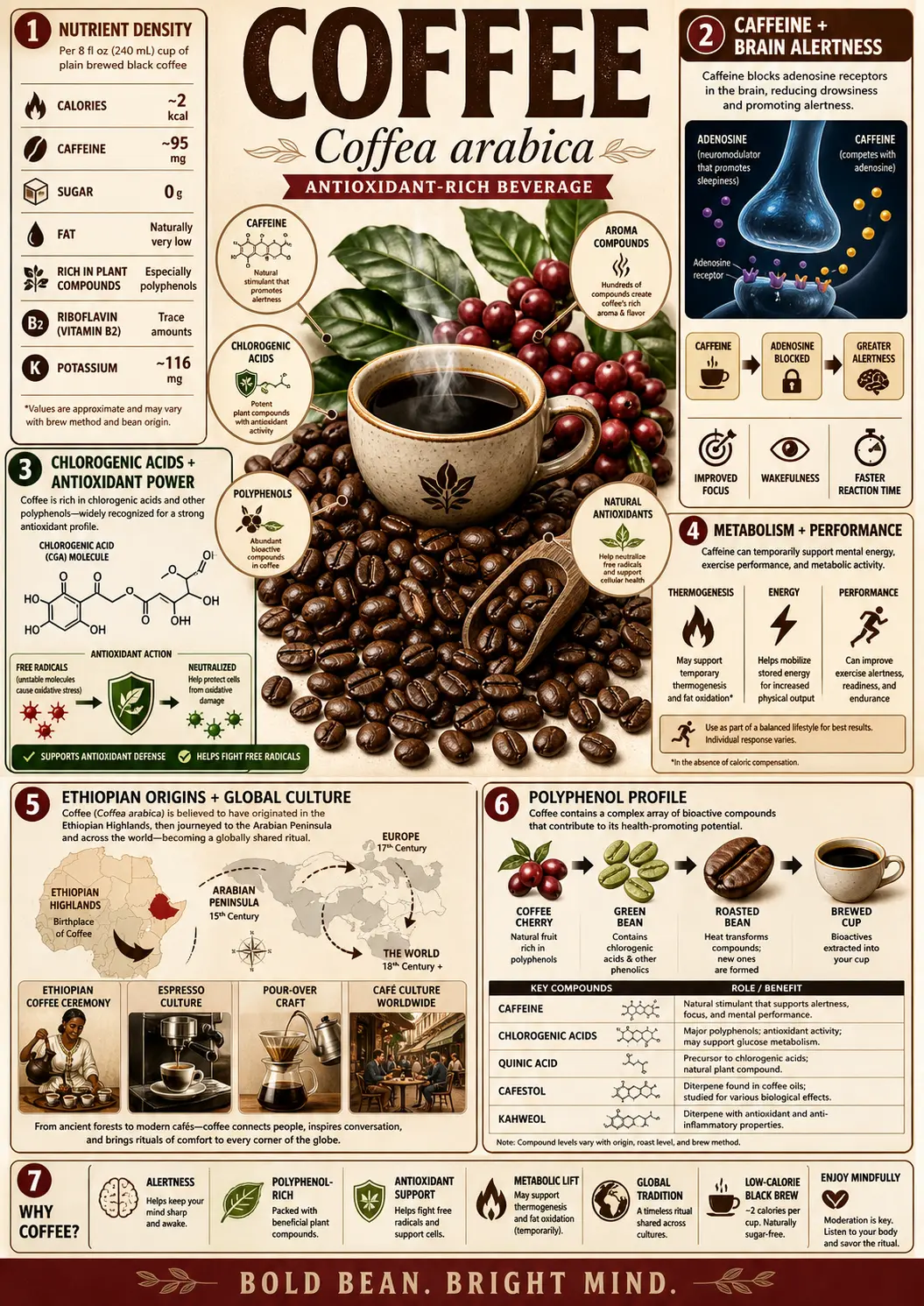
Coffee's origin is part botany, part legend. The plant Coffea arabica grew wild in the highland forests of southwestern Ethiopia, but the drink itself first enters the documented record among Sufi worshippers in fifteenth-century Yemen, before spreading through the Ottoman coffeehouses to Europe and, on colonial trade routes, around the world. The romantic tale of the goat herder Kaldi is a much later legend rather than history — the fuller story is told in the dedicated History article.
Most of this evidence comes from prospective cohort studies, which show associations rather than cause and effect. The authors of the BMJ umbrella review wrote that robust randomised controlled trials are needed to understand whether the associations they found are causal (Poole 2017).
2. Nutritional Profile and Active Compounds
The USDA FoodData Central entry for brewed coffee prepared with tap water lists, per 100 g, about 1 kcal, 0.12 g of protein and 0.02 g of fat, with small amounts of potassium (49 mg), magnesium (3 mg), riboflavin (0.076 mg), niacin (0.191 mg) and pantothenic acid (0.254 mg) (FDC 171890). A 2014 review of coffee biochemistry names the key compounds in the drink as the volatile aroma constituents, the alkaloids caffeine and trigonelline, chlorogenic acids, the diterpenes cafestol and kahweol, and melanoidins, which are Maillard-reaction products of roasting (Ludwig 2014).
Caffeine. FoodData Central lists 40 mg of caffeine per 100 g of brewed coffee and 212 mg per 100 g of restaurant-prepared espresso (FDC 171890, 171891). The FDA gives a typical range of 113 to 247 mg for a 12-fluid-ounce serving of regular brewed non-specialty coffee, and 2 to 15 mg for an 8-fluid-ounce cup of decaf. Caffeine produces most of its biological effects by blocking all types of adenosine receptors (A1, A2A, A3 and A2B) on neurons and glial cells throughout the brain, and through this blockade it affects sleep, cognition, learning and memory (Ribeiro 2010). It is broken down mainly by the liver enzyme CYP1A2 (Cornelis 2006).
Chlorogenic acids. Coffee is a relatively rich source of chlorogenic acids, a group of polyphenols. A considerable proportion of the chlorogenic acid a person swallows reaches the large intestine, where gut bacteria break it down (see Gut Microbiome below) (Mills 2015).
Trigonelline and the diterpenes. Niacin (nicotinic acid) forms from the alkaloid trigonelline during roasting. In a human study, 500 mL of regular coffee containing 34.8 µmol of nicotinic acid was followed by rapid urinary excretion of niacin metabolites, and the authors concluded that regular coffee is a source of niacin (Kremer 2018). Cafestol and kahweol are diterpenes present in unfiltered coffee brews. In a controlled crossover study of 10 healthy men, pure cafestol (61–64 mg/day for 28 days) raised LDL cholesterol by 0.57 mmol/L (22 mg/dL), and adding kahweol had a much smaller further effect (Urgert 1997). A meta-analysis of 14 trials found that unfiltered, but not filtered, coffee raises total and LDL cholesterol (Jee 2001).
Melanoidins. Melanoidins are high-molecular-weight, nitrogen-containing brown compounds formed during roasting, and coffee is one of the main sources of them in the diet. Antioxidant, antimicrobial, anticariogenic, anti-inflammatory, antihypertensive and antiglycative activities have been attributed to them, but their exact structures and how they form are still far from worked out (Moreira 2012).
3. Cognitive Function and Brain Health
Caffeine's effects on alertness follow from its blockade of adenosine receptors (Ribeiro 2010). The International Society of Sports Nutrition's 2021 position stand states that caffeine has been shown to improve cognitive function, including attention and vigilance, in most individuals (Guest 2021). A 2016 review sums up that caffeine can increase alertness and well-being, help concentration and improve mood (Nehlig 2016).
In a randomized, double-blind, placebo-controlled trial in people who did not normally consume caffeine, 200 mg of caffeine given after they had studied a set of images improved their ability, 24 hours later, to tell similar “lure” images apart from the ones they had seen. The effect followed an inverted U-shaped dose-response curve and was specific to memory consolidation, not retrieval (Borota 2014).
For Parkinson’s disease, a 2002 meta-analysis in the Annals of Neurology (8 case-control and 5 cohort studies) found a relative risk of 0.69 for coffee drinkers compared with non-drinkers, and 0.68 per three additional cups a day in the cohort studies (Hernán 2002). A 2010 meta-analysis of 26 studies found a summary relative risk of 0.75 for caffeine intake, 0.80 when only cohort studies were counted, and a weaker, non-significant association in women (RR 0.86, 95% CI 0.73–1.02) (Costa 2010).
For dementia the evidence is less certain. A 2010 meta-analysis of nine cohort and two case-control studies found a summary relative risk of 0.84 (95% CI 0.72–0.99) for caffeine intake and cognitive impairment or decline, but 0.93 (0.83–1.04) when only the cohort studies were included; the authors concluded that methodological differences between the studies rule out robust and definite statements (Santos 2010). In aged mice bred to develop Alzheimer’s-like disease, caffeine in drinking water restored working memory and reduced amyloid-beta deposits by 40% in the hippocampus and 46% in the entorhinal cortex; this is an animal finding (Arendash 2009).
In laboratory assays, instant coffee extracts inhibited the clumping of amyloid-beta and tau proteins. Dark-roast extracts were stronger inhibitors of amyloid-beta clumping than light roast, pure caffeine had no effect, and phenylindane — formed during roasting and more abundant in dark roasts — inhibited both amyloid-beta and tau fibril formation. These are test-tube results (Mancini 2018).
4. Cardiovascular Health
Caffeine raises blood pressure in the short term. In a meta-analysis of trials in people with hypertension, 200–300 mg of caffeine raised systolic blood pressure by a mean of 8.1 mmHg and diastolic by 5.7 mmHg; the rise appeared within the first hour and lasted at least 3 hours. In three studies of longer-term (2-week) coffee drinking, no rise in blood pressure was seen, and seven cohort studies found no link between habitual coffee drinking and higher cardiovascular risk in people with hypertension (Mesas 2011).
A 2014 dose-response meta-analysis in Circulation (36 prospective studies, 1,279,804 participants, 36,352 cardiovascular cases) found a non-linear pattern: compared with the lowest intake, the relative risk of cardiovascular disease was 0.85 at a median of 3.5 cups a day, the lowest risk was at 3 to 5 cups a day, and heavy coffee drinking was not associated with higher risk (Ding 2014). The 2017 BMJ umbrella review found its largest relative risk reductions at three to four cups a day versus none, including cardiovascular mortality (RR 0.81) and cardiovascular disease (RR 0.85) (Poole 2017).
A 2011 meta-analysis of 11 prospective studies (479,689 participants, 10,003 strokes) found relative risks of 0.86 for 2 cups a day and 0.83 for 3–4 cups a day compared with none, and described moderate coffee drinking as possibly weakly inversely associated with stroke (Larsson and Orsini 2011). In the Swedish Mammography Cohort (34,670 women followed for a mean of 10.4 years), the relative risks of total stroke were 0.78, 0.75 and 0.77 for 1–2, 3–4 and 5 or more cups a day, compared with less than one cup (Larsson 2011, Stroke).
For long-term blood pressure, a 2012 meta-analysis of 10 randomized trials and 5 cohort studies found no statistically significant effect of coffee on blood pressure (systolic −0.55 mmHg, diastolic −0.45 mmHg) and a pooled risk ratio for developing hypertension of 1.03. The authors rated the evidence low-quality and stated that no recommendation could be made for or against coffee in relation to blood pressure (Steffen 2012).
For heart rhythm, a 2018 meta-analysis covering 176,675 people found that coffee drinking did not increase the incidence of atrial fibrillation, and incidence was lower above 436 mg of caffeine a day (Abdelfattah 2018). Among 386,258 UK Biobank participants followed for a mean of 4.5 years, each additional daily cup of habitual coffee was associated with a 3% lower risk of a new arrhythmia (HR 0.97), with a similar estimate for atrial fibrillation or flutter. Genetic variants affecting caffeine metabolism did not change the association, and a Mendelian randomization analysis found no link between genetically predicted caffeine metabolism and arrhythmia (Kim 2021).
5. Liver Health Research
Liver conditions are among the outcomes the 2017 BMJ umbrella review found associated with lower risk in coffee drinkers (Poole 2017).
A 2016 meta-analysis (five cohort and four case-control studies; 432,133 participants and 1,990 cases) found a pooled relative risk of cirrhosis of 0.56 for each two-cup increase in daily coffee, 0.62 for alcoholic cirrhosis and 0.55 for death from cirrhosis; the results varied considerably between studies (Kennedy 2016).
In 27,793 adults in the US National Health and Nutrition Examination Survey (1999–2010), people reporting 3 or more cups a day had lower odds of abnormal ALT (OR 0.75), AST (0.82), alkaline phosphatase (0.73) and GGT (0.69) than non-drinkers, and decaffeinated coffee showed similar inverse associations (Xiao 2014). Unfiltered coffee behaved differently in a trial: five to six strong cups a day of cafetière (French-press) coffee for 24 weeks raised ALT by up to 80% above baseline relative to filtered coffee, and the rise reversed after the trial ended (Urgert 1996).
In 766 participants of the HALT-C trial who had advanced hepatitis C-related liver disease, rates of disease progression fell with coffee intake; the relative risk was 0.47 for 3 or more cups a day compared with none, while tea intake was not associated with outcomes (Freedman 2009).
6. Type 2 Diabetes Research
A 2014 dose-response meta-analysis of 28 prospective studies (1,109,272 participants and 45,335 cases) found relative risks of type 2 diabetes of 0.92, 0.85, 0.79, 0.75, 0.71 and 0.67 for 1 to 6 cups a day, compared with no or rare coffee drinking. For each additional daily cup the relative risk was 0.91 for caffeinated and 0.94 for decaffeinated coffee, so the association was seen with both (Ding 2014, Diabetes Care).
In three US cohorts (48,464 and 47,510 women in the Nurses’ Health Studies and 27,759 men in the Health Professionals Follow-up Study), people who raised their coffee intake by more than one cup a day over four years had an 11% lower risk of type 2 diabetes in the next four years than people who made no change, while those who cut intake by more than a cup a day had a 17% higher risk (Bhupathiraju 2014).
7. Cancer Research
In June 2016 a Working Group of 23 scientists convened by the International Agency for Research on Cancer (IARC) classified drinking coffee as “not classifiable as to its carcinogenicity to humans” (Group 3), replacing its 1991 classification as possibly carcinogenic (Group 2B). After reviewing more than 1,000 studies in humans and animals, the group found inadequate evidence that coffee drinking causes cancer overall: many studies showed no carcinogenic effect for cancers of the pancreas, female breast and prostate, reduced risks were seen for cancers of the liver and uterine endometrium, and for more than 20 other cancers the evidence was inconclusive. The same group classified drinking very hot beverages (above 65 °C) as probably carcinogenic to humans (Group 2A), for cancer of the oesophagus (IARC press release 244; Loomis 2016).
For hepatocellular carcinoma (HCC), the most common primary liver cancer, a 2017 dose-response meta-analysis of 18 cohorts (2,272,642 participants) and 8 case-control studies found that an extra two cups of coffee a day was associated with a 35% lower risk. The association was not significantly changed by stage of liver disease, high alcohol intake, high body mass index, type 2 diabetes, smoking or hepatitis B and C, and the authors rated the quality of evidence “very low” because there are no randomized trials and publication bias is possible (Kennedy 2017). A 2020 meta-analysis of 20 studies reported an overall relative risk of 0.69 for HCC or liver cancer (Bhurwal 2020).
For colorectal cancer, a meta-analysis of 19 prospective cohorts (2,046,575 participants) found a significant inverse association only at 5 or more cups a day, and a 7% lower risk of colon cancer for every 4 cups a day (Gan 2017). An umbrella review in the Annual Review of Nutrition listed breast, colorectal, colon, endometrial and prostate cancers among outcomes with a probable decreased risk in coffee drinkers (Grosso 2017).
For endometrial cancer, a 2015 dose-response meta-analysis of 13 articles (1,534,039 participants) found a relative risk of 0.80 for coffee drinking, stronger associations in women never treated with hormones (0.60) and in women with a body mass index of 25 or more (0.57), and a 5% lower risk per daily cup (Zhou 2015).
Across all cancers, the BMJ umbrella review found high versus low coffee consumption associated with an 18% lower risk of incident cancer (RR 0.82) (Poole 2017). Acrylamide, which forms in coffee during roasting, is covered under Potential Risks below.
8. Antioxidant Properties
In a Norwegian study that used 7-day weighed food records from 61 adults and survey data from 2,672 adults, total antioxidant intake was approximately 17 mmol a day; coffee contributed about 11.1 mmol, followed by fruits (1.8 mmol) and tea (1.4 mmol), and the authors described coffee as the single greatest contributor to total antioxidant intake (Svilaas 2004).
Antioxidant capacity measured in a food is not the same as an effect in the body. In the same study, total antioxidant intake correlated with plasma lutein, zeaxanthin and lycopene, which the authors read as consistent with the idea that dietary antioxidants other than the well-known vitamins contribute to the body’s antioxidant defence (Svilaas 2004). Melanoidins also show antioxidant activity in laboratory work (Moreira 2012).
Coffee polyphenols are heavily transformed by gut bacteria. In a laboratory colon model using human faecal bacteria, the chlorogenic acids in coffee were broken down within 4 hours into dihydrocaffeic acid and dihydroferulic acid, while caffeine was left unchanged (Mills 2015).
9. Physical Performance and Metabolism
The International Society of Sports Nutrition’s 2021 position stand states that caffeine has consistently improved exercise performance at doses of 3–6 mg per kg of body mass, that aerobic endurance shows the most consistent moderate-to-large benefit, that very high doses (for example 9 mg/kg) carry a high incidence of side-effects and do not seem to be needed for an effect, and that the most commonly used timing is 60 minutes before exercise (Guest 2021). A 2004 meta-analysis of 40 double-blind studies found that caffeine improved exercise-test outcomes by 12.3% compared with placebo, with larger effects in endurance tests (Doherty and Smith 2004).
Coffee itself was tested in a crossover study of eight trained male cyclists and triathletes. Caffeine (5 mg/kg) and instant coffee supplying the same caffeine dose both produced time-trial times about 5% faster than placebo or decaf, with no difference between caffeine and coffee (Hodgson 2013).
On energy expenditure, a single 100 mg dose of caffeine raised resting metabolic rate by 3–4% over 150 minutes in lean and formerly obese volunteers. Repeated 100 mg doses every 2 hours over a 12-hour day raised energy expenditure by 8–11% during that period, a net daily increase of 150 kcal in the lean volunteers and 79 kcal in the formerly obese volunteers (Dulloo 1989).
10. Mental Health and Mood
In 50,739 US women (mean age 63) followed for 10 years in the Nurses’ Health Study, those drinking 2–3 cups of caffeinated coffee a day had a relative risk of depression of 0.85, and those drinking 4 or more cups 0.80, compared with women drinking 1 cup or less a week. Decaffeinated coffee was not associated with depression risk (Lucas 2011).
A 2016 meta-analysis of 11 observational articles found pooled relative risks of depression of 0.757 for the highest versus lowest coffee intake and 0.721 for caffeine, and an 8% lower risk for each additional daily cup of coffee (Wang 2016).
In three large US cohorts (the Nurses’ Health Studies and the Health Professionals Follow-up Study) with 277 deaths from suicide, the pooled relative risk was 0.55 for 2–3 cups of caffeinated coffee a day and 0.47 for 4 or more cups, compared with 1 cup a week or less (Lucas 2014).
Caffeine may disturb sleep in sensitive individuals and may raise anxiety in a small subset of particularly sensitive people (Nehlig 2016). The ISSN position stand attributes differences between people in caffeine’s adverse effects on sleep or anxiety partly to genetic variation in caffeine metabolism (Guest 2021).
11. Gut Microbiome
Evidence on coffee and the gut microbiome is preliminary. In 34 polyp-free adults who gave 97 colonic biopsies, higher caffeine and coffee intake was related to higher microbial diversity, a higher relative abundance of Faecalibacterium and Alistipes, and a lower abundance of Erysipelatoclostridium; the authors noted that their preliminary study could not evaluate other prebiotics in coffee (Dai 2023).
In 16 healthy volunteers who drank 3 cups of instant coffee a day for 3 weeks, the dominant faecal bacteria did not change significantly, but Bifidobacterium populations increased (Jaquet 2009). In a laboratory colon model, the coffee with the most chlorogenic acid, and the same amount of chlorogenic acid on its own, increased the growth of Bifidobacterium (Mills 2015).
Coffee also stimulates the colon. In ambulatory colonic pressure recordings in 12 healthy people, caffeinated coffee (150 mg caffeine) increased colonic motor activity to a degree similar to a 1,000 kcal meal, 60% stronger than water and 23% stronger than decaffeinated coffee (Rao 1998).
12. Longevity and All-Cause Mortality
In the NIH-AARP Diet and Health Study (229,119 men and 173,141 women aged 50 to 71, followed from 1995 to 2008), coffee drinkers had a higher risk of death in age-adjusted models, but they were also more likely to smoke; after adjustment for smoking and other factors the association reversed. Compared with non-drinkers, the hazard ratio for 4–5 cups a day was 0.88 in men and 0.84 in women. Inverse associations were seen for deaths from heart disease, respiratory disease, stroke, injuries and accidents, diabetes and infections, but not cancer. The authors wrote that whether the finding was causal cannot be determined from their data (Freedman 2012).
In three US cohorts — the Nurses’ Health Study (74,890 women), Nurses’ Health Study II (93,054 women) and the Health Professionals Follow-up Study (40,557 men) — 1 to 5 cups a day was associated with lower mortality than no coffee, while more than 5 cups a day was not associated with mortality. Among never-smokers, the hazard ratio was 0.85 for 3.1 to 5 cups a day. Both caffeinated and decaffeinated coffee showed inverse associations (Ding 2015).
In the Multiethnic Cohort (185,855 African American, Native Hawaiian, Japanese American, Latino and white adults aged 45 to 75, average follow-up 16.2 years), the hazard ratio for 4 or more cups a day was 0.82 compared with no coffee. The inverse association was significant in four of the five ethnic groups; in Native Hawaiians it did not reach statistical significance (Park 2017).
In the UK Biobank (498,134 adults aged 38 to 73, 10 years of follow-up, 14,225 deaths), coffee drinking was inversely associated with all-cause mortality, with hazard ratios ranging from 0.94 for less than 1 cup a day to 0.86 for 8 or more cups. Similar associations were seen for instant, ground and decaffeinated coffee, and regardless of a genetic score for how fast people metabolize caffeine (Loftfield 2018).
The 2017 BMJ umbrella review found the largest relative risk reduction for all-cause mortality at three to four cups a day versus none (RR 0.83). All of these are observational findings; the umbrella review’s authors state that robust randomised controlled trials are needed to know whether the associations are causal (Poole 2017).
13. Amounts Studied, Timing and Brewing Methods
The FDA cites 400 mg of caffeine a day — which it equates to about two to three 12-fluid-ounce cups of coffee — as an amount not generally associated with negative effects for most adults, and notes wide variation in how sensitive people are to caffeine and how fast they eliminate it. The FDA estimates that toxic effects such as seizures can occur with rapid consumption of around 1,200 mg of caffeine, a concern it ties to pure and highly concentrated caffeine products (FDA). A 2016 review states that food regulation authorities have concluded coffee and caffeine are not harmful at 200 mg in one sitting or 400 mg a day (Nehlig 2016).
The intakes linked with the lowest risk in observational studies differ by outcome: the BMJ umbrella review’s largest relative risk reductions were at three to four cups a day (Poole 2017), and the Circulation meta-analysis found the lowest cardiovascular risk at 3 to 5 cups a day (Ding 2014). A “cup” is not a fixed amount: one meta-analysis noted caffeine contents of 40 to 180 mg per cup across its included studies (Abdelfattah 2018).
Timing. In a home study, 400 mg of caffeine taken at bedtime, 3 hours before bedtime or 6 hours before bedtime each significantly disturbed sleep compared with placebo, measured both by self-report and with a portable sleep monitor. The authors wrote that the results support sleep-hygiene advice to refrain from substantial caffeine use for at least 6 hours before bedtime (Drake 2013).
Brewing method. Trials using filtered coffee showed very little increase in serum cholesterol, whereas unfiltered coffee raised total and LDL cholesterol (Jee 2001); five to six strong cups a day of French-press coffee for 24 weeks raised LDL cholesterol by 9–14% relative to filtered coffee (Urgert 1996). In 508,747 Norwegians followed for an average of 20 years, filtered coffee was associated with lower mortality than no coffee (hazard ratio 0.85 in both men and women). For unfiltered coffee the hazard ratios were 0.96 in men (not statistically significant) and 0.91 in women, and the authors concluded that unfiltered brew was associated with higher mortality than filtered brew (Tverdal 2020).
14. Potential Risks and Considerations
Pregnancy. Pregnancy was the main exception to the BMJ umbrella review’s otherwise reassuring results. Harmful associations were largely nullified by adjustment for smoking, except in pregnancy, where high versus low or no consumption was associated with low birth weight (OR 1.31), preterm birth in the first (1.22) and second (1.12) trimesters, and pregnancy loss (1.46) (Poole 2017). The Annual Review of Nutrition umbrella review likewise found caffeine associated with a probable increased risk of pregnancy loss (Grosso 2017). The American College of Obstetricians and Gynecologists (Committee Opinion 462, 2010, reaffirmed 2026) states that moderate caffeine consumption, less than 200 mg per day, does not appear to be a major contributing factor in miscarriage or preterm birth, that the relationship of caffeine to growth restriction remains undetermined, and that no final conclusion can be made on whether high caffeine intake is linked to miscarriage. A 2021 narrative review of 48 studies concluded that maternal caffeine consumption is reliably associated with negative pregnancy outcomes, reported frequent findings of no threshold below which the associations disappeared, and argued that pregnant women and women planning pregnancy should be advised to avoid caffeine (James 2021). The FDA refers people who are pregnant, trying to become pregnant or breastfeeding to their health care provider on whether to limit caffeine.
Bone health. The BMJ umbrella review found an association between coffee drinking and risk of fracture in women but not in men, and its authors suggested that women at increased risk of fracture should possibly be excluded from future coffee trials (Poole 2017).
Caffeine metabolism. In a Costa Rican case-control study (2,014 people with a first non-fatal heart attack and 2,014 controls), 54% of the controls carried the “slow” CYP1A2*1F allele. Among slow-allele carriers, 2–3 cups a day (OR 1.36) and 4 or more cups a day (OR 1.64) were associated with a higher risk of non-fatal heart attack, while no increased risk was seen in rapid metabolizers (Cornelis 2006). In the much larger UK Biobank, by contrast, the inverse association between coffee and mortality did not differ by a genetic caffeine-metabolism score (Loftfield 2018), and neither did the association with arrhythmia (Kim 2021).
Drug and nutrient interactions. In seven healthy volunteers, fluvoxamine, a drug that inhibits CYP1A2, cut caffeine clearance sharply and lengthened its elimination half-life from 4.9 to 56 hours; caffeine’s effects on performance and alertness after a single dose were not increased, but the authors could not rule out effects from caffeine building up with daily intake (Culm-Merdek 2005). Tobacco smoke induces CYP1A2, and caffeine is among the drugs whose levels are affected by smoking and by stopping smoking (Kroon 2007). Coffee swallowed with levothyroxine tablets lowered thyroxine absorption (area under the curve 36% lower in patients and 27% lower in volunteers), while taking the tablets with water and coffee 60 minutes later gave results similar to water alone (Benvenga 2008). A cup of coffee reduced non-haem iron absorption from a hamburger meal by 39%; coffee drunk 1 hour before a meal did not reduce absorption, while coffee drunk 1 hour after the meal did (Morck 1983).
Caffeine withdrawal. A review of 57 experimental and 9 survey studies confirmed headache, fatigue, decreased energy, decreased alertness, drowsiness, decreased contentedness, depressed mood, difficulty concentrating, irritability and feeling foggy as caffeine-withdrawal symptoms. Symptoms typically began 12–24 hours after stopping, peaked at 20–51 hours and lasted 2–9 days, and stopping doses as low as 100 mg a day produced symptoms. The authors concluded that the evidence warranted listing caffeine withdrawal as a disorder in the DSM (Juliano 2004).
Acrylamide. Acrylamide forms in coffee during roasting. In a Polish survey of 42 commercial samples, mean levels were 179 µg/kg in roasted coffee and 358 µg/kg in instant coffee, with grain-based coffee substitutes highest; arabica and robusta did not differ, and roasting had the largest effect on acrylamide levels in natural coffee (Mojska 2013). Under California’s Proposition 65, a state regulation operative since 1 October 2019 declares that exposures to chemicals listed as causing cancer (on or before 15 March 2019) that are created by and inherent in roasting coffee beans or brewing coffee “do not pose a significant risk of cancer” (27 CCR § 25704). Acrylamide itself is covered on the Acrylamide page.
Overall. The BMJ umbrella review concluded that coffee consumption seems generally safe within usual levels of intake and is more likely to benefit health than harm, with the exceptions of pregnancy and of women at increased risk of fracture (Poole 2017).
Key Research Papers
The following represents a summary of key scientific publications referenced throughout this article, organized by topic area.
- Freedman ND et al. "Association of Coffee Drinking with Total and Cause-Specific Mortality." New England Journal of Medicine, 2012. — PubMed PMID: 22591295 (NIH-AARP cohort; 229,119 men and 173,141 women aged 50–71; inverse association with total mortality after adjustment for smoking; causality not determinable.)
- Ding M et al. "Association of Coffee Consumption with Total and Cause-Specific Mortality in Three Large Prospective Cohorts." Circulation, 2015. — PubMed PMID: 26572796 (Three US cohorts; 1–5 cups/day associated with lower mortality than none; HR 0.85 for 3.1–5 cups/day among never-smokers.)
- Park SY et al. "Association of Coffee Consumption with Total and Cause-Specific Mortality Among Nonwhite Populations." Annals of Internal Medicine, 2017. — PubMed PMID: 28693036 (Multiethnic Cohort, 185,855 participants; inverse associations in four of five ethnic groups, not significant in Native Hawaiians.)
- Poole R et al. "Coffee Consumption and Health: Umbrella Review of Meta-Analyses." BMJ, 2017. — PubMed PMID: 29167102 (Umbrella review; largest relative risk reductions at three to four cups/day; harmful associations in pregnancy and with fracture in women. Erratum: BMJ 2018;360:k194.)
- Borota D et al. "Post-study Caffeine Administration Enhances Memory Consolidation in Humans." Nature Neuroscience, 2014. — PubMed PMID: 24413697
- Santos C et al. "Caffeine Intake and Dementia: Systematic Review and Meta-Analysis." Journal of Alzheimer's Disease, 2010. — PubMed PMID: 20182026 (Summary RR 0.84 for cognitive impairment or decline; 0.93 for cohort studies only; authors judged the evidence too heterogeneous for definite statements.)
- Costa J et al. "Caffeine Exposure and the Risk of Parkinson's Disease: A Systematic Review and Meta-Analysis." Journal of Alzheimer's Disease, 2010. — PubMed PMID: 20182023 (26 studies; summary RR 0.75; weaker, non-significant association in women.)
- Ding M et al. "Caffeinated and Decaffeinated Coffee Consumption and Risk of Type 2 Diabetes." Diabetes Care, 2014. — PubMed PMID: 24459154 (28 cohorts, 1,109,272 participants; RR 0.91 per daily cup of caffeinated and 0.94 of decaffeinated coffee.)
- Bhurwal A et al. "Inverse Association of Coffee with Liver Cancer Development." Journal of Gastrointestinal and Liver Diseases, 2020. — PubMed PMID: 32830818 (20 studies; overall RR 0.69 for HCC or liver cancer.)
- Kennedy OJ et al. "Coffee, Including Caffeinated and Decaffeinated Coffee, and the Risk of Hepatocellular Carcinoma." BMJ Open, 2017. — PubMed PMID: 28490552 (18 cohorts and 8 case-control studies; an extra two cups/day associated with 35% lower HCC risk; GRADE quality “very low”.)
- Kennedy OJ et al. "Systematic Review with Meta-Analysis: Coffee Consumption and the Risk of Cirrhosis." Alimentary Pharmacology and Therapeutics, 2016. — PubMed PMID: 26806124 (Nine studies, 432,133 participants; RR 0.56 for cirrhosis per two extra cups/day.)
- Lucas M et al. "Coffee, Caffeine, and Risk of Depression Among Women." Archives of Internal Medicine, 2011. — PubMed PMID: 21949167 (50,739 women; RR 0.80 for 4 or more cups/day of caffeinated coffee; decaf not associated.)
- Lucas M et al. "Coffee, Caffeine, and Risk of Completed Suicide." The World Journal of Biological Psychiatry, 2014. — PubMed PMID: 23819683 (Three cohorts, 277 suicides; RR 0.55 for 2–3 and 0.47 for 4 or more cups/day vs 1 cup/week or less.)
- Tverdal A et al. "Coffee Consumption and Mortality from Cardiovascular Diseases and Total Mortality: Does the Brewing Method Matter?" European Journal of Preventive Cardiology, 2020. — PubMed PMID: 32320635 (508,747 Norwegians, about 20 years; filtered coffee associated with lower mortality than none; unfiltered with higher mortality than filtered.)
- Grosso G et al. "Coffee, Caffeine, and Health Outcomes: An Umbrella Review." Annual Review of Nutrition, 2017. — PubMed PMID: 28826374
- Nehlig A. "Effects of Coffee/Caffeine on Brain Health and Disease: What Should I Tell My Patients?" Practical Neurology, 2016. — PubMed PMID: 26677204
- Vinson JA. "Coffee Is the Number One Source of Antioxidants in the US Diet." Presented at the American Chemical Society National Meeting, 2005. (Conference presentation; no published abstract was located to verify it, and the page no longer relies on it.)
- Loftfield E et al. "Association of Coffee Drinking With Mortality by Genetic Variation in Caffeine Metabolism: Findings From the UK Biobank." JAMA Intern Med 2018;178(8):1086-1097. — PubMed PMID: 29971434 (UK Biobank, 498,134 adults; inverse association with mortality regardless of genetic caffeine-metabolism score.)
- Mojska H et al. "Studies of acrylamide level in coffee and coffee substitutes: influence of raw material and manufacturing conditions." Rocz Panstw Zakl Hig 2013;64(3):173-81. — PubMed PMID: 24325083 (42 samples; mean acrylamide 179 µg/kg roasted, 358 µg/kg instant.)
- Ding M et al. "Long-term coffee consumption and risk of cardiovascular disease: a systematic review and a dose-response meta-analysis of prospective cohort studies." Circulation 2014;129(6):643-59. — PubMed PMID: 24201300 (36 cohorts; lowest CVD risk at 3–5 cups/day.)
- Larsson SC et al. "Coffee consumption and risk of stroke: a dose-response meta-analysis of prospective studies." Am J Epidemiol 2011;174(9):993-1001. — PubMed PMID: 21920945 (11 cohorts; RR 0.83 for 3–4 cups/day.)
- Larsson SC et al. "Coffee consumption and risk of stroke in women." Stroke 2011;42(4):908-12. — PubMed PMID: 21393590 (Swedish Mammography Cohort, 34,670 women.)
- Steffen M et al. "The effect of coffee consumption on blood pressure and the development of hypertension: a systematic review and meta-analysis." J Hypertens 2012;30(12):2245-54. — PubMed PMID: 23032138 (10 RCTs, 5 cohorts; no significant effect on blood pressure.)
- Mesas AE et al. "The effect of coffee on blood pressure and cardiovascular disease in hypertensive individuals: a systematic review and meta-analysis." Am J Clin Nutr 2011;94(4):1113-26. — PubMed PMID: 21880846 (Hypertensive individuals; acute rise after 200–300 mg caffeine.)
- Kim EJ et al. "Coffee Consumption and Incident Tachyarrhythmias: Reported Behavior, Mendelian Randomization, and Their Interactions." JAMA Intern Med 2021;181(9):1185-1193. — PubMed PMID: 34279564 (UK Biobank, 386,258 people; HR 0.97 per daily cup for arrhythmia.)
- Abdelfattah R et al. "Does Caffeine Consumption Increase the Risk of New-Onset Atrial Fibrillation?" Cardiology 2018;140(2):106-114. — PubMed PMID: 29966128 (176,675 subjects; no increase in atrial fibrillation.)
- Loomis D et al. "Carcinogenicity of drinking coffee, mate, and very hot beverages." Lancet Oncol 2016;17(7):877-878. — PubMed PMID: 27318851 (IARC Monographs volume 116 summary.)
- Bhupathiraju SN et al. "Changes in coffee intake and subsequent risk of type 2 diabetes: three large cohorts of US men and women." Diabetologia 2014;57(7):1346-54. — PubMed PMID: 24771089 (Changes in intake over 4 years.)
- Xiao Q et al. "Inverse associations of total and decaffeinated coffee with liver enzyme levels in National Health and Nutrition Examination Survey 1999-2010." Hepatology 2014;60(6):2091-8. — PubMed PMID: 25124935 (NHANES 1999–2010, 27,793 adults.)
- Jee SH et al. "Coffee consumption and serum lipids: a meta-analysis of randomized controlled clinical trials." Am J Epidemiol 2001;153(4):353-62. — PubMed PMID: 11207153 (14 trials; unfiltered coffee raises LDL cholesterol.)
- Jaquet M et al. "Impact of coffee consumption on the gut microbiota: a human volunteer study." Int J Food Microbiol 2009;130(2):117-21. — PubMed PMID: 19217682 (16 volunteers; Bifidobacterium increased.)
- Rao SS et al. "Is coffee a colonic stimulant?" Eur J Gastroenterol Hepatol 1998;10(2):113-8. — PubMed PMID: 9581985 (12 healthy subjects; colonic manometry.)
- Drake C et al. "Caffeine effects on sleep taken 0, 3, or 6 hours before going to bed." J Clin Sleep Med 2013;9(11):1195-200. — PubMed PMID: 24235903 (400 mg caffeine 0, 3 or 6 hours before bed.)
- Hernán MA et al. "A meta-analysis of coffee drinking, cigarette smoking, and the risk of Parkinson's disease." Ann Neurol 2002;52(3):276-84. — PubMed PMID: 12205639 (RR 0.69 for coffee drinkers.)
- Wang L et al. "Coffee and caffeine consumption and depression: A meta-analysis of observational studies." Aust N Z J Psychiatry 2016;50(3):228-42. — PubMed PMID: 26339067 (11 articles; RR 0.92 per daily cup.)
- Hodgson AB et al. "The metabolic and performance effects of caffeine compared to coffee during endurance exercise." PLoS One 2013;8(4):e59561. — PubMed PMID: 23573201 (Eight trained cyclists; coffee and caffeine similar.)
- Dulloo AG et al. "Normal caffeine consumption: influence on thermogenesis and daily energy expenditure in lean and postobese human volunteers." Am J Clin Nutr 1989;49(1):44-50. — PubMed PMID: 2912010 (100 mg caffeine; resting metabolic rate +3–4%.)
- Svilaas A et al. "Intakes of antioxidants in coffee, wine, and vegetables are correlated with plasma carotenoids in humans." J Nutr 2004;134(3):562-7. — PubMed PMID: 14988447 (Coffee the single greatest contributor to antioxidant intake in Norway.)
- Urgert R et al. "Comparison of effect of cafetière and filtered coffee on serum concentrations of liver aminotransferases and lipids: six month randomised controlled trial." BMJ 1996;313(7069):1362-6. — PubMed PMID: 8956701 (Six-month randomised trial; cafetière vs filtered coffee.)
- Urgert R et al. "Separate effects of the coffee diterpenes cafestol and kahweol on serum lipids and liver aminotransferases." Am J Clin Nutr 1997;65(2):519-24. — PubMed PMID: 9022539 (Cafestol raised LDL cholesterol by 0.57 mmol/L.)
- Gan Y et al. "Association of coffee consumption with risk of colorectal cancer: a meta-analysis of prospective cohort studies." Oncotarget 2017;8(12):18699-18711. — PubMed PMID: 27078843 (19 cohorts; inverse association at 5 or more cups/day.)
- Zhou Q et al. "Coffee consumption and risk of endometrial cancer: a dose-response meta-analysis of prospective cohort studies." Sci Rep 2015;5:13410. — PubMed PMID: 26302813 (13 articles; RR 0.80.)
- James JE. "Maternal caffeine consumption and pregnancy outcomes: a narrative review with implications for advice to mothers and mothers-to-be." BMJ Evid Based Med 2021;26(3):114-115. — PubMed PMID: 32843532 (Narrative review of 48 studies.)
- Juliano LM et al. "A critical review of caffeine withdrawal: empirical validation of symptoms and signs, incidence, severity, and associated features." Psychopharmacology (Berl) 2004;176(1):1-29. — PubMed PMID: 15448977 (57 experimental and 9 survey studies.)
- Morck TA et al. "Inhibition of food iron absorption by coffee." Am J Clin Nutr 1983;37(3):416-20. — PubMed PMID: 6402915 (Iron absorption from a hamburger meal reduced 39%.)
- Benvenga S et al. "Altered intestinal absorption of L-thyroxine caused by coffee." Thyroid 2008;18(3):293-301. — PubMed PMID: 18341376 (Case histories plus in vivo and in vitro tests.)
- Cornelis MC et al. "Coffee, CYP1A2 genotype, and risk of myocardial infarction." JAMA 2006;295(10):1135-41. — PubMed PMID: 16522833 (Costa Rica; 2,014 cases and 2,014 controls.)
- Mancini RS et al. "Phenylindanes in Brewed Coffee Inhibit Amyloid-Beta and Tau Aggregation." Front Neurosci 2018;12:735. — PubMed PMID: 30369868 (In vitro study.)
- Arendash GW et al. "Caffeine reverses cognitive impairment and decreases brain amyloid-beta levels in aged Alzheimer's disease mice." J Alzheimers Dis 2009;17(3):661-80. — PubMed PMID: 19581722 (Transgenic mouse study.)
- Freedman ND et al. "Coffee intake is associated with lower rates of liver disease progression in chronic hepatitis C." Hepatology 2009;50(5):1360-9. — PubMed PMID: 19676128 (HALT-C trial, 766 participants.)
- Dai A et al. "The Association between Caffeine Intake and the Colonic Mucosa-Associated Gut Microbiota in Humans-A Preliminary Investigation." Nutrients 2023;15(7):1747. — PubMed PMID: 37049587 (34 adults, 97 colonic biopsies.)
- Mills CE et al. "In vitro colonic metabolism of coffee and chlorogenic acid results in selective changes in human faecal microbiota growth." Br J Nutr 2015;113(8):1220-7. — PubMed PMID: 25809126 (In vitro colon model.)
- Doherty M et al. "Effects of caffeine ingestion on exercise testing: a meta-analysis." Int J Sport Nutr Exerc Metab 2004;14(6):626-46. — PubMed PMID: 15657469 (40 double-blind studies.)
- Guest NS et al. "International society of sports nutrition position stand: caffeine and exercise performance." J Int Soc Sports Nutr 2021;18(1):1. — PubMed PMID: 33388079 (Position stand.)
- Ludwig IA et al. "Coffee: biochemistry and potential impact on health." Food Funct 2014;5(8):1695-717. — PubMed PMID: 24671262 (Review.)
- Moreira AS et al. "Coffee melanoidins: structures, mechanisms of formation and potential health impacts." Food Funct 2012;3(9):903-15. — PubMed PMID: 22584883 (Review.)
- Ribeiro JA et al. "Caffeine and adenosine." J Alzheimers Dis 2010;20 Suppl 1:S3-15. — PubMed PMID: 20164566 (Review.)
- Kremer JI et al. "Urinary Excretion of Niacin Metabolites in Humans After Coffee Consumption." Mol Nutr Food Res 2018;62(7):e1700735. — PubMed PMID: 29468817 (Human intervention study.)
- Culm-Merdek KE et al. "Fluvoxamine impairs single-dose caffeine clearance without altering caffeine pharmacodynamics." Br J Clin Pharmacol 2005;60(5):486-93. — PubMed PMID: 16236038 (Seven healthy subjects; crossover study.)
- Kroon LA. "Drug interactions with smoking." Am J Health Syst Pharm 2007;64(18):1917-21. — PubMed PMID: 17823102 (Review.)
- U.S. Food and Drug Administration. "Spilling the Beans: How Much Caffeine Is Too Much?" Consumer Update (content current as of 28 August 2024). — fda.gov
- American College of Obstetricians and Gynecologists. "Moderate Caffeine Consumption During Pregnancy." Committee Opinion No. 462, August 2010 (reaffirmed 2026). — acog.org
- International Agency for Research on Cancer. "IARC Monographs evaluate drinking coffee, maté, and very hot beverages." Press release No. 244, 15 June 2016. — iarc.who.int
- California Code of Regulations, Title 27, § 25704. "Exposures to Listed Chemicals in Coffee Posing No Significant Risk" (operative 1 October 2019). — law.cornell.edu
- USDA FoodData Central. "Beverages, coffee, brewed, prepared with tap water" (FDC ID 171890) and "Beverages, coffee, brewed, espresso, restaurant-prepared" (FDC ID 171891), SR Legacy. — fdc.nal.usda.gov
PubMed Topic Searches
The following curated PubMed topic searches lead to the peer-reviewed primary literature and systematic reviews that underpin the health claims discussed on this page. Each link opens PubMed in a new tab.
- PubMed: Coffee consumption and all-cause mortality: meta-analysis
- PubMed: Coffee and type 2 diabetes risk: dose-response
- PubMed: Coffee and cardiovascular disease: umbrella review
- PubMed: Coffee and liver disease (hepatocellular carcinoma)
- PubMed: Caffeine and cognitive performance: systematic review
- PubMed: Coffee and Parkinson disease risk
- PubMed: Chlorogenic acid and blood pressure
- PubMed: Coffee and colorectal cancer: meta-analysis
- PubMed: Caffeine and athletic performance: IOC consensus
- PubMed: Coffee polyphenols and gut microbiota
Browse all PubMed citations for “Coffee”
This content is provided for informational purposes only and does not constitute medical advice. Decisions about diet, caffeine and medicines belong with a qualified clinician.
Connections
- All Food
- Hydration — the caffeine-diuretic myth, honestly tested
- Caffeine, Adenosine & Why Coffee Stops Working — interactive animation
- Coffee Health Benefits (Remedies)
- Coffee & Type 2 Diabetes
- Liver Disease
- Parkinson's Disease
- Green Tea
- Dark Chocolate
- Alzheimer's Disease
- Anxiety
- Depression
- Cirrhosis
- Cancer
- Cardiovascular Disease
- Stroke
- Coffee & Cardiovascular Health
- Coffee & Cancer Prevention
- Gut-Brain Axis
- Remission and Reversal Strategies
- Health Benefits