Green Tea: Composition, Research Findings and Safety
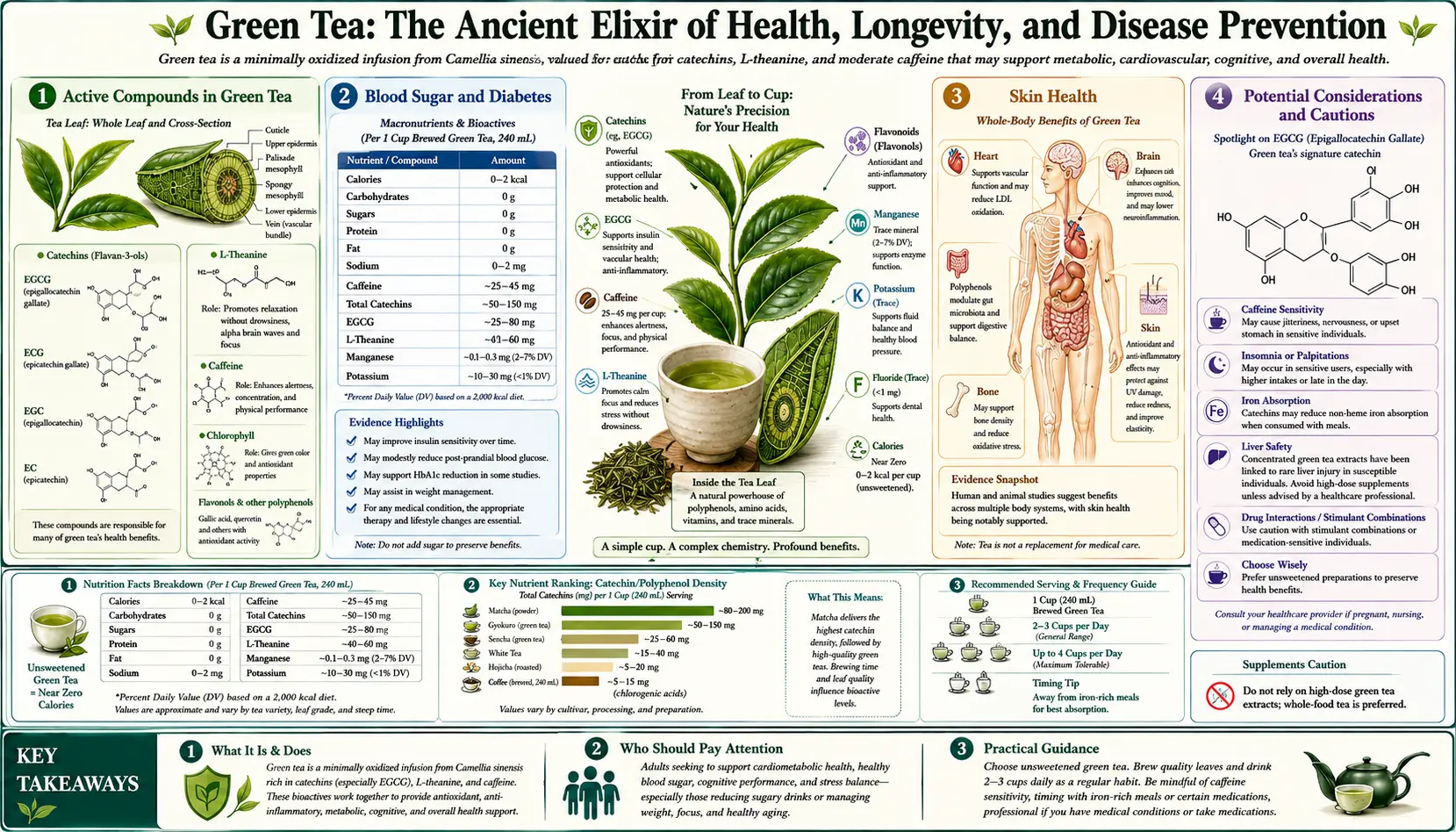
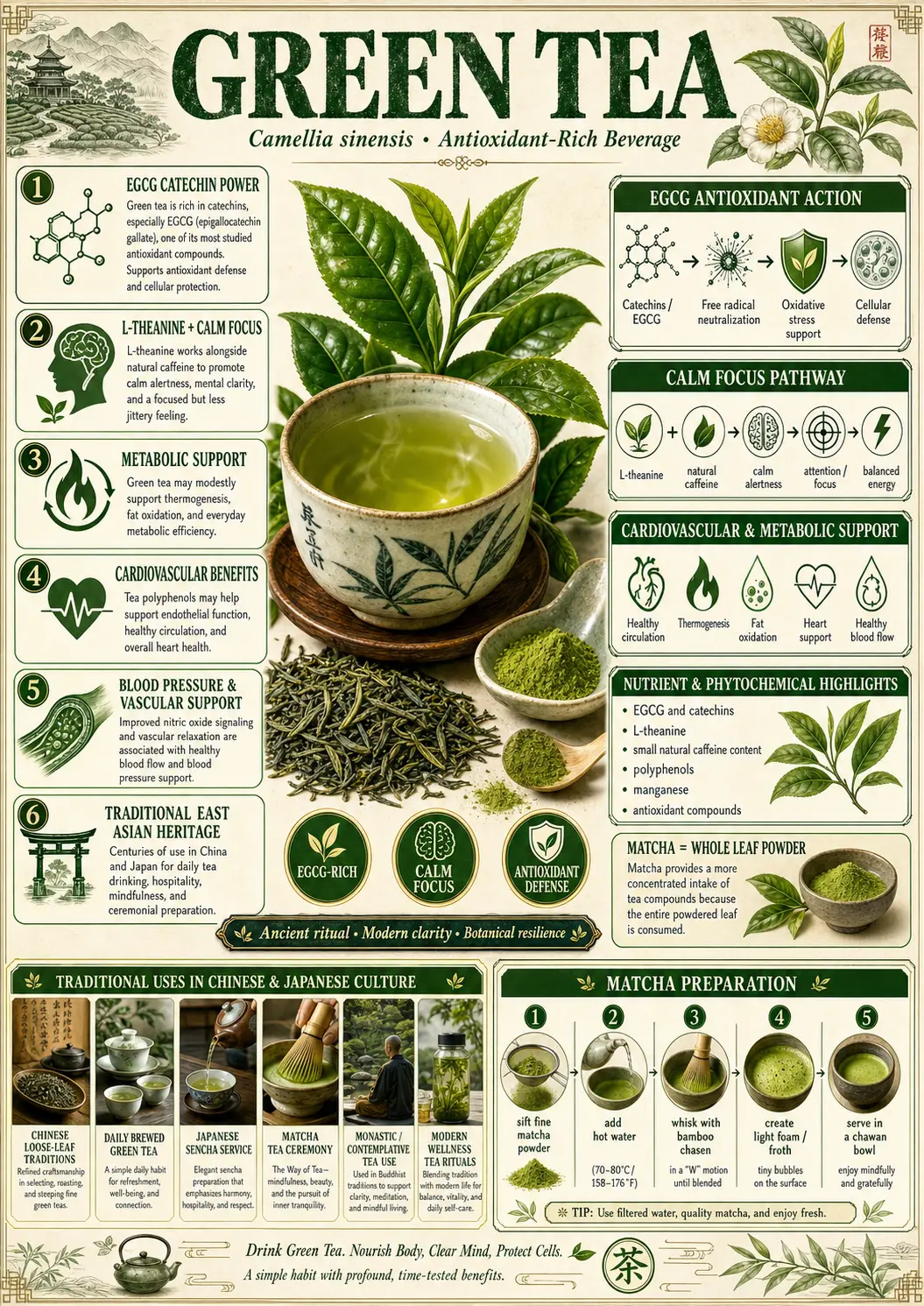
Table of Contents
- Active Compounds in Green Tea
- Cancer Prevention
- Heart Health
- Brain Health
- Weight Loss and Metabolism
- Blood Sugar and Diabetes
- Liver Health
- Anti-Inflammatory and Immune Support
- Oral Health
- Skin Health
- Bone Health
- Longevity and All-Cause Mortality
- Types of Green Tea
- Brewing and Consumption
- Potential Considerations and Cautions
- Key Research Papers
- Connections
- Featured Videos
Green tea is made from the leaves of the Camellia sinensis plant, processed so that the leaves are minimally oxidized — the distinction from black and oolong tea that preserves a high concentration of polyphenols, catechins, amino acids and other compounds. Tea as a whole is described as the most widely consumed beverage in the world after water. According to Chinese legend, Emperor Shen Nung discovered tea in 2737 BCE when leaves from a wild tea tree blew into his pot of boiling water. Whatever the truth of the legend, tea drinking in China is ancient. Green tea became part of Chinese medicine, philosophy and daily life, and was later carried to Japan by Buddhist monks, where it became central to the Japanese tea ceremony (chanoyu) — a practice emphasizing harmony, respect, purity and tranquility.
After harvesting, green tea leaves are quickly heated — by pan-firing (the traditional Chinese method) or steaming (the Japanese method) — to deactivate the enzyme polyphenol oxidase, which would otherwise oxidize the leaves toward oolong or black tea. The European Food Safety Authority (EFSA) notes that most of the polyphenols in green tea are catechins and describes epigallocatechin-3-gallate (EGCG) as the most relevant catechin in green tea. Green tea has been studied for cancer, cardiovascular disease, neurodegeneration, metabolic syndrome, diabetes, liver disease, immune function and ageing. Much of that evidence comes from laboratory, animal and observational studies, and controlled human trials generally report modest effects.
In large Japanese and Chinese cohort studies, regular green tea or tea drinking is associated with lower mortality, though observational studies cannot prove cause and effect, and tea drinkers may differ from non-drinkers in other ways. This article sets out green tea's active compounds and their proposed mechanisms, what human studies report in each area, the main types of green tea, how brewing affects what ends up in the cup, and the safety findings — including liver injury linked to concentrated green tea extracts.
1. Active Compounds in Green Tea
Most of the polyphenols in green tea are catechins (EFSA) — polyphenolic flavan-3-ols. The four main catechins are epicatechin (EC), epicatechin-3-gallate (ECG), epigallocatechin (EGC) and epigallocatechin-3-gallate (EGCG), which EFSA describes as the most relevant catechin in green tea. The amount of EGCG in a cup varies with the leaf, the water temperature and the steeping time. EFSA estimated mean EGCG intake from green tea infusions at 90–300 mg per day in European adults, with high consumers reaching up to about 866 mg per day; food supplements containing green tea catechins supplied 5–1,000 mg of EGCG per day. EGCG's structure, with eight hydroxyl groups and a gallate ester, makes it a strong free-radical scavenger in laboratory assays, but the concentration of EGCG that reaches the blood after drinking tea is very low (Pervin and colleagues, 2019).
Green tea also contains the amino acid L-theanine, which Nobre and colleagues describe as unique to tea. In human EEG studies L-theanine increases activity in the alpha frequency band, a pattern linked to a relaxed but alert state; in a 2008 study, alpha activity rose more over time after 50 mg of L-theanine than after placebo in resting participants (Nobre and colleagues). Shading tea plants before harvest, as is done for gyokuro and matcha, increased theanine and caffeine and decreased epicatechin and epigallocatechin in a Japanese study of covered cultivation (Sano and colleagues, 2018).
Green tea also contains caffeine, in amounts that vary with the leaf and the brewing. Trials of L-theanine combined with caffeine, the pairing found in tea, report improvements in attention-switching tasks; those trials are described under Brain Health below.
Beyond the catechins, green tea contains other polyphenols, including flavonols (quercetin, kaempferol, myricetin) and phenolic acids such as gallic acid, as well as minerals such as manganese and potassium. The tea plant can also contain substantial amounts of fluoride (Izuora and colleagues, 2011). Antioxidant-capacity scores such as ORAC are test-tube measurements and do not show what happens in the body.
2. Cancer Prevention
In laboratory and animal studies, EGCG interferes with several stages of cancer development. It induces cell cycle arrest and apoptosis (programmed cell death) in cancer cells, suppresses the matrix metalloproteinases (MMPs) that cancer cells use to invade surrounding tissue, inhibits angiogenesis (the formation of new blood vessels that tumors need), and modulates signaling pathways including NF-kB, PI3K/Akt and MAPK. A 2009 review (Yang and colleagues) reports that tea extracts and tea polyphenols inhibit the formation and development of tumors at different organ sites in animal models. The human evidence is much weaker and mostly observational.
For breast cancer, a 2006 meta-analysis in Carcinogenesis (Sun and colleagues) combined four studies of green tea and found a lower risk at the highest versus the lowest intake (odds ratio 0.78, 95% CI 0.61–0.98). For prostate cancer, a 2006 proof-of-principle trial in Cancer Research (Bettuzzi and colleagues) gave 60 men with high-grade prostatic intraepithelial neoplasia (a precancerous condition) either 600 mg of green tea catechins a day or placebo; after one year, cancer was diagnosed in 1 of 30 treated men (about 3%) and in 9 of 30 men on placebo (30%). A larger 2015 trial (Kumar and colleagues) of a decaffeinated catechin mixture supplying 400 mg of EGCG a day in 97 men with high-grade prostatic intraepithelial neoplasia or atypical small acinar proliferation found no significant difference in prostate cancer after one year (5 of 49 versus 9 of 48 on placebo).
For colorectal cancer, a cohort of 69,710 Chinese women followed for 6 years (Yang and colleagues, 2007, Cancer Epidemiology, Biomarkers & Prevention) found a relative risk of 0.63 for women who drank green tea regularly compared with non-regular tea drinkers, with a dose-response for both the amount and the years of tea drinking. For lung cancer, a 2009 meta-analysis of 22 studies (Tang and colleagues) found a borderline association between the highest green tea intake and lower risk (relative risk 0.78, 95% CI 0.61–1.00) and an 18% lower risk for each increase of two cups a day; black tea showed no significant association. In the Ohsaki cohort, green tea was not associated with lower cancer mortality (Kuriyama and colleagues, 2006). These are observational associations.
In laboratory studies EGCG also suppresses vascular endothelial growth factor (VEGF), the main signal tumors use to recruit new blood vessels, and it has reduced tumor microvessel density in animal models. EGCG can also interact with cancer drugs: in cell and mouse experiments it blocked the anticancer effect of bortezomib, and the authors suggested green tea products may be contraindicated during bortezomib therapy (Golden and colleagues, 2009). Green tea is not a cancer treatment.
3. Heart Health
Meta-analyses of randomized trials report small effects of green tea on cardiovascular risk markers, and prospective cohorts associate green tea drinking with lower cardiovascular mortality. Proposed mechanisms include lower total and LDL cholesterol, lower blood pressure, improved endothelial function and reduced LDL oxidation.
A 2011 meta-analysis of 14 randomized controlled trials (1,136 participants) in the American Journal of Clinical Nutrition (Zheng and colleagues) found that green tea beverages or extracts lowered total cholesterol by 7.20 mg/dL and LDL cholesterol by 2.19 mg/dL, with no significant change in HDL cholesterol. A second 2011 meta-analysis of 20 trials (Kim and colleagues) found reductions of 5.46 mg/dL in total and 5.30 mg/dL in LDL cholesterol, again without an effect on HDL cholesterol or triglycerides. Proposed mechanisms from laboratory studies include reduced intestinal cholesterol absorption and inhibition of the oxidation of LDL cholesterol — the step by which LDL is taken up into the foam cells of atherosclerotic plaque.
For blood pressure, a 2014 meta-analysis of 13 randomized trials (Khalesi and colleagues) found that green tea and its catechins lowered systolic blood pressure by 2.08 mmHg and diastolic blood pressure by 1.71 mmHg compared with controls, with larger reductions in trials whose participants started with a systolic pressure of 130 mmHg or more and in trials of extracts. A proposed mechanism is improved endothelial function through nitric oxide (NO). In 42 people with coronary artery disease, flow-mediated dilation of the brachial artery rose from 7.1% to 8.6% two hours after a single 300 mg dose of EGCG, but was similar to baseline after two weeks of treatment, measured about 14 hours after the last dose (Widlansky and colleagues, 2007).
In laboratory studies, EGCG inhibits the proliferation and migration of vascular smooth muscle cells and reduces the expression of adhesion molecules (ICAM-1, VCAM-1, E-selectin) on endothelial cells that let monocytes attach to vessel walls — early steps in plaque formation. Whether these effects occur at the concentrations reached by drinking tea has not been established.
In the Ohsaki cohort of 40,530 Japanese adults aged 40 to 79 (Kuriyama and colleagues, 2006, Journal of the American Medical Association), green tea consumption was inversely associated with cardiovascular mortality over up to 7 years, more strongly in women: women drinking five or more cups a day had a hazard ratio of 0.69 for cardiovascular death compared with those drinking less than one cup a day. The strongest inverse association was for stroke mortality. A 2015 dose-response meta-analysis of 18 prospective cohort studies (Tang and colleagues) found that each additional daily cup of green tea was associated with a 5% lower risk of cardiovascular mortality.
4. Brain Health
The combination of L-theanine and caffeine found in tea has been studied for attention. In a crossover trial (Einöther and colleagues, 2010, Appetite), 97 mg of L-theanine with 40 mg of caffeine improved attention on a switch task compared with placebo, while subjective alertness and intersensory attention did not improve significantly. In a trial of 27 volunteers in Nutritional Neuroscience (Owen and colleagues, 2008), 100 mg of L-theanine with 50 mg of caffeine improved the speed and accuracy of an attention-switching task and reduced susceptibility to distracting information in a memory task, compared with placebo.
For Alzheimer's disease, which is characterized by beta-amyloid plaques and tau tangles, laboratory studies report that EGCG binds amyloid peptides and redirects their aggregation away from the fibrils that form plaques. In mice engineered to overproduce beta-amyloid, EGCG treatment lowered beta-amyloid levels and plaques, associated with promotion of the non-amyloidogenic alpha-secretase pathway (Rezai-Zadeh and colleagues, 2005, Journal of Neuroscience). Human trials showing that green tea or EGCG prevents or treats Alzheimer's disease do not yet exist.
For Parkinson's disease, laboratory studies report that EGCG protects dopaminergic neurons through antioxidant activity, iron chelation and inhibition of alpha-synuclein aggregation, and it protected against the neurotoxin MPTP in animal models. In a cohort of 29,335 Finnish adults followed for a mean of 12.9 years (Hu and colleagues, 2007, Movement Disorders), drinking three or more cups of tea a day was associated with a lower risk of Parkinson's disease than not drinking tea (hazard ratio 0.41); the study measured tea in general, not green tea specifically.
Animal studies report that EGCG and L-theanine increase brain-derived neurotrophic factor (BDNF), a protein that supports neuron survival and the strengthening of synaptic connections. Whether drinking green tea changes BDNF or long-term brain health in people has not been established.
5. Weight Loss and Metabolism
The main proposed mechanism for green tea's metabolic effects is the combination of catechins (particularly EGCG) and caffeine. In laboratory studies EGCG inhibits catechol-O-methyltransferase (COMT), an enzyme that breaks down norepinephrine, which is proposed to prolong the fat-mobilizing signal of the sympathetic nervous system and stimulate thermogenesis. In a 1999 respiratory-chamber study of 10 healthy men in the American Journal of Clinical Nutrition (Dulloo and colleagues), a green tea extract containing 50 mg of caffeine and 90 mg of EGCG, taken at breakfast, lunch and dinner, raised 24-hour energy expenditure by 4% compared with placebo and lowered the respiratory quotient, a sign of more fat being burned; caffeine alone in the same amount had no effect.
In a 2009 trial in the Journal of Nutrition (Maki and colleagues), overweight and obese adults following an exercise program drank a beverage with about 625 mg of catechins and 39 mg of caffeine, or a control beverage with the same caffeine and no catechins, for 12 weeks. Total abdominal fat area, subcutaneous abdominal fat area and fasting triglycerides fell more with catechins, while the difference in weight loss was only a statistical trend and fat mass did not differ. In a crossover study of 12 healthy men (Venables and colleagues, 2008), green tea extract taken in the 24 hours before raised average fat oxidation during moderate cycling by 17% compared with placebo.
A 2009 meta-analysis of 11 studies in the International Journal of Obesity (Hursel and colleagues) found that catechins significantly decreased body weight and helped maintain it after a period of weight loss (−1.31 kg), which the authors described as a small effect; habitual caffeine intake and ethnicity appeared to moderate it, with a smaller effect in Caucasian than in Asian participants. A 2012 Cochrane review (Jurgens and colleagues) concluded that green tea preparations appear to induce a small, statistically non-significant weight loss in overweight or obese adults that is not likely to be clinically important; six trials conducted outside Japan pooled to a difference of −0.04 kg. More detail is on the EGCG Metabolism and Weight page.
Other proposed mechanisms come from laboratory and animal work: EGCG inhibits pancreatic lipase, the enzyme that digests dietary fat, and green tea catechins alter the gut microbiome in animal studies. These effects have not been shown to produce meaningful weight loss in people.
6. Blood Sugar and Diabetes
Cohort studies of tea and type 2 diabetes are mixed. A 2009 meta-analysis of nine cohort studies (324,141 participants; Jing and colleagues) found no overall association between tea consumption and type 2 diabetes risk (relative risk 0.96, 95% CI 0.92–1.01), but a lower risk among people drinking four or more cups a day (relative risk 0.8). That analysis covered tea in general, not only green tea.
In cell and animal studies, EGCG activates the AMP-activated protein kinase (AMPK) pathway, which the diabetes drug metformin also targets, increasing glucose uptake by muscle and suppressing glucose production in the liver. In humans, a 2013 meta-analysis of 17 randomized trials (1,133 participants; Liu and colleagues) found that green tea lowered fasting blood glucose by 0.09 mmol/L and HbA1c by 0.30 percentage points; fasting insulin fell only in the subgroup of higher-quality trials.
In laboratory studies, EGCG inhibits the carbohydrate-digesting enzymes alpha-amylase and alpha-glucosidase, which could slow the conversion of starch and sugars into absorbable glucose. How much this changes blood sugar after a meal in people has not been well established.
Animal studies report that EGCG preserves the mass and function of pancreatic beta cells in diabetic models, partly by lowering the inflammatory cytokines TNF-alpha and IL-6. Green tea is not a diabetes treatment, and the effects on blood sugar in human trials are small.
7. Liver Health
Observational studies have linked green tea drinking with lower liver-enzyme levels. In a 1995 cross-sectional study of 1,371 Japanese men in the BMJ (Imai and Nakachi), drinking more green tea, especially more than 10 cups a day, was related to lower serum aspartate aminotransferase (AST), alanine aminotransferase (ALT) and ferritin; the trends for the two liver enzymes were of borderline significance (P for trend 0.06 and 0.07).
Non-alcoholic fatty liver disease (NAFLD) is an accumulation of fat in liver cells without significant alcohol use, and can progress to non-alcoholic steatohepatitis (NASH), fibrosis, cirrhosis, and liver failure or liver cancer. In cell and animal studies, EGCG reduces liver fat by activating AMPK, suppressing sterol regulatory element-binding protein 1c (SREBP-1c), a regulator of fat synthesis in the liver, and supporting mitochondrial function.
In a 90-day randomized, double-blind, placebo-controlled trial of 80 adults with NAFLD in the International Journal of Preventive Medicine (Pezeshki and colleagues, 2016), a 500 mg green tea extract tablet a day significantly lowered ALT and AST, while the reduction in the placebo group was not significant. That small trial measured liver enzymes, not liver fat, and does not establish that extracts are safe for people with liver disease.
In laboratory and animal studies, EGCG raises phase II detoxification enzymes (glutathione S-transferase, UDP-glucuronosyltransferase, quinone reductase) through the Nrf2-ARE pathway and increases glutathione, and green tea catechin pre-treatment reduced liver damage from acetaminophen (paracetamol) and carbon tetrachloride in animals. Concentrated green tea extracts, however, have been linked to liver injury in people, as described in the Considerations section below.
8. Anti-Inflammatory and Immune Support
In laboratory studies, EGCG suppresses nuclear factor kappa B (NF-kB), a transcription factor that controls many pro-inflammatory genes, by inhibiting the breakdown of IkB-alpha, the protein that holds NF-kB in the cytoplasm. In cell experiments this lowers production of the cytokines TNF-alpha, IL-1-beta, IL-6 and IL-8.
Laboratory studies also report that green tea catechins inhibit the inflammatory enzymes cyclooxygenase-2 (COX-2), inducible nitric oxide synthase (iNOS) and 5-lipoxygenase (5-LOX), and the MAPK/ERK and JAK/STAT signaling pathways. Whether these effects occur in people at the concentrations reached by drinking tea has not been established.
In cell and animal studies, EGCG affects T-cell subsets, including regulatory T cells (Tregs) and Th17 cells. A 2003 study by Kamath and colleagues in the Proceedings of the National Academy of Sciences found that drinking tea, which contains L-theanine, a precursor of the antigen ethylamine, primed blood gamma-delta T cells to mount a memory response to ethylamine and to secrete interferon-gamma in response to bacteria.
In laboratory studies, EGCG inhibits influenza virus by binding the hemagglutinin protein on the viral surface, and green tea catechins have shown activity against several other viruses and against bacteria in cell experiments. These are test-tube findings, not evidence of protection against infection in people.
9. Oral Health
Streptococcus mutans is the main bacterium behind dental caries (cavities). In laboratory studies, EGCG inhibits its growth and acid production and the enzyme glucosyltransferase, which it uses to build the sticky matrix of dental plaque.
For periodontal (gum) disease, in vitro studies show that green tea polyphenols inhibit the growth and adherence of periodontal pathogens such as Porphyromonas gingivalis. In a 2009 study of 940 Japanese men aged 49 to 59 in the Journal of Periodontology (Kushiyama and colleagues), each additional daily cup of green tea was associated with a 0.023 mm smaller mean probing depth, a 0.028 mm smaller clinical attachment loss and 0.63% less bleeding on probing; the authors described a modest inverse association.
Halitosis (bad breath) is caused mainly by volatile sulfur compounds (VSCs) such as hydrogen sulfide and methyl mercaptan produced by oral bacteria. In a 2008 study (Lodhia and colleagues), green tea powder produced the largest immediate reduction in these gases in mouth air, while chewing gum, mints and a parsley-seed oil product did not reduce them; no reduction was seen 1, 2 and 3 hours after green tea was given. The tea plant also accumulates fluoride, and chronic very heavy tea drinking has caused skeletal fluorosis: a 2011 case report described a woman who drank 1–2 gallons of brewed tea daily for more than three decades (Izuora and colleagues).
10. Skin Health
In a 12-week double-blind trial of 60 women in the Journal of Nutrition (Heinrich and colleagues, 2011), a beverage providing 1,402 mg of green tea catechins a day reduced UV-induced erythema (redness) in the intervention group by 16% at 6 weeks and 25% at 12 weeks, and improved the elasticity, roughness, scaling, density and water balance of the skin, with increased blood flow and oxygen delivery to the skin. Laboratory studies report that EGCG absorbs UV light and neutralizes the reactive oxygen species that UV exposure generates.
In laboratory studies, EGCG inhibits collagenase and elastase, enzymes that break down collagen and elastin, and protects skin cells from advanced glycation end products (AGEs). The human findings on skin structure come from the Heinrich trial above.
For acne, laboratory studies report antibacterial activity of EGCG against Cutibacterium acnes (formerly Propionibacterium acnes) and effects on sebum production. In a study of 20 patients with mild-to-moderate acne in the Journal of Drugs in Dermatology (Elsaie and colleagues, 2009), a 2% green tea lotion applied twice daily for six weeks lowered the mean lesion count from 24 to 10 (58%); the study had no comparison group.
Topical green tea extracts are common ingredients in cosmetic products. Controlled trials of these products are limited.
11. Bone Health
Green tea's possible effects on bone involve its catechins and its fluoride. The tea plant can contain substantial amounts of fluoride. High fluoride levels stimulate bone-forming cells and enhance bone deposition, but fluoride substitutes into hydroxyapatite crystals and can result in skeletal fragility; chronic consumption of very large amounts of tea has caused skeletal fluorosis (Izuora and colleagues, 2011).
In cell studies, EGCG inhibits the formation and activity of osteoclasts (bone-resorbing cells) by suppressing RANKL signaling, and promotes the differentiation and mineralization of osteoblasts (bone-forming cells) through the Wnt/beta-catenin pathway. These are laboratory findings.
In the Minnesota Green Tea Trial, one year of a decaffeinated green tea extract supplying 843 mg of EGCG a day did not change bone mineral density in overweight or obese postmenopausal women compared with placebo (Dostal and colleagues, 2016). Observational studies of tea drinking and bone cannot separate tea from other lifestyle factors.
Chronic inflammation driven by TNF-alpha, IL-1 and IL-6 contributes to bone loss, and in laboratory studies green tea catechins suppress these cytokines and protect osteoblasts from oxidative stress.
12. Longevity and All-Cause Mortality
The largest body of evidence on green tea and mortality comes from cohort studies. In the Ohsaki Cohort Study of 40,530 Japanese adults aged 40 to 79, followed for up to 11 years (Kuriyama and colleagues, 2006, Journal of the American Medical Association), green tea consumption was associated with lower mortality from all causes and from cardiovascular disease, but not from cancer. Compared with less than one cup a day, five or more cups was associated with a hazard ratio for death from all causes of 0.88 in men and 0.77 in women; the association was stronger in women.
A 2015 meta-analysis of 18 prospective cohort studies in the British Journal of Nutrition (Tang and colleagues) found that the highest versus the lowest green tea consumption was associated with lower all-cause mortality (relative risk 0.80) and cardiovascular mortality (0.67), but not with cancer mortality; each additional daily cup of green tea was associated with a 4% lower risk of all-cause mortality and a 5% lower risk of cardiovascular mortality. In the China-PAR Project, a cohort of 100,902 Chinese adults followed for a median of 7.3 years (Wang and colleagues, 2020, European Journal of Preventive Cardiology), habitual tea drinkers had a hazard ratio for all-cause death of 0.85 and 1.26 years longer life expectancy at age 50 than never or non-habitual tea drinkers; that study covered tea in general.
Telomeres, the protective caps at the ends of chromosomes, shorten with age. In a 2010 cross-sectional study of 2,006 Chinese adults aged 65 and over in the British Journal of Nutrition (Chan and colleagues), Chinese tea consumption was associated with longer telomeres in men: those in the highest quartile of intake (more than 3 cups a day) had telomeres 0.46 kb longer than those in the lowest quartile, which the authors equated to approximately 5 years of life. The association was reported in men only.
These are observational associations. Tea drinkers may differ from non-drinkers in other habits, and the cohorts could adjust only for the factors they measured. In China-PAR, the associations were stronger among people who kept the tea-drinking habit throughout follow-up.
13. Types of Green Tea
Matcha is made from shade-grown tea leaves that are de-stemmed, de-veined and stone-ground into a fine powder. Because matcha is drunk as a suspension of the whole ground leaf rather than as an infusion, more of the leaf's compounds are consumed. A 2003 analysis (Weiss and Anderton) found that the EGCG available from matcha, per gram of dry leaf, was at least three times higher than the largest literature value for other green teas. The taste is rich, vegetal and umami-forward, and matcha is the tea of the Japanese tea ceremony, whisked with a bamboo chasen.
Sencha is the everyday green tea of Japan. It is made from leaves grown in full sunlight (unlike the shade-grown leaves used for matcha and gyokuro), which are harvested, steamed to prevent oxidation, rolled, shaped and dried. Leaves grown without shade are higher in epicatechin and epigallocatechin and lower in theanine than shaded leaves (Sano and colleagues, 2018), giving sencha a more astringent, grassy flavor than shade-grown teas. First-harvest sencha (shincha), picked in spring, is the most prized. Sencha is traditionally steeped in water below boiling for a short time and produces a clear, pale green to golden infusion.
Gyokuro is a shade-grown Japanese green tea. Like matcha, the plants are shaded for weeks before harvest, but the leaves are processed whole (steamed, rolled and dried) rather than ground into powder. Covering tea plants before harvest increases chlorophyll, L-theanine and caffeine and decreases epicatechin and epigallocatechin in the new shoots (Sano and colleagues, 2018), which gives gyokuro its deep green leaves and sweet, umami-rich, often “brothy” flavor with little astringency. Gyokuro is traditionally brewed at a lower temperature than sencha, with a higher leaf-to-water ratio, producing a small volume of concentrated liquor.
Dragon Well (Longjing) is a famous Chinese green tea from Zhejiang province near the city of Hangzhou. Unlike steamed Japanese teas, it is pan-fired: freshly harvested leaves are pressed against the hot walls of a wok, which halts oxidation and shapes them into their flat, sword-like form. The result is a nutty, sweet, chestnut-like flavor without the marine or vegetal notes of steamed Japanese teas. The early spring harvest picked before the Qingming festival, known as Ming Qian tea, is the most prized.
14. Brewing and Consumption
How green tea is brewed changes what ends up in the cup. Green tea is traditionally brewed with water below boiling — commonly cited ranges are about 70–85 degrees Celsius for most varieties and lower for gyokuro — because hotter water and longer steeping extract more of the bitter, astringent compounds. The amounts of catechins and caffeine extracted rise with temperature and steeping time, so the EGCG content of a cup varies widely.
Whole-leaf green teas are traditionally re-steeped several times, as in Chinese gongfu brewing and in Japanese practice, with each infusion extracting a different balance of compounds.
Intakes in the cohort studies vary: the Ohsaki cohort compared five or more cups a day with less than one, and China-PAR compared habitual with non-habitual tea drinkers. EFSA estimated mean EGCG intake from green tea infusions at 90–300 mg per day in European adults, with high consumers reaching up to about 866 mg per day.
What is eaten or added with green tea affects how much is absorbed. Food reduces EGCG uptake: in a crossover study, plasma EGCG exposure was 2.7 times higher when EGCG capsules were taken with water than with a light breakfast (Naumovski and colleagues, 2015). In an in vitro simulated-digestion study (Green and colleagues, 2007), less than 20% of total catechins survived digestion in plain green tea, while adding citrus juice gave the highest recovery of any formulation (56–76% for EGCG), and adding ascorbic acid (vitamin C) or milk also raised recovery. These are laboratory digestion results, not measurements in people.
15. Potential Considerations and Cautions
Green tea contains caffeine, and people who are sensitive to caffeine may experience insomnia, restlessness, anxiety, a rapid heartbeat or stomach upset. Sensitivity varies with genetic differences in CYP1A2, the liver enzyme that metabolizes caffeine, and in adenosine receptors. Shading raises the caffeine content of the leaf (Sano and colleagues, 2018), so shade-grown teas such as gyokuro and matcha are not lower in caffeine. Decaffeination processes can also remove part of the catechins.
Tea polyphenols inhibit the absorption of non-heme iron (the form of iron in plant foods, fortified foods and iron supplements). In a study of 10 young women, adding a green tea extract to a meal lowered non-heme iron absorption from 12.1% to 8.9% (Samman and colleagues, 2001); in a 1999 study, black tea reduced iron absorption from a bread meal by 79–94% (Hurrell and colleagues). The research raises this concern mainly for people at risk of iron deficiency, such as women with heavy periods, pregnant women, and people who rely on plant sources of iron.
The most important safety finding concerns liver injury linked to concentrated green tea extracts. In 2018 the European Food Safety Authority (EFSA) concluded that catechins from traditionally brewed green tea are in general considered safe at the intakes reported in Europe, while noting that rare cases of liver injury have been reported after drinking green tea infusions, most probably as an idiosyncratic reaction; the NIH LiverTox database likewise describes rare cases after ingestion of large amounts of green tea. For supplements, EFSA found that intervention trials of 800 mg or more of EGCG per day produced a statistically significant rise in serum transaminases, and it could not identify an intake of green tea catechins from supplements that does not give rise to concern. Taking extracts fasted and as a single bolus raises EGCG exposure: the peak plasma level of free EGCG was more than 3.5-fold higher after an overnight fast than with a light breakfast (Chow and colleagues, 2005). In the Minnesota Green Tea Trial, ALT elevations occurred in 6.7% of women taking 843 mg of EGCG a day for a year versus 0.7% on placebo (Dostal and colleagues, 2015). A 2009 review (Mazzanti and colleagues) found 34 published cases of hepatitis linked to green tea, the U.S. Pharmacopeia reviewed the problem in 2008 and 2020, and in the U.S. Drug-Induced Liver Injury Network the immune gene variant HLA-B*35:01 was found in 72% of green tea cases (Hoofnagle and colleagues, 2021).
Since 2022, EU Regulation 2022/2340 has required a daily portion of a food containing green tea extract to supply less than 800 mg of EGCG, with label warnings that include, quoted from the regulation: “Should not be consumed if you are consuming other products containing green tea on the same day”, “Should not be consumed by pregnant or lactating women and children below 18 years old”, and “Should not be consumed on an empty stomach”. The full findings are on the EGCG Safety and Liver page.
For pregnancy and breastfeeding, EFSA noted that none of the intervention studies on green tea catechins included pregnant or lactating women, and the EU label warning for green tea extracts covers these groups. In laboratory studies EGCG inhibits dihydrofolate reductase, an enzyme of folate metabolism, at concentrations found in the blood and tissues of green tea drinkers (Navarro-Perán and colleagues, 2005), and in healthy volunteers green tea taken with a 0.4 mg folic acid tablet lowered peak serum folate by 39% (Alemdaroglu and colleagues, 2008); adequate folate matters for preventing neural tube defects in early pregnancy. Reported drug interactions include warfarin (a case report of a falling INR in a man drinking one-half to one gallon of green tea a day, attributed by the authors to vitamin K; Taylor and Wilt, 1999) and the beta-blocker nadolol (green tea lowered its blood levels by about 85% in healthy volunteers; Misaka and colleagues, 2014). Decisions about medicines and supplements belong with a clinician.
Key Research Papers
- Kuriyama S et al. "Green tea consumption and mortality due to cardiovascular disease, cancer, and all causes in Japan: the Ohsaki study" JAMA, 2006. — PubMed PMID: 16968850 (Green tea inversely associated with all-cause and cardiovascular mortality, but not cancer mortality, in 40,530 Japanese adults; all-cause hazard ratio at five or more cups a day 0.88 in men and 0.77 in women.)
- Bettuzzi S et al. "Chemoprevention of human prostate cancer by oral administration of green tea catechins in volunteers with high-grade prostate intraepithelial neoplasia" Cancer Research, 2006. — PubMed PMID: 16424063 (Prostate cancer diagnosed after one year in 1 of 30 men taking 600 mg green tea catechins daily versus 9 of 30 on placebo.)
- Sun CL et al. "Green tea, black tea and breast cancer risk: a meta-analysis of epidemiological studies" Carcinogenesis, 2006. — PubMed PMID: 16311246 (Four green tea studies combined: odds ratio 0.78 for highest versus lowest intake.)
- Yang G et al. "Prospective cohort study of green tea consumption and colorectal cancer risk in women" Cancer Epidemiology, Biomarkers & Prevention, 2007. — PubMed PMID: 17548688 (Relative risk 0.63 for regular green tea drinkers among 69,710 Chinese women.)
- Rezai-Zadeh K et al. "Green tea epigallocatechin-3-gallate (EGCG) modulates amyloid precursor protein cleavage and reduces cerebral amyloidosis in Alzheimer transgenic mice" Journal of Neuroscience, 2005. — PubMed PMID: 16177050 (EGCG lowered beta-amyloid levels and plaques in transgenic Alzheimer mice.)
- Owen GN et al. "The combined effects of L-theanine and caffeine on cognitive performance and mood" Nutritional Neuroscience, 2008. — PubMed PMID: 18681988 (L-theanine and caffeine combination improved speed and accuracy on cognitively demanding tasks.)
- Einother SJ et al. "L-theanine and caffeine improve task switching but not intersensory attention or subjective alertness" Appetite, 2010. — PubMed PMID: 20079786 (97 mg L-theanine and 40 mg caffeine improved attention on a switch task; subjective alertness and intersensory attention did not improve significantly.)
- Hu G et al. "Coffee and tea consumption and the risk of Parkinson's disease" Movement Disorders, 2007. — PubMed PMID: 17712848 (Prospective cohort of 29,335 Finnish adults found tea consumption associated with lower Parkinson's disease risk.)
- Dulloo AG et al. "Efficacy of a green tea extract rich in catechin polyphenols and caffeine in increasing 24-h energy expenditure and fat oxidation in humans" American Journal of Clinical Nutrition, 1999. — PubMed PMID: 10584049 (Green tea extract increased 24-hour energy expenditure by 4% and lowered the respiratory quotient; caffeine alone had no effect.)
- Maki KC et al. "Green tea catechin consumption enhances exercise-induced abdominal fat loss in overweight and obese adults" Journal of Nutrition, 2009. — PubMed PMID: 19074207 (With exercise, catechins reduced total and subcutaneous abdominal fat area and triglycerides more than a caffeine-matched control over 12 weeks.)
- Hursel R et al. "The effects of green tea on weight loss and weight maintenance: a meta-analysis" International Journal of Obesity, 2009. — PubMed PMID: 19597519 (Meta-analysis of 11 studies: catechins decreased body weight and maintained it after weight loss, −1.31 kg.)
- Kim A et al. "Green tea catechins decrease total and low-density lipoprotein cholesterol: a systematic review and meta-analysis" Journal of the American Dietetic Association, 2011. — PubMed PMID: 22027055 (Meta-analysis of 20 trials: total cholesterol −5.46 mg/dL and LDL cholesterol −5.30 mg/dL.)
- Wang X et al. "Tea consumption and the risk of atherosclerotic cardiovascular disease and all-cause mortality: The China-PAR project" European Journal of Preventive Cardiology, 2020. — PubMed PMID: 31914807 (Habitual tea drinkers had 1.26 years longer life expectancy at age 50 among 100,902 Chinese adults.)
- Chan R et al. "Chinese tea consumption is associated with longer telomere length in elderly Chinese men" British Journal of Nutrition, 2010. — PubMed PMID: 19671205 (In men, more than 3 cups a day was associated with telomeres 0.46 kb longer than the lowest intake quartile, which the authors equated to about 5 years of life.)
- Tang J et al. "Tea consumption and mortality of all cancers, CVD and all causes: a meta-analysis of eighteen prospective cohort studies" British Journal of Nutrition, 2015. — PubMed PMID: 26202661 (Each additional daily cup of green tea associated with 4% lower all-cause and 5% lower cardiovascular mortality.)
- Zheng XX et al. "Green tea intake lowers fasting serum total and LDL cholesterol in adults: a meta-analysis of 14 randomized controlled trials" American Journal of Clinical Nutrition, 2011. — PubMed PMID: 21715508 (Total cholesterol −7.20 mg/dL and LDL cholesterol −2.19 mg/dL; no significant change in HDL.)
- Khalesi S et al. "Green tea catechins and blood pressure: a systematic review and meta-analysis of randomised controlled trials" European Journal of Nutrition, 2014. — PubMed PMID: 24861099 (13 trials: systolic −2.08 mmHg, diastolic −1.71 mmHg.)
- Widlansky ME et al. "Acute EGCG supplementation reverses endothelial dysfunction in patients with coronary artery disease" Journal of the American College of Nutrition, 2007. — PubMed PMID: 17536120 (A single 300 mg dose of EGCG improved flow-mediated dilation at two hours; no sustained effect at two weeks.)
- Kumar NB et al. "Randomized, placebo-controlled trial of green tea catechins for prostate cancer prevention" Cancer Prevention Research, 2015. — PubMed PMID: 25873370 (400 mg EGCG a day for one year did not reduce prostate cancer in 97 men with HGPIN or ASAP.)
- Tang N et al. "Green tea, black tea consumption and risk of lung cancer: a meta-analysis" Lung Cancer, 2009. — PubMed PMID: 19128856 (22 studies: borderline association for highest green tea intake; 18% lower risk per two cups a day.)
- Yang CS et al. "Cancer prevention by tea: animal studies, molecular mechanisms and human relevance" Nature Reviews Cancer, 2009. — PubMed PMID: 19472429
- Golden EB et al. "Green tea polyphenols block the anticancer effects of bortezomib and other boronic acid-based proteasome inhibitors" Blood, 2009. — PubMed PMID: 19190249 (Cell and mouse experiments.)
- Pervin M et al. "Function of green tea catechins in the brain: epigallocatechin gallate and its metabolites" International Journal of Molecular Sciences, 2019. — PubMed PMID: 31349535
- Nobre AC, Rao A, Owen GN "L-theanine, a natural constituent in tea, and its effect on mental state" Asia Pacific Journal of Clinical Nutrition, 2008. — PubMed PMID: 18296328
- Sano T et al. "Effect of shading intensity on morphological and color traits and on chemical components of new tea (Camellia sinensis L.) shoots under direct covering cultivation" Journal of the Science of Food and Agriculture, 2018. — PubMed PMID: 29722013 (Covering increased theanine and caffeine and decreased epicatechin and epigallocatechin.)
- Weiss DJ, Anderton CR "Determination of catechins in matcha green tea by micellar electrokinetic chromatography" Journal of Chromatography A, 2003. — PubMed PMID: 14518774
- Venables MC et al. "Green tea extract ingestion, fat oxidation, and glucose tolerance in healthy humans" American Journal of Clinical Nutrition, 2008. — PubMed PMID: 18326618
- Jurgens TM et al. "Green tea for weight loss and weight maintenance in overweight or obese adults" Cochrane Database of Systematic Reviews, 2012. — PubMed PMID: 23235664 (Small, statistically non-significant weight loss, not likely to be clinically important.)
- Jing Y et al. "Tea consumption and risk of type 2 diabetes: a meta-analysis of cohort studies" Journal of General Internal Medicine, 2009. — PubMed PMID: 19308337
- Liu K et al. "Effect of green tea on glucose control and insulin sensitivity: a meta-analysis of 17 randomized controlled trials" American Journal of Clinical Nutrition, 2013. — PubMed PMID: 23803878
- Imai K, Nakachi K "Cross sectional study of effects of drinking green tea on cardiovascular and liver diseases" BMJ, 1995. — PubMed PMID: 7711535
- Pezeshki A et al. "The effect of green tea extract supplementation on liver enzymes in patients with nonalcoholic fatty liver disease" International Journal of Preventive Medicine, 2016. — PubMed PMID: 26955458
- Kamath AB et al. "Antigens in tea-beverage prime human Vgamma2Vdelta2 T cells in vitro and in vivo for memory and nonmemory antibacterial cytokine responses" Proceedings of the National Academy of Sciences, 2003. — PubMed PMID: 12719524
- Kushiyama M et al. "Relationship between intake of green tea and periodontal disease" Journal of Periodontology, 2009. — PubMed PMID: 19254120
- Lodhia P et al. "Effect of green tea on volatile sulfur compounds in mouth air" Journal of Nutritional Science and Vitaminology, 2008. — PubMed PMID: 18388413
- Izuora K et al. "Skeletal fluorosis from brewed tea" Journal of Clinical Endocrinology and Metabolism, 2011. — PubMed PMID: 21593111 (Case report.)
- Heinrich U et al. "Green tea polyphenols provide photoprotection, increase microcirculation, and modulate skin properties of women" Journal of Nutrition, 2011. — PubMed PMID: 21525260
- Elsaie ML et al. "The efficacy of topical 2% green tea lotion in mild-to-moderate acne vulgaris" Journal of Drugs in Dermatology, 2009. — PubMed PMID: 19363854
- Dostal AM et al. "Long-term supplementation of green tea extract does not modify adiposity or bone mineral density in a randomized trial of overweight and obese postmenopausal women" Journal of Nutrition, 2016. — PubMed PMID: 26701796
- Naumovski N et al. "Food inhibits the oral bioavailability of the major green tea antioxidant epigallocatechin gallate in humans" Antioxidants, 2015. — PubMed PMID: 26783711
- Green RJ et al. "Common tea formulations modulate in vitro digestive recovery of green tea catechins" Molecular Nutrition and Food Research, 2007. — PubMed PMID: 17688297 (In vitro simulated digestion.)
- Samman S et al. "Green tea or rosemary extract added to foods reduces nonheme-iron absorption" American Journal of Clinical Nutrition, 2001. — PubMed PMID: 11237939
- Hurrell RF, Reddy M, Cook JD "Inhibition of non-haem iron absorption in man by polyphenolic-containing beverages" British Journal of Nutrition, 1999. — PubMed PMID: 10999016 (Green tea itself was not tested.)
- EFSA Panel on Food Additives and Nutrient Sources added to Food (ANS), Younes M et al. "Scientific opinion on the safety of green tea catechins" EFSA Journal, 2018. — PubMed PMID: 32625874
- LiverTox: Clinical and Research Information on Drug-Induced Liver Injury. Green Tea. National Institute of Diabetes and Digestive and Kidney Diseases (2012–). — PubMed PMID: 31643260
- Chow HH et al. "Effects of dosing condition on the oral bioavailability of green tea catechins after single-dose administration of Polyphenon E in healthy individuals" Clinical Cancer Research, 2005. — PubMed PMID: 15958649
- Dostal AM et al. "The safety of green tea extract supplementation in postmenopausal women at risk for breast cancer: results of the Minnesota Green Tea Trial" Food and Chemical Toxicology, 2015. — PubMed PMID: 26051348
- Mazzanti G et al. "Hepatotoxicity from green tea: a review of the literature and two unpublished cases" European Journal of Clinical Pharmacology, 2009. — PubMed PMID: 19198822
- Sarma DN et al. "Safety of green tea extracts: a systematic review by the US Pharmacopeia" Drug Safety, 2008. — PubMed PMID: 18484782
- Oketch-Rabah HA et al. "United States Pharmacopeia (USP) comprehensive review of the hepatotoxicity of green tea extracts" Toxicology Reports, 2020. — PubMed PMID: 32140423
- Hoofnagle JH et al. "HLA-B*35:01 and green tea-induced liver injury" Hepatology, 2021. — PubMed PMID: 32892374
- Navarro-Perán E et al. "The antifolate activity of tea catechins" Cancer Research, 2005. — PubMed PMID: 15781612 (Laboratory study.)
- Alemdaroglu NC et al. "Influence of green and black tea on folic acid pharmacokinetics in healthy volunteers: potential risk of diminished folic acid bioavailability" Biopharmaceutics and Drug Disposition, 2008. — PubMed PMID: 18551467
- Taylor JR, Wilt VM "Probable antagonism of warfarin by green tea" Annals of Pharmacotherapy, 1999. — PubMed PMID: 10332534 (Case report.)
- Misaka S et al. "Green tea ingestion greatly reduces plasma concentrations of nadolol in healthy subjects" Clinical Pharmacology and Therapeutics, 2014. — PubMed PMID: 24419562
PubMed Topic Searches
The following curated PubMed topic searches lead to the peer-reviewed primary literature and systematic reviews that underpin the health claims discussed on this page. Each link opens PubMed in a new tab.
- PubMed: EGCG and cardiovascular disease: meta-analysis
- PubMed: Green tea and all-cause mortality (Ohsaki cohort)
- PubMed: Green tea catechins and body weight
- PubMed: L-theanine and anxiety
- PubMed: Green tea and type 2 diabetes risk
- PubMed: Green tea polyphenols and cancer prevention
- PubMed: Green tea and blood pressure: meta-analysis
- PubMed: EGCG and cognitive function
- PubMed: Matcha green tea polyphenol content
- PubMed: Green tea and neurodegenerative disease
Browse all PubMed citations for “Green Tea”
This content is provided for informational purposes only and does not constitute medical advice. Consult a qualified healthcare provider for personalized dietary guidance.
Connections
- Fluoride Chelation — the tea plant accumulates fluoride — an under-counted source
- All Food
- EGCG
- Coffee
- Blueberries
- Dark Chocolate
- Cancer
- Cancer Prevention
- Cardiovascular Disease
- Diabetes
- Alzheimer's Disease
- Parkinson's Disease
- Anxiety
- Osteoporosis
- Atherosclerosis
- Oxidative Stress
- Acne
- Vitamin C
- Gut-Brain Axis
- Quercetin
- Olive Oil
- Catechins — the polyphenol class that gives green tea most of its activity.
- Covered in depth on its own page: L-Theanine
- Conditions on this site that reference this page: Rosacea · Prostate Cancer · Prostate Conditions
- Dangerous Supplements — concentrated extract vs the brewed leaf: the liver-injury record.