Taurine and Electrolyte Balance: The Forgotten Osmolyte
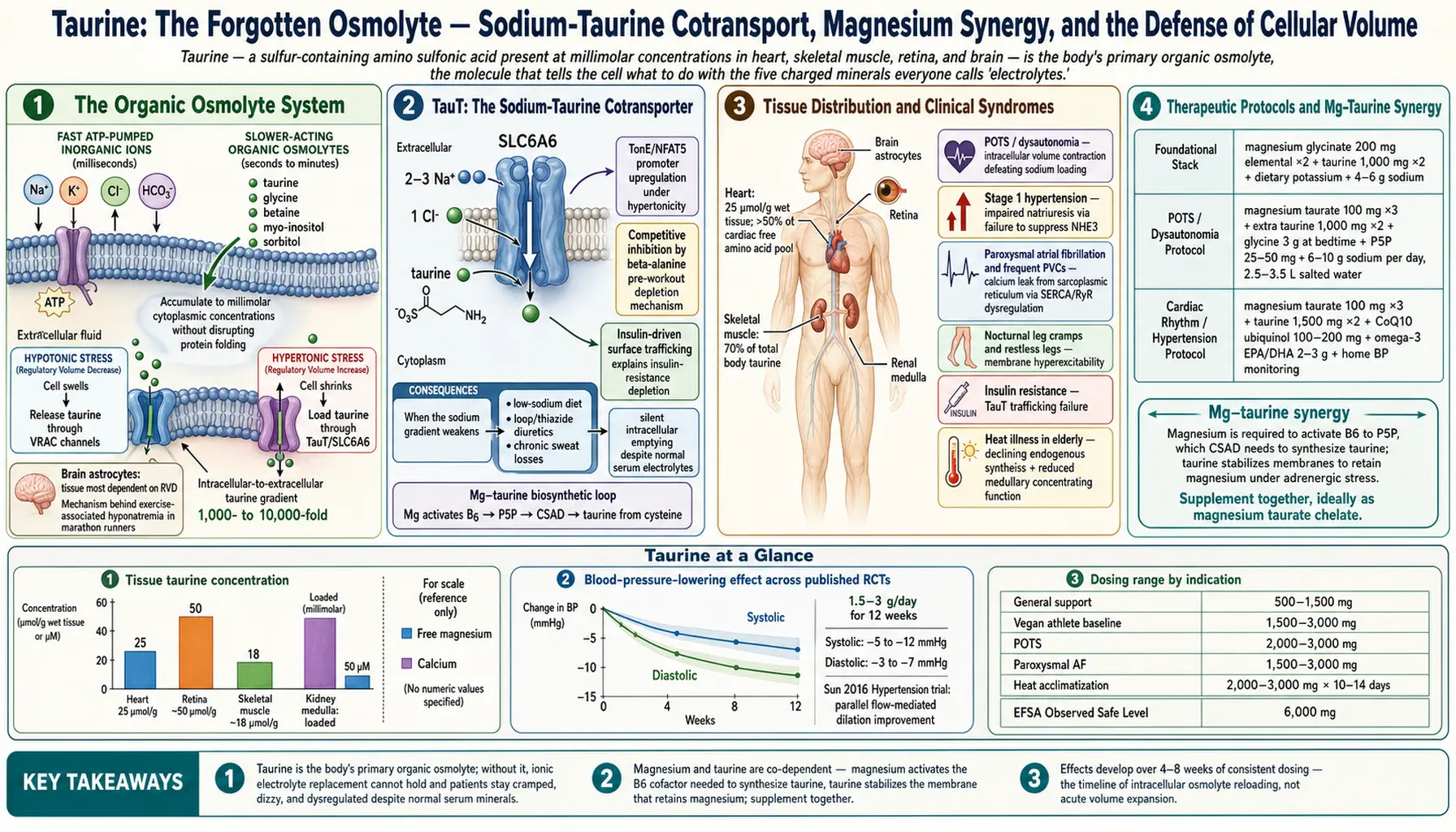
Most people think of electrolytes as five charged minerals — sodium, potassium, chloride, calcium, magnesium — and stop there. They miss the molecule that actually tells the cell what to do with those minerals: taurine. This deep dive reports what is known about taurine and electrolyte handling, and where the evidence for claims about cramps, palpitations, fatigue, orthostatic intolerance, and hypertension stands.
Table of Contents
- Why Taurine Is the Missing Electrolyte
- Taurine as an Organic Osmolyte
- The Sodium-Taurine Cotransporter (TauT)
- Renal Handling of Sodium, Potassium, and Chloride
- Magnesium-Taurine Synergy
- Calcium Modulation in Heart, Muscle, and Nerve
- Potassium and Resting Membrane Potential
- Exercise, Sweat, and the Athletic Electrolyte
- Heat Stress, Dehydration, and Recovery
- POTS, Dysautonomia, and Volume Regulation
- Hypertension and the Natriuretic Effect
- Cardiac Arrhythmias and Electrolyte Imbalance
- Muscle Cramps, Restless Legs, and Neuromuscular Excitability
- Insulin Resistance and Electrolyte Wasting
- Liver, Bile Acids, and the Sodium Bile Salt Cotransporter
- Doses Used in Studies
- Practical Protocols: Pairing Taurine with Electrolytes
- Cautions and Drug Interactions
- Key Research Papers
- Connections
- Featured Videos
1. Why Taurine Is the Missing Electrolyte
If you have ever drunk three bottles of electrolyte mix on a hot day and still felt dizzy, cramped, or strangely vacant behind the eyes — if you have ever swallowed handfuls of magnesium glycinate and still woke up with calf cramps — this article is for you. The standard model of electrolyte balance is incomplete. It treats the cell membrane like a passive container and the minerals like pebbles in a jar. That model leaves out the groups this article discusses: athletes, patients with POTS, people on diuretics, those with insulin resistance, anyone in their fifties or older.
The piece that almost everyone misses is taurine. Taurine is a sulfur-containing amino sulfonic acid — technically not a proteinogenic amino acid, because it carries a sulfonate group instead of a carboxyl group — that contributes significantly to the cellular pool of organic osmolytes (Lambert and colleagues 2015). An osmolyte is a small molecule that cells use to regulate their internal water content without disturbing the function of their proteins. While sodium and potassium pump back and forth across the cell membrane in milliseconds, taurine is the slower-moving counterweight that sets the long-term volume the cell is trying to defend. Cells contain millimolar concentrations of taurine — the heart, retina, and skeletal muscle each carry 5 to 50 times more taurine than they do free magnesium, and ten thousand times more taurine than they do free calcium. Taurine is not a trace molecule. It is, by mass, one of the most abundant solutes in the cytoplasm.
The implication is straightforward: if your taurine pool is depleted, no amount of mineral replacement will fully restore cellular electrolyte homeostasis. The minerals will not stay where they belong. You will feel chronically off-balance — dehydrated despite drinking, cramped despite supplementing, exhausted despite resting — because the cell has lost its osmotic governor. This article walks through the biochemistry of how taurine controls electrolyte flow, the clinical syndromes where taurine depletion drives the symptoms, and the protocols that restore proper balance.
2. Taurine as an Organic Osmolyte
Every cell in the body lives in a precarious osmotic balance. The extracellular fluid that bathes a cell is rich in sodium and chloride; the inside of the cell is rich in potassium, organic phosphates, and proteins. If a cell could not regulate its own water content, it would either swell and burst (when the outside became dilute) or shrink to non-function (when the outside became concentrated). To prevent both, cells deploy two kinds of solutes:
- Inorganic ions — sodium, potassium, chloride, bicarbonate. These are fast, electrochemically charged, and tightly regulated by ATP-powered pumps. But they also disrupt protein folding at high concentrations. A cell cannot use ions alone to defend volume without destabilizing the enzymes that keep it alive.
- Organic osmolytes — taurine, glycine, betaine (trimethylglycine), myo-inositol, sorbitol, and a handful of methylamines. These are compatible solutes: small, neutral or zwitterionic, accumulating to high cytoplasmic concentrations without poisoning enzymes. Of these, taurine is by far the most abundant in mammalian tissue.
When a cell is exposed to a hypotonic environment — for example, when plasma sodium drops during overhydration, prolonged endurance exercise, or SIADH (syndrome of inappropriate antidiuretic hormone) — water rushes into the cell down its osmotic gradient. The cell responds with a process called regulatory volume decrease (RVD). It opens chloride and potassium channels to dump those ions out, and it opens specific channels (volume-regulated anion channels, VRACs) to release taurine into the extracellular space. Taurine efflux carries water with it, restoring the cell to its target volume.
Conversely, when a cell is exposed to a hypertonic environment — dehydration, heat stress, hyperglycemia, hypernatremia — water leaves the cell. The cell responds with regulatory volume increase (RVI). It activates the sodium-taurine cotransporter (TauT, SLC6A6) to pull taurine in from the extracellular fluid, dragging water with it and restoring cell volume. This is not a fast process — it operates on the timescale of minutes to hours rather than milliseconds — but it is what keeps cells viable through sustained osmotic stress.
The brain is the organ most dependent on this system. Brain cells cannot tolerate the swelling that occurs during acute hyponatremia; uncontrolled swelling inside the rigid skull causes herniation and death. Astrocytes, the glial cells that surround neurons, deploy taurine as their primary RVD osmolyte. When hyponatremia develops slowly enough that astrocytes can dump taurine, the brain adapts. When hyponatremia develops too quickly or taurine reserves are depleted, brain swelling and seizures result. This is the mechanism behind exercise-associated hyponatremia, the syndrome that has killed marathon runners and military trainees who overhydrated with plain water.
The kidney is the second-most dependent. The renal medulla is the most osmotically extreme tissue in the body, with interstitial concentrations climbing from 300 mOsm/kg at the cortex to over 1,200 mOsm/kg at the inner medulla. Medullary cells survive this gradient by loading themselves with taurine, betaine, myo-inositol, and sorbitol. Without this osmolyte loading, the medulla could not produce concentrated urine, and the kidney could not conserve water during dehydration.
3. The Sodium-Taurine Cotransporter (TauT)
Taurine does not cross cell membranes by diffusion. It is a small, hydrophilic, zwitterionic molecule that requires an active transporter to move against its concentration gradient. The transporter that does this work is TauT, encoded by the gene SLC6A6, a member of the sodium- and chloride-dependent neurotransmitter transporter family (the same family that includes the transporters for GABA, glycine, dopamine, serotonin, and norepinephrine). TauT couples the inward movement of one taurine molecule to the inward movement of two or three sodium ions and one chloride ion, using the energy stored in the sodium gradient (maintained by the Na+/K+-ATPase) to pull taurine into the cell at concentrations a thousand to ten thousand times higher than the extracellular fluid.
Several practical consequences follow from this biochemistry.
Sodium depletion impairs taurine uptake. If a patient is on a low-sodium diet, on a loop or thiazide diuretic, or losing sodium through chronic diarrhea or excessive sweating, the sodium gradient available to drive TauT weakens. Taurine uptake into peripheral tissues falls. The cells most affected are those with the highest taurine demand: heart, skeletal muscle, retina, kidney, and the central nervous system. This is one reason why athletes on very-low-sodium diets often feel tired, mentally foggy, and prone to cramps even when their blood electrolytes look normal — the intracellular taurine pool is silently emptying.
TauT is regulated by tonicity. The promoter region of the SLC6A6 gene contains a tonicity-responsive enhancer (TonE) element. When the cell senses hypertonicity (through the transcription factor NFAT5, also called TonEBP), TauT expression is upregulated within hours. This is the molecular basis for the kidney's ability to load taurine into medullary cells. It also means that chronic mild dehydration and chronic hyperglycemia (which raises extracellular tonicity) both upregulate TauT — effectively borrowing taurine from the plasma pool to defend cellular volume. Over time, this can lead to plasma taurine depletion in poorly controlled diabetes.
Beta-alanine and taurine share TauT. The taurine transporter cloned from human placenta carries taurine and other beta-amino acids, including beta-alanine (Ramamoorthy and colleagues 1994), so a large amount of beta-alanine could in principle reduce taurine uptake. A 2019 systematic risk assessment of 101 human and 50 animal studies found an effect of beta-alanine on taurine concentration in mice and rats only when the daily dose was 3% or more beta-alanine in drinking water; its meta-analysis of human data found no effect on skeletal-muscle taurine (Dolan and colleagues 2019). In a 24-week trial, 6.4 grams per day of sustained-release beta-alanine did not significantly affect muscle taurine in healthy men (Saunders and colleagues 2020). None of these sources tested taking taurine alongside beta-alanine, so there is no trial evidence either way on that practice. The beta-alanine evidence is covered on the Beta-Alanine Safety & Stacking page.
Insulin upregulates TauT. Insulin signaling increases the surface expression of TauT in muscle and adipose tissue. This is part of why insulin-resistant tissues progressively lose intracellular taurine: the trafficking signal is dampened, the transporter sits in endosomes instead of the plasma membrane, and the cell cannot maintain its taurine pool against the gradient. This is also why aggressive insulin-sensitization protocols — berberine, metformin, low-carbohydrate diet, time-restricted eating — tend to restore tissue taurine over months.
4. Renal Handling of Sodium, Potassium, and Chloride
The kidney is the master regulator of whole-body electrolyte balance, and taurine sits at the center of three distinct renal mechanisms.
Natriuresis at the proximal tubule. Taurine directly promotes the excretion of sodium in the urine. The mechanism involves inhibition of the angiotensin II-mediated upregulation of the sodium-hydrogen exchanger (NHE3) in the proximal tubule. Less NHE3 activity means less sodium reabsorption, more sodium delivered to downstream segments, and ultimately more sodium in the urine. This is one of the principal ways taurine lowers blood pressure: by gently nudging the kidney toward sodium excretion without the abrupt diuresis caused by a loop diuretic.
Potassium conservation. Taurine modulates aldosterone signaling in a way that reduces inappropriate potassium wasting. In animal models of high-salt diet and hyperaldosteronism, taurine supplementation reduces urinary potassium loss, helping maintain plasma potassium in the upper end of the normal range. For patients on thiazide or loop diuretics, who routinely run low-normal potassium (3.5 to 3.8 mEq/L) and feel chronically fatigued because of it, adding taurine alongside a potassium-rich diet can flatten out the diurnal swings.
Renal medullary concentrating function. As noted above, the renal medulla relies on taurine as one of its key intracellular osmolytes. The ability of the kidney to concentrate urine to 1,200 mOsm/kg or higher during dehydration depends on medullary cell viability under extreme osmotic stress. In experimental taurine depletion, the maximum urinary concentrating capacity drops by 20 to 30 percent. Clinically, this means a taurine-depleted kidney loses water more readily under any dehydrating stress, and the patient experiences low-grade chronic intravascular volume contraction — the very state that drives many cases of orthostatic intolerance.
The renal effects of taurine are mild and tonic rather than acute and dramatic. You will not see a furosemide-style diuresis from an evening dose of taurine. What you will see, over weeks of consistent supplementation, is a gradual normalization of urinary sodium output, plasma potassium creeping into the 4.2 to 4.5 mEq/L range, and improved urinary concentrating ability when measured by morning urine osmolality. These are the small, durable changes that move a patient from chronically volume-dysregulated to comfortably hydrated.
5. Magnesium-Taurine Synergy
Of all the partnerships in electrolyte physiology, magnesium and taurine are the most intimately linked. They are not redundant; they are co-dependent. A patient who corrects one without the other often gets stuck halfway home.
The connections run in both directions.
Magnesium is required to make taurine. The biosynthesis of taurine from cysteine requires the enzyme cysteine sulfinate decarboxylase (CSAD), which uses pyridoxal-5-phosphate (the active form of vitamin B6) as a cofactor. The activation of B6 to its active form, however, depends on magnesium-dependent kinases. In magnesium deficiency, B6 utilization falls, CSAD activity drops, and endogenous taurine production declines. This is the silent mechanism by which a magnesium-deficient diet creates a downstream taurine deficiency even when sulfur amino acid intake is adequate.
Taurine is required to retain magnesium. Intracellular magnesium concentrations are maintained by a combination of active transport (the magnesium-permeable channels TRPM6 and TRPM7) and passive retention behind a polarized cell membrane. Taurine stabilizes the cell membrane and reduces the leak of magnesium out of cells under stress conditions. In experimental models of ischemia, hypoxia, and adrenergic stress, taurine pretreatment dramatically reduces the magnesium efflux that would otherwise occur. The clinical translation: patients with chronic stress, sympathetic overdrive, or recurrent atrial fibrillation lose magnesium more rapidly than their dietary intake can replace, and taurine supplementation slows that loss.
They are both calcium antagonists. Magnesium is the physiological calcium channel blocker at the cell membrane; taurine is the physiological calcium modulator at the sarcoplasmic reticulum. Together they constrain the calcium signal that triggers muscle contraction, neuronal firing, and cardiac arrhythmia. When both are adequate, calcium handling is precise. When either is deficient, calcium signaling becomes noisy — manifesting clinically as muscle cramps, twitches, palpitations, anxiety, insomnia, and migraine.
They share the same transporter family. The cellular uptake of taurine and the cellular uptake of magnesium both depend on a stable sodium gradient and a polarized membrane. Conditions that destabilize the membrane — chronic inflammation, oxidative stress, mitochondrial dysfunction — impair both uptakes simultaneously. This is why patients with fibromyalgia, chronic fatigue, mast cell activation syndrome, and mold illness so often have low intracellular levels of both nutrients even when serum levels look reassuring.
Proponents of combined use cite these overlaps; none of the sources cited here compared magnesium and taurine taken together with either taken alone. The combination is sometimes packaged commercially as magnesium taurate — a chelate of magnesium with two molecules of taurine, providing both nutrients in a single bioavailable form. Magnesium taurate has been studied specifically for cardiovascular indications (hypertension, ischemic heart disease, atrial fibrillation, mitral valve prolapse) where the synergy is most clinically relevant.
6. Calcium Modulation in Heart, Muscle, and Nerve
Calcium is the universal signal molecule. It triggers muscle contraction, neurotransmitter release, hormone secretion, cell division, and apoptosis. The cell that cannot precisely control its intracellular calcium concentration cannot function. Intracellular calcium is normally held at one ten-thousandth of the extracellular concentration — a vast gradient that allows even a small calcium signal to be amplified into a robust biological response. Maintaining that gradient costs enormous amounts of ATP and requires a delicate balance of channels, pumps, and buffers.
Taurine modulates calcium handling at multiple levels.
At the plasma membrane: taurine reduces the inappropriate opening of L-type voltage-gated calcium channels under stress conditions, particularly during ischemia, hypoxia, and adrenergic stimulation. This effect is most pronounced in cardiac muscle, where excessive calcium entry through L-type channels is a primary driver of ischemia-reperfusion injury, ventricular arrhythmia, and adverse remodeling after myocardial infarction.
At the sarcoplasmic reticulum (SR): taurine binds reversibly to phospholipids of the SR membrane and modulates the activity of two key calcium-handling proteins. It enhances the activity of SERCA (sarco/endoplasmic reticulum calcium ATPase), which pumps calcium back into the SR during muscle relaxation. It also stabilizes the ryanodine receptor (RyR), reducing leak of calcium from the SR during the resting phase of the cardiac cycle. The combined effect is faster, more complete cardiac relaxation (better diastolic function), reduced arrhythmic burden, and improved exercise capacity.
At the mitochondrion: taurine inhibits opening of the mitochondrial permeability transition pore (mPTP), a catastrophic event triggered by calcium overload that releases cytochrome c, activates caspase-mediated apoptosis, and kills the cell. By preventing mPTP opening, taurine protects cardiomyocytes, neurons, and skeletal muscle fibers during stress states ranging from acute ischemia to chronic neurodegenerative disease.
The clinical phenotype of inadequate calcium modulation is familiar to anyone who has seen a patient with electrolyte-driven palpitations: a heart that races during the day, skips beats at night, struggles to keep up with mild exercise, and feels “wrong” in a way that no standard cardiology workup explains. The ECG looks normal. The echocardiogram looks normal. The Holter monitor shows scattered PACs and PVCs that are dismissed as “benign.” What is actually happening is a low-grade dysregulation of intracellular calcium driven by depletion of the molecules that modulate it: magnesium, potassium, and taurine. Repleting all three over six to twelve weeks resolves the syndrome in a significant majority of cases.
7. Potassium and Resting Membrane Potential
The resting membrane potential of a cell — typically minus 70 to minus 90 millivolts across the plasma membrane — is set primarily by the gradient of potassium across the cell membrane, mediated by inward-rectifier potassium channels. A cell with a stable, deep negative resting potential is electrically quiet, calcium-quiet, and metabolically efficient. A cell with a shallow or fluctuating resting potential is hyperexcitable, leaks calcium, and fires inappropriately. This is the underlying physiology of muscle cramps, restless legs, palpitations, migraine aura, anxiety, and seizure susceptibility.
Taurine contributes to membrane stabilization in three ways:
- Direct activation of GABA-A and glycine receptors. Taurine is a partial agonist at both inhibitory neurotransmitter receptor families. Activation of GABA-A and glycine receptors opens chloride channels, which hyperpolarize the cell (drives the membrane potential more negative). This is the mechanism behind taurine's calming, anxiolytic effect at higher doses. In peripheral tissue, the same effect stabilizes excitable membranes against premature depolarization.
- Indirect support of the Na+/K+-ATPase. The pump that maintains the sodium and potassium gradients consumes 20 to 40 percent of cellular ATP in metabolically active tissues. Taurine supports mitochondrial ATP production (through its role in tRNA modification and electron transport chain stability), ensuring that the Na+/K+-ATPase has fuel to do its job. A taurine-depleted cell makes less ATP, runs the pump more slowly, and slowly loses its potassium gradient.
- Membrane phospholipid stabilization. Taurine binds to phosphatidylcholine and phosphatidylethanolamine in the plasma membrane, reducing membrane fluidity and stabilizing the lipid bilayer against oxidative damage. This is particularly important in tissues exposed to high oxidant stress: photoreceptors, cardiac mitochondria, and neuronal axons.
For the patient with frank hypokalemia — serum potassium below 3.5 mEq/L — taurine alone will not fix the problem. They need actual potassium repletion through diet (potatoes, beans, leafy greens, coconut water) and sometimes pharmacologic potassium chloride. But for the much larger group of patients with “normal but low” potassium (3.5 to 3.8 mEq/L) and chronic neuromuscular symptoms, the combination of dietary potassium plus taurine plus magnesium produces a more durable improvement than potassium alone.
8. Exercise, Sweat, and the Athletic Electrolyte
Skeletal muscle holds approximately 70 percent of the body's total taurine pool. During exercise, intramuscular taurine concentrations decline as taurine is mobilized into the circulation to support increased metabolic demand. This efflux is proportional to exercise intensity and duration. A 2015 review notes a difference between species: in rodents, dietary taurine raises muscle taurine content and contractile function, but in humans the transport of taurine into muscle resists large and prolonged increases in plasma taurine after oral supplementation, so any effect of supplements on muscle function in people has to act outside the muscle cell (Spriet and Whitfield 2015).
Sweat composition tells the story. Human sweat contains approximately 40 to 60 mEq/L of sodium, 5 to 10 mEq/L of potassium, and small amounts of magnesium, calcium, and chloride. Less appreciated is that sweat also contains 3 to 8 micromoles per liter of free taurine. Over a four-hour endurance event in the heat, an athlete losing 4 liters of sweat loses 12 to 32 micromoles of taurine through skin alone — modest in absolute terms, but contributing to the cumulative pool drawdown.
A 2018 meta-analysis of ten studies found that taurine improved endurance performance overall (Hedges' g 0.40), with similar results in the seven time-to-exhaustion trials. Doses ranged from 1 to 6 grams per day, given as a single dose or for up to 2 weeks; neither the dose nor the length of supplementation changed the size of the effect (Waldron and colleagues 2018, Sports Medicine). The studies it pooled were small.
For the recreational athlete training in heat, the protocol that produces the most consistent benefit is:
- 1.5 to 3 grams of taurine, 60 to 90 minutes before training
- Adequate sodium in the pre-training meal (700 to 1,500 mg, depending on body size and heat acclimation status)
- An electrolyte drink during training that includes sodium (300 to 700 mg per liter), potassium (100 to 200 mg per liter), and magnesium (50 to 100 mg per liter)
- Post-training meal containing whole food sources of taurine: meat, fish, shellfish, and dairy
Vegetarians and vegans deserve special attention here. Plant foods contain essentially no preformed taurine. A plant-based athlete relies entirely on endogenous synthesis from cysteine and methionine, and this synthesis is rate-limited by vitamin B6 status, magnesium status, and the activity of CSAD. In a study of 12 vegan men, plasma taurine averaged 45 against 58 µmol/L in nonvegetarian men, and urinary taurine was much lower (Laidlaw and colleagues 1988). No trial cited here tested taurine supplements in vegan athletes.
9. Heat Stress, Dehydration, and Recovery
Heat stress is one of the most osmotically demanding states the body encounters. As core temperature rises and sweat production accelerates, plasma volume contracts, plasma sodium concentration rises, and cells throughout the body must rapidly load osmolytes to defend against shrinkage. Taurine is one of the principal osmolytes the body deploys in response. Animal studies of heat stress show rapid upregulation of TauT expression in cardiac, renal, and skeletal muscle tissue within hours of heat exposure, with full adaptation occurring over five to ten days — the same timeline as classical heat acclimatization.
This has direct clinical relevance for several populations:
Athletes preparing for hot-weather events. Heat acclimatization is conventionally achieved by progressive exposure to the heat over 10 to 14 days, allowing physiological adaptations including increased plasma volume, lower core temperature at given workload, and more dilute sweat. Adding 2 to 3 grams of taurine daily during this acclimatization period supports the osmolyte loading that underlies tissue heat tolerance and may shorten the time needed to feel functionally adapted.
Workers in hot industrial environments. Foundry workers, roofers, agricultural workers, oil field workers, kitchen staff — populations exposed to chronic heat stress — show measurable depletion of plasma and urinary taurine over the course of a shift. Daily taurine supplementation alongside electrolyte hydration is a reasonable intervention for these workers, particularly those with cardiovascular risk factors that make heat-related cardiac events more likely.
Older adults during heat waves. The elderly are at vastly increased risk of heat-related mortality. They have reduced sweat capacity, impaired thirst sensation, declining renal concentrating ability, and progressively falling endogenous taurine production. The combination of taurine plus magnesium plus careful daily hydration is a low-cost, low-risk intervention worth recommending to older patients heading into the warm months.
Recovery from heat illness. After an episode of heat exhaustion or mild heat stroke, the recovery period is dominated by intracellular electrolyte normalization. Plasma values may return to normal within hours, but the intracellular pool takes days to weeks. Taurine supplementation during this recovery window supports the reloading of muscle, cardiac, and renal osmolyte stores.
10. POTS, Dysautonomia, and Volume Regulation
Postural orthostatic tachycardia syndrome (POTS) is a disorder of autonomic regulation in which standing up produces an excessive rise in heart rate (more than 30 beats per minute, or to a rate above 120 bpm, within 10 minutes of standing) without significant blood pressure drop. POTS patients are typically young women, often with a history of mast cell activation, joint hypermobility, post-viral illness, or chronic Lyme disease. They suffer from a constellation of symptoms — lightheadedness, fatigue, brain fog, palpitations, exercise intolerance, GI dysmotility, heat intolerance — that fundamentally derive from impaired regulation of intravascular volume and venous return.
The standard POTS treatment paradigm centers on volume expansion: aggressive sodium intake (8 to 12 grams per day, sometimes higher), aggressive fluid intake (2 to 3 liters per day), compression garments, and exercise reconditioning. For some patients, fludrocortisone is added to enhance renal sodium retention. For others, beta blockers, ivabradine, or midodrine are layered on to control heart rate or blood pressure.
What this paradigm misses is that the cell is the unit that needs to hold volume, not the blood vessel. Pouring sodium and water into a system whose cells cannot retain them produces transient improvement followed by polyuria and crash. The patients who respond best long-term are those whose cells are restored to their osmolyte-loaded baseline state — and that means restoring taurine.
The practical POTS protocol layered around taurine looks like this:
- Foundational electrolytes: 6 to 10 grams of sodium daily (split across the day, not all at once), with 2 to 3 liters of water. Use whole-food sources where possible (broth, brined olives, salted nuts) and electrolyte mixes for the rest.
- Magnesium glycinate or magnesium taurate: 300 to 600 mg daily of elemental magnesium, split into two or three doses. Magnesium taurate offers both the magnesium and the taurine in a single chelate.
- Potassium: dietary first (potatoes, beans, leafy greens, coconut water, citrus). Add potassium chloride or potassium bicarbonate only if serum potassium is documented low and the patient is not on a potassium-sparing medication.
- Taurine: 2 to 3 grams daily, split into morning and evening doses. Empty stomach is fine.
- Glycine: 3 to 5 grams at bedtime. Glycine is the second-most-important organic osmolyte after taurine, supports inhibitory neurotransmission, and improves sleep quality — all relevant in POTS.
- Vitamin B6 (as P5P, pyridoxal-5-phosphate): 25 to 50 mg daily. Supports endogenous taurine synthesis from cysteine.
This combination addresses the underlying intracellular electrolyte depletion that drives POTS symptoms, rather than just patching the symptomatic vasoconstriction. Patients typically report improvement over four to eight weeks rather than four to eight days — the timeline of intracellular osmolyte reloading rather than acute volume expansion.
11. Hypertension and the Natriuretic Effect
Trials of taurine and blood pressure are small. A 2018 meta-analysis of seven studies with 103 participants found mean reductions of about 3 mmHg in both systolic and diastolic pressure, at doses of 1 to 6 g/day given for 1 day to 12 weeks, with no adverse events reported; the authors called the findings preliminary (Waldron and colleagues 2018, Current Hypertension Reports). In a randomized, double-blind trial in 120 people with prehypertension, 1.6 grams of taurine daily for 12 weeks lowered mean clinic systolic pressure by 7.2 mmHg against 2.6 mmHg with placebo, and diastolic pressure by 4.7 against 1.3 mmHg; 24-hour ambulatory pressure also fell, and taurine improved endothelium-dependent and endothelium-independent vasodilation (Sun and colleagues 2016). A 2024 meta-analysis of 20 randomized trials with 808 participants reported pooled reductions of about 4.0 mmHg systolic and 1.4 mmHg diastolic (Tzang and colleagues 2024).
The mechanisms are multiple and reinforce each other:
- Renal natriuresis (covered above): increased urinary sodium excretion via inhibition of NHE3.
- Sympathetic nervous system modulation: taurine reduces central sympathetic outflow via its action on GABA-A receptors in the rostral ventrolateral medulla, the brainstem region that sets baseline sympathetic tone. Less sympathetic outflow means less peripheral vasoconstriction and lower blood pressure.
- Endothelial nitric oxide: taurine enhances the bioavailability of nitric oxide by reducing oxidative inactivation, improving vasodilation and reducing vascular resistance.
- Calcium channel modulation: taurine reduces inappropriate calcium entry into vascular smooth muscle, complementing the action of dietary magnesium.
- Aldosterone modulation: taurine reduces inappropriate aldosterone secretion in salt-sensitive hypertension, supporting both natriuresis and potassium conservation.
The mechanisms behind the blood-pressure effects seen in trials are still being worked out. In the 2016 trial, taurine raised plasma hydrogen sulfide, and accompanying laboratory experiments pointed to reduced calcium entry into artery muscle cells (Sun and colleagues 2016). No trial cited here compared taurine with blood-pressure medicines. Taurine's blood-pressure effect can add to that of antihypertensive drugs (see Cautions below), and decisions about medicines belong with a clinician.
12. Cardiac Arrhythmias and Electrolyte Imbalance
Atrial fibrillation, atrial flutter, premature atrial and ventricular contractions, sinus tachycardia, and a long list of less common arrhythmias all have at least one electrolyte dimension. Magnesium deficiency, potassium depletion, and intracellular taurine depletion are the three most common and most reversible drivers of arrhythmic burden in otherwise healthy hearts.
The cardiac taurine pool is enormous — the heart contains approximately 25 micromoles of taurine per gram of wet tissue, comprising more than 50 percent of the free amino acid pool of cardiac muscle. This concentration is maintained by aggressive TauT expression in cardiomyocytes. When TauT is genetically knocked out in mice, animals develop progressive cardiomyopathy with impaired contractility, abnormal calcium handling, and increased arrhythmic burden — a phenotype that resembles taurine deficiency cardiomyopathy described in cats fed taurine-poor commercial diets in the 1980s.
Whether taurine prevents heart-rhythm disorders such as atrial fibrillation in people has not been established in clinical trials. In heart failure, a 1985 double-blind crossover trial in 14 patients found that taurine added to conventional treatment for 4 weeks improved New York Heart Association functional class compared with placebo (Azuma and colleagues 1985), and a 2011 single-blind trial in 29 patients found that 500 mg three times daily for 2 weeks increased exercise time and distance (Beyranvand and colleagues 2011). The 2024 meta-analysis reported an average 5-percentage-point rise in left ventricular ejection fraction and improved functional class, with no significant adverse effects compared with controls (Tzang and colleagues 2024).
Premature ventricular contractions (PVCs), particularly when frequent and symptomatic, are a common reason for cardiology consultation. None of the sources cited on this page reports a trial of taurine, alone or with magnesium and potassium, for PVCs.
13. Muscle Cramps, Restless Legs, and Neuromuscular Excitability
Nocturnal leg cramps, exercise-associated muscle cramps, and restless legs syndrome (RLS) are three closely related expressions of neuromuscular hyperexcitability. They share a common underlying mechanism: a motor neuron or muscle fiber whose resting membrane is too close to threshold, firing spontaneously or in response to trivial stimuli.
The classical electrolyte triad is magnesium, potassium, and calcium. The forgotten fourth member is taurine.
For the patient with frequent nocturnal cramps, a practical protocol is:
- Magnesium glycinate or magnesium taurate: 200 to 400 mg of elemental magnesium at bedtime. Glycine and taurine both have calming GABAergic effects that improve sleep alongside cramp prevention.
- Potassium-rich evening meal: baked potato, sweet potato, banana, white beans, leafy greens. Dietary potassium is preferred to potassium chloride supplements unless serum potassium is documented low.
- Taurine: claims that taurine improves muscle cramps are not supported by the trials summarized on the Taurine main page, and none of the sources cited here tested taurine with magnesium for cramps.
- Adequate sodium: particularly relevant for patients on a low-sodium diet, on diuretics, or with high sweat output. Salt the evening meal generously unless there is a strong medical contraindication.
- Address pharmacologic contributors: statins, diuretics, beta-2 agonists, oral contraceptives, and proton pump inhibitors all influence cramp risk through various electrolyte mechanisms. Review the medication list.
For RLS specifically, iron status and dopamine handling are additional dimensions that need attention — iron studies (ferritin, with a target above 75 ng/mL for RLS patients), assessment of dopaminergic medications, and sometimes a trial of low-dose ropinirole or gabapentin under specialist supervision. But the electrolyte foundation matters even in pharmacologically managed RLS, and adding taurine plus magnesium often allows the dopaminergic medication dose to be reduced.
14. Insulin Resistance and Electrolyte Wasting
Insulin resistance is a state of cellular electrolyte chaos. The insulin signal, which normally instructs cells to take up glucose, amino acids, potassium, magnesium, and phosphate, fires inefficiently. Cells fail to load potassium properly, leading to a low-normal serum potassium that the kidney compounds by wasting more. The Na+/K+-ATPase, which depends on insulin signaling for full activity, runs at reduced efficiency, allowing slow sodium accumulation inside cells and slow potassium loss. Intracellular magnesium falls. And, as noted in the TauT section above, intracellular taurine declines as insulin-dependent transporter surface expression drops.
The clinical manifestations of this electrolyte derangement track with the worsening of insulin resistance over years to decades:
- Mild fatigue, sluggish exercise tolerance — intracellular potassium depletion
- Cramps, palpitations, twitches, anxiety — intracellular magnesium and taurine depletion
- Salt cravings, fluid retention, hypertension — renal sodium handling dysregulation
- Frequent urination, persistent thirst — impaired renal concentrating ability
- Worsening glucose control — loss of taurine's insulin-sensitizing effect
A 2012 review reports that taurine is effective against diabetes, insulin resistance, and diabetic complications in several animal models (Ito and colleagues 2012). In people, a 2026 meta-analysis of 34 randomized trials reported average reductions in fasting blood glucose (about 5.9 mg/dL), hemoglobin A1c (about 0.21 percentage points), fasting insulin, and the HOMA insulin-resistance index; in its subgroup and dose-response analyses, daily doses of 1.5 to 3.0 g were more effective, and interventions of 8 weeks or longer gave greater improvements (Nie and colleagues 2026). The pooled trials were mostly short, and the reductions are modest. The electrolyte mechanism described above has not been tested as the explanation in these trials.
Taurine can add to the effect of glucose-lowering medicines (see Cautions below); decisions about supplements alongside such medicines belong with a clinician.
15. Liver, Bile Acids, and the Sodium Bile Salt Cotransporter
The original biological role for which taurine is named — the molecule was first isolated from ox bile in 1827 — is the conjugation of bile acids. In the liver, primary bile acids (cholic acid and chenodeoxycholic acid) are conjugated with either taurine or glycine to form taurocholic acid, taurochenodeoxycholic acid, glycocholic acid, and glycochenodeoxycholic acid. Conjugation increases the polarity of the bile acid, making it a more effective detergent for fat emulsification and reducing its toxicity to the bile duct epithelium.
The taurine-conjugated bile acids interact with electrolyte handling in several ways:
- Sodium-dependent bile acid reabsorption. The ileal apical sodium-dependent bile acid transporter (ASBT) is the primary transporter that recovers conjugated bile acids from the small intestine for return to the liver via the enterohepatic circulation. ASBT depends on the sodium gradient. Bile acid losses in the stool obligate sodium losses in the stool, contributing to volume contraction in patients with bile acid diarrhea, post-cholecystectomy diarrhea, or ileal resection.
- Choleresis. Taurine-conjugated bile acids stimulate bile flow more vigorously than glycine-conjugated forms. Adequate taurine status supports healthy bile flow, reduces biliary stasis, and lowers the risk of cholesterol gallstone formation.
- FXR signaling. Conjugated bile acids are endogenous ligands for the farnesoid X receptor (FXR), a nuclear receptor that regulates lipid metabolism, glucose homeostasis, and inflammation. The bile acid — FXR axis is increasingly recognized as a master regulator of metabolic health.
The clinical translation is that patients with bile acid problems — gallbladder removal, bile acid sequestrants, ileal disease — often benefit from taurine supplementation. The dose to support bile conjugation is modest (500 to 1,500 mg daily), but the benefits include better fat digestion, reduced post-prandial bloating, improved fat-soluble vitamin absorption, and indirect support for systemic electrolyte balance through reduced sodium losses in stool.
16. Doses Used in Studies
The doses below are those reported in the trials and reviews cited on this page and on the Taurine main page; they describe research, not recommendations. No trial cited here tested taurine for POTS, heat acclimatization, muscle cramps, atrial fibrillation, or bile-acid problems, so no study dose exists for those uses.
- Blood pressure: 1 to 6 g/day for 1 day to 12 weeks across the trials in a 2018 meta-analysis (Waldron and colleagues 2018, Current Hypertension Reports); 1.6 g/day for 12 weeks in the prehypertension trial (Sun and colleagues 2016).
- Heart failure: 500 mg three times daily for 2 weeks (Beyranvand and colleagues 2011).
- Endurance exercise: 1 to 6 g, as a single dose or daily for up to 2 weeks; the dose did not change the size of the effect (Waldron and colleagues 2018, Sports Medicine).
- Glucose, lipids, and inflammation markers: in a 2026 meta-analysis of 34 trials, subgroup and dose-response analyses found daily doses of 1.5 to 3.0 g more effective (Nie and colleagues 2026).
A 2008 risk assessment found strong evidence for the absence of adverse effects at supplemental intakes up to 3 g/day and set this as the Observed Safe Level for healthy adults; much higher intakes had been tested without adverse effects, but the authors judged the data insufficient for a confident conclusion about long-term safety (Shao and Hathcock 2008). The 2018 blood-pressure meta-analysis reported no adverse events, and the 2024 cardiovascular meta-analysis found no significant adverse effects compared with controls (Tzang and colleagues 2024).
17. Practical Protocols: Pairing Taurine with Electrolytes
The standalone use of taurine as an electrolyte intervention is rarely optimal. Taurine works best when paired with the minerals it modulates. Below are three reference protocols organized by clinical scenario.
Protocol A: The Foundational Electrolyte Stack
For general support, mild fatigue, occasional cramps, or as a starting point for unexplained dysregulation:
- Magnesium glycinate, 200 mg elemental magnesium, twice daily with meals
- Taurine, 1,000 mg, twice daily (morning and evening)
- Potassium-rich diet emphasizing potatoes, beans, leafy greens, citrus, coconut water
- Adequate sodium (4 to 6 grams per day from real food, unless on sodium-restricted medical diet)
- 2 to 3 liters of water daily
Protocol B: The POTS / Dysautonomia / High-Sweat Athlete Protocol
For volume-contracted patients with orthostatic symptoms or high training-volume athletes in heat:
- Sodium, 6 to 10 grams per day, distributed across meals (broth, brined olives, salted nuts, electrolyte mixes)
- Magnesium taurate, 100 mg elemental magnesium, three times daily
- Additional taurine, 1,000 mg morning and 1,000 mg evening (in addition to the taurate)
- Dietary potassium aggressive (3,500 to 5,000 mg per day)
- Glycine, 3 grams at bedtime
- Vitamin B6 as P5P, 25 to 50 mg daily
- 2.5 to 3.5 liters of water daily, salted
- Compression garments and progressive recumbent exercise reconditioning
Protocol C: The Cardiac Rhythm / Hypertension Protocol
For paroxysmal atrial fibrillation, frequent PVCs, or stage 1 hypertension, used alongside — not in place of — physician-directed cardiology care:
- Magnesium taurate, 100 mg elemental magnesium, three times daily
- Additional taurine, 1,500 mg twice daily
- Potassium-rich diet (target dietary intake above 4,000 mg per day)
- Coenzyme Q10 (ubiquinol), 100 to 200 mg daily
- Omega-3 fatty acids (EPA + DHA), 2 to 3 grams daily
- Address contributors: sleep apnea screening, alcohol reduction, stress management, weight optimization
- Home blood pressure monitoring twice daily for the first two weeks, then weekly
18. Cautions and Drug Interactions
Taurine has an excellent safety profile across decades of clinical use, but several specific cautions apply:
Lithium. Taurine may reduce renal excretion of lithium, potentially raising lithium blood levels. This is a concern for people taking lithium, whose blood levels are monitored by the prescriber.
Antihypertensive medications. Taurine's blood-pressure-lowering effect is additive with antihypertensive medications. For people on antihypertensive therapy, the combined effect raises the possibility of low blood pressure.
Antidiabetic medications. Taurine improves insulin sensitivity, which can amplify the effect of insulin, sulfonylureas, and meglitinides. For people on these medicines, the combined effect raises the possibility of low blood glucose.
Antiepileptic medications. Taurine has weak GABA-A receptor activity. The clinical relevance of this for people taking antiepileptic drugs is unclear.
Energy drink confusion. Caffeinated energy drinks containing taurine have generated occasional cardiac safety concerns, but the implicated component in nearly all published case reports has been caffeine (often in combination with alcohol or other stimulants), not taurine itself. Taurine on its own, without caffeine, has no stimulant effect and does not cause palpitations, anxiety, or insomnia. It is, if anything, mildly calming.
Pregnancy and lactation. Taurine is a conditionally essential nutrient in the fetus and neonate. None of the sources cited on this page studied taurine supplements in pregnancy or lactation; the absence of data is a gap, not evidence of harm or of safety.
Severe renal impairment. Patients with advanced chronic kidney disease (eGFR below 30 mL/min/1.73 m²) have impaired renal handling of multiple amino acids. None of the sources cited on this page studied taurine supplements in this group. Decisions about supplements alongside any of these medicines or conditions belong with a clinician.
Key Research Papers
Peer-reviewed primary literature on taurine's role in electrolyte balance, osmotic regulation, cardiovascular function, and exercise physiology. Each citation links to the full text via DOI where available.
- Huxtable RJ. Physiological actions of taurine. Physiological Reviews. 1992;72(1):101–163. — doi:10.1152/physrev.1992.72.1.101
- Schaffer SW, Jong CJ, Ramila KC, Azuma J. Physiological roles of taurine in heart and muscle. Journal of Biomedical Science. 2010;17(Suppl 1):S2. — doi:10.1186/1423-0127-17-S1-S2
- Lambert IH, Kristensen DM, Holm JB, Mortensen OH. Physiological role of taurine — from organism to organelle. Acta Physiologica. 2015;213(1):191–212. — doi:10.1111/apha.12365
- Singh P, Gollapalli K, Mangiola S, et al. Taurine deficiency as a driver of aging. Science. 2023;380(6649):eabn9257. — doi:10.1126/science.abn9257
- Sun Q, Wang B, Li Y, et al. Taurine supplementation lowers blood pressure and improves vascular function in prehypertension: randomized, double-blind, placebo-controlled study. Hypertension. 2016;67(3):541–549. — doi:10.1161/HYPERTENSIONAHA.115.06624
- Militante JD, Lombardini JB. Treatment of hypertension with oral taurine: experimental and clinical studies. Amino Acids. 2002;23(4):381–393. — doi:10.1007/s00726-002-0212-0
- Beyranvand MR, Khalafi MK, Roshan VD, Choobineh S, Parsa SA, Piranfar MA. Effect of taurine supplementation on exercise capacity of patients with heart failure. Journal of Cardiology. 2011;57(3):333–337. — doi:10.1016/j.jjcc.2011.01.007
- Waldron M, Patterson SD, Tallent J, Jeffries O. The effects of an oral taurine dose and supplementation period on endurance exercise performance in humans: a meta-analysis. Sports Medicine. 2018;48(5):1247–1253. — doi:10.1007/s40279-018-0896-2
- Spriet LL, Whitfield J. Taurine and skeletal muscle function. Current Opinion in Clinical Nutrition and Metabolic Care. 2015;18(1):96–101. — doi:10.1097/MCO.0000000000000135
- Ito T, Schaffer SW, Azuma J. The potential usefulness of taurine on diabetes mellitus and its complications. Amino Acids. 2012;42(5):1529–1539. — doi:10.1007/s00726-011-0883-5
- Murakami S. Role of taurine in the pathogenesis of obesity. Molecular Nutrition & Food Research. 2015;59(7):1353–1363. — doi:10.1002/mnfr.201500067
- Yamori Y, Taguchi T, Hamada A, Kunimasa K, Mori H, Mori M. Taurine in health and diseases: consistent evidence from experimental and epidemiological studies. Journal of Biomedical Science. 2010;17(Suppl 1):S6. — doi:10.1186/1423-0127-17-S1-S6
- Han X, Patters AB, Jones DP, Zelikovic I, Chesney RW. The taurine transporter: mechanisms of regulation. Acta Physiologica. 2006;187(1–2):61–73. — doi:10.1111/j.1748-1716.2006.01573.x
- Ripps H, Shen W. Review: taurine, a “very essential” amino acid. Molecular Vision. 2012;18:2673–2686.
- Jong CJ, Sandal P, Schaffer SW. The role of taurine in mitochondria health: more than just an antioxidant. Molecules. 2021;26(16):4913. — doi:10.3390/molecules26164913
- Caine JJ, Geracioti TD. Taurine, energy drinks, and neuroendocrine effects. Cleveland Clinic Journal of Medicine. 2016;83(12):895–904. — doi:10.3949/ccjm.83a.15050
- Waldron M, Patterson SD, Tallent J, Jeffries O. The effects of oral taurine on resting blood pressure in humans: a meta-analysis. Current Hypertension Reports. 2018;20(9):81. — doi:10.1007/s11906-018-0881-z
- Tzang CC, Lin WC, Lin LH, Lin TY, Chang KV, Wu WT, et al. Insights into the cardiovascular benefits of taurine: a systematic review and meta-analysis. Nutrition Journal. 2024;23(1):93. — doi:10.1186/s12937-024-00995-5
- Nie Z, Liu Y, Zhang M, Wu C, Cao Q, Xu J, et al. Effects of oral taurine supplementation on cardiometabolic risk factors: a meta-analysis and systematic review of randomized clinical trials. Nutrition Reviews. 2026;84(10):2028–2051. — doi:10.1093/nutrit/nuaf220
- Azuma J, Sawamura A, Awata N, Ohta H, Hamaguchi T, Harada H, et al. Therapeutic effect of taurine in congestive heart failure: a double-blind crossover trial. Clinical Cardiology. 1985;8(5):276–282. — doi:10.1002/clc.4960080507
- Shao A, Hathcock JN. Risk assessment for the amino acids taurine, L-glutamine and L-arginine. Regulatory Toxicology and Pharmacology. 2008;50(3):376–399. — doi:10.1016/j.yrtph.2008.01.004
- Laidlaw SA, Shultz TD, Cecchino JT, Kopple JD. Plasma and urine taurine levels in vegans. American Journal of Clinical Nutrition. 1988;47(4):660–663. — doi:10.1093/ajcn/47.4.660
- Dolan E, Swinton PA, Painelli VS, Stephens Hemingway B, Mazzolani B, Infante Smaira F, et al. A systematic risk assessment and meta-analysis on the use of oral β-alanine supplementation. Advances in Nutrition. 2019;10(3):452–463. — doi:10.1093/advances/nmy115
- Saunders B, Franchi M, de Oliveira LF, da Eira Silva V, da Silva RP, de Salles Painelli V, et al. 24-Week β-alanine ingestion does not affect muscle taurine or clinical blood parameters in healthy males. European Journal of Nutrition. 2020;59(1):57–65. — doi:10.1007/s00394-018-1881-0
- Ramamoorthy S, Leibach FH, Mahesh VB, Han H, Yang-Feng T, Blakely RD, Ganapathy V. Functional characterization and chromosomal localization of a cloned taurine transporter from human placenta. Biochemical Journal. 1994;300(Pt 3):893–900. — PubMed PMID: 8010975
PubMed Topic Searches
Live PubMed queries that update as new papers are indexed.
- PubMed: taurine and osmoregulation
- PubMed: taurine sodium transporter (TauT/SLC6A6)
- PubMed: taurine and blood pressure
- PubMed: taurine and cardiac arrhythmia
- PubMed: taurine and endurance exercise
- PubMed: taurine in heart failure
- PubMed: magnesium taurate and cardiovascular outcomes
- PubMed: taurine and SR calcium handling
- PubMed: taurine and insulin sensitivity
- PubMed: taurine and renal sodium handling
- PubMed: taurine status in vegan / vegetarian diets
- PubMed: taurine and orthostatic intolerance
- PubMed: taurine and sweat losses
- PubMed: taurine and heat acclimatization
- PubMed: taurine and mitochondrial function
- PubMed: taurine and brain osmolyte function
Connections
- All Amino Acids
- Taurine Benefits Deep Dive (Hub)
- Taurine Overview
- Taurine for Cardiac Function
- Taurine for Bile Acids and Fat Digestion
- Taurine for Retinal and Eye Health
- Glycine
- Cysteine
- Methionine
- Arginine
- Magnesium
- Potassium
- Calcium
- Calcium and Muscle Function — excitation-contraction coupling, cramps, tetany, and the calcium-magnesium balance for cardiac and skeletal muscle.
- Salt
- Hypertension
- Atrial Fibrillation
- Heart Failure
- POTS
- POTS Salt & Hydration Protocol
- Insulin Resistance
- Metabolic Syndrome
- Diabetes
- Adrenal Fatigue
- Vitamin B6 (P5P)
- B5 & Adrenal Health
- Oxidative Stress
- History
- Sources