Glycine
Interactive Visualization Vitamin C, Collagen & Why Sailors Fell Apart Zip three protein chains into the strongest rope in biology — then take the vitamin C away and watch the helix unravel, and old healed scars split back open. Launch →
Table of Contents
- Overview
- How Glycine Helps Remove Aspirin from the Body
- Collagen Synthesis
- Sleep Quality and Neurotransmission
- Creatine Production
- Glutathione Synthesis
- Digestive Health
- Anti-Inflammatory Effects in Laboratory Studies
- Blood Sugar and Metabolic Associations
- Schizophrenia Trials and the NMDA Receptor
- Joint and Skin Health
- The Glycine Deficiency Hypothesis
- Food Sources
- Doses Used in Studies
- Daily Intake: What Is Known
- Key Research Papers
- Connections
- Featured Videos
Overview
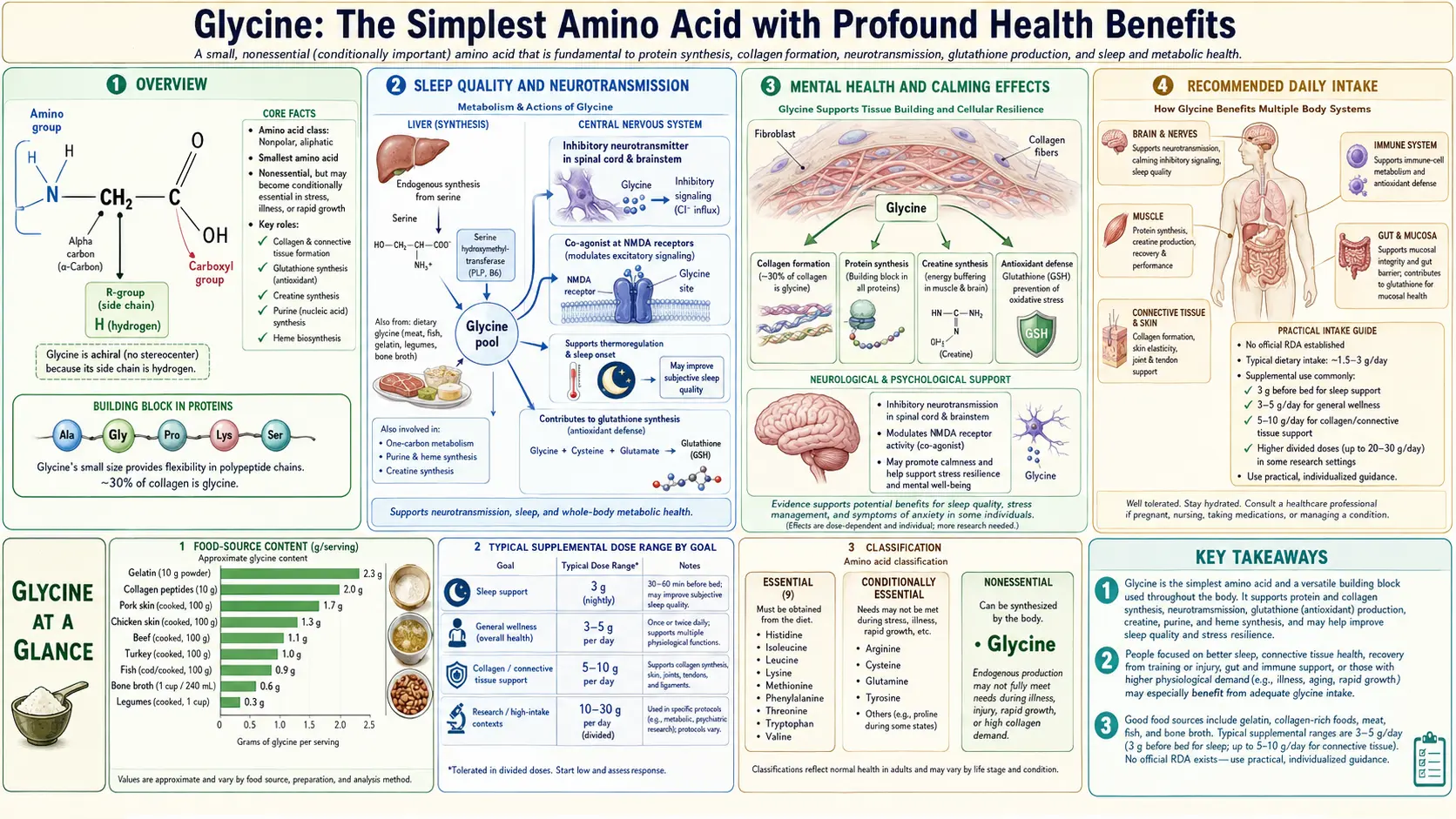
Glycine is the smallest and structurally simplest of the twenty standard amino acids: its side chain is a single hydrogen atom. The body makes it from serine, threonine, choline and hydroxyproline, mainly in the liver and kidneys, and uses it to build collagen, glutathione, heme, creatine and nucleic acids; glycine is also a component of the bile acids used to digest fat (Wang 2013). Nutrition textbooks class glycine as non-essential because the body can make it. A 2013 review describes its own synthesis as insufficient and calls it a conditionally essential amino acid (Wang 2013).
How much glycine the body needs, and whether ordinary diets supply enough, is unsettled. A 2009 modelling study by Meléndez-Hevia and colleagues estimated that synthesis (about 3 g/day) plus a typical diet (1.5–3.0 g/day) may fall short of total metabolic need by about 10 g per day in a 70 kg adult. That figure is a model estimate and a hypothesis, not a measured deficiency; it is described in The Glycine Deficiency Hypothesis below.
In the nervous system glycine has two roles. It is an inhibitory neurotransmitter acting on glycine receptors, chiefly in the brainstem and spinal cord, and it is a required co-agonist at the excitatory NMDA glutamate receptor (Bannai & Kawai 2012; Heresco-Levy 1999). Human trials of glycine have looked at sleep, schizophrenia and type 2 diabetes; most are small, and several were run or funded by companies that make amino acids or nutrition products. Each is described below with its design and size.
How Glycine Helps Remove Aspirin from the Body
Deep dive: for the full biochemistry of the salicyluric acid pathway, the GLYAT enzyme, why glycine becomes rate-limiting at higher aspirin doses, the Reye's syndrome connection, and the research on glycine in aspirin overdose, see Glycine and Aspirin Metabolism: The Salicyluric Acid Pathway.
In a 1990 study of 45 patients treated for aspirin overdose, plasma glycine was consistently lower than in healthy volunteers, suggesting that the available glycine was being used up; in healthy volunteers a 500 mg therapeutic dose did not change plasma glycine (Patel 1990). Glycine does not directly metabolize aspirin. Instead, after aspirin is changed into salicylic acid, glycine is joined to it, which makes the salicylic acid easier to remove in urine.
Step-by-Step Process
-
Aspirin is absorbed
- Aspirin is also called acetylsalicylic acid.
- After it is swallowed, it is absorbed from the stomach and small intestine into the bloodstream.
-
Aspirin is converted to salicylic acid
- Enzymes called esterases remove the acetyl group from aspirin.
- This turns aspirin into salicylic acid (salicylate), which is the main form that continues through metabolism.
-
Glycine joins with salicylic acid
- In the liver, salicylic acid can be linked to glycine.
- This reaction is called glycine conjugation.
- The product formed is salicyluric acid.
-
Why glycine conjugation matters
- Adding glycine makes the drug metabolite more water-soluble.
- That helps the kidneys filter it more easily.
- The body can then remove it in urine.
-
Excretion
- Salicyluric acid is one of the major urinary metabolites of aspirin. In the 1990 overdose study it was the main metabolite in the urine of patients given fluids or glycine by mouth; in patients given intravenous sodium bicarbonate, unchanged salicylic acid was the main one (Patel 1990).
- Some salicylate is also excreted unchanged, and some is processed by other pathways such as glucuronidation.
- In the same study, glycine by mouth raised plasma glycine and the maximum rate of salicyluric acid excretion, but did not change the fraction of salicylate recovered as salicyluric acid (Patel 1990).
Aspirin + Glycine = Summary
- Aspirin → converted to salicylic acid
- Salicylic acid + glycine → salicyluric acid
- Salicyluric acid → removed from the body in urine
Collagen Synthesis
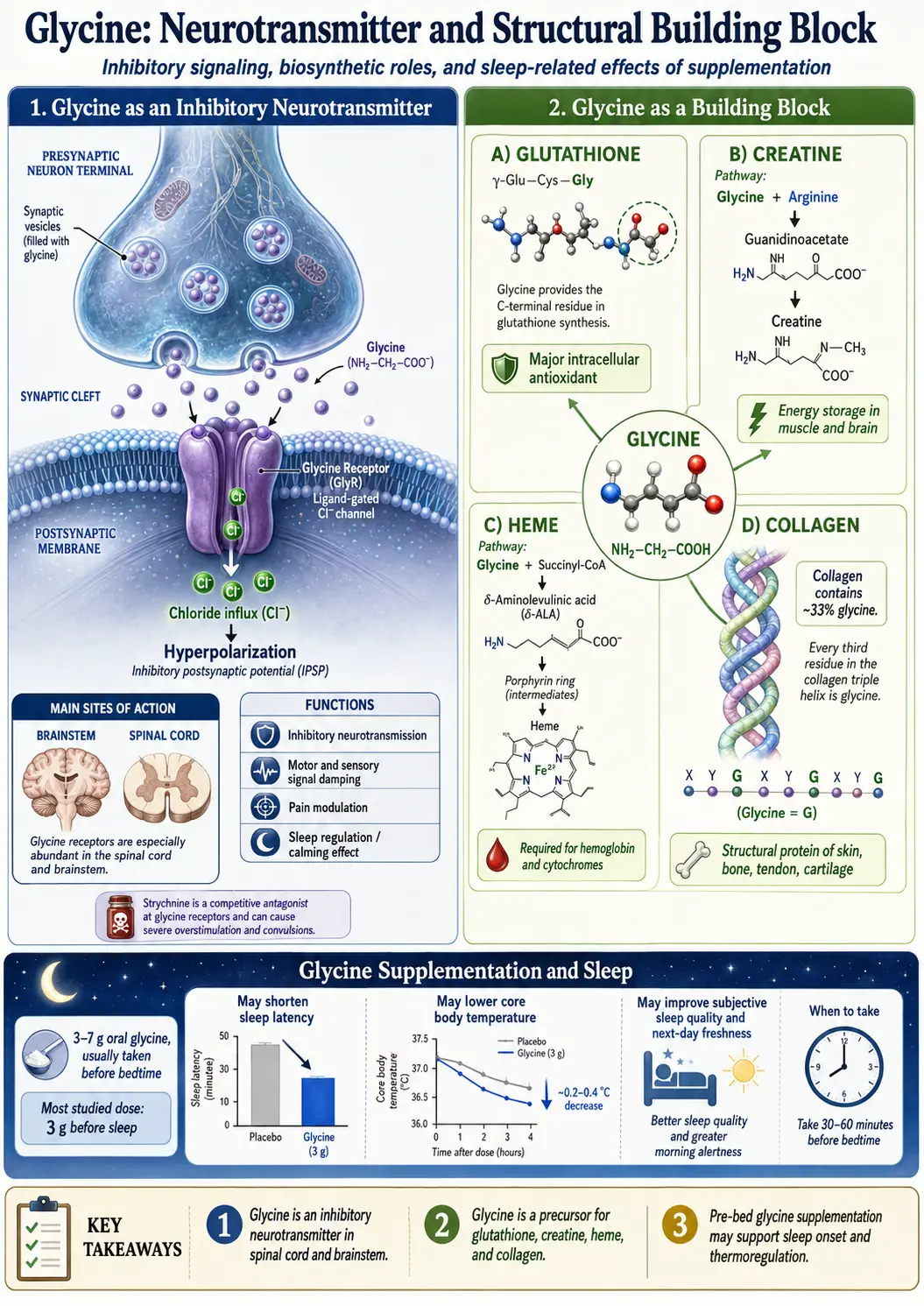
Collagen is the most abundant protein in animals, a bundle of three intertwined helical chains (Shoulders & Raines 2009). It gives structure to skin, bone, tendon, ligament, cartilage and blood-vessel walls. In collagen's triple helix, every third amino acid is glycine, the repeating pattern written Gly-X-Y, so roughly one residue in three is glycine. Gelatin, which is made from collagen, consists of about 30% glycine residues (Gannon 2002).
The reason is geometry: glycine's single-hydrogen side chain is the only one small enough to fit at the centre of the tightly wound triple helix, where the three chains meet. Inherited changes that replace one of those glycines with another amino acid are the commonest structural cause of the brittle-bone disease osteogenesis imperfecta: in a 2007 catalogue of 832 such mutations in type I collagen, 682 substituted for a glycine in the triple helix (Marini 2007). The structure is described further on the Collagen Synthesis page.
Meléndez-Hevia and colleagues argue that glycine supply, rather than the collagen-making machinery, may limit how much collagen the body can make (Meléndez-Hevia 2009). That argument is a hypothesis drawn from a model; trials testing whether extra glycine changes collagen turnover in people were not found in PubMed. Trials of collagen peptides on skin are summarized under Joint and Skin Health.
Sleep Quality and Neurotransmission
Three small Japanese studies form most of the human evidence on glycine and sleep. All three gave 3 g of glycine at bedtime, and each included authors employed by a manufacturer of amino acids:
- Inagawa 2006 (Sleep and Biological Rhythms) — a short report on the subjective effects of glycine taken before bedtime on sleep quality. No abstract is indexed, so its details could not be checked here.
- Yamadera 2007 (Sleep and Biological Rhythms) — in volunteers who had been sleeping poorly for some time, 3 g of glycine before bedtime improved subjective sleep quality and sleep efficiency, and in sleep-laboratory recordings (polysomnography) shortened the time to fall asleep and to reach slow-wave sleep without changing the overall structure of sleep. Daytime sleepiness was lower and a memory-recognition task improved. The abstract does not give the number of participants.
- Bannai 2012 (Frontiers in Neurology) — healthy volunteers had their sleep cut by 25% for three nights and took 3 g of glycine or placebo before bed. The glycine group reported significantly less fatigue and a trend toward less sleepiness the next day, and did better on a psychomotor vigilance test. The same paper reported that in rats glycine did not change melatonin or clock-gene expression.
The proposed mechanism comes from rats. Oral glycine raised glycine in the blood and cerebrospinal fluid, increased blood flow to the skin and lowered core body temperature, a change that normally accompanies falling asleep (Bannai & Kawai 2012). In a 2015 rat study these sleep-promoting and temperature-lowering effects depended on NMDA receptors in the suprachiasmatic nucleus, the brain's circadian clock, and disappeared when that nucleus was destroyed (Kawai 2015). Whether the same pathway operates in people has not been shown directly.
Beyond sleep, glycine functions as a major inhibitory neurotransmitter in the brainstem and spinal cord, where its receptors, which are chloride channels, quiet nerve signalling involved in movement and pain. It is also a required co-agonist at NMDA glutamate receptors: the receptor responds to glutamate only when glycine is also bound, at a separate site (Heresco-Levy 1999). That second role is the basis of the schizophrenia trials described below.
Creatine Production
Creatine is made from three amino acids, glycine, arginine and methionine, by three enzymes. The first step, in which arginine's amidino group is joined to glycine to form guanidinoacetate, takes place mainly in the kidney; the second, a methylation using S-adenosylmethionine, mainly in the liver. The entire glycine molecule is consumed, but only one group each from arginine and methionine (Brosnan 2011).
Creatine is used as a rapid energy buffer in muscle and brain and is lost each day as creatinine: about 2 g a day in men aged 20 to 39 weighing 70 kg, less in women and older people, who have less muscle. In people who eat meat and fish about half of that loss is replaced from the diet; in vegetarians nearly all of it must be made in the body (Brosnan 2011).
The same 2011 review concludes that creatine synthesis does not appear to place a major burden on glycine metabolism in adults, because glycine is readily made, while it does place an appreciable burden on methionine (about 40% of the body's labile methyl groups from S-adenosylmethionine) and on arginine (Brosnan 2011). That view differs from the glycine-deficiency hypothesis described further down.
Glutathione Synthesis
Glutathione, the main antioxidant made inside cells, is a tripeptide of glutamate, cysteine and glycine. The standard account treats cysteine as the main limit on how fast it is made. A research group at Baylor College of Medicine led by Rajagopal Sekhar proposes that in older adults glycine runs short too: in a 2011 study, 8 older adults had lower red-cell glycine and cysteine and slower glutathione synthesis than 8 younger adults, and after 2 weeks of cysteine plus glycine their glutathione was 94.6% higher (Sekhar 2011). Because the studies gave the two precursors together, they cannot show how much glycine alone contributed.
The group calls the glycine-plus-N-acetylcysteine (NAC) combination GlyNAC. Nearly all of the human GlyNAC evidence comes from this one group:
- Kumar 2021 — an open-label pilot with no placebo group: 8 older adults versus 8 young adults. After 24 weeks of GlyNAC the authors reported improvements in glutathione, oxidative stress, mitochondrial function, inflammation, insulin resistance, strength, gait speed and cognition, which declined during 12 weeks off the supplement.
- Kumar 2023 — a randomized, placebo-controlled trial of 24 older adults (12 GlyNAC, 12 placebo) for 16 weeks, which reported that GlyNAC, and not placebo, improved glutathione, oxidative stress, mitochondrial fuel use, inflammation, insulin resistance, physical function and waist circumference.
- Kumar 2022 — an animal study in which GlyNAC-fed mice lived 24% longer than control mice.
The one independent trial gave different results. Lizzo 2022, a randomized, placebo-controlled trial run by researchers employed by a nutrition company, gave 114 healthy older volunteers GlyNAC at 2.4, 4.8 or 7.2 g/day or placebo for 2 weeks. GlyNAC was safe and well tolerated but did not meet its primary endpoint: it did not raise total glutathione or the ratio of reduced to oxidized glutathione. A post-hoc analysis found higher glutathione in a subgroup with high oxidative stress and low starting glutathione. The full GlyNAC record, study by study, is on the Glutathione, Aging and GlyNAC page.
Digestive Health
Bile acids made in the liver are joined (conjugated) to either glycine or taurine before they are secreted into the small intestine, and the glycine-conjugated forms are needed for the digestion of dietary fat and the absorption of long-chain fatty acids (Wang 2013).
A 2003 review of mainly animal and laboratory studies reported that glycine inhibits gastric acid secretion and protects the stomach lining against chemically induced and stress-induced ulcers (Zhong 2003). In people, a randomized double-blind crossover trial in haemodialysis patients with signs of malnutrition compared glycine with branched-chain amino acids (7 g twice daily for 4 months each); in the 27 patients analysed, the type of supplement made no difference to markers of intestinal permeability, cytokines or the gut microbiota (Genton 2021).
Anti-Inflammatory Effects in Laboratory Studies
Most of the evidence for glycine as an anti-inflammatory agent comes from animal and cell studies. A 2003 review summarized reports that glycine protected animals against shock from blood loss, endotoxin and sepsis, against ischemia-reperfusion injury in the liver, kidney, heart, intestine and muscle, and against liver and kidney damage from toxic chemicals and drugs (Zhong 2003).
The proposed mechanism is that glycine opens a chloride channel in the membrane of immune cells such as macrophages, which stabilizes the cell's electrical potential, blunts the rise in intracellular calcium that activates the cell, and so reduces the formation of free radicals and inflammatory cytokines (Zhong 2003).
In people, one randomized trial in 74 adults with type 2 diabetes found that 5 g/day of glycine for 3 months, compared with placebo, lowered levels of a tumour necrosis factor receptor (TNF-receptor I) and raised interferon-gamma (Cruz 2008). That trial is described further in the next section.
Blood Sugar and Metabolic Associations
In a 2002 study, 9 healthy people drank glycine, glucose, glycine with glucose, or water on four separate occasions. When glycine was taken with 25 g of glucose, the rise in blood glucose (measured as the area under the curve) was more than 50% smaller than after glucose alone, while the overall insulin response was not significantly different. The authors suggested that glycine may trigger a gut hormone that strengthens insulin's effect (Gannon 2002).
In a randomized trial in Mexico, 74 adults with type 2 diabetes took 5 g/day of glycine or placebo, in three doses a day, for 3 months. HbA1c (glycated hemoglobin) was significantly lower in the glycine group at the end of the trial (Cruz 2008). It is a single trial, and larger confirmations were not found.
Higher blood glycine has been associated in earlier studies with lower rates of coronary heart disease and type 2 diabetes. A 2019 genetic study of 80,003 people (Mendelian randomization, which uses inherited differences in glycine levels to test cause and effect) found that genetically higher glycine was associated with lower coronary heart disease risk, partly through blood pressure. The genetic evidence for a link with type 2 diabetes was weaker, and the authors found a strong effect in the other direction: high insulin levels lowered glycine. They concluded that the glycine–diabetes association may be driven by insulin resistance lowering glycine, rather than low glycine causing diabetes (Wittemans 2019).
Schizophrenia Trials and the NMDA Receptor
Because glycine is a required co-agonist at the NMDA receptor, and reduced NMDA signalling has been proposed as a cause of the negative symptoms of schizophrenia (social withdrawal, flattened emotion, reduced speech), high-dose glycine was tested as an add-on to antipsychotic drugs:
- Heresco-Levy 1999 — 22 people with treatment-resistant schizophrenia took 0.8 g/kg per day of glycine or placebo for 6 weeks each, in a double-blind crossover design. Glycine was well tolerated and was associated with a 30% reduction in negative symptoms on the PANSS rating scale.
- CONSIST, Buchanan 2007 — a larger, 16-week, double-blind trial at five sites in 157 people with schizophrenia or schizoaffective disorder compared glycine, D-cycloserine and placebo. It found no significant difference between glycine and placebo on negative symptoms or cognition, and the authors concluded that neither agent is a generally effective treatment for these symptoms.
- With clozapine — in a 12-week trial in 19 people taking clozapine, 30 g/day of glycine did not reduce symptoms, while the placebo group had a 35% reduction in positive symptoms; the authors suggested glycine may interfere with clozapine's effect (Potkin 1999). In an 8-week trial in 30 adults, 60 g/day of glycine added to clozapine produced no significant change in symptoms or cognition, and no participant worsened clinically (Evins 2000).
Glycine's inhibitory role in the brainstem and spinal cord is a property of the neurotransmitter acting on its receptors. Randomized trials testing whether glycine supplements reduce anxiety or improve mood in healthy people were not found in PubMed, so claims of a calming effect from everyday doses rest on that mechanism rather than on trial results.
Joint and Skin Health
Since roughly one residue in three in collagen is glycine, collagen supplements (hydrolyzed collagen, collagen peptides, gelatin) are also a source of glycine. The trials on skin test these products as a whole, not glycine on its own, and their results depend on who paid for them:
- de Miranda 2021 — a meta-analysis of 19 randomized, double-blind trials with 1,125 participants (95% women) found that hydrolyzed collagen improved skin hydration, elasticity and wrinkles compared with placebo.
- Myung 2025 — a later meta-analysis of 23 randomized trials with 1,474 participants also found an overall benefit, but when the trials were split by funding, those not funded by companies showed no effect on hydration, elasticity or wrinkles, and the high-quality trials showed no significant effect. Its authors concluded there is currently no clinical evidence to support collagen supplements to prevent or treat skin aging.
Clinical trials of free glycine for joint pain or osteoarthritis were not found in PubMed. Collagen and gelatin are covered on the Collagen page.
The Glycine Deficiency Hypothesis
Because the body makes glycine, no clinical deficiency syndrome for dietary glycine is defined in the way that scurvy defines vitamin C deficiency. The idea that many people are short of glycine is a hypothesis, set out most fully by Meléndez-Hevia and colleagues in 2009. Comparing all the reported rates at which an adult makes and uses glycine, they estimated that:
- synthesis from serine accounts for more than 85% of the glycine the body makes;
- synthesis provides about 3 g/day, and the diet 1.5–3.0 g/day;
- together these may fall short of the amount needed for all metabolic uses, including collagen synthesis, by about 10 g per day for a 70 kg person.
The authors concluded that this supports the view that glycine is semi-essential (Meléndez-Hevia 2009). A 2013 review reached a similar conclusion, calling it conditionally essential (Wang 2013).
Diagram: the 2009 supply and shortfall estimates drawn to scale. Sources: Meléndez-Hevia 2009; Brosnan 2011.
Other researchers read the evidence differently. A 2011 review of creatine synthesis describes glycine as readily made in adults (Brosnan 2011), and a 2019 genetic study suggests that the low blood glycine seen in type 2 diabetes may be a consequence of insulin resistance rather than a cause (Wittemans 2019). Lists of "glycine deficiency signs" (poor sleep, joint pain, skin aging, low mood and so on) circulate widely, but no study was found that defines or validates such a list.
Food Sources
Glycine is found in all protein-containing foods, but amounts vary widely. Because glycine fills every third position in collagen, the highest figures in the USDA FoodData Central (SR Legacy) records are for collagen-derived foods. Per 100 g, as listed on the Glycine Sources page:
- Gelatin, dry — 19.0 g
- Pork-rind snacks — 11.9 g
- Roasted chicken skin — 3.25 g; roasted turkey skin — 3.11 g
- Meat, fish and organ meat — the records in that table list 1.20–1.76 g
- Seeds and nuts — dried pumpkin and squash seed kernels 1.84 g; dried watermelon seed kernels 1.66 g; hulled hemp seed 1.61 g; raw peanuts 1.55 g; dried sunflower seed kernels 1.46 g
Bone broth and slow-cooked cuts with skin, tendon and cartilage contain collagen and so glycine, but their glycine content varies with the recipe and cooking time, and no standard figure is given here. Proponents of the deficiency hypothesis argue that modern diets favour muscle meat over the skin, bone and connective tissue that earlier diets used, and so supply less glycine (Meléndez-Hevia 2009); dietary surveys testing that comparison were not found.
Doses Used in Studies
Glycine is sold as a free amino-acid powder or capsules and is also present in collagen and gelatin products. The pure powder is sweet-tasting and dissolves readily in water. The doses below are those the studies on this page used; they describe the research, not a regimen.
- Sleep: 3 g taken before bedtime (Yamadera 2007; Bannai 2012).
- Type 2 diabetes: 5 g/day in three doses for 3 months (Cruz 2008).
- Glucose response: 1 mmol per kg of lean body mass, taken once with 25 g of glucose (Gannon 2002).
- GlyNAC: the Baylor pilot used glycine at 1.33 mmol/kg/day with cysteine, as NAC, at 0.81 mmol/kg/day (Kumar 2021); the independent trial used 2.4, 4.8 or 7.2 g/day of glycine and NAC in a 1:1 ratio (Lizzo 2022).
- Schizophrenia trials: 0.8 g/kg per day (Heresco-Levy 1999); 30 g/day and 60 g/day in the trials with clozapine (Potkin 1999; Evins 2000).
Safety findings reported in the trials:
- High-dose glycine (0.8 g/kg per day) was reported as well tolerated in the 1999 schizophrenia trial, and GlyNAC at up to 7.2 g/day as safe and well tolerated over 2 weeks (Heresco-Levy 1999; Lizzo 2022).
- The research raises a concern for people taking the antipsychotic clozapine: in one trial, glycine added to clozapine did not reduce symptoms while placebo did, and the authors suggested glycine may interfere with clozapine's effect (Potkin 1999). A second trial found no benefit and no clinical worsening (Evins 2000).
- These trials were small and short; long-term safety data for high doses are limited. Decisions about supplements belong with a clinician, particularly for people with kidney or liver disease or who take prescription drugs.
Daily Intake: What Is Known
No Recommended Dietary Allowance has been set for glycine, which is classed as a non-essential amino acid because the body can make it.
The only quantitative estimate of need found is the 2009 model described above: synthesis of about 3 g/day plus 1.5–3.0 g/day from the diet, against a need estimated to be about 10 g per day higher for a 70 kg person (Meléndez-Hevia 2009). That estimate has not been tested in intake trials, and other researchers regard glycine as readily made (Brosnan 2011). Figures for “optimal” or “therapeutic” daily glycine intake that appear in supplement literature do not come from studies of health outcomes.
Key Research Papers
- Meléndez-Hevia E, De Paz-Lugo P, Cornish-Bowden A, Cárdenas ML (2009). A weak link in metabolism: the metabolic capacity for glycine biosynthesis does not satisfy the need for collagen synthesis. Journal of Biosciences 34(6):853-72. — PubMed PMID: 20093739
- Wang W, Wu Z, Dai Z, Yang Y, Wang J, Wu G (2013). Glycine metabolism in animals and humans: implications for nutrition and health. Amino Acids 45(3):463-77. — PubMed PMID: 23615880
- Brosnan JT, da Silva RP, Brosnan ME (2011). The metabolic burden of creatine synthesis. Amino Acids 40(5):1325-31. — PubMed PMID: 21387089
- Shoulders MD, Raines RT (2009). Collagen structure and stability. Annual Review of Biochemistry 78:929-58. — PubMed PMID: 19344236
- Marini JC, Forlino A, Cabral WA, et al. (2007). Consortium for osteogenesis imperfecta mutations in the helical domain of type I collagen: regions rich in lethal mutations align with collagen binding sites for integrins and proteoglycans. Human Mutation 28(3):209-21. — PubMed PMID: 17078022
- Inagawa K, Hiraoka T, Kohda T, Yamadera W, Takahashi M (2006). Subjective effects of glycine ingestion before bedtime on sleep quality. Sleep and Biological Rhythms 4:75-77. (Not indexed in PubMed; no abstract available.) — doi:10.1111/j.1479-8425.2006.00193.x
- Yamadera W, Inagawa K, Chiba S, Bannai M, Takahashi M, Nakayama K (2007). Glycine ingestion improves subjective sleep quality in human volunteers, correlating with polysomnographic changes. Sleep and Biological Rhythms 5:126-131. (Not indexed in PubMed.) — doi:10.1111/j.1479-8425.2007.00262.x
- Bannai M, Kawai N, Ono K, Nakahara K, Murakami N (2012). The effects of glycine on subjective daytime performance in partially sleep-restricted healthy volunteers. Frontiers in Neurology 3:61. — PubMed PMID: 22529837
- Bannai M, Kawai N (2012). New therapeutic strategy for amino acid medicine: glycine improves the quality of sleep. Journal of Pharmacological Sciences 118(2):145-8. — PubMed PMID: 22293292
- Kawai N, Sakai N, Okuro M, Karakawa S, Tsuneyoshi Y, Kawasaki N, Takeda T, Bannai M, Nishino S (2015). The sleep-promoting and hypothermic effects of glycine are mediated by NMDA receptors in the suprachiasmatic nucleus. Neuropsychopharmacology 40(6):1405-16. (Animal study.) — PubMed PMID: 25533534
- Heresco-Levy U, Javitt DC, Ermilov M, Mordel C, Silipo G, Lichtenstein M (1999). Efficacy of high-dose glycine in the treatment of enduring negative symptoms of schizophrenia. Archives of General Psychiatry 56(1):29-36. — PubMed PMID: 9892253
- Buchanan RW, Javitt DC, Marder SR, Schooler NR, Gold JM, McMahon RP, Heresco-Levy U, Carpenter WT (2007). The Cognitive and Negative Symptoms in Schizophrenia Trial (CONSIST): the efficacy of glutamatergic agents for negative symptoms and cognitive impairments. American Journal of Psychiatry 164(10):1593-602. — PubMed PMID: 17898352
- Potkin SG, Jin Y, Bunney BG, Costa J, Gulasekaram B (1999). Effect of clozapine and adjunctive high-dose glycine in treatment-resistant schizophrenia. American Journal of Psychiatry 156(1):145-7. — PubMed PMID: 9892314
- Evins AE, Fitzgerald SM, Wine L, Rosselli R, Goff DC (2000). Placebo-controlled trial of glycine added to clozapine in schizophrenia. American Journal of Psychiatry 157(5):826-8. — PubMed PMID: 10784481
- Gannon MC, Nuttall JA, Nuttall FQ (2002). The metabolic response to ingested glycine. American Journal of Clinical Nutrition 76(6):1302-7. — PubMed PMID: 12450897
- Cruz M, Maldonado-Bernal C, Mondragón-Gonzalez R, Sanchez-Barrera R, Wacher NH, Carvajal-Sandoval G, Kumate J (2008). Glycine treatment decreases proinflammatory cytokines and increases interferon-gamma in patients with type 2 diabetes. Journal of Endocrinological Investigation 31(8):694-9. — PubMed PMID: 18852529
- Wittemans LBL, Lotta LA, Oliver-Williams C, et al. (2019). Assessing the causal association of glycine with risk of cardio-metabolic diseases. Nature Communications 10(1):1060. — PubMed PMID: 30837465
- Zhong Z, Wheeler MD, Li X, Froh M, Schemmer P, Yin M, Bunzendaul H, Bradford B, Lemasters JJ (2003). L-Glycine: a novel antiinflammatory, immunomodulatory, and cytoprotective agent. Current Opinion in Clinical Nutrition and Metabolic Care 6(2):229-40. — PubMed PMID: 12589194
- Genton L, Pruijm M, Teta D, et al. (2021). Gut barrier and microbiota changes with glycine and branched-chain amino acid supplementation in chronic haemodialysis patients. Journal of Cachexia, Sarcopenia and Muscle 12(6):1527-1539. — PubMed PMID: 34535959
- Patel DK, Ogunbona A, Notarianni LJ, Bennett PN (1990). Depletion of plasma glycine and effect of glycine by mouth on salicylate metabolism during aspirin overdose. Human & Experimental Toxicology 9(6):389-95. — PubMed PMID: 2271231
- Sekhar RV, Patel SG, Guthikonda AP, Reid M, Balasubramanyam A, Taffet GE, Jahoor F (2011). Deficient synthesis of glutathione underlies oxidative stress in aging and can be corrected by dietary cysteine and glycine supplementation. American Journal of Clinical Nutrition 94(3):847-53. — PubMed PMID: 21795440
- Kumar P, Liu C, Hsu JW, Chacko S, Minard C, Jahoor F, Sekhar RV (2021). Glycine and N-acetylcysteine (GlyNAC) supplementation in older adults improves glutathione deficiency, oxidative stress, mitochondrial dysfunction, inflammation, insulin resistance, endothelial dysfunction, genotoxicity, muscle strength, and cognition: Results of a pilot clinical trial. Clinical and Translational Medicine 11(3):e372. — PubMed PMID: 33783984
- Kumar P, Liu C, Suliburk J, Hsu JW, Muthupillai R, Jahoor F, Minard CG, Taffet GE, Sekhar RV (2023). Supplementing Glycine and N-Acetylcysteine (GlyNAC) in Older Adults Improves Glutathione Deficiency, Oxidative Stress, Mitochondrial Dysfunction, Inflammation, Physical Function, and Aging Hallmarks: A Randomized Clinical Trial. Journals of Gerontology Series A: Biological Sciences and Medical Sciences 78(1):75-89. — PubMed PMID: 35975308
- Kumar P, Osahon OW, Sekhar RV (2022). GlyNAC (Glycine and N-Acetylcysteine) Supplementation in Mice Increases Length of Life by Correcting Glutathione Deficiency, Oxidative Stress, Mitochondrial Dysfunction, Abnormalities in Mitophagy and Nutrient Sensing, and Genomic Damage. Nutrients 14(5):1114. (Animal study.) — PubMed PMID: 35268089
- Lizzo G, Migliavacca E, Lamers D, Frézal A, Corthesy J, Vinyes-Parès G, Bosco N, Karagounis LG, Hövelmann U, Heise T, von Eynatten M, Gut P (2022). A Randomized Controlled Clinical Trial in Healthy Older Adults to Determine Efficacy of Glycine and N-Acetylcysteine Supplementation on Glutathione Redox Status and Oxidative Damage. Frontiers in Aging 3:852569. — PubMed PMID: 35821844
- de Miranda RB, Weimer P, Rossi RC (2021). Effects of hydrolyzed collagen supplementation on skin aging: a systematic review and meta-analysis. International Journal of Dermatology 60(12):1449-1461. — PubMed PMID: 33742704
- Myung SK, Park Y (2025). Effects of Collagen Supplements on Skin Aging: A Systematic Review and Meta-Analysis of Randomized Controlled Trials. American Journal of Medicine 138(9):1264-1277. — PubMed PMID: 40324552
PubMed Topic Searches
- PubMed: Search — Glycine: Metabolism and biochemistry (review)
- PubMed: Search — Glycine: Dietary intake and requirements
- PubMed: Search — Glycine: Supplementation randomized controlled trials
- PubMed: Search — Glycine: Plasma levels and clinical outcomes
- PubMed: Search — Glycine: Muscle protein synthesis and exercise
- PubMed: Search — Glycine: Deficiency: signs and consequences
- PubMed: Search — Glycine: Cardiovascular effects
- PubMed: Search — Glycine: Neurological and cognitive effects
- PubMed: Search — Glycine: Immune function
- PubMed: Search — Glycine: Oxidative stress and antioxidant activity
- PubMed: Search — Glycine: Gastrointestinal and gut health
- PubMed: Search — Glycine: Safety, toxicity, and upper limit
For a broader literature review, see the full PubMed record for Glycine and the NIH Office of Dietary Supplements Fact Sheets.
This content is provided for informational purposes only and is not medical advice. Decisions about supplements belong with a qualified clinician.
Connections
- Fluoride Chelation — the second glutathione building block
- All Amino Acids
- Vitamin C, Collagen & Why Sailors Fell Apart — interactive animation
- Glycine Benefits Deep Dive
- Cysteine
- Methionine
- Proline
- Serine
- Arginine
- Taurine
- Glycine & Aspirin Metabolism
- Glycine for Tinnitus
- Aspirin
- Willow Bark
- Collagen
- NAC & Glutathione
- Bone Broth
- Creatine
- Blood Sugar
- Anxiety
- Stress Management
- Oxidative Stress
- Organ Meats
- Zinc
- Sleep Hygiene