Heart Failure
Interactive Visualization The Heart & Circulation — watch a blood cell make the loop Trace a blood cell through all four chambers and both circuits, with a live ECG, chamber pressures, and an exercise mode. Launch → Interactive Visualization SGLT2 — watch the kidney spill sugar into the urine Watch the kidney reclaim every gram of glucose — until blood sugar passes the threshold and it spills into the urine, or an SGLT2-inhibitor drug dumps it there on purpose. Launch → Interactive Visualization How Heart Failure Develops Weaken the pump and watch the ejection fraction fall, fluid back up into the lungs, and the body's own 'fixes' quietly make it worse — then unload it with the right drugs. Launch →
Table of Contents
What is Heart Failure?
Heart failure is a chronic condition where the heart is unable to pump blood effectively to meet the body's needs. This can lead to a buildup of fluid in the lungs, legs, and other tissues, causing congestion and swelling.
The name is misleading — start here
"Heart failure" sounds like the heart has stopped or is about to. It has not. The term means the heart cannot keep up with demand at normal filling pressures — it is a supply-and-demand problem, not an on/off switch. Millions of people live with it for decades, and modern treatment has changed its outlook substantially.
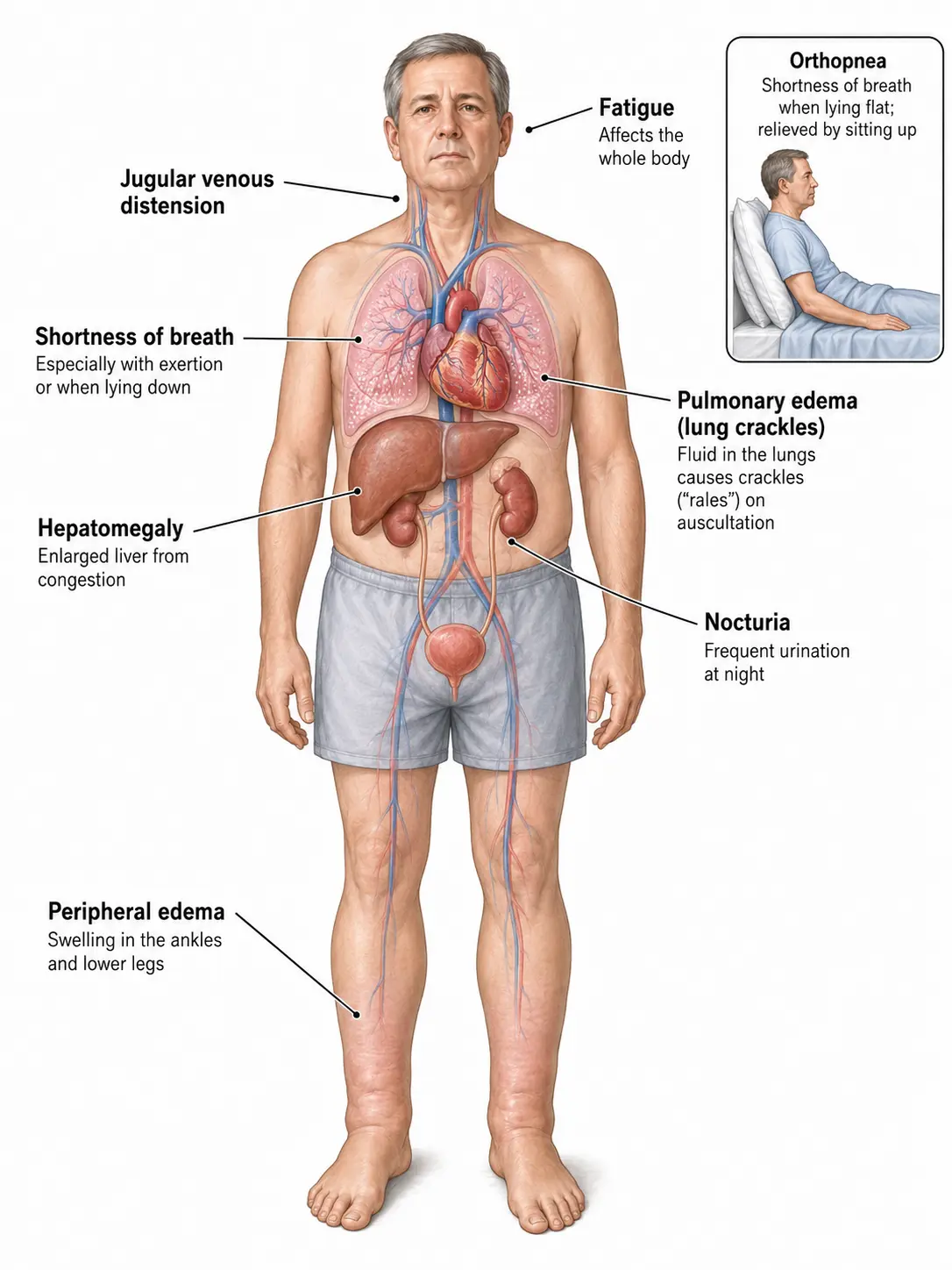
Picture the circulation as a pump pushing water through a closed loop of hoses. When the pump cannot move water forward fast enough, two things happen at once. Forward failure: not enough gets delivered, so muscles and kidneys are short-changed — this is the fatigue, the heavy legs, the sense that a familiar hill has become a mountain. Backward failure: what cannot go forward backs up, like traffic behind a bottleneck. Back up behind the left side and fluid accumulates in the lungs — breathlessness, a night-time cough, needing extra pillows. Back up behind the right side and fluid accumulates in the legs, the abdomen and the liver — swollen ankles, a tight belt, poor appetite.
Most symptoms of heart failure are one of those two things. Recognising which you are having tells you a great deal about what is going on.
Why the body makes it worse before it makes it better
When the kidneys sense reduced flow they cannot tell the difference between a failing pump and bleeding to death, and they respond the same way to both: retain salt and water, tighten the blood vessels, and pour out adrenaline. For blood loss that is life-saving. For a struggling heart it is precisely wrong — more fluid to pump, higher pressure to pump against, and a faster heart rate burning more oxygen. This vicious circle, driven by the renin–angiotensin–aldosterone system and the sympathetic nervous system, is what drives the illness forward.
That single insight explains almost every drug used in heart failure. Beta-blockers turn down the adrenaline. ACE inhibitors, ARBs and ARNIs interrupt the renin–angiotensin arm. Mineralocorticoid antagonists block aldosterone. It also explains something that confuses patients enormously: beta-blockers may make you feel slightly worse for the first few weeks, because you are removing a compensation the body has been leaning on. Pushed through, they are among the strongest life-extending drugs in cardiology.
Ejection Fraction: Why That One Number Changes Everything
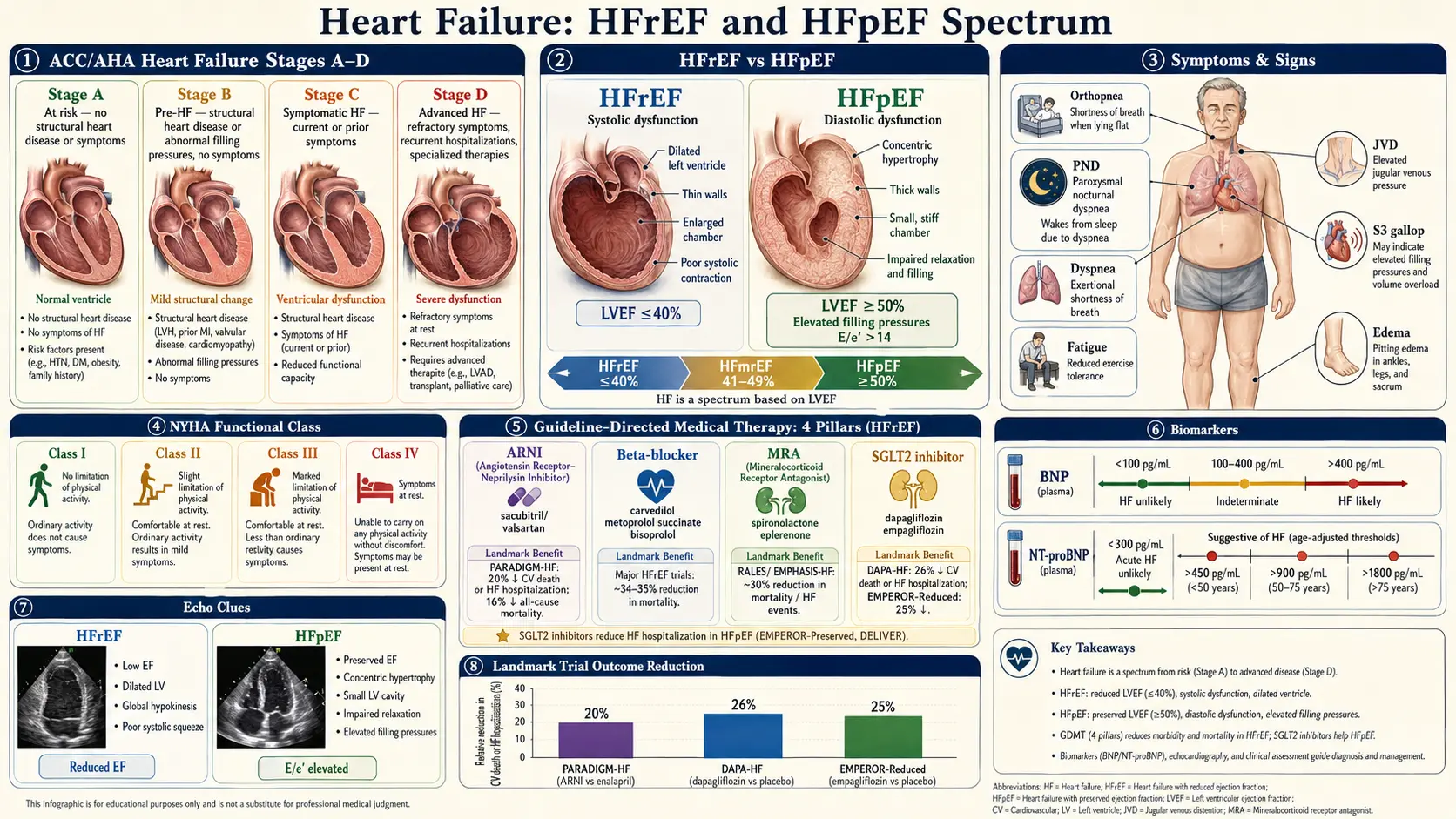
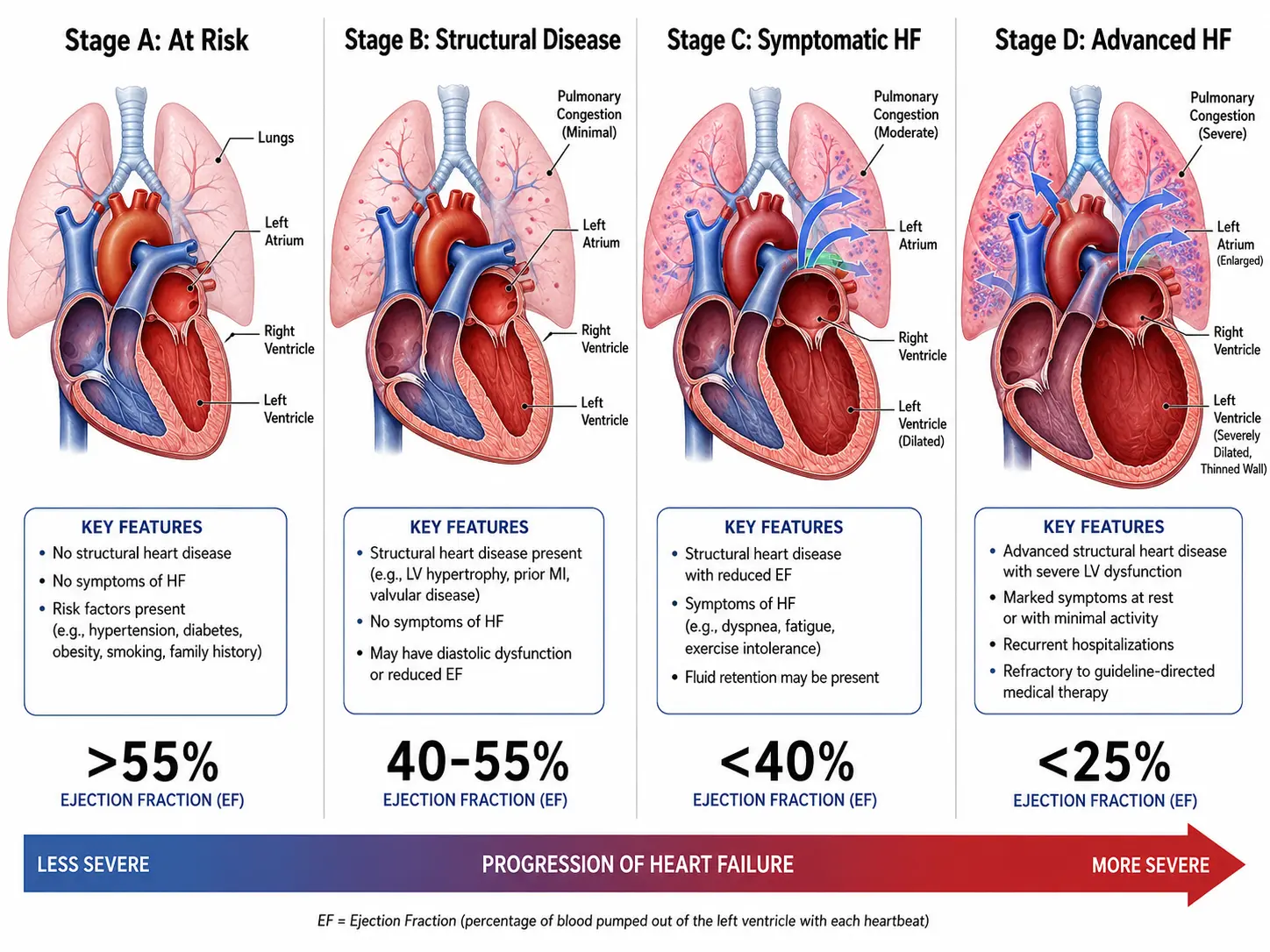
When your echocardiogram is done, one number dominates the report: the ejection fraction (EF) — the percentage of blood in the left ventricle that gets pushed out with each beat. A normal EF is roughly 50–70%. Note that even a healthy heart never empties completely; an EF of 55% is normal, not "45% failure".
The EF splits heart failure into categories that look similar from the outside but behave differently and are treated differently:
- HFrEF — reduced ejection fraction, EF 40% or below. The squeeze is weak. The muscle has been damaged, usually by a heart attack, long-standing high blood pressure, a virus, alcohol, chemotherapy, or an inherited cardiomyopathy. This is the type with the strongest treatments — the drugs discussed below genuinely extend life here.
- HFmrEF — mildly reduced, EF 41–49%. A middle band. In practice most patients are treated much like HFrEF.
- HFpEF — preserved ejection fraction, EF 50% or above. The squeeze is fine; the relaxation is not. A stiff, thick-walled ventricle cannot fill properly, so pressure backs up even though the pumping percentage looks normal. This is roughly half of all heart failure, it is more common in older women, and it travels with high blood pressure, obesity, diabetes, kidney disease and atrial fibrillation. See HFpEF for the detailed page.
If it helps: HFrEF is a worn-out pump motor. HFpEF is a stiff balloon that resists being inflated. Both leave you congested and breathless. They are not the same disease.
The practical consequence used to be bleak — nothing much worked in HFpEF. That changed with the SGLT2 inhibitors. In EMPEROR-Preserved, empagliflozin reduced cardiovascular death or heart-failure hospitalization in patients with an EF above 40% [4]. If you were told years ago that there was no real drug treatment for your type of heart failure, that information is now out of date and is worth revisiting.
Causes and Risk Factors
- Coronary artery disease: The most common cause, involving the narrowing or blockage of coronary arteries.
- High blood pressure: Forces the heart to work harder, which can weaken it over time. See Hypertension — it is the single biggest driver of HFpEF.
- Heart attack: Damages the heart muscle, affecting its pumping ability. Dead muscle is replaced by scar, which neither squeezes nor conducts.
- Cardiomyopathy: Disease of the heart muscle from genetic conditions, infections, or alcohol abuse.
- Diabetes: Increases the risk of developing heart failure, independently of coronary disease.
- Valve disease: A leaking or narrowed valve makes the ventricle do extra work every beat for years. See Valvular Heart Disease.
- Persistent fast rhythms: Weeks to months of an uncontrolled rate — usually atrial fibrillation — can weaken the muscle on its own. This tachycardia-induced cardiomyopathy often reverses once the rhythm is controlled, which is why rhythm treatment can matter so much here [11]. See also Arrhythmia.
- Chemotherapy and radiation: Anthracyclines (doxorubicin), trastuzumab and chest radiation can all injure the heart, sometimes years later. Anyone with that history should know their baseline EF.
- Alcohol: Sustained heavy drinking is a well-established, and partly reversible, cause of dilated cardiomyopathy.
- Thyroid disease, severe anaemia and obstructive sleep apnea: All make an already-struggling heart work harder, and all are correctable. See Obstructive Sleep Apnea.
- Amyloidosis: Increasingly recognised as an under-diagnosed cause of HFpEF in older adults, particularly alongside carpal tunnel syndrome or spinal stenosis. See Cardiac Amyloidosis. It matters because it has its own specific treatment.
Symptoms of Heart Failure
Common symptoms include:
- Shortness of breath, especially during exertion or when lying down
- Fatigue and weakness
- Swelling in the legs, ankles, and feet
- Rapid or irregular heartbeat
- Persistent cough or wheezing with white or pink-tinged mucus
- Increased need to urinate at night
- Sudden weight gain from fluid retention
The two symptoms most often missed
Orthopnea — breathlessness on lying flat — is one of the most specific signs there is, and it is routinely mistaken for a pillow preference. When you lie down, fluid that was pooling in your legs redistributes into your chest within minutes. The question that matters is not "do you get breathless?" but "how many pillows do you sleep on, and has that number changed?" Going from one pillow to three over a few months is a clinical finding.
Paroxysmal nocturnal dyspnea is its dramatic cousin: waking one to two hours into sleep gasping, having to sit on the edge of the bed or open a window, with relief over 15–30 minutes. People describe this as a panic attack or a nightmare for months before anyone connects it to the heart.
How it presents differently in different people
- Older adults often present with confusion, loss of appetite, or simply "slowing down" rather than classic breathlessness — they have unconsciously reduced their activity below the threshold that would provoke it.
- Women are more likely to have HFpEF, and more likely to have symptoms attributed to anxiety, deconditioning or weight before an echocardiogram is ordered.
- People with lung disease get the two conditions confused constantly; a blood natriuretic peptide test is one of the fastest ways to sort out which is driving today's breathlessness.
- Right-sided predominance can present almost without breathlessness at all — instead abdominal fullness, early satiety, nausea, and clothes that no longer fit, from fluid in the abdomen and a congested liver.
The NYHA classes, in plain terms
You will see "NYHA class" on letters. It is simply how much activity it takes to make you symptomatic: I — no limitation; II — comfortable at rest, ordinary activity brings symptoms; III — comfortable at rest, less-than-ordinary activity brings symptoms; IV — symptoms at rest. It can move in both directions, and moving from III to II with treatment is a real, measurable win.
Diagnosis and Treatment
Diagnostic Tests
To diagnose heart failure, doctors may use:
- Physical examination: To check for signs of fluid retention and listen to the heart.
- Blood tests: To check for markers indicating heart failure.
- Imaging tests: Such as echocardiograms, X-rays, and MRI to assess heart function.
- Electrocardiogram (ECG): To detect irregular heart rhythms.
What the numbers actually mean
BNP and NT-proBNP are hormones the heart releases when its walls are stretched, and they are the single most useful blood test here. Their great strength is ruling out: a low value in someone who is breathless makes heart failure very unlikely and points elsewhere. Commonly used thresholds are BNP under 100 pg/mL or NT-proBNP under 300 pg/mL to exclude it in the acute setting, and NT-proBNP under about 125 pg/mL in a non-urgent outpatient. Rule-in thresholds rise with age, which is why an NT-proBNP of 800 means different things at 45 and at 80. Values are also pushed up by kidney disease and atrial fibrillation, and pushed down by obesity — a normal-looking result in someone with a high BMI does not exclude heart failure as confidently.
The echocardiogram is the central test. It gives the ejection fraction, wall thickness, valve function, an estimate of filling pressures, and often the underlying cause. Ask for a copy of the report, and specifically for the EF, because every treatment decision downstream hangs on it.
Other tests worth knowing: a cardiac MRI when the cause is unclear (it distinguishes scar from inflammation from infiltration far better than ultrasound); ischaemia testing or angiography when coronary disease is suspected as the cause; and a routine panel of kidney function, electrolytes, full blood count, thyroid function and iron studies — the last of which is genuinely important and frequently forgotten, for reasons covered below.
Treatment Options
- Medications: Such as ACE inhibitors, beta-blockers, and diuretics to manage symptoms and improve heart function.
- Lifestyle changes: Including a heart-healthy diet, exercise, and weight management.
- Surgery: Such as coronary bypass surgery or heart valve repair for severe cases.
- Implantable devices: Pacemakers or defibrillators to help manage heart rhythms.
The four pillars — the most important thing on this page
For heart failure with reduced ejection fraction, four drug classes each independently reduce death and hospitalization, and current guidelines recommend that suitable patients end up on all four [1]. They are usually started at low doses and increased over weeks, and being on a low dose of all four is generally better than a full dose of one.
- An ARNI, or an ACE inhibitor / ARB. In PARADIGM-HF, sacubitril–valsartan beat enalapril for cardiovascular death or heart-failure hospitalization, and the trial was stopped early for benefit [2]. Where an ARNI is not available or affordable, a plain ACE inhibitor (lisinopril, ramipril, enalapril) remains a genuinely effective, inexpensive generic option. A dry cough is the classic ACE inhibitor side effect; switching to an ARB fixes it.
- A beta-blocker — specifically carvedilol, bisoprolol or metoprolol succinate, which are the ones with trial evidence in heart failure. Start low, go slow, and expect a few weeks of feeling flat before it turns around.
- A mineralocorticoid receptor antagonist (spironolactone or eplerenone). In RALES, spironolactone cut the risk of death by 30% and heart-failure hospitalization by 35% in severe heart failure [5]. It needs potassium and kidney monitoring, because it retains potassium. Around 10% of men on spironolactone get breast tenderness or enlargement; eplerenone avoids that.
- An SGLT2 inhibitor (dapagliflozin or empagliflozin). Originally diabetes drugs, and the most important addition in a generation. In DAPA-HF, dapagliflozin reduced worsening heart failure or cardiovascular death from 21.2% to 16.3% over a median 18 months — and it worked equally in people without diabetes [3]. They also work in preserved ejection fraction [4], where the other three pillars have much weaker support.
Diuretics (furosemide, bumetanide, torsemide) sit outside the four pillars for a reason: they make you feel better by removing fluid, but they have never been shown to extend life. They are for symptoms, and the correct dose is the lowest one that keeps you dry.
Do not accept a slow up-titration by default
The STRONG-HF trial randomized patients after a heart-failure hospitalization to rapid up-titration of these drugs with close follow-up versus usual care, and rapid up-titration reduced readmission and death at 180 days [6]. The practical translation: if you left hospital on starter doses and nobody has increased them in three months, that is a gap worth raising. A reasonable question at every visit is "am I on all four pillars, and are we at target dose on each?"
Devices and procedures
- Implantable cardioverter-defibrillator (ICD) — considered when the EF stays at or below 35% after at least three months of good drug therapy, to prevent sudden death. The three-month wait is deliberate: many hearts improve enough on treatment that the device is no longer needed.
- Cardiac resynchronization therapy (CRT) — a pacemaker that re-times the two ventricles when the electrical signal is delayed (a wide QRS with left bundle branch block). In the right patient the response can be dramatic.
- Ablation for atrial fibrillation — in CASTLE-AF, ablation in patients with heart failure and reduced EF reduced death or heart-failure hospitalization [11].
- Revascularization, valve repair, and, at the far end, LVAD or transplant — the point of naming these is that advanced options exist, and referral is often left too late.
Diet, Minerals and Supplements
Salt — the advice has genuinely changed
Severe salt restriction has been standard advice for decades on the strength of physiological reasoning rather than trial evidence. SODIUM-HF put it to the test: 806 patients randomized to a target under 100 mmol/day (about 1,500 mg of sodium) versus usual care. The low-sodium group did reduce their intake, but the primary outcome — cardiovascular admission, emergency visit or death at 12 months — occurred in 15% versus 17%, a difference that was not statistically significant [7]. Quality of life improved modestly; hard outcomes did not.
Read this carefully, because it is easy to over-correct. It does not license a high-salt diet, and it does not apply to someone actively congested in hospital. What it does say is that grim, joyless restriction below 1,500 mg is not supported by evidence, and if it is making food unpalatable enough that you eat less overall — a real hazard, since malnutrition and muscle loss are serious problems in heart failure — the trade is a bad one. Aim to avoid excess: the biggest wins are processed meat, canned soup, restaurant meals and bread, not the salt shaker.
Iron — the most under-tested thing in heart failure
Iron deficiency affects a large share of heart-failure patients, and here it is defined differently from ordinary anaemia: ferritin under 100 ng/mL, or ferritin 100–299 ng/mL with a transferrin saturation under 20%. You can be iron-deficient with a perfectly normal haemoglobin, which is exactly why it gets missed.
It matters because heart muscle is metabolically hungry and iron is central to mitochondrial energy production. In AFFIRM-AHF, intravenous ferric carboxymaltose given to iron-deficient patients after an acute heart-failure admission reduced heart-failure hospitalizations (rate ratio 0.74) with no effect on cardiovascular death [8].
The critical practical point: oral iron does not work here. IRONOUT-HF gave high-dose oral iron polysaccharide for 16 weeks and it barely moved iron stores and did not improve exercise capacity [9]. Inflammation in heart failure raises hepcidin, which blocks iron absorption from the gut. So if you are iron-deficient with heart failure, the useful question is "can I have intravenous iron?" — not "should I take a tablet?" Ask for ferritin and transferrin saturation; a ferritin alone is not enough.
Coenzyme Q10 — promising, single trial, not established
CoQ10 is popular, and the honest position sits between the enthusiasm and the dismissal. The best trial is Q-SYMBIO: 420 patients randomized to CoQ10 300 mg daily or placebo on top of standard therapy. At two years the primary composite of major adverse cardiovascular events occurred in 15% versus 26% (hazard ratio 0.50), with lower cardiovascular and all-cause mortality [10].
Those are striking numbers. They are also from one moderate-sized trial that has not been replicated at scale, which is why CoQ10 is not in the guidelines and is not a substitute for any of the four pillars. It has a good safety record and few interactions, though it can mildly reduce warfarin's effect. A fair summary: reasonable to consider as an add-on if you want to, worth discussing with your cardiologist, and not something to prioritise over getting the four pillars to target dose.
Food, plainly
There is no special heart-failure diet, but a few things are consistently useful. Build meals around vegetables, fruit, legumes, fish, eggs, nuts, olive oil and whole grains — oats, barley, and brown rice. Get enough protein: unintentional muscle loss (cardiac cachexia) is a genuinely bad prognostic sign, and under-eating is a bigger risk for most patients than over-salting. Watch alcohol closely, and stop entirely if alcohol caused the cardiomyopathy. Be careful with potassium: several heart-failure drugs raise it, so large increases in potassium-rich foods or any potassium supplement need a blood test behind them, not a guess. See Potassium and Magnesium — loop diuretics deplete magnesium, and low magnesium worsens arrhythmias.
Routine fluid restriction is weakly supported. It is often imposed reflexively at 1.5 L/day. Unless you have low sodium levels or persistent congestion, drinking to thirst is usually fine, and dehydration on top of a diuretic causes its own kidney problems.
Exercise — honest tiering
HF-ACTION randomized 2,331 patients with reduced EF to structured aerobic training or usual care. The primary outcome of all-cause death or hospitalization was 65% versus 68% — a reduction that was not statistically significant as first analysed (hazard ratio 0.93, p = 0.13), though it became significant after adjustment for baseline prognostic factors, and quality of life clearly improved [12]. So: exercise training is safe, it reliably makes you feel and function better, and its effect on survival is modest at best. That is still a good reason to do cardiac rehabilitation — just not on the promise that it will add years.
Daily Self-Monitoring and Red Flags
The daily weight is the single most useful habit
Fluid retention shows up on the scale days before you feel it. Weigh yourself every morning, after the toilet, before breakfast, in similar clothing, and write it down. The standard alert thresholds are a gain of 2–3 lb (about 1–1.5 kg) in 24 hours, or 5 lb (about 2.3 kg) in a week. Either warrants a call — not a wait-and-see. Many patients are given a written plan to take an extra diuretic dose for a defined number of days; if you do not have one, that is a reasonable thing to ask for.
Go to hospital now for
- Severe breathlessness at rest, or breathlessness that stops you speaking a full sentence.
- Coughing pink, frothy sputum.
- Chest pain or pressure — see Heart Attack.
- Fainting, or a fast heart rate that will not settle.
- Confusion, cold clammy skin, or a sharp drop in urine output.
Call your team within a day or two for
- The weight thresholds above, or new or worsening ankle swelling.
- Needing more pillows, or new waking-at-night breathlessness.
- Persistent dizziness on standing, which often means the diuretic is now too much.
- A missed or doubled dose you are unsure about — a phone call is always cheaper than an admission.
Medicines and substances to be careful with
- NSAIDs — ibuprofen, naproxen, diclofenac. These cause salt and water retention and blunt diuretics. They are the most common avoidable cause of a heart-failure decompensation bought over the counter. Paracetamol/acetaminophen is generally the safer first choice for pain.
- Effervescent and soluble tablets — often carry a surprisingly large sodium load per dose.
- Verapamil and diltiazem — avoided in reduced ejection fraction, as they further weaken contraction.
- Some diabetes drugs (pioglitazone, saxagliptin) can worsen heart failure; worth reviewing if you have both conditions.
- Liquorice root, high-dose ginseng and ephedra-containing products — raise blood pressure or deplete potassium. St John's wort interferes with a long list of cardiac drugs. Tell your team about every supplement, including the ones you assume are irrelevant.
- Decongestants containing pseudoephedrine — common in cold remedies, and best avoided.
Prognosis
The prognosis for heart failure varies based on its severity and the patient’s overall health. While it is a chronic condition, proper management can improve quality of life and longevity.
Two things are worth adding, because published survival figures frighten people unnecessarily. First, most quoted statistics come from cohorts assembled before the four-pillar era, and each pillar independently reduces mortality; someone taking all four today is not the patient those numbers describe. Second, ejection fraction is not fixed. It commonly improves on treatment, and in some situations — a rhythm-driven cardiomyopathy, alcohol-related cardiomyopathy after stopping, peripartum cardiomyopathy, an inflammatory myocarditis — it can normalise altogether.
What actually predicts a worse course: repeated hospital admissions (each one marks a step down), worsening kidney function, persistently high natriuretic peptides, low blood pressure limiting drug doses, unintentional weight and muscle loss, and low sodium levels. What predicts a better one: getting to target doses of all four pillars, correcting the reversible contributors (iron deficiency, thyroid disease, sleep apnea, uncontrolled rhythm, alcohol), staying physically active, and catching fluid early with the daily weight.
It is also worth saying that heart failure is a condition where planning ahead is kindness rather than pessimism. Discussing what you want if things worsen — including whether and when an ICD should be deactivated near the end of life — is best done calmly, early, and with your family present, not in an emergency department at 3 a.m.
Key Research Papers
The following PubMed topic searches return current peer-reviewed literature relevant to this condition. Each link opens a live PubMed query.
Key Research Papers
Every citation below was verified against its PubMed record before publication — author list, journal, year and title all checked against the source.
- Heidenreich PA, Bozkurt B, Aguilar D, et al. 2022 AHA/ACC/HFSA Guideline for the Management of Heart Failure: A Report of the American College of Cardiology/American Heart Association Joint Committee on Clinical Practice Guidelines. J Am Coll Cardiol. 2022;79(17):e263-e421 — PubMed PMID: 35379503 · doi:10.1016/j.jacc.2021.12.012
- McMurray JJ, Packer M, Desai AS, et al. Angiotensin-neprilysin inhibition versus enalapril in heart failure. N Engl J Med. 2014;371(11):993-1004 — PubMed PMID: 25176015 · doi:10.1056/NEJMoa1409077
- McMurray JJV, Solomon SD, Inzucchi SE, et al. Dapagliflozin in Patients with Heart Failure and Reduced Ejection Fraction. N Engl J Med. 2019;381(21):1995-2008 — PubMed PMID: 31535829 · doi:10.1056/NEJMoa1911303
- Anker SD, Butler J, Filippatos G, et al. Empagliflozin in Heart Failure with a Preserved Ejection Fraction. N Engl J Med. 2021;385(16):1451-1461 — PubMed PMID: 34449189 · doi:10.1056/NEJMoa2107038
- Pitt B, Zannad F, Remme WJ, et al. The effect of spironolactone on morbidity and mortality in patients with severe heart failure. Randomized Aldactone Evaluation Study Investigators. N Engl J Med. 1999;341(10):709-17 — PubMed PMID: 10471456 · doi:10.1056/NEJM199909023411001
- Mebazaa A, Davison B, Chioncel O, et al. Safety, tolerability and efficacy of up-titration of guideline-directed medical therapies for acute heart failure (STRONG-HF): a multinational, open-label, randomised, trial. Lancet. 2022;400(10367):1938-1952 — PubMed PMID: 36356631 · doi:10.1016/S0140-6736(22)02076-1
- Ezekowitz JA, Colin-Ramirez E, Ross H, et al. Reduction of dietary sodium to less than 100 mmol in heart failure (SODIUM-HF): an international, open-label, randomised, controlled trial. Lancet. 2022;399(10333):1391-1400 — PubMed PMID: 35381194 · doi:10.1016/S0140-6736(22)00369-5
- Ponikowski P, Kirwan BA, Anker SD, et al. Ferric carboxymaltose for iron deficiency at discharge after acute heart failure: a multicentre, double-blind, randomised, controlled trial. Lancet. 2020;396(10266):1895-1904 — PubMed PMID: 33197395 · doi:10.1016/S0140-6736(20)32339-4
- Lewis GD, Malhotra R, Hernandez AF, et al. Effect of Oral Iron Repletion on Exercise Capacity in Patients With Heart Failure With Reduced Ejection Fraction and Iron Deficiency: The IRONOUT HF Randomized Clinical Trial. JAMA. 2017;317(19):1958-1966 — PubMed PMID: 28510680 · doi:10.1001/jama.2017.5427
- Mortensen SA, Rosenfeldt F, Kumar A, et al. The effect of coenzyme Q10 on morbidity and mortality in chronic heart failure: results from Q-SYMBIO: a randomized double-blind trial. JACC Heart Fail. 2014;2(6):641-9 — PubMed PMID: 25282031 · doi:10.1016/j.jchf.2014.06.008
- Marrouche NF, Brachmann J, Andresen D, et al. Catheter Ablation for Atrial Fibrillation with Heart Failure. N Engl J Med. 2018;378(5):417-427 — PubMed PMID: 29385358 · doi:10.1056/NEJMoa1707855
- O'Connor CM, Whellan DJ, Lee KL, et al. Efficacy and safety of exercise training in patients with chronic heart failure: HF-ACTION randomized controlled trial. JAMA. 2009;301(14):1439-50 — PubMed PMID: 19351941 · doi:10.1001/jama.2009.454
PubMed Topic Searches
Each link opens a live PubMed query returning current peer-reviewed literature on that sub-topic.
- PubMed: Heart failure epidemiology
- PubMed: HFrEF reduced ejection fraction
- PubMed: HFpEF preserved ejection fraction
- PubMed: SGLT2 inhibitor heart failure
- PubMed: ACE inhibitor heart failure
- PubMed: Beta blocker heart failure
- PubMed: Heart failure guidelines
- PubMed: BNP NT-proBNP heart failure
- PubMed: Cardiac resynchronization therapy heart failure
- PubMed: Heart failure mortality
- PubMed: Sacubitril valsartan heart failure
- PubMed: Heart failure hospitalization
Connections
- Cardiology
- Echocardiogram — the test that defines HFrEF vs HFpEF
- How Heart Failure Develops — interactive animation
- SGLT2: Why Diabetes Drugs Make You Pee Sugar — interactive animation
- The Heart & Circulation — interactive animation
- Cardiomyopathy
- Coronary Artery Disease
- Hypertension
- Arrhythmia
- Valvular Heart Disease
- Atrial Fibrillation
- Shortness of Breath
- Edema
- Chest Pain
- Fatigue
- Magnesium
- Potassium
- Omega-3 Fatty Acids
- Cardiovascular Disease
- Diabetes
- Pulmonary Embolism
- Anti-Inflammatory Diet
- Stroke
- Astragalus for Cardiovascular Health — the Chinese trials adding astragalus injection to standard therapy, and what they measured.
- Herbs covered on this site that discuss this condition: Hawthorn (Crataegus monogyna) · Coleus forskohlii (Forskolin) · Cat’s Whiskers / Java Tea (Orthosiphon aristatus) · Licorice (Glycyrrhiza glabra) · St. John's Wort (Hypericum perforatum)
- Discussed in depth on these pages: Organ Meats for Heart and CoQ10
- HFpEF (Preserved Ejection Fraction) — the stiff-ventricle half of heart failure, where SGLT2 inhibitors finally gave a treatment
- Cardiac Amyloidosis — an under-diagnosed cause of HFpEF in older adults, with its own specific treatment
- Heart Attack — the most common route to a weakened left ventricle
- Obstructive Sleep Apnea — a correctable load on an already-struggling heart
- BNP / NT-proBNP — the blood test that rules heart failure in or out, and what shifts the numbers