Processed Seed Oils: Industrial Oils in Our Food
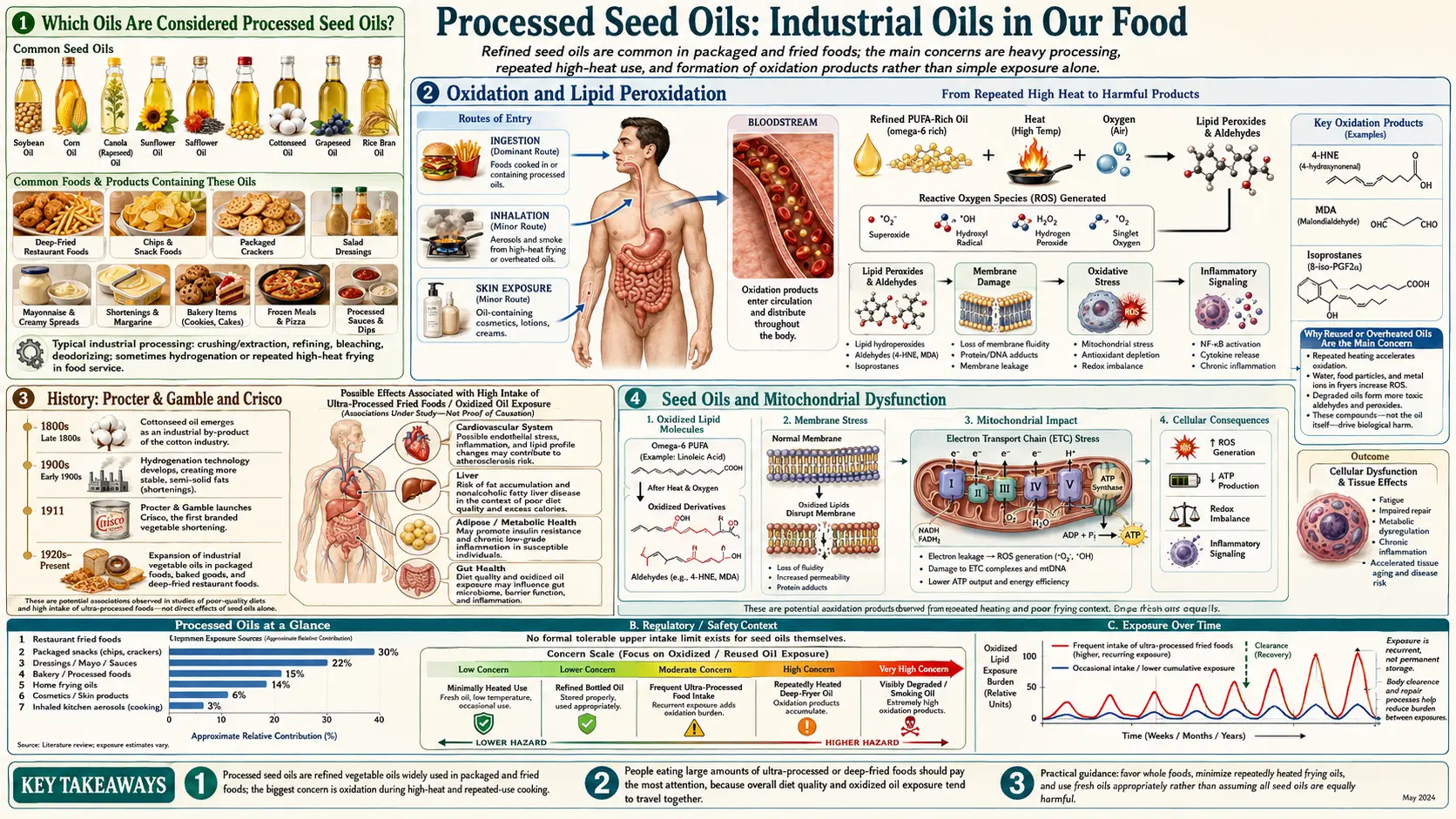


Table of Contents
- Which Oils Are Considered Processed Seed Oils?
- The Industrial Extraction Process
- The Omega-6 to Omega-3 Ratio Problem
- Oxidation and Lipid Peroxidation
- 4-HNE and Aldehyde Formation When Heated
- Inflammatory Cascade and Chronic Disease
- Restaurant and Fast Food Ubiquity
- History: Procter & Gamble and Crisco
- Healthy Alternatives to Processed Seed Oils
- The Rise of Seed Oil Consumption
- Seed Oils and Mitochondrial Dysfunction
- Connections
- Featured Videos
Over the past century, processed seed oils and vegetable oils have gone from industrial lubricants to the dominant source of fat in the modern diet. These oils, extracted from seeds through intensive chemical and mechanical processes, now account for a significant portion of caloric intake in Western diets. Their rise parallels the increase in chronic diseases including heart disease, obesity, diabetes, and inflammatory conditions, leading a growing number of researchers and health advocates to question whether these oils are truly safe for human consumption.
Unlike traditional fats that have been used for thousands of years, such as olive oil, butter, and animal fats, processed seed oils are a product of 20th-century industrial food manufacturing. Their prevalence in the modern food supply is driven not by nutritional superiority but by low cost, long shelf life, and the influence of food industry marketing campaigns that promoted them as "heart-healthy" alternatives to saturated fats.
Which Oils Are Considered Processed Seed Oils?
- Soybean oil: The most consumed oil in the United States, found in nearly every processed food product, from salad dressings and mayonnaise to baked goods and frozen meals. Approximately 70% of soybean oil comes from genetically modified soybeans
- Canola oil (rapeseed): Derived from the rapeseed plant through genetic modification and intensive processing to remove toxic erucic acid, canola oil was originally developed in Canada and marketed as a healthy cooking oil despite its industrial origins
- Corn oil: Extracted from the germ of corn kernels as a byproduct of corn syrup and ethanol production, corn oil is heavily used in deep frying and processed food manufacturing
- Cottonseed oil: Originally classified as a toxic industrial waste product from cotton production, cottonseed oil was repurposed as a food ingredient in the early 1900s, notably as the original fat in Crisco shortening
- Sunflower oil: High in omega-6 linoleic acid, conventional sunflower oil contributes to inflammatory imbalance when consumed in the quantities typical of modern diets
- Safflower oil: One of the highest omega-6 oils available, safflower oil is commonly used in processed foods, margarine, and commercial cooking applications
- Rice bran oil: Extracted from the outer layer of rice grains using solvent extraction, rice bran oil is increasingly used in Asian food manufacturing and fast food restaurants
- Grapeseed oil: Though sometimes marketed as a health food, grapeseed oil is extremely high in omega-6 fatty acids and is typically extracted using hexane solvents
The Industrial Extraction Process
How Seed Oils Are Made
- Seed preparation: Seeds are cleaned, dehulled, and crushed or flaked to increase surface area for oil extraction
- Hexane solvent extraction: The crushed seeds are washed with hexane, a petroleum-derived chemical solvent classified as a neurotoxin, to dissolve and extract the oil. Trace amounts of hexane remain in the finished product
- Degumming: Phosphoric acid or citric acid is added to remove phospholipids, lectins, and other "impurities" from the crude oil
- Neutralization: Sodium hydroxide (caustic soda/lye) is used to neutralize free fatty acids and remove additional impurities
- Bleaching: The oil is passed through bleaching clays and activated carbon to remove pigments, chlorophyll, and remaining impurities, giving the oil a pale, uniform appearance
- Deodorizing: The oil is heated to extremely high temperatures (400-500 degrees Fahrenheit) under a vacuum to remove volatile compounds that give the oil its natural but unpalatable smell and taste. This step can generate trans fats as a byproduct
- Chemical preservatives: Synthetic antioxidants such as BHA, BHT, and TBHQ are often added to prevent the highly unstable polyunsaturated fats from going rancid on store shelves
Contrast with Traditional Oil Production
- Olive oil: Produced by mechanically pressing whole olives, a process used for thousands of years that requires no chemical solvents, no bleaching, and no deodorizing
- Coconut oil: Cold-pressed from fresh coconut meat or dried copra without the need for chemical extraction
- Butter: Made simply by churning cream, a process that has been used for millennia across cultures worldwide
The Omega-6 to Omega-3 Ratio Problem
- Ancestral ratio: For most of human history, the ratio of omega-6 to omega-3 fatty acids in the diet was approximately 1:1 to 4:1, a balance that supports anti-inflammatory processes and overall health
- Modern ratio: The typical Western diet now contains omega-6 to omega-3 ratios of 15:1 to 25:1, driven almost entirely by the massive increase in processed seed oil consumption
- Inflammatory cascade: Omega-6 fatty acids, particularly linoleic acid, are converted in the body to arachidonic acid, which is the precursor to pro-inflammatory eicosanoids including prostaglandins, thromboxanes, and leukotrienes
- Competitive inhibition: Omega-6 and omega-3 fatty acids compete for the same enzymes (delta-6 desaturase and elongase), so excess omega-6 intake actively blocks the body's ability to use anti-inflammatory omega-3 fatty acids
- Chronic inflammation: The resulting imbalance promotes a state of chronic, low-grade systemic inflammation that underlies virtually every modern chronic disease, including heart disease, diabetes, cancer, autoimmune disorders, and neurodegenerative diseases
- Tissue incorporation: Linoleic acid from seed oils has been accumulating in human body fat over the past century, with adipose tissue samples showing that linoleic acid content has increased from approximately 9% in 1959 to over 21% today
Oxidation and Lipid Peroxidation
- Polyunsaturated vulnerability: The polyunsaturated fatty acids (PUFAs) in seed oils contain multiple double bonds in their carbon chains, making them extremely susceptible to oxidation when exposed to heat, light, or oxygen
- Lipid peroxidation chain reaction: When PUFAs oxidize, they initiate a self-perpetuating chain reaction that generates cascades of harmful breakdown products, each capable of damaging cellular membranes, proteins, and DNA
- Cooking amplification: Heating seed oils to cooking temperatures dramatically accelerates oxidation and lipid peroxidation, generating toxic compounds at rates far exceeding those produced by stable saturated or monounsaturated fats
- Rancidity: Many commercial seed oils are already partially oxidized by the time they reach store shelves due to their inherent instability and the harsh conditions of the extraction process
- In vivo oxidation: Once consumed, the polyunsaturated fats from seed oils are incorporated into cell membranes throughout the body, where they continue to be vulnerable to oxidative damage from normal metabolic processes
- Oxidized LDL: Linoleic acid-rich LDL particles are more susceptible to oxidation than LDL particles enriched with saturated or monounsaturated fats, and oxidized LDL is a key driver of atherosclerotic plaque formation
- Smoke point myth: The commonly cited "smoke point" of an oil is an unreliable indicator of safety, as toxic oxidation products begin forming well below the smoke point in polyunsaturated oils
4-HNE and Aldehyde Formation When Heated
- 4-Hydroxynonenal (4-HNE): When omega-6 rich seed oils are heated, they generate 4-HNE, a highly reactive and toxic aldehyde compound that has been directly linked to cellular damage, inflammation, and chronic disease
- Cellular toxicity: 4-HNE damages cells by reacting with proteins, DNA, and phospholipids, disrupting normal cellular function and promoting mutations that can lead to cancer
- Cardiovascular damage: 4-HNE promotes the oxidation of LDL cholesterol, a critical step in the development of atherosclerotic plaques that cause heart attacks and strokes
- Neurotoxicity: 4-HNE has been found in elevated levels in the brains of patients with Alzheimer's disease, Parkinson's disease, and other neurodegenerative conditions
- Other toxic aldehydes: In addition to 4-HNE, heated seed oils produce malondialdehyde (MDA), acrolein, crotonaldehyde, and other toxic aldehyde compounds
- Restaurant exposure: Deep fryers in restaurants and fast food establishments, which heat seed oils continuously and reuse them repeatedly, generate particularly high levels of these toxic aldehyde compounds
- Comparison to stable fats: Saturated fats (butter, coconut oil, tallow) and monounsaturated fats (olive oil) produce dramatically fewer toxic aldehydes when heated compared to polyunsaturated seed oils
Inflammatory Cascade and Chronic Disease
- Heart disease: Despite decades of marketing as "heart-healthy," the evidence linking seed oil consumption to reduced heart disease is weak at best. The Sydney Diet Heart Study and Minnesota Coronary Experiment both found that replacing saturated fat with linoleic acid-rich seed oils actually increased cardiovascular mortality
- Obesity connection: The dramatic rise in seed oil consumption closely parallels the obesity epidemic. Linoleic acid promotes fat cell growth, activates endocannabinoid signaling (stimulating appetite), and impairs mitochondrial function, all of which contribute to weight gain
- Insulin resistance: Excess omega-6 consumption promotes insulin resistance by increasing inflammatory signaling in adipose tissue and the liver, contributing to type 2 diabetes
- Autoimmune conditions: The chronic inflammatory state promoted by excessive omega-6 intake may contribute to the rising prevalence of autoimmune diseases including rheumatoid arthritis, lupus, and inflammatory bowel disease
- Cancer: Oxidized linoleic acid metabolites have been shown to promote tumor growth, angiogenesis, and metastasis in multiple cancer types
- Skin damage: High linoleic acid intake makes skin cells more susceptible to UV damage and may contribute to the rising rates of skin cancer and accelerated skin aging
Restaurant and Fast Food Ubiquity
- Cost advantage: Processed seed oils cost a fraction of traditional cooking fats, making them the default choice for restaurants, fast food chains, and food manufacturers operating on thin margins
- Deep frying dominance: Virtually all restaurant deep fryers use soybean, canola, or other seed oils, meaning that french fries, fried chicken, onion rings, and other fried foods are cooked in these industrial oils
- Hidden in everything: Even foods that are not fried are often prepared with seed oils. Salad dressings, sauces, marinades, baked goods, and grilled items in restaurants typically contain soybean or canola oil
- Oil reuse: Restaurants commonly reuse frying oil for days or even weeks, during which time the oil undergoes extensive oxidation and generates increasingly high levels of toxic compounds
- Difficult to avoid: Eating out while avoiding seed oils is nearly impossible at conventional restaurants, as these oils are used in virtually every aspect of commercial food preparation
History: Procter & Gamble and Crisco
- Industrial origins: In the early 1900s, Procter & Gamble was searching for a cheaper alternative to animal fat for their soap and candle manufacturing when they developed a process to hydrogenate liquid cottonseed oil into a solid fat
- Crisco launch (1911): Rather than using this hydrogenated cottonseed oil solely for industrial purposes, P&G marketed it as "Crisco" (Crystallized Cottonseed Oil), a cooking fat positioned as a modern, clean alternative to lard and butter
- Marketing genius: P&G distributed free cookbooks to every household in America, gave away free samples, and advertised heavily to convince housewives that this industrial product was superior to the animal fats their grandmothers had cooked with for generations
- AHA partnership: In the 1960s, the American Heart Association began recommending vegetable oils over saturated fats, despite limited evidence. P&G was a major donor to the AHA, and the relationship between industry funding and dietary recommendations has been widely criticized
- Ancel Keys and the diet-heart hypothesis: Researcher Ancel Keys promoted the theory that saturated fat caused heart disease, based on cherry-picked data from his Seven Countries Study. This theory, despite its flaws, became the foundation for decades of dietary guidelines favoring seed oils over traditional fats
- Dietary guidelines: U.S. Dietary Guidelines began recommending replacing saturated fat with polyunsaturated vegetable oils in the 1980s, a recommendation that dramatically increased seed oil consumption and coincided with rising rates of obesity and metabolic disease
Healthy Alternatives to Processed Seed Oils
For Cooking
- Extra virgin olive oil: Rich in monounsaturated oleic acid and powerful polyphenol antioxidants, extra virgin olive oil is the cornerstone of the Mediterranean diet and has extensive research supporting cardiovascular and anti-inflammatory benefits. Contrary to popular belief, it is stable enough for most cooking applications
- Coconut oil: Composed primarily of medium-chain saturated fatty acids including lauric acid, coconut oil is highly heat-stable and resistant to oxidation. It has antimicrobial properties and is metabolized differently than long-chain fatty acids
- Butter and ghee: Traditional cooking fats rich in fat-soluble vitamins A, D, E, and K2. Ghee (clarified butter) has a higher smoke point and is suitable for high-heat cooking. Grass-fed butter contains higher levels of beneficial conjugated linoleic acid (CLA) and omega-3 fatty acids
- Tallow and lard: Animal fats that were dietary staples for centuries before being displaced by industrial seed oils. They are heat-stable, naturally high in fat-soluble vitamins, and produce minimal toxic oxidation products when heated
- Avocado oil: High in monounsaturated oleic acid with a high smoke point, making it suitable for high-heat cooking. Choose cold-pressed, unrefined versions when possible, as studies have found that many commercial avocado oils are adulterated with cheaper seed oils
The Rise of Seed Oil Consumption
- Historical consumption: Before 1900, processed seed oils were virtually nonexistent in the human diet. Traditional cultures around the world relied on animal fats, olive oil, coconut oil, and butter for their dietary fat needs
- Explosion of use: Soybean oil consumption in the United States increased more than 1,000-fold during the 20th century, going from near zero to over 25 pounds per person per year
- Caloric contribution: Processed seed oils now account for an estimated 8-10% of total calories consumed in the American diet, a level of polyunsaturated fat intake unprecedented in human evolutionary history
- Linoleic acid in body fat: Analysis of adipose tissue samples shows that linoleic acid content in American body fat has approximately doubled since the 1960s, directly reflecting the massive increase in seed oil consumption
- Parallel with disease: The steep rise in seed oil consumption closely parallels the increase in obesity, type 2 diabetes, heart disease, autoimmune conditions, and inflammatory disorders over the same time period
- Global spread: As the Western diet spreads to developing nations, seed oil consumption is increasing worldwide, accompanied by rising rates of the same chronic diseases
Seed Oils and Mitochondrial Dysfunction
- Mitochondrial membrane damage: When excess linoleic acid from seed oils is incorporated into mitochondrial membranes, it makes these membranes more susceptible to oxidative damage, impairing the electron transport chain and reducing energy production
- Cardiolipin disruption: Cardiolipin, a critical phospholipid in mitochondrial membranes, becomes loaded with linoleic acid when dietary intake is high. Oxidized cardiolipin triggers cell death pathways and is implicated in heart failure, neurodegeneration, and aging
- Metabolic rate reduction: Impaired mitochondrial function from excess PUFA intake may reduce basal metabolic rate, contributing to weight gain and fatigue even without increased caloric intake
- Comparison to saturated fat: Mitochondrial membranes function optimally when their fatty acid composition includes adequate saturated and monounsaturated fats, which are resistant to the oxidative damage that impairs PUFA-rich membranes
- Insulin resistance mechanism: Oxidized linoleic acid metabolites interfere with insulin signaling at the cellular level, contributing to insulin resistance through a mechanism distinct from the inflammatory pathway
How to Avoid Seed Oils
- Read ingredient labels: Check every packaged food for soybean oil, canola oil, corn oil, sunflower oil, safflower oil, cottonseed oil, and "vegetable oil" (which is typically soybean oil)
- Cook at home: Preparing meals at home gives you complete control over the fats and oils used in cooking
- Ask at restaurants: Request that your food be prepared with butter or olive oil instead of the default seed oil, or choose restaurants that already use quality fats
- Avoid processed foods: The vast majority of packaged and processed foods contain seed oils as a primary ingredient
- Choose whole foods: A diet centered around whole, unprocessed foods naturally minimizes seed oil exposure
- Check condiments: Mayonnaise, salad dressings, ketchup, and other condiments are among the highest sources of seed oils in the diet. Look for versions made with olive oil or avocado oil
Connections
- All Toxins
- Seed Oils
- Olive Oil
- Trans Fats
- Omega-3 Fatty Acids
- Insulin Resistance
- Obesity
- Cancer
- Avocado
- Ultra Processed Foods
- Diabetes
- Food Additives
- Cardiovascular Disease
- TBHQ
- BHA
- BHT
- Alzheimer's Disease
- Detoxification