Quercetin: The Widely Studied Flavonoid Behind Allergies, Immunity, Cardiovascular Health, and Longevity

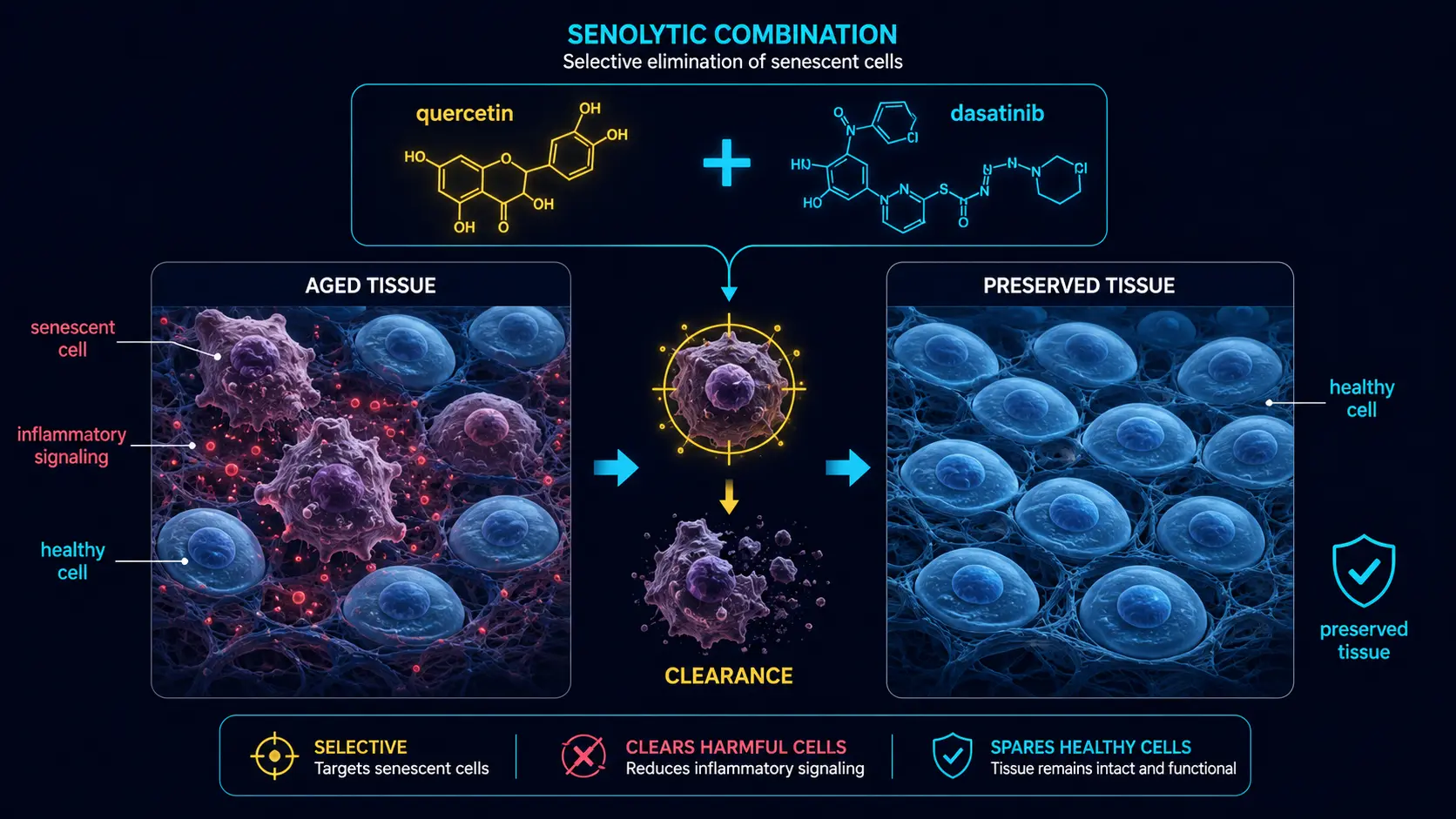
Quercetin is one of the most abundant flavonoids in the human diet, present in onions (especially red onions and shallots), capers, apples, red wine, black and green tea, berries, broccoli, kale, and citrus peels. It has been studied for decades as a natural antihistamine, an anti-inflammatory, a cardiovascular protectant, and more recently as a senolytic agent used in combination with the cancer drug dasatinib in early human trials of age-related disease.
This article covers the core biology of quercetin, what the strongest human evidence shows, dosing considerations, the partnership with dasatinib in senolytic trials, and why quercetin has remained one of the most relevant polyphenols in the longevity toolkit.
Table of Contents
- Structure and Food Sources
- Antihistamine and Allergy Effects
- Antiviral and Immune Effects
- Cardiovascular Benefits
- Senolytic Use with Dasatinib
- Quercetin as a Zinc Ionophore
- Forms, Dosing, and Bioavailability
- Safety and Interactions
- Research Papers
- Connections
- Featured Videos
Structure and Food Sources
Quercetin belongs to the flavonol subclass of flavonoids and is typically found in plants bound to sugars as glycosides (e.g., rutin, isoquercitrin). The richest dietary sources are:
- Capers (fresh) — the single densest source
- Red and yellow onions, shallots, scallions
- Apples (with skin), elderberries, blueberries, cranberries
- Kale, broccoli, asparagus
- Buckwheat
- Green and black tea, red wine
Antihistamine and Allergy Effects
Quercetin stabilizes mast-cell membranes, reducing the release of histamine and other mediators that drive allergic rhinitis, urticaria, and some asthma phenotypes. Randomized trials have shown reductions in nasal-allergy symptom scores; clinical effect sizes are modest but meaningful for people seeking non-sedating natural options. It pairs well with vitamin C, which helps recycle oxidized quercetin.
Antiviral and Immune Effects
Quercetin has shown antiviral activity against a wide range of respiratory viruses in laboratory studies, operating in part through inhibition of viral entry and replication enzymes. Human-trial evidence is mixed but suggestive of shorter symptom duration when used prophylactically during viral-heavy seasons. It also modulates immune function by shifting T-cell balance and reducing excessive NF-κB-driven inflammation.
Cardiovascular Benefits
Meta-analyses of randomized trials show quercetin (typically 500–1000 mg/day for 8–12 weeks) lowers systolic blood pressure by roughly 3–5 mmHg — a clinically relevant signal, particularly in people with metabolic syndrome or hypertension. Additional benefits include improved endothelial function, reduced LDL oxidation, and modest lipid improvements. The large dietary-flavonol epidemiological literature consistently associates high intake with lower cardiovascular mortality.
Senolytic Use with Dasatinib
The Mayo Clinic team that later identified fisetin first developed the Dasatinib + Quercetin (D+Q) cocktail as a proof-of- concept senolytic regimen. A single 2–3 day pulsed course of the combination reduced senescent-cell burden in aged mice and in human patients with diabetic kidney disease. D+Q trials continue in idiopathic pulmonary fibrosis, diabetic kidney disease, and frailty. Quercetin alone has weaker senolytic activity than D+Q or fisetin, but it remains the accessible, food-derived half of the pair.
Quercetin as a Zinc Ionophore
Quercetin enhances intracellular delivery of zinc by acting as a zinc ionophore. Zinc itself has antiviral activity and supports immune function; the combination of quercetin plus zinc is a common integrative-medicine cold/flu protocol for this reason. This shuttling mechanism is shared with the nutraceutical ionophore epigallocatechin gallate (EGCG) found in green tea.
Forms, Dosing, and Bioavailability
Plain quercetin aglycone has poor bioavailability. Enhanced forms include:
- Quercetin phytosome (Quercefit) — 20-fold higher absorption than aglycone.
- Isoquercitrin or enzymatically modified isoquercitrin (EMIQ) — the sugar-modified form, well-absorbed.
- Quercetin dihydrate — the most common form, moderately bioavailable with fat.
Typical daily doses: 250–1000 mg/day for cardiovascular and allergy outcomes, split across meals. Senolytic pulsed protocols use higher short-course doses. Take with a fat-containing meal.
Safety and Interactions
- Generally very well tolerated. Occasional GI upset or headache at high doses.
- Inhibits CYP3A4 and P-glycoprotein at high doses — relevant for drugs with narrow therapeutic windows (cyclosporine, certain chemotherapies, some anticoagulants).
- Caution with heavy anticoagulant use due to mild antiplatelet effect.
- Kidney disease: high doses may not be appropriate; consult clinician.
- Pregnancy: insufficient data; avoid supplemental doses.
Research Papers
PubMed topic-search links for quercetin across allergy, cardiovascular, antiviral, and senolytic domains. Each link opens a live PubMed search.
- Quercetin, mast cells, and allergy
- Quercetin and blood pressure (randomized trials)
- Quercetin and endothelial function
- Quercetin antiviral activity
- Quercetin as a zinc ionophore
- Dasatinib + quercetin senolytic trials
- Quercetin phytosome and bioavailability
- Quercetin and NF-κB inflammation
- Quercetin and LDL oxidation
- Quercetin in diabetic kidney disease (senolytic)
- Quercetin and allergic rhinitis
- Dietary flavonol intake and cardiovascular mortality
Connections
- Zinc
- Fisetin
- Vitamin C
- Hypertension
- Allergies
- Immune Boosting
- Spermidine
- Longevity Protocols
- Cold and Flu Treatments
- Kidney Disease
- Blueberries
- Green Tea
- Broccoli
- Cancer
- Asthma
- Metabolic Syndrome
- Oxidative Stress
- MCAS
Featured Videos
Performance Medicine — "Why You Should Be Taking Quercetin". DICTATIONS #184

Dr. Arsalan Aspires — Quercetin Benefits You Can't Ignore | Quercetin With Bromelain Does What?
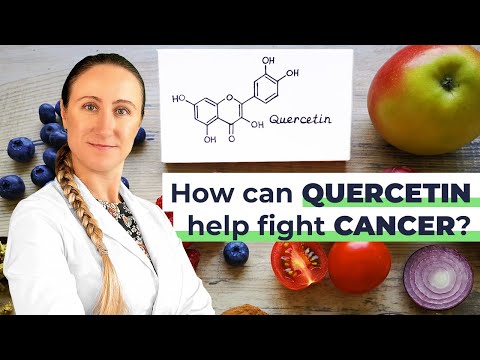
Personalized Medicine — Quercetin: A Natural Anti-Cancer Flavonoid You Need to Know About

Dr. Jin W. Sung — QUERCETIN--Comprehensive Guide. Antioxidant, antimicrobial, antihistamine, anti-inflammatory

MD Custom Rx — Is Quercetin the Answer to Your Chronic Pain & Insomnia?
JT Jared Taylor — Can Quercetin Slow Aging After 50? NEW STUDY

Dr. Janine Bowring, ND — QUERCETIN, Hidden Secrets They Don’t Want You to Know | Dr. J9 Live

MD Custom Rx — The Surprising Health Benefits of Quercetin Revealed
Dr. med. Ulrich Selz — Das passiert, wenn du täglich ZWIEBELN isst - QUERCETIN PUR!
Dr. Susan E. Brown — QUERCETIN — Don't Miss Out On the POWERFUL HEALTH BENEFITS of this Antioxidant & Anti-Inflammatory

Thomas DeLauer — The Benefits of QUERCETIN- The Most VERSATILE Antioxidant

Dr. Jin W. Sung — QUERCETIN 🍎🧅🧅🥦----Antioxidant, Anti-Inflammatory, Anti-Histamine, Anti-Microbial, Immune Modulation.
Healthnews — QUERCETIN BENEFITS: What Is Quercetin? What QUERCETIN Supplements Should You Take?
Curtis Alexander, Pharm.D. — Quercetin Benefits and Side Effects [And 1 Warning]

Thomas DeLauer — Quercetin and Resveratrol Benefits- Boost Carb Utilization
Functional Medicine Charlotte — Quercetin for Weight Loss and Obesity Prevention - Functional Nugget #413