Spermidine: The Dietary Polyamine That Triggers Autophagy
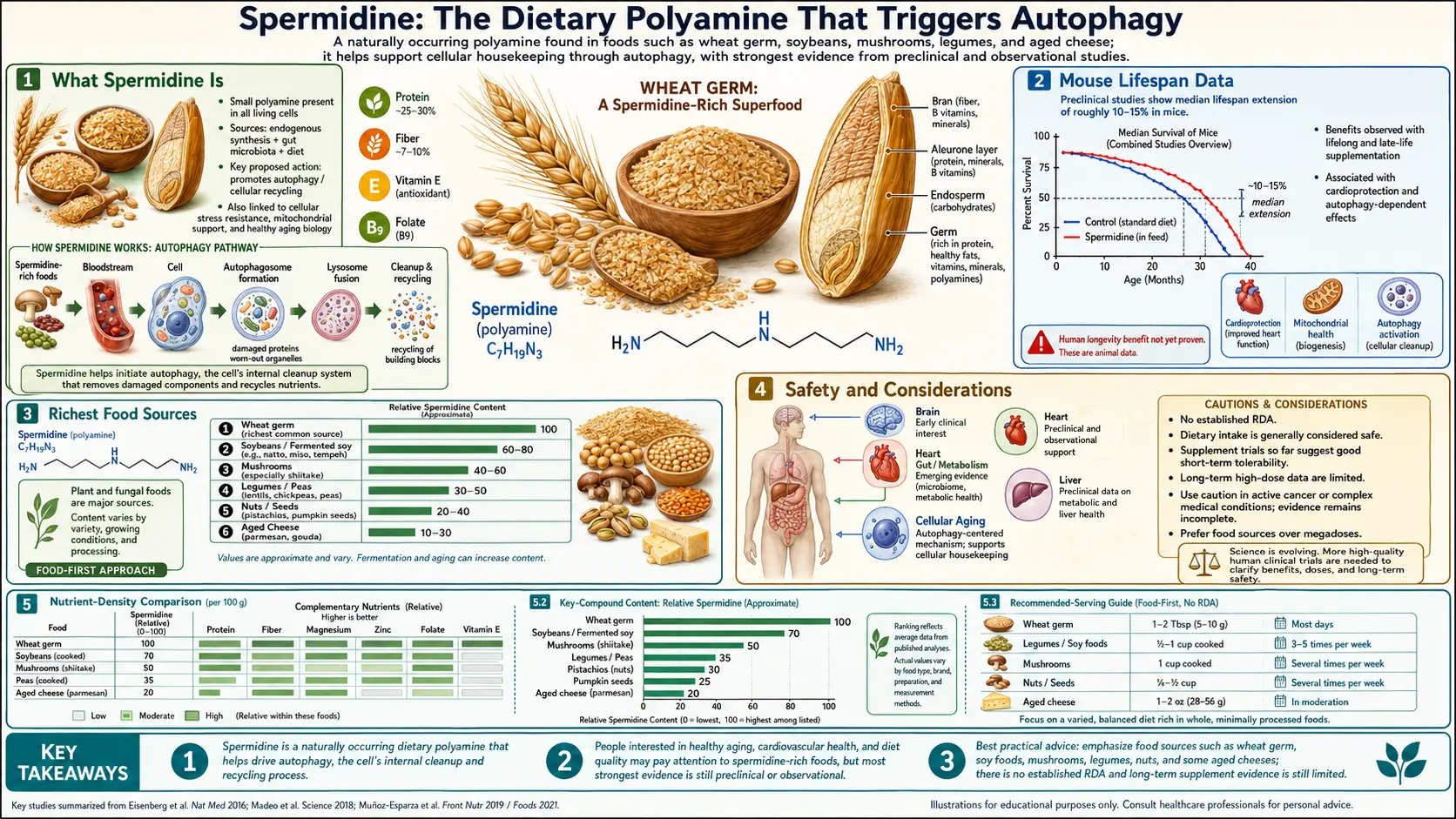
Spermidine is a naturally occurring polyamine originally isolated from human semen in 1678 by Antonie van Leeuwenhoek, from which its name derives. Present in every living cell, spermidine plays essential roles in DNA stability, gene transcription, ribosomal function, and the cellular recycling program called autophagy. Levels of spermidine in human tissues decline with age, and both epidemiological studies and animal experiments suggest that restoring or increasing spermidine intake — through food or supplementation — may extend healthspan and reduce risk of age-related disease.
This article explains the biology of spermidine, reviews the key studies linking it to longevity, covers the richest dietary sources, and addresses dosing and safety for those considering supplementation.
Table of Contents
- What Spermidine Is
- Autophagy — The Core Mechanism
- Mouse Lifespan Data
- Human Epidemiology
- Cardiac and Cognitive Effects
- Richest Food Sources
- Spermidine Supplements
- Safety and Considerations
- Research Papers
- Connections
- Featured Videos
What Spermidine Is
Spermidine is a triamine — a small molecule with three amine groups — produced endogenously from the amino acid ornithine. It is also synthesized by gut bacteria and obtained from food. Tissue concentrations fall substantially with age, most steeply after middle adulthood, and particularly in the heart, brain, and immune tissues. Whether this decline drives aging or simply reflects it is still debated, but a growing body of interventional data suggests the former.
Autophagy — The Core Mechanism
Spermidine is one of the most potent natural inducers of autophagy, the cellular self-cleaning process that degrades damaged organelles (including dysfunctional mitochondria), misfolded proteins, and cellular debris. Autophagy declines with age in parallel with spermidine, and both can be reactivated by fasting, caloric restriction, exercise, and spermidine itself. Mechanistically, spermidine inhibits acetyltransferases, lowering the acetylation of autophagy-related proteins and freeing them to act. This is partly why spermidine’s effects overlap with rapamycin and caloric restriction but operate through a different entry point.
Mouse Lifespan Data
In a 2016 Nature Medicine paper, a research team led by Frank Madeo fed spermidine-rich water to aging mice and observed significant extension of lifespan, cardiac preservation, and reduced cardiovascular mortality. The effect was abolished when autophagy was genetically blocked, strong evidence that autophagy is the principal mechanism. Comparable lifespan effects have been documented in yeast, fruit flies, and nematodes.
Human Epidemiology
The Bruneck Study in Italy tracked dietary spermidine intake in approximately 800 adults over 20 years. Participants in the highest tertile of intake showed roughly a 5-year lower risk-adjusted mortality compared with the lowest tertile, independent of other dietary and lifestyle factors. Similar associations have been reported in Japanese cohorts. These are observational data and cannot establish causation, but the effect size and reproducibility warrant attention.
Cardiac and Cognitive Effects
The SmartAge trial tested spermidine supplementation in older adults with subjective cognitive decline and showed modest improvements in memory and hippocampal-dependent learning. Cardiac benefits in animal models include reduced fibrosis, improved diastolic function, and decreased hypertensive heart disease. Human cardiac trials are ongoing.
Richest Food Sources
- Wheat germ — by far the highest per-gram concentration (~200 mg/kg).
- Aged cheeses — Cheddar, Parmesan, and aged blue cheeses are rich.
- Soybeans, natto, tempeh.
- Mushrooms.
- Green peas, broccoli, cauliflower.
- Peanuts, hazelnuts.
- Mangoes, pears.
A Mediterranean-style diet with wheat-germ-supplemented whole grains, legumes, and aged cheese can provide 5–10 mg per day, comparable to doses used in some clinical trials.
Spermidine Supplements
Commercial spermidine supplements (most commonly extracted from wheat germ and standardized to 1–5 mg per capsule) have proliferated. Typical trial doses are 1–6 mg per day. Quality varies; independent third-party testing is worth checking because polyamine content in wheat-germ extracts can differ substantially. Food-based sources have the advantage of nutrient co-factors and are the baseline most clinicians recommend.
Safety and Considerations
- Spermidine is a normal metabolite; safety in food-level and supplement-level doses is well established.
- Very high polyamine intake has been raised as a theoretical concern in active cancer (polyamines support cell proliferation), so individuals in active treatment should discuss with their oncologist.
- Gluten-sensitive individuals may prefer non-wheat sources.
- Most supplements are well tolerated. GI upset is occasionally reported.
Research Papers
PubMed topic-search links for spermidine, autophagy, and longevity. Each link opens a live PubMed search.
- Spermidine and autophagy
- Spermidine and lifespan extension
- Spermidine and cardioprotection
- Spermidine intake and mortality (Bruneck study)
- Spermidine, cognition, and memory
- SmartAge spermidine cognition trial
- Polyamines and aging
- Spermidine content of wheat germ
- Spermidine and hypertensive heart disease
- Spermidine and neurodegeneration
- Spermidine and immunosenescence
- Spermidine and mitophagy
Connections
- Rapamycin
- Fasting
- Fisetin
- Quercetin
- Longevity Protocols
- Dementia
- NAD NMN
- Heart Failure
- Natto
- Broccoli
- Cancer
- Probiotics
- Fermented Foods
- Osteoporosis
Featured Videos
Is Spermidine The Solution To Slow Down Cellular Aging? | TUH #190
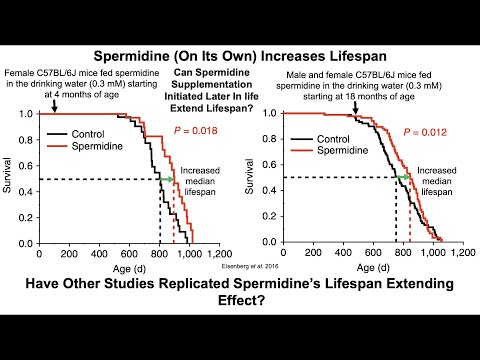
Spermidine Impacts Health and Longevity

Anti-Aging Supplement Spermidine: Research | Benefits | Dosages | Longevity
Spermidine BENEFITS: A Supplement For Anti-Aging & Longevity?
Spermidine: The Longevity Compound Your Grocery Store Is Hiding (The Autophagy Switch)
SPERMIDINE ?! Core Longevity EXPLAINED
Top 4 BEST Spermidine Supplements of 2025: Special DISCOUNTS INSIDE!
Spermidine Review: Is It Anti-Aging?

Spermidine Life for Hormone Imbalance