Berberine (Berberis & Coptis spp.)
Interactive Visualization Blood Sugar & Insulin — eat a meal and watch glucose move Watch insulin escort glucose into cells and the liver bank glycogen, then switch on insulin resistance and see the curve change. Launch →
Table of Contents
- What Berberine Is
- Mechanism of Action
- Blood Sugar and Type 2 Diabetes
- Cholesterol and Lipid Metabolism
- Polycystic Ovary Syndrome (PCOS)
- Gut Microbiome and SIBO
- Non-Alcoholic Fatty Liver Disease
- The Bioavailability Problem and Dihydroberberine
- Recommended Dosage
- Cautions and Contraindications
- Conditions It Is Used For
- Featured Videos
What Berberine Is
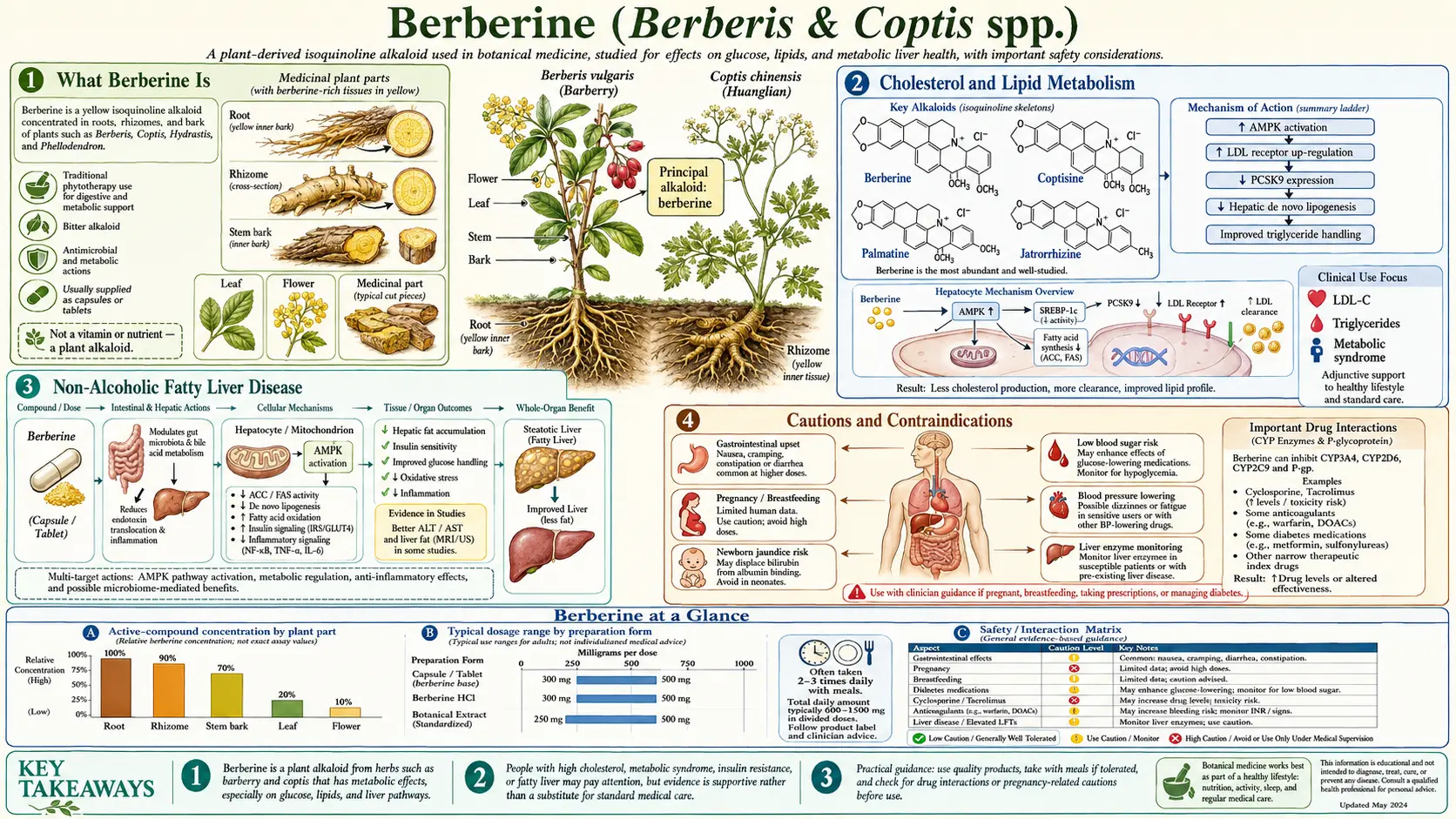
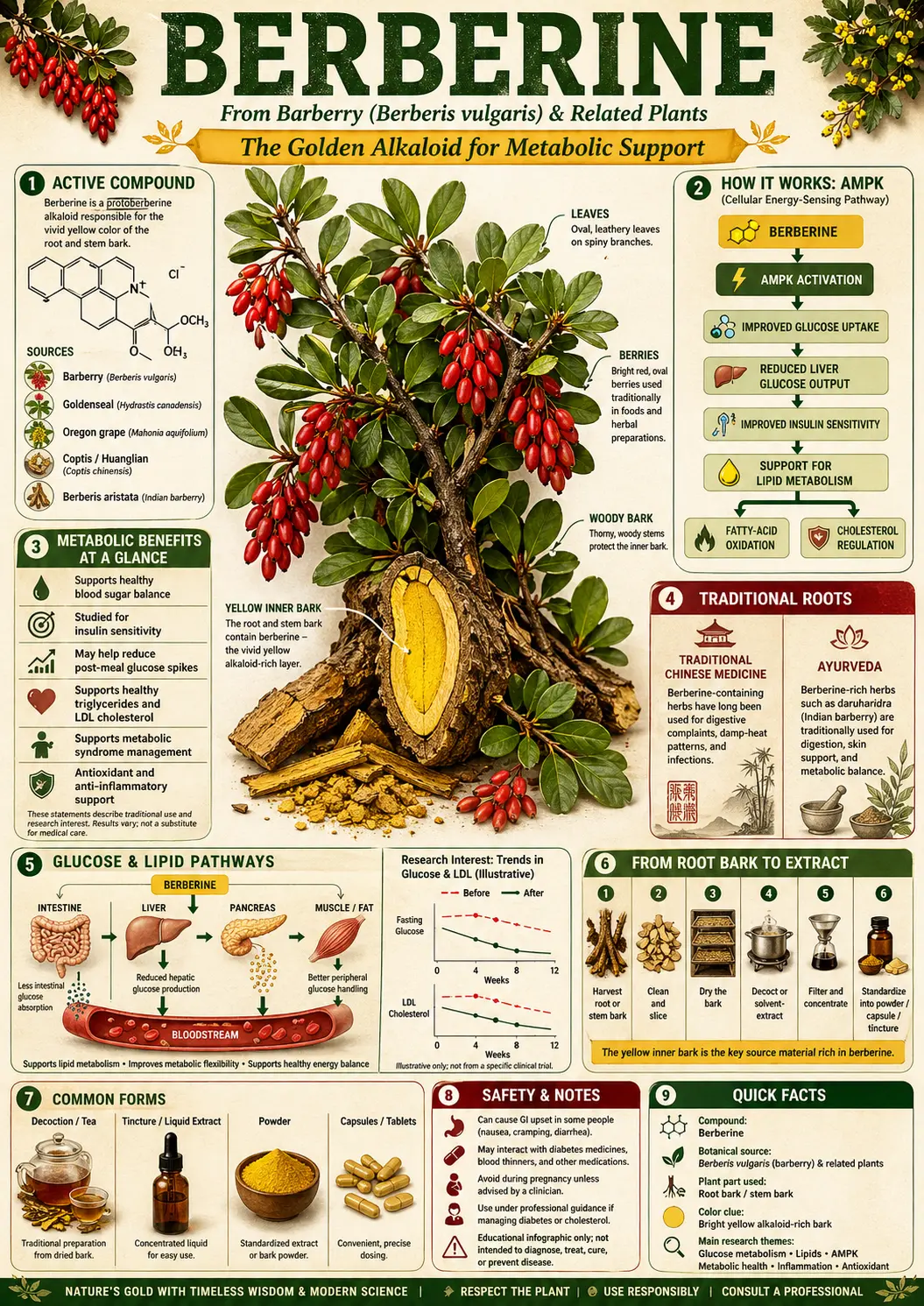
Berberine is a yellow alkaloid compound found in the roots, rhizomes, and bark of several plants including Berberis vulgaris (barberry), Berberis aristata (Indian barberry), Coptis chinensis (Chinese goldthread), Hydrastis canadensis (goldenseal), and Phellodendron amurense (Amur cork tree). It has been used in Ayurveda and Traditional Chinese Medicine for at least 2,500 years for diarrhea, infection, and hot inflammatory conditions.
In modern integrative medicine, berberine has been thrust into the spotlight because it produces metabolic effects comparable in magnitude to certain pharmaceutical drugs — most notably the diabetes drug metformin — with a well-characterized molecular mechanism and a generally favorable safety profile. It has emerged as one of the most clinically validated nutraceuticals available today.
Mechanism of Action
The primary molecular target of berberine is AMP-activated protein kinase (AMPK), a master regulator of cellular energy status. When AMPK is activated, the cell shifts from energy storage to energy expenditure: glucose uptake increases, fatty acid oxidation accelerates, and gluconeogenesis (the liver's production of new glucose) is suppressed. AMPK activation is also the proposed mechanism by which exercise, caloric restriction, and metformin produce their metabolic benefits.
Beyond AMPK, berberine has additional documented activities:
- Inhibition of hepatic glucose production through suppression of gluconeogenic enzymes
- Enhancement of insulin receptor expression and downstream signaling
- Upregulation of LDL receptors in the liver, lowering circulating LDL cholesterol
- Modulation of the gut microbiome, including reduction of pathogenic bacteria and shifts in short-chain fatty acid producers
- Inhibition of the inflammatory transcription factor NF-kB
- Mild PCSK9 inhibition, contributing to its lipid-lowering effects
Blood Sugar and Type 2 Diabetes
Berberine has been compared head-to-head with metformin — the most prescribed first-line diabetes medication — in multiple randomized trials, with several studies showing comparable reductions in fasting glucose, postprandial glucose, and HbA1c over three to six months of treatment. A typical trial finding is HbA1c reduction of 0.7 to 1.0 percentage points from a baseline of approximately 8%, which is clinically meaningful.
Berberine also improves measures of insulin resistance (HOMA-IR), reduces fasting insulin, and may be useful in metabolic syndrome and prediabetes. Effects build over weeks rather than days; expect to see measurable changes in fasting glucose by week three or four and meaningful HbA1c improvement by month three.
In integrative practice, berberine is sometimes used as an alternative to metformin in patients who cannot tolerate the gastrointestinal side effects of pharmaceutical metformin, or as an add-on to lifestyle therapy in early type 2 diabetes and prediabetes when patients prefer to delay drug therapy.
Cholesterol and Lipid Metabolism
Berberine reliably lowers total cholesterol, LDL cholesterol, and triglycerides while modestly increasing HDL cholesterol. Typical reductions in clinical trials are 20-30 mg/dL for LDL and 35-50 mg/dL for triglycerides, depending on baseline values and duration of use.
Mechanistically, berberine upregulates LDL receptor expression in the liver through a pathway distinct from statin drugs, which inhibit HMG-CoA reductase. This makes berberine an interesting option for patients who experience statin intolerance (myalgia, fatigue) or who need additional LDL lowering on top of moderate statin therapy. In statin-intolerant patients, berberine is sometimes combined with red yeast rice, plant sterols, and bergamot for synergistic effect.
Polycystic Ovary Syndrome (PCOS)
PCOS is fundamentally a disorder of insulin resistance, and any therapy that improves insulin sensitivity tends to improve PCOS symptoms. Multiple clinical trials have shown that berberine improves menstrual cycle regularity, reduces androgen levels, decreases ovarian volume, and supports ovulation in women with PCOS. In one comparison study, berberine produced effects similar to metformin with better tolerability and additional improvements in lipid profile.
For PCOS, berberine is typically taken at 500 mg three times daily for three to six months. It is often combined with inositol (myo-inositol and D-chiro-inositol in a 40:1 ratio), N-acetyl cysteine, and lifestyle interventions for comprehensive metabolic support.
Gut Microbiome and SIBO
Berberine has long been used in herbal medicine as an antimicrobial for diarrhea and intestinal infection. Modern research shows that it has selective antimicrobial activity against many pathogenic bacteria, fungi, and protozoa while sparing — and in some cases supporting — beneficial commensal organisms.
In the integrative gastroenterology community, berberine is one of the standard botanical antimicrobials for small intestinal bacterial overgrowth (SIBO). A landmark 2014 study published in Global Advances in Health and Medicine showed that a four-week course of an herbal antimicrobial protocol containing berberine produced SIBO breath test normalization rates comparable to the antibiotic rifaximin.
Berberine is typically combined with neem, oregano oil, and other botanical antimicrobials in SIBO protocols. The combination is favored because broad-spectrum botanicals reduce the chance of resistant bacterial regrowth and may be better tolerated than long courses of pharmaceutical antibiotics.
Non-Alcoholic Fatty Liver Disease
Non-alcoholic fatty liver disease (NAFLD) shares an underlying biology with type 2 diabetes — insulin resistance, lipid dysregulation, and chronic low-grade inflammation — and berberine's mechanisms address all three. Clinical trials in patients with NAFLD have shown reductions in hepatic fat content (measured by ultrasound or MRI), improvements in liver enzymes (ALT, AST), and improvements in associated metabolic parameters.
For NAFLD, berberine is often combined with milk thistle (silymarin), choline, and lifestyle interventions including weight loss and elimination of fructose. It is one of a small number of nutraceuticals with credible evidence for this increasingly common condition.
The Bioavailability Problem and Dihydroberberine
Berberine has notoriously poor oral bioavailability — estimated at less than 1% of the ingested dose, due to extensive intestinal P-glycoprotein efflux and rapid hepatic metabolism. Despite this, it produces robust clinical effects, partly because much of its activity occurs at the level of the intestinal epithelium and gut microbiome before systemic absorption.
Newer formulations attempt to improve absorption:
- Dihydroberberine — a reduced form with approximately five times the bioavailability of berberine HCl; lower doses (100-200 mg twice daily) achieve effects similar to 500 mg of berberine three times daily
- Berberine phytosome — berberine bound to phospholipids for enhanced absorption
- Liposomal berberine — encapsulated in lipid vesicles to improve uptake
- Co-administration with milk thistle silymarin — inhibits the P-glycoprotein efflux pump, modestly increasing absorption
Recommended Dosage
- Berberine HCl (standard form) — 500 mg three times daily with meals; total daily dose 1,500 mg
- Dihydroberberine — 100-200 mg twice daily; equivalent effects at lower total dose
- For diabetes / metabolic syndrome — 1,500 mg/day divided in three doses; expect HbA1c improvement at 12 weeks
- For SIBO / dysbiosis — 5,000 mg/day total of an herbal antimicrobial blend (often 1,500 mg from berberine combined with neem and oregano) for four to eight weeks under clinical supervision
- Always take with food — improves tolerability and absorption; loose stools are common at the start of treatment
Cautions and Contraindications
- Pregnancy and breastfeeding — contraindicated; berberine crosses the placenta and may displace bilirubin from albumin in the newborn, increasing the risk of kernicterus; do not use during pregnancy or while nursing
- Drug interactions — berberine inhibits cytochrome P450 enzymes (CYP2D6, CYP3A4) and P-glycoprotein, which can increase blood levels of many drugs including statins, calcium channel blockers, cyclosporine, certain antipsychotics, and macrolide antibiotics; review all medications with a pharmacist before starting
- Hypoglycemia risk — when combined with diabetes medications (metformin, sulfonylureas, insulin), monitor blood glucose closely and adjust doses with the prescribing physician
- Gastrointestinal side effects — nausea, abdominal cramping, constipation, or loose stools are common in the first one to two weeks; usually resolve as the gut microbiome adapts
- Long-term use — safety data extend to about two years of continuous use; clinicians often recommend cycling (eight weeks on, two weeks off) for indefinite use
- Children — avoid in infants and young children due to bilirubin displacement risk
Research Papers and References
The following PubMed search links provide curated entry points into the published clinical and mechanistic literature on Berberine (Berberis & Coptis spp.). Each link opens directly in PubMed at the National Library of Medicine.
- Berberine for type 2 diabetes and HbA1c — PubMed: berberine diabetes HbA1c
- Berberine versus metformin head-to-head trials — PubMed: berberine metformin
- Berberine and cholesterol / LDL reduction — PubMed: berberine LDL cholesterol
- Berberine for non-alcoholic fatty liver disease — PubMed: berberine NAFLD
- Berberine for polycystic ovary syndrome — PubMed: berberine PCOS
- Berberine and the gut microbiome — PubMed: berberine microbiome
- Berberine for SIBO and intestinal dysbiosis — PubMed: berberine SIBO small intestinal bacterial overgrowth
- Berberine bioavailability and dihydroberberine — PubMed: berberine bioavailability dihydroberberine
External Authoritative Resources
- NCCIH — Herbs at a Glance
- MedlinePlus — Herbs and Supplements
- PubMed — All research on Berberis & Coptis spp.
Conditions Berberine Is Used For
Each condition below links to its page. The coloured half of every capsule shows how much human evidence supports this herb for that specific use — traditional use is history, not proof, and is marked as such.
Connections
- All Herbs
- Blood Sugar & Insulin — interactive animation
- Berberine Benefits Deep Dive
- Barberry
- Goldenseal
- Bitter Melon
- Gymnema
- Cinnamon
- Hemoglobin A1C
- Fasting Insulin
- Lipid Panel
- PCOS
- SIBO
- Diabetes
- Insulin Resistance
- Non-Alcoholic Fatty Liver Disease
- Metabolic Syndrome
- Blood Sugar
- Inositol
- Gut Healing
- Atherosclerosis
- Conditions on this site that reference this page: Escherichia coli · Klebsiella pneumoniae · MRSA Antibiotic Resistance · MRSA Treatment · Staphylococcus aureus · Cholesterol Management · Type 2 Diabetes Remission and Reversal Strategies · Metformin, Berberine, and GLP-1 Agonists for Insulin