Bitter Melon (Momordica charantia)
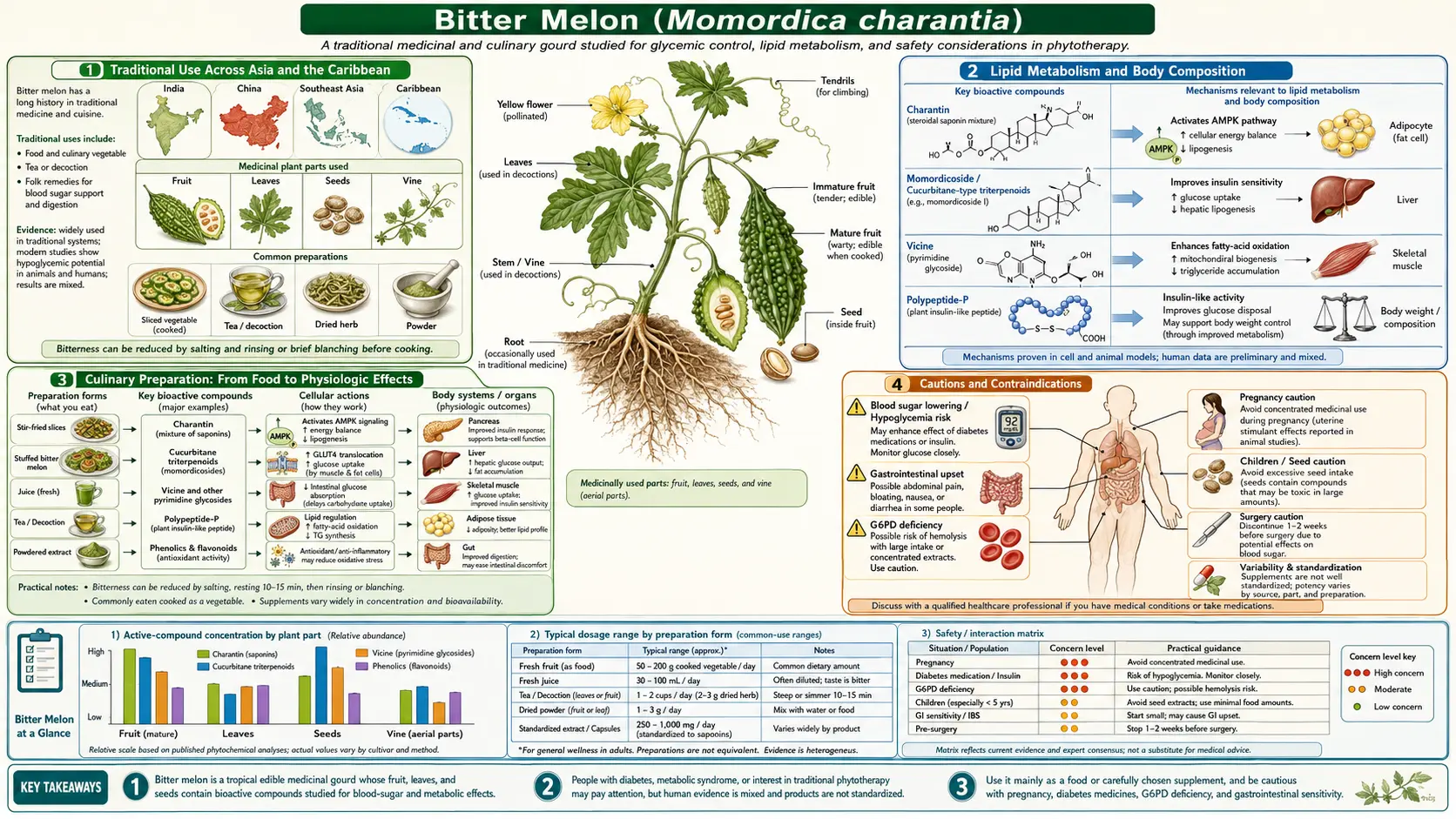
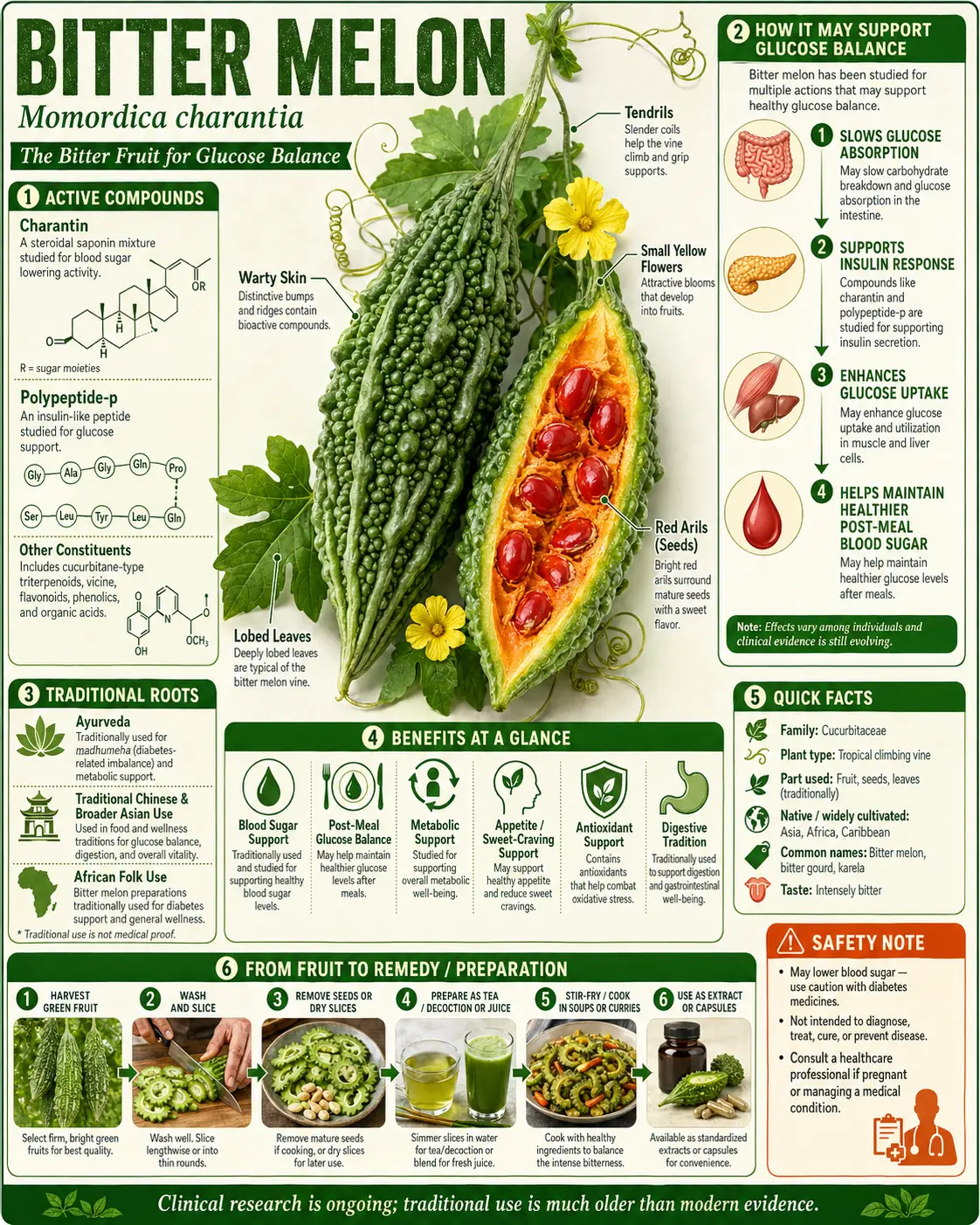
Table of Contents
- Traditional Use Across Asia and the Caribbean
- Active Compounds
- Blood Sugar Regulation
- Lipid Metabolism and Body Composition
- Antimicrobial and Antiviral Activity
- Culinary Preparation
- Forms and Preparations
- Recommended Dosage
- Cautions and Contraindications
- Conditions It Is Used For
- Featured Videos
Traditional Use Across Asia and the Caribbean
Bitter melon (also called bitter gourd, karela in Hindi, kŭgua in Chinese) is a tropical vine in the cucumber family whose intensely bitter, warty fruit has been eaten as both food and medicine for centuries. Genetic studies trace the wild plant to Africa, with domestication in Asia, and it became deeply established in Ayurvedic, Traditional Chinese, and Caribbean folk medicine — most consistently as a remedy for high blood sugar and diabetes. — the fuller story is told in the dedicated History & Traditional Use article.
Active Compounds
Bitter melon contains a complex mix of bioactive constituents:
- Charantin — a steroidal saponin mixture (sitosteryl glucoside and stigmasteryl glucoside) with documented hypoglycemic activity
- Polypeptide-p (p-insulin) — a 17-amino-acid peptide that closely resembles bovine insulin and has insulin-like effects when administered subcutaneously
- Vicine — a glycoalkaloid that contributes to glucose lowering but can cause hemolysis in individuals with G6PD deficiency
- Momordicins and momordicosides — triterpenoid compounds with anti-inflammatory and antitumor activity
- Cucurbitacins — bitter triterpenoids responsible for the characteristic flavor and contributing to anti-inflammatory effects
- Conjugated linolenic acids — in the seeds, with PPAR-activating activity that improves lipid metabolism
Blood Sugar Regulation
Bitter melon's antidiabetic action operates through multiple complementary mechanisms, more diverse than any single pharmaceutical drug:
- Increased glucose uptake by skeletal muscle through enhanced GLUT4 transporter translocation
- Improved insulin secretion from pancreatic beta cells
- Inhibition of intestinal glucose absorption through suppression of disaccharidase enzymes
- Reduction of hepatic gluconeogenesis (the liver's production of new glucose)
- Direct insulin-like activity from polypeptide-p
- Improvement of insulin receptor sensitivity via AMPK pathway activation
Clinical trials have produced mixed but generally positive results. A meta-analysis of randomized controlled trials concluded that bitter melon produces modest but statistically significant reductions in fasting glucose and HbA1c, on the order of 0.3-0.5 percentage points of HbA1c reduction. Effects are smaller than those of berberine or pharmaceutical metformin but bitter melon is well tolerated and food-grade, making it suitable for daily dietary use.
Lipid Metabolism and Body Composition
Beyond glucose, bitter melon improves several markers of metabolic health. Animal and human studies have shown reductions in total cholesterol, LDL, and triglycerides, along with increases in HDL. The seed-derived conjugated linolenic acids appear to activate PPAR-alpha and PPAR-gamma receptors, which regulate fatty acid metabolism and adipocyte differentiation.
In overweight and obese individuals with insulin resistance, bitter melon supplementation has been shown to reduce visceral adipose tissue and improve waist-to-hip ratio when combined with caloric restriction, although the magnitude of effect is modest.
Antimicrobial and Antiviral Activity
Bitter melon has demonstrated activity against a range of bacterial, viral, and parasitic pathogens in laboratory studies. The MAP30 protein isolated from bitter melon seeds has been studied for activity against herpes simplex virus and HIV in cell culture. Traditional use for intestinal parasites, malaria, and dysentery may have a basis in cucurbitacin and momordicin antimicrobial effects.
Clinical evidence in human infectious disease is limited, and bitter melon should not be considered a replacement for established antimicrobial therapy. It may have value as an adjunct in chronic dysbiosis and as part of broader integrative protocols.
Culinary Preparation
Bitter melon is most commonly consumed as food in Asia. Traditional preparation reduces but does not eliminate the bitterness:
- Slice lengthwise, scoop out the spongy core and seeds, then cut crosswise into thin half-moons
- Salt heavily and let stand for 15-30 minutes to draw out bitter juices, then rinse
- Stir-fry with eggs, garlic, and fermented black beans (Cantonese style)
- Stuff with spiced ground meat (Filipino ampalaya rellena, Indian bharva karela)
- Add to vegetable curries with turmeric, cumin, and coriander
- Juice raw fruit and dilute (intensely bitter; an acquired taste)
- Brew dried slices as cerasee tea (Caribbean tradition)
Therapeutic doses for diabetes management generally exceed what most people will eat as food, so supplementation with standardized capsules is the practical option for clinical use.
Forms and Preparations
- Fresh juice — 50-100 mL daily on empty stomach (intensely bitter; mix with cucumber or apple to improve palatability)
- Dried fruit powder — 3-5 g daily in capsules or mixed into beverages
- Standardized extract — typically standardized to charantin content (often 7%) at 500-1000 mg twice daily
- Bitter melon seed oil — richer in conjugated linolenic acids; less commonly used clinically
- Whole dried fruit slices — brewed as tea, 3-6 g of dried slices simmered in water for 10-15 minutes
Recommended Dosage
- For type 2 diabetes / blood sugar — 1,000-2,000 mg of standardized extract daily, divided into two or three doses with meals
- Fresh juice — 50 mL twice daily on empty stomach for diabetic patients
- Dietary intake — 100-200 g of cooked bitter melon, two to four times per week, contributes meaningfully to glycemic management
- Duration — effects build over four to eight weeks; HbA1c reductions are most evident at three months
Cautions and Contraindications
- Pregnancy — contraindicated; bitter melon has uterine-stimulating activity and has been used historically as an abortifacient; do not use during pregnancy
- G6PD deficiency — the seeds contain vicine, which can trigger hemolysis (favism) in individuals with glucose-6-phosphate dehydrogenase deficiency; remove all seeds before use, or avoid entirely if G6PD-deficient
- Hypoglycemia risk — when combined with diabetes medications (insulin, sulfonylureas, metformin), can cause low blood sugar; monitor glucose and adjust medications with the prescribing physician
- Gastrointestinal upset — bitter melon can cause nausea, abdominal pain, and diarrhea in sensitive individuals, particularly at higher doses or as fresh juice
- Children — avoid in infants; the red ripe fruit and seeds have caused vomiting, diarrhea, and hypoglycemic coma in young children
- Fertility — some animal studies suggest bitter melon may impair male fertility at high doses; avoid for couples actively trying to conceive
Research Papers and References
The following PubMed search links provide curated entry points into the published clinical and mechanistic literature on Bitter Melon (Momordica charantia). Each link opens directly in PubMed at the National Library of Medicine.
- Bitter melon for type 2 diabetes glycemic control — PubMed: Momordica charantia diabetes
- Bitter melon and insulin resistance — PubMed: Momordica insulin resistance
- Bitter melon active compounds: charantin, vicine, polypeptide-p — PubMed: Momordica charantin polypeptide-p
- Bitter melon and cholesterol / triglycerides — PubMed: Momordica lipid cholesterol
- Bitter melon antiviral activity — PubMed: Momordica antiviral
- Bitter melon and cancer cell apoptosis — PubMed: Momordica charantia cancer apoptosis
- Safety and adverse effects of bitter melon — PubMed: Momordica safety
External Authoritative Resources
- NCCIH — Herbs at a Glance
- MedlinePlus — Herbs and Supplements
- PubMed — All research on Momordica charantia
Conditions Bitter Melon Is Used For
Each condition below links to its page. The coloured half of every capsule shows how much human evidence supports this herb for that specific use — traditional use is history, not proof, and is marked as such.
Connections
- All Herbs
- Bitter Melon Benefits Deep Dive
- Berberine
- Gymnema
- Fenugreek
- Cinnamon
- Hemoglobin A1C
- Fasting Insulin
- Lipid Panel
- Blood Sugar
- Diabetes
- Insulin Resistance
- Fasting
- Cancer
- Malaria
- Chanca Piedra for Blood Sugar