Fever (Pyrexia)
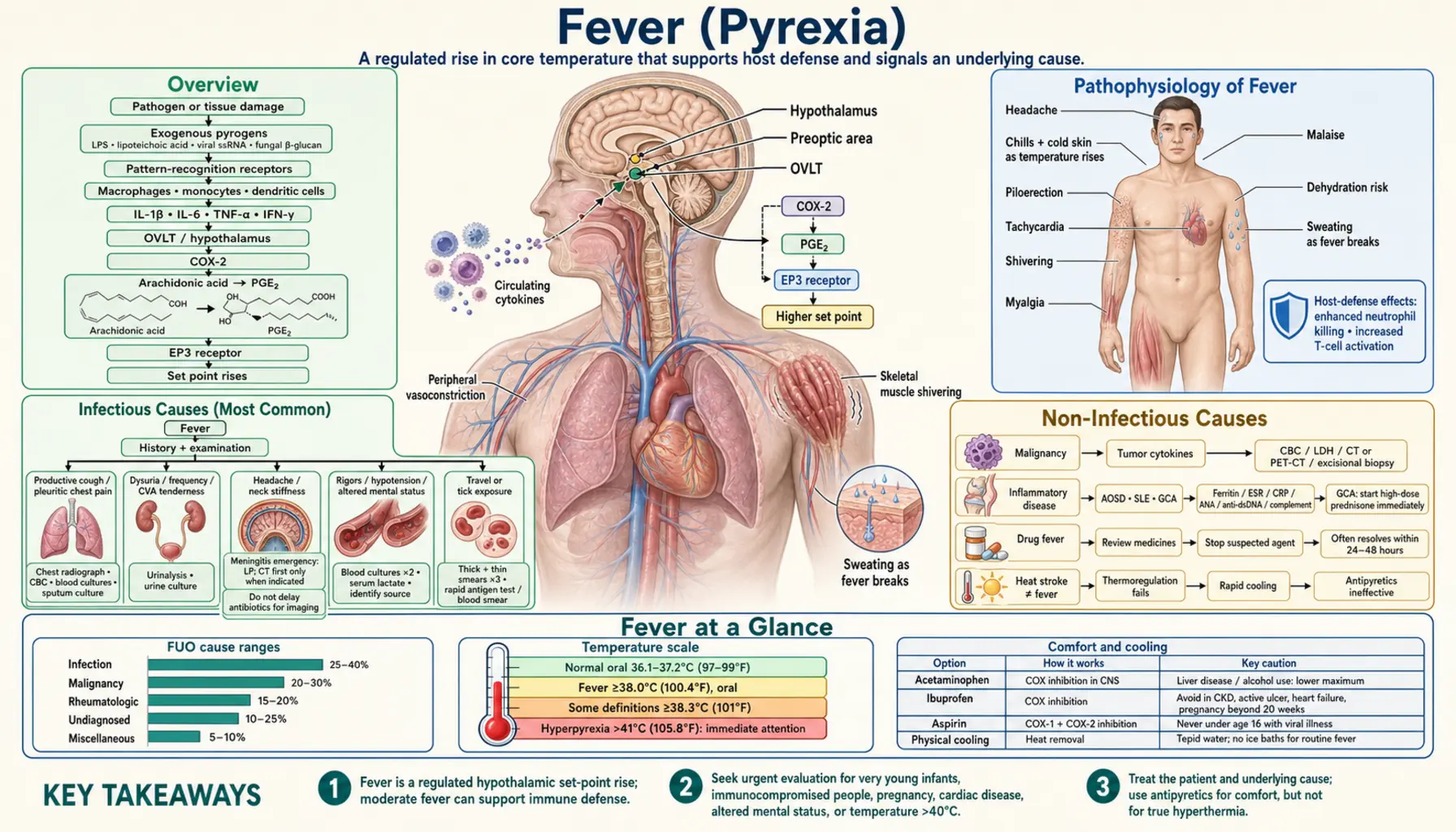
Table of Contents
Overview
Fever (pyrexia) is defined as a core body temperature of ≥38.0°C (100.4°F) by oral measurement, or ≥38.3°C (101°F) by some clinical definitions. Normal oral temperature ranges from 36.1–37.2°C (97–99°F); rectal temperature runs approximately 0.5°C higher and is considered the gold standard for accuracy; axillary temperature runs approximately 0.5°C lower; tympanic measurements vary with technique. Body temperature also exhibits significant circadian variation, reaching its lowest point around 6 AM and peaking between 4–6 PM. Hyperpyrexia is defined as temperature greater than 41°C (105.8°F) and represents a danger threshold requiring immediate attention.
Fever is critically a regulated response: exogenous and endogenous pyrogens reset the hypothalamic thermostat upward, causing the body to actively generate and conserve heat until it reaches the new set point. This fundamental distinction separates fever from hyperthermia (heat stroke, malignant hyperthermia, neuroleptic malignant syndrome), conditions in which the thermoregulatory mechanism fails entirely and uncontrolled temperature rise occurs. This distinction is clinically essential: antipyretics such as acetaminophen and nonsteroidal anti-inflammatory drugs (NSAIDs) act by blocking the prostaglandin cascade that resets the hypothalamic thermostat — they are effective in fever but have no effect in true hyperthermia, where the thermostat is not the problem.
A pervasive patient misconception is that fever itself is dangerous to the brain. In otherwise healthy adults, core temperatures below approximately 41.5°C (106.7°F) do not cause neurological injury. Moderate fever represents an active host defense response that evolved over millions of years, not a medical emergency. The urgency in evaluating fever lies in identifying and treating the underlying cause — whether infection, malignancy, inflammatory disease, or drug reaction — rather than in the elevated temperature number itself. Exceptions exist: patients with cardiac disease may not tolerate the associated tachycardia; fever in pregnancy carries fetal risks; and temperatures above 40°C in very young infants or immunocompromised patients warrant aggressive evaluation regardless of clinical appearance.
Pathophysiology of Fever
The fever cascade begins with exogenous pyrogens — molecular patterns associated with pathogens or tissue damage. Lipopolysaccharide (LPS, endotoxin) from gram-negative bacterial cell walls is the prototypical exogenous pyrogen; lipoteichoic acid serves the same role for gram-positive organisms. Additional triggers include flagellin, viral single-stranded RNA, fungal β-glucan, and tumor-derived cytokines. These molecules are recognized by pattern-recognition receptors (Toll-like receptors, NOD-like receptors) on macrophages, monocytes, Kupffer cells, and dendritic cells throughout the body.
Activated innate immune cells release endogenous pyrogens — a cascade of cytokines including interleukin-1β (interleukin-1 (IL-1)β), interleukin-6 (IL-6), tumor necrosis factor-alpha (tumor necrosis factor-α), and interferon-gamma (IFN-γ). These small proteins are too large to cross the blood-brain barrier in most brain regions, but the hypothalamus is adjacent to the circumventricular organs — the organum vasculosum of the lamina terminalis (OVLT), the area postrema, and the subfornical organ — specialized structures that lack a tight blood-brain barrier and therefore directly sense circulating cytokines.
In the hypothalamic preoptic area, cytokine signals trigger cyclooxygenase-2 (COX-2) upregulation. Cyclooxygenase-2 converts arachidonic acid to prostaglandin E&sub2; (PGE&sub2;), which binds EP3 receptors on hypothalamic neurons and resets the thermoregulatory set point upward. The thermoregulatory response is then coordinated: peripheral vasoconstriction reduces heat loss (explaining the chills and cold skin seen as temperature is rising), piloerection occurs, and skeletal muscle shivering increases heat production. Once core temperature reaches the new set point, the vasoconstriction resolves and sweating commences — the subjective experience of “breaking a fever.”
Antipyretics work by blocking COX enzymes: aspirin and nonsteroidal anti-inflammatory drugs irreversibly or competitively inhibit cyclooxygenase-1 (COX-1) and cyclooxygenase-2; acetaminophen has a similar mechanism via COX inhibition plus a possible central cannabinoid pathway. By reducing PGE&sub2; synthesis, they return the hypothalamic set point toward normal. Fever has genuine immunological benefits: neutrophil chemotaxis and killing are enhanced at higher temperatures; T-cell activation increases; bacterial iron acquisition (which requires enzymatic processes optimized at 37°C) is impaired; and many viral pathogens replicate less efficiently above normal body temperature. These observations explain why moderate fever is not automatically treated in otherwise comfortable patients with a clear source.
Infectious Causes (Most Common)
Bacterial Infections
- Pneumonia (Community-Acquired, CAP): Productive cough, pleuritic chest pain, and consolidation on chest radiograph; fever with rigors is common. Principal pathogens include Streptococcus pneumoniae (most common), Mycoplasma pneumoniae (atypical; young adults; dry cough; chest X-ray worse than clinical appearance), and Legionella pneumophila (atypical; hyponatremia + confusion + gastrointestinal symptoms + shower/cooling tower exposure). Workup: complete blood count (CBC), blood cultures (before antibiotics), urine Legionella and pneumococcal antigens, sputum Gram stain and culture. CURB-65 score (confusion, urea >7 mmol/L, respiratory rate ≥30, blood pressure (BP) <90/60, age ≥65) guides inpatient vs outpatient decision.
- Urinary Tract Infection and Pyelonephritis: Dysuria, frequency, and pyuria indicate lower urinary tract infection (UTI) (cystitis); addition of fever, costovertebral angle tenderness, and rigors indicates upper tract involvement (pyelonephritis). Escherichia coli accounts for 80% of community-acquired urinary tract infection. Workup: urinalysis and urine culture (catheter specimen in young children). Uncomplicated pyelonephritis is treated outpatient with fluoroquinolone or TMP-SMX; hospitalization for vomiting, pregnancy, obstruction, or sepsis.
- Bacteremia and Sepsis: High fever with rigors, followed by hemodynamic instability (hypotension, tachycardia, altered mental status) suggests bloodstream infection progressing to sepsis. Identify the source: pneumonia, urinary tract infection, skin and soft tissue, intravascular catheter, intra-abdominal. Blood cultures ×2 from different sites before antibiotics (do not delay antibiotics for culture results beyond minutes). Serum lactate. Sepsis-3 definition: life-threatening organ dysfunction caused by a dysregulated host response to infection, characterized by SOFA score increase ≥2.
- Infective Endocarditis: Prolonged or recurrent fever with a new or changing cardiac murmur, combined with embolic phenomena (Osler nodes on finger pads, Janeway lesions on palms and soles, Roth spots on funduscopic exam, splinter hemorrhages under nails) strongly suggests endocarditis. Duke Criteria (major: positive blood cultures, echocardiographic evidence; minor: fever, vascular phenomena, immunological phenomena, microbiological) guide diagnosis. Echocardiography is essential — TEE preferred for sensitivity. New murmur plus fever in a febrile patient should be assumed endocarditis until proven otherwise.
- Bacterial Meningitis: The classic triad is fever + neck stiffness + headache, often with photophobia and phonophobia. Kernig sign (inability to extend knee with hip flexed) and Brudzinski sign (involuntary hip flexion on passive neck flexion) suggest meningeal irritation. This is a medical emergency. LP should be performed immediately unless there are contraindications (papilledema, focal neurological signs, immunocompromised state, altered consciousness, new-onset seizure — in these cases, computed tomography (CT) first). Common pathogens: S. pneumoniae and N. meningitidis. Empiric treatment: ceftriaxone + vancomycin + dexamethasone (4mg intravenous (IV) q6h × 4 days; reduces hearing loss and neurological sequelae in pneumococcal meningitis). Do not delay antibiotics for imaging.
Viral Infections
- Influenza: Abrupt onset of high fever, severe myalgia, headache, and cough is the classic presentation. Rapid influenza diagnostic test has 60–70% sensitivity (negative does not exclude influenza). Oseltamivir (75 mg twice daily ×5 days) is recommended within 48 hours of symptom onset for high-risk patients (elderly, immunocompromised, chronic pulmonary or cardiac disease, hospitalized patients) regardless of vaccination status.
- Epstein-Barr Virus (Infectious Mononucleosis): Fever + exudative pharyngitis + posterior cervical lymphadenopathy + splenomegaly in a young adult. Monospot test (heterophile antibody) is diagnostic; EBV VCA IgM confirms in monospot-negative cases. Atypical lymphocytes on peripheral smear. Avoid contact sports for at least 3–4 weeks due to risk of splenic rupture. Ampicillin or amoxicillin causes a diffuse maculopapular rash (not true penicillin allergy) in Epstein-Barr virus (EBV) infection — avoid.
- Cytomegalovirus (CMV): In immunocompetent hosts, cytomegalovirus causes a mononucleosis syndrome with negative monospot, fever, lymphadenopathy, and mild hepatitis. In immunocompromised patients (organ transplant, human immunodeficiency virus (HIV) with CD4 <50), cytomegalovirus causes end-organ disease: retinitis (painless floaters + visual loss), colitis (bloody diarrhea), pneumonitis (bilateral infiltrates), and esophagitis. Cytomegalovirus immunoglobulin M (IgM) and quantitative polymerase chain reaction (PCR) are diagnostic.
- Common Viral Syndromes: The vast majority of febrile illnesses in community practice are caused by respiratory viruses (rhinovirus, coronavirus, adenovirus, parainfluenza, respiratory syncytial virus (RSV)) or enteroviruses causing gastroenteritis. These are generally self-limited over 5–7 days. Supportive care (hydration, antipyretics, rest) is appropriate. Antibiotics are not indicated and their unnecessary use drives antibiotic resistance.
Parasitic Infections
- Malaria: A travel history to endemic regions (Sub-Saharan Africa, South/Southeast Asia, Central and South America) is essential in any patient with fever of unclear cause. The classic periodic fever pattern reflects synchronous rupture of erythrocytes: P. vivax and P. ovale cause fever every 48 hours (tertian pattern); P. malariae every 72 hours (quartan). P. falciparum produces irregular fever but is the most lethal, causing cerebral malaria (altered consciousness, seizures), severe hemolytic anemia, ARDS, and acute kidney injury. Diagnosis: thick and thin blood smears ×3 on consecutive days (to catch low-parasitemia periods); rapid antigen test (RDT) is a useful adjunct. Treatment: artemisinin-based combination therapy (ACT) for uncomplicated malaria; intravenous artesunate for severe malaria — superior to quinine.
- Babesiosis: Clinically resembles malaria and is caused by intraerythrocytic parasites transmitted by Ixodes scapularis ticks. Endemic in the Northeastern United States (New England, Long Island). Hemolytic anemia, thrombocytopenia, and fever; the pathognomonic finding on blood smear is ring-form parasites inside red blood cells with the “Maltese cross” (tetrad) form. Malaria prophylaxis does not prevent babesiosis. Asplenic patients are at risk for severe, potentially fatal disease. Treatment: atovaquone + azithromycin, or clindamycin + quinine for severe cases.
Non-Infectious Causes
Malignancy
- Lymphoma: “B symptoms” are constitutional symptoms that carry prognostic significance in lymphoma staging: fever >38°C, drenching night sweats, and unintentional weight loss greater than 10% of body weight over 6 months. Hodgkin’s lymphoma has a bimodal age distribution (young adults 15–35 years and adults over 55); non-Hodgkin’s lymphoma encompasses dozens of subtypes. Workup: complete blood count with differential (may show cytopenias or lymphocytosis), lactate dehydrogenase (LDH) (prognostic marker), uric acid, computed tomography chest-abdomen-pelvis with contrast, PET-CT for staging, and excisional lymph node biopsy (not fine-needle aspiration) for histology.
- Leukemia: Acute myeloid leukemia (AML) in particular causes fever from two mechanisms: the malignant cells themselves release pyrogenic cytokines, and profound neutropenia creates susceptibility to serious bacterial and fungal infections. Complete blood count is usually diagnostic — peripheral blasts, extreme leukocytosis (“leukostasis” with WBC >100,000) or paradoxical leukopenia, anemia, and thrombocytopenia. Bone marrow biopsy confirms.
- Renal Cell Carcinoma (Hypernephroma): Classically presents with the triad of hematuria + flank pain + palpable abdominal mass, though most are diagnosed incidentally on imaging. RCC is a well-known cause of paraneoplastic fever from cytokines secreted by the tumor. Up to 20% of patients have a paraneoplastic syndrome at presentation.
- Solid Tumor Paraneoplastic Fever: Various solid tumors (hepatocellular carcinoma, colon cancer with liver metastases, atrial myxoma) release pyrogenic cytokines — particularly IL-1, interleukin-6, and tumor necrosis factor-α directly, causing chronic or intermittent fever independent of infection. This “tumor fever” often resolves dramatically with naproxen (the naproxen test: 375 mg twice daily for 3 days; resolution of fever favors neoplastic cause over infection).
Inflammatory and Rheumatologic Causes
- Adult-Onset Still’s Disease (AOSD): A systemic inflammatory disorder characterized by a quotidian fever pattern (once-daily spike of ≥39°C that resolves within a few hours, often at the same time each day), a transient evanescent salmon-colored maculopapular rash appearing during fever spikes, and arthritis. Laboratory findings: markedly elevated ferritin (often >10,000 ng/mL; hyperferritinemia is the hallmark), leukocytosis with neutrophilia, elevated erythrocyte sedimentation rate (ESR) and C-reactive protein (CRP), elevated LDH. AOSD is a diagnosis of exclusion after ruling out infection, malignancy, and other rheumatologic diseases.
- Systemic Lupus Erythematosus (SLE): Fever occurs in active systemic lupus erythematosus flares. The challenge is distinguishing lupus flare from superimposed infection, particularly in patients on immunosuppressive therapy. Blood cultures, procalcitonin (generally higher in infection than in lupus flare), antinuclear antibody (ANA), anti-dsDNA titer, and complement levels (C3, C4 — depressed in active lupus) assist in differentiation.
- Giant Cell Arteritis (GCA) and Polymyalgia Rheumatica: GCA presents in patients over age 50 with new headache, jaw claudication (aching fatigue of the masseter with chewing), scalp tenderness, and vision changes (amaurosis fugax progressing to permanent blindness if untreated). Erythrocyte sedimentation rate is markedly elevated (>50 mm/hr, often >100). Temporal artery biopsy confirms diagnosis. Treat empirically with high-dose prednisone immediately upon clinical suspicion — do not wait for biopsy to initiate treatment when blindness risk is present. Polymyalgia rheumatica (shoulder and hip girdle pain + morning stiffness + elevated erythrocyte sedimentation rate) frequently accompanies GCA.
- Sarcoidosis: Granulomatous disease of unknown cause; bilateral hilar adenopathy with or without interstitial infiltrates on chest radiograph is the most common presentation. Elevated serum ACE (sensitivity ~60%, specificity ~90%). Tissue biopsy shows non-caseating granulomas. Löfgren syndrome (acute sarcoidosis): bilateral hilar adenopathy + erythema nodosum + acute arthritis + fever — a self-limiting presentation with good prognosis.
Drug Fever
- Frequency: Drug fever accounts for 5–10% of hospital-acquired fevers and should always be considered in any unexplained fever in a hospitalized patient receiving medications, particularly if fever begins days to weeks into therapy.
- Classic Causative Agents: Beta-lactam antibiotics (most common), sulfonamides, phenytoin, procainamide, isoniazid, allopurinol, methyldopa, nitrofurantoin, and heparin. Vancomycin can cause “Red Man Syndrome” (flushing, erythema, pruritus during infusion — an infusion-rate reaction, not true drug fever).
- Characteristic Finding — Relative Bradycardia: Drug fever classically produces a pulse-temperature dissociation (relative bradycardia): the patient is febrile but the heart rate is not appropriately elevated. A well-appearing patient with high fever but a normal or near-normal pulse in the hospital setting should prompt consideration of drug fever.
- Diagnosis and Management: Drug fever is a diagnosis of exclusion. The fever typically resolves within 24–48 hours of discontinuing the offending agent. Eosinophilia is not required to make the diagnosis. In the right clinical context, empirical discontinuation of the most likely causative agent is both diagnostic and therapeutic. Rechallenge confirms the diagnosis but is rarely performed clinically.
Other Non-Infectious Causes
- Pulmonary Embolism (PE): A classic but underappreciated cause of unexplained low-grade to moderate fever in hospitalized patients. The rule of thumb: PE is always on the differential for unexplained fever in a hospitalized patient. Inflammatory mediators from pulmonary infarction and atelectasis cause fever. Accompanying features include tachycardia, pleuritic chest pain, and dyspnea; Wells score guides pre-test probability; computed tomography pulmonary angiography is definitive.
- Heat Stroke: Represents failure of thermoregulation — NOT a fever. The hypothalamic thermostat is overwhelmed or fails, and uncontrolled temperature rise occurs without the regulated PGE&sub2; cascade. Presents with temperature >40°C + altered mental status + absent or reduced sweating. Classic heat stroke: elderly during heat waves. Exertional: young athletes or military recruits. Emergency: rapid cooling (cold water immersion is most effective; cooling blankets + ice packs to axillae/neck/groin as alternative). Antipyretics are ineffective and should not be used.
- Transfusion Reaction: Febrile non-hemolytic transfusion reaction (FNHTR) is the most common transfusion reaction — cytokines in donor blood cause chills and fever 1–6 hours into transfusion. Slowing the transfusion rate and giving acetaminophen is usually sufficient. Distinguished from acute hemolytic reaction (ABO incompatibility): back/flank pain + hemoglobinuria + fever + hypotension + disseminated intravascular coagulation — stop the transfusion immediately and contact blood bank.
- Hyperthyroidism and Thyroid Storm: Thyroid storm (thyrotoxic crisis) is a life-threatening exacerbation of hyperthyroidism: high fever, extreme tachycardia, atrial fibrillation, altered mental status, and severe hypertension precipitated by surgery, infection, or iodine load. Burch-Wartofsky score guides diagnosis. Treatment: PTU or methimazole + beta-blockade (propranolol) + inorganic iodine (after PTU) + glucocorticoids + supportive care.
- Pheochromocytoma: Adrenal medullary tumor secreting catecholamines. Classic episodic triad: hypertension + diaphoresis + headache, accompanied by episodic fever during catecholamine surges. 24-hour urine fractionated catecholamines and metanephrines (or plasma free metanephrines) are the preferred screening tests. Computed tomography adrenal or MIBG scan for localization.
Fever of Unknown Origin (FUO)
The classic Petersdorf-Beeson definition (1961, updated) defines FUO as: fever greater than 38.3°C (101°F) documented on multiple occasions; illness duration greater than 3 weeks; and no diagnosis reached despite a comprehensive evaluation. The original criteria required 1 week of inpatient evaluation; contemporary practice accepts a thorough outpatient workup as the threshold before applying the FUO label. Four subcategories are now recognized: classical FUO, nosocomial FUO (develops in hospitalized patient), immune-deficient FUO (in neutropenic patients), and human immunodeficiency virus-associated FUO.
Causes of FUO by Category
- Infection (25–40%):
- Tuberculosis: Most important infectious cause of FUO globally. Pulmonary tuberculosis (TB) may present with fever alone before cavitary disease. Interferon-gamma release assay (IGRA) or tuberculin skin test plus high-resolution chest computed tomography. Consider extrapulmonary tuberculosis (lymph node, bone, peritoneal, genitourinary).
- Infective endocarditis: Blood cultures ×3 from different sites at different times; TEE preferred over TTE for sensitivity.
- Intra-abdominal abscess: Post-operative or following diverticulitis/appendicitis; computed tomography abdomen and pelvis with contrast.
- Brucellosis: Exposure to cattle, goats, or unpasteurized dairy products; occupational risk (farmers, veterinarians, abattoir workers). Undulant fever. Serology (Brucella agglutinins) and blood culture in specialized medium.
- Q Fever: Coxiella burnetii; exposure to parturient cattle, sheep, goats. Pneumonia or hepatitis. Serology: phase II IgG >200 confirms acute Q fever.
- Visceral Leishmaniasis (Kala-Azar): Prolonged fever + progressive splenomegaly + pancytopenia + weight loss in patients from endemic regions (South Asia, East Africa, Mediterranean). Bone marrow biopsy or splenic aspirate shows amastigotes; rK39 rapid test in endemic settings.
- Malignancy (20–30%): Lymphoma is the most common malignant cause of FUO. Others include leukemia, renal cell carcinoma (enhancement pattern on computed tomography), hepatocellular carcinoma (elevated AFP + hepatic mass), and solid tumors with liver metastases. Positron emission tomography-CT has become a high-yield early imaging tool for malignant FUO.
- Rheumatologic (15–20%): Adult-onset Still’s disease (quotidian fever + salmon rash + arthritis + hyperferritinemia); giant cell arteritis in patients over 60 (elevated erythrocyte sedimentation rate + headache + jaw claudication → temporal artery biopsy); polyarteritis nodosa (medium-vessel vasculitis; mononeuritis multiplex + renal involvement + ischemic symptoms); systemic lupus erythematosus.
- Miscellaneous (5–10%): Drug fever; sarcoidosis; Crohn’s disease (may present with fever before obvious gastrointestinal (GI) symptoms); familial Mediterranean fever (FMF) — autosomal recessive, Sephardic Jewish/Middle Eastern/Mediterranean heritage, episodic fever + serositis, MEFV gene mutation, colchicine-responsive; factitious fever (in healthcare workers; thermometer manipulation or self-injection of pyrogenic material).
- Undiagnosed (10–25%): Despite complete systematic workup, a significant minority of FUO cases remain undiagnosed. This group has a favorable prognosis if malignancy has been excluded; many resolve spontaneously over months.
FUO Systematic Workup
- Blood Tests: erythrocyte sedimentation rate; C-reactive protein; antinuclear antibody + antineutrophil cytoplasmic antibody (ANCA) panel; ferritin (markedly elevated >10,000 ng/mL in AOSD, hemophagocytic lymphohistiocytosis [HLH], and some malignancies); lactate dehydrogenase; β&sub2;-microglobulin (lymphoma marker); blood cultures ×3 on separate days; complete blood count with differential; metabolic panel; LFTs; human immunodeficiency virus fourth-generation Ag/Ab assay; cytomegalovirus immunoglobulin M + quantitative polymerase chain reaction; EBV VCA IgM and polymerase chain reaction; hepatitis C virus (HCV) antibody; IGRA for tuberculosis.
- Imaging: computed tomography chest/abdomen/pelvis with contrast is the highest-yield early anatomic study in FUO. 18F-FDG PET-CT is increasingly recommended as a first-line investigation in FUO, identifying lymphoma, occult infection foci (endocarditis, spondylodiscitis), and large-vessel vasculitis with high sensitivity. Echocardiography (TEE preferred) for endocarditis.
- Directed Tissue Sampling: Temporal artery biopsy in patients over 60 with elevated erythrocyte sedimentation rate and any headache — initiate prednisone immediately; biopsy within 1–2 weeks (histology remains positive for up to 2 weeks after starting steroids). Bone marrow biopsy in patients with cytopenias, abnormal peripheral smear, or unexplained hepatosplenomegaly. Liver biopsy in patients with unexplained hepatomegaly or elevated transaminases.
- Serology Panel: Brucella agglutinins; Q fever (Coxiella) phase I and II antibodies; Bartonella henselae immunoglobulin M/immunoglobulin G (IgG); rickettsial antibodies; histoplasma urine antigen (in endemic areas or cavitary lung lesions).
Special Populations — Pediatric Fever
Fever Without Source (FWS) in Infants — Age-Based Risk Stratification
- Age <28 Days (Neonates): Neonates have immature immune systems and cannot localize infection effectively. A full sepsis workup is mandatory regardless of clinical appearance: complete blood count, blood culture, urinalysis and urine culture (catheter specimen), cerebrospinal fluid (LP for culture, cell count, glucose, protein), and CXR. Admit for at least 48 hours pending cultures. Empiric antibiotics: ampicillin + gentamicin (or cefotaxime for central nervous system (CNS) coverage). Pathogens: group B Streptococcus, E. coli, Listeria monocytogenes. Herpes simplex virus (HSV) must be considered in any neonate with fever + seizures + cerebrospinal fluid (CSF) pleocytosis or vesicular lesions — acyclovir should be started empirically for high-risk features.
- Age 29–60 Days: The PECARN/STEP validation (2021) provides a risk-stratification algorithm. Well-appearing infants with low-risk laboratory values (urinalysis negative, absolute neutrophil count <4090/µL, procalcitonin <1.71 ng/mL) can be observed without LP in some protocols with close follow-up. High-risk laboratory values or ill appearance mandates LP, blood and urine cultures, and empiric antibiotics. Shared decision-making with the family is emphasized.
- Age 3–36 Months: Universal vaccination with PCV13 and Hib has dramatically reduced the incidence of occult bacteremia in this age group from approximately 3% to <0.5%. Urinary tract infection is now the most common serious bacterial infection presenting as fever without source in this group. Urine culture from a catheter specimen is essential in all febrile girls under 24 months and boys under 12 months (uncircumcised boys have higher risk). A well-appearing vaccinated child with fever in this age group and no identifiable source can generally be managed with close outpatient follow-up.
Febrile Seizures
- Definition and Epidemiology: Febrile seizures occur in 2–5% of children aged 6 months to 5 years. They are triggered by the rapid rise in body temperature rather than the absolute temperature, and they represent the most common seizure type in this age group.
- Simple Febrile Seizure: Duration less than 15 minutes; generalized tonic-clonic onset; single episode within a 24-hour period; complete neurological recovery within 1 hour. A simple febrile seizure does not increase the long-term risk of epilepsy above population baseline. Routine electroencephalogram (EEG) and magnetic resonance imaging (MRI) are not indicated. LP is only indicated if meningitis is suspected clinically.
- Complex Febrile Seizure: Duration greater than 15 minutes, OR focal onset, OR more than one seizure within a 24-hour period. Neuroimaging (magnetic resonance imaging preferred), electroencephalogram, and LP are indicated. Complex febrile seizures carry a slightly higher risk of subsequent epilepsy and require more thorough evaluation.
- Counseling: Recurrence risk is approximately 30–35% with subsequent febrile illnesses. Parental education and reassurance are critical — febrile seizures are frightening to witness but are overwhelmingly benign. Prophylactic antipyretics have not been shown to prevent febrile seizures and are not recommended for this purpose.
Return to School / Daycare
Fever greater than 38°C (100.4°F) requires exclusion from group childcare and school settings until the child is afebrile for at least 24 hours without the use of antipyretics. This standard reduces transmission of febrile illness and ensures the child has sufficient energy for the school environment.
Neutropenic Fever
Neutropenic fever is defined as a single oral temperature of ≥38.3°C (101°F), or a sustained temperature of ≥38.0°C (100.4°F) for at least one hour, in a patient with an absolute neutrophil count (ANC) less than 500 cells/µL, or whose ANC is expected to fall below 500 within 48 hours. It represents a medical emergency. Without prompt initiation of broad-spectrum antibiotics, mortality can reach 20–30%, particularly in patients with prolonged or severe neutropenia (<100 cells/µL).
The MASCC (Multinational Association for Supportive Care in Cancer) Risk Score stratifies patients into low-risk and high-risk groups. Low-risk patients (score ≥21) have no hypotension, no chronic obstructive pulmonary disease (COPD), a solid tumor or hematologic malignancy without prior fungal infection, no dehydration, outpatient status at fever onset, and age under 60. These patients may be candidates for outpatient management with oral antibiotics (ciprofloxacin + amoxicillin-clavulanate). High-risk patients (score <21 — anticipated prolonged neutropenia >7 days, hematologic malignancy, significant comorbidities, or clinical instability) require hospitalization and intravenous broad-spectrum antibiotics.
Initial management protocol: Blood cultures ×2 sets (one peripheral, one from each lumen of an indwelling central venous catheter if present); urinalysis and urine culture; CXR; basic metabolic panel. Broad-spectrum intravenous antibiotics must be started within 1 hour of presentation. Standard empiric regimen: piperacillin-tazobactam (4.5g intravenous q6h) OR cefepime (2g intravenous q8h) OR meropenem (for patients with prior ESBL or Pseudomonas, or with recent hospitalization). Add vancomycin (or daptomycin for VRE) if: hemodynamic instability, methicillin-resistant Staphylococcus aureus (MRSA) risk factors (prior methicillin-resistant Staphylococcus aureus, skin/soft tissue infection), radiographic pneumonia, or severe mucositis. De-escalate or discontinue vancomycin after 48–72 hours if no gram-positive pathogen is identified.
If fever persists beyond 4–7 days despite appropriate antibacterial therapy, empiric antifungal therapy should be added — presumed invasive fungal infection (IFI), most commonly Candida or Aspergillus. Agents: micafungin or caspofungin (echinocandins; preferred in patients with prior azole exposure or hepatic dysfunction); voriconazole or isavuconazole for suspected mold infection.
Prophylaxis during periods of anticipated neutropenia: Antibacterial prophylaxis with levofloxacin (500 mg daily) is recommended for patients expected to have severe neutropenia (<100 cells/µL) for >7 days. Antifungal prophylaxis: fluconazole for short-duration neutropenia; voriconazole or posaconazole for allogeneic stem cell transplant recipients or prolonged neutropenia at high risk for mold. G-CSF (filgrastim or pegfilgrastim) reduces the duration and depth of neutropenia post-chemotherapy but does not replace antibiotics once neutropenic fever is established.
Measurement and Antipyretics
Temperature Measurement Methods
- Rectal thermometry: Most accurate method; gold standard for infants and young children; approximately 0.5°C higher than oral temperature.
- Oral thermometry: Reliable in cooperative patients who can hold the thermometer under the tongue with lips closed. Avoid for 30 minutes after hot or cold beverages, smoking, or vigorous exercise.
- Tympanic (infrared ear): Convenient but technique-dependent; accuracy varies with positioning and presence of cerumen. Less reliable for clinical decision-making in critical situations.
- Temporal artery (forehead infrared): Acceptable for screening in outpatient and home settings; variable accuracy; not validated for detection of fever in neonates.
- Axillary: Least accurate; approximately 0.5°C lower than oral; generally avoided in clinical settings when more accurate measurements are possible.
- Mercury thermometers: Never use — mercury is a neurotoxin and an environmental hazard; banned in healthcare settings in many jurisdictions.
- Clinical pearl: Treat the patient, not the number. A comfortable, well-appearing patient with an oral temperature of 38.5°C may not need antipyretics. An ill-appearing, tachycardic patient with altered mental status and a temperature of 38.0°C needs urgent evaluation regardless of the thermometer reading.
Antipyretics
- Acetaminophen (Paracetamol): 650–1000 mg every 4–6 hours as needed (maximum 4 g/day in healthy adults; maximum 3 g/day in elderly patients or those with liver disease or regular alcohol use). Safe in pregnancy, renal disease, and patients with peptic ulcer disease. Mechanism: COX inhibition in the central nervous system + possible cannabinoid-mediated pathway.
- Ibuprofen: 400–600 mg every 6–8 hours. Effective and fast-acting antipyretic; generally preferred over acetaminophen for musculoskeletal pain. Avoid in: chronic kidney disease (reduces renal prostaglandin-mediated autoregulation), active peptic ulcer disease, decompensated heart failure, pregnancy beyond 20 weeks (premature closure of ductus arteriosus, oligohydramnios).
- Aspirin: 325–650 mg every 4–6 hours. Contraindicated in children and adolescents under age 16 with viral illnesses (risk of Reye’s syndrome — acute hepatic encephalopathy and cerebral edema); not preferred in pregnancy or renal insufficiency. Still used in adults for fever associated with pericarditis (anti-inflammatory benefit).
- Alternating Acetaminophen and Ibuprofen: Some pediatric studies suggest modest fever-reduction benefit; however, alternating regimens carry a significantly increased risk of medication errors in children (dosing miscalculation, double-dosing). Generally not recommended by major pediatric societies. If used, precise written schedules are essential.
- Physical Cooling Measures: Cool compresses to forehead and wrists; tepid sponging with lukewarm water (NOT ice baths — cold water causes skin vasoconstriction and shivering, which generates more heat and raises core temperature); remove excessive clothing and blankets; maintain adequate ambient ventilation. For hyperpyrexia (>41°C): ice packs to axillae, neck, and groin; cooling blankets; consider cold intravenous fluids.
Should All Fever Be Treated?
Moderate fever (38–39°C) is a physiological defense response with genuine immunological benefits: enhanced neutrophil phagocytosis and killing, augmented natural killer (NK) cell activity, increased T-cell activation and cytokine production, and impaired replication of many bacterial and viral pathogens at supranormal temperatures. No high-quality randomized evidence demonstrates that treating moderate fever in otherwise healthy patients improves clinical outcomes over supportive care. The decision to administer antipyretics should be based on patient comfort (fever causes malaise, myalgia, and subjective distress), risk of dehydration (particularly in children and elderly patients), and the need for clinical reassessment of the patient’s appearance after temperature reduction. Treat aggressively when: temperature exceeds 40°C; the patient has underlying cardiac disease (the associated tachycardia is poorly tolerated); during pregnancy (fetal neural tube risks); seizure history; or when fever-related altered mental status impedes clinical assessment.
Connections
- All Symptoms
- Sepsis
- Meningitis
- Lymphoma
- Night Sweats
- Unexplained Weight Loss
- Infectious Mononucleosis
- Pulmonary Embolism
- Thyroid Disorders
- Leukemia
- Tuberculosis
- Human Immunodeficiency Virus/Acquired Immunodeficiency Syndrome
- Lupus / Systemic Lupus Erythematosus
- Infective Endocarditis
- Fatigue
- Headache
- Swollen Lymph Nodes
- Malaria
- Hepatitis
- Pneumonia
- Sore Throat
Key Research Papers
Historical Background
Hippocrates recognized fever as a sign of disease around 400 BCE and proposed that it accompanied the body’s effort to purge harmful excess; Galen elaborated on this framework, associating fever with imbalance of the four humors. The scientific understanding of fever was transformed in 1851 when Carl Reinhold August Wunderlich systematically measured body temperature in tens of thousands of patients and established 37°C as the human normal, while describing the characteristic patterns of fever in different infectious diseases. Harold Petersdorf and Paul Beeson defined fever of unknown origin in their landmark 1961 paper, establishing a clinical framework that remains foundational today.
The molecular mechanisms of fever were elucidated progressively over the latter half of the 20th century. Elisha Atkins and Phyllis Bodel identified endogenous pyrogens as proteins released by leukocytes in the 1960s. Charles Dinarello characterized interleukin-1 (IL-1) as a central endogenous pyrogen through the 1970s and 1980s, work that fundamentally reshaped the understanding of the fever-immune axis. The critical role of prostaglandin E&sub2; in resetting the hypothalamic thermostat, and the specific neural circuits engaged by PGE&sub2; via EP3 receptors, were confirmed and mapped by Clifford Saper and colleagues through the 1990s and 2000s, completing the mechanistic chain from pathogen to hypothalamic thermostat reset to the clinical experience of fever.
Key Research Papers
- Petersdorf RG, Beeson PB. Fever of unexplained origin: report on 100 cases. Medicine (Baltimore). 1961;40:1–30. — doi:10.1097/00005792-196102000-00002
- Dinarello CA. Infection, fever, and exogenous and endogenous pyrogens: some concepts have changed. J Endotoxin Res. 2004;10(4):201–222. — doi:10.1179/096805104225006129
- Singer M, Deutschman CS, Seymour CW, et al. The Third International Consensus Definitions for Sepsis and Septic Shock (Sepsis-3). JAMA. 2016;315(8):801–810. — doi:10.1001/jama.2016.0287
- Klastersky J, Paesmans M, Rubenstein EB, et al. The Multinational Association for Supportive Care in Cancer risk index: a multinational scoring system for identifying low-risk febrile neutropenic cancer patients. J Clin Oncol. 2000;18(16):3038–3051. — doi:10.1200/JCO.2000.18.16.3038
- Subcommittee on Febrile Seizures, American Academy of Pediatrics. Neurodiagnostic evaluation of the child with a simple febrile seizure. Pediatrics. 2011;127(2):389–394. — doi:10.1542/peds.2011-0097
- Drekonja DM, Gnadt B, Yoo T, et al. PECARN/STEP validation study for febrile infants. Acad Emerg Med. 2023. — Search PubMed
- Knockaert DC, Vanneste LJ, Bobbaers HJ. Fever of unknown origin in elderly patients. J Am Geriatr Soc. 1993;41(11):1187–1192. — doi:10.1111/j.1532-5415.1993.tb07301.x
- Bleeker-Rovers CP, Vos FJ, de Kleijn EM, et al. A prospective multicenter study on fever of unknown origin: the yield of a structured diagnostic protocol. Medicine (Baltimore). 2007;86(1):26–38. — doi:10.1097/md.0b013e31802fe858
- Freifeld AG, Bow EJ, Sepkowitz KA, et al. Clinical practice guideline for the use of antimicrobial agents in neutropenic patients with cancer: 2010 update by the IDSA. Clin Infect Dis. 2011;52(4):e56–e93. — Search PubMed
- Saper CB, Romanovsky AA, Scammell TE. Neural circuitry engaged by prostaglandins during the sickness syndrome. Nat Neurosci. 2012;15(8):1088–1095. — doi:10.1038/nn.3159
- El-Radhi AS. Fever management: evidence vs current practice. World J Clin Pediatr. 2012;1(4):29–33. — doi:10.5409/wjcp.v1.i4.29
- Bleeker-Rovers CP, van der Meer JW, Oyen WJ. Fever of unknown origin. Semin Nucl Med. 2009;39(2):81–87. — doi:10.1053/j.semnuclmed.2008.10.002