Phenylalanine: The Amino Acid for Mood, Focus, and Pain Relief
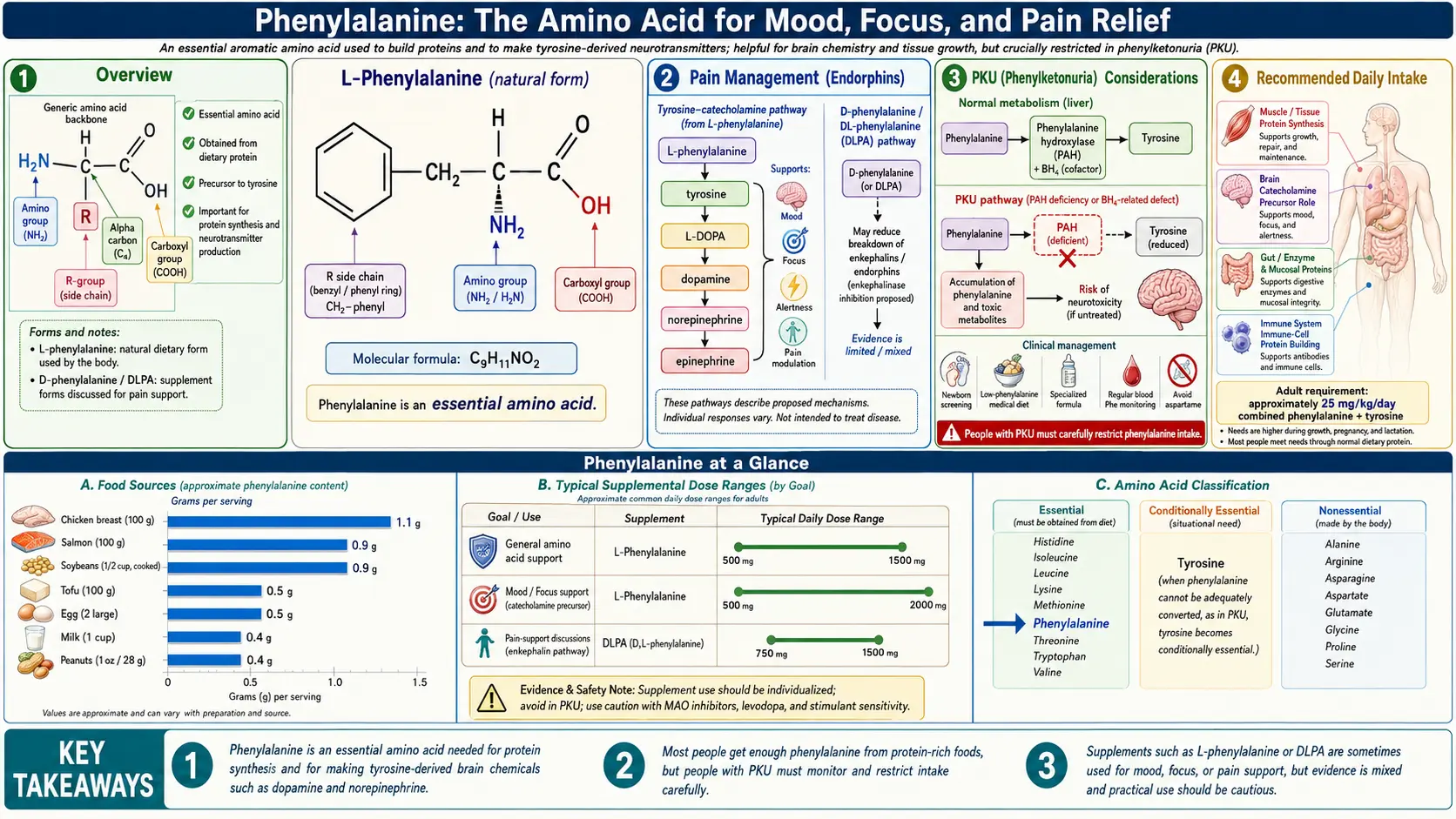
Table of Contents
- Overview
- Dopamine and Norepinephrine Production
- Mood Regulation and Depression
- Cognitive Function and Mental Clarity
- Pain Management (Endorphins)
- Thyroid Hormone Synthesis
- Skin Pigmentation (Melanin)
- Appetite Regulation
- PKU (Phenylketonuria) Considerations
- Deficiency Signs
- Food Sources
- Supplementation Guidelines (L- vs DL- Forms)
- Recommended Daily Intake
- Research Papers
- Connections
- Featured Videos
Overview
Phenylalanine is one of the nine essential amino acids that the human body cannot synthesize on its own and must therefore obtain through dietary sources. Classified as an aromatic amino acid due to its benzene ring structure, phenylalanine serves as a critical biochemical precursor for some of the most important molecules in human physiology. Without adequate phenylalanine intake, the body cannot produce sufficient quantities of the neurotransmitters, hormones, and pigments that regulate mood, cognition, pain perception, metabolic rate, and skin protection.
From a naturopathic perspective, phenylalanine occupies a central role in supporting the body's innate capacity for self-regulation and healing. Rather than viewing this amino acid as merely a nutritional requirement, we recognize it as a foundational building block that the body uses to maintain emotional equilibrium, mental sharpness, and resilience against chronic pain. When phenylalanine status is optimal, the downstream pathways it feeds function smoothly, supporting everything from a positive outlook to healthy thyroid function. When it is depleted, the consequences can be far-reaching and profoundly affect quality of life.
Phenylalanine exists in two mirror-image forms: L-phenylalanine, the naturally occurring form found in food proteins, and D-phenylalanine, a synthetic mirror image that has distinct pharmacological properties. A third form, DL-phenylalanine (DLPA), combines both isomers and is widely used in clinical nutrition for its synergistic effects on mood and pain modulation. Understanding the differences among these forms is essential for anyone considering supplementation.
Dopamine and Norepinephrine Production
Perhaps the most clinically significant role of phenylalanine is its function as the starting material for catecholamine neurotransmitter synthesis. The metabolic pathway begins when the enzyme phenylalanine hydroxylase converts L-phenylalanine into L-tyrosine, another amino acid. Tyrosine is then hydroxylated to form L-DOPA, which is subsequently decarboxylated to produce dopamine. From dopamine, the enzyme dopamine beta-hydroxylase generates norepinephrine, and in the adrenal medulla, norepinephrine can be further methylated to form epinephrine (adrenaline).
This catecholamine cascade is fundamental to human motivation, reward processing, alertness, and the ability to respond to stress. Dopamine drives the sense of pleasure and accomplishment that motivates goal-directed behavior. Norepinephrine sharpens attention, enhances working memory, and prepares the body for action. When phenylalanine intake is insufficient, the entire cascade is compromised, leading to reduced neurotransmitter output and a constellation of symptoms including low motivation, difficulty concentrating, and emotional flatness.
Key cofactors are required at each step of this conversion pathway, including iron, vitamin B6, vitamin C, folate, and tetrahydrobiopterin (BH4). A naturopathic approach to optimizing catecholamine production therefore addresses not only phenylalanine intake but also the status of these essential cofactors, ensuring the entire metabolic chain functions efficiently.
Mood Regulation and Depression
The connection between phenylalanine and mood regulation stems directly from its role in dopamine and norepinephrine synthesis. Clinical research has demonstrated that individuals with depression frequently exhibit reduced levels of these catecholamine neurotransmitters. Because phenylalanine is the upstream precursor for both, restoring adequate intake can help replenish depleted neurotransmitter pools and alleviate depressive symptoms.
Studies dating back to the 1970s and 1980s showed that both L-phenylalanine and DL-phenylalanine supplementation produced meaningful improvements in patients with various forms of depression, including those who had not responded well to conventional antidepressant medications. The DL form has been of particular interest because the D-isomer appears to enhance the activity of endogenous opioid peptides (endorphins and enkephalins), which themselves contribute to emotional well-being and a sense of comfort.
From a naturopathic standpoint, phenylalanine-based nutritional support for mood is appealing because it works with the body's own biochemistry rather than artificially blocking neurotransmitter reuptake. By providing the raw material the brain needs to manufacture its own mood-regulating chemicals, we support the body's inherent capacity for emotional balance. This approach is especially valuable for patients who prefer to explore natural options before turning to pharmaceutical interventions, or who wish to complement their existing treatment protocols with nutritional support.
It is important to note that phenylalanine supplementation for mood support should be undertaken with professional guidance, particularly for individuals already taking antidepressant medications or monoamine oxidase inhibitors (MAOIs), as combining these can lead to excessive catecholamine levels and potentially dangerous elevations in blood pressure.
Cognitive Function and Mental Clarity
Dopamine and norepinephrine are not only mood regulators but also the primary neurotransmitters responsible for executive cognitive function. Dopamine activity in the prefrontal cortex governs working memory, cognitive flexibility, and the ability to plan and organize complex tasks. Norepinephrine enhances signal-to-noise ratio in neural circuits, improving focus and the capacity to filter out irrelevant distractions.
When phenylalanine status is optimal, these cognitive systems operate at their best, supporting sharp mental clarity, sustained attention, and efficient information processing. Conversely, when phenylalanine is depleted, whether through inadequate dietary intake, chronic stress that exhausts catecholamine reserves, or genetic variations that impair conversion efficiency, cognitive performance suffers. Patients often describe the experience as brain fog, difficulty following conversations, trouble making decisions, and an inability to stay on task.
Research on acute phenylalanine and tyrosine depletion has consistently shown that reducing the availability of these amino acids impairs cognitive performance, particularly on tasks that demand working memory and attentional control. These findings underscore the importance of maintaining steady amino acid availability through regular protein intake or, when indicated, targeted supplementation.
For individuals under high cognitive demand, such as students, professionals in high-pressure environments, or older adults seeking to preserve mental acuity, ensuring adequate phenylalanine intake is a practical and well-supported strategy. Combining phenylalanine-rich foods with cofactor nutrients such as B vitamins and vitamin C further enhances the brain's ability to convert this amino acid into the neurotransmitters that drive clear, focused thinking.
Pain Management (Endorphins)
One of the most distinctive therapeutic applications of phenylalanine, particularly the D-form, relates to its capacity to modulate pain perception. D-phenylalanine inhibits the enzyme enkephalinase, which is responsible for breaking down enkephalins, the body's naturally produced opioid peptides. By slowing the degradation of these endogenous painkillers, D-phenylalanine effectively prolongs and amplifies the body's own analgesic response.
This mechanism is fundamentally different from conventional pain medications, which either block pain signals at the nerve level (as with local anesthetics) or occupy opioid receptors directly (as with narcotic analgesics). Instead, D-phenylalanine works by preserving the pain-relieving molecules the body already produces, allowing them to exert their effects for longer periods. This approach supports the naturopathic principle of working with the body's own healing systems rather than overriding them with external agents.
Clinical studies have reported that DL-phenylalanine supplementation can be beneficial for a variety of chronic pain conditions, including:
- Chronic low back pain
- Osteoarthritis and joint pain
- Migraine and tension headaches
- Fibromyalgia-related pain
- Postoperative pain management
- Neuropathic pain syndromes
The onset of pain relief with DL-phenylalanine is typically gradual, often requiring one to three weeks of consistent supplementation before meaningful results are observed. This gradual onset reflects the time needed for enkephalin levels to build up in the central nervous system. Patients should be counseled to maintain consistent dosing and not to expect immediate results, as the mechanism is cumulative rather than acute.
Thyroid Hormone Synthesis
Phenylalanine plays an indirect but essential role in thyroid function through its conversion to tyrosine. Tyrosine is the amino acid backbone upon which thyroid hormones are built. In the thyroid gland, tyrosine residues within thyroglobulin are iodinated to form monoiodotyrosine (MIT) and diiodotyrosine (DIT), which are then coupled to produce the active thyroid hormones thyroxine (T4) and triiodothyronine (T3).
These thyroid hormones regulate the basal metabolic rate of virtually every cell in the body. They influence energy production, body temperature, heart rate, protein synthesis, and the metabolism of fats and carbohydrates. When thyroid hormone levels are insufficient, a condition known as hypothyroidism, patients experience fatigue, weight gain, cold intolerance, dry skin, constipation, and cognitive sluggishness.
While iodine deficiency is the most widely recognized nutritional cause of thyroid dysfunction, inadequate phenylalanine and tyrosine availability can also contribute to suboptimal thyroid hormone production. In clinical practice, naturopathic physicians often assess amino acid status as part of a comprehensive thyroid evaluation, recognizing that providing the body with adequate precursor molecules is a prerequisite for healthy hormone synthesis. Supporting phenylalanine intake alongside iodine, selenium, zinc, and other thyroid-supportive nutrients creates a more complete foundation for thyroid health.
Skin Pigmentation (Melanin)
The phenylalanine-to-tyrosine conversion pathway is also critical for the production of melanin, the pigment responsible for the color of skin, hair, and eyes. In melanocytes, the specialized pigment-producing cells of the skin, tyrosine is oxidized by the enzyme tyrosinase to form DOPA and then dopaquinone, which undergoes a series of further reactions to produce the two main types of melanin: eumelanin (brown-black pigment) and pheomelanin (red-yellow pigment).
Melanin serves a vital protective function by absorbing ultraviolet radiation and preventing DNA damage in skin cells. Adequate melanin production is therefore important for reducing the risk of sunburn and long-term UV-induced skin damage. Individuals with impaired phenylalanine metabolism, such as those with phenylketonuria, often exhibit reduced melanin production, resulting in characteristically lighter skin, hair, and eye color.
Research has also explored the use of L-phenylalanine, both orally and topically, as a complementary treatment for vitiligo, a condition characterized by patchy loss of skin pigmentation. Some clinical studies have reported that L-phenylalanine supplementation combined with UVA exposure can stimulate repigmentation in affected areas. While results vary among individuals, this application highlights the direct relationship between phenylalanine availability and the skin's capacity to produce melanin.
Appetite Regulation
Phenylalanine has emerged as a molecule of interest in appetite regulation and weight management. Research has shown that phenylalanine stimulates the release of cholecystokinin (CCK), a hormone produced in the small intestine that signals satiety to the brain. CCK slows gastric emptying, promotes the release of digestive enzymes, and activates vagal nerve pathways that communicate fullness to the hypothalamus.
Studies have demonstrated that oral administration of phenylalanine before meals can reduce subsequent food intake by enhancing the sensation of fullness. This effect appears to be mediated through both the gut hormone CCK pathway and through the downstream production of catecholamines, which themselves suppress appetite through central nervous system mechanisms.
From a naturopathic weight management perspective, phenylalanine offers a physiologically sound approach to appetite control. Rather than relying on stimulants or appetite suppressants that can disrupt normal metabolic function, phenylalanine works through the body's own satiety signaling systems. Including phenylalanine-rich protein sources at meals, such as poultry, fish, eggs, and legumes, naturally promotes the hormonal signals that tell the brain when enough food has been consumed. For individuals struggling with persistent hunger or difficulty maintaining portion control, ensuring adequate protein and phenylalanine intake is a foundational strategy that naturopathic physicians frequently recommend.
PKU (Phenylketonuria) Considerations
Phenylketonuria (PKU) is an inherited metabolic disorder caused by mutations in the gene encoding the enzyme phenylalanine hydroxylase (PAH). When this enzyme is deficient or absent, the body cannot efficiently convert phenylalanine into tyrosine, resulting in a dangerous accumulation of phenylalanine in the blood and brain. If left untreated, PKU causes severe intellectual disability, seizures, behavioral problems, and psychiatric disorders.
PKU is typically identified through newborn screening programs, which test for elevated blood phenylalanine levels within the first few days of life. The primary treatment is a lifelong phenylalanine-restricted diet that limits protein intake from natural food sources and relies on specially formulated medical foods and amino acid supplements that provide all essential amino acids except phenylalanine. Maintaining blood phenylalanine levels within the therapeutic range of 120 to 360 micromoles per liter requires meticulous dietary management and regular monitoring.
Individuals with PKU must be especially vigilant about reading food labels, as many processed foods contain the artificial sweetener aspartame, which is a dipeptide composed of phenylalanine and aspartic acid. Aspartame is broken down in the body to release free phenylalanine, making it hazardous for those with PKU. Products containing aspartame are required by law to carry a warning label stating that the product contains phenylalanine.
It is critically important that individuals with PKU, or carriers of PKU mutations, do not supplement with phenylalanine in any form. The information about phenylalanine supplementation in this article applies only to individuals with normal phenylalanine metabolism. Anyone with a personal or family history of PKU should consult with a metabolic specialist before making any changes to their amino acid intake.
Deficiency Signs
True phenylalanine deficiency is uncommon in individuals consuming adequate dietary protein, but suboptimal levels can develop in people with restricted diets, malabsorption conditions, chronic illness, or prolonged periods of high physiological stress. Because phenylalanine feeds into multiple critical pathways, even modest insufficiency can produce a wide range of symptoms affecting mood, cognition, energy, and physical well-being.
Common signs and symptoms associated with inadequate phenylalanine status include:
- Low mood and depression resulting from reduced dopamine and norepinephrine synthesis
- Difficulty concentrating and mental fog due to impaired prefrontal cortex neurotransmitter activity
- Fatigue and low motivation stemming from diminished catecholamine drive
- Increased sensitivity to pain caused by reduced endorphin and enkephalin activity
- Decreased stress tolerance as the adrenal catecholamine response becomes compromised
- Reduced skin pigmentation due to insufficient tyrosine available for melanin production
- Weight gain or difficulty managing appetite from impaired satiety signaling
- Sluggish thyroid function when tyrosine availability limits thyroid hormone synthesis
- Muscle wasting in severe cases, as the body breaks down muscle tissue to access amino acids
Naturopathic evaluation of suspected phenylalanine insufficiency typically includes a thorough dietary assessment, plasma amino acid testing, and evaluation of related biomarkers such as urinary catecholamine metabolites and thyroid hormone levels. Identifying and correcting underlying causes of poor amino acid status, such as digestive insufficiency, chronic inflammation, or dietary restriction, is central to the naturopathic approach.
Food Sources
Phenylalanine is found in virtually all protein-containing foods. As a general rule, foods that are rich in protein are also rich in phenylalanine. The highest concentrations are found in animal-based proteins, although plant-based sources can also provide meaningful amounts when consumed in sufficient quantity.
Excellent animal-based sources of phenylalanine include:
- Turkey and chicken breast (approximately 1,300 to 1,500 mg per 100 g serving)
- Lean beef and pork (approximately 1,200 to 1,400 mg per 100 g serving)
- Wild-caught fish such as salmon, tuna, and cod (approximately 1,000 to 1,300 mg per 100 g serving)
- Eggs (approximately 680 mg per two large eggs)
- Dairy products including cheese, yogurt, and milk
Plant-based sources of phenylalanine include:
- Soybeans and tofu (approximately 900 to 1,100 mg per 100 g serving)
- Lentils, chickpeas, and black beans (approximately 500 to 700 mg per cooked cup)
- Pumpkin seeds and sunflower seeds (approximately 500 to 600 mg per 30 g serving)
- Almonds, peanuts, and cashews (approximately 400 to 550 mg per 30 g serving)
- Quinoa, oats, and whole wheat (moderate amounts, approximately 300 to 500 mg per cooked cup)
- Spirulina (approximately 2,500 mg per 100 g, though typically consumed in much smaller quantities)
For most healthy adults consuming a varied diet with adequate protein, meeting phenylalanine needs through food alone is straightforward. The key is to include a quality protein source at each meal. Individuals following vegan or very low-protein diets should pay particular attention to combining complementary plant proteins to ensure they receive all essential amino acids, including phenylalanine, in adequate quantities.
Supplementation Guidelines (L- vs DL- Forms)
When dietary intake alone is insufficient or when therapeutic goals require higher levels of phenylalanine than food can practically provide, supplementation becomes a useful clinical tool. Understanding the differences between the available forms is essential for selecting the appropriate product for each individual's needs.
L-Phenylalanine (LPA) is the naturally occurring form identical to the phenylalanine found in food proteins. It is the direct precursor to tyrosine and, subsequently, to dopamine, norepinephrine, epinephrine, thyroid hormones, and melanin. L-phenylalanine supplementation is primarily indicated for mood support, cognitive enhancement, thyroid support, and vitiligo management. Typical therapeutic doses range from 500 mg to 2,000 mg per day, usually taken in divided doses on an empty stomach to optimize absorption and minimize competition with other large neutral amino acids for transport across the blood-brain barrier.
D-Phenylalanine (DPA) is the synthetic mirror-image form that does not participate in protein synthesis or catecholamine production. Its primary action is the inhibition of enkephalinase, thereby prolonging the analgesic effects of the body's own endorphins and enkephalins. D-phenylalanine is specifically used for pain management applications. It is available as a standalone supplement, though it is more commonly found combined with L-phenylalanine as DLPA.
DL-Phenylalanine (DLPA) is a 50:50 racemic mixture of both L- and D- forms. It offers the combined benefits of mood and cognitive support from the L-form and pain-modulating effects from the D-form. DLPA is the most frequently recommended form in naturopathic practice for patients presenting with both mood concerns and chronic pain. Typical therapeutic doses range from 750 mg to 3,000 mg per day, divided into two or three doses taken between meals.
General supplementation guidelines include:
- Take phenylalanine supplements on an empty stomach, ideally 30 minutes before meals, to enhance absorption
- Start with a lower dose and gradually increase over one to two weeks to assess tolerance
- Ensure adequate intake of cofactors including vitamin B6, vitamin C, folate, and iron
- Avoid supplementation in the evening, as increased catecholamine production may interfere with sleep
- Monitor blood pressure regularly, especially when using higher doses, as catecholamine increases can raise blood pressure
Contraindications and cautions:
- Individuals with PKU must never supplement with any form of phenylalanine
- Those taking MAO inhibitors should avoid phenylalanine due to the risk of hypertensive crisis
- Individuals with uncontrolled hypertension should use phenylalanine cautiously and under professional supervision
- Pregnant and breastfeeding women should consult their healthcare provider before supplementing
- Phenylalanine may interact with levodopa and other Parkinson's medications by competing for transport and metabolism
Recommended Daily Intake
The World Health Organization and the Institute of Medicine have established combined requirements for phenylalanine and tyrosine together, since the body can convert phenylalanine to tyrosine. The recommended daily intake for the combined total of phenylalanine plus tyrosine is approximately 25 mg per kilogram of body weight per day for healthy adults.
For practical reference, this translates to the following approximate daily requirements:
- A 60 kg (132 lb) adult: approximately 1,500 mg combined phenylalanine and tyrosine
- A 70 kg (154 lb) adult: approximately 1,750 mg combined phenylalanine and tyrosine
- An 80 kg (176 lb) adult: approximately 2,000 mg combined phenylalanine and tyrosine
- A 90 kg (198 lb) adult: approximately 2,250 mg combined phenylalanine and tyrosine
These figures represent the minimum amounts needed to prevent deficiency in healthy individuals. Therapeutic applications, such as mood support, pain management, or cognitive enhancement, may require intakes substantially above these baseline levels. It is also worth noting that requirements increase during periods of growth, pregnancy, lactation, illness, recovery from surgery, and high physical or psychological stress, when the demand for catecholamines and other phenylalanine-derived molecules is elevated.
Individuals consuming a standard mixed diet providing 0.8 to 1.0 grams of protein per kilogram of body weight per day will generally meet or exceed the combined phenylalanine and tyrosine requirement without difficulty. Those on restricted diets, older adults with reduced protein intake, and athletes with elevated amino acid turnover should pay closer attention to their intake and consider periodic assessment of amino acid status through laboratory testing.
As with all aspects of naturopathic care, the optimal approach to phenylalanine nutrition is individualized. What constitutes the right amount for one person may be insufficient or excessive for another, depending on genetics, health status, medication use, and metabolic demands. Working with a qualified healthcare practitioner who can assess your specific needs and monitor your response to dietary changes or supplementation is always the wisest course of action.
Research Papers
The following curated PubMed searches surface the peer-reviewed literature underpinning the claims on this page. Each link opens a live PubMed query for Phenylalanine filtered by topic, so the results stay current as new studies are indexed.
- PubMed search — Phenylalanine: Metabolism and biochemistry (review)
- PubMed search — Phenylalanine: Dietary intake and requirements
- PubMed search — Phenylalanine: Supplementation randomized controlled trials
- PubMed search — Phenylalanine: Plasma levels and clinical outcomes
- PubMed search — Phenylalanine: Muscle protein synthesis and exercise
- PubMed search — Phenylalanine: Deficiency: signs and consequences
- PubMed search — Phenylalanine: Cardiovascular effects
- PubMed search — Phenylalanine: Neurological and cognitive effects
- PubMed search — Phenylalanine: Immune function
- PubMed search — Phenylalanine: Oxidative stress and antioxidant activity
- PubMed search — Phenylalanine: Gastrointestinal and gut health
- PubMed search — Phenylalanine: Safety, toxicity, and upper limit
For a broader literature review, see the full PubMed record for Phenylalanine and the NIH Office of Dietary Supplements Fact Sheets.
This content is provided for informational purposes only and does not constitute medical advice. Consult a qualified healthcare provider before beginning any supplementation regimen.
Connections
- All Amino Acids
- Dopamine, Reward & How Habits Hijack You — interactive animation
- Phenylalanine Benefits Deep Dive
- Tyrosine
- Aspartic Acid
- Tryptophan
- Leucine
- Methionine
- Valine
- Depression
- Chronic Pain
- Vitamin C
- Vitamin B6
- Iron
- Iodine
- Aspartame
- Vitiligo
- Eggs
- Artificial Sweeteners
- Isoleucine