Aspartic Acid: The Amino Acid for Energy Production and Neurotransmission
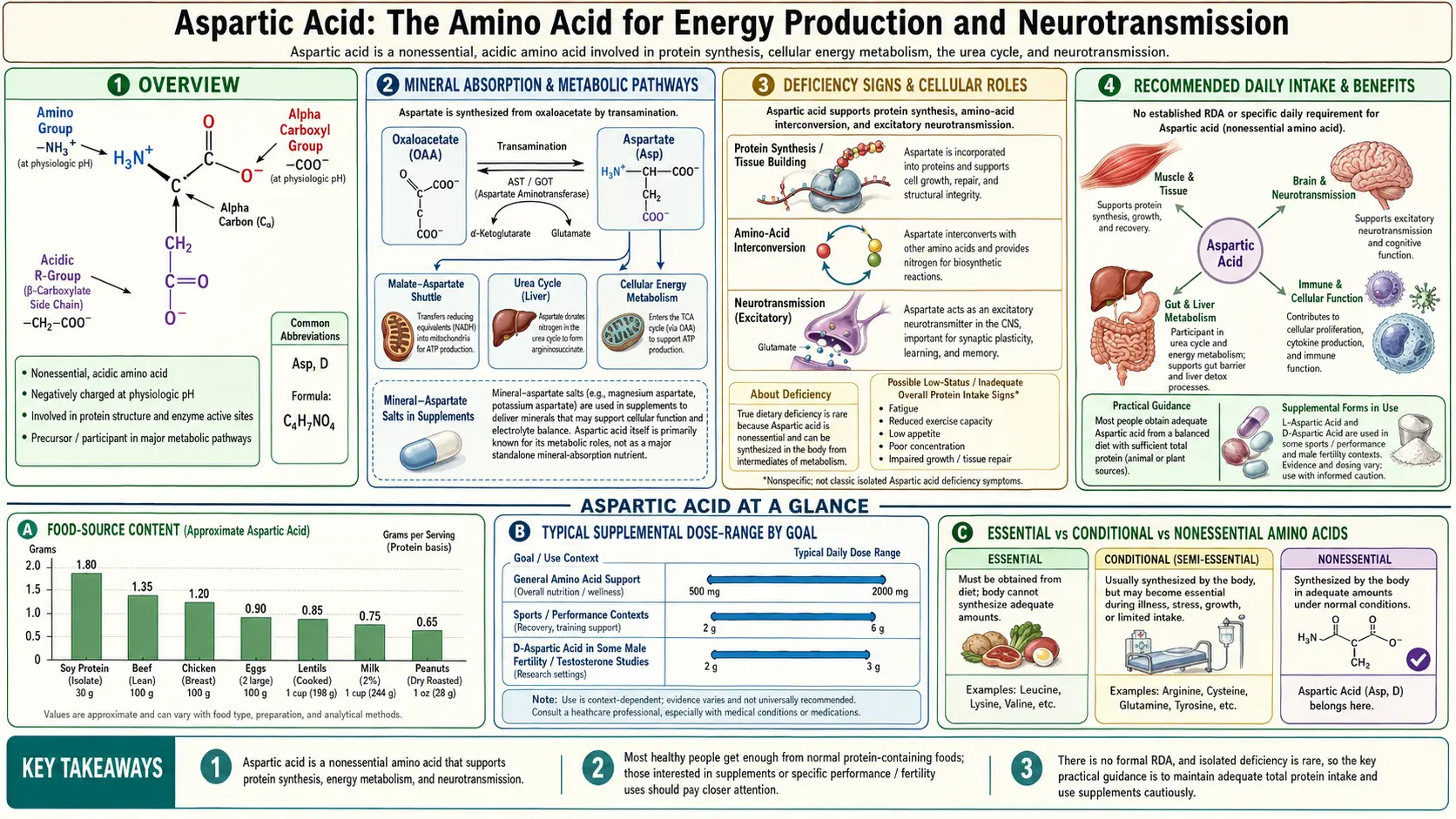
Table of Contents
- Overview
- Krebs Cycle and Energy Production
- Neurotransmitter Synthesis
- Hormone Production and Testosterone
- Mineral Absorption
- Ammonia Detoxification (Urea Cycle)
- DNA and RNA Synthesis
- Immune System Function
- Athletic Performance and Stamina
- Deficiency Signs
- Food Sources
- D-Aspartic Acid vs L-Aspartic Acid
- Supplementation Guidelines
- Recommended Daily Intake
- Research Papers
- Connections
- Featured Videos
Overview
Aspartic acid is a non-essential amino acid, meaning the human body is capable of synthesizing it on its own without requiring direct dietary intake. Despite this classification, its importance to overall health cannot be overstated. Aspartic acid participates in some of the most fundamental biochemical processes in the body, including cellular energy production, neurotransmission, hormonal regulation, and detoxification. It exists in two mirror-image forms, L-aspartic acid and D-aspartic acid, each playing distinct physiological roles.
From a naturopathic perspective, aspartic acid is viewed as a cornerstone metabolite that supports the body's innate healing capacity. When the body is under chronic stress, fighting infection, or recovering from illness, demand for aspartic acid rises significantly. Although it is classified as non-essential, functional deficiencies can and do occur in individuals with compromised digestion, chronic fatigue syndromes, liver dysfunction, or prolonged physical stress. Ensuring adequate aspartic acid status through whole foods and, when indicated, targeted supplementation is an important consideration in holistic health care.
Aspartic acid was first isolated in 1827 from asparagus juice, from which it derives its name. It carries a negative charge at physiological pH and is classified as an acidic amino acid alongside glutamic acid. Together, these two amino acids serve as the primary excitatory neurotransmitters in the central nervous system and are deeply woven into the metabolic fabric of every living cell.
Krebs Cycle and Energy Production
One of aspartic acid's most critical functions is its direct involvement in the Krebs cycle, also known as the citric acid cycle or tricarboxylic acid cycle. This cycle is the central metabolic hub within mitochondria where carbohydrates, fats, and proteins are converted into usable cellular energy in the form of adenosine triphosphate (ATP). Aspartic acid feeds into the Krebs cycle through its conversion to oxaloacetate, a key intermediate that keeps the entire cycle turning.
Without sufficient oxaloacetate, the Krebs cycle slows down, and energy production falters. This is one reason why individuals with chronically low aspartic acid levels often report persistent fatigue, mental fog, and reduced physical endurance. In naturopathic practice, supporting the Krebs cycle through amino acid and cofactor replenishment is a foundational strategy for patients presenting with mitochondrial dysfunction and chronic fatigue.
Aspartic acid also participates in the malate-aspartate shuttle, a biochemical mechanism that transfers electrons produced during glycolysis into the mitochondria for oxidative phosphorylation. This shuttle is essential for efficient energy extraction from glucose. When this shuttle is impaired, cells must rely on less efficient anaerobic pathways, leading to lactic acid buildup and diminished stamina.
Neurotransmitter Synthesis
Aspartic acid functions as an excitatory neurotransmitter in the central nervous system. Along with glutamic acid, it stimulates neural receptors, particularly the N-methyl-D-aspartate (NMDA) receptors, which play a vital role in synaptic plasticity, learning, and memory formation. These NMDA receptors are involved in long-term potentiation, the cellular mechanism underlying the formation of new memories and cognitive adaptation.
In appropriate concentrations, aspartic acid promotes healthy neural signaling, sharp cognition, and mental alertness. It supports the transmission of nerve impulses across synapses, facilitating rapid communication between neurons. This excitatory function is essential for maintaining focus, reaction time, and overall mental clarity.
However, balance is paramount. Excessive excitatory neurotransmitter activity, a condition known as excitotoxicity, can damage or destroy neurons. This is why naturopathic practitioners approach aspartic acid supplementation with care, especially in patients with neurological conditions, seizure disorders, or those who are sensitive to excitatory amino acids. The body's own regulatory mechanisms typically maintain safe levels when aspartic acid is obtained through whole food sources rather than isolated supplementation.
Aspartic acid also serves as a precursor to other important neurochemicals. Through transamination reactions, it contributes to the synthesis of additional amino acids and neurotransmitter precursors, making it a hub molecule in brain chemistry.
Hormone Production and Testosterone
D-aspartic acid has attracted considerable attention for its role in the neuroendocrine system, particularly in the regulation of hormone synthesis and release. Research has demonstrated that D-aspartic acid accumulates in the hypothalamus, the anterior pituitary gland, and the testes, where it influences the release of key reproductive and metabolic hormones.
In the hypothalamus, D-aspartic acid stimulates the release of gonadotropin-releasing hormone (GnRH). This in turn triggers the anterior pituitary to secrete luteinizing hormone (LH) and follicle-stimulating hormone (FSH). Luteinizing hormone then acts on Leydig cells in the testes to promote testosterone synthesis. Several clinical studies have shown that D-aspartic acid supplementation can temporarily increase testosterone levels in men, particularly those with lower baseline levels.
Beyond testosterone, D-aspartic acid influences the release of growth hormone and may modulate thyroid hormone production. From a naturopathic standpoint, supporting healthy hormonal axes through amino acid precursors represents a gentler, more physiologically harmonious approach compared to exogenous hormone replacement. D-aspartic acid is often considered as part of a broader protocol for men experiencing age-related hormonal decline, alongside adaptogenic herbs, zinc, vitamin D, and lifestyle modifications.
It is worth noting that the testosterone-boosting effects of D-aspartic acid appear to be most pronounced in individuals with suboptimal levels. In healthy young men with already robust testosterone production, supplementation may have minimal additional effect, as the body's feedback mechanisms tightly regulate hormonal output.
Mineral Absorption
Aspartic acid plays a valuable role in enhancing the absorption and transport of essential minerals across the intestinal lining and into the bloodstream. Its acidic side chain allows it to chelate, or bind to, positively charged mineral ions such as magnesium, zinc, calcium, and potassium. These mineral-aspartate chelates are more readily absorbed by intestinal enterocytes than their inorganic salt forms.
This chelation property is why many mineral supplements are formulated as aspartate salts. Magnesium aspartate, zinc aspartate, and potassium aspartate are commonly used in clinical nutrition because they offer superior bioavailability compared to oxide or carbonate forms. The aspartic acid molecule essentially acts as a molecular escort, guiding minerals through the intestinal wall and into circulation.
For naturopathic practitioners, this has practical implications in the management of mineral deficiencies, which are remarkably common in modern populations due to depleted soils, processed food consumption, and chronic stress. Recommending mineral-aspartate forms can make a meaningful difference in replenishing intracellular mineral stores, particularly for magnesium, a mineral involved in over 300 enzymatic reactions in the body.
Ammonia Detoxification (Urea Cycle)
Aspartic acid is an indispensable participant in the urea cycle, the metabolic pathway by which the body converts toxic ammonia into urea for safe excretion through the kidneys. Ammonia is a natural byproduct of amino acid metabolism, but it is highly toxic to the nervous system even at relatively low concentrations. The urea cycle, which takes place primarily in the liver, is the body's main defense against ammonia accumulation.
In the urea cycle, aspartic acid donates one of its nitrogen atoms to form argininosuccinate, a critical intermediate step. Without adequate aspartic acid, this cycle becomes sluggish, and ammonia levels can rise. Elevated blood ammonia, known as hyperammonemia, manifests as confusion, lethargy, headaches, nausea, and in severe cases, neurological damage or coma.
From a naturopathic perspective, supporting urea cycle function is essential for patients with liver disease, those on high-protein diets, individuals with genetic urea cycle defects, and anyone undergoing significant tissue catabolism such as during illness or intense exercise. Ensuring adequate aspartic acid availability, along with cofactors like arginine, ornithine, and citrulline, helps maintain efficient ammonia clearance and protects the brain and nervous system from toxic damage.
DNA and RNA Synthesis
Aspartic acid is a precursor in the de novo biosynthesis of both purine and pyrimidine nucleotides, the molecular building blocks of DNA and RNA. In pyrimidine synthesis, aspartic acid combines with carbamoyl phosphate to form the pyrimidine ring structure, which is ultimately incorporated into cytosine, thymine, and uracil bases. In purine synthesis, aspartic acid donates a nitrogen atom that becomes part of the adenine and guanine ring structures.
This role in nucleotide synthesis makes aspartic acid essential during periods of rapid cell division and growth, including fetal development, childhood growth, wound healing, immune cell proliferation, and recovery from illness. Any condition that demands increased cellular replication will simultaneously increase the demand for aspartic acid.
Naturopathic practitioners recognize that supporting nucleotide synthesis through adequate amino acid and cofactor availability is particularly important for patients recovering from surgery, those with compromised immune function, and individuals undergoing periods of high physiological demand. Ensuring a diet rich in aspartic acid precursors and cofactors like folate, vitamin B12, and iron supports healthy DNA replication and repair.
Immune System Function
The immune system relies heavily on aspartic acid for multiple functions. Immune cells, particularly lymphocytes and macrophages, undergo rapid proliferation when the body is challenged by infection or injury. This proliferation requires abundant nucleotide synthesis, for which aspartic acid is essential. Additionally, the energy demands of activated immune cells are enormous, and aspartic acid's role in the Krebs cycle helps fuel the metabolic machinery of the immune response.
Aspartic acid also contributes to the production of immunoglobulins, the antibody proteins that identify and neutralize pathogens. The synthesis of these complex proteins requires a full complement of amino acids, and while aspartic acid is non-essential, its availability can become rate-limiting during severe or prolonged immune challenges.
Furthermore, aspartic acid supports the function of the thymus gland, the primary organ responsible for T-cell maturation. A healthy thymus produces competent T-cells that can distinguish self from non-self, mount appropriate immune responses, and maintain immune surveillance against abnormal cells. Supporting thymic function through optimal nutrition, including adequate amino acid status, is a foundational principle in naturopathic immunology.
Athletic Performance and Stamina
Aspartic acid has long been studied for its potential to enhance physical performance and reduce exercise-induced fatigue. Its role in the Krebs cycle and the malate-aspartate shuttle directly supports aerobic energy production, which is the primary energy system used during sustained physical activity. Athletes and physically active individuals may benefit from adequate aspartic acid status to maintain optimal mitochondrial function during training and competition.
Research has explored the use of potassium-magnesium aspartate salts as ergogenic aids. Several studies from the mid-twentieth century reported that these mineral aspartate combinations could delay the onset of fatigue and improve endurance capacity. The proposed mechanism involves both enhanced mineral delivery to working muscles and more efficient ammonia clearance during prolonged exercise, as ammonia accumulation is a known contributor to central and peripheral fatigue.
From a naturopathic sports medicine perspective, aspartic acid is best utilized as part of a comprehensive performance nutrition strategy rather than as an isolated supplement. Combining adequate protein intake from diverse whole food sources with attention to mineral status, hydration, sleep quality, and stress management yields far more robust and sustainable performance improvements than any single nutrient intervention.
D-aspartic acid supplementation has also been explored in the context of resistance training due to its potential effects on testosterone levels. While some athletes report subjective improvements in strength and recovery, the evidence remains mixed, and individual responses appear to vary considerably based on baseline hormonal status and training history.
Deficiency Signs
Because aspartic acid is a non-essential amino acid that the body can produce endogenously, true clinical deficiency is uncommon in otherwise healthy individuals consuming adequate calories and protein. However, functional insufficiency can develop under specific circumstances, and recognizing the signs is important for comprehensive patient care.
Signs and symptoms that may indicate suboptimal aspartic acid status include:
- Chronic fatigue and low energy that does not respond to rest, potentially reflecting impaired Krebs cycle function
- Mental fog, poor concentration, and reduced memory due to diminished excitatory neurotransmitter activity
- Reduced physical stamina and prolonged recovery times after exercise
- Low mood and diminished motivation, which may relate to suboptimal dopamine and hormone signaling
- Frequent infections or slow wound healing, suggesting compromised immune cell proliferation
- Hormonal imbalances, particularly low testosterone in men, that resist other interventions
- Elevated blood ammonia levels in the context of liver dysfunction or high-protein diets
- Mineral deficiency symptoms despite adequate dietary mineral intake, possibly reflecting poor absorption
Conditions that may increase the risk of functional aspartic acid insufficiency include chronic liver disease, malabsorption syndromes, prolonged caloric restriction, severe or chronic illness, advanced age, and extreme physical training without adequate nutritional support. In these populations, naturopathic practitioners may consider targeted nutritional support to ensure adequate aspartic acid availability.
Food Sources
Aspartic acid is widely distributed in both animal and plant foods, making it readily accessible through a balanced and varied diet. The richest dietary sources tend to be protein-dense foods, as aspartic acid is a common constituent of most proteins. A whole-foods diet that includes a variety of the sources listed below will generally provide ample aspartic acid for healthy individuals.
Animal sources:
- Wild-caught fish and seafood, particularly salmon, sardines, and shrimp
- Pasture-raised poultry, including chicken and turkey breast
- Grass-fed beef and bison
- Eggs, especially the whites
- Dairy products such as cottage cheese, yogurt, and whey protein
Plant sources:
- Asparagus, the vegetable from which aspartic acid was first discovered
- Sprouted legumes, including lentils, chickpeas, and mung beans
- Avocados
- Whole grains such as oats and quinoa
- Nuts and seeds, particularly almonds, pumpkin seeds, and sunflower seeds
- Soy products, including tempeh, tofu, and edamame
- Sugar cane and molasses
It is important to note that aspartame, the artificial sweetener found in many diet beverages and processed foods, is metabolized into aspartic acid, phenylalanine, and methanol in the body. From a naturopathic standpoint, aspartame is not recommended as a source of aspartic acid due to concerns about its metabolic byproducts and potential neurotoxic effects at high intake levels. Obtaining aspartic acid from whole, unprocessed food sources is always the preferred approach.
D-Aspartic Acid vs L-Aspartic Acid
Aspartic acid exists in two stereoisomeric forms that are mirror images of each other: L-aspartic acid and D-aspartic acid. Although they share the same chemical formula, their three-dimensional structures differ, and this distinction has significant biological implications.
L-Aspartic Acid is the form predominantly found in dietary proteins and is the form incorporated into the body's own protein structures. It is the metabolically active form involved in the Krebs cycle, the urea cycle, nucleotide synthesis, and the malate-aspartate shuttle. When food labels or general references mention aspartic acid without specifying the form, they are almost always referring to L-aspartic acid. This is the workhorse form that carries out the vast majority of aspartic acid's metabolic functions.
D-Aspartic Acid is present in much smaller quantities in the body but has been found to concentrate in specific tissues, including the brain, pituitary gland, and testes. Its primary role of interest is in the neuroendocrine system, where it modulates the release of hormones such as luteinizing hormone, growth hormone, and testosterone. D-aspartic acid is produced from L-aspartic acid by the enzyme aspartate racemase, and its levels tend to fluctuate with age and hormonal status.
In supplementation, the distinction matters considerably. D-aspartic acid supplements are marketed primarily for hormonal support, especially testosterone enhancement in men. L-aspartic acid or general aspartic acid supplements are used more broadly for energy support, mineral chelation, and overall metabolic function. Practitioners should be aware of which form they are recommending and match it to the patient's specific clinical goals.
The body maintains a careful balance between these two forms through enzymatic interconversion. Excessive supplementation of either form can potentially disrupt this equilibrium, which is why conservative dosing and periodic reassessment are advisable in clinical practice.
Supplementation Guidelines
Supplementation with aspartic acid should be approached thoughtfully and individualized based on the patient's health status, goals, and overall nutritional picture. In naturopathic practice, food-first strategies are always preferred, with supplementation reserved for situations where dietary intake is insufficient or therapeutic doses are indicated.
General considerations for supplementation:
- Begin with the lowest effective dose and titrate upward based on clinical response
- Take aspartic acid supplements with meals to enhance absorption and reduce gastrointestinal discomfort
- Cycle supplementation periods rather than using continuously, particularly for D-aspartic acid, to prevent receptor desensitization and maintain the body's natural regulatory capacity
- Monitor for signs of excessive excitatory neurotransmitter activity, including restlessness, insomnia, irritability, or headaches
- Combine with complementary nutrients such as magnesium, B vitamins, and zinc to support the metabolic pathways in which aspartic acid participates
D-Aspartic acid for hormonal support: Typical dosing ranges from 2,000 to 3,000 mg per day, taken for cycles of two to three weeks followed by one to two weeks off. This cycling approach helps prevent the downregulation of hormonal receptors and maintains the body's responsiveness to the supplement.
L-Aspartic acid or mineral aspartates for energy and mineral support: Dosing varies by the specific mineral aspartate form being used. Magnesium aspartate is commonly dosed at 400 to 800 mg of elemental magnesium per day, while potassium aspartate and zinc aspartate follow standard recommended intakes for those respective minerals.
Contraindications and cautions: Individuals with seizure disorders, neurological conditions involving excitotoxicity, severe kidney disease, or those taking medications that affect neurotransmitter levels should consult with a qualified healthcare provider before supplementing with aspartic acid. Pregnant and breastfeeding women should avoid high-dose supplementation due to insufficient safety data.
Recommended Daily Intake
There is no established Recommended Dietary Allowance (RDA) or Adequate Intake (AI) specifically for aspartic acid, as it is a non-essential amino acid that the body can synthesize. However, general protein intake recommendations provide a useful framework for ensuring adequate aspartic acid availability, since it constitutes a significant proportion of most dietary proteins.
The general protein intake needed to support adequate aspartic acid levels is approximately:
- Sedentary adults: 0.8 grams of protein per kilogram of body weight per day
- Active adults and recreational athletes: 1.2 to 1.6 grams per kilogram per day
- Competitive athletes and those in recovery from illness: 1.6 to 2.2 grams per kilogram per day
- Older adults (over 65): 1.0 to 1.2 grams per kilogram per day to offset age-related muscle loss and metabolic decline
Within these total protein intakes, aspartic acid typically constitutes roughly 6 to 9 percent of total amino acid content, depending on the protein source. For an average adult consuming 70 grams of protein daily, this translates to approximately 4 to 6 grams of aspartic acid per day from dietary sources alone, which is generally sufficient for all metabolic needs.
Naturopathic practitioners often emphasize that the quality and diversity of protein sources matter as much as the total quantity. Consuming a wide range of animal and plant proteins ensures not only adequate aspartic acid but also a balanced amino acid profile that supports all of the body's biosynthetic and regulatory processes. Whole foods deliver aspartic acid in a matrix of synergistic nutrients, enzymes, and cofactors that isolated supplements cannot replicate.
Research Papers
The following curated PubMed searches surface the peer-reviewed literature underpinning the claims on this page. Each link opens a live PubMed query for Aspartic Acid filtered by topic, so the results stay current as new studies are indexed.
- PubMed search — Aspartic Acid: Metabolism and biochemistry (review)
- PubMed search — Aspartic Acid: Dietary intake and requirements
- PubMed search — Aspartic Acid: Supplementation randomized controlled trials
- PubMed search — Aspartic Acid: Plasma levels and clinical outcomes
- PubMed search — Aspartic Acid: Muscle protein synthesis and exercise
- PubMed search — Aspartic Acid: Deficiency: signs and consequences
- PubMed search — Aspartic Acid: Cardiovascular effects
- PubMed search — Aspartic Acid: Neurological and cognitive effects
- PubMed search — Aspartic Acid: Immune function
- PubMed search — Aspartic Acid: Oxidative stress and antioxidant activity
- PubMed search — Aspartic Acid: Gastrointestinal and gut health
- PubMed search — Aspartic Acid: Safety, toxicity, and upper limit
For a broader literature review, see the full PubMed record for Aspartic Acid and the NIH Office of Dietary Supplements Fact Sheets.
This content is provided for informational purposes only and does not constitute medical advice. Consult a qualified healthcare provider before beginning any supplementation regimen.
Connections
- All Amino Acids
- Aspartic Acid Benefits Deep Dive
- Glutamic Acid
- Arginine
- Asparagine
- Lysine
- Alanine
- Glutamine
- Testosterone
- Fatigue
- Magnesium
- Zinc
- Potassium
- Aspartame
- Liver Disease
- Vitamin B12
- Iron
- Stress Management
- Artificial Sweeteners
- Phenylalanine