Valine: The Branched-Chain Amino Acid for Muscle Repair and Mental Vigor
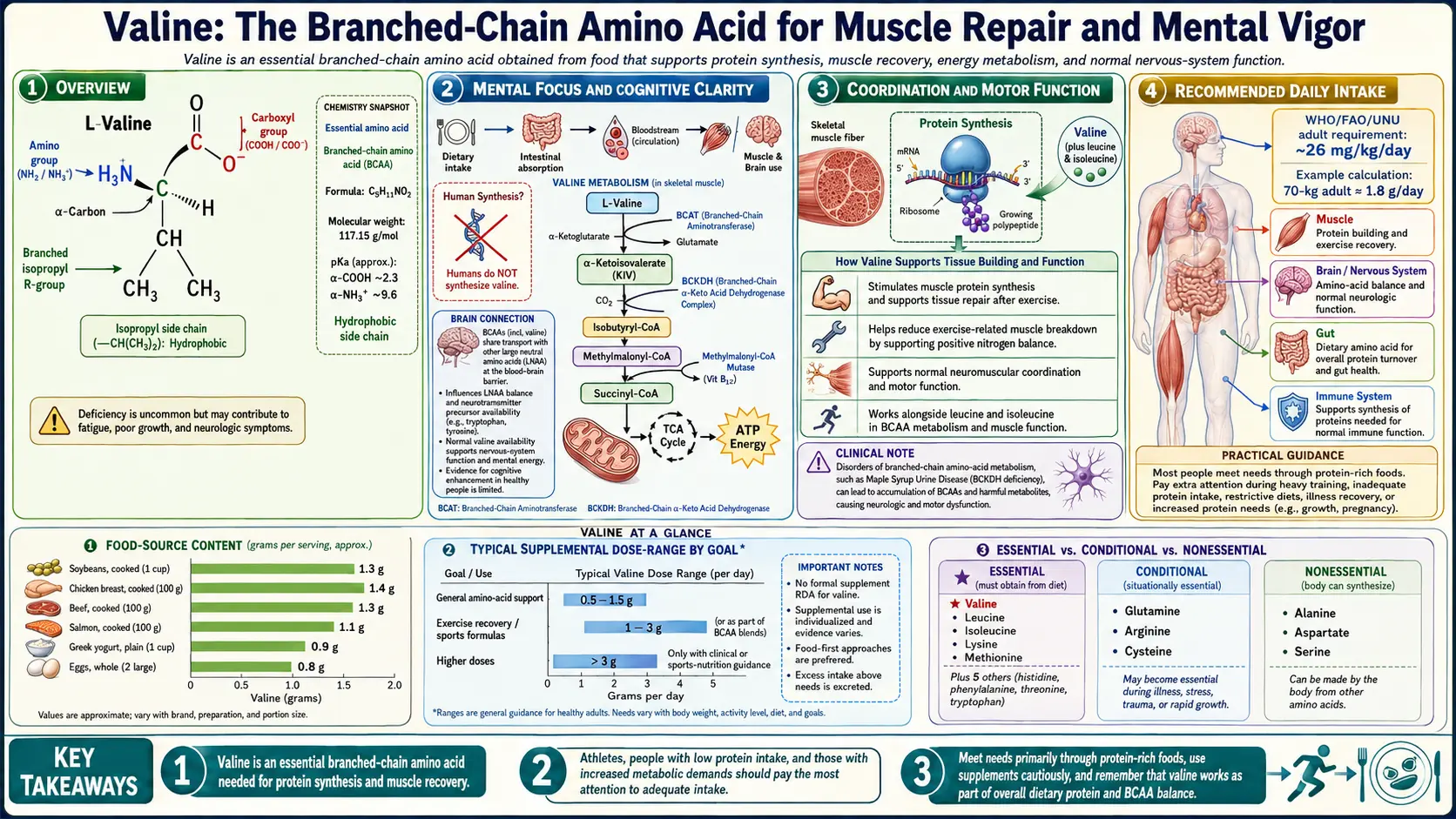
Table of Contents
- Overview
- Muscle Growth and Tissue Repair
- Energy Production During Exercise
- Nervous System Function
- Mental Focus and Cognitive Clarity
- Blood Sugar Regulation
- Liver Health
- Immune System Support
- Coordination and Motor Function
- Deficiency Signs
- Food Sources
- Supplementation Guidelines
- Recommended Daily Intake
- Research Papers
- Connections
- Featured Videos
Overview
Valine is one of the nine essential amino acids that the human body cannot synthesize on its own and must therefore obtain through diet or supplementation. It belongs to a special trio of amino acids known as the branched-chain amino acids (BCAAs), alongside leucine and isoleucine. The name "branched-chain" refers to the unique molecular structure of these amino acids, which features a side chain that branches off from the main carbon backbone. This structural distinction gives valine particular biochemical properties that set it apart from other amino acids.
First isolated in 1901 by the German chemist Emil Fischer — from casein, the principal protein of milk — valine has since been recognized as a cornerstone of human nutrition and physiology. From a naturopathic perspective, valine exemplifies the principle that the body possesses an innate intelligence for self-repair and optimal function, provided it receives the raw materials it needs. When valine is abundant in the diet, the body can carry out critical processes related to muscle maintenance, neurological health, energy metabolism, and tissue regeneration with remarkable efficiency. — the fuller story is told in the dedicated History article.
Valine is classified as a glucogenic amino acid, meaning it can be converted into glucose through a metabolic pathway known as gluconeogenesis. This distinguishes it from leucine, which is strictly ketogenic, and isoleucine, which is both glucogenic and ketogenic. This glucogenic nature makes valine especially important for sustaining blood sugar levels during periods of fasting, prolonged exercise, or metabolic stress. In holistic medicine, we view this as the body's elegant mechanism for maintaining homeostasis across multiple systems simultaneously.
Muscle Growth and Tissue Repair
One of valine's most celebrated roles is its contribution to muscle protein synthesis and tissue repair. As a branched-chain amino acid, valine is metabolized directly in skeletal muscle rather than being processed first by the liver, as most other amino acids are. This direct muscular metabolism means that valine is rapidly available at the site where it is needed most during periods of physical exertion, recovery, and growth.
Valine works in concert with leucine and isoleucine to stimulate the mTOR signaling pathway, a central regulator of cell growth and protein synthesis. While leucine is often considered the primary activator of this pathway, valine plays an indispensable supporting role. Without adequate valine, the effectiveness of leucine in triggering muscle protein synthesis is significantly diminished. Think of it as a three-legged stool: remove one leg and the entire structure becomes unstable.
In clinical practice, I have observed that patients recovering from surgery, traumatic injury, or prolonged illness benefit considerably from ensuring adequate valine intake. The amino acid supports the rebuilding of damaged muscle fibers, connective tissue, and even skin. Wound healing, in particular, appears to proceed more efficiently when the body has a generous supply of all three BCAAs, with valine contributing to the structural integrity of newly formed tissue.
Valine also plays a role in preventing muscle catabolism, the breakdown of muscle tissue that occurs when the body is under metabolic stress. During periods of caloric restriction, illness, or intense training, the body may begin to break down its own muscle proteins for energy. Adequate valine intake helps signal to the body that sufficient amino acid reserves are available, thereby reducing the drive to cannibalize lean tissue.
Energy Production During Exercise
During sustained physical activity, the body's glycogen stores gradually become depleted, and it must turn to alternative fuel sources. Valine serves as one of these alternative fuels. Through a series of enzymatic reactions, valine is converted into succinyl-CoA, an intermediate of the citric acid cycle (also known as the Krebs cycle). This allows valine to contribute directly to aerobic energy production within the mitochondria of muscle cells.
This energy-providing capacity becomes especially important during endurance activities such as long-distance running, cycling, swimming, and hiking. Athletes who maintain adequate BCAA levels, including valine, often report greater endurance and less perceived fatigue during prolonged exercise. From a naturopathic standpoint, this reflects the body's remarkable ability to adapt its fuel utilization based on the available nutrient supply.
Valine also helps to delay the onset of central fatigue during exercise. Central fatigue is a phenomenon in which the brain receives signals that reduce the drive to continue physical activity. One mechanism behind central fatigue involves the amino acid tryptophan, which competes with BCAAs for transport across the blood-brain barrier. When BCAA levels fall during exercise, more tryptophan enters the brain, where it is converted into serotonin, a neurotransmitter that promotes feelings of relaxation and drowsiness. By maintaining adequate circulating levels of valine and the other BCAAs, this tryptophan-serotonin pathway is modulated, helping the exerciser maintain drive and alertness.
Nervous System Function
Valine's influence extends well beyond the musculoskeletal system and into the realm of neurological health. As an amino acid that can cross the blood-brain barrier, valine directly participates in brain chemistry and neural signaling. It serves as a precursor for the synthesis of certain neurotransmitters and plays a regulatory role in the balance of amino acid concentrations within the central nervous system.
The nervous system relies on a delicate equilibrium of excitatory and inhibitory signals. Valine contributes to this balance by influencing the availability of other amino acids in the brain. Specifically, valine competes with aromatic amino acids such as tryptophan, phenylalanine, and tyrosine for transport across the blood-brain barrier via the large neutral amino acid transporter. By modulating the entry of these aromatic amino acids, valine indirectly affects the synthesis of neurotransmitters like serotonin, dopamine, and norepinephrine.
In naturopathic practice, this regulatory function is of particular interest when addressing conditions related to neurotransmitter imbalance. Patients experiencing mood instability, sleep disturbances, or heightened stress responses may benefit from a careful evaluation of their BCAA-to-aromatic amino acid ratio. Ensuring adequate valine intake can be one component of a broader nutritional strategy aimed at restoring neurochemical harmony.
Valine also supports the maintenance of the myelin sheath, the protective fatty coating that surrounds nerve fibers and enables rapid signal transmission. Adequate amino acid availability, including valine, is essential for the ongoing repair and regeneration of myelin, which is continuously turned over throughout life. This has implications for long-term neurological resilience and the prevention of age-related cognitive decline.
Mental Focus and Cognitive Clarity
Building on its neurological roles, valine contributes meaningfully to mental focus, concentration, and cognitive clarity. Many patients in my practice who adopt a diet rich in BCAAs report improvements in their ability to sustain attention during demanding mental tasks, maintain clarity of thought under pressure, and resist the mental fog that can accompany fatigue or stress.
The mechanism behind these cognitive benefits relates in part to valine's role in modulating the tryptophan-serotonin pathway described earlier. While serotonin is essential for mood regulation and sleep, excessive serotonin production during waking hours can lead to drowsiness, reduced motivation, and impaired concentration. By maintaining healthy BCAA levels, valine helps to keep serotonin synthesis within an optimal range, supporting a state of alert wakefulness without overstimulation.
Furthermore, valine's contribution to stable blood sugar levels (discussed in greater detail below) has downstream effects on cognitive performance. The brain is highly sensitive to fluctuations in glucose availability, and even mild hypoglycemia can impair memory, attention, and decision-making. By supporting gluconeogenesis and steady glucose delivery, valine helps ensure that the brain receives a consistent supply of its primary fuel.
From a holistic perspective, cognitive clarity is not merely a function of brain chemistry but also of overall metabolic health, physical vitality, and emotional balance. Valine contributes to all of these dimensions, making it a genuinely integrative nutrient for mental performance.
Blood Sugar Regulation
As a glucogenic amino acid, valine can be converted into glucose when the body requires additional blood sugar. This process, known as gluconeogenesis, takes place primarily in the liver and, to a lesser extent, in the kidneys. The carbon skeleton of valine enters the gluconeogenic pathway as succinyl-CoA, ultimately contributing to the production of new glucose molecules that can be released into the bloodstream.
This glucogenic capacity makes valine particularly valuable for individuals who experience blood sugar instability, including those with reactive hypoglycemia, insulin resistance, or type 2 diabetes. In naturopathic medicine, we often emphasize the importance of consuming protein-rich meals and snacks that provide a balanced supply of amino acids, including valine, to help smooth out the glycemic response and prevent the dramatic spikes and crashes associated with high-carbohydrate diets.
Research has also suggested that BCAAs, including valine, may influence insulin signaling and glucose uptake in muscle tissue. While the relationship between BCAAs and insulin sensitivity is complex and still being investigated, there is evidence that adequate BCAA availability supports efficient glucose disposal by skeletal muscle, which is the primary site of insulin-mediated glucose uptake in the body. This underscores the importance of viewing valine not in isolation but as part of a broader metabolic network.
For patients engaged in intermittent fasting or extended fasting protocols, valine's glucogenic properties provide an additional layer of metabolic safety. During fasting, the body must generate glucose from non-carbohydrate sources to maintain brain function and red blood cell activity. Valine, released from the breakdown of dietary or endogenous protein, contributes to this essential glucose production.
Liver Health
The liver is the body's central metabolic organ, and valine plays a noteworthy role in supporting hepatic health and function. Unlike most amino acids, which are extensively processed by the liver upon absorption from the gut, BCAAs are largely metabolized in peripheral tissues, particularly skeletal muscle. This unique metabolic routing means that BCAAs place relatively little metabolic burden on the liver, which is advantageous for individuals with compromised liver function.
In clinical settings, BCAA supplementation, including valine, has been used as part of the nutritional management of chronic liver disease, including cirrhosis and hepatic encephalopathy. Patients with advanced liver disease often exhibit altered amino acid profiles, with elevated levels of aromatic amino acids (phenylalanine, tyrosine, tryptophan) and depleted levels of BCAAs. This imbalance contributes to the neurological symptoms of hepatic encephalopathy, including confusion, disorientation, and impaired motor function. Restoring BCAA levels through supplementation helps to correct this imbalance and can improve both cognitive function and nutritional status in these patients.
Valine also supports the liver's role in nitrogen metabolism and ammonia detoxification. The metabolism of BCAAs in skeletal muscle generates glutamate and glutamine, which serve as carriers of nitrogen and participate in the urea cycle. By facilitating efficient nitrogen handling, valine indirectly supports the liver's ability to clear ammonia, a potent neurotoxin, from the bloodstream.
Immune System Support
A well-functioning immune system depends on a steady supply of amino acids to fuel the rapid proliferation of immune cells and the synthesis of antibodies, cytokines, and other immune mediators. Valine contributes to this process by providing the building blocks for immune cell protein synthesis and by supporting the overall metabolic health of the organism.
During periods of infection, trauma, or surgical recovery, the body's demand for amino acids increases dramatically. Immune cells such as lymphocytes, macrophages, and neutrophils undergo rapid division and require substantial amounts of amino acids to synthesize the proteins necessary for their function. Valine, along with the other BCAAs, helps to meet this increased demand and supports a robust immune response.
From a naturopathic perspective, immune health is intimately connected to nutritional status. A diet deficient in essential amino acids, including valine, can lead to immunosuppression, characterized by reduced antibody production, impaired cell-mediated immunity, and increased susceptibility to infections. This is particularly concerning in elderly populations, individuals with chronic illness, and those recovering from major medical procedures. Ensuring adequate valine intake through a balanced, whole-foods diet is one of the foundational strategies for maintaining immune resilience throughout life.
Additionally, valine supports the health of the gut-associated lymphoid tissue (GALT), which constitutes a significant portion of the body's immune system. The intestinal lining, where much of the GALT resides, undergoes rapid cell turnover and requires a constant supply of amino acids for maintenance. Valine contributes to the structural integrity and regenerative capacity of the intestinal epithelium, thereby supporting both immune function and nutrient absorption.
Coordination and Motor Function
Valine's contributions to both muscle health and nervous system function converge in its support of physical coordination and motor control. Smooth, coordinated movement requires seamless communication between the brain, spinal cord, peripheral nerves, and skeletal muscles. Valine supports each component of this neuromuscular chain.
At the muscular level, adequate valine availability ensures that muscle fibers can contract efficiently and maintain their structural integrity during repeated use. At the neurological level, valine supports neurotransmitter balance and myelin maintenance, both of which are essential for precise motor signaling. The result is improved proprioception (the body's sense of its position in space), finer motor control, and better overall physical coordination.
This is of particular relevance for athletes, dancers, martial artists, and anyone engaged in activities that demand precise, coordinated movement. It is equally important for aging populations, in whom declining muscle mass (sarcopenia) and neurological changes can lead to impaired balance, increased fall risk, and loss of independence. Supporting valine intake as part of a comprehensive BCAA strategy may help to preserve neuromuscular function and quality of life in older adults.
Deficiency Signs
True valine deficiency is relatively uncommon in individuals who consume a varied diet that includes adequate protein. However, certain populations are at increased risk, including those on very restrictive diets, individuals with malabsorption disorders, patients with chronic liver disease, and people undergoing prolonged periods of intense physical training without adequate nutritional support.
Signs and symptoms that may indicate insufficient valine intake include:
- Muscle wasting and weakness due to impaired protein synthesis and increased muscle catabolism
- Fatigue and reduced exercise tolerance resulting from diminished energy production in muscle tissue
- Poor wound healing and slow recovery from injury or surgery
- Mental fog and difficulty concentrating related to altered neurotransmitter balance
- Mood disturbances, including increased irritability and emotional instability
- Increased susceptibility to infections due to compromised immune function
- Blood sugar instability, particularly episodes of hypoglycemia during fasting or between meals
- Impaired coordination and balance, especially noticeable during physical activities
- Skin disorders and delayed tissue regeneration
In naturopathic practice, these symptoms are rarely attributed to a single nutrient deficiency in isolation. Rather, they are viewed as part of a broader pattern of nutritional insufficiency that may involve multiple amino acids, vitamins, and minerals. A comprehensive dietary assessment and, when indicated, targeted laboratory testing (such as plasma amino acid profiles) can help to identify specific deficiencies and guide appropriate interventions.
Food Sources
Valine is found in a wide variety of protein-rich foods. As a general principle, any food that provides complete protein will contain meaningful amounts of valine along with the other essential amino acids. The richest dietary sources include:
Animal Sources
- Eggs — one of the most bioavailable sources of all essential amino acids, including valine
- Chicken and turkey breast — lean poultry provides approximately 1.0 to 1.2 grams of valine per 100 grams of cooked meat
- Beef and lamb — red meats are rich in BCAAs, with valine content ranging from 0.9 to 1.1 grams per 100 grams
- Wild-caught fish — salmon, tuna, cod, and halibut are excellent sources
- Dairy products — milk, yogurt, cheese, and especially whey protein are abundant in valine
Plant Sources
- Soybeans and soy products — tofu, tempeh, and edamame provide among the highest plant-based valine concentrations
- Lentils and chickpeas — legumes are a reliable source, particularly when combined with grains for a complete amino acid profile
- Quinoa — a complete plant protein that provides all nine essential amino acids, including valine
- Pumpkin seeds and sunflower seeds — nutrient-dense seeds that contribute meaningful amounts of valine
- Spirulina — this blue-green algae is exceptionally rich in protein and BCAAs by weight
- Peanuts and almonds — nuts provide moderate amounts of valine alongside healthy fats and fiber
- Whole grains — brown rice, oats, and whole wheat contribute smaller but still significant amounts
From a naturopathic perspective, obtaining valine from whole, minimally processed food sources is always preferable to relying on isolated supplements. Whole foods provide valine in the context of a complex matrix of other nutrients, cofactors, and phytochemicals that support optimal absorption and utilization. When building meals, aim for a diversity of protein sources throughout the day to ensure a balanced intake of all essential amino acids.
Supplementation Guidelines
While a well-planned diet should provide sufficient valine for most individuals, there are circumstances in which supplementation may be warranted. These include:
- Intense athletic training — competitive athletes and those engaged in high-volume resistance training may benefit from BCAA supplementation to support recovery and reduce muscle soreness
- Recovery from surgery or illness — increased amino acid demands during healing may justify short-term supplementation
- Chronic liver disease — under medical supervision, BCAA supplementation can help correct the amino acid imbalances associated with hepatic insufficiency
- Restrictive diets — vegans, individuals on very low-calorie diets, and those with food allergies or intolerances may benefit from targeted supplementation
- Age-related sarcopenia — older adults experiencing muscle loss may find that BCAA supplementation supports the maintenance of lean tissue
Valine is most commonly supplemented as part of a BCAA complex that includes leucine and isoleucine, typically in a 2:1:1 ratio (leucine:isoleucine:valine). This ratio reflects the relative proportions found in muscle tissue and has been shown in research to support optimal muscle protein synthesis. Typical dosages of BCAA supplements range from 5 to 20 grams per day, with valine constituting approximately one-quarter of the total.
When supplementing with individual valine, dosages in the range of 1 to 5 grams per day are generally considered safe for most adults. However, it is important to avoid excessively high doses, as an imbalance among the three BCAAs can impair the absorption and metabolism of the others. Always work with a qualified healthcare practitioner to determine the appropriate dosage for your individual circumstances.
Precautions: Individuals with maple syrup urine disease (MSUD), a rare genetic disorder affecting BCAA metabolism, must strictly avoid valine supplementation and carefully control dietary BCAA intake. Those with kidney disease or severe liver disease should also consult their healthcare provider before beginning any amino acid supplementation. Pregnant and breastfeeding women should rely on dietary sources rather than supplements unless specifically directed by their practitioner.
Recommended Daily Intake
The World Health Organization (WHO) recommends a daily valine intake of approximately 26 milligrams per kilogram of body weight for adults. For a person weighing 70 kilograms (approximately 154 pounds), this translates to roughly 1,820 milligrams (1.82 grams) per day. Some researchers and clinicians suggest that this figure may be conservative, particularly for physically active individuals, and that intakes in the range of 2 to 4 grams per day may be more appropriate for optimal health and performance.
To put this in practical dietary terms:
- A single chicken breast (approximately 170 grams cooked) provides roughly 1.8 to 2.0 grams of valine
- Two large eggs provide approximately 0.8 grams of valine
- One cup of cooked lentils provides approximately 0.7 grams of valine
- One cup of Greek yogurt provides approximately 0.5 to 0.7 grams of valine
- One serving of whey protein powder (25 grams) provides approximately 1.0 to 1.5 grams of valine
As these figures illustrate, meeting the daily valine requirement is readily achievable through a diet that includes adequate protein from a variety of sources. Most adults consuming 0.8 to 1.2 grams of total protein per kilogram of body weight will naturally obtain sufficient valine without the need for supplementation.
In my naturopathic practice, I encourage patients to focus not on isolated nutrient targets but on the overall quality and diversity of their diet. A diet built around whole, nutrient-dense foods, including generous servings of vegetables, legumes, nuts, seeds, whole grains, and high-quality animal proteins for those who include them, will reliably provide all the essential amino acids, including valine, in the proportions the body needs for vibrant health.
Research Papers
The following curated PubMed searches surface the peer-reviewed literature underpinning the claims on this page. Each link opens a live PubMed query for Valine filtered by topic, so the results stay current as new studies are indexed.
- PubMed search — Valine: Metabolism and biochemistry (review)
- PubMed search — Valine: Dietary intake and requirements
- PubMed search — Valine: Supplementation randomized controlled trials
- PubMed search — Valine: Plasma levels and clinical outcomes
- PubMed search — Valine: Muscle protein synthesis and exercise
- PubMed search — Valine: Deficiency: signs and consequences
- PubMed search — Valine: Cardiovascular effects
- PubMed search — Valine: Neurological and cognitive effects
- PubMed search — Valine: Immune function
- PubMed search — Valine: Oxidative stress and antioxidant activity
- PubMed search — Valine: Gastrointestinal and gut health
- PubMed search — Valine: Safety, toxicity, and upper limit
For a broader literature review, see the full PubMed record for Valine and the NIH Office of Dietary Supplements Fact Sheets.
This content is provided for informational purposes only and does not constitute medical advice. Consult a qualified healthcare provider before beginning any supplementation regimen.
Connections
- All Amino Acids
- Valine Benefits Deep Dive
- Isoleucine
- Leucine
- Tryptophan
- Phenylalanine
- Tyrosine
- Glutamine
- Arginine
- Blood Sugar
- Fatigue
- Fasting
- Liver Disease
- NAC & Liver Health
- Gut-Brain Axis
- Insulin Resistance
- Eggs
- Lentils
- Alanine