Ultra-Processed Foods (UPF): The Dominant Dietary Story of Our Time
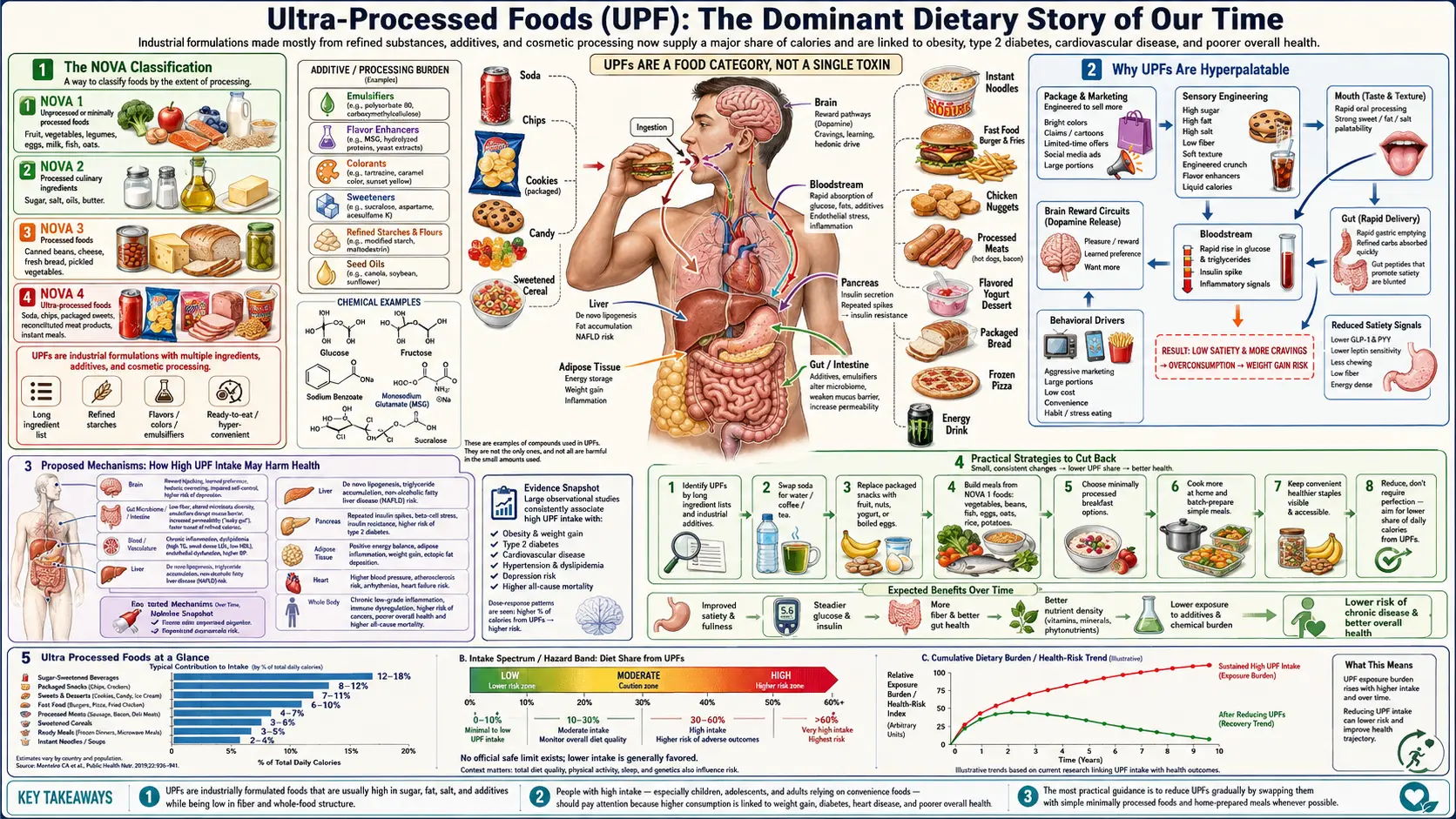
Ultra-processed foods (UPFs) have shifted from being a fringe nutrition concern to the center of global public-health concern over the past five years. The term is derived from the NOVA classification developed by Brazilian researcher Carlos Monteiro, who divided foods into four groups based on the nature and extent of industrial processing. In the highest (NOVA 4) group are industrial formulations made mostly from chemically modified ingredients — substances rarely used in home cooking — and containing cosmetic additives such as flavors, colors, emulsifiers, thickeners, and preservatives. UPFs now account for over 60 percent of caloric intake in the United States and are the dominant dietary feature of the obesity and metabolic-disease epidemic.
This article explains the NOVA classification, the epidemiological and mechanistic evidence linking UPFs to chronic disease, why these foods are engineered to be hyperpalatable, and practical strategies to reduce intake without making food restrictive or joyless.
Table of Contents
- The NOVA Classification
- What Makes a Food Ultra-Processed
- Why UPFs Are Hyperpalatable
- Evidence Linking UPFs to Disease
- Proposed Mechanisms
- Hidden UPF Categories
- Practical Strategies to Cut Back
- Connections
- Featured Videos
The NOVA Classification
- NOVA 1 — Unprocessed or minimally processed. Fresh produce, plain meat, fish, eggs, milk, legumes, grains, nuts, herbs.
- NOVA 2 — Processed culinary ingredients. Salt, butter, olive oil, vinegar, honey, sugar used in home cooking.
- NOVA 3 — Processed foods. Real cheese, cured meats, bread from basic ingredients, canned vegetables, traditional pickles.
- NOVA 4 — Ultra-processed. Industrial formulations with 5+ ingredients, many not used in home cooking. Sugary drinks, packaged snacks, breakfast cereals, reconstituted meat products, instant meals, plant-based meat analogues, most breads with dough conditioners, flavored yogurts.
What Makes a Food Ultra-Processed
Typical markers of NOVA-4 status on a label:
- Ingredient list with unfamiliar industrial components — maltodextrin, invert syrup, monoglycerides, soy protein isolate, modified food starch, carrageenan, sodium phosphates, polysorbates, guar gum, xanthan gum, interesterified oils.
- Added flavors (“natural flavor,” “artificial flavor”), added colors, emulsifiers, preservatives.
- Refined sugars, refined fats, or refined isolates that make the food palatable at shelf-stable scale.
- A name that describes the food that is being imitated rather than the food itself (“chicken nuggets,” “cheese-flavored crackers,” “plant-based sausage”).
Why UPFs Are Hyperpalatable
UPFs are engineered, often with millions of dollars of product-testing research, to maximize the reward signal per bite. The formula combines refined carbohydrate, refined fat, salt, umami, and specific texture profiles (“crunch” followed by “melt”) that trigger dopamine release and bypass the satiety mechanisms that evolved to limit over-consumption of whole foods. Kevin Hall’s landmark NIH inpatient trial showed that when adults were fed an ultra-processed or minimally processed diet matched for macronutrients and offered freely, the ultra-processed eaters consumed 500 more calories per day and gained weight; when the same people switched to the minimally processed diet they lost it.
Evidence Linking UPFs to Disease
Major 2024 umbrella reviews synthesizing hundreds of observational studies and Hall’s inpatient trial have found that higher UPF intake is associated with:
- All-cause mortality (roughly 21% higher with each 10% increase in UPF share of calories).
- Cardiovascular disease, hypertension, and stroke.
- Type 2 diabetes and metabolic syndrome.
- Obesity and weight gain.
- Depression, anxiety, and sleep disturbance.
- Certain cancers (colorectal, breast, pancreatic).
- Inflammatory bowel disease flares.
Proposed Mechanisms
- Energy overconsumption via hyperpalatability and rapid ingestion.
- Disrupted satiety signaling — refined fats and carbohydrates bypass the normal gut-hormone response.
- Emulsifier effects on the gut barrier — carboxymethylcellulose, polysorbate-80, and others disrupt the mucus layer and tight junctions in animal and human studies.
- Altered microbiome composition and reduced diversity.
- Advanced glycation end-products (AGEs) formed at high-temperature industrial processing.
- Nutrient density crowd-out — UPFs replace nutrient-dense whole foods in the diet.
Hidden UPF Categories
Items most people do not realize are UPFs:
- Most commercial whole-wheat bread (dough conditioners, emulsifiers, added gluten).
- Flavored yogurts and “healthy” yogurt drinks.
- Plant-based meat alternatives.
- “Healthy” protein bars with isolates and gums.
- Breakfast cereals (including granolas with “natural flavors” and lots of binders).
- Many plant-milk products with added emulsifiers and gums.
- Deli meats with added phosphates and flavor enhancers.
- Most sliced bread, including artisan-style loaves.
Practical Strategies to Cut Back
- Shop the perimeter of the supermarket (produce, meat, fish, dairy) and be cautious in the center aisles.
- If you can’t make the ingredient at home, consider why. Carrageenan and maltodextrin don’t live in home kitchens.
- Cook at home more. Simple dishes of real ingredients beat almost any processed meal.
- Target the highest-impact replacements first — breakfast cereals, sugary drinks, snack foods, and convenience meals deliver most of the UPF burden for most people.
- Upgrade without deprivation. Real cheese instead of cheese product, plain yogurt with fruit instead of flavored yogurt, whole bread from a bakery instead of dough-conditioner supermarket bread.
- Plan for imperfect execution. Going from 60% UPF calories to 20% is extraordinary; chasing 0% is exhausting and usually reverts.
Connections
- Fake Meat — The ultra-processing criticism, applied to both aisles equally
- Fake Food — Food sold as something it is not — adulteration and grade fraud
- All Toxins
- Preservatives
- Obesity
- Metabolic Syndrome
- Food Additives
- Diabetes
- Seed Oils
- Gut Healing
- Anti-Inflammatory Diet
- Elimination Diet
- Food Dyes
- Artificial Sweeteners
- Cardiovascular Disease
- Carrageenan
- Depression
- Inflammatory Bowel Disease
- Gut-Brain Axis
- Hypertension