Fenbendazole: Anticancer Research & Protocols
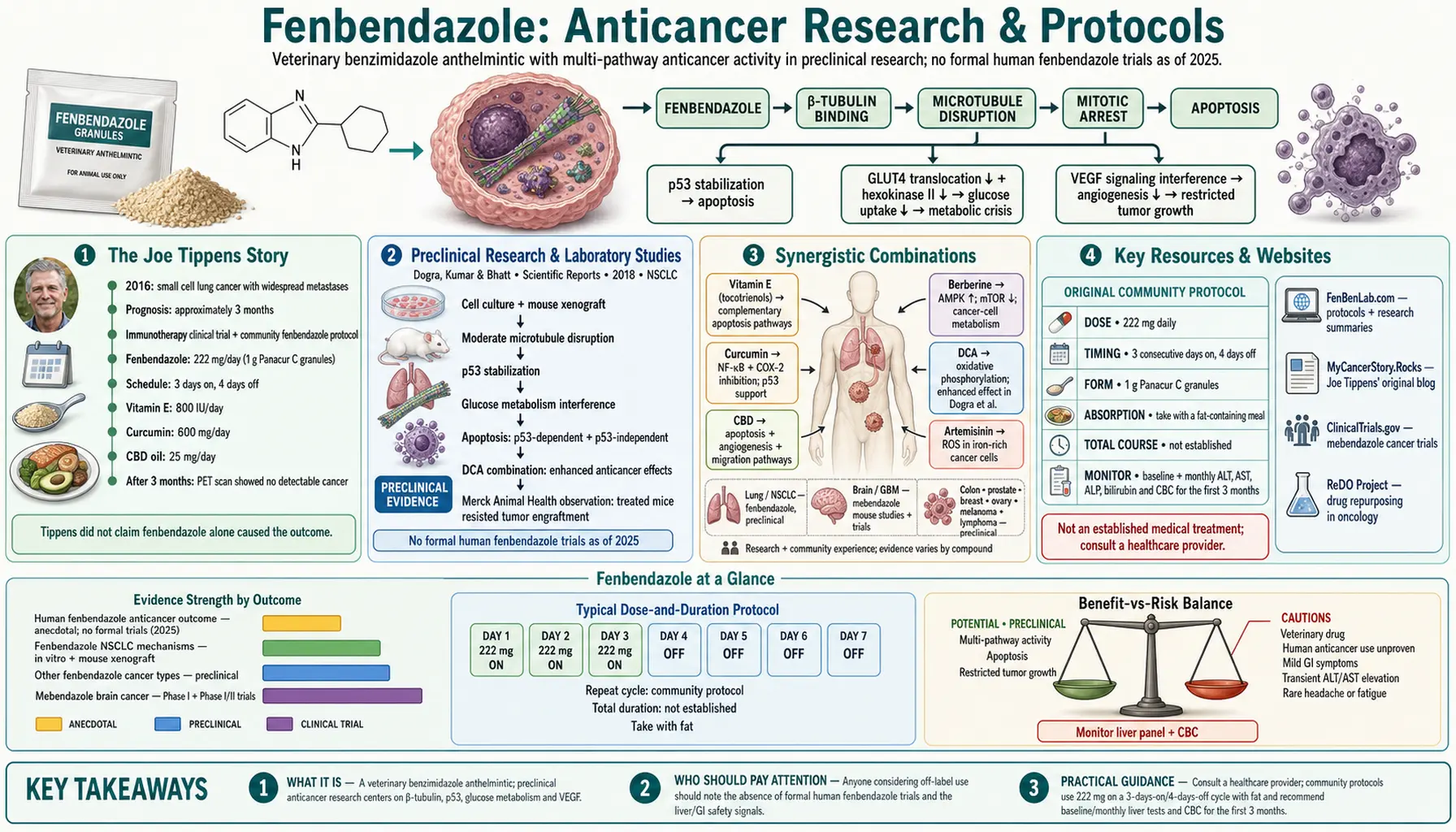
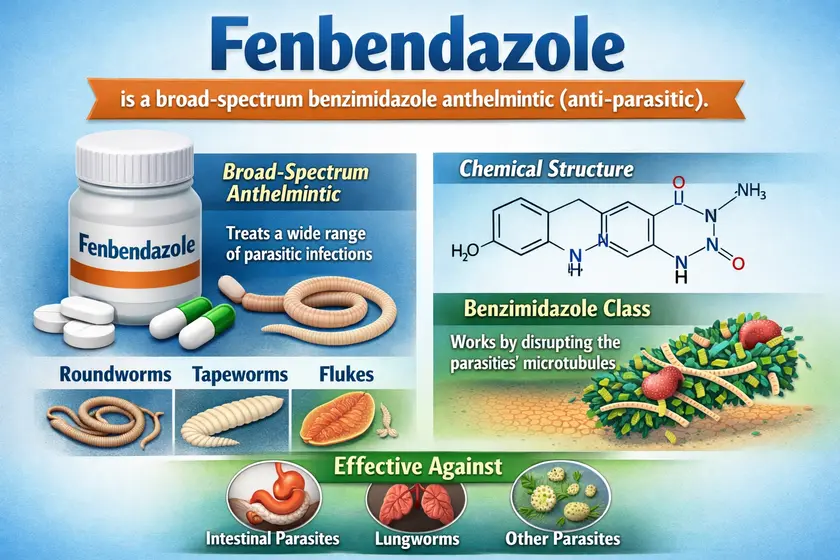
Fenbendazole is a broad-spectrum benzimidazole anthelmintic (anti-parasitic) drug originally developed for veterinary use against roundworms, hookworms, whipworms, and certain tapeworms. Marketed under brand names including Panacur and Safe-Guard, it has been used safely in animals for decades. In recent years, fenbendazole has gained worldwide attention as a potential anticancer agent after dramatic anecdotal recoveries and a growing body of preclinical research suggesting it can disrupt multiple cancer survival mechanisms simultaneously.
Table of Contents
- The Joe Tippens Story
- Other Notable Cases & Advocates
- Anticancer Mechanisms of Action
- Preclinical Research & Laboratory Studies
- Cancer Types Studied
- Common Fenbendazole Protocols
- Mebendazole: The Human-Approved Cousin
- Synergistic Combinations
- Safety Profile & Side Effects
- Clinical Trials & Current Status
- Key Resources & Websites
- References & Research Papers
- Research Papers
- Connections
- Featured Videos
The Joe Tippens Story
The modern fenbendazole cancer movement began with Joe Tippens, an Oklahoma businessman diagnosed in 2016 with small cell lung cancer that had metastasized throughout his body — including his stomach, neck, bones, liver, bladder, pancreas, and tail bone. He was given approximately three months to live.
While undergoing an immunotherapy clinical trial at MD Anderson Cancer Center, Tippens received a tip from a veterinarian who mentioned that a scientist at Merck Animal Health had observed that fenbendazole accidentally cured cancer in laboratory mice. With nothing to lose, Tippens began taking fenbendazole alongside his immunotherapy treatment.
The Protocol Joe Used
- Fenbendazole: 222 mg per day (1 gram of Panacur C granules), taken 3 days on, 4 days off
- Vitamin E: 800 IU per day (tocotrienols)
- Curcumin: 600 mg per day (bio-available form)
- CBD oil: 25 mg per day
Within three months, Tippens' PET scan showed no detectable cancer anywhere in his body. His oncologists at MD Anderson were astonished. He was declared cancer-free and has remained so. Tippens went on to share his story through his blog MyCancerStory.Rocks and social media, sparking a global movement of cancer patients exploring fenbendazole as a complementary treatment.
Tippens has repeatedly stated that he does not claim fenbendazole alone cured his cancer — he was also receiving immunotherapy — but he believes the combination was key. His story has been viewed tens of millions of times and has been covered by media outlets worldwide, particularly in South Korea where fenbendazole became a national phenomenon in 2019.
Other Notable Cases & Advocates
The South Korea Phenomenon (2019)
After Joe Tippens' story went viral on Korean social media, fenbendazole became one of the most-discussed health topics in South Korea. Several Korean cancer patients reported positive outcomes:
- Korean media reported that fenbendazole sales surged dramatically, with veterinary supply stores selling out nationwide
- The Korean medical establishment initially dismissed the trend, but public interest forced the Korean Cancer Association to issue a statement acknowledging the preclinical data while cautioning about unproven human use
- Multiple Korean YouTube channels documenting patient experiences accumulated millions of views
Dr. Tom Rogers (The Common Sense MD)
Dr. Tom Rogers, a physician and health educator, has become one of the most prominent medical voices discussing fenbendazole research. Through his YouTube channel "The Common Sense MD," he has provided detailed analysis of the preclinical research, explained the mechanisms of action, and discussed protocols combining fenbendazole with other compounds like artemisinin. His work has helped bridge the gap between anecdotal reports and scientific literature for patients seeking information.
FenBen Lab
The website FenBenLab.com has become a central resource for the fenbendazole community, providing protocol information, research summaries, dosing guides, and patient testimonials. It serves as a clearinghouse for information from both the scientific literature and the growing community of patients using fenbendazole.
Dr. Gregory Riggins (Johns Hopkins)
While not an advocate for fenbendazole specifically, Dr. Gregory Riggins and his team at Johns Hopkins have conducted significant research on the related drug mebendazole for brain cancer treatment. Their work has provided scientific credibility to the broader concept of benzimidazole anthelmintics as anticancer agents and has led to actual clinical trials (discussed in the Mebendazole section below).
Anticancer Mechanisms of Action
Fenbendazole's anticancer potential stems from its ability to simultaneously target multiple pathways that cancer cells depend on for survival and growth. This multi-target action is particularly significant because it mirrors the approach of combination chemotherapy but in a single, well-tolerated compound.
1. Microtubule Disruption
The primary mechanism, and the one best supported by research:
- Fenbendazole binds to beta-tubulin, the protein building block of microtubules — the structural scaffolding inside cells
- Cancer cells depend heavily on microtubules for cell division (mitosis); disruption causes mitotic arrest and prevents tumors from growing
- This is the same mechanism used by established chemotherapy drugs like taxol (paclitaxel) and vincristine, but fenbendazole appears to cause far fewer side effects
- Fenbendazole shows selective toxicity — affecting cancer cell microtubules more than normal cell microtubules, potentially due to differences in tubulin isotype expression
2. p53 Tumor Suppressor Stabilization
- Fenbendazole upregulates and stabilizes p53, known as "the guardian of the genome" — the most important tumor suppressor protein in the body
- p53 is mutated or inactivated in over 50% of all human cancers; restoring its function is one of the most sought-after goals in oncology
- Stabilized p53 triggers apoptosis (programmed cell death) specifically in cancer cells
- This mechanism was documented in the landmark 2018 study by Dogra, Kumar, and Bhatt at the National Centre for Human Genome Studies and Research in India
3. Glucose Uptake Inhibition (Warburg Effect Disruption)
- Cancer cells consume glucose at rates 10–200x higher than normal cells (the Warburg effect) and are often heavily dependent on this glucose for survival
- Fenbendazole inhibits GLUT4 glucose transporter translocation, reducing glucose uptake by cancer cells
- Fenbendazole also downregulates hexokinase II, the first enzyme in the glycolysis pathway, further starving cancer cells of their preferred fuel
- This metabolic disruption makes cancer cells more vulnerable to other treatments and can induce metabolic crisis and cell death
4. Angiogenesis Inhibition
- Tumors require new blood vessel formation (angiogenesis) to grow beyond a few millimeters in size
- Fenbendazole interferes with vascular endothelial growth factor (VEGF) signaling, reducing the ability of tumors to recruit new blood supply
- Without adequate blood supply, tumors cannot receive nutrients or oxygen and tumor growth is restricted
5. Proteasome Interference
- The proteasome is the cell's protein recycling machinery; cancer cells rely on it heavily to dispose of misfolded proteins produced during rapid growth
- Fenbendazole has been shown to interfere with proteasome function, leading to accumulation of toxic proteins within cancer cells
- This mechanism is shared with the approved cancer drug bortezomib (Velcade)
6. Immune System Modulation
- Emerging research suggests fenbendazole may enhance the immune system's ability to recognize and attack cancer cells
- Some studies indicate fenbendazole reduces regulatory T-cells (Tregs) that suppress anti-tumor immunity
- This may explain why fenbendazole appeared to work synergistically with Joe Tippens' immunotherapy treatment
Preclinical Research & Laboratory Studies
The Merck Animal Health Discovery
The accidental discovery that sparked the entire fenbendazole-cancer connection occurred at Merck Animal Health laboratories. Scientists noticed that laboratory mice being treated with fenbendazole for pinworm infections were resistant to tumor engraftment — researchers could not get cancers to grow in the fenbendazole-treated mice. This observation was reported internally and eventually reached the broader scientific community.
Johns Hopkins University Research (Mebendazole)
Dr. Gregory Riggins' laboratory at Johns Hopkins has produced some of the most rigorous research on benzimidazole anthelmintics as anticancer agents:
- Demonstrated that mebendazole significantly extended survival in mouse models of glioblastoma multiforme (GBM), the most aggressive brain cancer
- Showed that mebendazole inhibited tumor growth through microtubule disruption and VEGF-mediated angiogenesis inhibition
- Completed preclinical work that led to FDA approval of Phase I clinical trials for mebendazole in brain tumors
National Centre for Human Genome Studies & Research, India (2018)
The most frequently cited fenbendazole-specific cancer study was published by Dogra, Kumar, and Bhatt in the journal Scientific Reports (Nature Publishing Group). Key findings:
- Fenbendazole exhibited potent anticancer activity in human non-small cell lung cancer (NSCLC) cell lines
- Caused moderate microtubule disruption, p53 stabilization, and interference with glucose metabolism
- Induced apoptosis through both p53-dependent and p53-independent pathways
- Demonstrated activity in both in vitro (cell culture) and in vivo (mouse xenograft) models
- Combined fenbendazole treatment with dichloroacetate (DCA) showed enhanced anticancer effects
University of Texas MD Anderson Cancer Center
- Research has shown that benzimidazole compounds demonstrate activity against cancer stem cells — the subpopulation of tumor cells believed to drive recurrence and metastasis
- Studies on related benzimidazole compounds have shown radiosensitizing effects, potentially making radiation therapy more effective
Additional Preclinical Studies
- Colon cancer: Multiple studies show fenbendazole inhibits proliferation of colon cancer cell lines (HCT-116, SW480) through cell cycle arrest at G2/M phase
- Prostate cancer: Fenbendazole induces apoptosis in prostate cancer cells via mitochondrial pathway activation
- Breast cancer: Research demonstrates anti-proliferative effects against both ER-positive and triple-negative breast cancer cell lines
- Lymphoma: Studies show fenbendazole reduces tumor burden in lymphoma mouse models, particularly when combined with vitamins
- Melanoma: Fenbendazole inhibits melanoma cell growth and migration in vitro; animal models show reduced metastatic spread
- Ovarian cancer: Preclinical data shows activity against cisplatin-resistant ovarian cancer cells, suggesting potential against drug-resistant disease
Cancer Types Studied
Fenbendazole and related benzimidazole compounds have shown preclinical activity against a wide range of cancer types:
- Lung cancer (non-small cell and small cell) — the most extensively studied; the Dogra et al. 2018 study focused on NSCLC
- Glioblastoma (brain cancer) — mebendazole research at Johns Hopkins led to clinical trials
- Colorectal cancer — multiple in vitro and in vivo studies
- Prostate cancer — apoptosis induction via mitochondrial pathway
- Breast cancer — including triple-negative subtypes
- Pancreatic cancer — in vitro growth inhibition demonstrated
- Ovarian cancer — activity against cisplatin-resistant lines
- Melanoma — anti-proliferative and anti-metastatic effects
- Lymphoma & leukemia — in vivo tumor burden reduction
- Hepatocellular carcinoma (liver cancer) — in vitro growth inhibition
- Renal cell carcinoma (kidney cancer) — preclinical activity demonstrated
Common Fenbendazole Protocols
Important: These protocols are compiled from patient community reports and are not established medical treatments. Always consult with a healthcare provider before starting any new health regimen.
The Joe Tippens Protocol (Original)
- Fenbendazole: 222 mg daily (1 gram of Panacur C granules for dogs), 3 consecutive days on, 4 days off
- Vitamin E: 800 IU daily (tocotrienols preferred)
- Curcumin: 600 mg daily (bio-available form such as Theracurmin or with BioPerine)
- CBD oil: 25 mg daily
Modified Tippens Protocol (Higher Dose)
Some practitioners and patients have adopted a higher-dose protocol:
- Fenbendazole: 444 mg daily (2 grams of Panacur C), 3 days on, 4 days off
- Same supplement stack as original protocol
- Some users take fenbendazole daily (7 days/week) for more aggressive cancers, with periodic breaks
FenBen Lab Protocol
The FenBen Lab community has developed additional variations:
- Fenbendazole: 222–444 mg daily depending on body weight and cancer stage
- Vitamin E: 800 IU (mixed tocotrienols and tocopherols)
- Curcumin: 600 mg bio-available form
- CBD oil: 25 mg
- Optional additions: Berberine (500 mg), quercetin (500 mg), or turkey tail mushroom extract
Protocol Considerations
- Absorption: Fenbendazole is fat-soluble; taking it with a fat-containing meal or fish oil significantly improves absorption
- Cycling: The on/off cycling approach (3 on, 4 off) is intended to give the liver recovery time and is recommended by most protocol advocates
- Liver monitoring: Regular liver enzyme testing (ALT, AST) is recommended, particularly during the first 3 months
- Source: Most users purchase veterinary-grade Panacur C (granules) or liquid Safeguard for goats; some compounding pharmacies now prepare human-grade fenbendazole capsules
Mebendazole: The Human-Approved Cousin
Mebendazole is a closely related benzimidazole compound that is FDA-approved for human use as an anti-parasitic (brand names: Vermox, Emverm). It shares the same core mechanisms of action as fenbendazole and has been the subject of formal clinical research for cancer:
Key Differences from Fenbendazole
- FDA-approved for humans: Mebendazole has a well-established human safety profile from decades of worldwide use
- Prescription required: Unlike veterinary fenbendazole, mebendazole requires a doctor's prescription
- Similar mechanisms: Both drugs bind beta-tubulin, disrupt microtubules, stabilize p53, and interfere with glucose metabolism
- Bioavailability: Mebendazole has slightly different pharmacokinetics; some researchers consider fenbendazole to have more favorable tissue distribution
Clinical Trials for Mebendazole
- Johns Hopkins Phase I trial: Mebendazole for newly diagnosed high-grade glioma (brain cancer), initiated by Dr. Gregory Riggins' research (NCT01729260)
- Phase I/II pediatric trial: Mebendazole for pediatric brain tumors at Cohen Children's Medical Center (NCT02644291)
- Colorectal cancer trial: Mebendazole as adjuvant therapy for Stage IV colorectal cancer
- Case reports: Published medical literature includes case reports of mebendazole use in adrenocortical carcinoma with positive response
Synergistic Combinations
Research and community experience suggest fenbendazole may work more effectively when combined with certain other compounds:
Established Synergistic Partners
- Vitamin E (tocotrienols): Tocotrienols are potent anticancer agents in their own right; delta-tocotrienol in particular has shown ability to induce apoptosis in cancer cells. Combined with fenbendazole's mechanisms, the two may attack cancer through complementary pathways
- Curcumin: A powerful anti-inflammatory and anticancer compound from turmeric that inhibits NF-κB, COX-2, and multiple cancer signaling pathways. Enhances fenbendazole's p53 stabilization effects
- CBD (Cannabidiol): Research shows CBD induces apoptosis in cancer cells, inhibits angiogenesis, and reduces cancer cell migration. May potentiate fenbendazole's anti-tumor effects
- Berberine: Activates AMPK, inhibits mTOR, and disrupts cancer cell metabolism. Complements fenbendazole's glucose uptake inhibition
- DCA (Dichloroacetate): Shifts cancer cell metabolism from glycolysis back to oxidative phosphorylation; demonstrated enhanced effects with fenbendazole in the Dogra et al. study
- Artemisinin: Derived from sweet wormwood; generates ROS selectively in iron-rich cancer cells. Dr. Tom Rogers has discussed the fenbendazole-artemisinin combination in detail
Other Compounds Under Investigation
- Ivermectin: Another anti-parasitic drug with demonstrated anticancer properties; may work synergistically with fenbendazole through complementary mechanisms
- Quercetin: A flavonoid that enhances drug absorption and has its own anticancer activity
- Turkey tail mushroom (Trametes versicolor): PSK and PSP polysaccharides boost immune surveillance against cancer cells
- EGCG (Green tea extract): Inhibits angiogenesis and enhances chemotherapy sensitivity
Safety Profile & Side Effects
One of the most remarkable aspects of fenbendazole is its favorable safety profile. As a veterinary drug used for decades across multiple animal species at high doses, its toxicity profile is well-characterized:
Known Safety Data
- Wide therapeutic window: In animal studies, the LD50 (lethal dose) is extremely high — greater than 10,000 mg/kg in rodents, indicating very low acute toxicity
- WHO safety classification: The WHO classifies benzimidazoles as having a favorable safety profile for human use (based on mebendazole and albendazole data)
- Minimal systemic absorption: Fenbendazole has relatively low bioavailability orally, which limits systemic toxicity but also means it must be taken with fat to improve absorption to therapeutic levels
Reported Side Effects (from community reports)
- Mild GI symptoms: Occasional nausea, loose stools, or mild abdominal discomfort, usually resolving within the first week
- Transient liver enzyme elevation: Some users report mild ALT/AST increases, typically returning to normal with cycling (3 on, 4 off) or temporary discontinuation
- Die-off reaction: Some users report flu-like symptoms in the first week, potentially related to parasite die-off (Herxheimer-like reaction)
- Rare: Headache, mild fatigue during the first few days
Monitoring Recommendations
- Baseline and monthly liver function tests (ALT, AST, ALP, bilirubin) for the first 3 months
- Complete blood count (CBC) at baseline and monthly
- Regular tumor marker monitoring if applicable
- PET/CT scans per oncologist's schedule to track response
Clinical Trials & Current Status
As of 2025, the landscape of benzimidazole anticancer research includes:
Active Clinical Trials (Mebendazole)
- NCT01729260: Phase I trial of mebendazole for newly diagnosed high-grade glioma (Johns Hopkins)
- NCT02644291: Phase I/II trial of mebendazole for pediatric gliomas (Cohen Children's Medical Center)
- NCT03925662: Mebendazole in combination with temozolomide for glioblastoma
- Additional trials exploring mebendazole for colorectal cancer and other solid tumors
Fenbendazole-Specific Status
- No formal human clinical trials for fenbendazole have been registered as of 2025
- This is largely because fenbendazole is a generic veterinary drug with no patent protection, making it financially unattractive for pharmaceutical companies to fund human trials
- The preclinical evidence continues to grow, with new studies published regularly
- Patient communities continue to document anecdotal outcomes
- Some integrative oncologists are incorporating fenbendazole or mebendazole into treatment plans off-label
The Generic Drug Challenge
A key barrier to formal clinical trials for fenbendazole is economic: as a decades-old generic veterinary drug, no company holds a patent that would justify the $50–100+ million investment required for FDA-approved human clinical trials. This is a well-known problem in drug repurposing — promising compounds without patent protection struggle to attract the funding needed for clinical development, regardless of scientific merit. Organizations like the Repurposing Drugs in Oncology (ReDO) project are working to address this systemic barrier.
Key Resources & Websites
- FenBenLab.com — Protocol guides, research summaries, and community support
- MyCancerStory.Rocks — Joe Tippens' original blog documenting his journey
- ClinicalTrials.gov — Search active mebendazole cancer trials
- ReDO Project — Repurposing Drugs in Oncology international initiative
References & Research Papers
Foundational Fenbendazole Research
- Dogra N, Kumar A, Mukhopadhyay T. Fenbendazole acts as a moderate microtubule destabilizing agent and causes cancer cell death by modulating multiple cellular pathways. Scientific Reports. 2018;8:11926.
- Duan Q, Liu Y, Bhatt VR. Fenbendazole as a potential anticancer drug. Journal of Cancer. 2013;4(8):628-639.
- Mukhopadhyay T, Sasaki J, Ramesh R, Roth JA. Mebendazole elicits a potent antitumor effect on human cancer cell lines both in vitro and in vivo. Clinical Cancer Research. 2002;8(9):2963-2969.
Mebendazole Cancer Research & Clinical Trials
- Bai RY, Staedtke V, Aprhys CM, Gallia GL, Riggins GJ. Antiparasitic mebendazole shows survival benefit in 2 preclinical models of glioblastoma multiforme. Neuro-Oncology. 2011;13(9):974-982.
- Bai RY, Staedtke V, Wanjiku T, Bhatt VR, Riggins GJ. Brain penetration and efficacy of different mebendazole polymorphs in a mouse brain tumor model. Clinical Cancer Research. 2015;21(15):3462-3470.
- De Witt M, Gamble A, Hanson D, et al. Repurposing mebendazole as a replacement for vincristine for the treatment of brain tumors. Molecular Medicine. 2017;23:579-588.
- Pantziarka P, Bouche G, Meheus L, Sukhatme V, Sukhatme VP. Repurposing drugs in oncology (ReDO) — mebendazole as an anti-cancer agent. Ecancermedicalscience. 2014;8:443.
Benzimidazole Mechanisms of Action
- Son DS, Lee ES, Bhatt VR. Benzimidazole anthelmintics can modulate HIF-1α and inhibit tumor growth. Biomedicine & Pharmacotherapy. 2020;127:110108.
- Nygren P, Larsson R. Drug repositioning from bench to bedside: tumour remission by the antihelmintic drug mebendazole in refractory metastatic colon cancer. Acta Oncologica. 2014;53(3):427-428.
- Williamson T, Bai RY, Staedtke V, et al. Mebendazole and a non-steroidal anti-inflammatory combine to reduce tumor initiation in a colon cancer preclinical model. Oncotarget. 2016;7(42):68571-68584.
Drug Repurposing & Tumor Metabolism
- Pantziarka P, Bouche G, Meheus L, Sukhatme V, Sukhatme VP. The Repurposing Drugs in Oncology (ReDO) Project. Ecancermedicalscience. 2014;8:442.
- Vander Heiden MG, Cantley LC, Thompson CB. Understanding the Warburg effect: the metabolic requirements of cell proliferation. Science. 2009;324(5930):1029-1033.
- Pushpakom S, Iorio F, Eyers PA, et al. Drug repurposing: progress, challenges and recommendations. Nature Reviews Drug Discovery. 2019;18(1):41-58.
Case Reports & Reviews
- Dobrosotskaya IY, Hammer GD, Schteingart DE, et al. Mebendazole monotherapy and long-term disease control in metastatic adrenocortical carcinoma. Endocrine Practice. 2011;17(3):e59-e62.
- Guerini AE, Triggiani L, Maddalo M, et al. Mebendazole as a candidate for drug repurposing in oncology: an extensive review of current literature. Cancers. 2019;11(9):1284.
Research Papers
- Fenbendazole cancer research — PubMed search
- Mebendazole anticancer studies — PubMed search
- Benzimidazoles and tubulin in cancer — PubMed search
- Albendazole and glioblastoma — PubMed search
- Mebendazole colorectal cancer trials — PubMed search
- Drug repurposing in oncology: anthelmintics — PubMed search
- Fenbendazole safety and hepatotoxicity — PubMed search
Connections
- All Remedies
- Vitamin E
- Turmeric
- Detox Protocols
- Detox and Recovery
- Vitamin D3
- Fasting
- Cancer
- Lymphoma
- Quercetin
- Turkey Tail Mushroom
- Berberine
- Gerson Cancer Treatment
- Parasites
- Complete Blood Count
- Vitamin C
- NAC
- Methylene Blue
- Bryan Ardis